
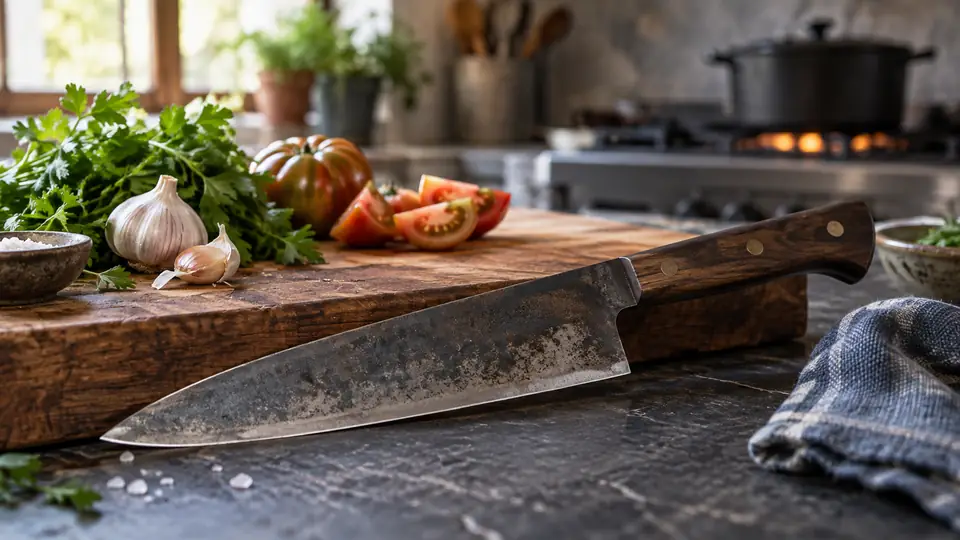
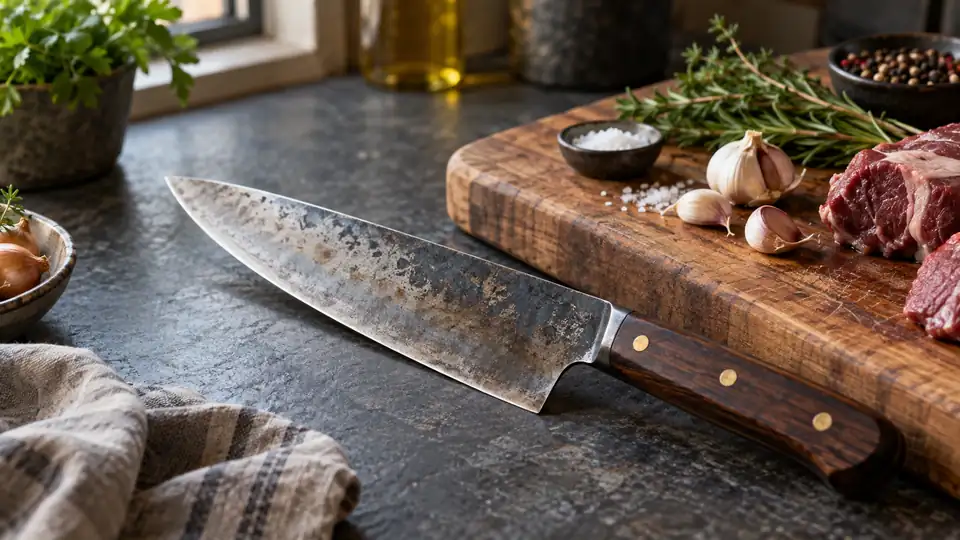
There is a particular thrill to buying a high carbon steel chef knife. The blade feels alive. It takes an edge that slices tomatoes like glass, and with proper care it will keep that edge longer than ordinary stainless blades. Shoppers hunt for high carbon steel because they want superior sharpness, better edge retention, and a tactile cutting experience that turns prep work into something satisfying. At the same time, high-carbon knives demand a little more attention. They can be more prone to surface spotting than high-chrome stainless steels, and beginners sometimes expect miracle maintenance-free performance.
Common mistakes include confusing decorative patterns with true steel quality, assuming a thicker blade automatically means better performance, or buying on looks alone without testing balance and handle comfort. What matters most is the steel chemistry and heat treatment, the edge angle, the handle ergonomics, and whether the knife fits the kind of cooking you actually do. Home cooks who prep large roasts will prioritize durability and a comfortable, heavy handle. Chefs slicing sashimi lean toward a thinner, harder steel and a razor edge.
Different buyers have very different priorities, and that’s why this roundup mixes everyday workhorses, Japanese-style high-hardness blades, forged specialty pieces, and value picks. For readers looking for a single recommendation to start with, the MOSFiATA 8″ chef’s knife stands out for balanced performance and a solid feel that suits both serious home cooks and culinary students.
If you are short on time, the comparison table below gives a fast overview of the top high carbon steel chef knives. Click any product name to jump to its full review and pros and cons.
Best High Carbon Steel Chef Knife Comparison Table
| Product | Best For | Main Strength | Key Specs |
|---|---|---|---|
| MOSFiATA 8″ Super Sharp Professional Chef’s Knife | All-Around Home Use | German EN1.4116 high-carbon balance | 8″ blade, 16° per side, full tang |
| HOSHANHO 8″ Japanese High Carbon Chef’s Knife | Japanese-Style Precision | 10Cr15CoMoV high carbon, 60 HRC | 8″ blade, 13° edge, matte finish |
| SHAN ZU 8″ Hand-Forged Gyuto Knife | Premium Hardness & Craft | 9-layer clad with 10Cr15MoV core, 62 HRC | 8″ blade, 12° edge, rosewood/G10 handle |
| Victorinox Fibrox Pro 8″ Chef’s Knife | Workhorse / Value | Trusted, durable everyday blade | 8″ blade, high-carbon stainless, Fibrox handle |
| KEEMAKE 8″ High Carbon Chef Knife | Ergonomics & Sharpness | 1.4116 high-carbon, 58±2 HRC | 8″ blade, 12°–15° edge, pakkawood handle |
| SANMEIHO 5-Piece Japanese Knife Set | Complete Kitchen Starter | 10Cr15CoMoV powder steel, 63 HRC | 8″ chef + 4 other knives, 12° edge |
| imarku 8″ Japanese Chef Knife | Budget-Friendly Sharp Edge | High-carbon stainless, consistent sharpness | 8″ blade, HRC 56-58, pakka handle |
| DRGSKL Serbian Hand-Forged Knife Set | Forged Tools For Meat/BBQ | ATS-34 carbon steel, hammered finish | Multiple knives, full tang, Honbazuke finish |
| Brewin Professional 3PC Knife Set | Starter Set With Edge Retention | 1.4116 German stainless, full tang | Chef, santoku, utility, 14-16° edge |
If you want more detail on how each knife performs, the reviews below walk through strengths, real-world scenarios, and who should buy which model.
1. Best Overall: MOSFiATA 8″ Super Sharp Professional Chef’s Knife

One reason this option stands out is how well it balances user-friendly features with a proper high-carbon German steel core. The MOSFiATA 8″ uses EN1.4116 with 0.45–0.55% carbon, giving a harder edge than many generic kitchen knives while retaining enough chromium for corrosion resistance. That makes it a sensible choice for cooks who want a knife that behaves like a step-up professional blade but is still forgiving when life gets busy in the kitchen.
Imagine prepping a week of dinners: you dice onions, chiffonade basil, and trim a chicken without stopping to re-sharpen. The knife’s 16° per-side grind hits a comfortable middle ground for everyday slicing, while the textured Micarta-style handle and full tang deliver a steady pinch grip for long sessions. Another real-world moment: the included finger guard and sharpener in the box are useful for giving this knife a little TLC between meals, which is handy for a new home cook learning basic maintenance.
Pros
- Solid German EN1.4116 high-carbon stainless core with good edge retention
- Full-tang, triple-riveted Micarta-style handle for stable balance and grip
- Hand-sharpened 16° per side for everyday versatility
- Comes with a finger guard, sharpener, and blade guard in a presentation box
- Laser-engraved pattern reduces sticking and looks refined
Cons
- Not as hard as some Japanese powder steels, so extreme edge retention is limited
- Pattern is decorative, not Damascus; buyers expecting layered steel may be disappointed
- Requires routine hand-washing and drying to avoid spotting over long-term use
The MOSFiATA earns the top spot because it strikes a dependable balance between performance and practicality. Home cooks who want a razor-sharp starting point for meal prep will appreciate the way it slices tomatoes, cleansly dices onions, and handles meat trimming with confidence. If you are someone who does heavy single-task work, such as sharpening for fine sushi slicing, you might prefer a thinner-edge Japanese blade. For most kitchens, though, the MOSFiATA covers the bases: comfort, durability, and an edge that’s easy to maintain.
To buy this product, click here.
2. Best Japanese High Carbon: HOSHANHO Kitchen Knife 8″ in Japanese High Carbon Steel

For buyers who prioritize a thinner, sharper cutting geometry, this HOSHANHO 8″ chef’s knife delivers the feel of a Japanese gyuto with modern materials. The blade’s 10Cr15CoMoV composition and reported 60 HRC hardness mean the edge holds well and cuts with less push. That extra hardness is especially noticeable when slicing soft fruits or making clean paper-thin cuts of fish for sashimi. Picture slicing a ripe peach without any tearing, or making tight julienne strips where every stroke counts.
Another everyday scene where this knife shines is busy weeknight prep. The matte blade finish resists glare and hides micro-scratches, while the sloped bolster and ergonomically contoured wooden handle invite a proper pinch grip. If you value precise control, this model is satisfying. Keep in mind two realistic tradeoffs: the harder steel needs more careful edge maintenance and may chip if used to pry bones or on frozen items, and the wooden handle will require extra care compared with synthetic grips.
Pros
- High-hardness 10Cr15CoMoV core with excellent edge retention
- Hand-sharpened 13° per side for razor-like slicing
- Comfortable wooden handle and sloped bolster for a secure pinch grip
- Matte finish reduces reflections and hides micro-abrasions
- Good gift presentation for culinary enthusiasts
Cons
- Harder steel demands more careful sharpening and conditional maintenance
- Wood handle requires drying and occasional oiling to stay in top shape
- Not ideal for heavy bone work or frozen foods
This HOSHANHO is a great pick for cooks who prize precision over brute force. Choose it when your priority is fine slicing and long edge life between hones. If your kitchen tasks include a lot of heavy-duty butchery, consider a tougher, slightly thicker blade instead. For prepping fish, vegetables, and fine garnishes, this knife’s geometry and hardness make it a lot of fun to use.
To buy this product, click here.
3. Best Premium: SHAN ZU 8″ Hand-Forged Gyuto Knife

If your aim is a statement piece that performs like a pro tool, the SHAN ZU 8″ gyuto brings hand-forged aesthetics along with a high-hardness core. The layered construction surrounds a 10Cr15MoV core rated at around 62 HRC, which translates into superb edge retention and fine slicing ability. You can feel the difference when slicing sashimi or trimming beef for carpaccio, where the knife’s slim edge glides with minimal resistance. One anecdote from home cooks: a weekend charcuterie session felt noticeably cleaner and faster thanks to its razor geometry.
Another scenario that highlights the knife’s advantage is holiday meal prep. When you need dozens of thin, identical slices of roast or ham, a high-hardness gyuto keeps an even edge over long passes. The hammer-forged pattern and rosewood/G10 hybrid handle give it a premium look and secure grip. Buyers should be aware that 62 HRC steels need careful handling; they are more brittle than lower-HRC blades and can chip if abused. For those who want heirloom-level performance and don’t mind the maintenance, this is a standout.
Pros
- High 62 HRC core for exceptional edge retention
- Hand-forged, hammered finish that helps reduce sticking
- Balanced ergonomics with hybrid handle materials
- Professional-level slicing performance for delicate tasks
- Distinctive presentation and craftsmanship
Cons
- Higher hardness requires careful sharpening technique
- More brittle under lateral stress or misuse
- Higher-end looks and feel may not be necessary for casual cooks
Choose the SHAN ZU gyuto when craftsmanship and maximum slicing performance are priorities. It performs best for precision tasks, sashimi, and fine butchery. Avoid this model if you regularly use a knife to separate bones or cut frozen blocks. For confident home chefs and pros who maintain their edges correctly, the payoff is long-lasting sharpness and a satisfying, almost surgical feel.
To buy this product, click here.
4. Best Workhorse Value: Victorinox Fibrox Pro Chef’s Knife, 8 Inch

This is the knife many cooks reach for when they want reliability over show. The Victorinox Fibrox Pro has been a favorite in home and professional kitchens for years. Its high-carbon stainless blade and practical Fibrox handle make it forgiving, easy to maintain, and comfortable for long prepping sessions. Picture the busy dinner service in a small restaurant, where a single sturdy chef’s knife must handle everything from breaking down chickens to fine herb work. This is the kind of blade that shrugs off varied use.
Another real-world advantage is the low-maintenance aspect. Unlike wooden-handle, high-HRC Japanese knives, a Fibrox handle accepts wet hands without drama and the blade tolerates everyday washing better. You lose some of the surgical sharpness of harder steels, but gain toughness and straightforward serviceability. That combination makes Victorinox a trusted choice for cooks who need a reliable tool that works every day, without ritual maintenance.
Pros
- Trusted, durable design favored by professionals and home cooks
- Comfortable, non-slip Fibrox handle for wet prep
- Easy to sharpen and maintain, tolerant of heavy use
- Backed by a strong reputation and long-term availability
Cons
- Not as hard or as razor-thin as premium Japanese options
- Less edge retention compared with 60+ HRC steels
- Not as flashy for gift buyers seeking a premium look
This is the pick for cooks who prioritize a reliable everyday knife. Choose the Victorinox if you want something that will handle varied tasks with minimal fuss. If your priority is the absolute sharpest possible edge for delicate slicing, consider the Japanese options above. For most families, though, this blade is the quickest path to consistent, dependable performance.
To buy this product, click here.
5. Best Ergonomics: KEEMAKE Chef Knife 8″ High Carbon Stainless Steel

If long prep sessions give you wrist fatigue, ergonomic design becomes a major buying factor. The KEEMAKE 8″ pairs a 1.4116 high-carbon steel blade with a curved pakkawood handle and sloped bolster that promote a natural pinch grip. One anecdote: a home cook who preps for weekly meal kits reported a noticeable drop in wrist strain after switching to a blade with a better-shaped handle. That comfort makes a difference when you’re doing repetitive dicing or mincing.
Beyond ergonomics, KEEMAKE claims 58±2 HRC and a fine edge sharpened to a 12°–15° angle. In practice that combination slices cleanly and keeps working through heavy batches of vegetables and herbs. The blade is versatile enough for proteins too. If you prioritize comfort over ultra-fine hardness, KEEMAKE gives you both reliable sharpness and a handle you can work with for longer stretches.
Pros
- Ergonomically shaped pakkawood handle reduces fatigue
- Solid 1.4116 high-carbon stainless core for steady edge retention
- Fine sharpening angle yields clean slicing and good versatility
- Includes sheath and gift packaging for easy storage and presentation
Cons
- Pakkawood still needs basic care to avoid swelling or cracking
- Not as hard as premium powder steels for extreme edge holding
- May be heavier than ultra-light Japanese blades
Buy the KEEMAKE if comfort matters as much as edge life. It suits cooks who prep large quantities or those who prefer a more substantial handle feel. Skip it if you chase the thinnest possible cutting geometry for delicate sashimi or paper-thin prosciutto slices. For holiday prep marathons and everyday meal kits, the KEEMAKE strikes a rare balance of ergonomics and steel performance.
To buy this product, click here.
6. Best Knife Set: SANMEIHO 5PCS Knife Set

If you’re equipping a kitchen from scratch, a set that uses a high-quality core steel will save guesswork and give matched handling across tasks. SANMEIHO’s 5-piece set uses 10Cr15CoMoV powder steel, heat-treated to an aggressive 63 HRC. That kind of hardness gives outstanding edge retention, which means fewer hones between meals. One real kitchen moment: a cook prepping a multi-course dinner found the set kept up through vegetable work, filleting fish, and finishing with delicate garnishes without frequent edge touch-ups.
Another everyday use case is the convenience of having the right knife for each job. The included santoku and utility blades complement the 8″ chef for accurate portioning and delicate work. Handles are pakkawood and sculpted for balance, so switching between knives feels natural. Keep in mind that 63 HRC steels are less forgiving of misuse, so if you rough it with your knives you will need to be careful. For an integrated, high-performance kit, this set is compelling.
Pros
- Powder steel cores with 63 HRC for long edge life
- Complete set covers major kitchen tasks out of the box
- Hand-sharpened 12° geometry for precise cuts
- Attractive pakkawood handles offer consistent balance
- Good choice for cooks who want matched blade feel
Cons
- High-hardness steel requires careful sharpening and handling
- Handles need occasional care to stay pristine
- Higher HRC can mean more difficult re-profiling if you damage the edge
Choose the SANMEIHO set when you want a cohesive high-performance toolkit. It’s a strong option for aspiring home chefs and those who prefer matched handling across knives. If you prefer a single ultra-hard blade for fine slicing, a dedicated gyuto may be a better single purchase, but for most kitchens the set provides immediate versatility and long-term value.
To buy this product, click here.
7. Best Budget Sharp Edge: imarku Japanese Chef Knife 8″
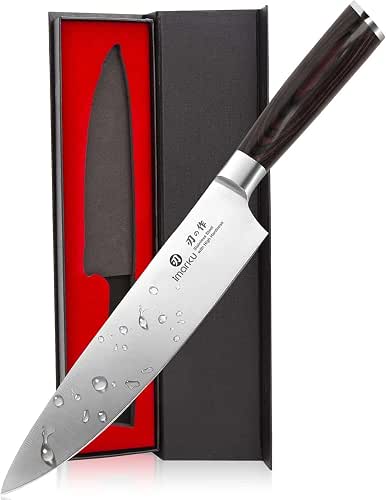
For shoppers constrained by budget but unwilling to accept a blunt, chunky knife, the imarku 8″ offers surprisingly strong performance. With a high-carbon stainless blade and a reported HRC in the mid-50s to upper-50s range, it balances sharpness and durability in an affordable package. Anecdotally, many buyers mention that the imarku outperforms older, inexpensive blades they replaced, turning leftover prep into a noticeably faster chore.
Another realistic kitchen scene is student or first-apartment cooking. The imarku’s pakka handle and practical packaging make it a sensible gift for new cooks, and its edge keeps up with basic weekly meal prep. It will not match the ultra-fine performance of 62 HRC steels, but for the price it delivers clean cuts, easy resharpening, and reliable daily use.
Pros
- Affordable access to a high-carbon-style cutting experience
- Pakka handle offers good grip without being delicate
- Sharp out of the box with sensible edge geometry
- Lifetime warranty and reasonable customer support options
Cons
- HRC and metallurgy are not as refined as premium blades
- Edge retention is good but requires periodic maintenance
- Quality control can vary between production runs
Pick the imarku if you want a capable, budget-friendly chef knife that performs well for everyday cooking. It is especially useful as a starter blade for culinary students, apartment cooks, or anyone who wants to upgrade from a flimsy grocery-store knife. If you want ultimate edge retention and plan heavy use without frequent honing, consider a higher-priced powder steel model.
To buy this product, click here.
8. Best Forged Set For Butchery: DRGSKL Serbian Hand-Forged Chef Knife Set

This DRGSKL set is aimed at cooks and butchers who want tools with real forged backbone. The knives are crafted from ATS-34 carbon steel, nitro-cooled for hardness and toughness, then finished using a traditional Honbazuke method that produces keen, durable edges. Think backyard brisket trimming, breaking down a whole chicken, and prepping big cuts of meat for slow-roasting. The included leather roll and accessories make it practical for outdoor BBQ cooks who travel to competitions or weekend grilling sessions.
Another kitchen reality where forged tools shine is repetitive heavy work. When you are slicing large roasts or carving brisket for a crowd, the full tang, balanced handle, and thicker geometry give confidence. These knives feel purposeful and hold up under stress better than many stamped alternatives. The manufacturer pre-oils the blades for shipment, so plan to wash and dry them before first use. High-carbon ATS-34 will patina with use, which many users appreciate as character rather than a flaw.
Pros
- Forged ATS-34 carbon steel with traditional finishing methods
- Excellent balance and control for heavy butchery and BBQ tasks
- Complete kit includes leather pouch and maintenance tools
- Durable handles and full-tang construction
Cons
- High maintenance relative to stainless alternatives, needs drying and oiling
- Pre-oiled blades require initial cleaning
- Appearance and patina will change with use, which may not suit all buyers
This DRGSKL set is a great pick for serious home butchers, outdoor cooks, and anyone who prefers the rugged feel of forged carbon steel. If you want low-maintenance stainless blades for dishwashers, this is not the right choice. For hands-on cooks who love restoring and caring for tools, these knives reward attention with lasting cutting performance.
To buy this product, click here.
9. Best Starter Set With Good Edge Retention: Brewin Professional 3PC Knife Set

For someone building a dependable small collection, the Brewin 3-piece set covers most early needs with an eye toward edge retention. Made from 1.4116 German stainless steel and sharpened to 14–16°, these blades are a sensible bridge between value and performance. A student chef prepping for classes will appreciate the chef, santoku, and utility knife combination, while a parent cooking family dinners will like how the set cuts through everyday ingredients without constant honing.
Real-world usage shows that matched handles and bolsters help speed up prep work. One kitchen story: a dinner host found the set comfortable enough to use across the entire meal prep without hand cramping, and the edge stayed usable across multiple tasks. The full tang and ergonomic ABS handles boost confidence when switching between tasks. For buyers who want a reliable starter kit that will last through early mistakes, this set is hard to beat.
Pros
- Balanced starter kit for most kitchen tasks
- German 1.4116 steel with good corrosion resistance
- Ergonomic handles and full-tang construction
- Sharpness and edge retention suitable for new cooks and prosumers
Cons
- Not as premium as single high-HRC blades
- Handles are ABS rather than natural materials for those who prefer wood
- Edge geometry favors general use rather than ultra-thin slicing
Buy the Brewin set if you want a practical, dependable starting trio of knives that will cover most kitchen needs and stay sharp longer than basic grocery-store blades. This set suits new cooks, small households, and anyone who wants a solid foundation without diving into costly specialty blades.
To buy this product, click here.
Best High Carbon Steel Chef Knife FAQ
How do I care for a high carbon steel chef knife?
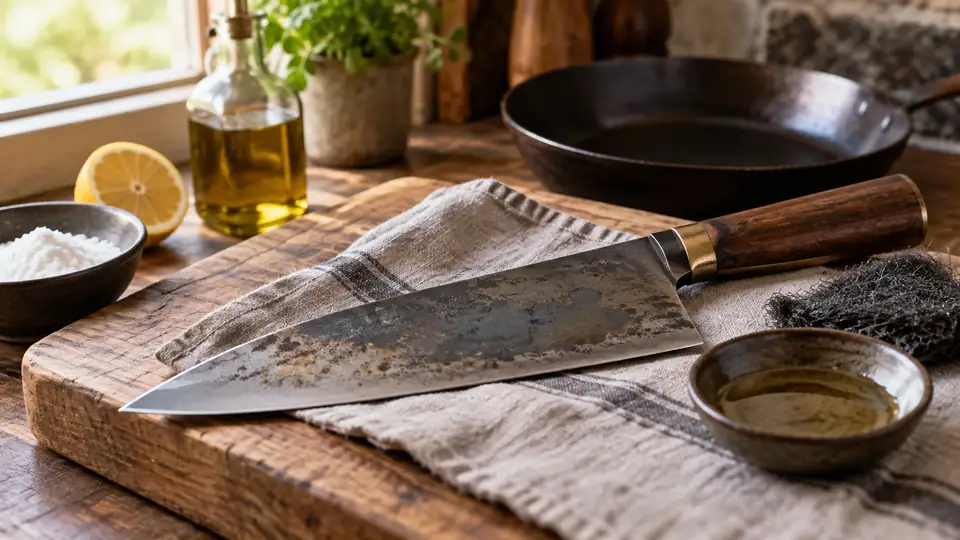
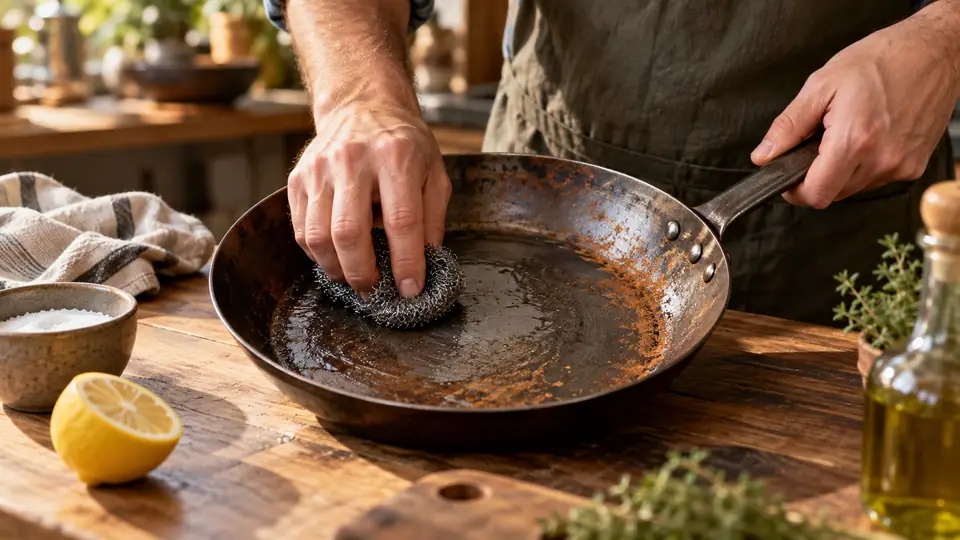
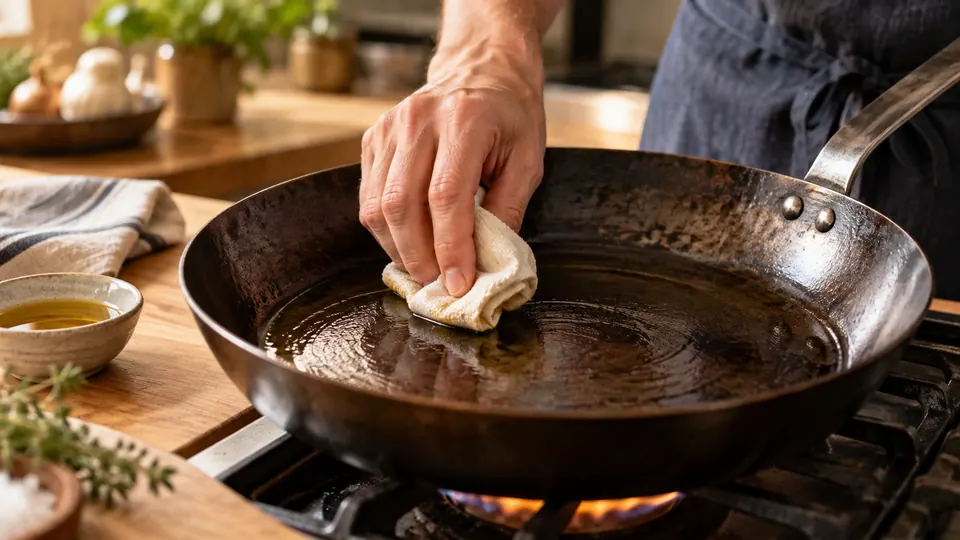
Wipe and hand-wash immediately after use, then dry thoroughly. Avoid soaking and dishwashers. For steels with lower chromium content, apply a light coat of food-safe oil occasionally to prevent surface spotting. Store knives in a block, magnetic strip, or sheath to protect the edge. Regular honing keeps the edge aligned; periodic sharpening on a whetstone restores the bevel.
What is HRC and why does it matter?
HRC is the Rockwell Hardness rating that measures how hard the steel is after heat treatment. Higher HRC numbers generally mean better edge retention, but also increased brittleness and greater difficulty when re-profiling. For kitchen knives, 56–63 HRC is common. Choose a higher HRC if you prioritize long-lasting sharpness and clean slicing, and a lower HRC if you want a tougher, easier-to-maintain blade for heavy work.
Is stainless higher-chrome steel always better than classic high-carbon steel?
They serve different needs. High-carbon steels can take and hold a finer edge and are often preferred for delicate slicing. Stainless, with higher chromium, resists staining and requires less care. Many modern chef knives use high-carbon stainless blends to blend edge performance and corrosion resistance. The best choice depends on how much maintenance you will realistically do and the type of cutting you do most often.
How sharp should the edge angle be for a chef knife?
Edge angles vary with style. Japanese-style knives often run 12°–15° per side for razor performance. Western-style knives commonly use 16°–20° per side for toughness and durability. Pick a narrower angle for finer slicing and a wider angle for tasks that require more impact or if you prefer fewer chips over ultimate sharpness.
Can I use a high carbon blade for meat with bones?
Occasional work near bones is fine, but repeated chopping on bone or using the blade to pry can chip harder, thinner high-HRC steels. For heavy bone splitting, use a cleaver or a thicker, tougher blade designed for that purpose. Keep a separate butcher’s cleaver if butchery is frequent.
How often should I sharpen versus hone?
Hone the blade with a steel or ceramic rod before or during each prep session to realign the edge. Sharpening is needed less often and depends on use; many home cooks sharpen 2–4 times per year, while heavy users might sharpen monthly. Use a whetstone for best results, or a professional sharpening service if you prefer.
Are decorative Damascus patterns the same as high carbon steel?
Not always. Some knives have stamped or laser-engraved patterns that mimic Damascus without layered steel cores. True Damascus implies a layered construction, often with a hard core. Read product details carefully. Performance depends on the core steel and heat treatment more than surface patterning.
Which handle material is easiest to maintain?
Synthetic handles like Fibrox, pakkawood with resin, or stabilized wood are low maintenance and resist water. Traditional wood handles look beautiful but need drying and occasional oiling. Choose synthetic for busy kitchens where wet hands are frequent, and choose wood if you prefer the aesthetic and are willing to care for it.
Final Verdict
High carbon steel chef knives span a wide range of styles, from rugged forged blades to ultra-hard Japanese gyutos. For most readers seeking a single versatile knife, the MOSFiATA 8″ stands out as the best overall choice, delivering dependable German EN1.4116 performance, comfortable balance, and useful accessories for everyday kitchen life. If your focus is surgical slicing and the thinnest possible edge, the HOSHANHO 8″ and the SHAN ZU gyuto push into higher hardness territory and reward careful maintenance with extraordinary slicing performance.
For value and durability, the Victorinox Fibrox Pro remains a reliable workhorse. Buyers who want matched knives for a full kitchen should consider the SANMEIHO set, while those who need forged tools for heavy butchery will find the DRGSKL set purpose-built. The imarku and Brewin sets provide solid budget-friendly and starter options, and KEEMAKE is a great pick when ergonomics and reduced wrist fatigue matter most. Match the knife’s steel, hardness, and handle to your routine, and you will find a tool that makes prep faster, safer, and more enjoyable.

Leave a Reply