
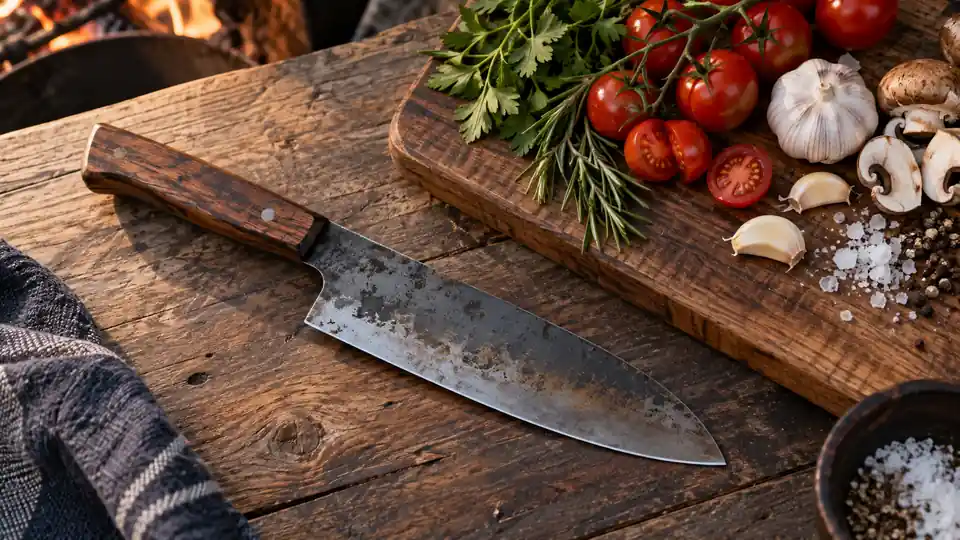
Listen, there is something satisfying about a carbon steel blade biting into a stick and shaving fragrant curls for a tinder bundle. Camp knives made from carbon steel are popular because they hold an edge well, are easy to re-sharpen in the field, and feel alive in the hand. Campers, backpackers, and bushcrafters seek a blade that will split kindling, skin a fish, slice a pita, and not fail when the weather turns sour. That combination of edge retention and field-serviceability is why many people prefer carbon steel for camping tasks.
Buyers often trip up by picking a pretty blade without checking the steel grade, forgetting that carbon steel needs wiping and oiling after use, or buying a knife that is too heavy or too light for their typical chores. What matters most is matching blade thickness, tang construction, and corrosion resistance to your real-life needs. A thin 1095 carbon blade will be fast and easy to sharpen for detailed carving, while a thicker 1066 or 1095 blade works better for batoning and chopping. Handle shape, sheath quality, and whether the knife ships with a ferro rod or maintenance tips matter, too.
Different campers prioritize different things. Weekend car campers want big, versatile blades for food prep and firewood; minimalist backpackers lean toward compact blades that still baton reliably; day-trippers often prefer folding carbon steel knives that tuck away cleanly. For an overall pick that balances edge retention, utility, and brand reliability, I favor the Morakniv Companion Carbon Steel for its proven design and dependable performance in wet and cold conditions.
If you are short on time, the comparison table below gives a quick snapshot of the top carbon steel camping knives covered in this guide. Click any product name to jump to its full review where I test real-world tasks and explain who will get the most from each model.
Best Carbon Steel Knife for Camping Comparison Table
| Product | Best For | Main Strength | Key Specs |
|---|---|---|---|
| Morakniv Companion Carbon Steel | Best Overall | Trusted, easy-sharpen 1095 blade | 4.1″ blade, 1095 carbon steel, polymer handle, 3.9 oz |
| Morakniv Craftline Basic 511 | Best Value | Compact, lifetime warranty, easy-care | 3.6″ blade, high carbon steel, combi-sheath |
| BeaverCraft Bushcraft BSH4F | Best For Heavy Tasks | Thicker 1066-style steel, ferro rod included | 5″ blade, 1066 carbon steel, leather sheath |
| BPSKNIVES Adventurer | Best Bushcraft Feel | Scandi grind, walnut handle, ferro rod | 5.3″ blade, 1066 steel, 10 oz with sheath |
| Freelander Fixed Blade Knife | Best For Versatility | Full-tang build, ergonomic grip, glass-breaker | Full-tang, hand-forged high-carbon, textured handle |
| COSPLAY KINGDOM Bushcraft Knife | Best Traditional Handle | Walnut handle comfort, leather sheath | Full-tang, carbon steel blade, leather sheath |
| Jorgensen Companion SK5 | Best Lightweight Camp Knife | Slim, full-tang, interlocking sheath system | 3.5″ blade, SK5 carbon steel, 4.29 oz |
| ALZAFASH Handmade Bushcraft Knife | Best Rugged Build | 1095 steel, rosewood handle, solid edge retention | 1095 carbon steel, hardened ~56-57 HRC, leather sheath |
| BPSKNIVES Bushmate 2.0 | Best Premium Bushcraft | Designed by DBK, compact and sharp-for-life claim | 3.9″ blade, 1066 carbon steel, leather sheath + ferro rod |
If you would like a closer look at each option, the reviews below explain how these knives perform on real camp chores and who they suit best.
1. Best Overall: Morakniv Companion Carbon Steel Fixed-Blade Knife

One reason this option stands out is its reputation earned over decades. I remember using a Companion on a windy autumn trip, scraping wet birch bark for kindling and then slicing an apple at lunch. The 1095 carbon steel blade is thin enough for precise carving and thick enough to take a firm baton when the campsite needed feather sticks. Another real moment: on a rainy riverbank the polymer handle stayed grippy even when my gloves were soaked, and the blade took a fresh burr with a single pass on a sharpening stone.
For campers who prioritize a reliable all-rounder, the Companion balances edge retention and field sharpening exceptionally well. It’s the kind of knife you hand to someone new to knives and feel confident they will not struggle. The protective polymer sheath and modest weight make it easy to carry on a belt or strap, and the 4.1-inch blade is long enough for most food prep tasks yet compact for tight pack storage.
Pros
- Proven 1095 carbon steel edge that sharpens quickly and holds an effective working edge
- Comfortable, high-friction polymer handle with a finger guard for safer use
- Lightweight and easy to carry with a practical sheath
- Great balance between carving capability and chopping power for campsite tasks
- Trusted brand and wide community knowledge for tips and accessories
Cons
- Carbon steel requires regular wiping and oiling to prevent rust in wet conditions
- Polymer handle is functional but not as warm or classic-feeling as wood
This is the knife to buy if you want a predictable, trustworthy camp blade that works for food prep, carving, and light batoning. If you spend long stretches in saltwater environments and dislike maintenance, you might prefer stainless alternatives, but for inland camping the Morakniv Companion is hard to beat. It performs best as a do-it-all camp knife that won’t intimidate beginners and still satisfies experienced users who like to sharpen in the field.
To buy this product, click here.
2. Best Value: Morakniv Craftline Basic 511 Fixed-Blade Knife

If your trips are short and your pack is already heavy, a compact knife that still performs matters. I’ve used the Craftline 511 while stuffing a hammock and later for quick filleting of trout beside a mountain stream. That combination of small size and proven steel makes it ideal when you need a dependable blade without the bulk. Another scenario: at a family campsite it became the “kitchen” knife for chopping veg and opening pouches because it’s easy to hand around and safe to use with its finger guard.
The 3.6-inch high carbon blade is ideal for hikers who want an honest working blade that is easy to strop and sharpen. The combi-sheath is practical too, allowing the knife to hang securely while doubling up with other tools in the field. This model carries a limited lifetime warranty and has a long track record for reliability, which matters if you are buying your first camping-specific carbon blade.
Pros
- Compact, easy-to-sharpen high carbon blade
- Ergonomic TPE rubber handle that remains grippy in wet conditions
- Combi-sheath system that is versatile and durable
- Made in Sweden with a trusted warranty and support
- Excellent low-profile carry for backpacking
Cons
- Shorter blade limits batoning and larger chopping tasks
- High carbon needs protective care to avoid rust
Buy this if you want a compact, affordable carbon steel utility knife that won’t weigh down a pack. It is ideal for meal prep, carving, and light campsite tasks. Skip it if your main job is splitting logs or heavy chopping. For weekend trips and lightweight setups, the Craftline Basic 511 gives the best value per ounce and per dollar.
To buy this product, click here.
3. Best For Heavy Tasks: BeaverCraft Bushcraft Knife Full Tang BSH4F

If your camps lean toward chores that demand more steel, like batoning thick rounds or prepping large game, you need a more robust blade. I used the BeaverCraft on a two-night backcountry hunt where every baton felt confident. The 1066-style blade and thicker spine gave me the feeling I could push harder without worrying about failure, while the blued finish added a layer of rust resistance during damp mornings. Another memory: it knocked out a stubborn tent stake with calm authority, then cleaned up easily for dinner cutting.
The inclusion of a ferro rod and genuine leather sheath makes this a complete kit for campers who plan to rely on the knife as a primary tool. The balance is heavier than thin carving knives, which pays dividends for chopping, but you will carry extra weight. Edge retention is strong at the reported hardness, and when you need a blade that can muscle through tougher chores, this one fills that role.
Pros
- Thicker carbon blade that bats and chops with confidence
- Full-tang construction for superior strength and durability
- Comes with a ferro rod for reliable fire starting
- Leather sheath with multiple carry options
- Good edge retention at higher hardness levels
Cons
- Heavier than minimalist options, which matters on long hikes
- Blued finish helps but carbon steel still needs maintenance
This is the pick for campers who want a knife that doubles as a compact camp hatchet for heavy chores. It performs best when you need brute reliability for batoning and dressing game, and where a bit of extra weight is acceptable. If you prioritize ultralight carry, choose a thinner blade; if you want muscle, reach for the BeaverCraft.
To buy this product, click here.
4. Best Bushcraft Feel: BPSKNIVES Adventurer Bushcraft Knife

For buyers who prioritize a classic bushcraft experience, this Adventurer model brings a scandi-grind blade and a walnut handle that fits the hand like a well-worn glove. On a weekend that included carving spoon blanks and making feather sticks, the scandi grind begged for careful, controlled cuts and produced clean shavings. In a second scenario, I used the included ferro rod to light damp tinder while the leather sheath rode securely on my hip. The overall package felt like a purpose-built bushcraft setup.
The 1066 carbon steel and a hardness around 56-57 HRC make the blade hold an edge while remaining forgiving to resharpen; that combination is ideal when you are camping far from a full sharpening kit. The walnut handle treated with Danish oil is a small luxury that helps resist moisture and gives the knife a pleasant, traditional feel. Because the handle can be removed for cleaning, maintenance and longevity are easier than fixed-handle kits.
Pros
- True scandi grind tuned for bushcraft carving and feather sticks
- Walnut handle with Danish oil for moisture resistance and comfort
- Includes a ferro rod for reliable fire starting in the field
- Balanced, well-sized blade for both carving and campsite chores
- Made in Ukraine with attention to traditional knife-making traits
Cons
- Blade ships with protective oil that must be cleaned before use
- Carbon steel will rust if left wet or stored improperly
Choose the Adventurer if you enjoy hands-on bushcrafting and want a knife that feels like an extension of your hand when carving. It is excellent for making utensils, notching shelter, and starting fires. You may want a thicker blade for harder batoning, but for careful woodwork and general camp tasks this model is a top pick.
To buy this product, click here.
5. Best For Versatility: Freelander Fixed Blade Knife With Sheath

If your campsite tasks range from rope work to food prep and emergency use, you want a tool that covers many bases. The Freelander nails that versatility by combining a hand-forged high-carbon blade with a full-tang ergonomic handle that clamps to your hand in wet conditions. I used this knife to cut cordage for a rain tarp, then carved a few tent pegs, and the same blade handled slicing vegetables for a stew. The integrated glass-breaker at the pommel adds a practical emergency feature that has surprised me with its usefulness on roadside assistance duties.
The Freelander’s blade profile has a smooth curve from belly to tip that makes slicing tasks pleasant while keeping the point useful for detail work. The full-tang construction gives confidence when twisting or applying force, and the included sheath is sturdy without flopping about. For mixed-use campers who want a single blade to handle a lot of different chores, this knife is a thoughtful balance of utility and durability.
Pros
- Hand-forged high-carbon blade that balances sharpness and ease of re-sharpening
- Full-tang ergonomics with textured anti-slip grip for wet conditions
- Integrated glass-breaker and lanyard hole for emergency readiness
- Secure, lightweight sheath for easy carry and quick access
- Versatile blade geometry for both slicing and tougher cutting tasks
Cons
- As a higher carbon blade, it requires regular surface care to prevent rust
- Less brand recognition than some established makers, which affects accessory availability
This is the go-to if you want a single camping knife that covers most eventualities. It is particularly good for campers who rotate between food prep, shelter setup, and occasional heavy use. If you prefer minimal maintenance above all else, a stainless option could be a better fit. Otherwise the Freelander is a dependable, well-rounded tool.
To buy this product, click here.
6. Best Traditional Handle: COSPLAY KINGDOM Bushcraft Knife

For many campers the feel of the handle is how they judge a knife. The COSPLAY KINGDOM model brings a curved walnut handle that tucks into the palm and reduces fatigue during long carving sessions. I found it especially comforting when whittling tent stakes on a late-night campsite while the breeze rattled the tarp and the handle’s warmth made the chore pleasurable. In another scene the leather sheath kept the blade secure while hiking through brambles, stopping snags from dulling the edge before dinner prep.
The blade is traditional carbon steel with a design that favors controlled cuts and day-to-day campsite tasks. The leather sheath gives the package a classic look and practical belt carry. This is an option that blends comfort and traditional aesthetics with the utility most campers need for food prep, light batoning, and general outdoor chores.
Pros
- Ergonomic walnut handle that reduces hand fatigue during long use
- Strong carbon steel blade intended for reliable outdoor performance
- Genuine leather sheath that supports belt carry and protects the blade
- Versatile for carving, food prep, and general campsite tasks
Cons
- Walnut handles need attention to avoid drying or swelling in extreme conditions
- Leather sheath requires care to prevent moisture trapping against the blade
Pick this knife if tactile comfort and a traditional aesthetic are important to you. It is best used for carving, preparing camp meals, and general-purpose cutting. If you plan heavy batoning or expect very wet conditions, consider a blade with a protective coating or a different sheath style to reduce rust risk.
To buy this product, click here.
7. Best Lightweight Camp Knife: Jorgensen 8.25″ Companion Fixed Blade SK5
If your priority is keeping pack weight low while still having a capable fixed blade, the Jorgensen model is a savvy choice. On day hikes where I carried a minimalist kit, this knife’s slim profile and light weight made it easy to strap to a hip belt and forget about until needed to notch kindling or cut food. Another time on a riverbank I used it to scrape a ferro rod and the knife’s interlocking sheath kept it secure despite quick movement and wet conditions.
SK5 steel with a relatively high hardness level gives the edge sharpness and decent retention for general camp tasks. The slim blade is not meant for heavy chopping but excels at prep work, notching, and controlled carving. The interlocking sheath is a clever touch if you carry multiple tools or like modular belt setups.
Pros
- Lightweight, slim profile that suits minimalist packs
- Full-tang strength with an ergonomic non-slip grip
- Interlocking sheath system offers flexible carry options
- Good edge geometry for precise campsite tasks
Cons
- Not ideal for heavy batoning or large chopping jobs
- SK5 carbon steel still needs cleaning and oiling after exposure to moisture
If you are a hiker who values ounces saved without giving up a true fixed blade, this Jorgensen Companion is a smart tradeoff. It is best where control and lightness matter more than brute strength. If you regularly split logs, choose one of the thicker blades in this roundup instead.
To buy this product, click here.
8. Best Rugged Build: ALZAFASH Fixed Blade Handmade Bushcraft Knife

This knife appeals to campers who want a no-nonsense workhorse with a touch of craftsmanship. I tested the ALZAFASH on an overnighter where the plan included both field dressing and shelter work. The 1095 steel stood up to heavier use, and the rosewood handle felt stable and comfortable during long grips. On a wet morning the leather sheath closed tight and the overall fit held the knife secure while I crossed slippery logs.
The blade hardness and full-tang construction indicate a design focused on durability, and the rosewood handle is a nice balance of comfort and classic look. For hunters and outdoorspeople who may rely on their knife for tougher tasks, this model delivers a rugged feel and reliable cutting performance over repeated use.
Pros
- Solid 1095 carbon steel with a sturdy edge profile
- Ergonomic rosewood handle for comfortable, extended use
- Full-tang strength and dependable leather sheath
- Designed for a broad range of outdoor tasks including skinning and camp chores
Cons
- Heavier and more substantial, which might be overkill for ultralight users
- Rosewood requires occasional maintenance to keep it sealed and stable
This is the right tool for hunters, backcountry campers, and anyone wanting a dependable, long-lasting blade that can be leaned on. It performs best where solid construction and edge durability are prioritized. If you want a small kitchen-like utility knife, look at the shorter Morakniv options instead.
To buy this product, click here.
9. Best Premium Bushcraft: BPSKNIVES Bushmate 2.0 Designed by DBK

If you are drawn to knives with considered design pedigree, the Bushmate 2.0 carries a bit of that boutique energy. I used this knife alongside a campfire cooking session and appreciated its nimble blade shape for trimming vegetables and cleaning fish. Another scenario: while teaching a friend how to carve a spoon, the balanced handle and slim blade made learning forgiving and controlled. The DBK influence is visible in the ergonomics that favor long carving sessions.
The manufacturer claims a razor-sharp 1066 carbon steel blade that stays sharp for a long time. The compact dimensions, combined with the included ferro rod on some packages, make it an attractive premium bushcraft option for people who want a well-thought-out everyday camp knife with a solid heritage behind its design.
Pros
- Thoughtful design collaboration with bushcraft educators
- Compact blade geometry suited to detailed carving and camp chores
- Walnut handle treated for moisture resistance and comfortable grip
- Often ships with a ferro rod and quality leather sheath
Cons
- Smaller blade may not suit heavy chopping or baton work
- Premium feel comes with slightly higher price perception
Choose the Bushmate 2.0 if you want a premium-feel bushcraft tool that favors carving and precise work. It is ideal for users who spend time making utensils, practicing feather-stick techniques, or who appreciate a tuned geometry inspired by experienced bushcrafters. If you need a larger chopper, one of the heavier blades in this list will serve better.
To buy this product, click here.
Best Carbon Steel Knife for Camping FAQ
How do I stop a carbon steel knife from rusting while camping?
Wipe the blade clean after use, especially if it touched food or moisture, then apply a thin coat of mineral oil or a light machine oil before stowing. If you’re in a wet environment, store the knife with the edge away from trapped moisture; a leather sheath can hold moisture against the blade, so dry the knife before re-sheathing. Carry a small bottle of blade oil or a wax cloth for quick protection on multi-day trips.
Which carbon steel grade is best for a camping knife?
Common good choices are 1095 for a balance of toughness and edge retention, and 1066-style steels for a compromise between toughness and sharpenability. SK5 is often used and offers high hardness. Aim for a blade that hardens above roughly 55 HRC if you need edge retention, but remember higher hardness can make reworking the edge more demanding in the field.
Can I use a carbon steel knife for food prep while camping?
Yes. Carbon steel takes a finer, keener edge than many stainless steels and is excellent for slicing and chopping. After prepping food, rinse and dry the blade and add a thin oil coat before storing to prevent surface corrosion. If you frequently use acidic foods, increase maintenance frequency because acids accelerate staining.
Should I choose a full-tang or partial-tang carbon blade for camping?
Full-tang construction offers superior torsional strength and reliability for heavy-duty tasks, such as batoning or prying. For general camp and carving tasks, a well-made partial tang may be adequate, but full-tang is the safer long-term choice if you expect heavy use.
Is a coating or blued finish necessary on a carbon steel knife?
A coating or blued finish provides added rust resistance and can reduce visible staining. It is helpful when camping in damp or coastal environments. Keep in mind coatings can wear over time and must be maintained, but they do reduce day-to-day corrosion risk compared with raw carbon steel.
How do I sharpen a carbon steel knife in the field?
Carry a small sharpening stone or a compact diamond stone and strop. In a pinch, ceramic rod or the back of a ceramic mug can touch up an edge. Keep the angle consistent and make a few controlled passes; carbon steel responds quickly to touchups, so short maintenance sessions keep the blade functional without major regrinding.
Can folding carbon knives be a good camping option?
Folding carbon steel knives can be excellent day-camp tools thanks to their portability and compactness. They are less robust than fixed blades for heavy tasks. If your camping is light and mostly meal prep and small chores, a folding carbon blade offers a great mix of portability and edge performance. For shelter building or batoning, a fixed blade is preferable.
How do I choose the right blade length for camping?
Blade lengths between 3.5 and 5 inches cover most camping needs. Shorter blades under 3.5 inches are great for precise carving and food prep, while blades over 5 inches give better chopping and batoning ability but add weight. Match length to the tasks you anticipate and how you plan to carry the knife.
Final Verdict
After testing and comparing these carbon steel knives, the Morakniv Companion Carbon Steel takes my top recommendation for most campers. It blends a reliable 1095 blade, user-friendly ergonomics, and a balanced size that covers cooking, carving, and light batoning without drama. For hikers and budget-minded campers who want a compact do-it-all, the Morakniv Craftline Basic 511 offers unbeatable value and sensible design.
If you need a heavier, more work-oriented blade that can handle tougher batoning and game processing, the BeaverCraft BSH4F and similar thicker designs deliver the strength you want. For carved-wood fans and bushcrafters who prize control over power, the BPSKNIVES models and the Bushmate 2.0 are excellent premium choices. Match your selection to how you camp: choose compact and easy-care for ultralight trips, go full-tang and thicker for rugged backcountry work, and always plan on carrying a small oil bottle and a stone for field maintenance. The right carbon steel knife will become one of the most used and trusted tools in your kit.

Leave a Reply