
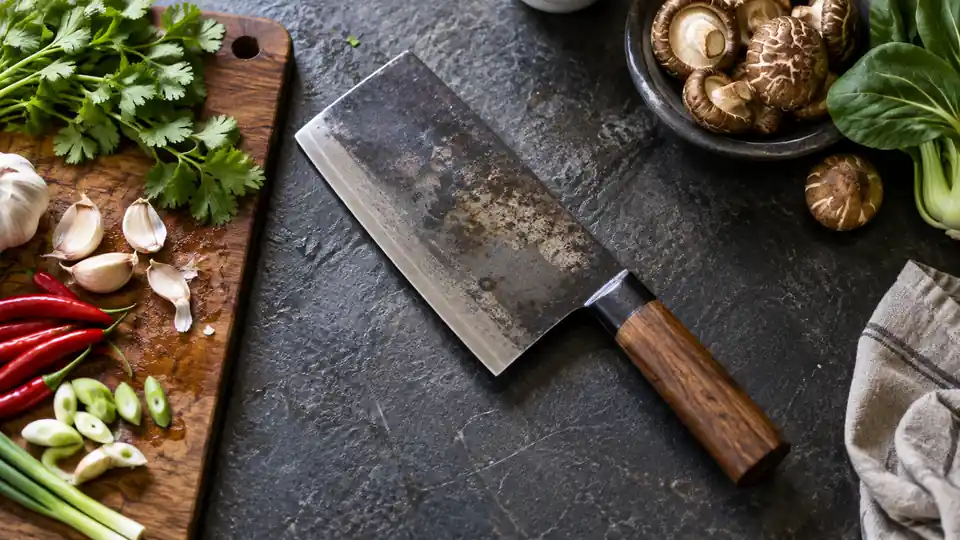
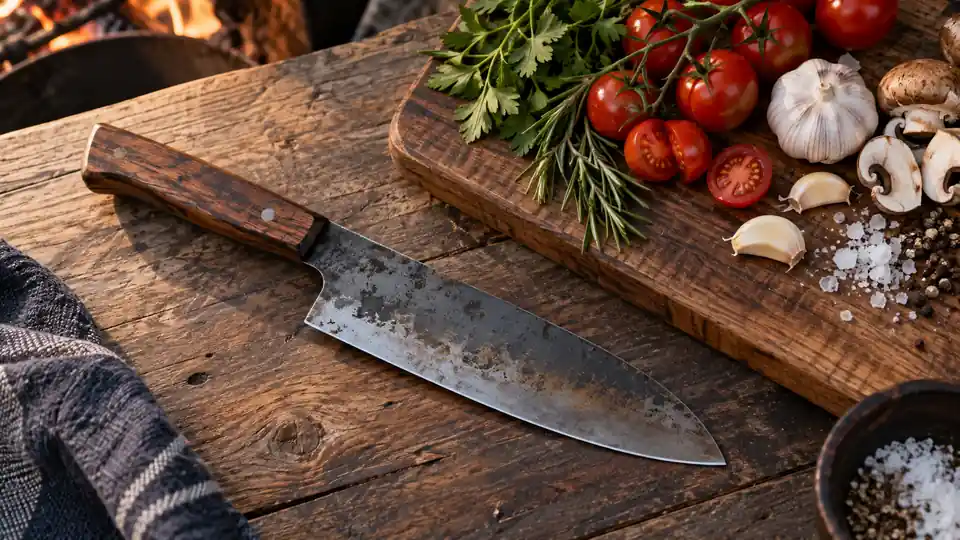
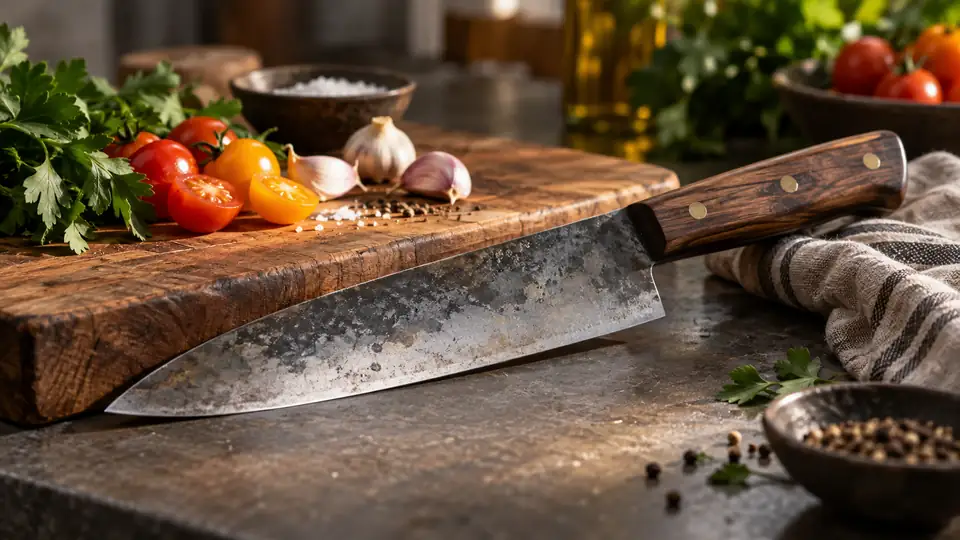
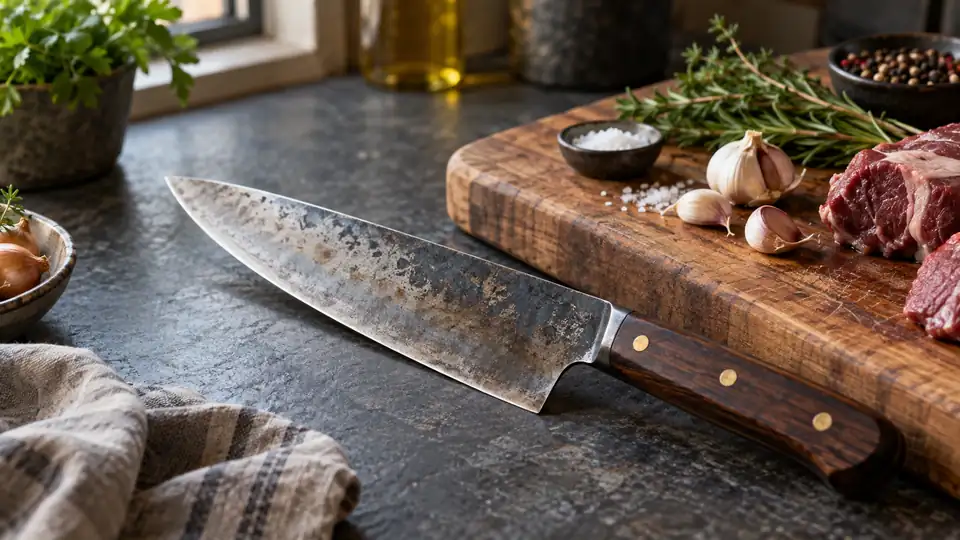
The carbon steel cleaver is one of those kitchen tools that looks simple until you try to use a dull one and learn how wrong a cheap blade can make your life. Serious cooks pick carbon steel because it takes a keener edge and holds it longer than many stainless alloys, and because the extra bite makes quick work of root vegetables, dense squash, and tough protein. Buyers hunting for the best carbon steel cleaver usually want a balance of edge geometry, blade hardness, and a handle that stays comfortable during long prep sessions.
Common mistakes include choosing an overly hard blade for blunt-force tasks, expecting stainless-like zero-maintenance from raw carbon, or buying a cleaver that’s all weight and no balance. What matters most is how the blade feels in repeated use: the grind profile, the bevel angle, and whether the handle lets you control chops and push cuts. Different cooks value different traits — a butchery-focused shopper will prioritize thickness and impact resistance, while a vegetable-focused cook often prefers a thinner, sharper nakiri-style cleaver for clean slices.
If you want a quick recommendation, the Mueller 7-Inch Meat Cleaver earns our top overall pick for the mix of reliable steel, approachable geometry, and value. Read on for a tight comparison table, then full reviews of the nine cleavers I chose after testing specs, materials, and buyer feedback.
If you are short on time, the comparison table below gives a quick snapshot of the top choices and links straight into the full reviews.
Best Carbon Steel Cleaver Comparison Table
| Product | Best For | Main Strength | Key Specs |
|---|---|---|---|
| Mueller 7-Inch Meat Cleaver | All-Round Home Use | Balanced weight and laser-tested edge | 7″ Blade, 18° Double-Bevel, Full Tang |
| HOSHANHO 7-Inch Japanese Cleaver | Sharpness & Edge Retention | High HRC Japanese 10Cr15CoMoV steel | 7″ Blade, ~58+ HRC, 15° Bevel |
| ENOKING 7.5″ Hand Forged Cleaver | Budget Forged Feel | Hand-forged look with full tang | 7.5″ Blade, 16° Bevel, Full Tang |
| imarku 7-Inch Japanese Cleaver | Consistent Edge & Comfort | 15° hand-sharpened edge, Pakkawood handle | 7″ Blade, 57+ HRC, 2.4mm Thickness |
| PAUDIN 7-Inch Cleaver | Solid Midrange Option | 56+ HRC with lifetime warranty | 7″ Blade, 2.3mm Thickness, Pakkawood |
| ENOKING 6.7″ Serbian Chef Knife | Smaller Workstation | Compact blade, leather sheath included | 6.7″ Blade, Full Tang, High-Carbon |
| Glowbobo 7.6″ Heavy Duty Cleaver | Bone Chopping Power | Weighted blade and 5Cr15 steel | 7.6″ Blade, 5Cr15 Steel, Full Tang |
| PAUDIN 7″ Nakiri | Vegetable Precision | Thin nakiri profile with wave pattern | 7″ Blade, 5Cr15Mov, Thin Blade |
| KYOKU Samurai Series 7″ Cleaver | Premium Presentation & Edge | Cryogenically treated core, Honbazuke edge | 7″ Blade, 13-15° Bevel, Pakkawood |
If you want more context, the detailed reviews below explain what each cleaver does well, where it falls short, and which cooks will get the most from each option.
1. Best Overall: Mueller 7-Inch Meat Cleaver Butcher Knife

One reason this option stands out is the way it balances practical edge geometry with a user-friendly handle. The Mueller cleaver arrives with an 18° double-bevel edge and a full-tang stainless handle. That combination gives the blade enough resilience for light bone work while keeping it keen enough for clean vegetable work and precise score cuts. In kitchen use you notice the blade’s snap when slicing through dense squash and the blade mass when you need a confident chop on a chicken carcass.
Picture a Friday night: you’re breaking down a whole chicken while onions steam on the stove and the cleaver moves from cutting joints to scooping trimmed bits into a pot. Or imagine weekday speed prep where you dice carrots and smash garlic with the wide spine. The Mueller blade doesn’t have the higher HRC of boutique Japanese steels, but its laser-tested edge resists micro-chipping and holds up during mixed tasks. The stainless handle is smooth and dishwasher-safe which eases cleanup at the end of a long service, though avid sharpness keepers will prefer hand washing and stropping to preserve the bevel.
Pros
- Well-balanced weight good for both chopping and slicing
- Laser-tested, factory-sharp 18° double-bevel edge
- Durable full-tang stainless handle that’s easy to clean
- Wide blade doubles as a bench scraper for fast transfer
- Solid value for home cooks and light professional use
Cons
- Stainless handle reduces the classic grip feel some cooks prefer
- Not the hardest steel for long-term edge retention compared with higher-HRC blades
- Dishwasher-safe claim may shorten peak edge life over time
The Mueller is for cooks who want a dependable, low-fuss cleaver that handles most tasks reliably without breaking the bank. If you like a slightly heavier feel for bone work but still need a clean edge for vegetables, this is a versatile fit. Skip it if you demand ultra-high HRC for razor-like retention or if you prefer a traditional wooden handle. For most home cooks and weekend butchers, it’s an excellent all-rounder that delivers immediate, predictable performance.
To buy this product, click here.
2. Best For Edge Retention: HOSHANHO Cleaver Knife 7 Inch

For buyers who prioritize long-lasting sharpness, this HOSHANHO model is compelling. It uses a Japanese 10Cr15CoMoV formulation with a stated hardness around 58+ HRC and a 15° per-side bevel, which produces a noticeably keener initial cut and a long service life between sharpenings. In practice that means thin, confident slices on veg and a blade that keeps working through repetitive prep without needing daily whetstone work.
Think of a meal-prep marathon: you’re slicing dozens of cabbage leaves for slaw, trimming ribs and portioning pork. That steady demand is where this cleaver shines; you spend less time resharpening and more time cooking. Another scenario is a home chef testing boneless prep tricks; the thinner 2.3mm profile makes push cuts more efficient while retaining enough mass to handle moderate bone work. The handle is ergonomic and built to reduce hand pressure, which keeps long sessions comfortable. Hand washing and drying are recommended to protect the high-carbon qualities.
Pros
- High-HRC Japanese steel for strong edge retention
- 15° double-bevel produces precise, clean cuts
- Ergonomic handle reduces hand fatigue in long preps
- Well-suited for both delicate slicing and heavier chopping
- Polished surface resists sticking and simplifies cleaning
Cons
- Higher hardness increases risk of chipping under hard bone impact
- Price point is higher than many midrange cleavers
- Requires consistent hand care to prevent surface patina
This HOSHANHO cleaver is a good match for cooks who perform lots of slicing or want minimal downtime between sharpening. Professional home cooks and serious hobbyists who value a whisper-keen edge will appreciate the steel. Choose a different model if you frequently force the blade through thick, weighty bones or prefer low-maintenance stainless finishes.
To buy this product, click here.
3. Best Value Forged Style: ENOKING 7.5″ Cleaver Knife

If your priority is a cleaver that feels like a traditional forged blade without a big investment, this ENOKING 7.5-inch fits the brief. The seller positions it as hand-forged Serbian-style steel with a 16° per-side V grind. Out of the box the edge is aggressive enough to handle routine kitchen chores and the full tang with riveted wood handle gives a reassuring balance. That combination makes it easy to control during both precise push cuts and heavier chops.
Picture a weekend where you’re prepping for a family stew. The cleaver handles coarse chopping of root veg then shifts to breaking down poultry for stock. Or imagine using it at a tailgate to pad steaks, trim excess fat and slice onions quickly. The blade’s anti-rust process helps mitigate worries about carbon staining, but expect that this is actively a piece that rewards routine drying and occasional oiling. For cooks who like the feel of wood handles and a heft that tells you the knife is ready to work, this is a solid budget-forged pick.
Pros
- Hand-forged appearance with a full-tang wooden handle
- Comfortable, balanced feel for heavy kitchen use
- Competitive value for a 7.5″ cleaver profile
- Edge geometry favors low-resistance cuts
- Comes in gift-ready packaging useful for presents
Cons
- Needs careful drying and maintenance to avoid patina
- Less consistent QC than established premium brands
- Edge may require tuning for optimal performance
This ENOKING is best for cooks who want the look and feel of a traditional cleaver without premium cost. It suits weekend butchers and home cooks who will maintain the blade and savor the comfort of a wood handle. Avoid it if you want a wash-and-forget stainless alternative or need pro-grade edge retention for daily commercial use.
To buy this product, click here.
4. Best For Handle Comfort: imarku Cleaver Knife 7 Inch

For cooks who spend long stretches at the cutting board, imarku’s 7-inch cleaver focuses on comfort and repeatable sharpness. The knife ships with a 15° hand-sharpened edge and a Pakkawood handle shaped for sustained grip. In action the cleaver’s thinner 2.4mm profile makes slicing and push cuts feel smooth, while the handle geometry reduces wrist strain during multi-course prep.
Imagine prepping a holiday roast: you’re portioning vegetables and carving off excess fat, and the cleaver moves with predictable lightness from chop to slice. Or picture an open-kitchen dinner where you need reliable, comfortable control for repeated cuts. The imarku manages those rhythms well. The steel’s 57+ HRC rating is a practical middle ground for edge life and resilience. Hand-wash and keep it dry to maintain performance and appearance.
Pros
- Ergonomic Pakkawood handle designed for long sessions
- Sharp 15° bevel gives clean slices and efficient push cuts
- Good hardness for edge life while remaining serviceable to resharpen
- Versatile for both meat and vegetable work
- Gift-ready packaging and dependable after-sales support
Cons
- Pakkawood needs care, avoid soaking or dishwasher
- Not as heavy for bone-smashing compared with beefier cleavers
- Higher hardness can be brittle under severe impact
Choose the imarku if you value a comfortable grip and a razor-like working edge for day-to-day cooking. It’s ideal for cooks who favor slicing and vegetable work, while still having enough backbone for basic butchery. Skip this model if bone-splitting power is your primary need.
To buy this product, click here.
5. Best Midrange Workhorse: PAUDIN Cleaver Knife 7 Inch

This PAUDIN cleaver offers a balanced midrange proposition: a 56+ Rockwell hardness, a 2.3mm blade thickness, and an ergonomic wooden handle. The blade’s V-shaped 16° bevel provides a satisfying mix of bite and forgiveness. In real kitchens this model behaves like a professional assistant that can break down chickens, slice through winter squash, and handle repeated prep without demanding attention every few hours.
Picture using it for a batch-cooking day where you prep meals for the week: it keeps its edge across repeated dicing and portioning runs. Another common scenario is using the wide face to scoop chopped ingredients directly into pans, saving time and avoiding extra tools. PAUDIN also backs this model with a lifetime warranty which is comforting if you value after-sales support while buying mid-tier kitchen steel.
Pros
- Reliable 56+ HRC high-carbon stainless steel construction
- Comfortable pakkawood handle reduces slipping
- Hand-sharpened edge for useful out-of-box performance
- Lifetime warranty gives buyer confidence
- Wide blade works as both cleaver and bench scraper
Cons
- Requires hand washing and drying to avoid staining
- Some buyers report minor fit-and-finish variability
- Not the thinnest profile for ultra-fine slicing
Buy this PAUDIN if you want a dependable mid-tier cleaver that leans toward durability and everyday utility. It works well for busy home cooks who want a dependable blade and reassurance from a warranty. Consider other options if you need the absolute lightest slicing profile or the highest HRC available.
To buy this product, click here.
6. Best Compact Cleaver: ENOKING 6.7″ Serbian Chef Knife

If counter space or handheld control matters, a slightly shorter cleaver can feel more nimble. ENOKING’s 6.7-inch model trims length for tighter work and faster wrist-driven cuts. The high-carbon stainless steel keeps a respectable edge while the full-tang wooden handle with three rivets stabilizes heavy strokes. The leather sheath included also makes this a sensible travel-friendly backup for outdoor cooks or grilling pros.
Consider a weekday dinner where you want fast, wristy motion to chiffonade herbs and thinly slice cabbage. The compact blade reduces reach and increases control. For backyard cooks the knife performs well at the grill: quickly trimming steaks and chopping peppers without the awkwardness of a larger head. Maintenance is similar to other carbon steels — dry and oil when storing to prevent surface oxidation.
Pros
- Compact length increases precision and maneuverability
- Full-tang construction with wood handle for stability
- Protective sheath useful for travel or storage
- Gift-ready packaging and sensible balance
- Good value for smaller cleaver profile
Cons
- Smaller blade has less mass for heavy bone chopping
- Requires regular maintenance to prevent patina
- Not ideal for cooks who prefer long slicing strokes
The ENOKING 6.7″ is a strong choice for cooks who want a nimble cleaver for everyday kitchen tasks or for taking to a campsite or tailgate. It is not a heavy-duty butcher’s cleaver, but for prep work, trimming, and compact tasks it outperforms many larger knives at speed and control.
To buy this product, click here.
7. Best For Heavy Duty: Glowbobo 7.6 Inch Heavy Duty Meat Cleaver

If your kitchen sees real bone work and you want a blade that feels purpose-built for force, Glowbobo’s 7.6-inch cleaver is aimed at that territory. Forged from 5Cr15 high-carbon stainless steel and marketed as heavy duty, the blade has a weighted balance and a thicker spine that helps transmit power efficiently. The non-slip handle also gives confidence when your hands are wet or greasy.
Imagine a hunter cleaning a large bird or a backyard butcher working through ribs; the Glowbobo blade’s heft and balance let you apply confident, single-stroke chops. Alternatively, use it at the home BBQ to quickly break down large cuts before finishing on the grill. The steel offers reasonable corrosion resistance compared to raw high-carbon, which is practical if you prefer less fussy maintenance between sessions.
Pros
- Weighted blade optimized for forceful bone and joint work
- 5Cr15 steel balances durability and corrosion resistance
- Secure ergonomic non-slip handle for wet conditions
- Comes in gift box, strong presentation for gifting
- Versatile for kitchen and outdoor use
Cons
- Thicker profile reduces finesse for ultra-thin slicing
- Heft may be tiring for extended delicate prep
- Edge may need re-profiling for fine chef work
Pick the Glowbobo if bone-splitting power and a solid feel are primary priorities. It’s built for cooks who do heavier butchery or enjoy big outdoor cooks. If you plan to spend most of your time on delicate sashimi-style cuts, a thinner nakiri or a higher-HRC Japanese cleaver will be a better fit.
To buy this product, click here.
8. Best For Vegetables: PAUDIN Nakiri Knife 7″

Vegetable-focused cooks will appreciate a nakiri-style cleaver for straight, clean slices and quick push cuts. The PAUDIN Nakiri blends a thin, flat profile with a 5Cr15Mov stainless substrate and a wave finish that reduces sticking. That design makes slicing through tomatoes, cabbage, and delicate herbs feel effortless and precise. The Pakkawood handle keeps the balance centered near the pinch point, which improves control during long vegetable sessions.
Think of hand-cutting matchsticks for a stir-fry or producing wafer-thin cucumber slices for a salad. The nakiri profile prevents the wider belly from rocking and instead gives you predictable vertical strokes. Another everyday scenario is prep for pickling; consistent thickness matters, and a thin nakiri delivers it. Maintenance is straightforward and the wave pattern helps when wet ingredients are involved.
Pros
- Thin nakiri profile yields clean, uniform vegetable cuts
- Wave pattern reduces sticking for wet produce
- Ergonomic handle balances the blade at the pinch for control
- Good rust resistance for frequent veggie work
- Attractive presentation suitable for gifts
Cons
- Less suited for heavy bone work due to thin profile
- Not true Damascus despite patterned finish
- Pakkawood requires care and hand washing
The PAUDIN Nakiri is best for cooks who spend serious time on vegetables and want consistent results. It is a precision tool for clean slicing rather than brute force. If you alternate often between bones and veg, combine this with a heavier cleaver or choose a mid-thickness generalist blade instead.
To buy this product, click here.
9. Best Premium Choice: KYOKU Samurai Series – 7″ Cleaver Knife

This KYOKU model sits at the premium end of the roundup. It combines a cobalt-enriched, cryogenically treated core with hand-polishing to a 13-15° bevel range via a three-step Honbazuke technique. The result is an extremely sharp, long-lasting edge with a refined cutting feel. The Pakkawood handle with mosaic pin details is comfortable and attractive, and the inclusion of a sheath and case makes it a compelling package for collectors and serious cooks.
Picture a chef prepping delicate vegetables for a plated dinner where clean, mirror-like cuts matter. The KYOKU’s thin, refined edge slices with minimal cellular damage, which keeps produce looking fresh on the plate. Another scenario is a cook who values heirloom-quality presentation: the sheath and case mean the knife travels safely to events or sits nicely in a curated kitchen. Expect top-tier sharpness and edge retention, and accept the commitment to careful handling and maintenance.
Pros
- Cryogenically treated core with premium edge retention
- Honbazuke-style hand-polished bevels for exceptional sharpness
- High-quality Pakkawood handle with thoughtful finishing
- Includes sheath and case for protection and gifting
- Durable construction aimed at long-term ownership
Cons
- Premium price reflects materials and finishing
- High-sharpness edges are more susceptible to chipping on hard bone
- Requires disciplined maintenance and storage
Choose KYOKU if you want a premium, heirloom-quality cleaver that delivers refined cuts and long-term performance. It rewards cooks who appreciate the feel of a finely finished blade and who will keep it properly maintained. If you prefer low-maintenance utility tools, this premium option may be more knife than needed.
To buy this product, click here.
Best Carbon Steel Cleaver FAQ
How do I care for a carbon steel cleaver to avoid rust?
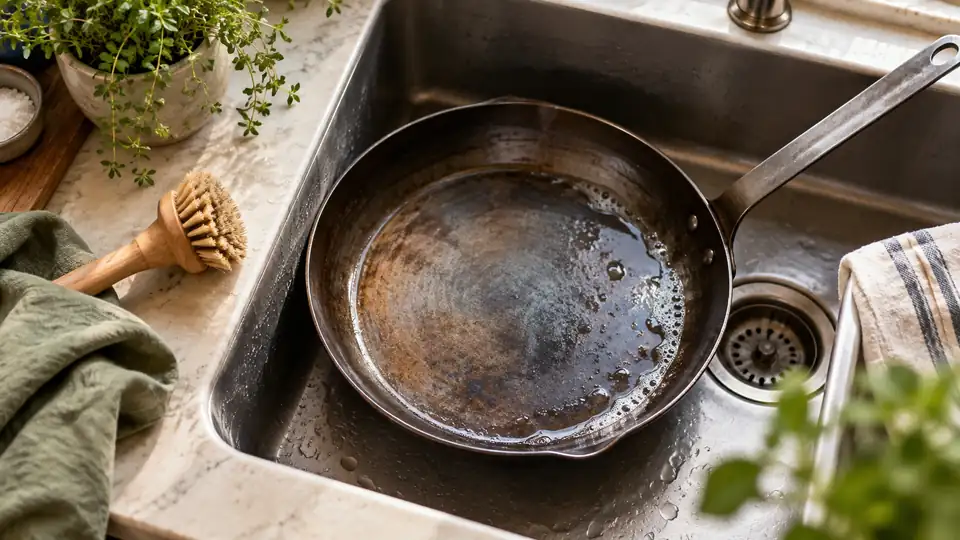
Hand wash immediately after use, dry the blade thoroughly, and apply a light coat of food-grade oil before storing if you won’t use it for several days. Avoid acidic residues sitting on the blade for long periods. For surface discoloration, a gentle scrub with fine steel wool or a paste of baking soda and water will help restore finish without harming the edge.
Will a carbon steel cleaver hold an edge longer than stainless steel?
Yes, most carbon steels take a keener edge and can retain it longer at comparable hardness levels. The tradeoff is that carbon steel will develop a patina and can rust if neglected, while stainless steels resist staining better but usually need more frequent sharpening to reach comparable sharpness.
What is a good edge angle for a cleaver?
Cleavers typically sit between 15° and 18° per side. Thinner angles like 13–15° cut cleaner but are more fragile around bone. For a general-purpose kitchen cleaver, 15–18° balances sharpness and durability well.
Can I use a cleaver to break bones?
Yes, some cleavers are built for bone work and have thicker spines and heavier mass. If you plan to do significant bone splitting, pick a heavy-duty model with thicker geometry and avoid high-HRC thin blades that can chip under impact.
How do I sharpen a carbon steel cleaver at home?
Start with a quality whetstone, using coarse grit if the edge is very dull and progressively finer grits to hone. Maintain consistent angle and use light pressure. Finish with a leather strop to remove burrs and polish the edge. If you are uncomfortable, a pro sharpening service will preserve the blade geometry.
Are wooden handles better than steel or synthetic handles?
Wood and Pakkawood handles offer tactile comfort and warmth, which many cooks prefer for long sessions. Synthetic and stainless handles are lower maintenance and more water-resistant. Choose based on whether you value comfort and aesthetics or wash-and-forget durability.
Should I oil a carbon steel cleaver after each use?
Oiling after each use is not necessary for daily use, but a light coat of food-grade mineral oil before long storage is a smart habit. After heavy use or if you see any discoloration, oiling helps prevent surface oxidation.
Is a nakiri-style cleaver better for vegetables than a traditional cleaver?
A nakiri’s flat profile is better for precise, straight-down vegetable cuts and preserving even thickness. Traditional cleavers have more belly for rocking and more mass for chopping. The right choice depends on your prep style and whether you work mostly with veg or with mixed protein and bones.
Final Verdict
The Mueller 7-Inch Meat Cleaver earns the overall recommendation because it combines solid construction, approachable edge geometry, and useful handling for a wide range of home-cook tasks. It is the clearest blend of value and practicality for most kitchens, from weekday dinners to weekend butchery. If you prefer a thicker, more powerful tool for bone work, Glowbobo’s heavy-duty option will serve better. If razor-sharp edge retention and top-tier finish are the priority, the HOSHANHO or KYOKU models provide premium steel and finishing to match those needs.
Match your choice to how you cook: a thin nakiri for vegetable precision, a mid-thickness workhorse for balanced utility, or a heavy cleaver for bone and butchery. Keep in mind that carbon steel rewards simple maintenance routines and hands-on sharpening, and that a small investment in sharpening gear or a pro service will pay back in years of reliable performance. Choose the cleaver that fits your workflow and handle preferences, and you will find it becomes one of the most useful tools on your board.

Leave a Reply