

There’s something satisfying about a knife that bites cleanly through a tomato skin and leaves the flesh intact, or one that can halve a roast without sawing. Home cooks hunt for carbon steel knives because they combine razor edges with easy re-sharpening and a tactile feel that makes prep feel faster and more precise. Buyers often confuse “high-carbon stainless” marketing with true carbon steel, or they buy an attractive set without checking edge angle, tang construction, or whether the blade is meant for heavy chopping or delicate slicing. Those mistakes show up during the first big dinner when a dull, sticky blade slows everything down.
What matters most is matching the blade to how you cook. Do you prep mountains of vegetables, break down whole chickens, or slice paper-thin fish? Hardness, edge angle, balance, and handle comfort decide whether a knife becomes an everyday workhorse or sits in the drawer. Different buyers will prioritize different things. Someone on a tight budget needs a forgiving edge and solid warranty, while an enthusiast may accept more maintenance for a sharper, longer-lasting edge. Our top overall pick balances sharpness, corrosion resistance, and ergonomics so most home cooks can use it every day.
If you are short on time, the comparison table below gives a fast snapshot of the strongest carbon-steel-style knives for home cooking, with links to each full review so you can jump straight to the model that fits your needs.
Best Carbon Steel Knife for Home Cooking Comparison Table
| Product | Best For | Main Strength | Key Specs |
|---|---|---|---|
| MOSFiATA 8″ Super Sharp Professional Chef’s Knife | All-Purpose Home Chef | German high-carbon steel with sturdy edge retention | 8″, EN1.4116, full tang, micarta handle |
| Santoku Knife, 7 Inch High-Carbon German Steel | Lowest Budget Starter | Surprisingly sharp for the price, hollow edge | 7″, 3Cr15MoV, double-bevel, non-stick coating |
| PAUDIN Chef Knife, 8 Inch | Best Midrange Value | Balanced ergonomics and hand-polished edge | 8″, 5Cr15Mov, 2mm blade, wooden handle |
| imarku 3 Pieces Knife Set | Premium Home Set | High-carbon Japanese steel, hand-polished edges | 3-piece set, 57±1 HRC, pakkawood handle |
| Amorston 22 Pieces Knife Set | Full Kitchen Kit | Complete range plus built-in sharpener | 22 pcs, high-carbon stainless, full tang |
| Sunnecko Japanese Nakiri Knife 7 Inch | Vegetable Prep Specialist | Straight Nakiri profile for clean vegetable cuts | 7″, high-carbon steel, 15° edge, pakkawood handle |
| Vorgexora 3PCS Butcher Chef Knife Set | Butchery & Heavy Duty | Hand-forged cleaver with anti-rust finish | 7″ cleaver + 6.5″ Viking + paring, high-carbon steel |
| Brewin Professional Kitchen Knives 3PC Set | Compact Starter Set | Good balance of hardness and edge angle | Chef, santoku, utility; 1.4116 German steel |
| FIKSHOT Kitchen Knife Set | One-Piece Forged Durability | Full steel one-piece construction, dishwasher-safe | 14-piece, German steel HRC 54±2, full-steel handles |
If you would like a closer look at each option, the in-depth reviews below explain who each knife suits best and the real-world tradeoffs that matter for home cooking.
1. Best Overall: MOSFiATA 8″ Super Sharp Professional Chef’s Knife

One reason this option stands out is the choice of EN1.4116 German high-carbon stainless steel. That alloy gives the blade a higher carbon content for better edge retention, while the chromium content improves corrosion resistance so the knife lives longer in an active home kitchen. Picture pulling this knife from a wooden block on a busy weeknight, the handle settling into your palm as you chiffonade basil and then switch to chopping onions without wrist fatigue. It carries enough heft to split a butternut squash and enough finesse for paper-thin prosciutto.
For buyers who prioritize a reliable daily driver, the MOSFiATA delivers a comfortable micarta-style handle and full tang construction for balance and confidence at the wrist. Two real moments make its value obvious: the first time you finish prep in half the usual time, and the first time you worry less about rust after a hurried wash. The included finger guard and sharpener nudge this toward cooks who want pro features without a high-maintenance steel.
Pros
- German EN1.4116 steel offers a strong balance of hardness and corrosion resistance.
- Comfortable full-tang micarta-style handle reduces hand fatigue during long prep.
- Hand-sharpened 16° edge per side for dependable slicing performance.
- Includes practical accessories like a finger guard and sharpener for the home cook.
- Well-suited for heavy and delicate tasks, from tough squash to fine herbs.
Cons
- Not a true carbon-only blade, so users seeking classic carbon patina and ease of re-profiling may prefer different steels.
- Micarta-style handle preferences are subjective and may feel bulky for very small hands.
- Edge is sharp out of the box but will need routine honing to stay optimal.
This knife is for home cooks who want an all-purpose chef’s knife that stays sharp through varied tasks and resists staining better than raw carbon steel. Skip this if you want a vintage carbon blade that will develop a patina and require oiling. The MOSFiATA excels in a busy kitchen that blends vegetables, proteins, and bread prep across a week of meals. Its balance and included accessories make it a straightforward upgrade from economy knives.
To buy this product, click here.
2. Best Budget: Santoku Knife, 7 Inch Chef’s Knife

If your kitchen currently runs on plastic-handled utility knives and you want one step up without breaking the bank, this Santoku is a persuasive starter. Imagine a rainy Sunday when you decide to learn stir-fry, and this blade slides through peppers and thin pork strips with a satisfying whisper. On the flip side, picture the first time you forget to dry it thoroughly; the coating and alloy are forgiving but not indestructible. These real-world moments define a budget knife’s charm and limits.
For buyers on a tight budget this model gives surprising control thanks to a 15° double-bevel edge and a hollow-grant design that reduces sticking when slicing wet vegetables. The full-stainless handle is easy to clean and goes straight into a small kitchen routine without drama. Expect to hone it regularly and avoid heavy chopping of bones, but expect reliable performance for daily vegetable and boning tasks in a busy home.
Pros
- Very low entry price, easy way to upgrade from disposable knives.
- Hollow edge reduces food sticking, useful for vegetables and fruit.
- Double-bevel 15° edge provides approachable sharpness for most cooks.
- Simple full-stainless handle is hygienic and low maintenance.
- Lightweight and nimble for small hands and quick tasks.
Cons
- Steel and coating are thin; heavy-duty use will wear the edge faster.
- Not ideal for hard bones or repeated butchery tasks.
- Finish may chip under rough handling, so treat it gently.
Buy this if you need a stout starter Santoku for everyday slicing, dicing, and quick stir-fries, especially in a small apartment kitchen. It’s an approachable tool for someone learning knife skills, or a backup knife that can handle party prep without anxiety. Choose a different knife if you expect heavy boning, big roasts, or long-term edge retention without frequent sharpening.
To buy this product, click here.
3. Best Midrange Value: PAUDIN Chef Knife, 8 Inch

If your evenings often involve chopping for a crowd, a knife that balances sharpness and comfort becomes a small kitchen hero. The PAUDIN 8-inch chef’s knife lands in that sweet spot. Its 2mm blade thickness and hand-polished edge make quick work of roots and meats, and the ergonomic wooden handle gives a warm grip that feels familiar in long sessions. Picture prepping a Sunday stew and watching the knife glide through carrots and onions while the handle keeps the pinch grip steady.
One real moment that sells the PAUDIN is the instant you slice a bagged tomato without squashing it. Another is carrying the knife to the sink and leaving a polished blade that resists spotting with basic care. The waved pattern on the blade looks premium and reduces drag a touch, though it is decorative rather than Damascus. This is a great pick for cooks who want a trustworthy all-round chef’s blade with a pleasing look and comfortable balance.
Pros
- Hand-polished 2mm blade that feels sharp and responsive in daily tasks.
- Ergonomic wooden handle provides a secure, comfortable grip.
- Attractive wavy pattern reduces surface friction and looks upscale.
- Good midrange value for home cooks who want pro-style performance.
- Versatile across vegetables, fish, poultry, and light carving.
Cons
- Steel is 5Cr15Mov, a stainless mix labeled high-carbon but not a true high-end carbon alloy.
- Wood handle requires occasional care to keep it looking its best.
- Edge will need periodic honing for sustained professional-level slicing.
Choose the PAUDIN if you want a reliable everyday chef’s knife that marries traditional looks with practical performance. It’s an excellent choice for cooks who host regularly and want something that feels good in the hand and performs consistently. If you want workshop-level re-sharpening or a boutique carbon blade with a raw finish, look elsewhere, but for most kitchens this knife hits a productive balance.
To buy this product, click here.
4. Best Premium: imarku 3 Pieces Knife Set
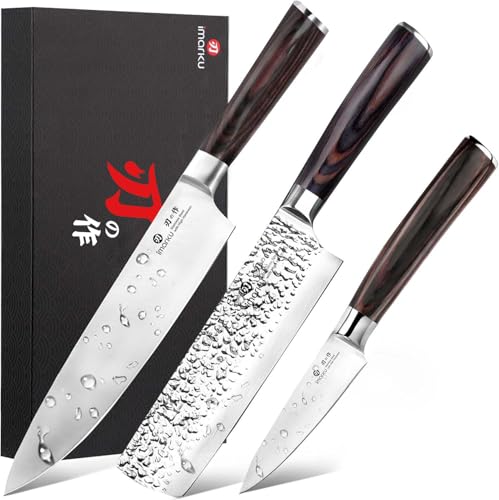
If you love the ritual of sharpening and want blades that hold a fine edge, premium hand-polished Japanese high-carbon stainless steel is appealing. The imarku 3-piece set includes an 8″ chef knife, a 7″ nakiri, and a paring knife, covering the core needs of nearly every home cook. Think of hosting a dinner where you carve roast, slice sashimi-thin vegetables, and finish with delicate fruit prep; these knives handle those shifts with composure because of their higher hardness rating and narrow edge geometry.
One memory that will stick is the first time you pull a paper-thin cucumber ribbon or slice smoked salmon for a platter, and the blade leaves a clean, glossy face. Another is the reduced sharpening frequency because the vacuum heat treatment and tempering give a tougher edge. These advantages make the imarku set ideal for serious home cooks who value longevity, refinement, and the pleasure of precise cuts.
Pros
- High-carbon Japanese stainless steel with 57±1 HRC for excellent edge retention.
- Set covers chef, nakiri, and paring tasks, reducing the need for extra knives.
- Pakkawood handles and well-balanced geometry for extended prep sessions.
- Hand-polished double bevel edges deliver refined slicing performance.
- Packaged nicely for gifting or first-time investment in quality blades.
Cons
- Higher initial cost compared with economy blades, reflecting the steel and finish.
- Requires careful hand-washing and drying to preserve finish.
- Not a raw carbon blade for those who prefer frequent patina development and oiling.
Buy this if you want a small premium set that will stay sharp longer and reward attention with very clean cuts. It’s best for cooks who prep varied meals and notice the difference between a blunt slice and a paper-thin one. Avoid if you prefer the easiest, lowest-maintenance stainless options or if you need a full knife block of every size.
To buy this product, click here.
5. Best Knife Set: Amorston 22 Pieces Knife Set

For someone who wants an entire kitchen covered in one purchase, the Amorston 22-piece set is tempting. It includes every blade from chef to steak knives and has a built-in sharpener so upkeep is straightforward. Imagine moving from prep to table without hunting for different blades, or pulling the set out for a holiday when the fridge and counters get crowded. That convenience is a major reason home cooks pick big sets.
Another real moment that sells this package is the first time you host a family meal and reach for the correct steak knife or bread knife without improvising. While laser-engraved patterns add visual flair, the strength here is in breadth. The high-carbon stainless construction gives better edge life than cheap stamped sets, and full-tang pieces add weight and control for larger tasks.
Pros
- Comprehensive 22-piece selection covers essentially all home cooking needs.
- Full-tang construction on many blades improves balance and durability.
- Built-in sharpener and laser-engraved blades are both functional and decorative.
- Good option for first-time buyers outfitting a new kitchen or gifting.
- Hand-wash recommendation protects the finish and engraving for long-term use.
Cons
- Large sets increase clutter and require storage space in a busy kitchen.
- Some pieces in large sets are less specialized and may be overkill for light cooks.
- Maintenance across many blades means more time spent honing if you use them all.
This is the set for households that want a single reliable collection for daily cooking and entertaining. It’s ideal for people building a kitchen from scratch or those who entertain often and need consistent performance from multiple blades. If you cook very infrequently or prize a few high-end knives over many consumable blades, a smaller premium set may be a smarter pick.
To buy this product, click here.
6. Best For Vegetables: Sunnecko Japanese Nakiri Knife 7 Inch

For those who spend more time chopping veg than carving meat, a nakiri shines. The straight edge geometry of this 7-inch nakiri lets you push cuts into a board without the rocking motion, which is perfect for julienne carrots, dicing onions, and cleanly slicing tomatoes. Picture making a massive tabbouleh where every parsley leaf needs denuding and the nakiri keeps cuts consistent, or the bright pop when a cucumber falls into perfectly even discs.
Another moment where the nakiri rewards is when you’re blitzing through prep for a week of salads. The thin, razor-sharp edge and textured blade reduce sticking and speed through sticky veggies like squash. The lightweight profile also helps if you prep a lot in standing shifts, since it reduces wrist strain compared with heavier chef knives.
Pros
- Straight nakiri profile provides exceptional control for vegetable prep.
- High-carbon construction retains edge and cuts clean slices with minimal crumpling.
- Pakkawood handle gives a warm, ergonomic feel for long sessions.
- Textured blade reduces adhesion when slicing wet produce.
- Versatile enough to tackle boneless meats when needed.
Cons
- Not intended for heavy bone work or large-scale cleaving.
- Requires hand-washing and drying to preserve the blade and handle.
- Straight profile may feel unfamiliar to cooks used to rocking with Western chef knives.
Choose this knife if your weekly routine centers on vegetables, salads, and thin slicing. It shines with repetitive cutting where control and a clean edge matter. Avoid if you regularly break down whole poultry or need a single knife that does very heavy-duty butchery as well as delicate work.
To buy this product, click here.
7. Best For Butchery: Vorgexora 3PCS Butcher Chef Knife Set

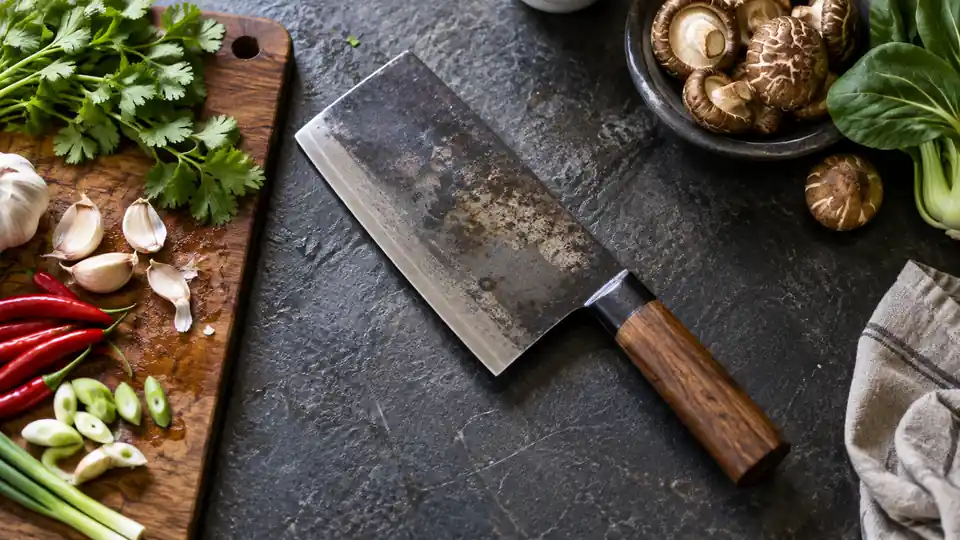
When a whole chicken, a rack of ribs, or a backyard brisket appears, you want a knife set that handles the grit. The Vorgexora butcher collection marries a 7-inch cleaver with a Viking-style blade and a parer, each forged from high-carbon steel and finished with a hammered oxidation texture. One real-world scene where this set earns its keep is when you need to separate joints and trim fat quickly, the cleaver carrying momentum while the paring knife tidies up—no scrambling for tools mid-prep.
Another scenario is outdoor grilling and campsite butchery. These knives come with sheaths and rust-resistant cladding that make them practical for travel and seasonal use. The rosewood handles deliver an old-school feel that anchors the blade in the hand while giving a touch of craftsmanship to tough, noisy tasks.
Pros
- Hand-forged high-carbon blades with an anti-rust process for practical durability.
- Cleaver design handles chopping, cutting through cartilage, and heavy-duty prep.
- Full-tang construction with ergonomic rosewood handles improves control.
- Comes with protective sheaths, ideal for storage and transport.
- Rust-resistant finish reduces maintenance compared to raw carbon finishes.
Cons
- Not dishwasher-safe; needs careful cleaning and drying.
- Heavier blades can be tiring during long prep sessions if you prefer light tools.
- Some buyers may prefer a smoother polished finish over the hammered look.
This set is aimed at home butchers, barbecue enthusiasts, and anyone who regularly breaks down larger cuts. It trades slightly more maintenance for the practical strengths of forged high-carbon steel and a purposeful cleaver shape. If your meal prep is mostly delicate slicing or you prize ultra-light knives, this is heavier than necessary.
To buy this product, click here.
8. Best Compact Starter Set: Brewin Professional Kitchen Knives, 3PC Set

For cooks who want coverage without a tower of knives, the Brewin 3-piece set provides chef, santoku, and utility silhouettes that handle most weekly tasks. Picture a weekday meal where you peel, chop, and sauté in rapid order; the utility knife bridges gaps while the chef or santoku takes bigger work. Another practical day is travel or rental kitchens, where packing three reliable blades beats improvising with dull chef knives supplied on vacation.
The set uses German 1.4116 steel tuned for a balance between hardness and stain resistance. The handles are full-tang and triple-riveted for sturdiness, and edges arrive ready for home use. This choice is for someone upgrading from grocery-store knives and who wants a sensible, compact toolkit that’s easy to maintain and store.
Pros
- Compact selection covers nearly all home cooking tasks without clutter.
- Good edge geometry and German 1.4116 steel for practical performance.
- Full-tang ergonomic handles for balance and durability.
- Attractive boxed presentation makes it gift-friendly.
- Straightforward maintenance for cooks who prefer hand washing and occasional honing.
Cons
- Less variety than larger sets, so niche tasks may need an additional blade.
- Edge retention is good but not comparable to higher-HRC Japanese steels.
- Sharpening will be required with regular heavy use.
Pick this set if you need a sensible starter kit that handles day-to-day meals and small dinner parties. It’s ideal for young cooks, apartment kitchens, and cooks who value a light collection that covers most needs. If you consistently cook for a crowd or specialize in sashimi and fine slicing, supplement with a premium chef or slicer.
To buy this product, click here.
9. Best One-Piece Forged: FIKSHOT Kitchen Knife Set

Where durability and low-maintenance are priorities, one-piece forged knives have a clear appeal. The FIKSHOT set uses a full steel one-piece construction that removes seams and potential weak points, and the German steel with HRC 54±2 gives a hard, resilient edge. Imagine using a single well-balanced knife to prep a multi-course meal without worrying about wobble or handle separation; that reliability is exactly why chefs and frequent home cooks favor forged designs.
Another real-world moment is cleaning. With a seamless construction, grime and food particles have fewer places to hide, which makes quick hand washes more effective. Paired with the included sharpener, this set suits a kitchen where knives are used hard and often, and where homeowners appreciate low fuss and longevity over decorative finishes.
Pros
- One-piece forged construction increases durability and stability.
- German high-carbon steel with solid edge geometry for everyday use.
- Dishwasher-safe claims reflect an emphasis on easy maintenance, though hand wash is still best for longevity.
- Includes practical pieces and a sharpener for long-term care.
- Ergonomic full-steel handle provides consistent balance across knives.
Cons
- Full-steel handles can feel cold or slippery to some users compared with wood or pakkawood.
- Heavy use over many years will still require professional re-profiling for peak performance.
- Although dishwasher-safe, hand-washing preserves the edge and finish better.
This set is aimed at cooks who prize robustness and a low-drama approach to kitchen tools. It does well in family kitchens and busy households where knives are used daily. Avoid if you want boutique styling or a very light chef knife for long slicing runs.
To buy this product, click here.
Best Carbon Steel Knife for Home Cooking FAQ
What is the difference between carbon steel and high-carbon stainless steel?
Carbon steel usually refers to steels with higher carbon and little chromium, which develop a patina and require oiling to prevent rust. High-carbon stainless steels add chromium to improve corrosion resistance while keeping carbon levels high enough for better hardness and edge retention. For busy home cooks, high-carbon stainless options often offer a good balance of sharpness and lower maintenance.
How should I care for a carbon-style knife in a home kitchen?
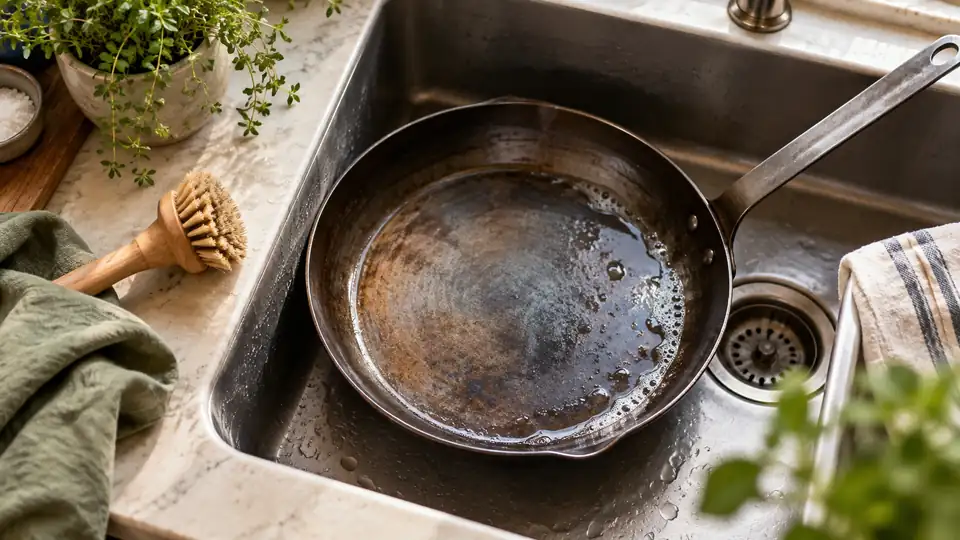
Hand wash with mild soap, dry immediately, and store in a block, magnetic strip, or sheath. Hone regularly with a honing rod to maintain the edge, and sharpen on a whetstone or with a guided sharpener when needed. If the blade is true carbon (not stainless), lightly oil it after drying to prevent rust if you do not use it daily.
Can I use carbon steel knives in the dishwasher?
No. Dishwashing will speed corrosion, dull the edge, and risk handle damage. Even knives marketed as “dishwasher-safe” fare best with hand washing and immediate drying to maintain tip integrity and finish.
Which edge angle is best for home cooking?
Home cooks benefit from a balance: around 15° to 18° per side for double-bevel blades offers a sharp, durable edge that handles vegetables and meats well. Very narrow angles are sharper but chip more easily under heavy use.
Is a nakiri better than a chef knife for everyday use?
A nakiri excels for vegetables, giving straight, clean cuts. A chef knife is more versatile for mixed prep including chopping, rocking, and light boning. If you prep mostly veg, a nakiri is a smart specialty pick. If you want one do-it-all blade, choose a chef knife.
How often should I sharpen my carbon-style knife?
It depends on use. Light home cooks may sharpen every six months, while frequent cooks should plan on professional sharpening or stone work every 1 to 3 months, with weekly honing to keep the edge aligned.
Are full-tang knives worth the investment?
Yes. Full-tang construction improves balance, strength, and longevity. For heavy or frequent use, full-tang knives feel more secure and resist handle loosening over time.
Can I sharpen these knives at home?
Yes. With a basic whetstone or guided sharpener most home cooks can restore a keen edge. Start with a coarse stone for very dull blades and finish on a fine stone. Practice on less valuable knives before working on premium blades.
Final Verdict
Across kitchens of different shapes and sizes, the MOSFiATA 8″ chef’s knife earns the top spot because it blends dependable German high-carbon stainless construction, a comfortable handle, and thoughtful accessories that make it easy to use for everyday cooking. It is the knife most home cooks will reach for morning through night whether they are slicing vegetables, trimming proteins, or carving roasts.
For budget-minded buyers, the 7″ Santoku offers a quick upgrade from disposable knives and is ideal for vegetable-focused cooks who want a sharp edge without fuss. If you prefer a premium feel and long-term edge performance, the imarku 3-piece set is the better investment, giving finer edge geometry and a satisfying hand-polish that rewards careful maintenance. Match your choice to how you cook: choose a nakiri for vegetable work, a forged cleaver set for heavy butchery, and a balanced chef’s knife for daily all-purpose prep. Keep edges honed, wash and dry by hand, and the right carbon-style blade will make kitchen work noticeably faster and more enjoyable.

Leave a Reply