
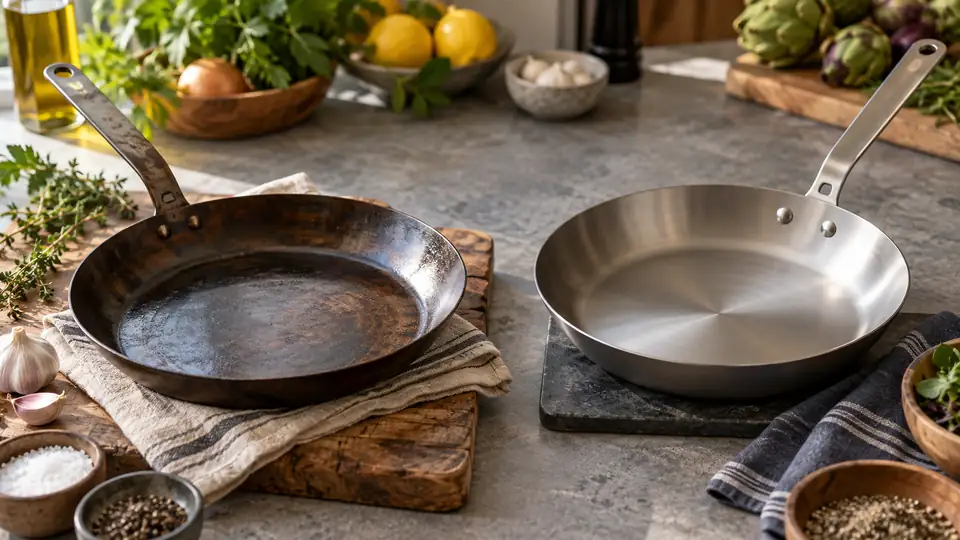
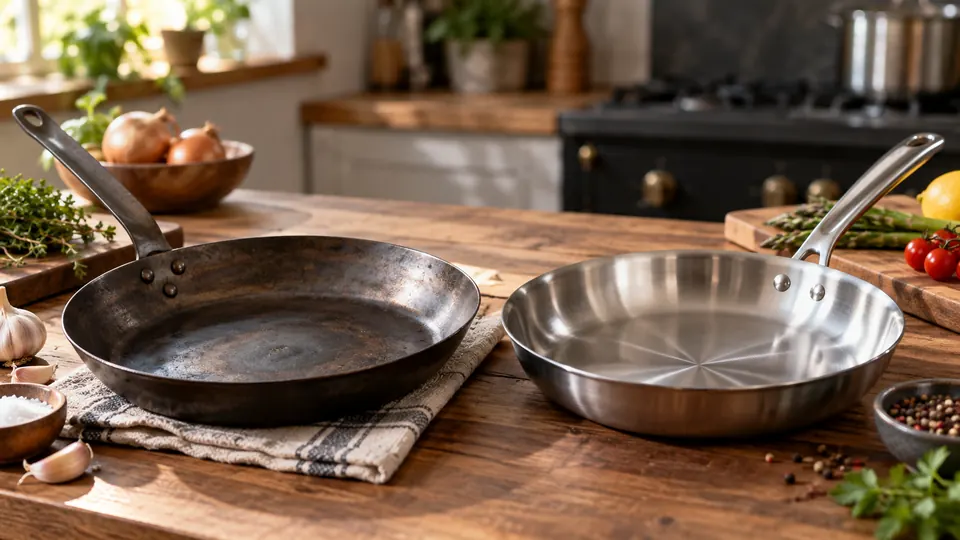
Carbon Steel vs Titanium Cookware is not a simple case of one material being better than the other. These two categories behave very differently in the kitchen, and the right choice depends heavily on how you cook, how much maintenance you are willing to do, and what you expect from the pan surface over time.
Carbon steel is valued for high-heat performance, natural seasoning, and the ability to develop a slick cooking surface with use. Titanium cookware, on the other hand, usually refers to either titanium-reinforced nonstick cookware or cookware made with titanium as part of a multi-layer construction. It is typically chosen for lighter maintenance, corrosion resistance, and convenience.
This comparison matters because the names can be misleading. A carbon steel pan is straightforward. It is mostly iron and carbon. Titanium cookware is often not a pure titanium pan in the way people imagine. In many cases, it is aluminum or stainless cookware with a titanium-based coating or reinforcement. That difference affects cooking performance, durability, and long-term value far more than the label alone.
Quick Answer
For most serious stovetop cooking, carbon steel outperforms titanium cookware in searing, browning, wok cooking, and building a naturally seasoned surface. It handles very high heat well, improves with use, and can last for decades if maintained properly. Its main drawbacks are that it can rust, needs seasoning, and is not ideal for long acidic cooking.
Titanium cookware is usually easier to live with day to day, especially if you want lower maintenance and less concern about rust or seasoning. Many titanium-labeled pans are lightweight, corrosion-resistant, and designed for easy release cooking. However, they often do not match carbon steel for high-heat searing, seasoning-based nonstick performance, or long-term restoration if the cooking surface wears out.
If you want a pan that becomes better with regular use and excels at intense stovetop cooking, carbon steel is usually the stronger choice. If you want convenience, lighter upkeep, and a surface that behaves more like modern nonstick or stainless hybrid cookware, titanium cookware may suit you better. The key is understanding what “titanium cookware” actually means before buying.
Comparison Table
| Category | Carbon Steel | Titanium Cookware |
|---|---|---|
| Core material | Mostly iron with a small amount of carbon | Often aluminum or stainless with titanium reinforcement or coating |
| High heat performance | Excellent | Varies by construction, often moderate to good |
| Searing and browning | Very strong | Usually good, but often less aggressive than carbon steel |
| Natural seasoning | Yes | No, in most cases |
| Rust resistance | Poor without proper care | Excellent in most designs |
| Acidic foods | Limited, especially in newer seasoning | Usually better, depending on surface type |
| Ease of cleaning | Moderate | Usually easy |
| Longevity | Very long if maintained | Good to very good, but surface lifespan varies |
| Repairability | Can often be stripped and re-seasoned | Usually limited if coating or treatment wears |
| Weight | Moderate, lighter than cast iron but heavier than many aluminum pans | Often lighter, depending on base material |
| Best uses | Searing, stir-frying, frying, roasting, omelets after seasoning develops | Low to medium heat cooking, convenience cooking, general everyday meals |
| Maintenance level | Higher | Lower |
What Is Carbon Steel?
Carbon steel cookware is made primarily from iron with a small amount of carbon. In cookware terms, it sits somewhere between cast iron and stainless steel. It shares cast iron’s ability to season and develop a dark, semi-nonstick cooking surface, but it is usually thinner, smoother, and more responsive to heat changes.
This material is especially popular for skillets, woks, crepe pans, paella pans, and griddles. Professional kitchens often use it because it can take serious burner heat, recover quickly, and produce strong browning on proteins and vegetables.
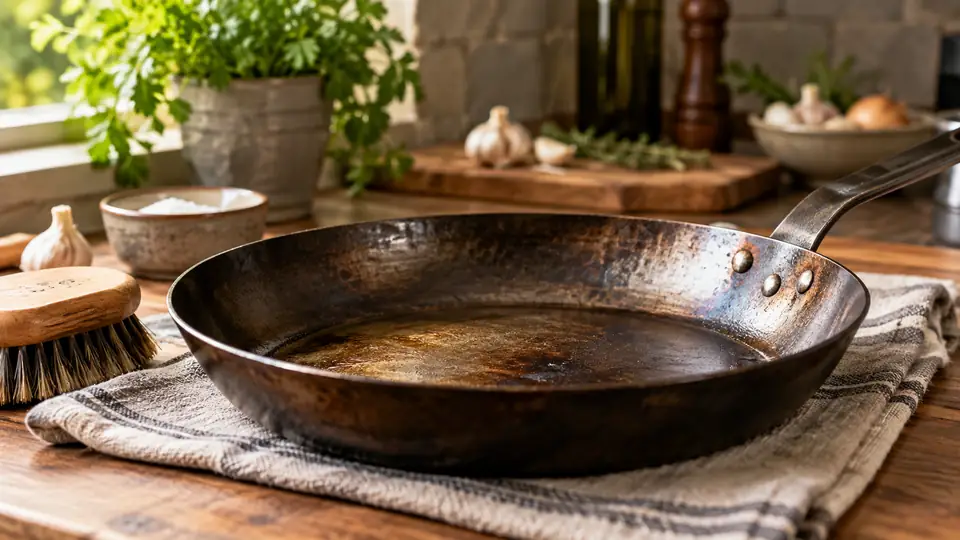
A new carbon steel pan usually starts out silver-gray or darkened from factory treatment. After seasoning, it gradually turns brown, then darker, then nearly black in places. That color change is normal. It reflects layers of oil that have bonded to the metal through heat, a process often referred to as polymerization.
Why cooks like carbon steel
- Handles high heat well
- Develops a natural cooking surface over time
- Excellent for searing and browning
- Usually lighter than cast iron
- Can last for decades
Where it asks more from the owner
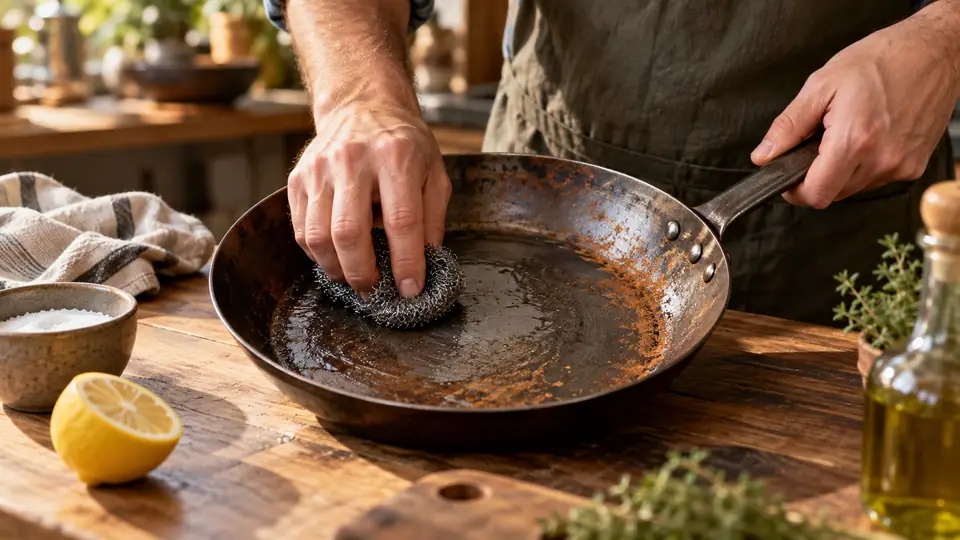
- Needs seasoning and occasional touch-ups
- Can rust if left wet
- Not ideal for long simmering of acidic sauces
- Takes some practice to reduce sticking consistently
What Is Titanium Cookware?
Titanium cookware is less straightforward as a category. In most cases, a pan marketed as titanium cookware is not made entirely from solid titanium. Instead, it may be one of several things:
- Aluminum cookware with a titanium-reinforced nonstick coating
- Stainless steel cookware with a titanium-infused surface treatment
- Camping cookware made from thin titanium metal
- Hybrid cookware using titanium as part of a multi-material build
That means performance can vary widely from one titanium-labeled pan to another. A titanium camping pot behaves very differently from a titanium-reinforced nonstick skillet. For home kitchen comparisons, titanium cookware usually refers to pans promoted as durable, lightweight, corrosion-resistant, and easy to clean.
Pure titanium metal is strong, light, and highly corrosion-resistant, but it is not commonly used for mainstream home frying pans in thick, solid form because of cost and performance tradeoffs. Many so-called titanium pans rely more on their base material, often aluminum, for heat distribution.
Why cooks choose titanium cookware
- Low-maintenance surface in many designs
- Good resistance to rust and corrosion
- Often lightweight and easy to handle
- Usually easier for acidic foods
Where titanium cookware can disappoint
- The term can be vague or marketing-heavy
- Cooking performance depends more on construction than the titanium label
- Some surfaces lose performance as coatings wear
- May not tolerate very high heat as well as carbon steel
Carbon Steel vs Titanium Cookware: Heat Performance
Heat performance is one of the clearest dividing lines between these materials.
Carbon steel under heat
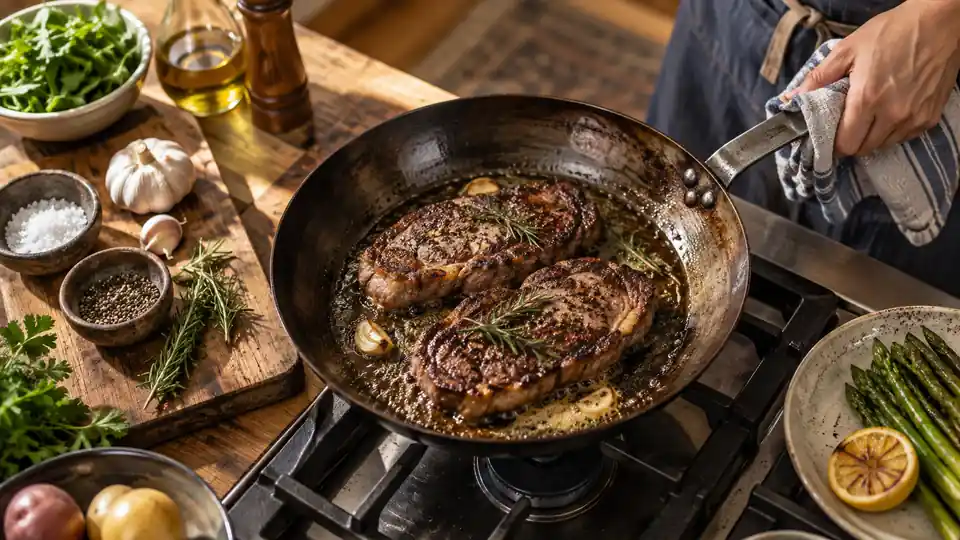
Carbon steel excels at high-heat cooking. It can preheat to very hot temperatures for steak, burgers, fried rice, blistered vegetables, or fast sautéing. Because it is generally thinner than cast iron, it also responds faster when you lower or raise the burner.
That responsiveness is useful in real cooking. If onions are browning too quickly or a fish fillet needs gentler heat after the initial sear, carbon steel reacts more quickly than cast iron. It is not as even-heating as thick aluminum-clad cookware, but it rewards good burner control.
Its main weakness is that thinner carbon steel can develop hot spots, especially on small burners or budget electric stoves. Still, for searing and intense stove work, it remains one of the strongest performers.
Titanium cookware under heat
Titanium cookware varies much more. If the pan is aluminum-based with a titanium-reinforced coating, heat responsiveness is often good because aluminum heats quickly. If it is a thin camping-style titanium vessel, heating may be very uneven and prone to scorching. If it is stainless-based with titanium treatment, it may heat more slowly but steadily.
This is why the label alone is not enough. Titanium itself does not tell you how the pan will cook. Thickness, base metal, cladding, and coating matter more.
In everyday terms, many titanium-labeled pans do fine for eggs, vegetables, chicken breasts, reheating, and general family meals. They are often less impressive for ripping-hot sears, wok hei-style stir-frying, or pushing a pan hard for repeated browning.
Winner for high heat
Carbon steel is the safer bet if your priority is high-temperature stovetop performance. It is built for that style of cooking. Titanium cookware can be good, but the category is too inconsistent to assume equal performance.
Cooking Surface Comparison
The cooking surface affects sticking, browning, food release, and how the pan changes over time.
Carbon steel’s seasoned surface
Carbon steel develops seasoning, which is a layer of oil baked onto the metal. Over time, repeated cooking adds more layers, helping the pan release food more easily. This does not create a flawless, factory-slick nonstick surface, but a well-used carbon steel pan can become impressively smooth for eggs, pancakes, fish, and delicate sautéing.
The tradeoff is that the surface changes. A carbon steel pan rarely looks perfectly even. Some spots darken faster, some seasoning lifts, and acidic ingredients can temporarily weaken parts of the coating. That is normal ownership, not a failure.
Experienced users learn that carbon steel performs best when preheated correctly, lightly oiled, and used with some patience. Cold food dropped into a barely warm pan is a common reason for sticking.
Titanium cookware’s surface
Titanium cookware often aims for convenience. If the pan has a titanium-reinforced nonstick surface, food release may be easy right away with little setup. That is attractive for eggs, low-fat cooking, and quick cleanup.
However, that convenience can come with limits. Many coated pans do not like aggressive preheating, metal utensils, or very high burner settings. Over time, the surface may lose some slickness, and unlike carbon steel, you usually cannot restore it by stripping and re-seasoning.
If the cookware uses titanium as part of a stainless-like interior rather than a nonstick layer, sticking behavior depends on technique, just as it does with stainless steel. In that case, it may not be naturally nonstick at all.
Winner for evolving, long-term surface
Carbon steel has the advantage if you want a pan that improves with use and can be maintained over the long haul.
Winner for immediate low-maintenance release
Titanium cookware often wins for easier food release out of the box, especially if it uses a modern reinforced nonstick surface.
Durability Comparison
Durability means different things here. One pan may resist rust better. Another may survive decades of hard use more gracefully.
Carbon steel durability
Carbon steel is physically tough. It can tolerate high heat, oven use, metal utensils in most cases, and rougher day-to-day handling than coated cookware. If seasoning gets damaged, the pan itself is usually still fine. You can scrub off rust, re-season, and keep cooking.
That makes carbon steel durable in a very practical sense. It is not delicate. It may look worn, blotchy, or smoky, but functionally it can keep going for many years.
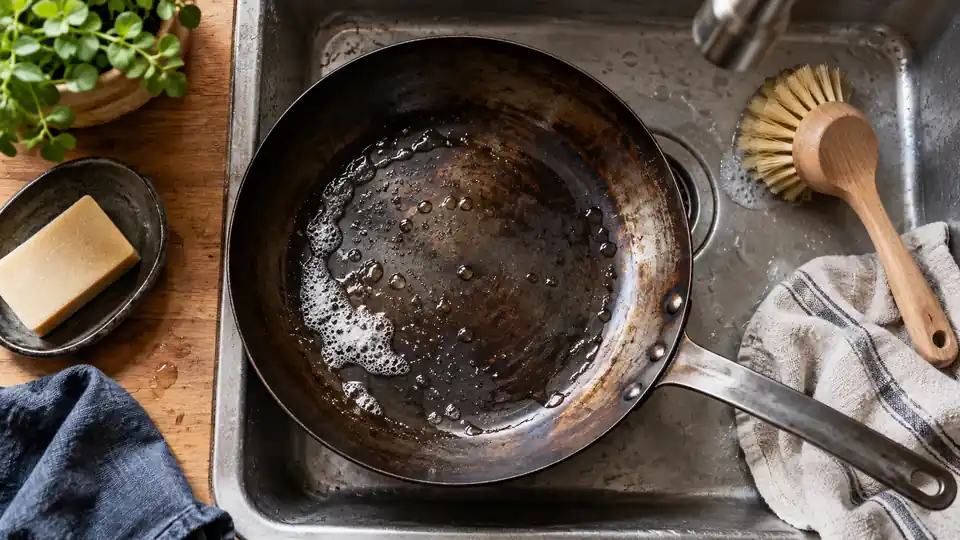
The main threat is neglect. Left wet in a sink or stored in a damp place, it can rust quickly. Severe rust can be fixed, but repeated moisture abuse is still a real drawback.
Titanium cookware durability
Titanium cookware usually resists corrosion very well. It is less likely to rust, react, or demand constant drying rituals. For many households, that alone feels more durable because it fits daily life better.
But if the pan relies on a coating for its cooking performance, durability becomes more limited. Once that coating degrades, chips, or loses its release qualities, the pan may still physically exist but no longer perform as intended. In that sense, coating life can be the limiting factor.
A titanium-treated stainless interior may hold up quite well, but it still will not offer the repairable, renewable surface that carbon steel provides.
Which is more durable overall?
If you define durability as long service life with the ability to restore performance, carbon steel usually wins. If you define it as resistance to rust, staining, and day-to-day care errors, titanium cookware often feels easier and more forgiving.
Maintenance Requirements
Maintenance is where the decision becomes very personal. Some cooks enjoy caring for cookware. Others want as little upkeep as possible.
Carbon steel maintenance
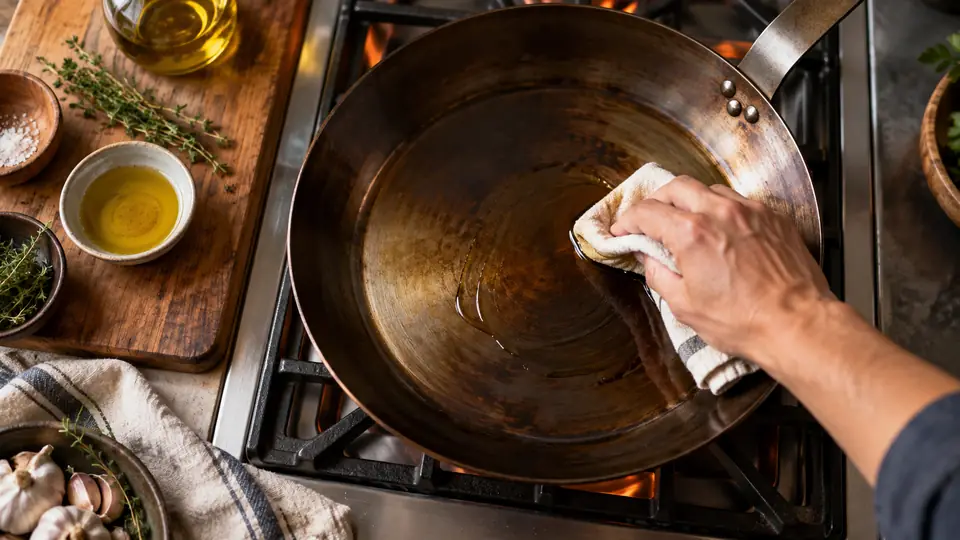
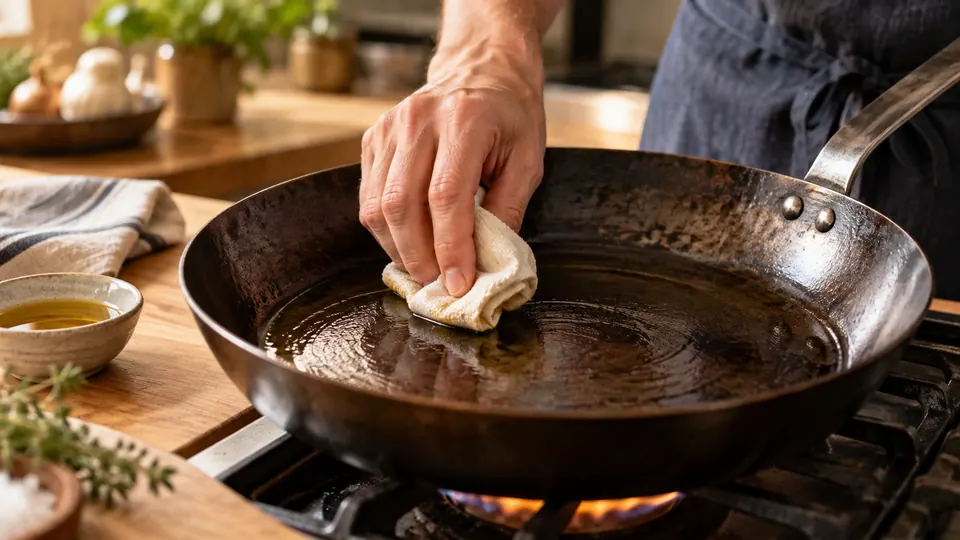
Carbon steel needs more attention, especially early on. After cooking, it should usually be washed gently, dried thoroughly, and given a light film of oil if needed. A strong dishwasher detergent cycle is not appropriate. Long soaking is also a bad idea.
Seasoning upkeep is not difficult, but it is ongoing. Sometimes a pan develops bare patches. Sometimes eggs start sticking more than usual. Sometimes a tomato-heavy dish strips the surface a bit. None of this is unusual. It just means the pan may need a small seasoning touch-up.
For readers looking into seasoned cookware options, pre-seasoned carbon steel pans can shorten the break-in period, though they still need normal carbon steel care.
Titanium cookware maintenance
Titanium cookware usually asks much less. Most versions are easier to wash, less sensitive to moisture, and less likely to develop surface issues from routine cooking. Acidic foods are usually less of a concern as well.
The main caution is to follow the surface type. A titanium-reinforced nonstick pan may still need silicone or wood utensils, moderate heat, and gentler cleaning. It may be low-maintenance, but it is not always abuse-proof.
Maintenance comparison table
| Maintenance Task | Carbon Steel | Titanium Cookware |
|---|---|---|
| Seasoning required | Yes | No, in most cases |
| Must be dried immediately | Yes | Usually no |
| Rust risk | High if neglected | Low |
| Dishwasher friendly | No | Depends on manufacturer, but hand washing is still often better |
| Acidic food tolerance | Limited | Usually better |
| Surface restoration | Usually possible | Often limited |
Weight and Handling
Weight affects comfort more than many buyers expect. A pan that performs beautifully but feels awkward in daily use may not become your most-used piece.
Carbon steel handling
Carbon steel is typically lighter than cast iron but heavier than many aluminum-based pans. A 10-inch skillet may feel manageable, while a larger 12-inch or 14-inch pan can become noticeably heavy, especially once food is added.
The weight can be an advantage for stability on the burner, but it is not always ideal for cooks with wrist issues or for one-handed tossing. Handle design matters a lot here because carbon steel pans can become front-heavy.
Titanium cookware handling
Many titanium cookware options are lighter, especially if aluminum forms the core structure. That can make them easier to lift, wash, and maneuver. For quick weekday meals, lighter cookware often gets used more often simply because it feels convenient.
Thin titanium camping cookware is especially light, though that style is more relevant outdoors than in a home cooking comparison.
Which feels easier to use?
Titanium cookware often wins on handling comfort, but this varies by construction. Carbon steel usually feels more substantial, which some cooks prefer for stovetop control and pan stability.
Cooking Applications
Different materials shine in different jobs. Matching the pan to the food matters more than chasing a single universal answer.
Best uses for carbon steel
- Steaks and chops
- Burgers and smash burgers
- Stir-fries and fried rice
- Roasted vegetables started on the stove
- Pan-fried potatoes
- Eggs and omelets once seasoning is established
- Crepes and flatbreads
Carbon steel is especially strong where browning matters. It builds fond well, gets hot fast enough for good crust development, and transitions nicely from stovetop to oven.
Best uses for titanium cookware
- Quick egg dishes
- Delicate fish
- General sautéing
- Low-oil weekday meals
- Acidic sauces, depending on the pan’s interior
- Convenience-first everyday cooking
Titanium cookware is often the easier choice for cooks who want less fuss. It can be especially practical in busy households where a pan gets washed quickly, stored damp by mistake, or used by multiple people with different cooking habits.
Less ideal uses for each
Carbon steel is less suited to long tomato braises, wine-heavy pan sauces left to simmer, or situations where a pan may sit wet after cleaning. Titanium cookware, especially coated versions, is less ideal for screaming-hot sears, broiler abuse, or aggressive utensil use.
Pros and Cons
Carbon steel pros
- Excellent for searing and high heat
- Develops natural seasoning over time
- Very long potential lifespan
- Can often be restored after rust or seasoning failure
- Works well for both stovetop and oven cooking
Carbon steel cons
- Requires seasoning and regular care
- Can rust if mishandled
- Not ideal for prolonged acidic cooking
- May have hot spots depending on thickness and stove type
- Takes some technique to prevent sticking
Titanium cookware pros
- Usually lower maintenance
- Strong corrosion resistance
- Often lighter and easier to handle
- Commonly better for acidic ingredients
- Can offer easy food release right away
Titanium cookware cons
- The category is inconsistent and sometimes unclear
- May not match carbon steel for high-heat cooking
- Coated surfaces can have a finite useful life
- Surface performance may not be restorable
- The titanium label alone does not guarantee superior cooking results
Which One Should You Choose?
The better option depends less on the material name and more on your cooking habits.
Choose carbon steel if you want
- A pan for searing, frying, and high-heat stovetop work
- A naturally seasoned surface that improves over time
- Cookware that can last for decades with proper care
- A tool-like pan that rewards technique and maintenance
Carbon steel makes the most sense for cooks who enjoy hands-on cookware ownership. If seasoning, drying, and occasional maintenance do not bother you, it offers a lot in return.
Choose titanium cookware if you want
- Simpler cleanup and less maintenance
- Better resistance to rust and acidic foods
- A lighter pan for everyday use
- Convenience over seasoning-based performance
Titanium cookware often fits households that prioritize ease. It can be a sensible choice for people who want dependable daily cooking without learning the quirks of a reactive pan.
A practical way to think about it
If your ideal pan is something you can preheat hard, build crust with, and keep for years through re-seasoning, carbon steel is usually the better fit. If your ideal pan is something that behaves predictably with less care and less concern about rust, titanium cookware may fit your routine better.
Also pay attention to what the titanium pan actually is. A titanium-reinforced nonstick skillet should be compared differently than a solid metal camping pot or a stainless pan with titanium treatment.
Frequently Asked Questions
Is titanium cookware healthier than carbon steel?
Not necessarily. Both can be safe choices when used as intended. Carbon steel is simple metal cookware that develops seasoning from oil. Titanium cookware safety depends on its actual construction, especially if it uses a coated nonstick surface. It is more useful to evaluate the specific pan design than to assume the titanium label alone makes it healthier.
Does carbon steel last longer than titanium cookware?
In many kitchens, yes. Carbon steel often lasts longer because the pan body is durable and the surface can be restored. Titanium cookware may resist corrosion better, but if its performance depends on a coating, that surface may have a shorter useful life than the pan body itself.
Can titanium cookware replace carbon steel for searing?
Sometimes, but not always well. Some titanium-labeled pans can brown food adequately, especially if they have a strong aluminum or stainless base. Still, carbon steel is generally better for intense searing and high-heat cooking.
Is carbon steel harder to cook eggs on than titanium cookware?
At first, yes. A new or poorly seasoned carbon steel pan often requires more attention to preheating and oil. A titanium-reinforced nonstick pan is usually easier for eggs immediately. Once carbon steel develops good seasoning, it can handle eggs very well, but it usually takes some break-in time.
Can you use acidic foods in carbon steel?
You can for short periods, but it is not ideal for long simmering. Tomato sauce, vinegar-heavy reductions, or wine-based dishes can weaken seasoning and leave metallic flavors if the pan is new or the seasoning is thin. Titanium cookware usually handles acidic cooking better.
Final Verdict
In the Carbon Steel vs Titanium Cookware comparison, carbon steel is usually the stronger performer for cooks who care most about searing, browning, seasoning, and long-term durability. It behaves more like a traditional professional pan. It asks for care, but it gives back excellent high-heat cooking and a surface that can improve for years.
Titanium cookware is usually the easier everyday option. It tends to be more forgiving, less vulnerable to rust, and better suited to cooks who want convenience and lower maintenance. The main caution is that “titanium cookware” is a broad label, and performance depends heavily on whether the pan is coated, clad, or simply marketed with titanium as a feature.
If you enjoy cookware that develops character and rewards technique, carbon steel is hard to beat. If you want simpler ownership and more flexibility with cleaning and acidic foods, titanium cookware may be the more practical fit. For most serious stovetop cooking, carbon steel remains the more distinctive and capable tool.

Leave a Reply