
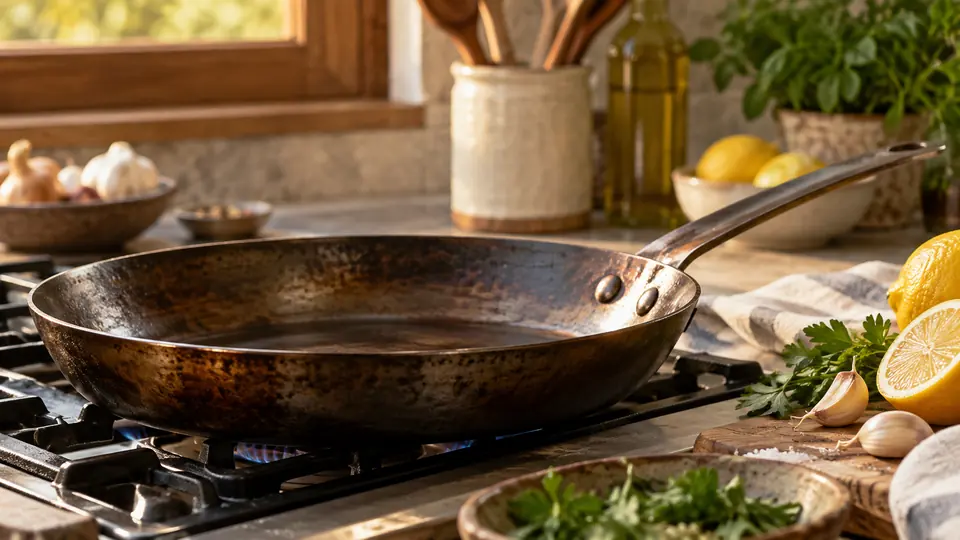
Carbon steel is one of the most versatile cookware materials in the kitchen, but it is not ideal for every ingredient or every cooking situation. A well-seasoned carbon steel pan handles high heat, browning, searing, stir-frying, and many everyday meals very well. Still, some foods can damage the seasoning, pick up a metallic taste, or simply cook better in another type of pan.
That is why the question what foods should not be cooked in carbon steel matters so much. The issue usually is not that the pan is unsafe. It is that carbon steel has a reactive surface when seasoning is new, thin, or partially worn. Acidic foods, delicate sticky foods, and long-simmered wet dishes are the main categories that cause trouble. Knowing those limits helps you protect the pan, avoid disappointing results, and choose the right cookware for the job.
Carbon steel rewards good technique, but it also asks for some judgment. A quick pan sauce may be fine in a mature, well-seasoned skillet. A long tomato braise usually is not. Eggs can release beautifully with proper heat and oil, but very delicate fish or sugary glazes may turn messy if the surface is not ready. The goal is not to avoid cooking in carbon steel. It is to understand where it shines and where another pan makes more sense.
Quick Answer
If you want the short version of what foods should not be cooked in carbon steel, avoid long-cooked acidic foods, very delicate sticky foods in a poorly seasoned pan, and wet dishes that simmer for a long time. The biggest problems usually come from ingredients such as tomatoes, vinegar-heavy sauces, wine reductions, citrus-based dishes, and other acidic foods that can strip seasoning and react with exposed metal.
Carbon steel also struggles with foods that need a very stable nonstick surface if your seasoning is still developing. Examples include eggs in a new pan, flaky fish fillets, pancakes with too little fat, or sugary marinades that burn and glue themselves to the surface. None of these foods are permanently forbidden, but they require more care than many cooks expect.
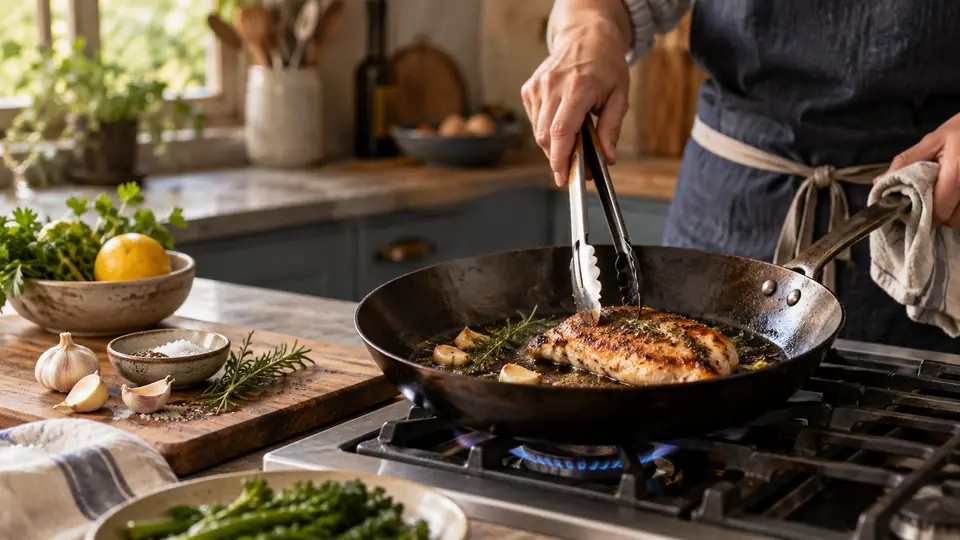
As a general rule, carbon steel is best for dry-heat cooking and shorter cooking times. Use it for searing steak, sauteing vegetables, frying potatoes, stir-frying, and browning proteins. Reach for stainless steel, enameled cast iron, or nonstick when cooking acidic sauces, braises, or ultra-delicate foods that are likely to stick.
Why Certain Foods Cause Problems in Carbon Steel
Carbon steel pans are made from iron and carbon. Unlike stainless steel, they do not have a highly corrosion-resistant cooking surface. Their performance depends heavily on seasoning, which is a thin layer of oil that has bonded to the metal through heat. That layer improves rust resistance and helps reduce sticking.
When the seasoning is strong and even, the pan performs very well. When it is weak, patchy, or new, certain foods can break it down. Acid is especially tough on seasoning because it can dissolve or loosen that protective layer. Once that happens, food may stick more easily, and the exposed metal may react with the ingredients.
Moisture also matters. Carbon steel does not love long stretches of simmering liquid. Short deglazing is often fine, but a 45-minute tomato sauce or a vinegar braise keeps the surface wet and reactive for too long. That can leave the pan looking dull, stripped, or slightly rusty if it is not dried and re-oiled afterward.
Sugar creates a different problem. It caramelizes and burns fast, especially over the high heat that carbon steel encourages. Sticky sugars and reduced syrups can cling stubbornly to the surface, especially if the pan is not smooth and well seasoned.
Foods That Should Usually Not Be Cooked in Carbon Steel
1. Long-Simmered Tomato Sauces
Tomatoes are the classic example of a food that often causes trouble in carbon steel. They are acidic enough to wear down seasoning, especially during longer cooking times. A quick pass with a few chopped tomatoes in a stir-fry may not ruin the pan, but a full pot of marinara or shakshuka cooked for 30 to 60 minutes is another story.
If the seasoning is stripped during cooking, the sauce may darken slightly or pick up a faint metallic taste. The pan can also come away with bare-looking spots that need re-seasoning. For tomato-heavy dishes, stainless steel or enameled cookware is the safer choice.
2. Vinegar-Heavy Sauces and Braises
Vinegar is even more aggressive than tomatoes in many cases. Pan sauces that lean heavily on vinegar, adobo-style preparations, pickling liquids, and braises with a sharp acidic base can all attack the seasoning quickly. The longer the liquid stays in the pan, the greater the effect.
A small splash of vinegar to brighten a finished dish is usually less of a problem than a full cup simmered down for half an hour. If a recipe depends on a strong acidic backbone, carbon steel is usually not the best fit.
3. Citrus-Based Dishes
Lemon, lime, and orange juices are acidic enough to cause a similar reaction. This matters most in dishes where citrus is the cooking medium rather than just a finishing touch. Fish poached in lemon sauce, chicken simmered in orange reduction, or vegetables braised with lots of lemon juice can all wear down the pan’s protective layer.
A squeeze of lemon over finished food is not the same as simmering lemon juice in the pan. Small finishing amounts are usually harmless. Extended cooking with citrus is where problems begin.
4. Wine Reductions Cooked for Too Long
Wine is another acidic ingredient that can be fine in small amounts but risky in larger, longer reductions. A quick deglaze with wine after searing meat is often manageable, especially in a well-seasoned pan. But if you keep reducing wine into a sauce over several minutes or combine it with tomatoes or vinegar, you increase the chance of stripping seasoning.
This is a good example of how duration matters as much as ingredient choice. Short contact is often acceptable. Long simmering is where carbon steel starts losing the advantage.
5. Beans, Stews, and Braises With a Lot of Liquid
Even if a dish is not very acidic, extended simmering can still be a poor match for carbon steel. Soupy beans, stews, and braised dishes hold moisture against the cooking surface for a long time. If the seasoning is not robust, the pan may lose its sheen and become more prone to sticking or rust later.
Carbon steel is not designed to replace a Dutch oven for long, wet cooking. It does better with recipes that move quickly and use less liquid overall.
6. Delicate Eggs in a New or Roughly Seasoned Pan
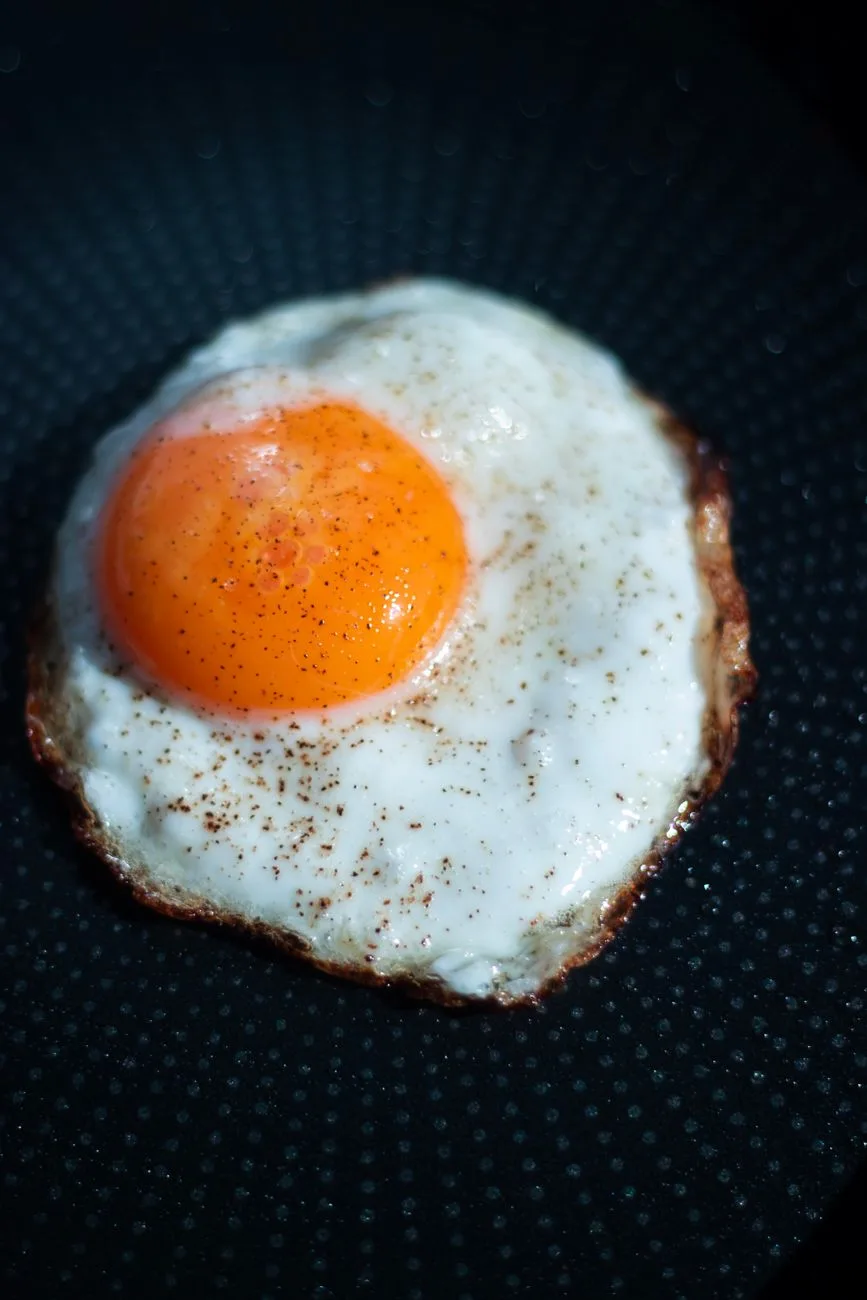
Eggs are often associated with carbon steel because a properly seasoned skillet can cook them beautifully. But eggs are also one of the easiest ways to expose a poorly seasoned or badly preheated pan. If the pan is new, the seasoning is uneven, or the heat is off, eggs can stick badly and create a frustrating cleanup.
So eggs are not on the “never cook” list. They belong on the “avoid until your pan and technique are ready” list. Carbon steel rewards patience here.
7. Very Delicate Fish Fillets
Thin white fish fillets can weld themselves to the surface if the pan is not fully preheated and lightly oiled. Even if they do release, they may tear before you can flip them cleanly. A mature carbon steel pan can do a solid job with fish, especially skin-on fillets cooked at the right temperature, but fragile pieces are still a risk.
If presentation matters and you want the lowest chance of tearing, another surface may be easier to manage.
8. Sugary Marinades and Glazes
Sugar burns fast in hot carbon steel. Marinades containing honey, maple syrup, brown sugar, hoisin, or sweet barbecue elements can go from glossy to scorched quickly. Once burnt sugar bonds to the pan, it can be stubborn to remove without scrubbing hard enough to damage seasoning.
This does not mean you cannot use any sweet glaze at all. It means heavily sweet sauces are better added near the end, with lower heat and more attention than usual.
9. Crepes, Pancakes, and Other Batter-Based Foods in an Unseasoned Pan
Batter-based foods often need a smooth, low-stick surface from the first seconds of cooking. In a mature carbon steel pan, that can work well. In a new pan, these foods often expose every weak spot in the seasoning. The result is torn pancakes, patchy browning, and stuck-on residue.
If your pan is still in the early seasoning stage, start with fattier, more forgiving foods before expecting reliable results from delicate batters.
A Practical Food Guide
| Food or Dish | Good in Carbon Steel? | Main Concern | Better Alternative |
|---|---|---|---|
| Long-simmered tomato sauce | No, usually avoid | Acid strips seasoning, metallic taste | Stainless steel, enameled cast iron |
| Vinegar-heavy braise | No, usually avoid | Strong acid reacts with metal | Stainless steel, Dutch oven |
| Quick wine deglaze | Usually yes | Too much reduction can strip seasoning | Stainless steel for repeated sauce work |
| Eggs in a new pan | Not ideal | Sticking from weak seasoning or poor preheat | Nonstick, mature seasoned carbon steel |
| Steak, chops, burgers | Yes | Very suitable use case | Carbon steel works well |
| Delicate fish fillets | Sometimes | Tearing and sticking | Nonstick, well-heated stainless steel |
| Sweet glazes | Use caution | Burnt sugar sticks hard | Nonstick, stainless steel with lower heat |
| Stir-fried vegetables | Yes | Works well with fast cooking | Carbon steel works well |
| Long braises and stews | No, usually avoid | Extended liquid contact weakens seasoning | Enameled cast iron, stainless steel |
What Foods Should Not Be Cooked in Carbon Steel if the Pan Is New?
A new carbon steel pan has the steepest learning curve. Even if it arrived pre-seasoned, the factory coating is often thin and inconsistent compared with seasoning built through regular use. During this stage, the pan is more reactive and more likely to stick.
That means you should be especially cautious with:
- Tomato-based dishes
- Vinegar-rich recipes
- Citrus-heavy sauces
- Eggs and omelets
- Flaky fish
- Pancakes and crepes
- Sugary marinades
New carbon steel does better with foods that help the seasoning improve rather than challenge it. Sauteed onions, potatoes, burgers, chicken thighs, and stir-fried vegetables are all friendlier early choices. These foods use moderate to high heat, relatively short cooking times, and enough fat to help the surface become smoother over time.
Foods That Are Fine in Small Amounts but Risky in Larger Amounts
Some ingredients fall into a gray area. They are not automatically a problem, but they can become one depending on timing, pan condition, and cooking method.
Short Acidic Deglazes
A small splash of wine, lemon juice, or vinegar to loosen browned bits is usually acceptable in a well-seasoned pan if you move quickly. The key is not letting that acidic liquid sit and simmer for long. If you reduce it too much or keep it on the heat, you may strip seasoning.
A Few Chopped Tomatoes
Adding a handful of tomatoes to a vegetable saute is very different from simmering a full tomato sauce. Brief contact is generally less harmful, especially if the pan already has a dark, established seasoning layer.
Finishing Sauces
A quick pan sauce that is built fast and served immediately may work. A slow reduction with lots of acid is where carbon steel becomes less practical. This is one reason many cooks use carbon steel to sear protein, then transfer to another pan for the sauce.
Why Carbon Steel Excels at Some Foods and Struggles With Others
Carbon steel is strongest in cooking styles that combine high heat, short duration, and limited liquid. That makes it excellent for:
- Searing steaks and chops
- Browning burgers
- Sauteing mushrooms
- Frying potatoes
- Stir-frying vegetables and noodles
- Toasting flatbreads
- Cooking skin-on proteins
It is less suitable where the dish depends on acidity, moisture, or delicate release. Stainless steel and enameled cast iron are better for tomato sauces, wine-heavy reductions, and braises. Nonstick is often easier for soft scrambled eggs, very delicate fish, and fragile batter work.
This difference is not about one material being better overall. It is about matching the pan to the cooking task.
Common Mistakes That Make Safe Foods Cook Poorly
Sometimes cooks think a certain food should never be cooked in carbon steel, when the real issue is technique. Several common mistakes make sticking and seasoning damage more likely.
Using Too Little Preheat
Carbon steel usually needs to preheat before food goes in. If the pan is still relatively cool, proteins and eggs are more likely to grab the surface. A gentle but thorough preheat often solves what looks like a seasoning problem.
Cooking Acid in a Weakly Seasoned Spot
Seasoning is not always uniform. The center may be dark and smooth while the sides are still developing. If acidic liquid pools in a lighter, less protected area, it can strip that spot quickly.
Leaving Food Sitting After Cooking
Even foods that cooked fine can cause trouble if they sit in the pan. This is especially true for acidic ingredients. Serving the food promptly reduces contact time and helps preserve seasoning.
Using High Heat for Sugary Sauces
Carbon steel makes it easy to overheat sweet ingredients. Honey, sugary marinades, and sticky glazes need more caution than a plain sear. Burnt sugar is often a heat-control issue, not just a pan issue.
Scrubbing Too Aggressively After Sticking
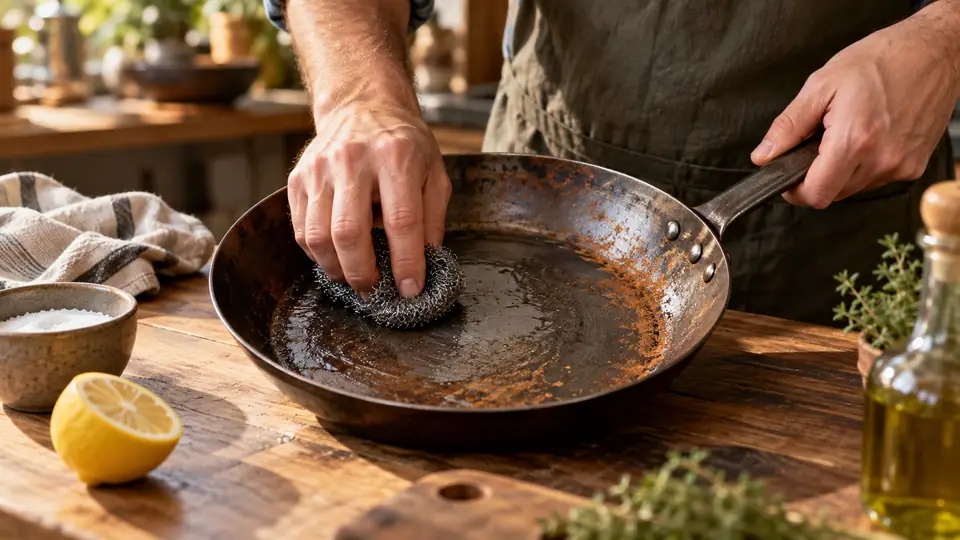
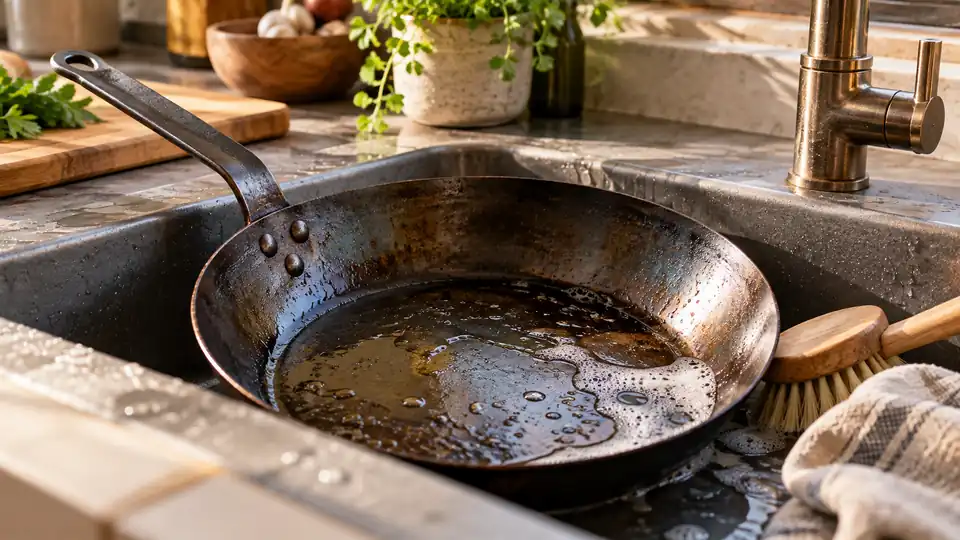
If delicate food sticks, some cooks respond by scrubbing hard with abrasive tools. That can remove seasoning and make the next attempt even worse. Cleaning carbon steel is often more about loosening residue with hot water and gentle scraping than heavy scouring.
How to Tell if Your Pan Can Handle More Challenging Foods
A mature carbon steel pan becomes more forgiving over time. Still, a dark color alone does not guarantee readiness. Look for these practical signs:
- The surface feels relatively smooth, not tacky
- Food releases more easily than it did when new
- Minor washing does not leave dull gray patches
- The pan dries without orange rust spots
- You can cook potatoes or onions with little sticking
Once the pan reaches that stage, it can usually handle brief acidic ingredients and more delicate foods better than a brand-new pan. But long tomato simmering and vinegar braises are still poor candidates, no matter how seasoned the skillet looks.
Better Alternatives for Foods Carbon Steel Does Not Like
| If You Are Cooking… | Use This Instead | Why It Works Better |
|---|---|---|
| Tomato sauce | Stainless steel or enameled cast iron | Non-reactive surface handles acid well |
| Long braise | Dutch oven | Built for moist, extended cooking |
| Soft scrambled eggs | Nonstick | Easier release with less technique required |
| Delicate flaky fish | Nonstick or well-heated stainless steel | Lower risk of tearing |
| Sweet reduced glaze | Nonstick or stainless steel on lower heat | Less risk of burnt sugar bonding hard |
Can You Ever Cook Acidic Foods in Carbon Steel?
Yes, but moderation matters. There is a big difference between brief contact and extended simmering. Many experienced cooks use carbon steel for a quick pan sauce with a little wine or lemon, especially after searing meat. That is usually manageable if the pan is well seasoned and the sauce is not held in the pan for long.
What usually fails is prolonged acidic cooking. A tomato sauce simmered for 40 minutes, or a braise with wine and vinegar, gives the acid too much time to work on the seasoning. The result may be patchy color, exposed metal, off flavors, or a pan that needs attention afterward.
If you are still building seasoning, it is smart to stay conservative. Once your pan is mature, you can test short acidic tasks carefully and judge how the surface responds.
Best Practices for Cooking Foods That Are Borderline
Some dishes sit between “fine” and “not ideal.” If you choose to cook them in carbon steel, a few habits can reduce problems.
- Preheat properly. This improves release and reduces sticking.
- Use enough fat. Carbon steel is low-stick, not magically frictionless.
- Keep acidic contact brief. Deglaze, reduce quickly, and serve.
- Do not store food in the pan. Transfer leftovers immediately.
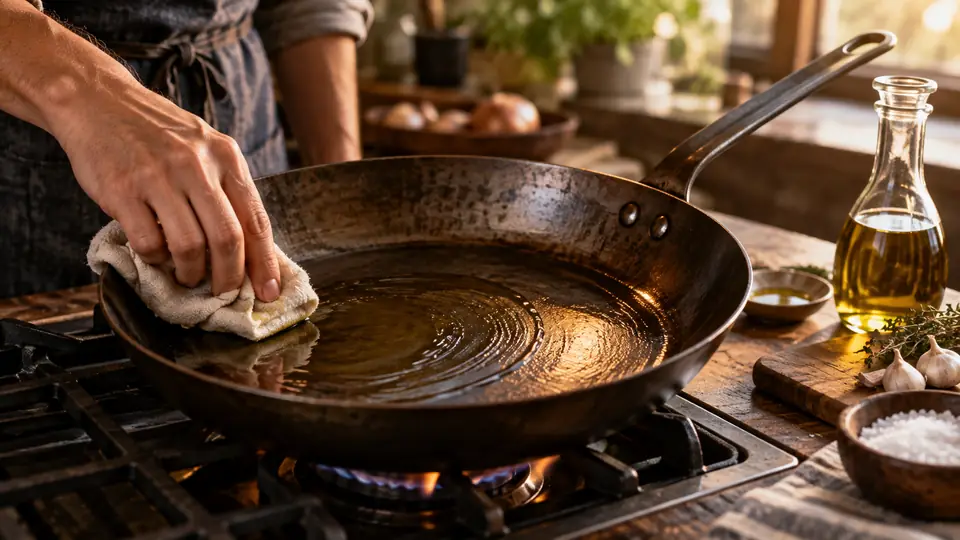
- Clean and dry the pan promptly. Re-oil lightly if the surface looks dry.
- Lower the heat for sugar. Add sweet glazes near the end.
If your main goal is effortless egg cooking, a look at carbon steel omelette pans can help illustrate the kind of shape and cooking surface that tends to work better for delicate release, though pan condition and heat control still matter just as much as design.
Frequently Asked Questions
Can I cook tomato sauce in a well-seasoned carbon steel pan?
You can cook a small amount briefly, but long-simmered tomato sauce is still not a great choice. Even well-developed seasoning can be worn down by extended exposure to acid.
Are eggs bad for carbon steel?
No. Eggs are not harmful to the pan, but they are demanding. In a new or poorly preheated pan, they stick easily. In a mature, properly heated pan with enough fat, they can cook very well.
Does acidic food ruin carbon steel permanently?
Usually not. Acid can strip seasoning, but that is typically a maintenance issue, not permanent damage. Wash, dry, apply a thin film of oil, and re-season if necessary.
Can I deglaze a carbon steel pan with wine or lemon juice?
Yes, in small amounts and for a short time. Quick deglazing is often fine. Long reductions with acidic liquids are more likely to remove seasoning.
Is carbon steel safe if food tastes metallic?
A metallic taste usually means the food contacted exposed metal because the seasoning was weak or stripped. The pan is not necessarily ruined, but it is a sign to stop using it for acidic foods until the seasoning is rebuilt.
Final Thoughts
The answer to what foods should not be cooked in carbon steel is mostly about acid, moisture, and delicacy. Long tomato sauces, vinegar-heavy braises, citrus-forward simmered dishes, and other extended acidic recipes are the clearest foods to avoid. Very delicate eggs, fish, and batter-based foods are not forbidden, but they are less forgiving if the seasoning or technique is not there yet.
Carbon steel performs best with high heat, short cooking times, and relatively dry methods. That is where its fast response, browning ability, and naturally developing cooking surface really stand out. If a recipe is wet, acidic, or highly sticky, another pan is often the smarter choice. Knowing that limit does not make carbon steel less useful. It helps you use it where it works best and keep it in good condition for years.

Leave a Reply