

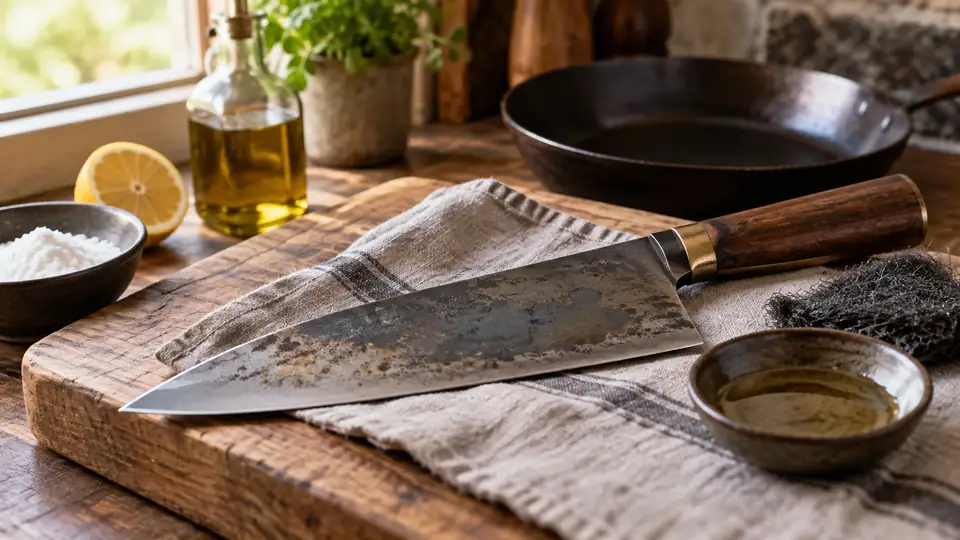
Carbon steel knives reward good habits and punish careless storage. Their fine edges, easy sharpenability, and crisp cutting feel are major strengths, but the same steel that takes a keen edge can also react quickly to moisture, acids, and neglect. A knife that is put away damp, left loose in a drawer, or stored in a humid sheath can develop rust spots, edge damage, or a blotchy patina faster than many stainless knives.
The best way to store carbon steel knives depends on where you use them and how often you reach for them, but the principles stay the same. Keep the blade clean, fully dry, protected from contact, and stored in a place with stable, low moisture. Good storage is not only about preventing rust. It also helps preserve the edge, reduce accidental chipping, and make the knife safer to handle.
This guide explains the best way to store carbon steel knives at home, which storage methods work well, which ones cause problems, and how to build a simple routine that keeps carbon steel in good condition over the long term.
Quick Answer
The best way to store carbon steel knives is to clean and dry them thoroughly, apply a very light coat of food-safe oil if the knife will sit unused for a while, and store them in a dry, edge-protective location such as a magnetic knife strip, a well-ventilated knife block, a saya, or an edge guard. Avoid storing carbon steel knives loose in a drawer, wet in a sink, or sealed in a damp leather sheath.
For daily-use kitchen knives, a magnetic strip in a dry kitchen is often the most practical option because it keeps the blade exposed to air, prevents edge contact with other utensils, and makes it easier to put the knife away only after it is fully dry. For less frequently used knives, a blade guard or wooden saya stored in a dry cabinet works well. If you live in a humid climate or plan to store the knife for weeks or months, a thin film of camellia oil or mineral oil adds useful protection.
The key is simple: dry blade, protected edge, low humidity, no crowding.
Why Proper Storage Matters for Carbon Steel Knives
Carbon steel is more reactive than most stainless kitchen knife steels. That does not make it fragile or impractical, but it does mean storage matters more. A few hours of trapped moisture can leave orange rust spots. Repeated contact with hard surfaces can dull or roll the edge. Poor storage also increases the chance of accidental damage to the tip, which is often one of the first parts of a knife to suffer.
Unlike carbon steel cookware, where a darker seasoned surface can be part of normal use, carbon steel knives need a more controlled approach. Knife blades may develop a patina over time, especially after contact with onions, citrus, meat, or other acidic ingredients. A stable patina is usually harmless and can even slow further reactivity. Rust is different. Rust means active corrosion, and poor storage is one of the biggest causes.
Good storage protects four things at once:
- The blade surface, by reducing moisture exposure
- The cutting edge, by preventing impact and abrasion
- The handle, by avoiding prolonged dampness
- Your safety, by keeping the knife stable and predictable to reach for
What the Best Way to Store Carbon Steel Knives Looks Like in Practice
The best way to store carbon steel knives is less about one perfect accessory and more about following a system. If your storage setup meets the conditions below, it will usually work well:
- The knife is washed promptly after use
- The blade is dried completely, including near the handle and spine
- The edge does not touch metal, ceramic, or other blades
- The storage area stays reasonably dry
- The knife can be removed and replaced without scraping the edge
- Longer-term storage includes light oil protection if needed
That is why some common storage options work well for one kitchen and poorly in another. A wooden block in a dry, climate-controlled home may be perfectly fine. The same block in a humid kitchen near a sink may hold moisture and become less suitable.
Best Storage Options for Carbon Steel Knives
Magnetic Knife Strip
A magnetic strip is one of the most effective everyday storage methods for carbon steel kitchen knives. It keeps knives off crowded countertops, avoids drawer damage, and allows airflow around the blade. That airflow matters because it reduces the chance of hidden moisture lingering around the steel.
It also makes it easier to build good habits. Since the blade is visible, you are less likely to put it away damp. With a drawer or block, moisture can be hidden until rust appears later.
To use a magnetic strip safely, place the spine of the knife on the strip first, then roll the blade flat onto the magnet. Pulling the edge directly onto the strip can chip or dull the knife over time. Likewise, when removing it, peel the spine away first rather than dragging the edge sideways.
Best for: Daily-use kitchen knives in dry to moderately humid kitchens.
Wooden Saya
A saya is a fitted wooden sheath designed for a specific blade shape. It protects the edge well and is especially useful for finer Japanese-style carbon steel knives. Because it covers the edge and most of the blade, it prevents accidental contact and transport damage better than open storage.
The main caution is moisture. A saya should be used only on a fully dry blade. If the knife is even slightly damp, the enclosed space can trap moisture against the steel. Over time, that can lead to spot rust or uneven patina.
Best for: Higher-end knives, occasional-use knives, and safe cabinet storage.
Blade Guards or Edge Guards
Plastic, leather-free synthetic, or felt-lined edge guards can work well if you store knives in a drawer or transport them. They are more flexible than a fitted saya and usually cost less. The edge stays protected, and the blade is less likely to bang into nearby items.
Not all guards are equal. A guard that traps moisture, fits loosely, or allows the edge to scrape on entry can create problems. For carbon steel, the fit should be secure without forcing the blade in or out.
Best for: Drawer storage with separation, knife bags, and occasional transport.
Well-Designed Knife Block
A knife block can be a good storage solution, but it depends on the design and where it sits. A block that stores knives horizontally or with the spine resting against the slot is gentler on the edge than a deep vertical slot where the edge may rub during insertion. Wood is generally preferable to harder materials because it is less abrasive.
Knife blocks also need occasional cleaning. Crumbs, dust, and moisture can collect inside the slots. If a knife goes in damp, the block can hold that moisture longer than you think.
Best for: Homes with enough counter space and a habit of drying knives carefully before storage.
Drawer Storage with Inserts
A drawer can work if the knife is protected by an insert, slot system, or individual guard. Loose drawer storage is one of the worst options, but organized drawer storage is different. The knife stays out of sight, which some kitchens prefer, and the edge can be well protected if each blade has its own place.
The drawer should be dry and not exposed to steam from a dishwasher or sink area. Humid drawers can cause problems, especially if knives are stored while still warm or damp after washing.
Best for: Small kitchens, child-conscious storage plans, and knives with individual guards.
Storage Methods Compared
| Storage Method | Rust Protection | Edge Protection | Ease of Access | Best Use Case | Main Caution |
|---|---|---|---|---|---|
| Magnetic knife strip | Good if kitchen is dry and knife is fully dried first | Good if placed and removed carefully | Excellent | Daily-use kitchen knives | Can scratch or chip if slapped onto strip |
| Wooden saya | Good if knife is perfectly dry | Excellent | Good | Fine carbon steel knives, occasional storage | Traps moisture if blade is damp |
| Edge guard | Good if dry and clean | Good to very good | Moderate | Drawer storage or transport | Poor fit can scrape edge or hold moisture |
| Knife block | Moderate to good | Moderate to good | Good | General home storage | Slots can collect moisture and debris |
| Drawer with insert | Moderate to good | Good | Moderate | Low-visibility storage | Humidity and crowding can cause issues |
| Loose in drawer | Poor | Poor | Poor | None | Rust, dulling, chipping, safety risk |
| Leather sheath for long-term storage | Poor to moderate | Good | Moderate | Short transport only, if dry | Leather can retain moisture and tanning chemicals |
How to Prepare a Carbon Steel Knife Before Storage
The best storage setup will not help much if the knife goes in wet or dirty. Preparation matters as much as the storage method itself.
1. Wash by Hand Promptly
Rinse or wash the knife soon after use, especially after cutting acidic foods like tomatoes, citrus, apples, or onions. Letting food residue sit on carbon steel increases the chance of staining and corrosion.
Use mild dish soap, warm water, and a soft sponge or cloth. Do not soak the knife in the sink. A sink full of water is one of the quickest ways to invite rust and accidental edge damage.
2. Dry It Thoroughly
Dry the blade immediately with a clean towel. Pay attention to the area where the blade meets the handle, since water often hides there. Also dry the spine and the choil if the knife has one.
If your kitchen is humid, it helps to let the knife air-dry for a minute or two after toweling, then wipe once more before storage. This small extra step can prevent the tiny remaining moisture film that often causes rust specks.
3. Add a Light Coat of Oil for Longer Storage
If you will not use the knife for several days, weeks, or longer, apply a very thin coat of food-safe oil. Camellia oil is commonly used on carbon steel knives, and plain mineral oil also works. You only need a light film, not a wet coating.
Oil is especially useful in coastal climates, humid homes, and seasonal storage. It is less necessary for knives used every day in a dry kitchen, though some owners still prefer it.
4. Store Only After the Knife Is Truly Dry
This sounds obvious, but it is where many storage problems begin. A knife can feel dry to the touch and still hold moisture near the handle or inside a guard. Taking an extra few seconds before storage is often the difference between a stable patina and active rust.
Where to Store Carbon Steel Knives in the Kitchen
Location matters almost as much as storage type. A good storage method placed in a bad environment can still lead to problems.
Keep Knives Away from Steam and Splash Zones
Storing knives directly above a kettle, next to a dishwasher vent, or beside a frequently wet sink increases moisture exposure. Repeated cycles of warm steam and cooling metal can create condensation. Carbon steel does not need much moisture to start reacting.
Avoid Cabinets with Trapped Humidity
Some kitchens have under-sink drawers or cabinets that stay slightly damp. These spaces are poor choices for carbon steel knives, especially if the knife is stored in a saya or guard that limits airflow.
Choose Stable, Dry Air
A wall-mounted magnetic strip on a dry interior wall is usually better than storage near a range hood exhaust or sink backsplash. For drawer storage, pick a drawer that stays clean, dry, and lightly used.
What to Avoid When Storing Carbon Steel Knives
Loose Drawer Storage
A loose drawer is bad for nearly every knife, but it is particularly rough on carbon steel. The blade knocks into other utensils, the edge dulls quickly, and hidden moisture from other tools can contact the steel. It is also a safety hazard.
Dishwasher Storage Between Washes
Leaving a carbon steel knife in or near the dishwasher exposes it to heat, moisture, detergent residue, and accidental impact. Even one cycle can damage the edge and encourage corrosion.
Wet Sheaths or Damp Guards
Any enclosed storage method becomes risky if moisture is trapped inside. Leather sheaths deserve extra caution. They can hold humidity and sometimes contain compounds that are not ideal for prolonged metal contact.
Storing After Cutting Acidic Foods Without Cleaning
Carbon steel reacts quickly with acidic residue. A knife used on lemons, tomatoes, or fruit and then stored without cleaning may stain heavily or form rust patches by the next day.
Contact with Other Metals
Jumbling knives together with steel tools, graters, or kitchen shears can scratch the blade and batter the edge. Storage should prevent hard contact.
Short-Term vs Long-Term Storage
Daily or Frequent Use
If the knife is part of your regular cooking routine, the simplest approach is usually best. Clean it, dry it well, and place it on a magnetic strip or in a dry block or guarded drawer. Routine use often means the knife is inspected often, which makes it easier to spot any early rust or residue.
Weekly or Occasional Use
For knives you use less often, a saya or edge guard makes sense because the blade is protected between uses. A light oil film becomes more useful here, especially if several days may pass before you handle the knife again.
Seasonal or Long-Term Storage
If a carbon steel knife will sit unused for a month or more, prepare it more carefully:
- Wash and dry thoroughly
- Apply a very thin coat of food-safe protective oil
- Use a dry saya, guard, or soft wrap that does not trap moisture
- Store in a cool, dry indoor location
- Check periodically if your climate is humid
Long-term storage is where many people underestimate humidity. Basements, garages, sheds, and campers are usually poor choices unless climate controlled.
How Patina Affects Storage
Carbon steel knives often darken with use. This patina is a normal oxidation layer that can develop in shades of gray, blue, or brown. It is not the same as red or orange rust. In many cases, a stable patina helps reduce further reactivity because it acts as a mild barrier between the steel and food or moisture.
Storage still matters even if the knife has developed a patina. Patina is not a license to put the knife away wet. It simply means the blade may be slightly less reactive than fresh bare steel. Active rust can still form on top of or beneath an existing patina if moisture is trapped.
If you are comparing different blade types before choosing one, articles like Best Japanese Carbon Steel Knife can help explain why many carbon steel enthusiasts accept the extra care in exchange for edge performance and sharpening feel.
Maintenance Habits That Make Storage Easier
The best way to store carbon steel knives is easier to follow when you pair it with a few maintenance habits.
Use a Dedicated Drying Cloth
A clean, absorbent towel reserved for knives works better than a damp general kitchen rag. Reusing a wet dishcloth can put moisture right back onto the blade.
Inspect the Blade in Good Light
Before storage, glance at both sides of the blade. Tiny rust freckles usually appear first as faint orange dots near the edge or around the handle junction. Catching them early makes cleanup easy.
Keep the Storage Area Clean
Knife blocks, drawer inserts, and guards collect dust and food particles over time. That debris can hold moisture and abrade the blade. Occasional cleaning is part of proper knife storage.
Do Not Over-Oil
A thin protective film is useful. A greasy coating that collects dust is not. Too much oil can make the handle slippery and attract grit inside storage sleeves or guards.
Common Mistakes People Make
Putting the Knife Away Almost Dry
Almost dry is not dry enough for carbon steel. Small moisture pockets are a frequent cause of rust spots.
Assuming a Knife Block Is Automatically Safe
A block protects the edge from open contact, but it can still be a problem if the slot interior is dirty or the knife goes in wet. Storage accessories are only as good as the habits around them.
Leaving the Knife on a Damp Towel
Some people wash a knife, dry it casually, then leave it on a counter towel for later. If the towel is damp, moisture stays against the blade longer than expected.
Using Leather for Long-Term Kitchen Storage
Leather can be fine for transport or short-term protection if fully dry, but it is not ideal for long-term storage of reactive steel. Wood or synthetic guards are usually safer.
Ignoring the Handle Material
Wood handles can also suffer from poor storage. Repeated dampness can swell or dry out natural handle materials. Keeping the whole knife dry matters, not just the blade.
Simple Storage Routine for Everyday Use
For most home cooks, a reliable routine matters more than an elaborate setup. This is a practical everyday system:
- Wash the knife by hand soon after use.
- Dry it completely with a clean towel.
- Check the blade near the handle and along the edge.
- If you will use it again soon, store it on a magnetic strip or in a dry block.
- If you will not use it for a while, add a trace of food-safe oil and use a saya or guard.
This routine takes less than a minute and prevents most storage-related problems.
Frequently Asked Questions
Can carbon steel knives be stored on a magnetic strip?
Yes. A magnetic strip is one of the better options for daily-use carbon steel knives, provided the knife is fully dry first and handled gently when placing or removing it. It promotes airflow and keeps the blade from contacting other tools.
Is a knife block bad for carbon steel knives?
Not necessarily. A knife block can work well if it is clean, dry, and designed so the edge does not scrape during insertion. Problems usually come from storing knives damp or using blocks that trap debris and moisture.
Should I oil a carbon steel knife before storing it?
For daily use in a dry kitchen, oil is optional. For longer storage, humid climates, or knives used only occasionally, a very light coat of food-safe oil is a smart precaution.
Can I store a carbon steel knife in a leather sheath?
It is better not to use leather for long-term storage. Leather can retain moisture and may not be ideal for prolonged contact with reactive steel. A dry wooden saya or a synthetic edge guard is usually safer.
Why did my carbon steel knife rust even though I dried it?
Moisture may have remained near the handle, inside a guard, or in the storage area itself. Humidity, acidic residue, and damp towels are also common causes. Carbon steel often rusts from small amounts of trapped moisture rather than obvious wetness.
Is patina a sign that I stored the knife incorrectly?
No. Patina is a normal reaction that often develops through regular food prep, especially with acidic ingredients. Rust is the real warning sign. Patina alone does not mean your storage method is wrong.
Final Thoughts
The best way to store carbon steel knives is to treat storage as part of maintenance, not as an afterthought. A clean, dry blade stored on a magnetic strip, in a dry knife block, or inside a properly fitted saya or guard will usually stay in good condition for years. The exact storage tool matters less than the basics: no moisture, no edge contact, and no careless drawer clutter.
If you use carbon steel knives often, choose the storage method that makes it easiest to follow those rules every single time. Convenience supports consistency, and consistency is what keeps carbon steel sharp, clean, and rust-free.







Leave a Reply