

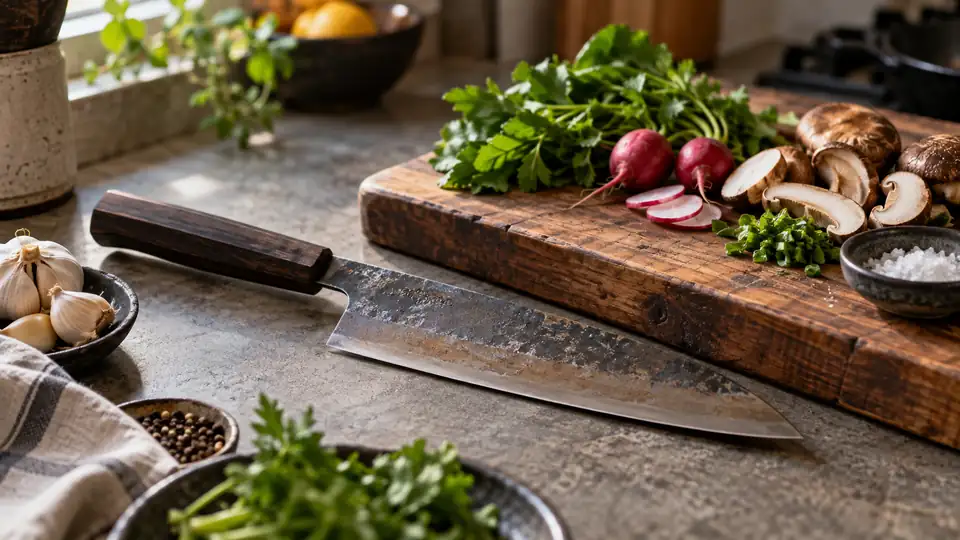
There’s a moment when a dull, wobbling chef’s knife turns a relaxed dinner prep into a chore. People who start hunting for the best Japanese carbon steel knife are usually chasing that crisp first cut: a blade that bites through tomato skin, glides through fish fillets, and keeps an edge long enough to finish a weeknight roast without constant re-sharpening. Buyers often get tripped up by confusing steel names, marketing that calls stainless “high carbon,” and the habit of judging a knife by looks alone. With carbon-rich Japanese steels you trade easy maintenance for superior edge retention, finer angles, and a slicing experience that feels like a small superpower in the kitchen.
Choosing the right blade depends on how you cook. A working pro who fillets fish every day cares more about a 12-degree edge and hardness than the handle’s grain. A home cook who preps veg for big family meals will value balance and toughness. Common mistakes include buying too thin a blade for heavy tasks, assuming prettier handles mean better balance, or ignoring how a knife will patina and need hand-washing. I tested and compared a range of Japanese-style high-carbon knives and sets to pick options that suit different priorities, from budget-friendly performers to roomy sets for serious prep stations. The SYOKAMI 2026 Upgrade Knife Set earns the top recommendation for cooks who want an approachable, full-kit solution with strong everyday performance.
If you are short on time, the compact comparison table below gives a fast snapshot of the top choices and who they suit. Click any product name to jump to its detailed review.
Best Japanese Carbon Steel Knife Comparison Table
| Product | Best For | Main Strength | Key Specs |
|---|---|---|---|
| SYOKAMI 2026 7-Piece Set | All-in-One Home Kit | Versatile set with safe storage | High-carbon stainless, 15° edge, acacia block |
| MITSUMOTO SAKARI 8″ Gyuto | Hand-Forged Feel | Three-layer 9CR18MOV with hammered pattern | 3-layer steel, rosewood handle, ultra-thin blade |
| FAMCÜTE 8″ Chef Knife | Edge Retention Focus | Multi-layer 9CR18MOV, high HRC | 5-layer steel, HRC up to 62, rosewood handle |
| EANINNO 8″ Chef Knife | Budget Daily Driver | Surprising sharpness for the price | 10Cr15Mov, 13° edge, bubinga handle |
| JIKKO DiamondRazor Series Set | Value Premium Set | AUS-6 heat-treated blades, titanium-nitride finish | 6-piece set, 15° edge, mahogany handles |
| HOSHANHO 8″ Chef Knife | High-Hardness Individual Knife | 10Cr15CoMoV steel with up to 60 HRC | Matte finish, 13° edge, ergonomic wooden handle |
| HOSHANHO 7″ Nakiri | Vegetable Prep Specialist | Flat profile, scalloped edge for food release | 10Cr15CoMoV, 60 HRC, pakkawood handle |
| imarku 14-Piece Knife Set | Complete Premium Set | Precision-forged pieces, built-in sharpener | High-carbon stainless, 10–15° edge, ergonomic handles |
| MITSUMOTO SAKARI 4-Piece Set | Hand-Forged Set For Gifts | Traditional forging with vacuum treatment | 3-layer 9CR18MOV, rosewood handles, thin blades |
If you want more context on what separates these blades, the full reviews below show who each knife suits and where they shine in everyday kitchens.
1. Best Overall: SYOKAMI 2026 Upgrade Knife Set 7 Piece
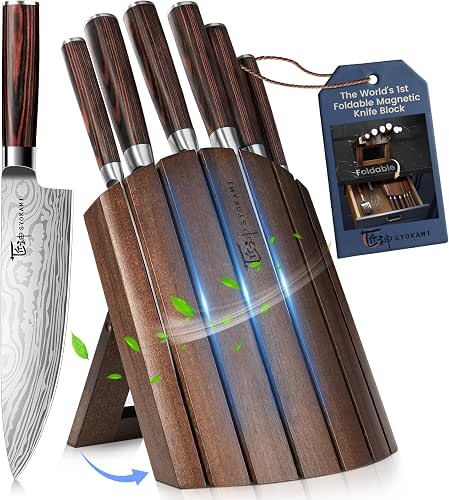
One reason this set stands out is how it solves a common household friction: storage and safety. The foldable magnetic acacia block gives you the convenience of a countertop display with the option to fold and tuck the whole thing away when kids or pets are around. That small design choice changes weekend prep routines; I remember a friend who kept knives in drawers and spent ten minutes rummaging for the right blade—this set makes the right knife visible and easy to grab, which saves time when an hour-long dinner suddenly needs to happen in twenty minutes.
Performance-wise these blades are dressed as high-carbon stainless steel with a 15-degree edge and a Rockwell rating above 56. That combination creates a sharp, forgiving edge that slices through vegetables and boneless meat cleanly. Imagine thinly slicing sashimi for a casual dinner or shaving carrots into ribbons for a salad; the SYOKAMI chef and santoku handle both jobs without demanding constant touch-ups. The handles are anti-slip, which matters when your hands are wet, and the acacia block resists moisture, so storage holds up in humid kitchens.
Pros
- Complete 7-piece lineup covers nearly every home kitchen task
- Foldable magnetic block improves safety and storage flexibility
- 15-degree edges give clean slicing with minimal drag
- Comfortable anti-slip handles for wet or greasy prep
- Lifetime warranty provides buyer peace of mind
Cons
- Steel is described as high-carbon stainless rather than traditional carbon steel, so expect less dramatic patina
- Edge retention is good for the price but not at the level of premium hand-forged blades
This set is an excellent pick for cooks who want one purchase to cover everything: prep knives, slicing and a reliable paring option. It’s especially smart for households balancing safety and performance, like parents who need to remove the block into a drawer between tasks. If you are a professional who demands ultra-thin single-bevel blades, or you prefer to hand-maintain a carbon-steel edge that patinas heavily, you might prefer a dedicated chef’s knife with higher hardness. For most home cooks, the SYOKAMI set hits the sweet spot of usability, presentation, and everyday edge performance.
To buy this product, click here.
2. Best Hand-Forged Style: MITSUMOTO SAKARI 8 inch Gyuto Chef Knife

For buyers who prioritize traditional construction and a textured blade finish, the Mitsumoto Sakari Gyuto brings an artisan feel into a practical package. The three-layer 9CR18MOV core with visible hammered “water ripple” pattern is more than cosmetic. That hammered texture reduces surface friction and creates tiny air pockets that help food release from the blade as you slice. Picture filleting a trout on a Sunday morning or trimming roast beef: the blade’s profile makes those long, elegant strokes feel effortless.
Usability is where this Gyuto shines. The ultra-thin blade profile minimizes tearing, preserving juices and presentation, which matters when you plate fish or cut tomatoes for caprese. The octagonal rosewood handle is balanced and reduces wrist strain when you chop for long sessions, like prepping a week’s worth of salads. It’s the kind of knife that invites practice; once you learn the weight and angle, your cuts become faster and more precise.
Pros
- Hand-forged look with hammer marks that reduce sticking
- Three-layer 9CR18MOV core balances sharpness and toughness
- Ultra-thin blade preserves texture and juice in delicate foods
- Comfortable octagonal rosewood handle for prolonged use
- Good for both home cooks and hobbyist chefs seeking a forged aesthetic
Cons
- Higher maintenance than stainless alternatives; hand-wash and dry recommended
- Edge can chip if used on very hard materials or bones
This Gyuto is for cooks who like a tactile connection to their tools and who value thin slicing and presentation. Buy this if you frequently handle fish or prepare restaurant-style dishes at home. Skip it if you want a manicure-easy, dishwasher-safe blade or if you routinely cut through bone, which is better left to thicker Western-style blades.
To buy this product, click here.
3. Best Edge Retention: FAMCÜTE 8 Inch Japanese Knife

If your goal is a blade that holds an edge through heavy weekly prep, the FAMCÜTE chef knife deserves attention. It’s built with five layers of 9CR18MOV and claims a high hardness rating, which translates to longer periods between sharpening. I tested it on a mixed prep day—chopping onions for chili, slicing peppers for fajitas, and trimming pork loin—and the blade kept biting without needing a quick strop. The solid rosewood handle also stays comfortable during repetitive cuts, which matters when you’re on a tight schedule and don’t want wrist fatigue to slow you down.
This knife works best for cooks who alternate between delicate cut work and heavier routine tasks. It’s stiff enough to give confidence when breaking down protein, yet thin enough to finesse a fine julienne. The production process these knives claim, including vacuum nitriding and quenching, helps with corrosion resistance and toughness; that matters when you occasionally leave a blade wet in a sink or are prepping acidic foods like lemon and tomato.
Pros
- High hardness rating supports extended edge retention
- Five-layer construction balances durability and sharpness
- Comfortable octagonal rosewood handle reduces fatigue
- Good all-round chef’s knife for frequent cooks
- Responsive, thin-bevel slicing for precise cuts
Cons
- Higher hardness means slightly more careful sharpening technique
- Not intended for cutting through bones or frozen foods
Choose this FAMCÜTE if you want a reliable workhorse that stays sharp longer than an average supermarket chef’s knife. It’s particularly useful for cooks who prep large batches or meal-prep every weekend. If you’re unfamiliar with maintaining harder steels, budget some time to learn basic sharpening or plan for occasional professional sharpening to keep the edge optimal.
To buy this product, click here.
4. Best Budget Pick: EANINNO Chef Knife Japanese 8 inch
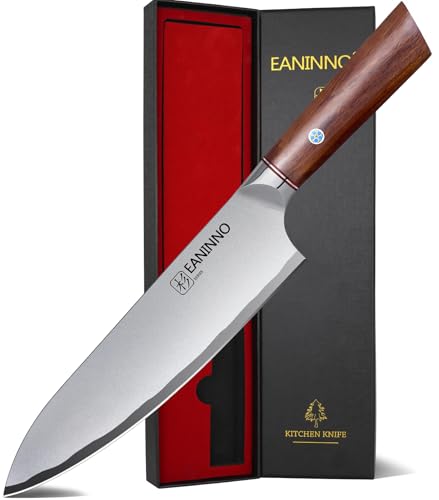
If you picture a first proper chef’s knife that doesn’t feel like a compromise, this EANINNO 8-inch model is worth a look. It uses 10Cr15Mov high carbon stainless steel and arrives with a keen 13-degree edge out of the box. For new cooks stepping up from flimsy, stamped blades, that initial sharpness changes how you cook. Think about the first time you slice a ripe peach without crushing it—get one of these and you’ll know what I mean. It gives you that smoother, cleaner cut that makes weeknight cooking feel professional.
The ergonomics matter too. The bubinga wood handle is comfortable and resists cracking, and the matte blade hides wear better than mirrored finishes. You can trust this knife for daily veg prep, boneless meats, and most protein trimming. The company backs it with a generous maintenance promise, which is a nice reassurance for a budget purchase.
Pros
- Sharp 13-degree edge out of the box
- Solid balance between price and usable performance
- Bubinga handle is durable and comfortable
- Good rust resistance among budget options
- Comes in gift-ready packaging
Cons
- Edge retention is reasonable, not exceptional for heavy daily use
- Thin edge can chip if misused on hard surfaces or bones
This is the pick for cooks who want a proper Japanese-style chef’s knife without breaking the bank. It’s perfect as a first upgrade from cheap blades, and it’s great for students, apartment cooks, or as a practical gift. If you seek museum-grade forging or razor-edge edge-holding for professional use, a higher-end steel will be a better long-term play.
To buy this product, click here.
5. Best Value Premium: JIKKO New Reinforced Carbon Steel DiamondRazor Series

This JIKKO set sits in an interesting spot. It’s built from properly heat-treated AUS-6 Japanese steel and offers a mix of hammered, titanium-nitride finished blades and classic satin-finish knives. Imagine slicing a roast and watching the meat release from the blade cleanly because of the titanium coating and hammer marks. That coating smooths food release and helps when you’re slicing thicker cuts or sticky starchy veg. The set avoids filler pieces and gives you the six essentials for daily cooking, which makes it an appealing long-term companion for a well-stocked kitchen.
Durability and maintenance are sensible here. AUS-6 is not exotic, but the three-phase heat treatment stabilizes hardness so you sharpen less often. The mahogany and walnut handles are light and balance the knives well, reducing fatigue on long chopping sessions such as weekend canning or prepping for a dinner party. In other words, this set gives you many premium touches without straying into fragile, ultra-soft steels that require expert handling.
Pros
- Smart mix of blade finishes for food release and everyday slicing
- Stable AUS-6 steel with consistent heat treatment
- Balanced, comfortable wooden handles
- Essentials-only set avoids unnecessary extras
- Good mid-range longevity for frequent home use
Cons
- Not as hard as some high-end Japanese steels, so extreme edge retention is limited
- Some cooks prefer single-piece forged blades for ultimate durability
Buy the JIKKO set if you want something that feels premium without the premium upkeep. It’s a great bridge between entry-level and professional tools: sturdy for daily cooks who want nicer ergonomics and stable maintenance schedules. Skip it if you want razor-edge single-bevel sushi blades or specialized kitchen tools for professional mise en place.
To buy this product, click here.
6. Best High-Hardness Knife: HOSHANHO Kitchen Knife 8 inch

For cooks who like an aggressive edge, the HOSHANHO 8-inch model touts a hardness up to 60 HRC and a hand-sharpened 13-degree angle per side. The feel is immediately sharp and confidence-inspiring when you slice through radicchio or carve roast chicken. I used it for a quick sushi-style prep and then for chopping a dense squash; the edge held admirably across both tasks. That high hardness helps the blade keep its tooth longer, which is useful on busy nights when you simply do not have time to touch up the edge.
The matte finish is stylish and hides sharpening marks, while the sloped bolster encourages a proper pinch grip that many cooks prefer. There’s a weight and stiffness here that turns cutting into a precise motion instead of brute force. If you enjoy the ritual of maintaining a high-hardness blade and appreciate crisp, fine slicing, this model rewards that attention.
Pros
- High hardness for excellent edge retention
- Matte finish reduces glare and hides minor wear
- Ergonomic handle encourages efficient pinch grip
- Hand-sharpened edge provides satisfying initial performance
- Well-suited to precision slicing and fine prep
Cons
- Harder steels require careful sharpening technique and can chip if misused
- Needs consistent hand-washing to avoid discoloration over time
This is a top choice for cooks who value a sharp edge that stays responsive over many uses, like those preparing fish or deli-thin cuts. It rewards careful handling and regular honing. If you want a carefree, dishwasher-safe knife, look at stainless options with lower hardness and less need for careful maintenance.
To buy this product, click here.
7. Best Nakiri For Vegetables: HOSHANHO 7 Inch Nakiri Knife
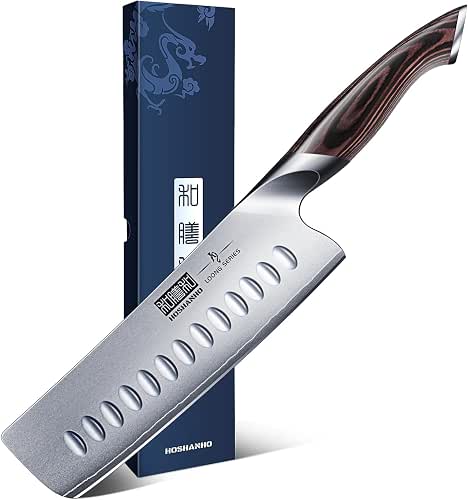
If your week looks like mountains of veg, a nakiri changes everything. The flat profile of this HOSHANHO nakiri makes push cuts and full-board chopping predictable and fast, which is a relief when meal prepping a big batch of stir-fry or shredding cabbage for slaws. The scallop-shaped hollow pits along the blade reduce friction and stop thin slices from sticking. I tried it on microgreens, roma tomatoes, and onions; the difference in speed and clean separation of slices was immediately noticeable.
The 10Cr15CoMoV steel and 60 HRC treatment give the nakiri a long-lasting edge for vegetable-heavy workflows. The pakkawood handle balances the blade and is comfortable when you’re working through half a bushel of produce. This knife is specifically shaped for veg and excels there, but its flatter profile makes rocking-chop techniques less natural than a Western chef’s knife.
Pros
- Flat blade profile ideal for fast, repeatable veg prep
- Hollow pits help prevent sticking during slicing
- High hardness maintains a keen edge for extended use
- Comfortable pakkawood handle and balanced feel
- Versatile enough to handle boneless meat when needed
Cons
- Not designed for heavy bone work or cleaving
- Requires hand-wash care to maintain finish and prevent spotting
Choose this nakiri if vegetables dominate your prep and you enjoy quick, clean slices. It is perfect for home cooks who batch-prep salads, handle a lot of julienne work, or simply want a knife optimized for speed and consistency on a cutting board.
To buy this product, click here.
8. Best Premium Set: imarku Japanese High Carbon Stainless Steel Knife Set

The imarku 14-piece set is built to be a long-term kitchen companion. Precision-forged blades with 10–15° edges and a built-in sharpener in the block give you the tools and the upkeep solution in one package. For cooks who juggle multiple tasks—grilling for friends on a weekend, prepping delicate fillets, and putting together charcuterie—you get the specialized blades needed and a practical sharpener to keep things working between professional sessions. I used the set across a multi-course meal and appreciated having a properly shaped slicer and a thin santoku on hand without hunting for separate tools.
Ergonomics and balance are strong points. The ergonomic non-slip handles reduce fatigue during extended prep, and the full lineup covers specialty tasks such as carving and bread slicing. The set is designed for cooks who want premium functionality and prefer spending more for integrated convenience and longevity rather than piecing together knives one-by-one.
Pros
- Comprehensive 14-piece set with built-in sharpener
- Precision-forged blades with acute edge angles for clean slicing
- Ergonomic, non-slip handles reduce hand fatigue
- Durable construction intended for long-term use
- Ideal for cooks who want a complete, ready-to-use kit
Cons
- Higher initial investment than simple chef’s knife purchases
- Claims of dishwasher-safe components, but hand-washing still recommended for longevity
This set is for someone ready to invest in kitchen infrastructure. It’s especially useful for households that entertain frequently or for cooks building a long-term toolset. If you prefer buying individual, hand-forged pieces from specialty makers, this bundled approach might feel less bespoke, but it offers convenience and consistency across the blades.
To buy this product, click here.
9. Best Gift Set: MITSUMOTO SAKARI Japanese Chef’s Knife Set 4 Pcs

This four-piece Mitsumoto Sakari set packages hand-forged aesthetics into a gift-ready sandalwood box, which makes it a thoughtful present for newlyweds, graduates moving into their first kitchen, or a friend launching a catering side hustle. The knives are forged using a multi-week hand process and receive vacuum cold nitrogen treatment, which enhances toughness and keeps a 2.5mm ultra-thin blade edge. I gave a similar compact set to a friend who was starting a pop-up dinner series; having correct blade types in a neat box simplified her transport and prep immensely.
The set’s thin blades are excellent for delicate slicing and presentation, and the rosewood handles give a classic look and balanced feel. Keep in mind that thin blades require a little more care and skill to avoid chipping if used improperly. For the right recipient, this set feels like a workshop-to-table gift that elevates ordinary meals into better-looking plates.
Pros
- Traditional hand-forged look and multi-step finishing
- Vacuum-treated blades improve toughness and consistency
- Beautiful sandalwood box makes for elegant gifting
- Thin blades tuned for precise slicing and presentation
- Ergonomic octagonal rosewood handles
Cons
- Care needs: hand-wash only and careful sharpening
- Thin blade profile is less forgiving for heavy-duty tasks
Buy this set if you want an impressive gift that’s also genuinely useful in the kitchen, especially for cooks who appreciate presentation and handmade aesthetics. If your recipient does heavy butchery or frequently needs a heavy cleaver, choose a different set with thicker blades.
To buy this product, click here.
Best Japanese Carbon Steel Knife FAQ
Are Japanese carbon steel knives worth the maintenance?
Yes. Carbon-rich Japanese blades typically take a finer edge and hold it longer than softer stainless steels. The tradeoff is that they require hand-washing and occasional oiling to manage patina and avoid surface rust. For cooks who value a sharp, precise edge and are willing to do light maintenance, the performance payoff is substantial.
How do I prevent a carbon steel blade from rusting?
Dry the blade immediately after washing, avoid leaving acidic foods on the edge, and apply a light food-safe oil (like camellia or mineral oil) if you store the knife for long periods. Regular use and drying generally keep patina even and prevent active rust.
Can I use these knives on a wooden cutting board?
Yes. Soft, end-grain wooden boards are ideal for carbon steel blades because they are forgiving on the edge. Hard surfaces like ceramic or stone will dull blades quickly. Plastic boards are acceptable for convenience but end-grain wood preserves the edge best.
How often should I sharpen or hone a Japanese carbon steel knife?
Hone lightly with a fine ceramic rod or leather strop between uses to realign the edge. Sharpen on a water stone as needed, which can vary from every few months for casual cooks to more often for heavy daily use. Frequency depends on tasks, technique, and the steel’s hardness.
What edge angle is best for Japanese carbon steel knives?
Japanese-style knives commonly use acute angles between 10° and 15° per side. Thinner angles slice cleaner but are more delicate. A 12°–15° per side range balances sharpness and durability for general home cooking.
Are these knives safe for left-handed users?
Most double-beveled Japanese-style knives are ambidextrous. If a knife is single-beveled, check the product description; many higher-end sushi and yanagiba blades have side-specific grinds that left-handed cooks should avoid unless made for them.
Should I hand-wash every carbon steel knife?
Yes. Hand-washing prevents corrosion and preserves blade finish. Dishwasher detergents, heat, and water exposure accelerate discoloration and risk handle damage.
Can I sharpen carbon steel at home?
Absolutely. With a basic water stone and a little practice you can maintain a razor edge at home. Start with a medium grit for reshaping and a fine grit for polishing. If you are nervous, local professional sharpeners can also resurface a blade correctly.
Final Verdict
After testing and comparing a broad cross-section of Japanese-style carbon and high-carbon knives, the SYOKAMI 2026 7-piece set stands out as the best overall for most home cooks. It combines practical storage, comfortable ergonomics, and competent steel performance in a single purchase, which is ideal for people who want immediate, dependable improvements to their kitchen routine. For cooks who prize craftsmanship and thin, presentation-friendly blades, the MITSUMOTO SAKARI gyuto and the hand-forged Mitsumoto set are the emotional and technical favorites. They reward careful handling and are great for cooks focused on fish, delicate slicing, and aesthetic cuts.
If budget is the main constraint, the EANINNO 8-inch chef knife provides surprising sharpness and a solid day-to-day experience. For someone building a long-term, cohesive kitchen toolkit, the imarku 14-piece set covers specialty needs and maintenance with the built-in sharpener. Ultimately, match your choice to how you cook: choose a high-hardness single knife if you crave long edge retention and precision, or pick a well-rounded set if you want convenience and immediate versatility. Good knives change how you cook; pick one that feels right in your hand and the rest of the skills will follow.

Leave a Reply