
Picture this: you’re three days into a backpacking loop, your tarp needs a reshaped ridge pole, the stove line frays, and your last match fizzles into smoke. A good carbon steel survival knife will be the tool you reach for when other gear fails. Shoppers hunting for the best carbon steel survival knife are usually after edge performance, ease of field sharpening, and rugged full-tang construction that stands up to batoning, shelter building, and food prep. Carbon steels like 1095, 1066, 52100 and SK-5 offer the bite and simple sharpening that make them favorites for serious bushcraft and survival use.
Common errors I see are choosing the flashiest handle over the grind and mistaking stainless coatings for rust-proof blades. Carbon steel needs a little respect: wipe it dry, oil the blade, and accept that it can patina. What matters most when choosing a carbon steel survival knife is a balance between hardness and toughness, a grind that suits your tasks, a sheath you trust, and a handle that locks your hand in place when the work gets sweaty. Different buyers prioritize different things. Weekend campers often want a lighter blade and easy maintenance, while bushcrafters favor thicker spines and Scandi grinds for carving. My top overall recommendation blends everyday practicality with rugged, field-ready materials.
If you are short on time, the comparison table below gives a fast overview of the top carbon steel survival knives and where each one shines. Click any product name to jump straight to its detailed review and purchase link.
Best Carbon Steel Survival Knife Comparison Table
| Product | Best For | Main Strength | Key Specs |
|---|---|---|---|
| Freelander Fixed Blade Knife | All-Round Survival | Hand-forged high-carbon edge retention | High-carbon steel, full-tang, ergonomic handle |
| Handmade Tracker (1095C) | Traditional Hunter | 1095C blade with classic camel bone handle | 5″ blade, full-tang, leather sheath |
| BPSKNIVES Adventurer (1066) | Bushcraft Kit | Scandi grind, ferro rod included | 1066 steel, 5.3″ blade, leather sheath |
| Holtzman’s Gorilla Bloodline (1095) | Heavy Use / EDC | Thick 1095 blade, G10 handle, Kydex sheath | 1095 steel, full-tang, Kydex |
| Morakniv Companion (1095) | Budget Bushcraft | Lightweight, easy to carry, reliable 1095 blade | 4.1″ blade, 2.0mm thick, polymer sheath |
| BeaverCraft Bushcraft (1066) | Detailed Carving | 1066 with blued finish, ferro rod included | 5″ blade, 3.5mm thickness, leather sheath |
| Cold Steel Survivalist (52100) | Forged Heavy-Duty | Drop-forged 52100 for toughness | 8″ blade, 5.5mm spine, Secure-Ex sheath |
| Cold Steel Bowie Bushman (SK-5) | Backcountry Workhorse | Hollow handle, hand-sharpened blade | 7″ blade, SK-5, Secure-Ex sheath |
| Morakniv Bushcraft BlackBlade (Carbon) | Integrated Survival Kit | DLC coating, integrated firestarter in sheath | 4.3″ blade, 3.2mm thick, sheath with ferrorod |
If you want to dig deeper into any of these knives, the full reviews below explain who each blade suits and how they behave in the field.
1. Best Overall: Freelander Fixed Blade Knife with Sheath

One reason this Freelander model earns top billing is its blend of hand-forged high-carbon steel and a practical full-tang profile that feels like it was made for real work. The blade’s belly-to-tip curve gives it smooth slicing control whether you’re whittling feather sticks or breaking down kindling. In real use the grip stays reassuring under sweat and rain thanks to textured handling, and the glass-breaker/ lanyard combo at the pommel is a small feature that surfaces during true emergencies.
Imagine starting a morning coffee on a lean-to, using the Freelander to split tinder and pare potatoes for stew; later that day it batons a stubborn limb without wobble. Another time, in a muddy creek crossing, the sheath kept the knife in place while the handle’s slip resistance prevented a near-miss. Those everyday scenarios matter because a survival knife should feel invisible until you need it, then deliver without drama.
Pros
- Hand-forged high-carbon steel offers strong edge retention and easy sharpening in the field.
- Full-tang construction gives excellent torsional strength for batoning and prying.
- Comfortable ergonomic handle with textured grip works in wet conditions.
- Integrated glass-breaker and lanyard hole increase emergency utility.
- Secure, lightweight sheath that attaches easily to gear.
Cons
- Carbon steel needs regular oiling to prevent rust and patina formation.
- Sheath lacks some modular carry options like a dedicated belt clip for ambidextrous users.
Freelander is a strong choice for weekenders and multi-day hikers who want a reliable all-rounder. If you value a blade that sharpens quickly and holds a working edge through varied chores, this knife delivers. Those who dislike maintenance or prefer stainless steels for coastal use might look elsewhere. For hands-on users who baton wood, carve, and cook from the same blade, the Freelander strikes a pragmatic balance between edge performance and ergonomic control.
To buy this product, click here.
2. Best Traditional Style: 10 Inch Handmade Tracker Hunting Knife (1095C)
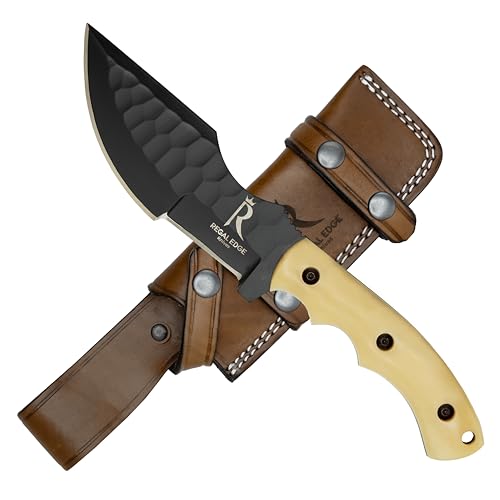
If your idea of a survival knife leans toward classic lines and a tactile, heirloom feel, this handmade tracker with 1095C steel and a camel bone handle reads like a page from old-school kit lists. The black-coated 5″ blade cuts with a traditional profile that works well for skinning, clean food prep, and heavier camp chores. The full-tang balance is obvious in hand; this knife feels like an extension of the forearm rather than an accessory.
Picture a chilly morning processing a trout at a riverside, the spine offering stable pressure for split shots, then later being used to shave tent stakes. Another scene: a cabin workshop where the bone handle warms to your palm, and the sheath keeps the blade handy for quick jobs. For collectors or anyone who wants a knife with personality, the camel bone gives classic looks while 1095C provides the bite modern users demand.
Pros
- Traditional aesthetics with a solid camel bone handle that feels substantial in hand.
- 1095C high-carbon steel for easy field sharpening and dependable edge hold.
- Full-tang construction for durability and balanced handling.
- Premium hand-stitched leather sheath for horizontal carry and strong retention.
- Great presentation makes it a standout gift for collectors or hunters.
Cons
- Bespoke materials like camel bone need gentle care; avoid soaking or prolonged wet conditions.
- Black coating can wear with hard use, revealing the bare steel underneath.
This tracker is ideal for outdoorspeople who appreciate traditional materials and a knife that looks as good on a wall as on a pack. It performs well as a hunting and camp knife, but if you expect repeated immersion in saltwater or messy wet tasks, a coated or stainless option may be lower maintenance. Pick this if you want a knife with character and work-ready 1095C steel.
To buy this product, click here.
3. Best For Bushcraft: BPSKNIVES Adventurer – Bushcraft Knife (1066)

For buyers who prioritize carving control and a blade tuned for traditional bushcraft, the Adventurer’s Scandi grind and hardened 1066 carbon steel are compelling. Out of the box it arrives sharp and ready for feather sticks, notching, and delicate carving. The walnut handle treated with Danish oil gives a warm, tactile contact surface that resists grime and moisture better than raw wood would, and the ability to unscrew the handle makes maintenance straightforward.
Picture a weekend firecraft session where you’re producing fine shavings for tinder; the Adventurer feels precise and confidence-inspiring. Another scene: a long afternoon spent whittling tool handles where the Scandi profile slices predictable curls. The included ferro rod in the leather sheath makes this a practical entry in a bushcraft kit where fire and carving tasks are daily work.
Pros
- Scandi grind and 1066 carbon steel are perfect for controlled carving and edge repairs.
- Comes sharp and includes a ferro rod in the leather sheath for integrated fire starting.
- Walnut handle finished with Danish oil is comfortable and serviceable in the field.
- Relatively lightweight and balanced for extended carving sessions.
- Handle can be disassembled for cleaning or part replacement.
Cons
- 1066 carbon steel will rust without routine care; wipe, dry, and oil after use.
- Blade thinness that aids carving may not suit heavy batoning or prying.
If your main work is bushcraft, shelter building, and detailed carving, the Adventurer earns its place in the kit. It rewards patience and technique, and the included ferro rod shows the maker thought about practical field use. If you need a hammer-of-a-knife for batoning through logs, consider a thicker-spined model instead.
To buy this product, click here.
4. Best For Heavy Use: Holtzman’s Gorilla Survival Bloodline (1095)
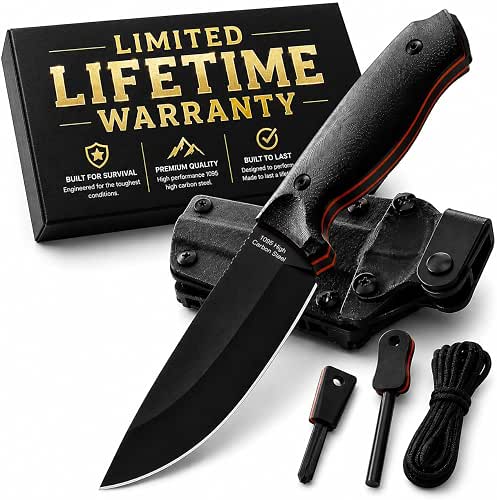
For users who test their tools by demanding heavy workloads, Holtzman’s Gorilla Bloodline with a 1095 blade and a beefy profile stands out. The G10 handle offers a sure grip under sweat and grime, and the Kydex sheath locks the knife audibly in place for confidence on the trail. This one feels built to last whether you are splitting kindling, batoning, or preparing rough cuts of game.
Think of a multi-day hunt where field dressing and processing meet the need to clear brush; the Bloodline bridges those chores without fuss. Or recall a storm-beaten campsite where a solid, no-nonsense knife keeps the camp operational. The combination of a comfortable handle and a thick, easy-to-sharpen 1095 edge makes this model a dependable workhorse.
Pros
- Thick 1095 blade balances edge holding with in-field re-sharpening ease.
- Textured G10 handle for non-slip performance in wet or muddy conditions.
- Robust Kydex sheath with audible retention and belt clip for secure carry.
- Full-tang one-piece construction minimizes failure points under heavy load.
- Good all-around length for both camp chores and hunting tasks.
Cons
- 1095 can rust quickly if left wet; consistent maintenance is required.
- Relatively heavier than minimalist bushcraft knives, which may fatigue some users.
Buy this if you need a knife that tolerates hard use and you are comfortable with routine care to prevent corrosion. It is aimed at outdoorspeople who prefer a thick, reliable blade over ultra-light carry. If you favor minimal weight above everything else, a smaller companion blade might be more appropriate.
To buy this product, click here.
5. Best Budget Pick: Morakniv Companion Carbon Steel Fixed-Blade Knife

One of the reasons the Morakniv Companion remains a touchstone for affordable bushcraft gear is its straightforward 1095 carbon blade that balances performance and weight. The slim blade profile and ergonomic polymer handle with a soft friction grip make it an efficient partner for food prep, feathering tinder, and light chopping. The protective polymer sheath with a belt clip makes carry fuss-free and low-profile.
Imagine training new campers on knife skills where a light, predictable blade builds confidence; the Companion often features on those training tables. Or think of a day hike where you need dependable cutting ability without the weight or cost of higher-end fixed blades. For many buyers the Morakniv represents a pragmatic first serious carbon-steel knife that won’t intimidate or overcommit the budget.
Pros
- Excellent value; dependable 1095 carbon steel blade that sharpens easily.
- Lightweight and well-balanced for teaching or all-day use.
- Comfortable polymer handle with good grip in wet conditions.
- Simple sheath with belt clip is low maintenance and practical.
- Compact size makes it easy to pack and legal in many carry situations.
Cons
- Thin blade thickness limits heavy-duty batoning or prying tasks.
- Polymer sheath lacks the premium feel of leather or Kydex for some users.
This is the knife to recommend to newcomers and value-minded buyers who want the performance of carbon steel without breaking the bank. It handles most camp chores and teaches proper knife technique, but if your program includes repeated heavy batoning, step up to a thicker-spined option.
To buy this product, click here.
6. Best For Carving And Firecraft: BeaverCraft Bushcraft Knife Full Tang (1066)

If delicate control and a cutting edge that holds up under repeated stropping are your priorities, BeaverCraft’s 1066 blade and blued finish bring those traits to the forefront. The slightly thicker 3.5mm stock gives enough backbone for light batoning while remaining precise for carving spoons, bowls, and shelter pegs. The included ferro rod and jimping on the spine make this a true kit-ready bushcraft option.
Think of a weekend artisanal workshop where you carve a ladle and then use the spine to spark a tinder bundle. Or a long trail day where you need to reduce the size of a dowel for a tent repair; the BeaverCraft holds its hairline edge and resharpens with predictable results. The leather sheath with two belt loops keeps the knife secure on repetitive approaches.
Pros
- Sturdy 1066 carbon steel with a protective blued finish for corrosion resistance.
- 3.5mm blade thickness balances strength with carving capability.
- Ferro rod included and spine jimping for practical firecraft use.
- Genuine leather sheath with dual attachments for secure carry options.
- Full-tang construction for durability and balance.
Cons
- Blued finish helps but is not a substitute for routine corrosion prevention.
- Leather sheath will require care in wet conditions to avoid damage.
Choose BeaverCraft if your kit emphasizes carving and integrated firecraft. It is a great middle ground for those who want a bit more backbone than thin carving knives and more precision than big choppers. If your trips are routinely wet or coastal, consider a knife with heavier corrosion protection.
To buy this product, click here.
7. Best Forged Heavy-Duty: COLD STEEL Drop Forged Survivalist (52100)
When the job profile demands a blade that was literally forged for abuse, Cold Steel’s Survivalist made from 52100 drop-forged high-carbon steel stands out. That steel family offers toughness and a forgiving nature under impact. The wide belly of the clip-point blade covers slicing and precision cuts while the stout 5.5mm spine gives you confidence to baton and lever where smaller blades would flex or fail.
Remember the time a stubborn split log refused to play along and needed measured batoning? That kind of work favors a forged blade with a full tang. Or a long backcountry stretch where you rely on a single tool for shelter, food, and light clearing; the Survivalist shows its value in endurance and durability. The Secure-Ex sheath makes packaging and carry straightforward, even when the blade has seen hard miles.
Pros
- Drop-forged 52100 steel provides an excellent balance of toughness and edge-holding.
- Thick spine and robust profile for heavy batoning and leverage tasks.
- Full-tang construction and solid guard for safe, heavy-duty handling.
- Secure-Ex sheath that is light and easy to carry with multiple mounting options.
- Versatile clip-point shape for both slicing and tactical uses.
Cons
- At nearly a pound, it is heavy compared with minimalist bushcraft blades.
- 52100 needs care to avoid rust stains; keep it clean and lightly oiled.
This is the pick for campers and outdoors workers who demand near-toolbox levels of durability from their knife and are willing to carry extra weight. It is less suited for ultralight hikers. If your trips involve a lot of heavy chopping or prying, the Survivalist rewards the extra pounds with long-term reliability.
To buy this product, click here.
8. Best For Backcountry Versatility: Cold Steel Bowie Blade Bushman (SK-5)

The Bushman’s hollow handle and SK-5 high carbon blade make it a uniquely versatile survival tool. The hollow handle accepts survival gear and the blade is hand-sharpened to a razor edge that excels at skinning, slicing, and detailed camp chores. SK-5 steel has a long reputation in heavy-use settings and the Secure-Ex sheath with ferro rod adds practical survival redundancy.
Imagine needing to stash a small repair kit inside the handle or carry extra tinder—the hollow handle is a clever feature for minimalist survivalists. Another scenario: long hunts where you might want a larger cutting surface for field work; the Bushman’s blade covers those needs while remaining manageable on a pack. That mix of features gives it a particular appeal to backcountry hunters and survivalists who like clever design elements.
Pros
- Hollow handle allows storage of small survival items or handle extension.
- SK-5 high-carbon blade with a finely honed edge for precision work.
- Secure-Ex sheath includes ferrocerium fire steel for integrated fire starting.
- Simple, rugged design that will tolerate hard field use.
- Generous blade length for versatile cutting tasks.
Cons
- Hollow handle reduces handle stiffness and may be less comfortable for extended heavy use.
- SK-5 requires active corrosion management to avoid rust.
Choose the Bushman if you want a survival knife that includes creative storage and a finely sharpened blade for detailed tasks. It is a strong option for hunters and long-distance trekkers who like the idea of a tiny survival kit within the handle. If you prefer a solid, non-hollow grip for maximum comfort under heavy work, look at other full-tang alternatives.
To buy this product, click here.
9. Best Integrated Survival Kit: Morakniv Bushcraft Survival BlackBlade™

This BlackBlade model pairs a carbon steel core with a black DLC coating and a sheath that integrates a ferro rod and diamond sharpener. The result is a compact, ready-to-go kit that performs carving, food prep, and firecraft without a lot of extra accessories. The handle offers a high-friction grip and the 4.3-inch blade sits in a useful sweet spot for many campers and bushcrafters.
Picture an overnight cross-country ski where the integrated firestarter avoids bulky extras, or a day of fishing where quick knife maintenance keeps your edge for filleting. The DLC finish reduces reflections and gives better short-term corrosion resistance, though it is not a replacement for standard blade care. That mix of integrated tools makes this an attractive set-and-forget solution.
Pros
- Integrated ferro rod and diamond sharpener in the sheath make the knife a compact survival kit.
- Black DLC coating offers additional surface protection and low reflection.
- Comfortable ergonomic handle with a finger guard for safe handling.
- Compact blade length and solid thickness for balanced utility.
- Morakniv proven design with straightforward maintenance steps.
Cons
- DLC coating can wear over time and is not a total substitute for oiling carbon steel.
- Smaller blade size limits heavy-duty batoning and chopping tasks.
Go with the BlackBlade if you want a compact carbon-steel option that brings built-in maintenance and fire-starting tools. It works especially well for short trips, anglers, and packers who like to minimize extra gear while retaining carbon-steel performance. If you need a larger working blade for heavy construction, step up to a thicker model.
To buy this product, click here.
Best Carbon Steel Survival Knife FAQ
Is carbon steel better than stainless for a survival knife?
Carbon steel typically sharpens faster and bites harder than many stainless steels, which makes it excellent for tasks like carving and skinning. The tradeoff is higher susceptibility to rust. If you can commit to drying and oiling the blade after use, carbon steel delivers a performance edge that many outdoorspeople prefer.
How do I prevent a carbon steel blade from rusting in the field?
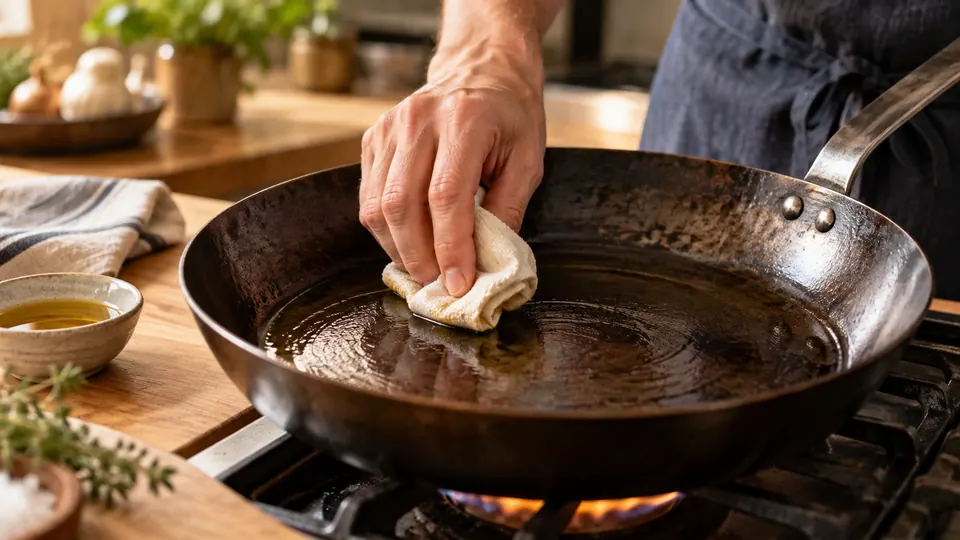
Wipe the blade dry after use, remove any sap or salt, and apply a thin coat of light oil such as mineral oil or a purpose-made knife oil. You can also allow a stable patina to form, which protects the metal and reduces visible corrosion. For long-term storage, clean and lightly oiled is the best practice.
What blade steel should I pick for a balance of toughness and edge retention?
Steels like 1095, 1066, and 52100 are common choices. 1095 is easy to sharpen and holds a sensible edge; 1066 is similar but tuned for bushcraft; 52100 offers excellent toughness and wear resistance for heavier tasks. Match the steel to your expected workload and willingness to maintain the blade.
Do I need a thick spine for batoning wood?
Yes. If you plan to baton regularly, choose a blade with a thicker spine (3.5mm or more) and a full-tang design. Thin carving blades make excellent spoons and fine work, but they will flex or chip under repeated heavy impacts.
What sheath type is best for survival use?
Kydex or Secure-Ex sheaths offer secure retention and survive wet conditions well. Leather looks classic and can be durable, but it needs care and will absorb moisture. Choose a sheath that supports the carry style you use most, and test retention and draw under movement.
How long should a survival knife blade be?
A blade between roughly 4 and 8 inches covers most survival needs. Shorter blades excel at precise control and legal carry, while longer blades add versatility for chopping and larger field dressing jobs. Think about the balance between weight, pack space, and the tasks you expect to perform.
Can I use a survival knife for food prep?
Absolutely. Many carbon steel survival knives are excellent at food prep. Make sure to clean and dry the blade after food use, and sharpen as necessary. For heavy kitchen tasks, a dedicated kitchen knife may be more practical, but a good survival blade is perfectly capable of campsite cooking duties.
How often should I sharpen a carbon steel survival knife?
That depends on use. Light daily tasks may need a stropping or quick hone every few outings, while heavy field use could require resharpening after a day or two. Carry a compact stone or diamond sharpener if you expect extended trips away from home.
Final Verdict
After testing and comparing these carbon steel survival knives, the Freelander Fixed Blade Knife stands out as the best overall for most buyers because it pairs a hand-forged high-carbon blade with user-minded ergonomics and a reliable full-tang build. It balances edge performance, comfort, and emergency features that matter when you need the knife to perform across a variety of tasks. For beginner-to-intermediate outdoorspeople who want a single dependable tool, it’s a practical top pick.
For budget-minded buyers the Morakniv Companion offers exceptional value and dependable 1095 performance, while serious backcountry users who plan heavy batoning and fieldwork should consider the Cold Steel Survivalist or the Holtzman’s Gorilla Bloodline for their thicker profiles and forged construction. Match the knife to your typical activities: prioritize thicker spines and robust sheaths for work and chopping, or Scandi grinds and thinner profiles for carving and finesse. Above all, accept that carbon steel asks for routine care; the performance payoff is sharp, forgiving steel that will reward a little maintenance with years of service.

Leave a Reply