
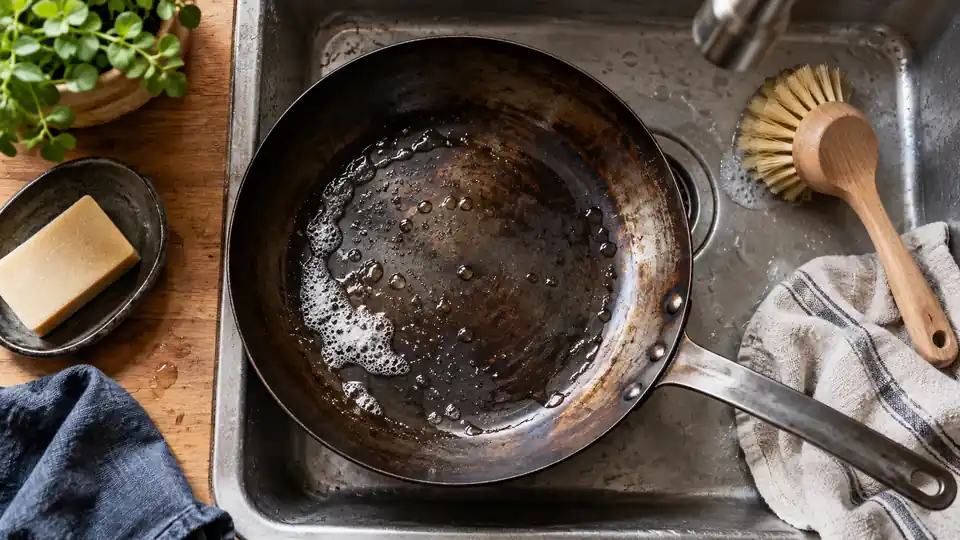
Carbon steel cookware builds a reputation for great searing, fast heat response, and long life, but that reputation comes with a maintenance question that confuses plenty of cooks: can you use soap on carbon steel without ruining the pan?
The short answer is less dramatic than older cookware advice makes it sound. Modern dish soap is usually safe for carbon steel in small amounts, especially when you are using it to remove grease, food residue, or stubborn smells. The real risk is not the soap itself. The bigger problem is aggressive scrubbing, long soaking, and leaving moisture on the pan after washing, which can weaken seasoning and lead to rust.
This matters because carbon steel depends on a thin seasoned layer to protect the metal and improve cooking performance. If that layer is still new or fragile, harsh cleaning can strip parts of it away. If the seasoning is mature and well built, a brief wash with mild soap is generally fine. Understanding that difference makes carbon steel much easier to own and maintain.
Quick Answer
Yes, you can use soap on carbon steel cookware, as long as you use a small amount of mild dish soap, wash the pan briefly, and dry it immediately. Modern dish soap does not usually destroy a well-seasoned carbon steel pan. That old warning comes largely from the days when soaps contained harsher lye-based ingredients.
What can cause trouble is how the pan is cleaned. If you soak carbon steel in soapy water, scrub it aggressively with abrasive pads, or leave it wet after washing, you can damage the seasoning and expose bare steel. That exposed steel can then rust quickly.
For routine cleanup, hot water and a soft brush or sponge are often enough. For greasy residue, sticky bits, or strong food odors, a little soap is perfectly reasonable. After washing, always dry the pan thoroughly over heat and apply a very thin film of oil if the surface looks dry or dull. If some seasoning comes off, that does not mean the pan is ruined. It usually just needs a quick stovetop touch-up.
Why the Soap Question Causes So Much Confusion
Carbon steel care advice often gets passed around in short, absolute rules. “Never use soap” is one of the most common. It sounds simple, but it leaves out an important detail: not all soap is the same, and not all seasoning is equally durable.
Older cleaning soaps could be much harsher than the dish liquids used in most kitchens now. Traditional lye-based soap was more likely to break down the oil-based seasoning layer on cast iron and carbon steel. Modern dish soap is designed mainly to cut grease, not to strip cookware down to raw metal.
Even so, carbon steel seasoning is not indestructible. A newly seasoned pan can lose patches more easily than one that has been used regularly for months. That is why two cooks can use soap on similar pans and get different results. One pan may stay fine, while the other shows dull spots or bare areas.
The better rule is this: use soap when needed, but clean gently and protect the pan afterward.
How Seasoning Works on Carbon Steel
To understand why soap is sometimes fine and sometimes not ideal, it helps to know what seasoning actually is. Seasoning is not leftover grease sitting on the surface. It is a thin layer of oil that has bonded to the metal through heat.
As oil heats past its smoke point, it begins to change and harden. This process, often described as polymerization, creates a darker, more durable film on the steel. That film helps reduce sticking and slows oxidation, which is the chemical process that causes rust.
A good seasoned surface is smooth, thin, and bonded to the pan. A bad seasoned surface is thick, sticky, uneven, or flaky. Soap is much less likely to affect well-bonded seasoning than it is to affect weak, gummy buildup.
What a Healthy Seasoned Surface Looks Like
- Darkened color: usually brown to deep black over time
- Smooth feel: not tacky or greasy
- Even coverage: though minor variation is normal
- No rust spots: orange or reddish areas indicate exposed steel
What a Fragile Seasoned Surface Looks Like
- Sticky patches: usually from too much oil during seasoning
- Flaking: seasoning was not bonded well
- Gray metal showing through: bare steel is exposed
- Uneven dull areas after washing: some seasoning may have thinned
Can You Use Soap on Carbon Steel Every Day?
Yes, you can use soap on carbon steel regularly if the pan is well seasoned and you use mild dish soap sparingly. Plenty of experienced cooks wash their carbon steel pans with a small amount of soap after cooking fatty foods, fish, or strongly spiced dishes.
That said, daily soap use is not always necessary. If you cooked eggs in a well-seasoned skillet and only have a light residue left behind, hot water and a soft brush may do the job. Using soap every single time is more about preference and cleanup needs than about a hard rule.
Where soap becomes more useful is after foods that leave grease, sugar, or odors. A pan used for skin-on chicken, burgers, or fish can hold onto a film that plain water does not remove very well. In those cases, a little soap can leave the pan cleaner and less likely to develop sticky residue over time.
Good Situations for Using Soap
- After cooking oily or greasy foods
- When the pan smells strongly of fish, onions, or spices
- When there is sticky residue that hot water alone does not remove
- When the pan feels greasy even after wiping it out
Situations Where Soap May Be Unnecessary
- After cooking dry foods with minimal residue
- When the pan is still clean enough after wiping and rinsing
- When the seasoning is very new and you want to treat it gently
When Soap Can Be a Problem
The phrase “can you use soap on carbon steel” has a yes answer, but there are still cases where soap contributes to trouble. Usually that trouble is part of a larger cleaning mistake.
| Cleaning Habit | Is It Safe? | Why It Matters |
|---|---|---|
| Small amount of mild dish soap | Usually yes | Removes grease without harming strong seasoning in most cases |
| Quick wash with sponge or soft brush | Yes | Gentle cleaning protects the seasoned layer |
| Long soak in sink water | No | Water can penetrate weak seasoning and trigger rust |
| Dishwasher cleaning | No | Harsh detergent, long moisture exposure, and heat can strip seasoning |
| Heavy scouring with abrasive pads | Sometimes harmful | Can physically remove seasoning down to bare steel |
| Leaving pan wet to air dry | No | Moisture on exposed steel can create rust quickly |
Newly Seasoned Pans Are More Vulnerable
A fresh carbon steel pan often goes through an adjustment period. The first few seasoning layers can be uneven, and some of them may come off during early cooking and cleaning. That is normal. It does not mean you did something terribly wrong.
If your pan is still in that stage, you may want to use soap less often and focus on simple rinsing, scraping with a wooden spatula, and drying thoroughly. As the seasoning becomes stronger through regular cooking, mild soap becomes less risky.
Soap Plus Aggressive Scrubbing Is the Real Issue
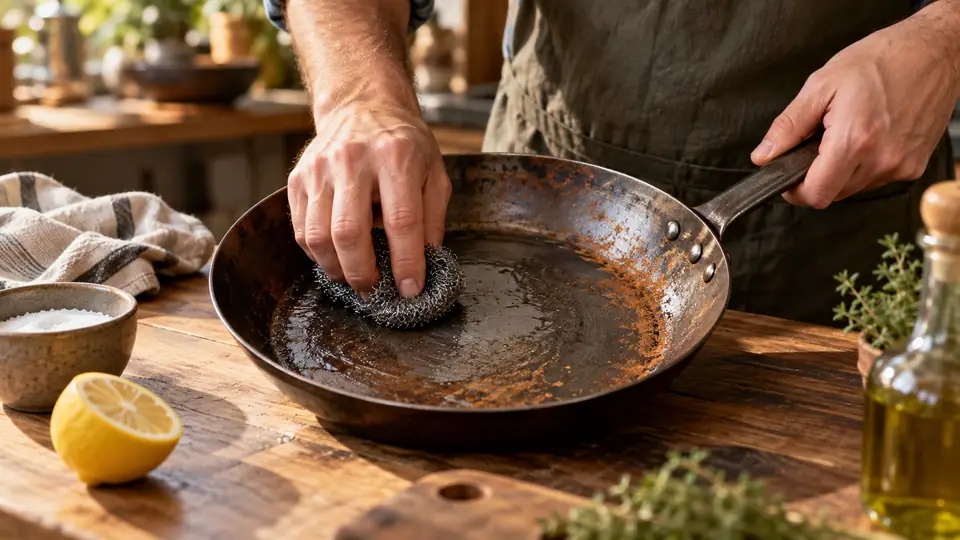
In practice, the biggest seasoning loss often comes from friction, not detergent. A metal scrubber or coarse abrasive pad can strip the surface quickly, especially if you are trying to remove burnt-on food. If you need extra cleaning power, simmering a small amount of water in the pan to loosen stuck bits is safer than attacking it dry with force.
How to Wash Carbon Steel With Soap Safely
If the pan needs a real wash, a careful routine keeps the seasoning intact while removing residue and odors. The process is simple and only takes a few minutes.
Step 1: Let the Pan Cool Slightly
Do not plunge a smoking hot carbon steel pan into cold water. Rapid temperature changes can stress the metal and, in some cases, contribute to warping. Let the pan cool until it is warm rather than blazing hot.
Step 2: Rinse Out Loose Residue
Use hot water to loosen any light food particles. A soft sponge, brush, or non-abrasive scrubber is usually enough at this stage.
Step 3: Add a Small Amount of Mild Dish Soap
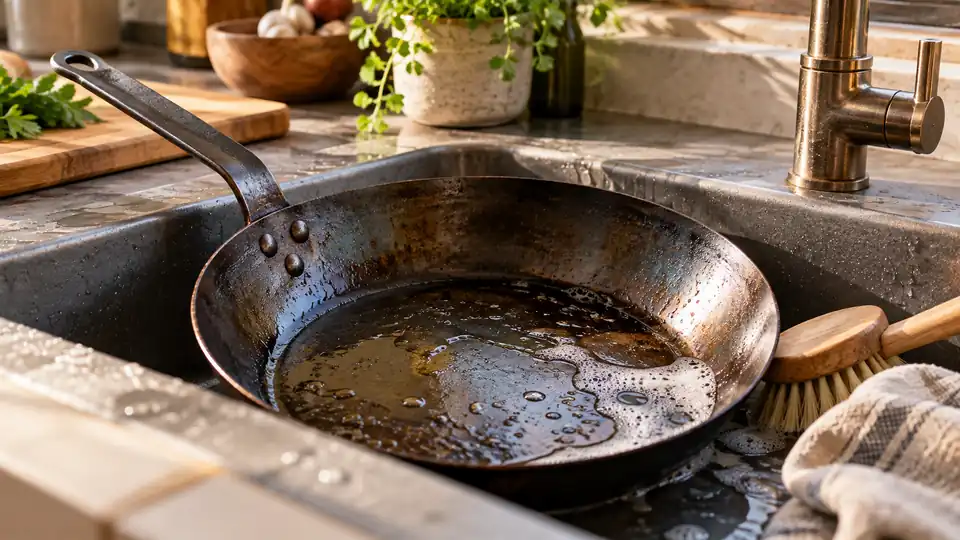
Use only what you need. A few drops is enough for most pans. Work it over the surface gently, paying attention to greasy areas and corners where residue tends to collect.
Step 4: Clean Gently
Use a sponge, dishcloth, or soft-bristle brush. If food is stuck, do not keep scrubbing harder and harder. Instead, add hot water and let it loosen for a minute, or simmer water briefly in the pan before washing again.
Step 5: Rinse Thoroughly
Make sure all soap is removed. Leftover soap residue can affect the feel of the pan and may interfere with the surface during the next cooking session.
Step 6: Dry Immediately and Completely
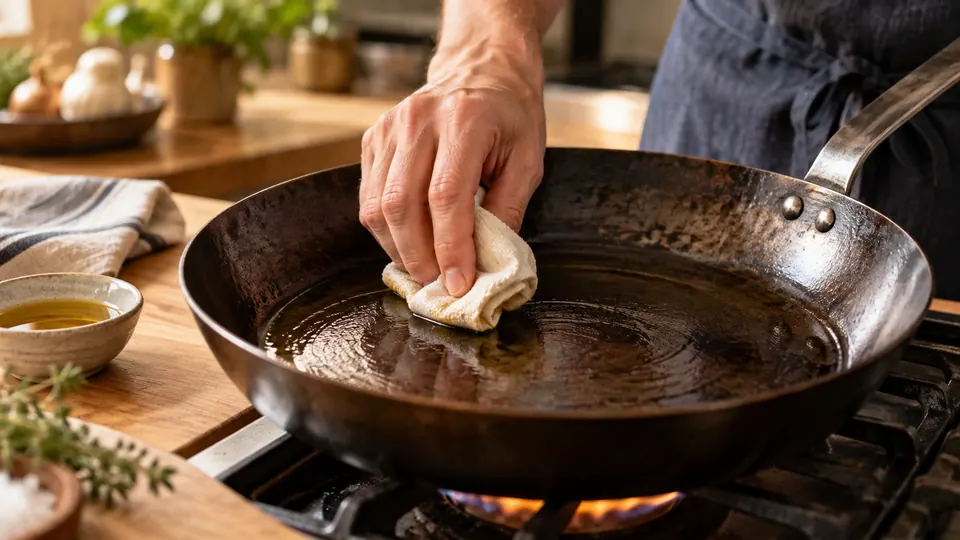
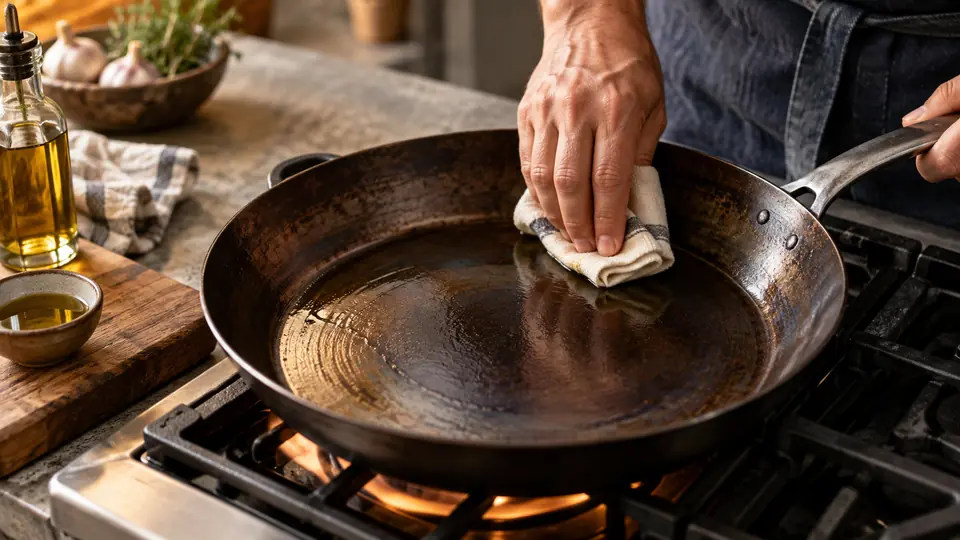
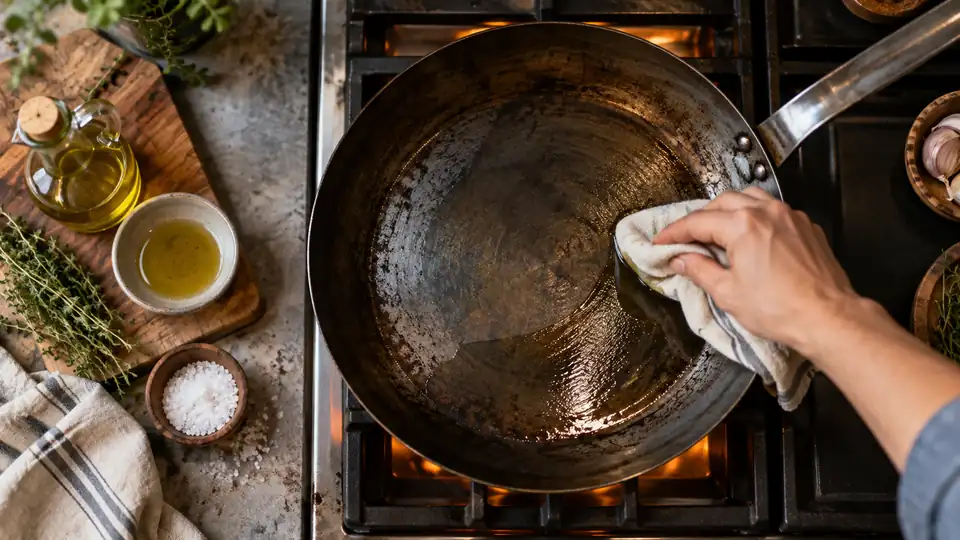
This is the critical step. Wipe the pan dry with a towel, then place it over low heat for a minute or two to drive off any hidden moisture. Moisture left around the rivets, handle junction, or curved sides can lead to rust.
Step 7: Add a Thin Film of Oil if Needed
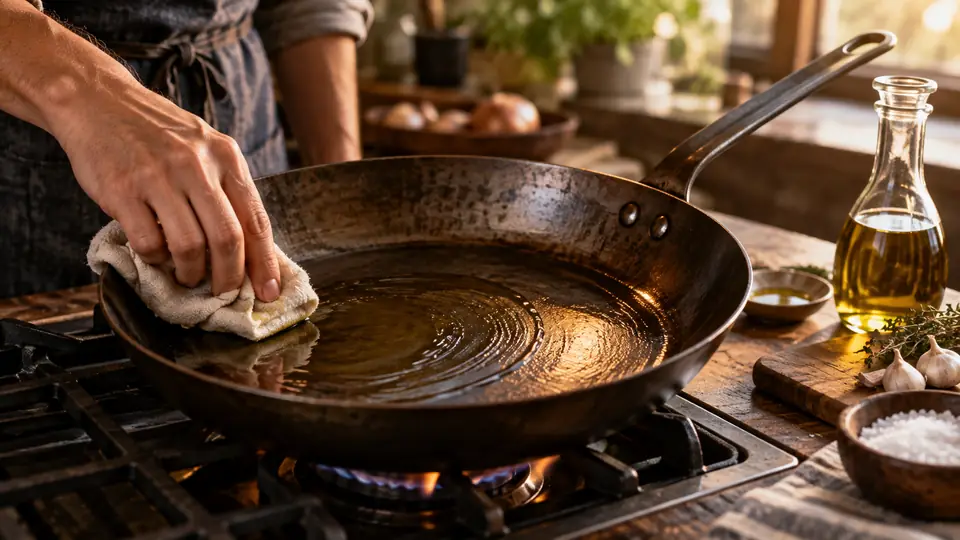
If the surface looks slightly dry, matte, or patchy, rub on a tiny amount of neutral oil and buff it until the pan does not feel greasy. This is not always required after every wash, but it helps protect the surface, especially in humid kitchens.
How to Clean Carbon Steel Without Soap
There are plenty of times when you do not need soap at all. In fact, non-soap cleaning is often the easiest method for routine maintenance.
Hot Water and a Brush
For most everyday cooking residue, hot water and a soft brush work well. This is especially true after sautéing vegetables, frying eggs in a stable seasoned pan, or searing meat without sugary marinades.
Salt Scrub for Stubborn Bits
Coarse salt can help remove stuck food without using harsh abrasives. Add a little oil or a damp paper towel and scrub gently. Then wipe the pan clean and rinse if needed.
This method is helpful, but it is not magic. If the pan is truly greasy, soap may still be the cleaner option.
Simmering Water to Release Burnt Food
For stuck-on residue, add a shallow layer of water and heat the pan until it simmers. Use a wooden spoon or spatula to scrape up loosened bits. Once the debris releases, dump the water, rinse, dry, and lightly oil if necessary.
Why Proper Cleaning Matters for Cooking Performance
Carbon steel works best when the cooking surface stays clean, smooth, and dry between uses. Greasy buildup can be almost as problematic as overcleaning. If old oil accumulates on the pan, it can turn sticky, uneven, and prone to smoking.
That buildup is sometimes mistaken for “good seasoning,” but it is usually the opposite. True seasoning is thin and bonded to the surface. Sticky residue is soft, patchy, and unstable. Soap can be useful here because it removes surface grease that plain water may leave behind.
A clean carbon steel pan also heats more predictably. Thick residue can create uneven contact between the food and the cooking surface. Over time, this can make sticking worse rather than better.
Common Mistakes People Make When Using Soap on Carbon Steel
The question is not just can you use soap on carbon steel. It is also how people tend to misuse it. Most cleaning problems come from habits, not from the soap bottle itself.
Soaking the Pan in the Sink
This is one of the fastest ways to invite rust. Carbon steel should not sit in water, whether soapy or plain. Even a well-seasoned pan can develop trouble if moisture gets into weak spots or exposed metal.
Using the Dishwasher
Carbon steel and dishwashers do not mix well. Dishwasher detergents are stronger than regular hand soap, and the long wet cycle is exactly what carbon steel does not need. A dishwasher can strip seasoning and leave rust spots in one cycle.
Scrubbing Until the Pan Looks Silver
Some people assume that a “truly clean” pan should return to bare shiny metal. That is not how carbon steel is meant to look in normal use. A dark patina is healthy. If you scrub down to raw steel every time, you will constantly restart the seasoning process.
Not Drying Thoroughly
Even a careful wash can turn into a rust problem if the pan is towel-dried only on the visible surface. Moisture can remain in hard-to-see spots. A minute or two of low heat after washing solves this.
Oiling Too Heavily After Washing
A thin protective layer is helpful. A thick greasy coating is not. Too much oil can become sticky between uses and attract dust or residue. Wipe on a small amount, then buff most of it off.
What to Do If Soap Seems to Remove Some Seasoning
It happens. You wash the pan, dry it, and notice lighter patches or a dull gray area where the surface used to be darker. That does not mean the pan is damaged beyond repair. Carbon steel is very forgiving.
Minor Loss of Seasoning
If only small patches have lightened, keep cooking with the pan and add a quick touch-up seasoning if needed. Frying onions, potatoes, or other moderately oily foods can help rebuild the surface over time.
More Noticeable Bare Metal
If a larger area has stripped down to steel, dry the pan thoroughly and apply a light stovetop seasoning. Add a tiny amount of oil, wipe until nearly dry, then heat the pan until the oil darkens and bonds. Repeat once or twice if needed.
Rust After Washing
If rust appears, remove it promptly with a non-abrasive scrubber or a mild abrasive such as baking soda paste. Dry the pan completely, then reseason the exposed area. Rust is common enough with carbon steel that it should be treated as a maintenance task, not a disaster.
A Simple Carbon Steel Cleaning Routine
For most home cooks, the easiest approach is a flexible routine rather than a strict no-soap rule.
| After Cooking Situation | Best Cleaning Approach | Follow-Up |
|---|---|---|
| Light residue only | Wipe out, rinse with hot water | Dry over low heat |
| Greasy surface | Mild soap and soft sponge | Rinse, dry, light oil if needed |
| Stuck food bits | Simmer water, scrape gently | Wash if needed, then dry |
| Fish or strong odors | Brief soap wash | Dry thoroughly |
| Sticky buildup | Soap plus gentle cleaning | Touch up seasoning if surface looks dull |
| Rust spots | Remove rust, dry completely | Reseason exposed metal |
Should You Avoid Soap During the First Few Uses?
That is often a smart idea, especially if the pan is newly seasoned and still building a stable surface. Early on, carbon steel can be temperamental. Acidic foods, high heat mistakes, and aggressive cleaning all affect the pan more noticeably during this stage.
For the first several uses, many cooks get better results by cleaning with hot water, a brush, and minimal scrubbing. Once the pan develops a darker, more consistent patina, mild soap becomes less of a concern.
If you are starting with a factory pre-seasoned pan, the same principle applies. Pre-seasoning helps, but it is rarely perfect or fully mature right out of the box. A little caution early on can make ownership easier later.
How Soap Use Differs Between Carbon Steel and Other Cookware
Part of the confusion comes from treating all pans the same. Carbon steel sits between several cookware categories in how it should be handled.
Compared With Stainless Steel
Stainless steel can usually tolerate soaking, stronger scrubbing, and heavier detergent use without issue. Carbon steel cannot. Stainless does not depend on seasoning for rust protection or surface performance.
Compared With Cast Iron
Carbon steel and cast iron are quite similar in cleaning needs. Both rely on seasoning and both can rust if left wet. The same modern advice applies to both: mild soap is generally okay, but soaking and harsh cleaning are not.
Compared With Nonstick
Nonstick pans do not need seasoning, but they also cannot handle aggressive scrubbing or high heat as well. Carbon steel is tougher in some ways, yet more maintenance-heavy because it needs drying and occasional oiling.
Frequently Asked Questions
Will soap ruin a carbon steel pan?
No, mild dish soap will not usually ruin a carbon steel pan. A brief hand wash is generally safe, especially on a well-seasoned pan. Problems usually come from soaking, harsh scrubbing, or failing to dry the pan immediately.
Can you use Dawn on carbon steel?
Yes, a mild dish soap such as Dawn can be used on carbon steel in small amounts. Use it for a quick wash, rinse thoroughly, and dry the pan over heat afterward.
Do you need to reseason carbon steel after every soapy wash?
No, not after every wash. If the pan still looks dark and smooth, simple drying is often enough. If the surface looks dull, patchy, or slightly bare, a light touch-up oiling or quick seasoning pass can help.
Is it better to clean carbon steel with salt instead of soap?
Salt can help remove stuck bits, but it does not replace soap in every situation. If the pan is greasy or holds odors, soap is often more effective. Salt is best used as a gentle scrubbing aid, not as a universal cleaner.
Can carbon steel soak in soapy water for a few minutes?
It is better not to soak carbon steel at all. Even a short soak can weaken fragile seasoning and increase the chance of rust, especially around exposed spots or edges. A quick wash is safer than letting it sit in the sink.
Why does my carbon steel pan look lighter after washing with soap?
That usually means some weak seasoning came off. It is common with newer pans or pans that had uneven seasoning buildup. Dry the pan well and add a light seasoning touch-up if needed.
Final Thoughts
Can you use soap on carbon steel? Yes, in most kitchens you can. Mild dish soap used briefly and gently is usually safe, especially on a pan with established seasoning. The old blanket rule against soap is too rigid for modern cookware care.
The more useful rule is to protect the pan’s seasoned surface. Avoid soaking, skip the dishwasher, scrub gently, and always dry the pan thoroughly. If washing removes a little seasoning, that is a normal maintenance issue, not a failure. Carbon steel rewards steady, sensible care more than strict rituals.
Once you get comfortable with that balance, cleaning carbon steel becomes much less intimidating. A clean, dry, lightly protected pan will cook better, rust less, and develop a stronger seasoning layer over time.



Leave a Reply