

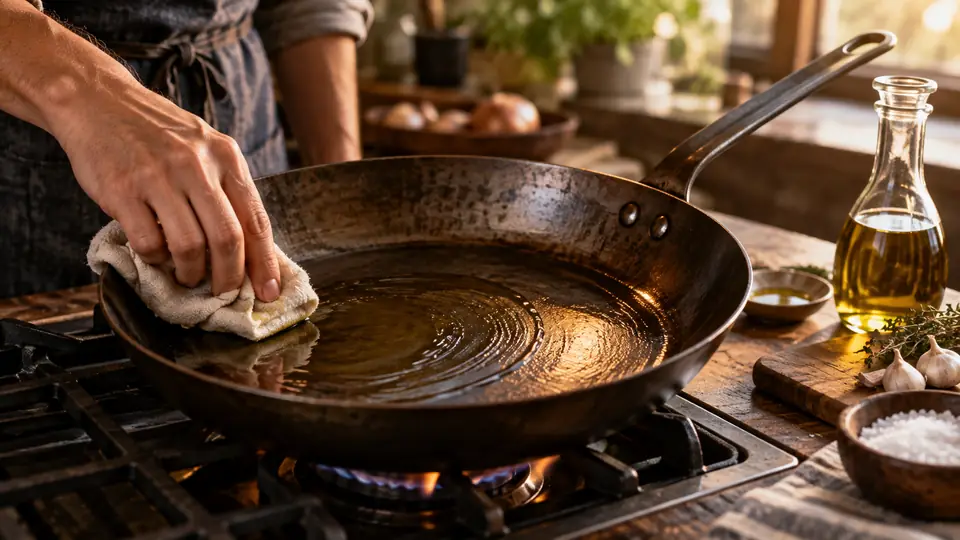
Carbon steel cooks differently depending on the oil you put in the pan. The right oil helps food release better, protects the seasoning layer, and handles high heat without filling the kitchen with smoke. The wrong oil can leave a sticky surface, burn too quickly, or make a well-seasoned pan feel frustrating to use.
That is why the question What Oil Should You Cook with in Carbon Steel matters more than it might seem. Carbon steel responds quickly to heat, and it often shines in high-heat cooking such as searing, sautéing, stir-frying, and frying eggs once the surface is properly seasoned. Oil choice affects all of that. Smoke point matters, but so do flavor, how refined the oil is, how cleanly it cooks, and whether you are using it for everyday cooking or for building seasoning.
In practice, most carbon steel owners do best with a small group of reliable cooking oils rather than chasing a single perfect answer. Neutral, reasonably high-heat oils tend to be the easiest fit. At the same time, some oils that are excellent for eating are not ideal for very hot carbon steel cooking, especially if the pan is being used for searing or wok-style cooking.
Quick Answer
The best oils to cook with in carbon steel are usually avocado oil, grapeseed oil, canola oil, refined sunflower oil, refined peanut oil, and other neutral oils with moderate to high smoke points. These oils work well because carbon steel often performs best at medium-high to high heat, and a neutral oil is less likely to burn or overpower the food.
For everyday stovetop use, avocado oil and grapeseed oil are especially practical choices. They tolerate heat well and do not leave a strong flavor behind. Canola oil is also widely used because it is affordable and versatile. If you are stir-frying, refined peanut oil is another strong option.
Butter and extra virgin olive oil can still be used in carbon steel, but they are better for lower to medium heat. Butter burns quickly unless combined with another oil. Extra virgin olive oil has more flavor and a lower smoke point than many neutral oils, so it is not the best choice for very hot searing.
If your goal is building or repairing seasoning rather than cooking food, oil choice becomes a separate issue. Some oils cook well but are not the easiest to season with. For actual cooking, though, a neutral high-heat oil is usually the safest and simplest answer.
Why Oil Choice Matters in Carbon Steel
Carbon steel is prized for its mix of heat responsiveness, durability, and the ability to develop a naturally slick seasoned surface. Unlike nonstick cookware, that surface is not a factory coating. It improves over time through use, careful heating, and thin layers of oil that polymerize onto the metal.
Because of that, oil in carbon steel does more than prevent sticking. It also acts as part of the pan’s day-to-day maintenance. A good cooking oil can help support the seasoning layer. A poor choice for the heat level you are using can leave behind burnt residue or a tacky film that feels rough instead of smooth.
High heat is a big factor here. Carbon steel pans and woks are often used for steaks, fried rice, chops, burgers, potatoes, and quick vegetable sautéing. Those jobs can push delicate oils beyond their comfort zone. Once an oil smokes heavily and burns, flavor suffers and cleanup gets harder.
This does not mean every carbon steel meal has to be cooked at maximum heat. It does mean your oil should match the kind of cooking you are doing.
What Oil Should You Cook with in Carbon Steel
The most practical answer is to match the oil to the pan’s typical use. Carbon steel is often used for hot, fast cooking, so neutral oils with moderate to high smoke points are the most dependable. These include avocado oil, grapeseed oil, canola oil, refined sunflower oil, safflower oil, vegetable oil, and refined peanut oil.
That does not mean flavored oils are off-limits. It simply means they are better used intentionally. Extra virgin olive oil, toasted sesame oil, walnut oil, and butter can all be used in carbon steel under the right conditions, but they are usually finishing fats or lower-heat fats rather than go-to oils for hard searing.
A helpful way to think about oil choice is to divide it into three categories:
- Best all-purpose cooking oils for daily carbon steel use
- Special-use oils and fats that work in specific situations
- Less suitable oils for high-heat carbon steel cooking
Best Oils for Cooking in Carbon Steel
| Oil | Heat Tolerance | Flavor | Best Uses in Carbon Steel | Main Caution |
|---|---|---|---|---|
| Avocado oil | High | Neutral to mild | Searing, sautéing, pan frying, general use | Often more expensive |
| Grapeseed oil | Moderate-high to high | Neutral | Eggs, vegetables, meat, everyday stovetop cooking | Smoke point varies by brand |
| Canola oil | Moderate-high | Very neutral | Daily cooking, frying, seasoning touch-ups | Not everyone prefers it for flavor or processing reasons |
| Refined peanut oil | High | Mild | Stir-frying, wok cooking, frying | Peanut allergy concerns in some kitchens |
| Refined sunflower oil | Moderate-high to high | Neutral | General cooking, crisping, shallow frying | Choose refined, not delicate unrefined versions, for higher heat |
| Safflower oil | High | Neutral | High-heat sautéing and searing | Can be less common in some stores |
| Vegetable oil blend | Moderate-high | Neutral | Budget-friendly daily use | Blend composition varies |
| Light or refined olive oil | Moderate-high | Mild olive flavor | Medium to medium-high heat cooking | Not the same as extra virgin olive oil |
Avocado Oil
Avocado oil is one of the easiest oils to recommend for carbon steel. It has a high smoke point, mild flavor, and broad versatility. That makes it useful for steaks, chicken thighs, potatoes, vegetables, and even eggs once the pan is heated correctly.
It is especially good for cooks who want one bottle that can handle both medium heat and harder searing. The main drawback is cost. If you cook often and use larger amounts of oil, avocado oil may feel expensive compared with canola or blended vegetable oil.
Grapeseed Oil
Grapeseed oil is a favorite for many carbon steel users because it is light, neutral, and easy to work with. It spreads well across the pan and does not add much flavor of its own. That makes it a strong choice for delicate foods as well as meats and vegetables.
It is also commonly used in seasoning discussions because it forms thin layers well, though cooking and seasoning are not always the same task. For actual cooking, grapeseed oil is dependable as long as you keep in mind that smoke points can vary a bit by refinement and brand.
Canola Oil
Canola oil is practical, affordable, and widely available. It performs well in carbon steel for everyday cooking and is often used by people who cook eggs, pancakes, cutlets, or weeknight vegetables on a regular basis.
Its neutrality is part of its value. You are less likely to have flavor clashes, and it works across many cuisines. Some cooks prefer less processed oils, but in terms of pan performance, canola remains a useful and common option.
Refined Peanut Oil
Refined peanut oil fits carbon steel particularly well in high-heat wok cooking. It tolerates heat, stays relatively stable, and has a mild flavor that works with stir-fries and shallow frying.
If you use carbon steel mostly for quick, hot cooking, refined peanut oil deserves consideration. Just be careful in shared kitchens where peanut allergies are a concern.
Sunflower, Safflower, and Vegetable Oil Blends
These oils are often overlooked because they seem ordinary, but ordinary is not a bad thing in carbon steel. Refined sunflower oil, safflower oil, and standard vegetable oil blends can all work well for frying, sautéing, and searing at common stovetop temperatures.
The key is to choose refined versions for higher heat. Unrefined oils can have lower smoke points and more pronounced flavors, which may not be what you want in a hot pan.
Oils and Fats That Work in Some Situations
Extra Virgin Olive Oil
Extra virgin olive oil can absolutely be used in carbon steel, but it is not the most forgiving option for very hot cooking. It has a stronger flavor and generally lower heat tolerance than the neutral oils listed above.
It works better for medium-heat cooking, gentle sautéing, and dishes where olive flavor is welcome. For example, cooking onions, greens, or chicken cutlets at moderate heat can be perfectly fine. For steak searing in a ripping hot pan, it is less ideal.
Butter
Butter gives excellent flavor, especially for eggs, fish, pancakes, and finishing vegetables. The problem is that the milk solids in butter burn quickly. In carbon steel, which heats fast and can create hot spots if preheated aggressively, plain butter can go from foaming to browned to burnt in a short window.
A common solution is to use a small amount of neutral oil first, then add butter once the food is in the pan or once the heat is lowered slightly. That gives you the flavor benefits without pushing butter too far.
Ghee or Clarified Butter
Ghee and clarified butter are better high-heat options than regular butter because the milk solids have been removed. They offer buttery flavor with better heat tolerance.
They can be excellent in carbon steel for eggs, potatoes, flatbreads, and some seared foods. Flavor is richer than neutral oils, so they are more of a style choice than a universal everyday oil.
Sesame Oil
Toasted sesame oil is not a primary cooking oil for carbon steel. It is strong, aromatic, and better used as a finishing oil or in small amounts. Adding it at the end of stir-frying is usually smarter than heating a large pool of it in a very hot wok.
Refined sesame oil is different and can tolerate more heat, but many home cooks specifically mean toasted sesame oil when they say sesame oil.
Coconut Oil
Coconut oil can work in carbon steel, though it is not always the easiest all-purpose choice. Refined coconut oil is more heat-tolerant and neutral than virgin coconut oil. Virgin coconut oil brings a noticeable flavor that may or may not fit the dish.
Because coconut oil can behave differently depending on room temperature and refinement, it is less universally convenient than avocado, grapeseed, or canola oil for most carbon steel cooking.
Oils That Are Usually Less Suitable for High-Heat Carbon Steel Cooking
- Flaxseed oil for cooking. It is more often discussed for seasoning than daily cooking, and it is not especially practical as a general cooking oil in hot pans.
- Unrefined delicate oils such as unrefined walnut oil or unrefined sesame oil. These are usually better for dressings or finishing.
- Extra virgin olive oil at very high heat. Fine for moderate heat, less ideal for aggressive searing.
- Regular butter in a very hot pan. Great flavor, but easy to burn.
“Less suitable” does not mean forbidden. It means they require more careful heat control and are more likely to produce smoke, bitterness, or sticky residue.
Smoke Point Matters, but It Is Not the Only Factor
Smoke point gets most of the attention in oil discussions, and it does matter. Carbon steel often runs hot, so an oil that starts smoking too early can become a problem. Still, smoke point is only one part of the picture.
Flavor matters too. A neutral oil is often better if you do not want the oil to compete with the food. Refinement also matters. Refined oils usually tolerate heat better, while unrefined oils often bring more flavor but less high-heat stability.
Pan technique is another factor. A well-preheated carbon steel pan with the right amount of oil often performs better than a poorly preheated pan with a supposedly perfect oil. In many sticking complaints, the issue is not just the oil itself. It is low or uneven preheating, using too little oil, or moving food before it naturally releases.
How Oil Choice Changes by Cooking Style
For Eggs
Eggs are sensitive to both heat and surface condition. In carbon steel, moderate heat works better than intense heat. Butter, ghee, grapeseed oil, or canola oil are all common choices.
If eggs tend to stick, the problem is often heat management rather than the oil alone. Let the pan preheat gently, add oil, then add the eggs once the oil looks fluid and lightly shimmering rather than smoking.
For Steak and Hard Searing
Steak benefits from oils that tolerate higher heat. Avocado oil, refined peanut oil, safflower oil, or grapeseed oil are strong choices. These give you a better chance of browning the surface before the oil burns excessively.
A little smoke is normal in hard searing. Heavy smoke from the moment the oil hits the pan usually means the pan is too hot or the oil is too delicate for the task.
For Stir-Frying in a Carbon Steel Wok
Wok cooking often involves very fast, high heat, especially on gas stoves. Refined peanut oil, avocado oil, grapeseed oil, or refined sunflower oil are practical fits here. If wok cooking is your main use case, the same oil advice applies to round-bottom or flat-bottom carbon steel woks. If you are comparing shapes and home-friendly options, a carbon steel wok for home use also needs an oil that can handle rapid temperature shifts.
Toasted sesame oil is usually added late for aroma rather than used as the main wok oil.
For Vegetables and General Sautéing
Vegetables are more flexible. You can use avocado oil, grapeseed oil, canola oil, light olive oil, or even extra virgin olive oil if the heat is moderate and the flavor suits the dish.
This is where personal preference matters most. Carbon steel does not force you into one oil. It simply rewards using an oil that fits the temperature and food.
For Shallow Frying
Neutral oils with decent heat tolerance are best for shallow frying. Canola, peanut, sunflower, safflower, and avocado oil all work well. Their flavor stays in the background, and they generally hold up better than delicate oils.
Cooking Oil vs Seasoning Oil
People often mix these together, but they are not always the same decision. An oil that works well for seasoning is not automatically the best choice for everyday cooking, and vice versa.
Seasoning a carbon steel pan means heating an extremely thin layer of oil until it bonds to the metal and forms a hard film. Some oils create sticky results if applied too thickly or heated improperly. Others create thinner, more even layers. Daily cooking is different. You are choosing for flavor, heat tolerance, and how the oil behaves with actual food in the pan.
That is why it is common to season a pan one way and cook in it another way. For example, you may maintain the pan with thin layers of one neutral oil, but cook eggs in butter and vegetables in olive oil.
Best Practices for Using Oil in Carbon Steel
- Preheat the pan first, but not excessively. Carbon steel heats quickly. A moderate preheat is often enough.
- Add oil to a warm pan, not a cold one, for most tasks. This helps the oil spread and reduces sticking.
- Use enough oil to coat the cooking surface. Too little oil often leads to patchy sticking, especially with eggs or lean proteins.
- Match the oil to the heat level. Save delicate fats for lower heat or finishing.
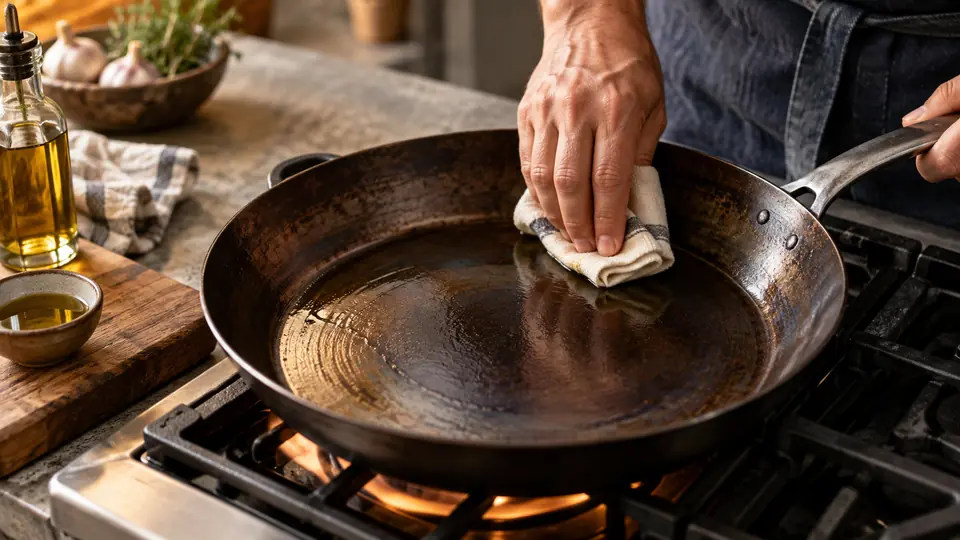
- Wipe out burnt residue after cooking. Repeatedly overheating oil can leave carbonized buildup that makes the surface rougher.
- Do not chase smoke. A hotter pan is not always a better pan.
Common Mistakes
Using Extra Virgin Olive Oil for Very Hot Searing
This is a common mismatch. Extra virgin olive oil is excellent in the kitchen, but very high heat in carbon steel can push it beyond its ideal range. The result may be harsh smoke and a bitter taste.
Using Butter in a Pan That Is Too Hot
Butter is easy to burn in carbon steel. If butter goes dark almost instantly, reduce the heat or combine it with a more stable oil.
Assuming All Sticking Means the Wrong Oil
Oil matters, but sticking often comes from technique. Food can stick if the pan is underheated, overheated, insufficiently seasoned, or if the food is moved too early.
Using Too Much Oil During Seasoning and Blaming the Oil
A sticky pan after seasoning is often the result of too much oil left on the surface, not just the oil type. The pan should look almost dry before it goes over heat for seasoning.
Letting Oil Burn Repeatedly
Repeatedly overheating oil can leave stubborn residue and make the pan look blotchy. That does not usually ruin the pan, but it can make cooking feel less smooth until the surface is cleaned and rebuilt through use.
How to Choose the Right Oil for Your Carbon Steel Pan
| If You Mostly Cook… | Good Oil Choices | Why They Work |
|---|---|---|
| Eggs and breakfast foods | Butter, ghee, grapeseed oil, canola oil | Good release at moderate heat, pleasant flavor options |
| Steaks and chops | Avocado oil, grapeseed oil, safflower oil | Better for higher-heat searing |
| Stir-fries | Refined peanut oil, avocado oil, grapeseed oil | Handles fast, hot wok-style cooking |
| Vegetables and everyday meals | Canola oil, grapeseed oil, sunflower oil, light olive oil | Versatile and easy to use |
| Shallow frying | Canola oil, peanut oil, sunflower oil, avocado oil | Neutral flavor and suitable heat tolerance |
| Lower-heat flavor-focused cooking | Extra virgin olive oil, butter, ghee | Better taste contribution at gentler temperatures |
Frequently Asked Questions
Can you use olive oil in carbon steel?
Yes. Olive oil can be used in carbon steel, especially for medium-heat cooking. Extra virgin olive oil is less suited to very high-heat searing, while light or refined olive oil handles heat a bit better.
Is avocado oil the best oil for carbon steel?
It is one of the most reliable choices, especially for cooks who want a neutral oil that handles high heat well. It is not the only good option, though. Grapeseed oil, canola oil, and refined peanut oil also work very well.
Can I cook eggs in carbon steel with butter?
Yes, and many people prefer it for flavor. Keep the heat moderate rather than high, and make sure the pan is properly preheated. If butter browns too quickly, lower the heat or add a little neutral oil first.
What oil should you avoid in carbon steel?
For very hot cooking, avoid delicate unrefined oils and be cautious with extra virgin olive oil and plain butter. They are not bad oils, but they are easier to burn in a hot carbon steel pan.
Is the best cooking oil the same as the best seasoning oil?
No. Some oils are great for everyday cooking but not necessarily ideal for seasoning technique, and some oils discussed for seasoning are not the most practical for regular stovetop cooking. It helps to treat those as separate decisions.
Final Thoughts
If you are trying to decide what oil should you cook with in carbon steel, start with a neutral oil that handles heat comfortably. For most kitchens, avocado oil, grapeseed oil, canola oil, or refined peanut oil are the easiest choices. They fit the way carbon steel is commonly used and reduce the chances of smoke, bitter flavor, or sticky residue.
From there, adjust based on what you cook most. Butter and extra virgin olive oil are still useful in carbon steel, just not for every heat level. The best oil is not only about smoke point. It is about how the oil behaves in your pan, with your cooking style, at the temperatures you actually use.
A well-heated carbon steel pan, a sensible amount of oil, and good heat control matter just as much as the bottle you choose. Get those pieces working together, and carbon steel becomes much easier to cook on consistently.






Leave a Reply