

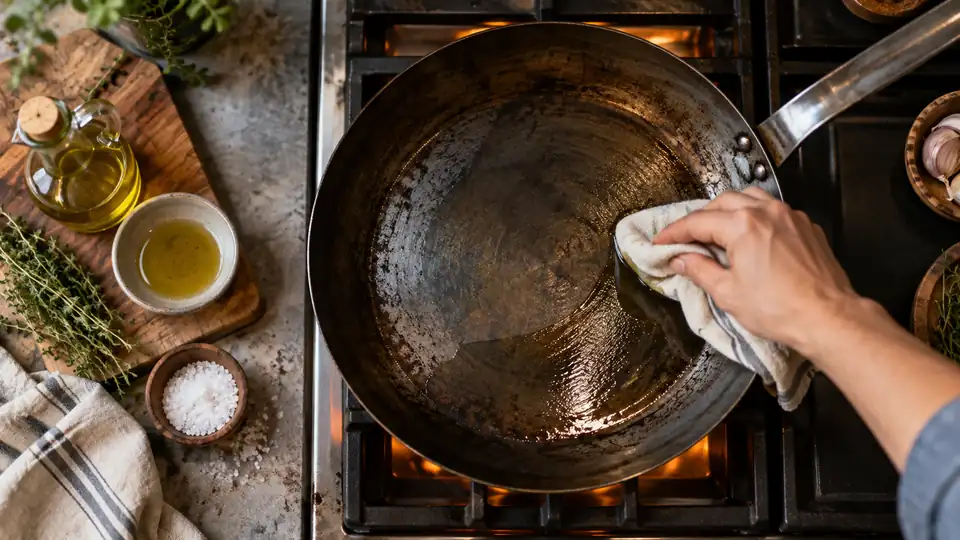
Seasoning is what gives carbon steel its dark protective layer, its improving nonstick performance, and much of its long-term appeal. It is also one of the most misunderstood parts of owning a carbon steel pan. Some cooks expect one seasoning session to last forever. Others think the surface is ruined every time an egg sticks or a patch turns brown instead of black.
How long does carbon steel seasoning last? The honest answer is that seasoning can last for years, but it does not usually remain identical from week to week. It is a working surface, not a permanent coating like factory nonstick. As you cook, wash, heat, scrape, and re-oil the pan, the seasoning gradually changes. Parts of it strengthen, parts wear down, and new layers form over time.
This matters because many normal changes in color and texture are mistaken for failure. A pan that looks blotchy may still cook well. A pan that loses seasoning in the center may only need a few more cooking sessions, not a full reset. Understanding what makes seasoning last, and what causes it to wear away, helps you keep carbon steel performing well without unnecessary maintenance.
Quick Answer
Carbon steel seasoning can last anywhere from a single cooking session to many years, depending on how the pan is used and cared for. Thin early layers of seasoning often wear or shift quickly, especially after cooking acidic foods, simmering liquids, scrubbing aggressively, or using high heat incorrectly. A mature seasoning layer that has built up through repeated cooking and light oiling can remain effective for a very long time, even though its appearance may continue to change.
In practical terms, seasoning lasts longest when the pan is used regularly for low-moisture, moderately fatty foods, dried thoroughly after washing, and protected with a very thin film of oil when needed. It lasts less time when the pan is exposed to tomato sauce, vinegar, long braises, boiling, soaking, dishwasher cleaning, or prolonged moisture.
The key point is this: carbon steel seasoning is not supposed to stay perfectly uniform. It is supposed to stay functional. If the pan resists rust, releases food better over time, and improves with use, the seasoning is doing its job even if it looks uneven.
What Carbon Steel Seasoning Actually Is
Seasoning is not just burnt oil sitting on the metal. It is a thin layer of oil that has changed through heat into a tougher, bonded film on the surface of the pan. This process is often described as polymerization. In plain terms, the oil transforms and clings to the steel, creating a barrier between moisture, food, and bare metal.
That barrier does several useful things. It helps reduce rust, improves food release, and makes routine cooking easier. Over time, repeated heating and cooking can strengthen the surface, especially when the pan is used often and cleaned properly.
Still, seasoning is not indestructible. It is thinner and more reactive than many people expect. It can be weakened by acid, stripped by harsh cleaning, softened by prolonged simmering, or lifted when food bonds strongly to an underdeveloped surface.
Why New Seasoning Is More Fragile
The first few layers of seasoning on carbon steel are usually the least stable. A fresh pan may look dark after initial seasoning, but that color can be misleading. Early seasoning often has not yet gone through enough cooking cycles to become durable.
This is why a pan may look well seasoned after setup, then lose patches after cooking potatoes, fish, or a sauce. That does not always mean something went wrong. It often means the seasoning was still in its early stages and needed more real cooking use to mature.
How Long Does Carbon Steel Seasoning Last in Real Use?
For most home cooks, the best answer is that carbon steel seasoning lasts as long as your habits support it. On a frequently used pan, the seasoning can remain functional indefinitely because old layers wear away while new ones keep building. In that sense, seasoning is less like a fixed coating and more like an ongoing maintenance cycle.
Here is how that usually looks in practice:
| Seasoning Stage | Typical Durability | What to Expect |
|---|---|---|
| Fresh initial seasoning | 1 to several cooking sessions | May look dark but can wear unevenly, especially with acidic or sticky foods |
| Early broken-in seasoning | Weeks to months | Improving food release, some blotchiness, occasional touch-ups needed |
| Mature daily-use seasoning | Months to years | Stable cooking performance, color shifts are normal, rust resistance improves |
| Neglected or damaged seasoning | Can fail after one bad cleaning or moisture exposure | Rust spots, dull gray patches, sticking, roughness, bare metal exposure |
A well-used pan might never need a total reseasoning, only occasional touch-ups. Another pan that sits damp in a cabinet or is repeatedly used for acidic sauces may need more frequent repair. The life of seasoning depends less on time alone and more on what happens during that time.
What Makes Carbon Steel Seasoning Last Longer
Regular Cooking
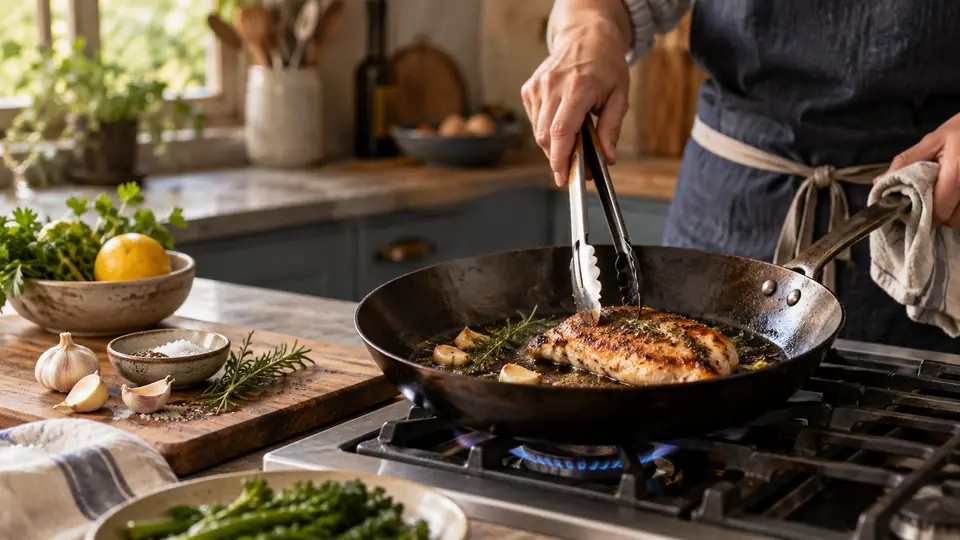
One of the most reliable ways to build lasting seasoning is simply to use the pan often. Repeated cooking gradually adds and reinforces thin layers. Frying eggs, sautéing vegetables, searing meat, and cooking pancakes or grilled sandwiches can all help, provided the pan is preheated properly and not overloaded with wet ingredients.
Frequent use tends to create more durable seasoning than repeated oven seasoning sessions alone. The pan gets exposed to fats, heat, and normal handling in a way that helps the surface settle into real use.
Thin Layers of Oil
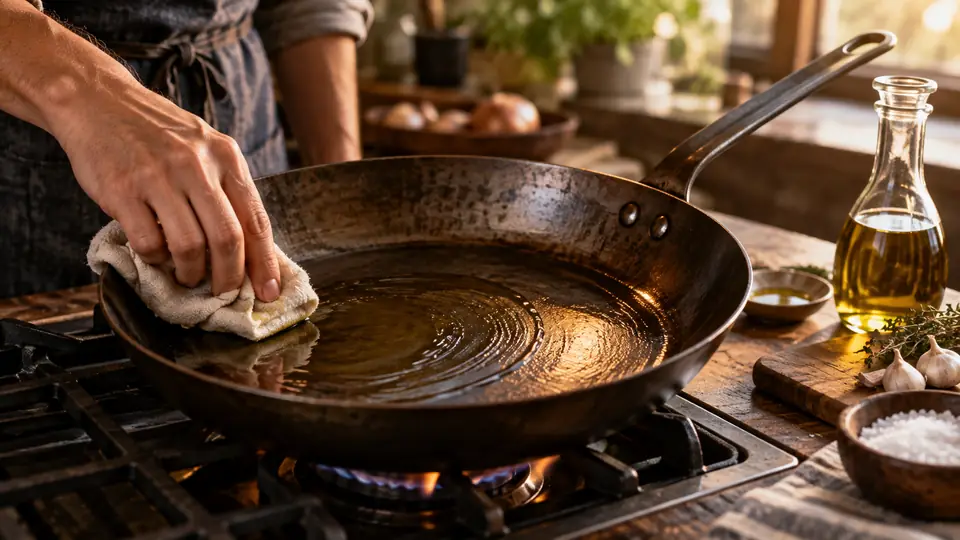
Seasoning lasts better when oil is applied very lightly. Thick oil layers are one of the most common causes of weak or sticky seasoning. Instead of forming a hard bonded film, excess oil can leave gummy patches that lift off more easily during cooking or washing.
The best seasoning layers are usually so thin that the pan barely looks oiled before heat is applied.
Good Drying Habits
Moisture is the enemy of carbon steel. Even a decent seasoning layer can be challenged if water sits on the pan for too long. Drying the pan thoroughly after washing, often with a brief return to the burner, helps preserve the seasoning and prevent rust from forming in weaker spots.
Cooking the Right Foods Early On
Newly seasoned pans benefit from gentler foods at first. Fatty proteins, onions, mushrooms, potatoes with enough oil, and cornbread often work well. Delicate fish, sugary glazes, and acidic sauces are less forgiving in the beginning.
That does not mean you can never cook those foods. It just means an immature seasoning layer may not hold up as well against them.
What Causes Seasoning to Wear Out Faster
Acidic Foods
Tomatoes, wine, citrus, and vinegar can weaken or strip seasoning, especially during longer cooking times. A brief splash of lemon at the end of cooking is usually less of a problem than simmering tomato sauce for 30 minutes.
This is one reason carbon steel is usually better for searing and sautéing than for long acidic braises.
Long Simmering or Boiling
Carbon steel seasoning does not like extended contact with liquid. Boiling water in the pan, simmering beans, or braising with lots of liquid can soften and loosen the seasoning. This is especially true in newer pans that have not built up a stronger base layer yet.
Abrasive Scrubbing
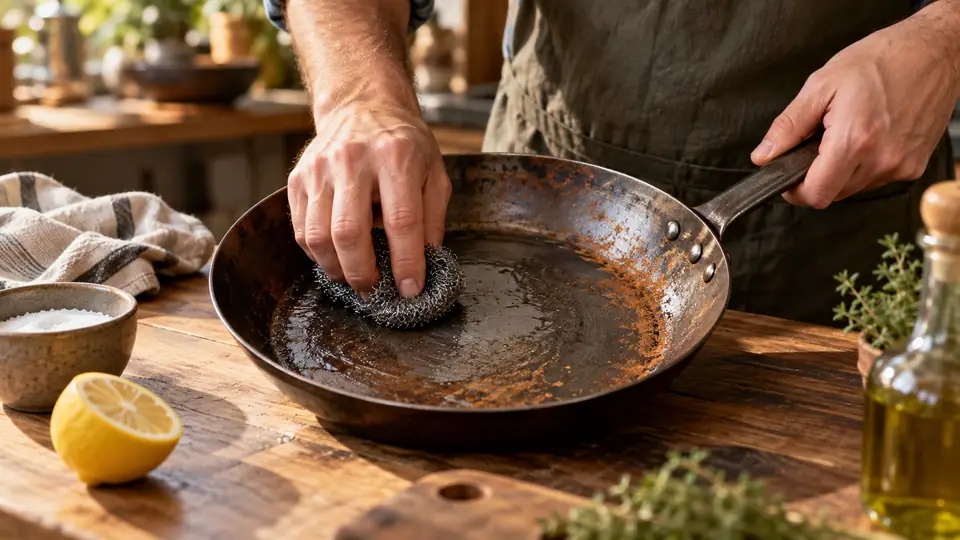
Heavy steel wool, harsh scouring powders, and aggressive scraping can remove seasoning along with stuck food. Sometimes that is necessary if the surface is sticky or rusted, but routine cleaning should usually be gentler.
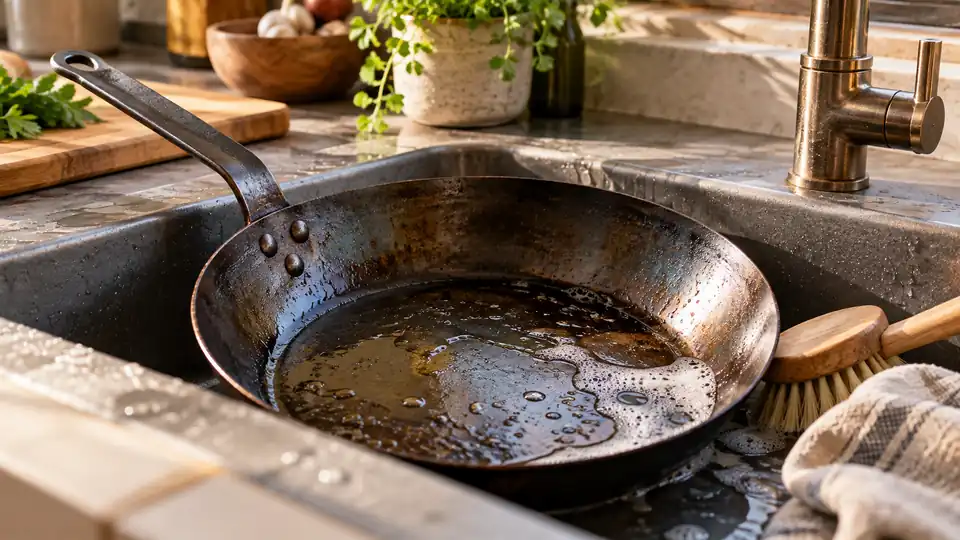
A pan scraper, brush, hot water, and coarse salt are often enough for normal cleanup.
Soap Misuse and Overcleaning
Modern dish soap is not automatically disastrous for carbon steel, but overdoing it can dry the surface and remove weaker layers if you scrub hard at the same time. A small amount of mild soap is usually fine when needed. The bigger problem is usually prolonged soaking or aggressive cleaning, not a few drops of soap.
Cooking on Barely Heated Steel
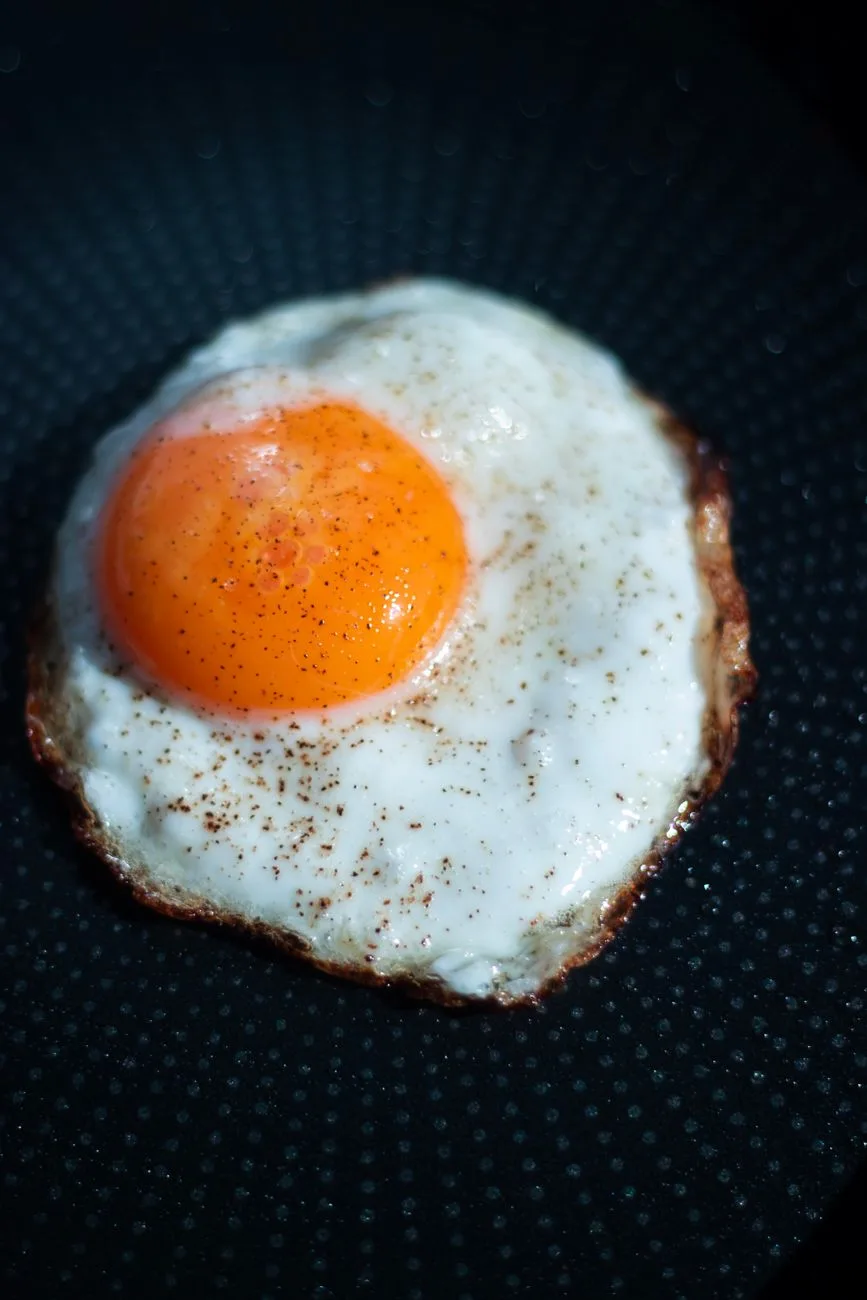
Food sticking badly to a cold or underheated pan can tear seasoning away in patches. This is common with eggs, fish, or skin-on proteins. Proper preheating helps food release more cleanly and reduces the chance of pulling seasoning off with it.
Storage Moisture
A pan can leave the sink looking fine and still rust later if hidden moisture remains around the rivets, handle joint, or cooking surface. Seasoning tends to fail fastest where moisture lingers unnoticed.
Signs Your Seasoning Is Still Fine
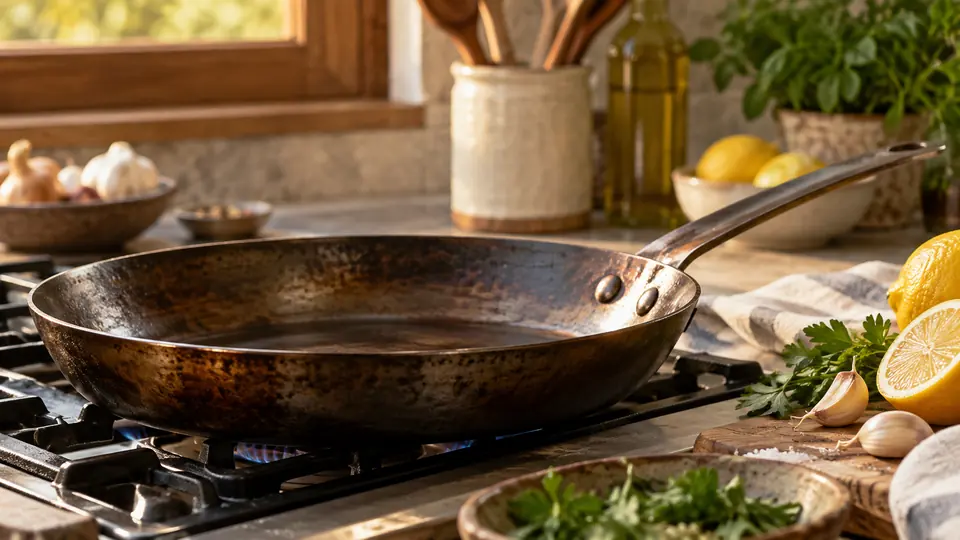
Color alone is a poor way to judge carbon steel seasoning. A pan does not need to be jet black and perfectly even to work well. Many excellent carbon steel pans look mottled, streaky, or bronze in places.
These signs usually mean the seasoning is still doing its job:
- The pan is not rusting.
- Food release is improving or staying consistent.
- The surface feels mostly smooth, not sticky.
- Dark and light patches come and go with use.
- Minor discoloration appears after cooking but does not expose raw silver-gray steel everywhere.
In other words, a pan can look imperfect and still be well seasoned.
Signs the Seasoning Needs Attention
Some changes are cosmetic. Others signal that the protective layer has weakened enough to justify action.
| What You See | Likely Meaning | What to Do |
|---|---|---|
| Brown or black uneven patches | Normal seasoning variation | Keep cooking, no major fix needed |
| Sticky or tacky surface | Too much oil was used | Heat to set it further or scrub lightly and reseason thinly |
| Gray bare spots | Seasoning wore off in that area | Cook with oil or apply a touch-up seasoning layer |
| Orange rust spots | Moisture reached exposed steel | Remove rust, dry thoroughly, reseason affected area |
| Flaking black pieces | Built-up residue or unstable seasoning | Scrub back loose material and reseason properly |
Why a Good Seasoning Layer Changes Instead of Staying Perfect
Carbon steel seasoning is dynamic. Every time you heat the pan, add oil, cook proteins, deglaze lightly, or wash it, the surface changes a little. New oils bond. Weak spots wear away. Heat patterns create darker zones in the center or around the sides.
This is normal because carbon steel is used over direct heat and in close contact with food. Unlike a synthetic nonstick coating, seasoning is partly maintained by the cook. That is one reason experienced users stop chasing a flawless appearance and focus more on cooking performance.
A pan with years of good use often has a patchy, layered look. That does not mean the seasoning is failing. It often means the pan has been used enough to develop an honest working surface.
How to Make Carbon Steel Seasoning Last Longer
Preheat Properly
Let the pan warm up before adding oil and food. Proper preheating helps reduce sticking, promotes even cooking, and lowers the chance of food ripping up early seasoning. It does not need to be heated until smoking every time, but it should not be cold.
Use Enough Cooking Fat
Carbon steel generally performs best with some oil or fat, especially while the seasoning is still developing. Very lean, low-fat cooking can work, but it is less forgiving on a younger pan.
Clean Promptly but Gently
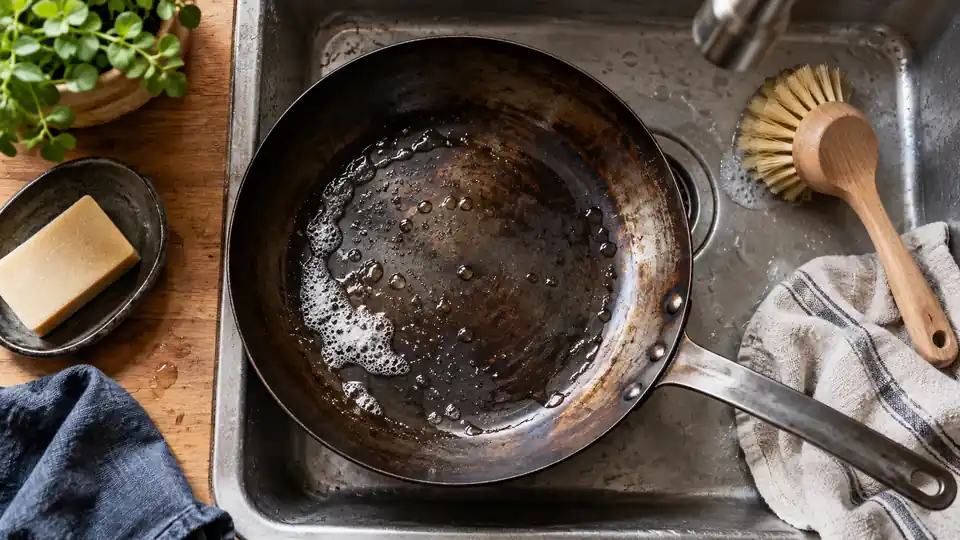
Wash after the pan cools enough to handle safely. Use hot water, a soft scrubber, or a pan scraper as needed. Remove stuck food without stripping more seasoning than necessary.
If you are still dialing in your routine, reading a guide on pre-seasoned carbon steel pans can help clarify what factory seasoning does and does not solve.
Dry on Heat
After washing, place the pan over low heat for a minute or two until all moisture evaporates. This simple habit makes a major difference in how long seasoning stays intact.
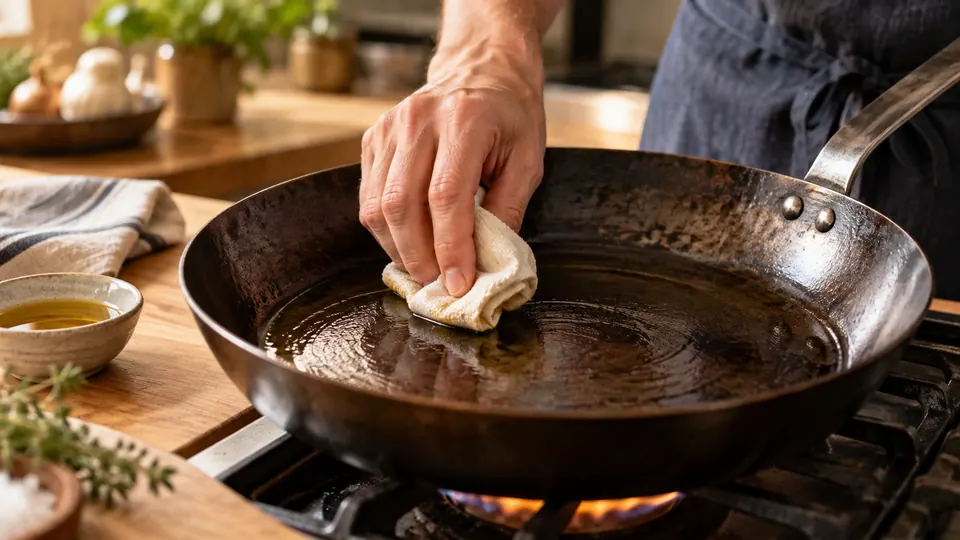
Apply a Very Thin Protective Oil Film
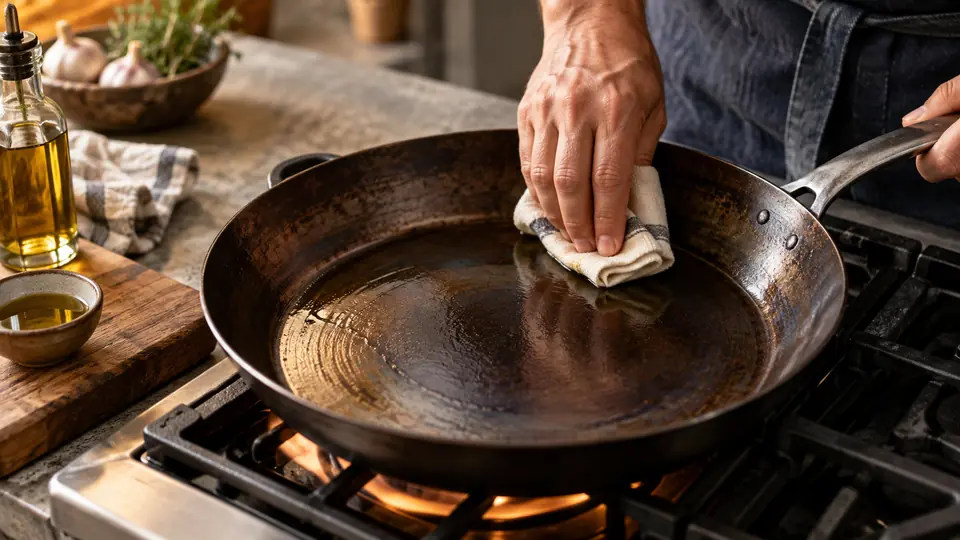
If the pan will be stored for a while or the surface looks dry, wipe on a drop or two of oil and buff it almost completely off. This can help protect weak spots between uses.
Avoid Long Acidic Simmers
Short exposure is usually manageable on a mature pan, but repeated acidic cooking can shorten the life of the seasoning. If you plan to simmer tomato sauce, stainless steel or enameled cookware is usually the easier choice.
Do You Need to Reseason Every Time the Pan Looks Uneven?
No. This is one of the biggest misunderstandings around carbon steel care. Uneven color does not automatically mean failed seasoning, and a full strip-and-reseason cycle is rarely necessary unless there is rust, flaking buildup, or severe stickiness.
Most of the time, a pan with worn spots can be fixed by one of these simpler approaches:
- Cook a few oil-friendly meals in it
- Apply one light stovetop touch-up seasoning
- Scrub away only the loose or sticky area
- Dry better after washing
Full reseasoning is useful when the pan has substantial rust, thick carbon buildup, or unstable seasoning that keeps flaking. For ordinary blotchiness, it is usually unnecessary.
How Long Does Carbon Steel Seasoning Last on Different Types of Pans?
Skillets and Frying Pans
Seasoning on skillets often lasts well because these pans are used for sautéing, frying, and searing. Those cooking methods support seasoning development, especially if the pan is used regularly.
Woks
Wok seasoning can build quickly because of high heat and frequent oil movement, but it may also look more uneven. The bottom and lower sidewalls usually darken first, while upper areas change more slowly.
Griddles
Griddle seasoning can last a long time if moisture is controlled, but large flat surfaces often show hot spots and wear patterns. Foods like burgers, bacon, and grilled sandwiches usually help maintain it well.
Carbon Steel Bakeware
Seasoning on carbon steel bakeware is somewhat different because the surface is exposed to less scraping and more dry heat. It may look more stable, though it can still be affected by washing habits and acidic ingredients.
Common Mistakes That Shorten Seasoning Life
- Using too much oil while seasoning. This often causes sticky, weak layers.
- Cooking acidic foods too soon. A new pan needs time to build resilience.
- Soaking the pan in the sink. Water sitting on carbon steel invites rust and weakens seasoning.
- Leaving the pan damp after washing. Hidden moisture can undo otherwise good care.
- Assuming appearance equals performance. A patchy pan may still be cooking exactly as it should.
- Using very harsh scrubbing for routine cleanup. Overcleaning removes seasoning faster than normal cooking ever would.
- Expecting carbon steel to behave like PTFE nonstick. Seasoning improves release, but technique still matters.
Touch-Up Seasoning vs Full Reseasoning
When a Touch-Up Is Enough
Touch-up seasoning is usually the right move when the pan has a few bare spots, minor sticking, or a dull-looking surface. Clean the pan, dry it thoroughly, apply a trace amount of oil, and heat it until the oil bonds. That is often enough to get the pan back on track.
When Full Reseasoning Makes Sense
Full reseasoning is more appropriate when you have widespread rust, thick sticky residue, heavy flaking, or a pan that has been neglected for a long time. In those cases, partial fixes may not hold well because the underlying surface is unstable.
A good rule is to fix the smallest problem that solves the issue. Carbon steel usually responds better to simple maintenance than to constant starting over.
Frequently Asked Questions
Does carbon steel seasoning wear off every time you cook?
Not necessarily. Some tiny amount of change happens during most cooking sessions, but that can include both wear and new seasoning formation. A well-used pan often maintains itself through regular cooking, even though the surface keeps evolving.
Can carbon steel seasoning last forever?
No single layer lasts forever in perfect condition, but the seasoning system can last indefinitely if you keep using and maintaining the pan. Old layers wear down and new ones replace them.
Why did my seasoning disappear after cooking tomatoes?
Tomatoes are acidic, and acid can weaken or remove seasoning, especially on a newer pan. If the damage is minor, clean the pan, dry it well, and do a light touch-up or cook a few oily foods to rebuild the surface.
Is it normal for a carbon steel pan to look blotchy?
Yes. Blotchy coloring is very common and usually harmless. Carbon steel rarely keeps a perfectly even finish once it enters regular use.
How often should I reseason my carbon steel pan?
There is no fixed schedule. Some pans need only occasional touch-ups for years, while others need more attention if they are used for acidic foods or cleaned aggressively. Reseason based on performance and rust protection, not just appearance.
Does soap remove carbon steel seasoning?
Mild soap by itself usually does not destroy well-established seasoning. The bigger concerns are prolonged soaking, hard scrubbing, and poor drying afterward. Used reasonably, a little soap is usually fine.
Final Thoughts
How long does carbon steel seasoning last? It can last for years, but not as a fixed, unchanged layer. Good seasoning is constantly being worn, renewed, and strengthened through use. That is normal, and it is part of how carbon steel works.
The most helpful way to judge seasoning is by performance. If the pan resists rust, releases food reasonably well, and improves with repeated cooking, the seasoning is lasting in the way that matters. Uneven color, dark patches, and occasional bare spots are often just signs of an active cooking surface, not failure.
Treat seasoning as an ongoing relationship with the pan rather than a one-time project. Cook often, use thin oil layers, avoid prolonged moisture, and touch up only when needed. With that approach, carbon steel seasoning can remain effective for a very long time without demanding constant reseasoning.

Leave a Reply