
Rust on carbon steel looks alarming, especially when it appears inside a pan you cook with or on a knife that touches food. The good news is that in most cases, surface rust on carbon steel cookware is not a serious health danger. It is mainly a maintenance problem. Rust can affect flavor, cooking performance, appearance, and long-term durability, but a small amount of light rust is usually fixable.
That said, rust should not be ignored. A heavily rusted pan or knife needs attention before it goes back into regular use. Rust often means the protective seasoning layer failed, moisture sat on the metal too long, or the item was stored in a damp environment. If the rust is left in place, it can spread, pit the metal, and make the surface rougher and less reliable.
This matters because carbon steel is reactive bare metal under its seasoning. Unlike stainless steel, it depends on proper drying, oiling, and seasoning to resist oxidation. Understanding what rust actually means helps you separate a fixable maintenance issue from a situation where the tool may no longer be worth saving.
Quick Answer
Is rust on carbon steel dangerous? Usually, light surface rust on carbon steel cookware or knives is not highly dangerous, but it is not something you should cook on or use without cleaning first. Rust is oxidized iron. Small accidental exposure is generally not considered a major health risk for most people, but rust can leave an unpleasant taste, discolor food, and signal that the protective surface has broken down.
If the rust is minor, you can usually scrub it off, dry the carbon steel thoroughly, and re-season it before using it again. If the rust is heavy, flaky, deeply pitted, or keeps returning quickly, the item may need more extensive restoration. In severe cases, especially with knives or thin cookware, long-term corrosion can weaken the metal or damage the cooking surface enough that replacement makes more sense.
The practical rule is simple: do not cook on active rust, remove it completely, and restore the protective layer before use. Rust is most often a repair issue, not an emergency, but it should be taken seriously.
What Rust on Carbon Steel Actually Is
Rust forms when iron in carbon steel reacts with oxygen and moisture. This process is called oxidation. Carbon steel contains a high amount of iron, so once its protective seasoning or oil film is compromised, it can rust quickly compared with materials like stainless steel.
On cookware, the dark seasoned surface acts like a barrier. That seasoning is created when thin layers of oil bond to the metal through heat. If that layer gets stripped by soaking, harsh scrubbing, acidic foods, or poor drying, water can reach the bare steel. Once that happens, orange or reddish-brown rust can appear.
On knives, the issue is similar. Carbon steel knives do not have a naturally rust-resistant surface, so moisture, food acids, and storage conditions matter a lot. A wet knife left in a sink or sheath can develop rust surprisingly fast.
Rust is different from a dark patina or seasoning. Seasoning is protective. Patina is often a harmless gray, blue, or dark discoloration caused by normal use. Rust is rougher, orange, red, or brown, and often wipes off as a dusty or gritty residue.
Is Rust on Carbon Steel Dangerous to Health?
For most people, small amounts of rust are not considered highly toxic. Iron oxide itself is not the same thing as a poisonous chemical coating. If a tiny amount of rust gets into food once, it is unlikely to cause serious harm in a healthy person.
Still, that does not mean rusty carbon steel is fine to use as-is. There are several practical reasons to remove rust before cooking or food prep:
- It is not sanitary to leave corrosion on a food-contact surface.
- Rust can trap moisture, residue, and old food particles.
- It can affect taste and color.
- It signals that the pan or knife is no longer properly protected.
- Loose rust flakes can transfer to food.
There is also an important distinction between rust itself and the conditions that allow rust to grow. Rusty surfaces are often neglected surfaces. If a pan has been stored damp, crusted with residue, or left uncleaned for a long time, the overall cleanliness of the item becomes part of the concern.
People with certain medical conditions involving iron metabolism should follow their doctor’s advice regarding iron exposure, but for the average home cook, the bigger issue is surface integrity and food quality rather than acute poisoning.
A Simple Risk Table
| Condition | Typical Risk Level | Can You Use It Immediately? | Recommended Action |
|---|---|---|---|
| Light surface rust, small spots | Low health risk, moderate maintenance concern | No | Scrub off rust, rinse, dry completely, re-season |
| Widespread orange rust film | Low to moderate concern | No | Full rust removal and seasoning reset |
| Heavy flaking rust | Moderate concern | No | Strip thoroughly, inspect for deep damage |
| Deep pitting and rough corrosion | Higher long-term usability concern | No | Restore if practical, replace if structure is compromised |
| Dark patina or seasoning only | Normal | Yes | Continue routine care |
Why Rust on Carbon Steel Happens
Rust is usually the result of a few common care mistakes rather than a defect in the metal. Carbon steel is durable, but it does demand a little routine attention.
Moisture Left on the Surface
This is the most common cause. A pan that air-dries on the rack, or a knife put away with a bit of water near the edge or handle, is likely to rust. Even a few droplets can start the process.
Seasoning Breakdown
Seasoning is not permanent. Cooking acidic ingredients for long periods, using strong detergents repeatedly, or scrubbing aggressively can wear it down. Once bare steel is exposed, rust can form quickly.
Soaking or Dishwashing
Long soaking is hard on carbon steel. Dishwashers are even worse because they combine prolonged moisture, detergent, and heat. That can strip protective oil and leave the surface exposed.
Damp Storage Conditions
A pan stored in a humid cabinet, stacked while still warm and damp, or wrapped before fully dry can rust between uses. Knives stored in leather sheaths are especially vulnerable if any moisture remains.
Food Residue and Salt
Salty or acidic residue can hold moisture against the steel and speed up corrosion. A pan used for tomato sauce or a knife used on citrus and then left unwashed can develop rust faster than expected.
Rust on Carbon Steel Cookware vs Rust on Carbon Steel Knives
The danger level is similar in the sense that both should be cleaned before use, but the practical implications are slightly different.
Cookware
On pans, skillets, woks, and griddles, rust usually means the seasoning failed or the pan was stored damp. Surface rust is often fixable because carbon steel cookware is usually thick enough to tolerate scrubbing and re-seasoning. The main concerns are food contact, flavor, and preventing further corrosion.
Knives
On knives, rust can be more troublesome because the edge is thin and precise. Even small corrosion spots near the cutting edge can damage performance. Pitting near the edge can create weak points or make sharpening harder. Rust around the handle junction also deserves attention because moisture can collect there and go unnoticed.
With knives, restoration needs to be more careful. Removing rust too aggressively can scratch the blade finish or alter the bevel if done poorly.
How to Tell the Difference Between Rust, Patina, and Seasoning
New carbon steel owners often mistake harmless darkening for a problem. Knowing what you are looking at prevents unnecessary stripping.
| Surface Change | Appearance | Texture | Is It a Problem? |
|---|---|---|---|
| Seasoning | Brown to black, sometimes uneven | Smooth to slightly tacky if immature | No, unless sticky or peeling badly |
| Patina | Gray, blue, dark bronze, or mottled | Usually smooth | No, often normal |
| Rust | Orange, red, or reddish-brown | Powdery, rough, or flaky | Yes, remove before use |
If you rub the area with a paper towel and see orange residue, that is a strong sign you are dealing with rust rather than patina.
What to Do If You Find Rust on Carbon Steel
If rust is light, the fix is usually straightforward. The key is to remove all active corrosion, dry the metal fully, and rebuild protection.
For Light Surface Rust on Cookware
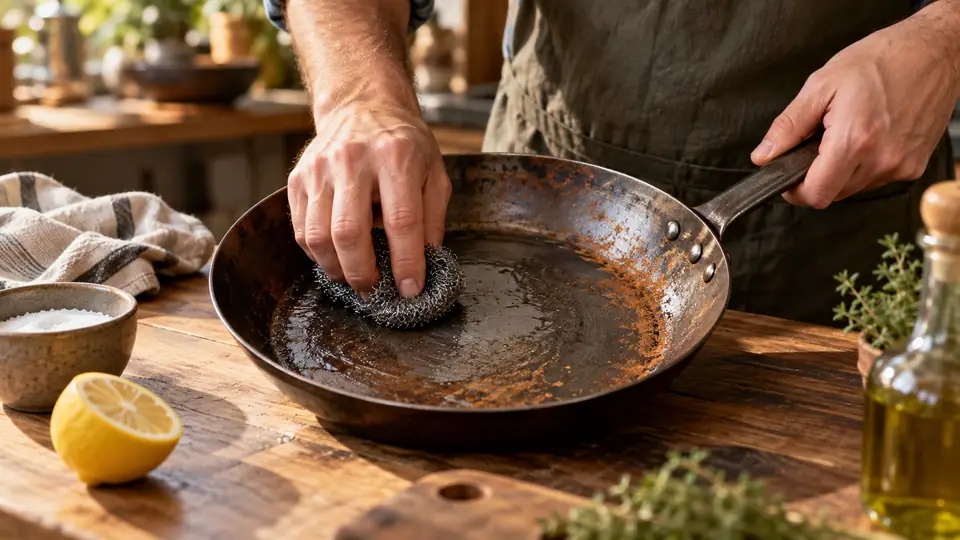
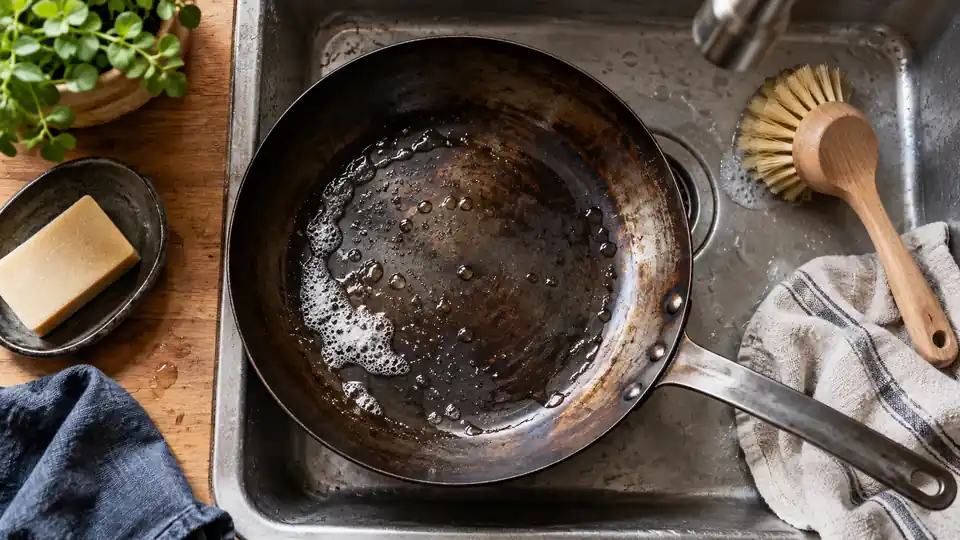
- Wash the pan with warm water. Use a mild scrubber or sponge.
- Scrub the rusted area. Coarse salt, a non-soap scrub pad, or fine steel wool can work depending on severity.
- Rinse and inspect. If orange discoloration remains, keep scrubbing.
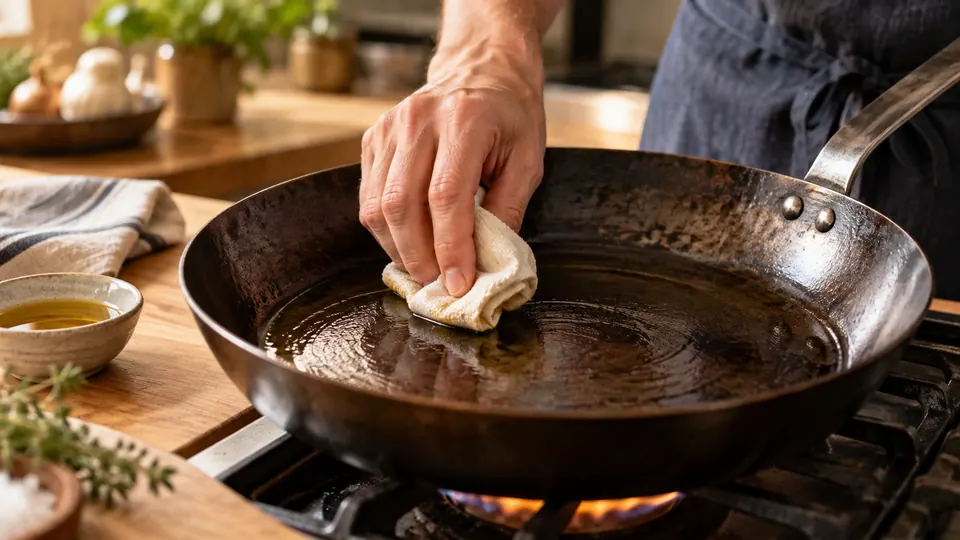
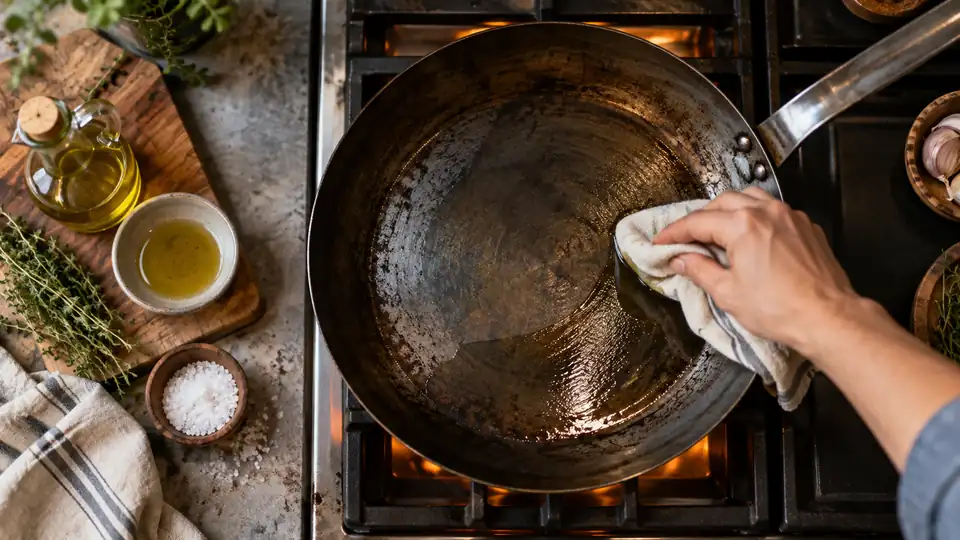
- Dry immediately and thoroughly. Use a towel, then place the pan over low heat for a few minutes to drive off hidden moisture.
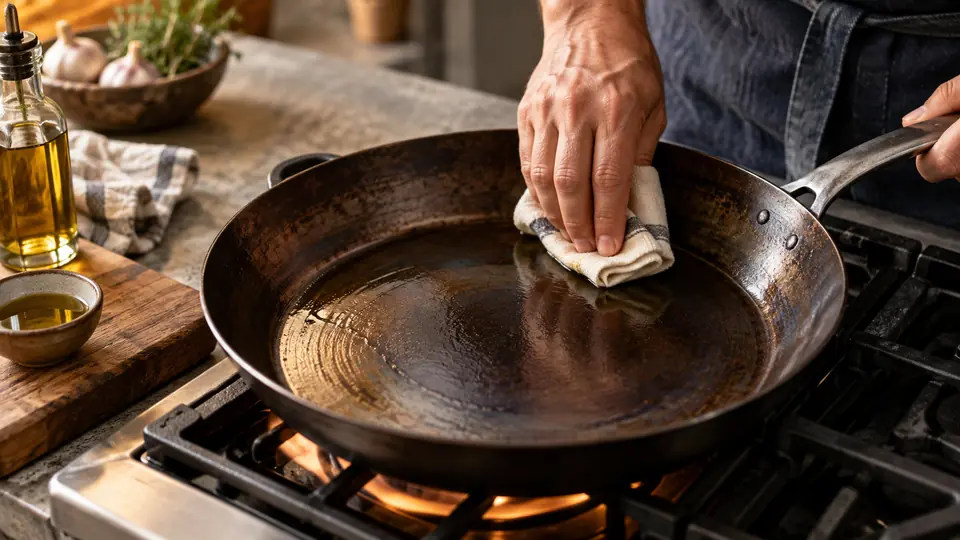
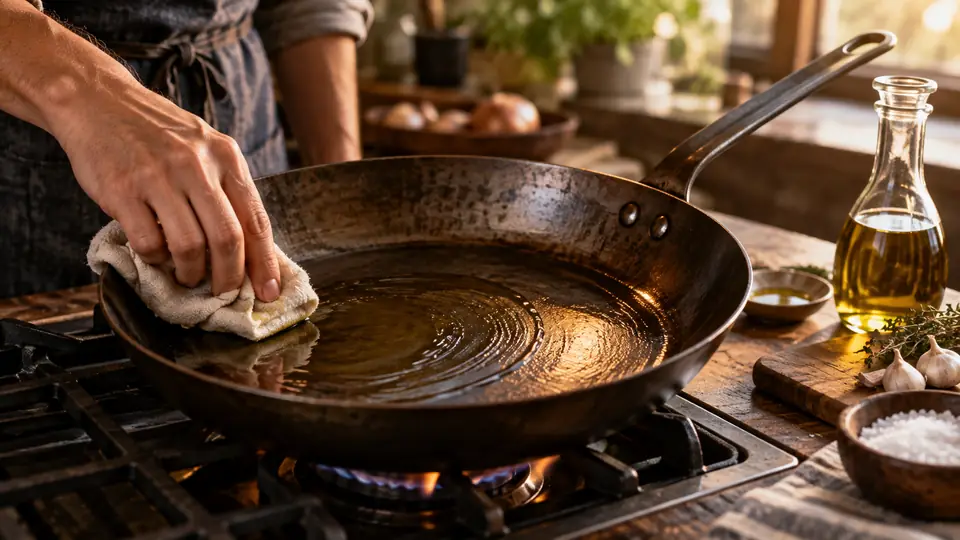
- Apply a very thin coat of oil. Wipe away excess.
- Re-season the pan. Heat it until the oil bonds into a thin protective layer.
For Moderate to Heavy Rust on Cookware
If the rust covers a large section, you may need to strip the surface more completely and start over with fresh seasoning. Vinegar can help loosen rust, but it should be used carefully and not left on the metal too long because acid can also attack bare steel.
For a badly rusted pan, a full reset is often easier than spot treatment. Scrub to bare metal where needed, rinse, dry completely, and apply several thin seasoning layers.
For Carbon Steel Knives
- Clean the blade first. Remove food residue and oils.
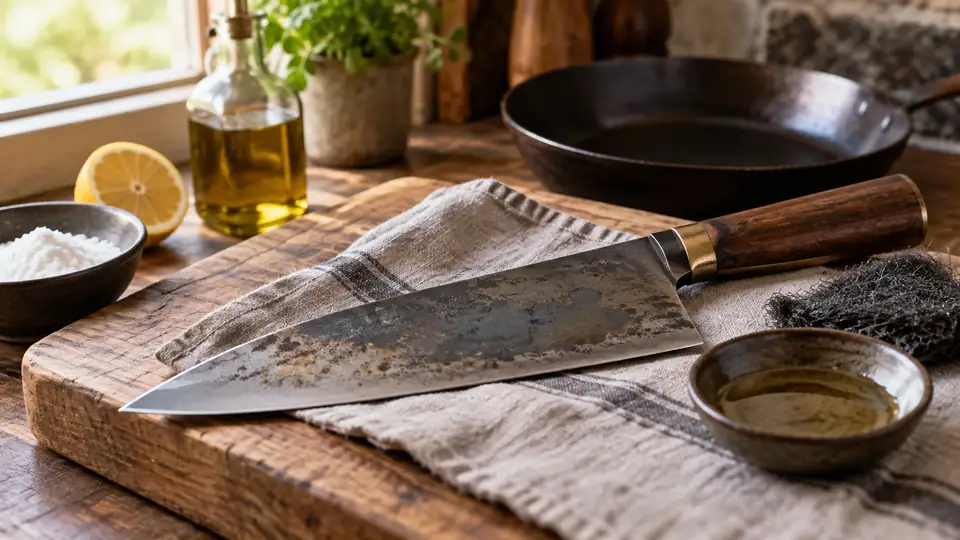
- Use a gentle rust remover method. A baking soda paste, rust eraser, or fine polishing pad is safer than aggressive grinding.
- Work carefully around the edge. Avoid changing the blade geometry.
- Rinse and dry immediately.
- Apply a light coat of food-safe oil if the knife will be stored.
If the knife has deep pitting near the edge or rust extending into the handle area, more careful restoration may be needed.
When Rust Becomes More Than a Cosmetic Issue
Light orange spotting is one thing. Deep corrosion is another. Carbon steel can usually be restored, but there is a point where rust begins to affect function, safety, and longevity more seriously.
Deep Pitting
Pitting means rust has eaten into the metal rather than staying on the surface. On a pan, pits can interfere with smooth seasoning and make sticking more likely. On a knife, pits near the edge can weaken fine cutting performance and make sharpening uneven.
Flaking or Layered Corrosion
If rust is lifting in flakes, the metal has been neglected for a while. This is more than a small patch from one damp evening on the drying rack. It requires thorough removal and close inspection underneath.
Warped, Thinned, or Structurally Damaged Areas
This is less common with cookware than with very old or poorly stored tools, but severe long-term rust can thin the metal. If a knife blade has significant metal loss or a pan has rough, deeply degraded areas that never season properly again, replacement can be more practical than repeated repair.
Does Cooking Heat Kill or Neutralize Rust?
No. Heat does not solve the problem in a way that makes a rusty pan ready to use. Heating a rusty surface may dry it, darken it, or temporarily make it look less obvious, but it does not remove corrosion. The rust still needs to be scrubbed away.
Also, applying oil over active rust does not create proper seasoning. Seasoning bonds best to clean bare steel or existing stable seasoning. Rust underneath can keep spreading and cause the new layer to fail.
If a pan is rusty, clean first, then season. Skipping the cleaning step usually leads to disappointing results.
Can You Get Sick From Using a Rusty Carbon Steel Pan Once?
Most of the time, a single accidental use of a lightly rusted pan is unlikely to cause serious illness. The more likely result is odd-looking food, metallic flavors, or concern after the fact. The same goes for a knife with a tiny rust spot that briefly touched food.
That does not mean it is good practice. Repeated use without cleaning is asking for worsening corrosion and poorer food contact conditions. The safer habit is to stop, clean the rust, and restore the surface before using the item again.
How to Prevent Rust on Carbon Steel
Prevention is much easier than restoration. A few small habits make a major difference.
Dry Immediately After Washing
Do not rely on air drying. Towel dry first, then warm the pan on the stove for a minute or two. For knives, dry the blade, spine, and handle junction carefully.
Maintain the Seasoning
A healthy seasoning layer helps block moisture. If your pan starts looking patchy, dull gray, or reactive, it may need a light stovetop seasoning refresh. For cooks learning this process, a guide to pre-seasoned carbon steel pans can help explain what a protected surface should look like.
Use a Thin Protective Oil Film for Storage
This is especially helpful if you live in a humid climate or do not use the pan often. Wipe on a very thin layer, then buff away excess so the surface does not feel greasy.
Avoid Long Soaks
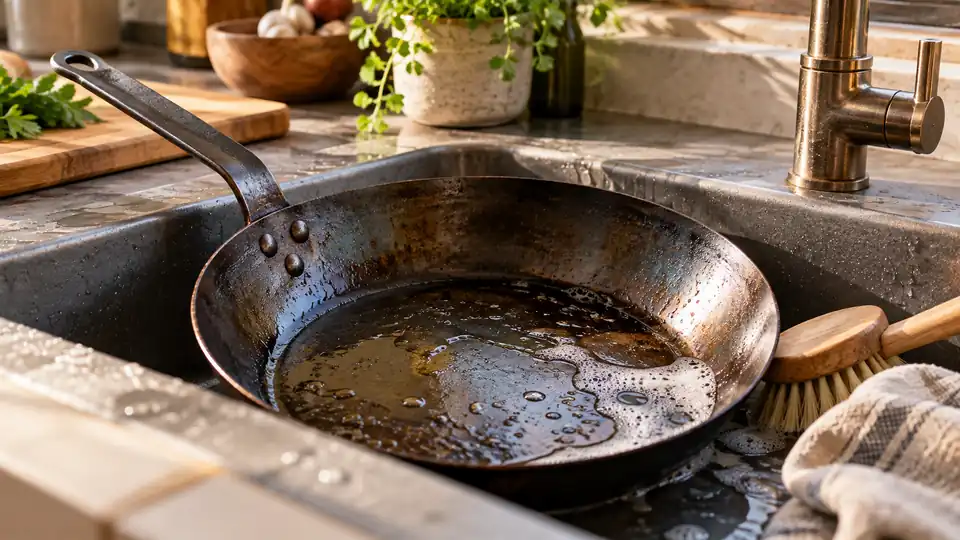
Wash, scrub if needed, rinse, dry, and move on. Carbon steel does not benefit from sitting in water.
Store in a Dry Place
Do not trap moisture by stacking pans tightly while damp or putting knives away in closed sheaths before they are fully dry. Good airflow helps.
Be Careful With Acidic Foods
Tomatoes, wine reductions, lemon juice, and vinegar-heavy sauces can strip young seasoning. That does not mean you can never cook them in carbon steel, but prolonged simmering is harder on the surface than quick cooking.
Common Mistakes That Make Rust Worse
- Oiling over rust instead of removing it first
- Leaving a pan to air dry in a humid kitchen
- Assuming black patches and orange patches are the same thing
- Soaking a rusted pan overnight
- Using harsh dishwasher cycles on carbon steel
- Putting a knife away in a sheath while still damp
- Applying thick seasoning layers after rust removal
That last mistake is especially common. After a rust cleanup, people often try to compensate with too much oil. Thick oil layers become sticky, uneven, and more likely to fail. Thin layers bond better.
Is a Rusted Carbon Steel Pan Ruined?
Usually not. Most rusted carbon steel pans can be restored, even if they look rough at first. Carbon steel is fairly forgiving, and one advantage of the material is that it can often be brought back with scrubbing and re-seasoning.
A pan is more likely to be worth saving if:
- The rust is mostly on the surface
- The metal is still solid and flat
- There is no major warping or deep structural damage
- You can remove the rust fully and get seasoning to bond again
It may be less worth saving if corrosion has caused major pitting across the cooking surface, the pan has thinned significantly, or restoration attempts keep failing because the surface is too damaged to hold seasoning well.
Is Rust on Carbon Steel More Dangerous Than Rust on Cast Iron?
Not really in a basic health sense. Rust on both materials is primarily a maintenance issue rather than a major toxic hazard. The difference is more about how the item performs and how easy it is to restore.
Cast iron is thicker and often tolerates aggressive rust removal well. Carbon steel is usually smoother and thinner, which can make surface restoration easier in some cases but deep corrosion more noticeable on performance surfaces like skillets and knives.
For either material, the same practical advice applies. Remove rust before use, dry thoroughly, and rebuild protection.
Frequently Asked Questions
Can I cook on a carbon steel pan with a tiny rust spot?
It is better not to. A tiny rust spot is usually easy to fix, so there is little reason to cook on it first. Scrub the spot clean, dry the pan, and apply a quick seasoning touch-up.
Is orange discoloration always rust?
No. Some residue from foods or old oil can look brownish or amber. True rust is usually orange to reddish-brown and often feels rough or leaves orange residue on a towel.
Does seasoning completely prevent rust forever?
No. Seasoning helps protect carbon steel, but it wears down with use, cleaning, acidic foods, and time. It reduces rust risk, but it does not make carbon steel rust-proof.
Can vinegar damage carbon steel while removing rust?
Yes, if used too aggressively or left too long. Vinegar can help loosen rust, but it also reacts with bare steel. Short contact followed by thorough rinsing and drying is safer than long soaking.
Why does rust keep coming back after I clean the pan?
Rust usually returns because some corrosion was left behind, the pan was not dried fully, or the protective seasoning was not rebuilt properly. Hidden moisture and weak seasoning are the usual causes.
Should I throw away a rusted carbon steel knife?
Not necessarily. Light surface rust can often be cleaned off. If the blade has deep pitting, rust near the edge that affects sharpening, or corrosion around the handle that suggests internal damage, replacement may be the better option.
Final Thoughts on Is Rust on Carbon Steel Dangerous
For most cooks, the answer to is rust on carbon steel dangerous is not usually in a serious health sense, but it is still a problem that needs to be fixed before use. Light rust is generally a sign of moisture exposure and lost protection, not a sign that the pan or knife is automatically ruined.
The smart response is simple. Remove the rust completely, dry the carbon steel thoroughly, and restore its protective surface. If the corrosion is deep, flaky, or has caused pitting and metal loss, inspect the item more critically before putting it back into service.
Carbon steel rewards regular care. A few minutes of proper drying, light oiling, and occasional seasoning maintenance will prevent most rust problems and keep the metal safe, reliable, and pleasant to cook with for years.

Leave a Reply