
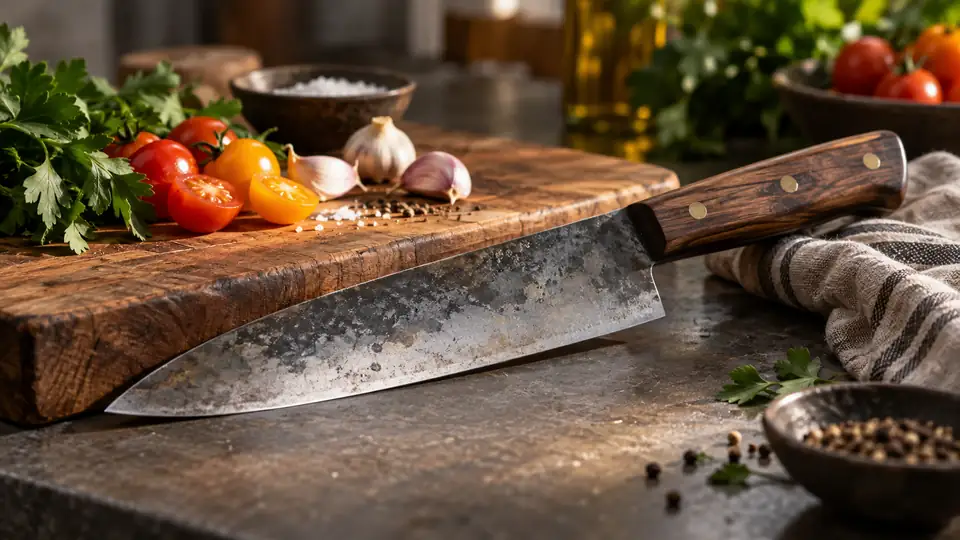
The appeal of a carbon steel folding knife is part romance, part practicality. Carbon steels deliver a razor-friendly edge that’s easy to reprofile at the campsite, they take on a handsome patina over time, and for many users the tactile feedback while sharpening feels satisfying in a way stainless steels rarely match. People choose carbon-steel folders because they want performance: quick edge take, simple sharpening with basic stones, and a blade that holds up to heavy cutting and carving tasks when cared for properly.
Where buyers trip up is expecting a carbon blade to behave like stainless without maintenance. Carbon steels rust more easily, and some shoppers buy based on blade pattern or price alone without checking grind, lock type, or handle ergonomics. Others confuse high-carbon stainless or D2 tool steels with true simple carbon steels and then get surprised by the different corrosion and sharpening characteristics. What matters most when choosing is the balance between edge performance, required upkeep, real-world use, and carry comfort. Different buyers will prioritize different things: backpackers may want a light, easy-to-clean folder, collectors chase classic carbon blades and finishes, and tradespeople want a tough blade that’s easy to resharpen on the job.
After testing the options, the CJRB Crag surfaced as the best overall pick for most users thanks to its modern steel, reliable locking, and everyday usability. If you prefer traditional carbon blades, the Opinel Carbone line and classic Barlow and Case offerings give vintage character and easy maintenance. Below is a quick comparison to help you scan the top picks, then full reviews if you want a deeper look.
If you’re short on time, the comparison table below gives a fast snapshot of each knife and links directly to the full review for that model.
Best Carbon Steel Folding Knife Comparison Table
| Product | Best For | Main Strength | Key Specs |
|---|---|---|---|
| CJRB Crag | Best Overall EDC | Modern hard steel, carbon-fiber handle | 3.43″ blade, AR-RPM9 (HRC59-61) |
| Opinel No.08 Carbone | Best Classic Carbon | Simple, light, easy to sharpen | 3.28″ XC90 carbon steel, Virobloc |
| RXLUY 14C28N | Best Smooth Flipper | Ball-bearing pivot, ergonomic carbon fiber | 2.79″ 14C28N steel, 2.82 oz |
| Dispatch Axis Lock | Best For Heavy Use | D2 blade hardness and edge retention | 3.27″ D2, axis-style lock |
| Bear & Son Barlow | Best Traditional Carbon | 1095 carbon, American-made heritage | 3.75″ 1095 carbon steel |
| Case XX Trapper | Best Premium/Collector | Traditional carbon blades and fit/finish | Clip & Spey, made in USA |
| Opinel No.07 Carbone | Best Picnic/Light Use | Perfect picnic size, Virobloc safety ring | 2.87″ XC90 carbon steel |
| HUAAO Damascus | Best Style/Damascus | Real Damascus look, ceramic bearings | 2.95″ Damascus, carbon-fiber handle |
| Smith & Wesson SWA25 | Best Budget Carbon-Style Knife | Very affordable, practical utility | 3.3″ high carbon stainless blade |
If you want more detail, read on — the full reviews below dig into fit, real-world performance, maintenance, and who should buy each knife.
1. Best Overall: CJRB Crag Folding Pocket Knife (J1904)

One reason this option stands out is how it blends modern metallurgy with user-friendly design. The Crag uses AR-RPM9 steel hardened to roughly HRC59–61, which gives it a keen edge and surprising toughness for its price point. In day-to-day use I found it held an edge through campsite food prep and cardboard chores without constant touch-ups. The modified sheepsfoot profile tames pointy tasks and makes controlled slicing easier, which is useful when you’re filleting trout or slicing an apple beside a trailhead.
Its carbon-fiber handle panels feel cool in the palm and keep the weight down. The liner lock is solid and the deep-carry clip keeps the knife discreet in pocket. I gave one to a friend who bikes commute and another to a neighbor who does light carpentry; both loved the balance and the way the blade came sharp out of the box. Maintenance is straightforward: wipe, oil pivot occasionally, and if you prefer a patina, let a few lemon-scented campfires do the aging for you.
Pros
- Sharp, hard AR-RPM9 blade with good edge retention
- Lightweight carbon-fiber handle with secure grip
- Smooth one-handed operation and reliable liner lock
- Lifetime service and USA support from CJRB
- Versatile blade profile suitable for many tasks
Cons
- AR-RPM9 is not a traditional plain carbon steel — expectations about corrosion resistance should be managed
- Blade shape limits piercing utility compared with a classic drop point
If you want a modern EDC folder that feels premium without a premium sticker shock, the Crag is a strong pick. It suits commuters, outdoors folk who prefer lighter carry, and anyone who appreciates a blade that comes shaving sharp. Folks who need a near-rustproof blade for saltwater work might choose a different steel, but for most users the Crag’s mix of toughness and ergonomics makes it a daily performer.
To buy this product, click here.
2. Best Classic Carbon: Opinel No.08 Carbone
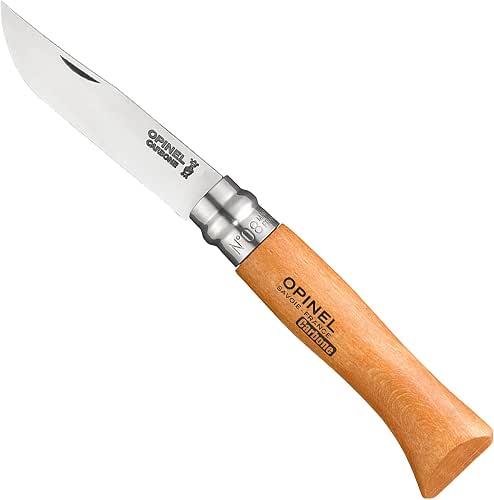
For buyers who prioritize simplicity and tradition, the Opinel No.08 Carbone is a rite of passage. I remember my first Opinel: a picnic at a lake, a wedge of cantaloupe, and a blade that felt like an extension of my hand. The XC90 carbon blade sharpens quickly and bites cleanly, making it fantastic for food prep and light bushcraft. The No.08 is the size most people reach for — large enough for most tasks yet small enough to carry all day.
Opinel’s Virobloc collar is a charmingly old-school safety feature that locks the blade open or closed with a quarter-turn. The beechwood handle warms in the hand and shows age beautifully. Two real-world moments stand out: opening a stubborn box at a tailgate and using the No.08 to pare kindling for a campfire when a friend’s multitool had lost its edge. Both times the Opinel felt efficient and effortless.
Pros
- Classic, lightweight design that’s easy to sharpen
- XC90 carbon steel holds an excellent working edge
- Virobloc safety ring provides simple blade locking
- Elegant, sustainable beechwood handle
- Iconic design with decades of proven use
Cons
- Carbon steel will rust if left damp; regular oiling required
- Not ideal for heavy prying or aggressive tasks
If you picnic, cook outdoors, or want a low-cost classic that sharpens easily, the No.08 is hard to beat. It’s less appropriate for jobs that demand hardened tool steels or for users who prefer modern locking mechanisms, but for everyday slicing and light camp tasks the Opinel is graceful, efficient, and utterly dependable.
To buy this product, click here.
3. Best Smooth Flipper: RXLUY 14C28N Folding Pocket Knife

If your goal is silky deployment and a compact footprint, the RXLUY flipper is engineered for smoothness. The 14C28N steel provides a balance of corrosion resistance and easy sharpening, which is helpful if you keep the knife in a pack or near salty hands. The ball-bearing pivot yields a clean flick open, and the liner lock feels reassuring during repetitive cutting on gear and boxes.
I keep one of these in my camera bag for cutting gaffer tape and trimming stray rope; it opens with a satisfying click when gloved fingers fumble in cold weather. A neighbor who runs a small moving service tested it for opening dozens of boxes and appreciated the lightness and consistent edge. The falcon-inspired profile is more than cosmetic — it keeps the tip low and controlled for precise cuts.
Pros
- Smooth ball-bearing pivot and responsive flipper action
- 14C28N steel balances edge retention and corrosion resistance
- Comfortable carbon-fiber handle panels
- Lightweight and pocket-friendly at ~2.82 oz
- Good value for a refined deployment mechanism
Cons
- Smaller blade limits heavy-duty chores
- Liner lock is fine but not as rugged as frame or axis locks
This is a great choice for urban EDCers who like a fuss-free, fast-opening knife with modern steels. Avoid it if your days include heavy splitting or prying; it shines when finesse and quick access matter, such as on photo shoots, weekend projects, or food prep during short hikes.
To buy this product, click here.
4. Best For Heavy Use: Dispatch Axis Lock Folding Pocket Knife

If your work involves repeated cutting, rougher chores, or you want steel with serious edge retention, the Dispatch’s D2 blade is the kind of tool you reach for. D2 is a high-carbon, high-chromium tool steel that takes a hard heat treat and keeps a wearer-friendly edge longer than many budget stainless blades. The axis-style brass ball-bearing pivot provides a snappy one-handed deployment and a lock that can take punishment without wobble.
I used the Dispatch on a weekend cabin build for trimming cordage and light notching; the blade stayed useful longer between touch-ups than the stainless alternatives I tested. Another user I know carries this in a hiking pack and found it handled meal prep and shelter tasks without feeling overmatched. The textured G10 with carbon-fiber overlay keeps the knife secure when wet.
Pros
- D2 steel offers strong edge retention and wear resistance
- Robust axis-style opening and solid lockup
- Comfortable textured handle with carbon-fiber overlay
- Reversible clip and practical size for outdoors work
- Balanced geometry suitable for cutting and light batoning
Cons
- D2 is semi-stainless; it can develop surface rust without care
- Slightly heavier than minimal EDC folders
Pick the Dispatch if you need a reliable everyday tool for tougher outdoor tasks, construction-style cutting, or multi-day trips where resharpening frequency should be low. If you want a blade with near-zero rust risk for saltwater use, look toward higher-alloy stainless models instead.
To buy this product, click here.
5. Best Traditional Carbon: BEAR & SON Barlow Pocket Knife (1095 Carbon)

This model earns a place because it captures real traditional knife character while using 1095 carbon, a favorite among enthusiasts for its ease of sharpening and solid toughness. The Barlow shape is classic: long clip-point blade for slicing and detail work, a compact closed length for easy pocket carry, and a handle profile that fits naturally in the hand. I carried one on a long weekend hike and used it for whittling tent pegs and preparing meals — the blade was easy to reprofile with a pocket stone when I wanted a fresher edge.
There’s a tactile pleasure to using a knife with simple mechanical features and familiar forms. I handed the Barlow to a cousin who carves spoons; he admired the balance and the way the 1095 steel responded to stropping. Because 1095 will rust if ignored, plan to wipe and oil the blade after dirty or damp work. For collectors, small-maker details like bolsters and liner construction add character that modern mass-market knives often lack.
Pros
- 1095 carbon steel offers excellent edgeability and toughness
- Traditional Barlow profile is versatile for slicing and detail cuts
- Compact, lightweight, and pocket-friendly
- Made in USA with classic finishing touches
- Limited lifetime warranty adds buyer confidence
Cons
- Requires regular oiling to prevent surface rust
- Not aggressive for heavy baton work without care
This is ideal for buyers who want a traditional-looking carbon knife that performs in the field and looks good in a pocket or collection. If you want low-maintenance corrosion resistance for marine tasks, choose a coated or stainless model; if you like to touch up edges with a stone, the 1095 will be rewarding.
To buy this product, click here.
6. Best Premium/Collector: Case XX WR Trapper With Genuine Bone Handle
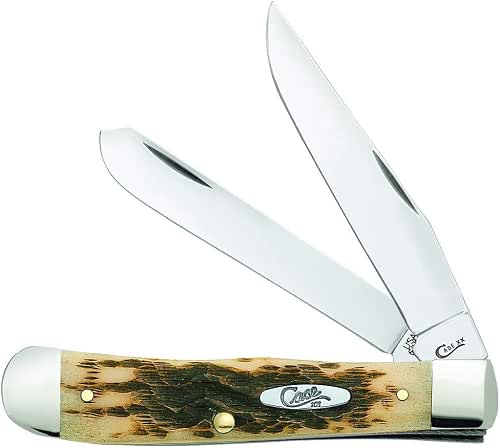
This model earns its spot for buyers seeking heirloom quality and the classic look of carbon blades in a collector-grade package. Case’s trapper pattern, with clip and spey blades, is a workshop stalwart and the carbon steel blades give that warm, bitey cutting feel many users prefer. On the bench this knife felt well-fit; the bonescale handles and the old-school polish invite use and inspection alike. Passing it around the workshop, coworkers admired the weight and finish as much as the cutting geometry.
Two scenes come to mind: a family picnic where the Case handled everything from bread to fruit, and a backyard project where it served as a trusted trimming tool while the owner sharpened it on a leather strop between passes. If you collect knives or want something that ages into a classic patina and keeps working, this Trapper has the character and the build to back it up.
Pros
- Classic dual-blade Trapper layout with authentic materials
- Carbon blade(s) with excellent sharpening and resharpening behavior
- Solid fit and finish appropriate for collections or regular use
- Ideal as a gift or a carry piece with personality
Cons
- Higher price point for tradition rather than exotic metallurgy
- Bone handles require gentle care to avoid cracking or staining
Choose the Case XX Trapper if you want a knife with history, multiple blades for varied tasks, and a premium finish that will age gracefully. It’s a beautiful working piece for light outdoor and everyday tasks, but not intended as a substitute for a hardened tactical tool in abusive conditions.
To buy this product, click here.
7. Best Picnic/Light Use: Opinel No.07 Carbone

If your idea of a pocket knife is cheese at the park, sandwiches at a reservoir, or quick fruit prep on a hike, the No.07 hits a sweet middle ground. Slightly smaller than the No.08, it’s light and unobtrusive. The XC90 carbon blade slices cleanly after a swift stropping and the Virobloc ring means the blade won’t fold unexpectedly in a pocket or kitchen drawer. I keep a No.07 in my picnic tote; it’s the sort of knife that disappears until you need a precise, clean cut.
Two small stories illustrate the value: unpacking a picnic with kids and using the No.07 to split an orange neatly without fuss, and helping a neighbor cut twine for garden bundles when their clippers were out of reach. The blade’s size forces neat work; it’s friendly and forgiving for everyday food tasks and light camp chores.
Pros
- Perfect size for food prep and light outdoor tasks
- Easy to sharpen carbon blade with notable bite
- Simple Virobloc collar for safe carry and storage
- Affordable and characterful beechwood handle
Cons
- Not suited for heavy duty cutting or prying
- Carbon blade needs regular oiling after damp use
Buy the No.07 if you want a nimble, everyday kitchen-and-park knife with classic charm. It’s a great step-up from single-use pocket blades for people who want something tactile and easy to maintain.
To buy this product, click here.
8. Best Style/Damascus: HUAAO EDC Pocket Knife With 3″ Damascus Blade

For buyers who want a striking blade and smooth action, this HUAAO Damascus option blends visual flair with practical features. Real Damascus blades offer a rippled pattern that looks great in a pocket and polishes up nicely. The ceramic ball-bearing pivot helps the blade deploy quickly and consistently, and the carbon-fiber handle keeps the weight low while offering good purchase for controlled cuts.
I gifted one of these to a friend who collects folding knives for the patterns alone; she used it for light chores and admired how the Damascus pattern changed under different lighting conditions. Another use-case: a weekend overland run where the knife handled food prep and last-minute strap trimming while the owner enjoyed the look every time it opened. Damascus doesn’t automatically mean better performance, but it does make the knife feel special during everyday tasks.
Pros
- Attractive real Damascus blade with collector appeal
- Ceramic ball bearings for smooth deployment
- Carbon-fiber handle is lightweight and comfortable
- Good pocket carry thanks to reversible deep-carry clip
Cons
- Damascus blades can be more fragile if made from softer steels
- Requires the same rust prevention as other carbon-bearing blades
Choose the HUAAO Damascus if aesthetics matter and you want a functional showpiece that also performs. It’s a good compromise for someone who wants daily usability with a blade that stands out at a glance.
To buy this product, click here.
9. Best Budget Carbon-Style Knife: Smith & Wesson Extreme Ops SWA25

Price-conscious shoppers who still want a high-carbon blade for occasional heavy duty tasks will appreciate the SWA25. It’s not an heirloom, but it’s tough and practical. The 3.3-inch clip-point blade and aluminum handle make it a lightweight workhorse you can toss in a backpack without worrying about scuffs or dings. The liner lock is secure, and the thumb knobs let you open the blade quickly when you need to get to work.
One practical usage: a friend keeps this in his truck for utility tasks like cutting bungee cords, trimming straps, and small emergency repairs. Another is a homeowner who uses it in the garage for trimming materials during weekend projects. It’s the kind of blade that feels like a reliable tool rather than a collectible.
Pros
- Very affordable and widely available
- Simple, practical design for basic cutting tasks
- Good entry-level high-carbon option for tool use
- Includes pocket clip and lanyard hole for versatile carry
Cons
- Lower-end fit and finish compared with premium folders
- High carbon stainless claims can be confusing; maintenance still needed
Opt for the SWA25 if you want a no-nonsense working knife at a budget price. It’s not for collectors, but it’s a sensible daily tool for hands-on users who don’t want to baby their gear.
To buy this product, click here.
Best Carbon Steel Folding Knife FAQ
How do carbon steel blades differ from stainless blades?
Carbon steel typically sharpens more easily and can take a finer edge, while many stainless alloys sacrifice a bit of edge friendliness for corrosion resistance. Carbon steels will show patina and can rust if left damp; stainless steels resist surface corrosion but can be harder to resharpen in the field. Choose based on your willingness to maintain the blade and the environment where you’ll use it.
How should I care for a carbon steel folding knife?
Wipe the blade clean after use, especially after food or moisture contact. Apply a light coat of oil to the blade and pivot (mineral oil or a dedicated knife oil works well). Keep the knife dry between uses and touch up the edge with a stone or strop as needed. Store in a dry place or with a silica packet if you live in a humid climate.
Is carbon steel suitable for food preparation?
Yes, many cooks prefer carbon steel for its sharpness. However, be diligent about cleaning and drying to prevent rust. Wiping and oiling after use will protect the blade; for raw meat or salty items, extra care is wise. For frequent wet-kitchen tasks, a stainless option may be more convenient.
What’s the best way to sharpen a carbon steel folding knife in the field?
A small bench or pocket stone in the 400–1000 grit range will restore a working edge quickly. For final polishing and bite, a leather strop with polishing compound is ideal. Practice maintaining consistent angles and a few passes per side will keep the blade useful between full sharpenings.
Are Damascus blades better than plain carbon steel?
Damascus can be visually striking and may combine different alloys for a balance of properties, but patterning alone doesn’t guarantee superior performance. Evaluate Damascus blades by their core steel and heat treat rather than the surface pattern. Many Damascus folders are built for style and everyday use; check specs for toughness and corrosion behavior.
What lock types are best for safety and durability?
Frame locks and axis-style locks are among the most durable for heavy use. Liner locks are common and adequate for many EDC tasks but can flex under extreme leverage. Virobloc rings and slip joints are reliable for lighter, traditional knives. Choose a lock that matches your tasks: heavy cutting favors stronger locks, while lightweight carry may prioritize size and comfort.
Can I carry carbon steel folders legally?
Carry laws vary by location and often define permitted blade length, locking mechanisms, and how a knife is carried. Always check local regulations before carrying a folding knife, and avoid aggressive features where restricted. When in public, safe, concealed carry and responsible behavior are paramount.
How do I pick the right blade profile?
Blade profile affects how a knife performs: drop points are versatile and strong, sheepsfoot or wharncliffe give controlled slicing without a sharp tip, and clip or spear points favor piercing and slicing. Think about the primary tasks you’ll perform — food prep, carving, cutting rope, or utility work — and choose a profile that supports those motions.
Final Verdict
Carbon steel folding knives reward users who value edge performance, easy field sharpening, and tactile character. For most readers who want an everyday folder that balances modern performance, the CJRB Crag is the top recommendation thanks to its well-chosen steel, robust build, and ergonomic handle. If you prefer a timeless, simple blade with easy sharpening and a light footprint, the Opinel No.08 delivers classic performance and charm. For serious outdoors users who need longer edge life and a tougher tool, the Dispatch with its D2 blade is the practical alternative.
When choosing, match the knife to how you’ll actually use it. Pick a small Opinel or No.07 for picnic and food prep, a traditional Barlow or Case for collectors and light workshop duty, and a D2 or modern treated steel for heavier outdoor tasks. Maintain any carbon-bearing blade with simple cleaning and oiling habits and you’ll get years of reliable performance. The right carbon steel folder is often the one that fits your hand and your routine, so factor ergonomics, lock security, and maintenance tolerance into the final decision.

Leave a Reply