

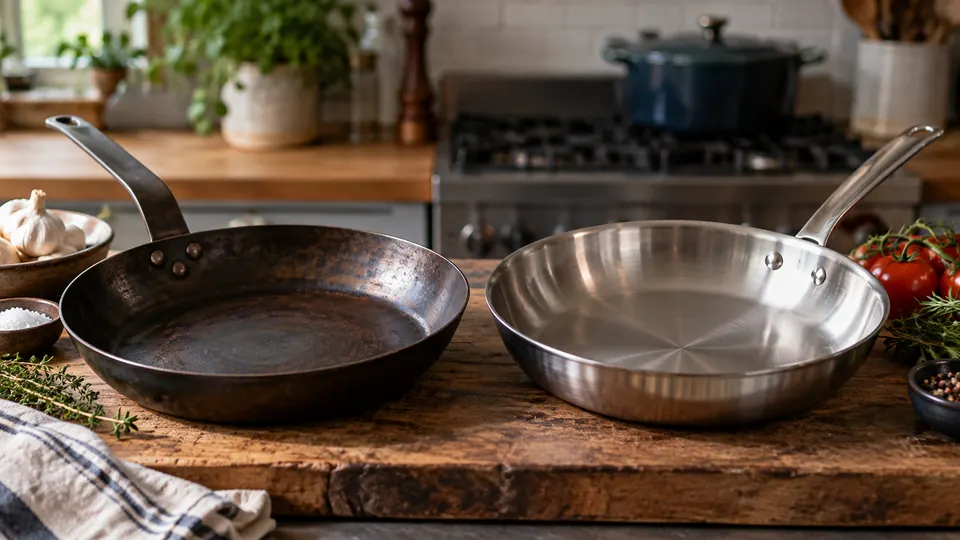
Knife steel changes how a blade cuts, sharpens, stains, and ages. That is why the question are carbon steel knives better than stainless steel does not have a single answer for every cook. A line cook breaking down cases of produce, a home cook slicing onions twice a week, and an outdoors user carrying a field knife all ask slightly different things when they compare these materials.
Carbon steel knives have a strong reputation for taking a very fine edge and being easy to sharpen. Stainless steel knives are better known for resisting rust, handling moisture, and requiring less day-to-day vigilance. Both reputations are broadly deserved, but they can also be oversimplified. Not all carbon steels behave the same way, and not all stainless steels are difficult to sharpen or too soft for serious cutting.
The better question is usually not which material is universally better, but better for what kind of use. In a dry kitchen with careful maintenance habits, carbon steel can be a pleasure to use. In a busy household where knives sit in the sink or cut acidic food often, stainless steel is usually easier to live with. Understanding the tradeoffs makes the choice much clearer.
Quick Answer
Are carbon steel knives better than stainless steel? Carbon steel knives are often better for edge sharpness, ease of sharpening, and fine cutting performance, while stainless steel knives are usually better for rust resistance, low maintenance, and everyday convenience. Neither material is automatically superior in every situation.
If you enjoy maintaining your knives, wiping them dry during use, and occasionally dealing with a patina, carbon steel can reward you with excellent sharpness and straightforward sharpening. That is one reason many enthusiasts and some professional cooks still prefer carbon steel blades for precise kitchen work.
If you want a knife that tolerates moisture, acidic ingredients, and less careful handling, stainless steel is usually the more practical choice. A good stainless knife may not always sharpen quite as quickly as simple carbon steel, but it is easier to own over the long run for most people.
So the short answer is this: carbon steel knives can be better performers for people who value edge quality and do not mind maintenance, while stainless steel knives are better all-around tools for most kitchens.
Carbon Steel vs Stainless Steel at a Glance
| Category | Carbon Steel Knives | Stainless Steel Knives |
|---|---|---|
| Sharpness potential | Often very high, especially with simple carbon steels | Also can be very high, depending on alloy and heat treatment |
| Ease of sharpening | Usually easier and faster to sharpen | Often slower to sharpen, though this varies a lot |
| Rust resistance | Poor to moderate, requires care | Good to excellent |
| Reaction to acidic foods | Can discolor, patina, or react with food | Usually much less reactive |
| Maintenance | Higher maintenance | Lower maintenance |
| Patina development | Common and expected | Usually minimal |
| Toughness | Can be very good, depends on steel and hardness | Can also be very good, depends on alloy |
| Best fit | Enthusiasts, careful users, traditional knife fans | Most home cooks, busy kitchens, low-maintenance users |
What Is a Carbon Steel Knife?
A carbon steel knife is made from steel with enough carbon to harden the blade effectively, but with too little chromium to qualify as stainless. In practical terms, that means the blade can take a keen edge, but it is more vulnerable to oxidation. Oxidation is simply the chemical reaction that leads to discoloration, patina, or rust.
Traditional carbon steels used in knives are often relatively simple alloys. They may contain carbon, iron, and modest amounts of other elements, but not the higher chromium content that helps stainless steels resist corrosion. Because of that simpler composition, many carbon steels sharpen more easily on common whetstones.
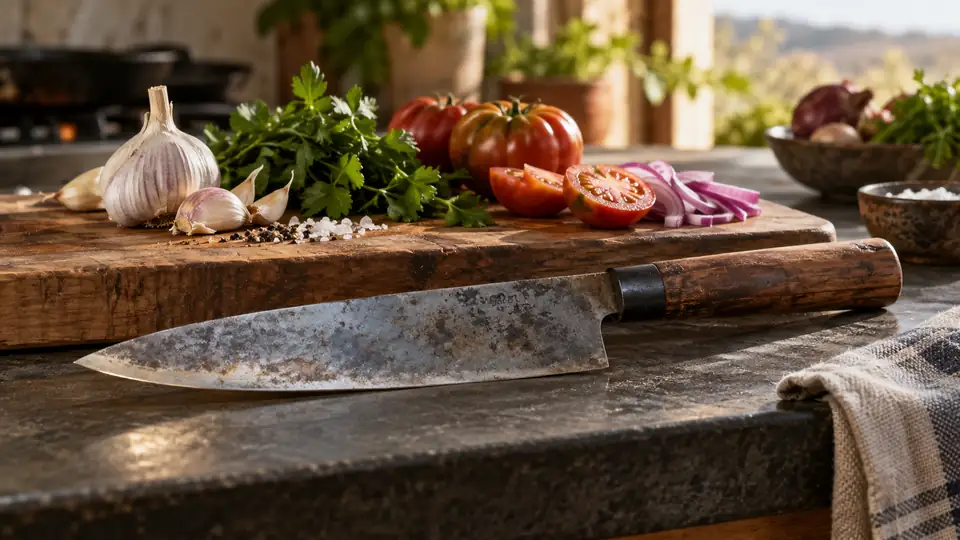
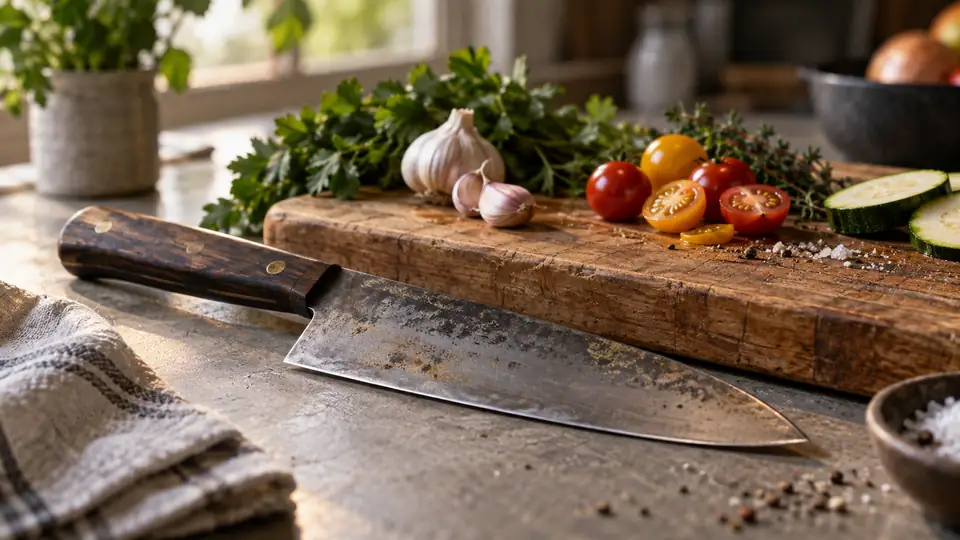
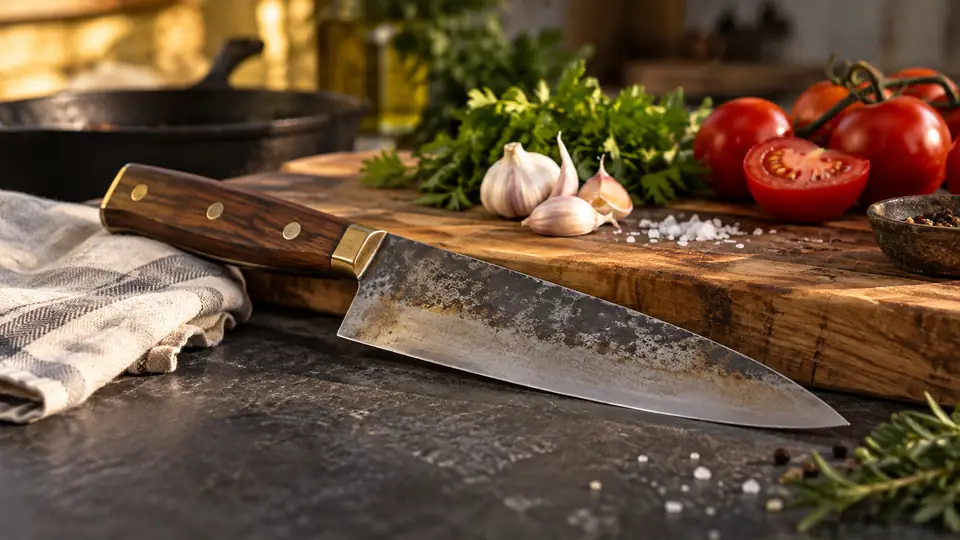
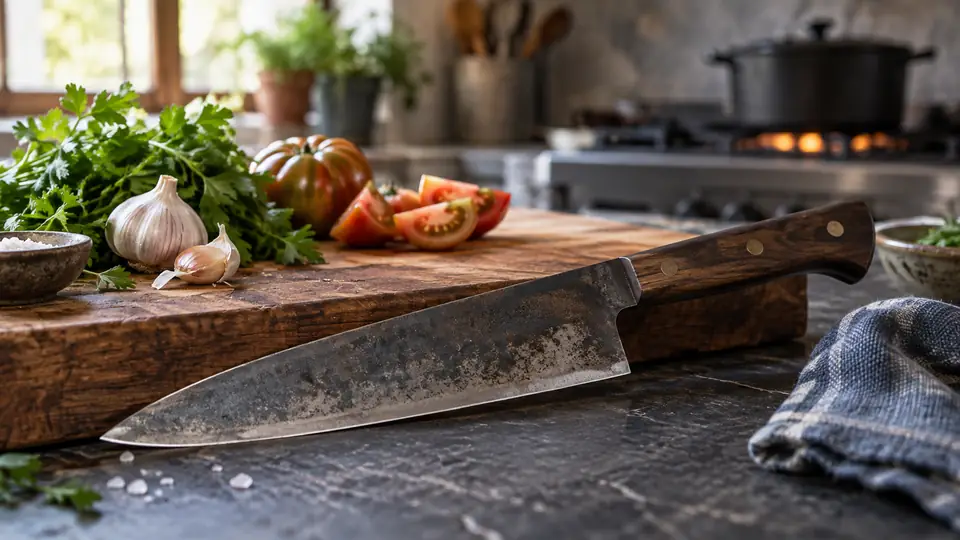
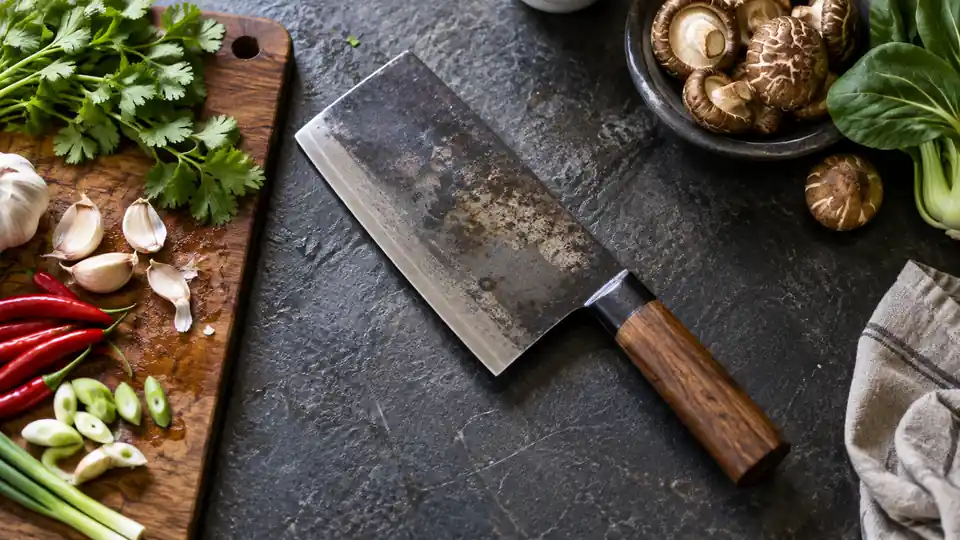
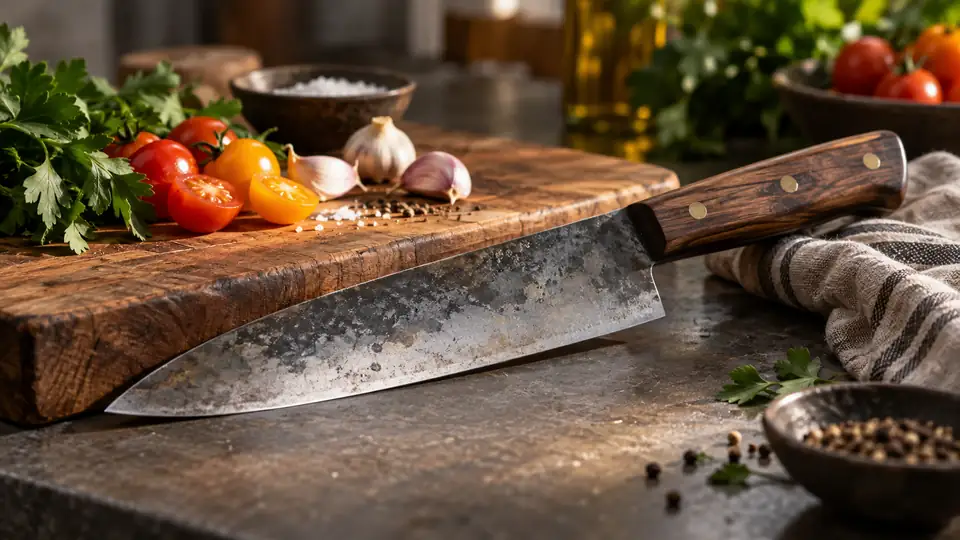
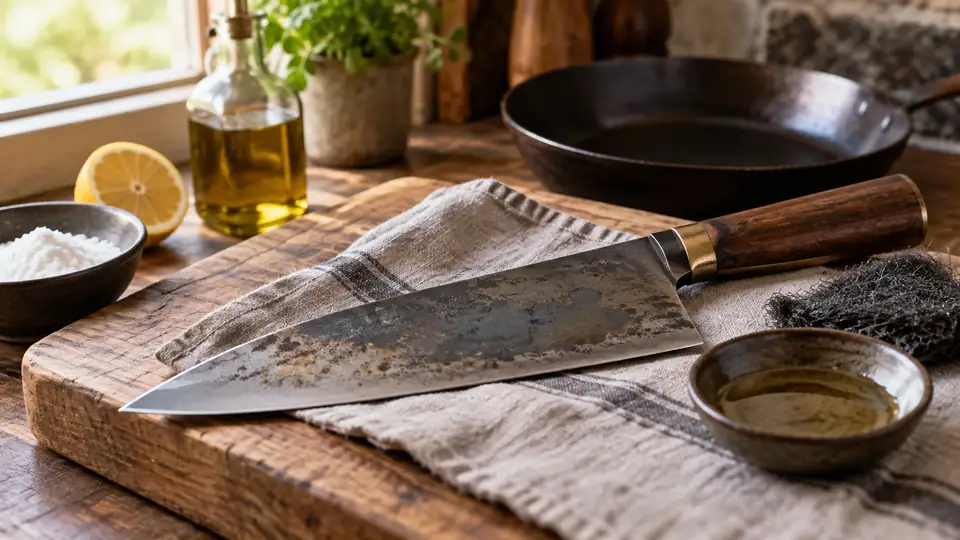
In kitchen use, carbon steel often darkens with time. This darkening is called a patina. A patina is not the same thing as red rust. It is a surface change that can actually help the blade become a little less reactive. Many carbon steel knife owners consider a stable gray-blue patina normal and even desirable.
What Is a Stainless Steel Knife?
A stainless steel knife contains enough chromium, usually around 10.5 percent or more, to form a protective oxide layer that improves corrosion resistance. That is what makes stainless blades less likely to rust after contact with water, tomato juice, citrus, onions, or damp cutting boards.
Stainless steel covers a very wide range of knife steels. Some are relatively soft and inexpensive. Others are advanced high-performance alloys with excellent edge retention, fine grain structure, and impressive durability. That range matters, because comparing all stainless knives to all carbon steel knives can be misleading.
Modern stainless knives can perform at a very high level. Some hold an edge longer than many traditional carbon steels. The tradeoff is that certain stainless alloys can be slower to sharpen and may require better abrasives, more patience, or more sharpening skill.
Are Carbon Steel Knives Better Than Stainless Steel for Sharpness?
This is where carbon steel often earns its reputation. Many carbon steel knives can take a very fine, aggressive edge with less effort than comparable stainless knives. They respond well to sharpening stones and often provide strong feedback during sharpening, which makes it easier to refine the edge.
For tasks like fine slicing, push cutting vegetables, or detailed prep work, a good carbon steel blade can feel exceptionally crisp. That feeling is one reason knife enthusiasts often gravitate toward carbon steel. The edge can feel very clean and precise on the board.
That said, stainless steel is not automatically less sharp. A well-made stainless knife with good heat treatment can become extremely sharp. The real difference is often in how easily that sharpness is achieved and maintained.
Why Carbon Steel Often Feels Sharper
Many simple carbon steels have a fine grain structure and are relatively easy to abrade on sharpening stones. In plain English, the steel responds quickly when you sharpen it. That makes it easier to raise a burr, refine the edge, and restore sharpness without removing excessive material.
Some stainless steels contain larger amounts of hard carbides from alloying elements like vanadium or chromium. Those carbides can improve wear resistance, but they may also make the sharpening process slower. The knife may still get very sharp, but it can take more time to reach that point.
Sharpness vs Edge Retention
Sharpness and edge retention are related, but they are not the same thing. Sharpness refers to how keen the edge is right now. Edge retention refers to how long the knife stays sharp in use.
Carbon steel often wins on ease of achieving a razor-like edge. Stainless steel, especially modern wear-resistant stainless alloys, may win on how long that edge lasts between sharpening sessions. That means a stainless knife can be more convenient even if it is not quite as pleasant to sharpen.
Performance Comparison
Cutting Feel
Many cooks describe carbon steel knives as lively, direct, and easy to control. Part of that comes from the edge itself, and part comes from how many carbon steel knives are ground. Thin, fine-edged carbon steel knives can move through onions, herbs, and proteins with very little drag.
Stainless knives can feel just as smooth in use, especially if they have a thin geometry and a refined finish. Still, in side-by-side comparisons, simple carbon steel often gives a slightly more immediate cutting sensation. This is subtle, but experienced users tend to notice it.
Edge Retention in Daily Use
There is no universal winner here. Some carbon steel knives lose their shaving sharpness fairly quickly but are easy to touch up. Some stainless knives keep a working edge longer, especially if they use harder, wear-resistant alloys. The tradeoff is that touching them up may take more effort.
For a home cook, that can mean this: a carbon steel knife may need more frequent maintenance, but each maintenance session is usually simpler. A stainless knife may go longer between sharpening, but the actual sharpening work can be more demanding.
Toughness and Chipping
People sometimes assume carbon steel is always tougher and stainless is always more brittle. That is too simple. Toughness depends on the steel type, hardness, heat treatment, and blade geometry. A thin hard edge can chip whether the steel is carbon or stainless.
In practical kitchen use, both materials can perform well if the knife is used appropriately. Twisting through hard squash, hitting bones, scraping the board with the edge, or cutting frozen foods can damage either one.
Maintenance Comparison
The biggest difference between carbon steel and stainless steel is usually maintenance. This is where many buyers decide what is realistic for their habits.
| Maintenance Task | Carbon Steel | Stainless Steel |
|---|---|---|
| Wash after use | Yes, promptly | Yes, but timing is less critical |
| Dry immediately | Very important | Recommended |
| Leave wet on board or sink | High risk of staining or rust | Usually more forgiving |
| Use on acidic foods | May react and discolor | Usually no issue |
| Apply protective oil for storage | Helpful, especially long term | Usually unnecessary |
| Patina development | Expected over time | Minimal to none |
Why Carbon Steel Rusts More Easily
Carbon steel has less chromium, so it lacks the same level of built-in corrosion resistance. If moisture stays on the blade, especially around the edge or where the handle meets the tang, rust can form surprisingly quickly. Humid kitchens and infrequent cleaning make this more likely.
Acidic ingredients can also affect the blade. Slicing lemons, tomatoes, apples, or onions with a carbon steel knife may darken the steel and sometimes transfer a metallic smell or taste if the blade is very reactive and not yet well patinated.
What Daily Care Looks Like
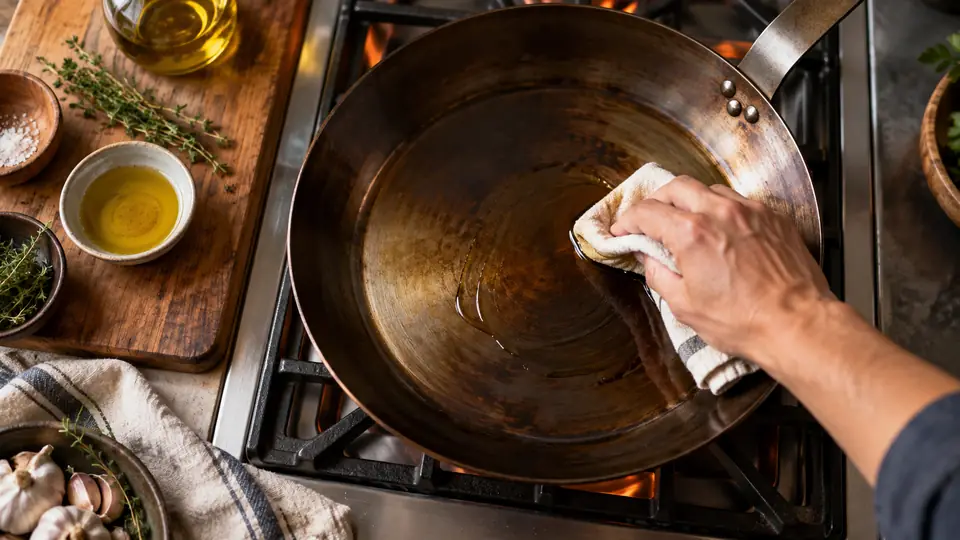
With carbon steel, the routine is simple but not optional. Wash by hand, dry thoroughly, and put the knife away. If the knife will be stored for a long period, a very light coat of food-safe mineral oil can help protect the blade.
Stainless steel also benefits from hand washing and drying, but it is much more forgiving if life gets busy. That difference matters in real kitchens, especially households where multiple people use the same tools.
Cooking Surface and Food Reactivity
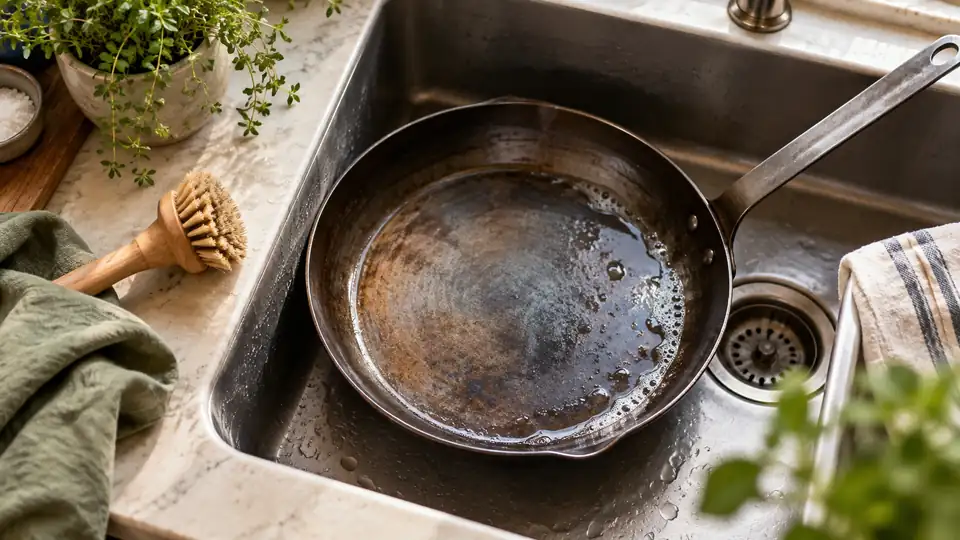
Although this comparison is about knives rather than pans, food reactivity still matters because the blade touches ingredients directly. Carbon steel can react with acidic foods. This may cause temporary discoloration on the blade and, in some cases, slight discoloration or off flavors in delicate foods.
For example, a carbon steel knife used on a pile of cut apples can sometimes leave the fruit with grayish streaks if the blade is highly reactive. A knife with a stable patina tends to do this less. Stainless steel is generally better for prep involving citrus, tomatoes, pickles, and other acidic ingredients.
For onions, herbs, raw meat, carrots, potatoes, and many day-to-day tasks, a carbon steel knife usually performs beautifully as long as it is cleaned afterward. The problem is not that carbon steel cannot do these jobs. The issue is that the user has to stay attentive.
Durability Comparison
Durability has two sides here. One is edge durability, meaning how well the cutting edge resists rolling, chipping, or dulling. The other is surface durability, meaning how well the blade resists corrosion, staining, and neglect.
Carbon steel often does very well in terms of edge refinement and repairability. If the edge gets dull, it is typically straightforward to restore. If light rust develops, it can often be removed before permanent damage occurs. But the blade surface is more vulnerable to moisture and acids.
Stainless steel is more durable from a corrosion standpoint. That does not mean indestructible. Stainless can still pit, stain, chip, or suffer edge damage. It simply tolerates imperfect care better, and for many people that makes it the more durable real-world choice.
Pros and Cons of Carbon Steel Knives
Advantages of Carbon Steel
- Easy to sharpen. Many carbon steels respond quickly to whetstones and honing.
- Very fine edge potential. They can take a keen, precise edge that feels excellent in use.
- Good tactile sharpening feedback. Users often find them easier to learn on.
- Traditional character. Patina, aging, and simpler steel composition appeal to many enthusiasts.
- Simple maintenance repairs. Minor dullness and light oxidation are often straightforward to address.
Disadvantages of Carbon Steel
- Prone to rust. Moisture left on the blade can cause problems quickly.
- Reacts with acidic foods. This may create discoloration or metallic notes.
- Higher maintenance. Drying and storage habits matter every time.
- Can look worn faster. Patina is normal, but not everyone likes the appearance.
- Less forgiving for shared kitchens. If other users leave it wet, the knife suffers.
Pros and Cons of Stainless Steel Knives
Advantages of Stainless Steel
- Better corrosion resistance. Ideal for busy kitchens and humid environments.
- Lower maintenance. Easier to own without constant attention.
- Less reactive with food. Better for acidic prep and long sessions.
- Wide range of options. Available from budget utility knives to high-end performance knives.
- Good real-world durability. More tolerant of imperfect habits.
Disadvantages of Stainless Steel
- Some types are harder to sharpen. Especially wear-resistant alloys.
- Cheap stainless can be disappointing. Low-quality versions may be soft and dull quickly.
- May not offer the same sharpening feel. Some users prefer the response of carbon steel.
- Can still chip or dull. Stainless is not maintenance-free, only more forgiving.
Who Should Choose Carbon Steel?
Carbon steel is a good fit for cooks who enjoy the tool side of cooking. If sharpening interests you, if you appreciate a blade developing character, and if wiping a knife dry feels like no big deal, carbon steel can be very satisfying.
It is also a strong choice for users who want straightforward sharpening on stones. Learning edge maintenance is often easier on simpler carbon steels because the feedback is clear and the steel responds predictably.
Carbon steel can make particular sense for:
- Knife enthusiasts who sharpen their own blades
- Cooks who want very fine edge performance
- Users comfortable with hand washing and immediate drying
- People who like traditional knife materials and patina
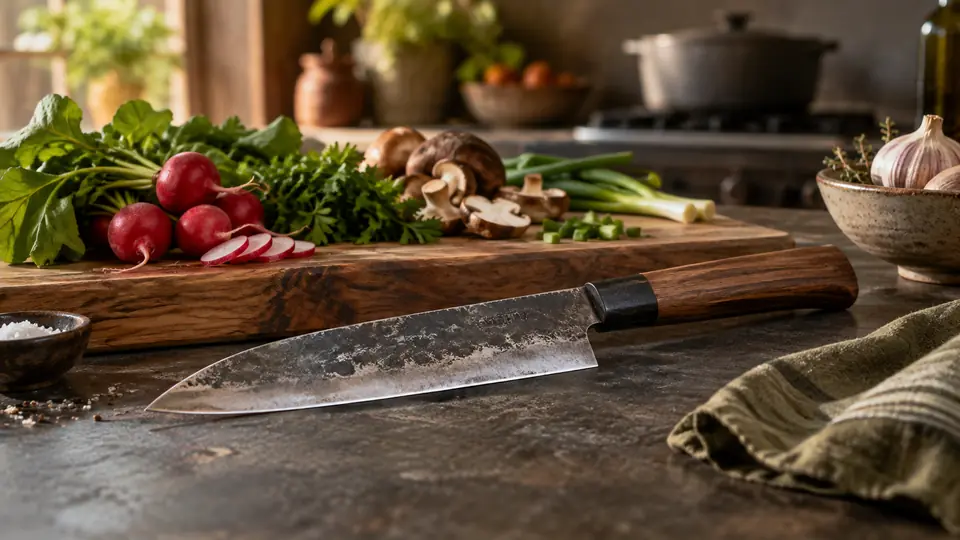
- Those interested in specialized Japanese or handmade knives, including some featured in guides to the best Japanese carbon steel knife
Who Should Choose Stainless Steel?
Stainless steel is usually the safer recommendation for the average home kitchen. It handles routine prep, less careful storage, and acidic foods with far fewer complications. If you want a knife to work well without becoming another maintenance task, stainless is easier to recommend.
It also makes sense in shared kitchens, family kitchens, and fast-paced environments where the knife may not always be cleaned and dried immediately. Convenience is not a small benefit here. A tool that fits your real habits is often the better tool.
Stainless steel is a strong fit for:
- Most home cooks
- People who want low-maintenance ownership
- Kitchens where multiple users handle the same knives
- Frequent prep of tomatoes, citrus, fruit, and other acidic ingredients
- Anyone unlikely to oil or closely monitor blade storage
Common Mistakes People Make in This Comparison
Assuming All Carbon Steel Knives Are Superior
A poorly heat-treated carbon steel knife is not automatically better than a well-made stainless one. Geometry, hardness, heat treatment, and edge angle matter as much as the basic steel category.
Assuming Stainless Means Dull
This idea comes from cheap stainless knives that prioritize corrosion resistance over edge performance. High-quality stainless kitchen knives can be excellent cutters. The category is too broad for blanket judgments.
Ignoring Maintenance Habits
This is probably the most common mistake. Some buyers choose carbon steel for the reputation, then realize they do not want to baby a blade after every use. The better material is often the one you will actually care for properly.
Confusing Patina With Damage
A gray or blue patina on carbon steel is normal. Orange or flaky red rust is the problem. Learning that difference prevents a lot of unnecessary concern.
How to Decide Between Carbon Steel and Stainless Steel
If the decision still feels close, ask yourself a few practical questions:
- Do I sharpen my own knives, or am I likely to ignore sharpening until performance drops badly?
- Will I remember to wash and dry a carbon steel blade right away?
- Do I frequently cut acidic foods?
- Is this knife for a careful solo user or a shared kitchen?
- Do I care more about edge feel, or about convenience and corrosion resistance?
If your answers lean toward maintenance, interest in sharpening, and appreciation for traditional blade behavior, carbon steel may be the better choice. If your answers lean toward convenience, flexibility, and lower risk, stainless is probably the smarter buy.
Frequently Asked Questions
Do carbon steel knives stay sharp longer than stainless steel?
Sometimes, but not always. Traditional carbon steel often gets sharper more easily, while some modern stainless steels keep a working edge longer because they have higher wear resistance. Edge retention depends heavily on the specific steel and heat treatment.
Do carbon steel knives rust easily?
Yes, they can rust much more easily than stainless steel if left wet or dirty. Hand washing and thorough drying are important after each use. In humid storage conditions, a light coat of protective oil can also help.
Is patina on a carbon steel knife bad?
No. A dark patina is usually normal and can even make the blade slightly less reactive. What you want to watch for is orange or red rust, which should be removed promptly.
Are stainless steel knives easier to maintain?
Yes. Stainless steel knives are generally much easier to maintain because they resist corrosion better and tolerate acidic foods and occasional delays in cleaning. They still benefit from proper care, but they are more forgiving.
Are carbon steel knives better for professional chefs?
Some professional chefs prefer them for edge quality and sharpening ease, but plenty of professionals use stainless steel for convenience and corrosion resistance. The best choice depends on workflow, maintenance habits, and the type of prep being done.
Final Verdict
Are carbon steel knives better than stainless steel? They are better in some important ways, especially for people who care deeply about edge feel, sharpening ease, and traditional blade performance. They are not better in the broader everyday sense for everyone.
Carbon steel rewards attention. Stainless steel forgives neglect. That simple difference explains most of the comparison. If you want a knife that can take an excellent edge and you are willing to keep it dry and well maintained, carbon steel is a strong choice. If you want reliability with fewer demands, stainless steel is usually the more practical option.
The right answer is less about which steel has the stronger reputation and more about which one matches your kitchen habits. A knife that fits the way you actually cook will serve you better than a material chosen only for prestige or tradition.

Leave a Reply