

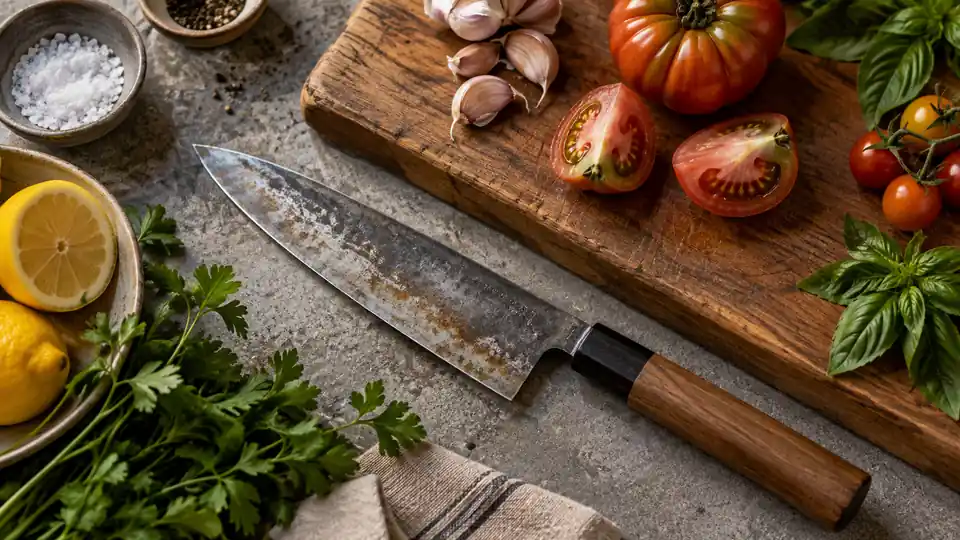
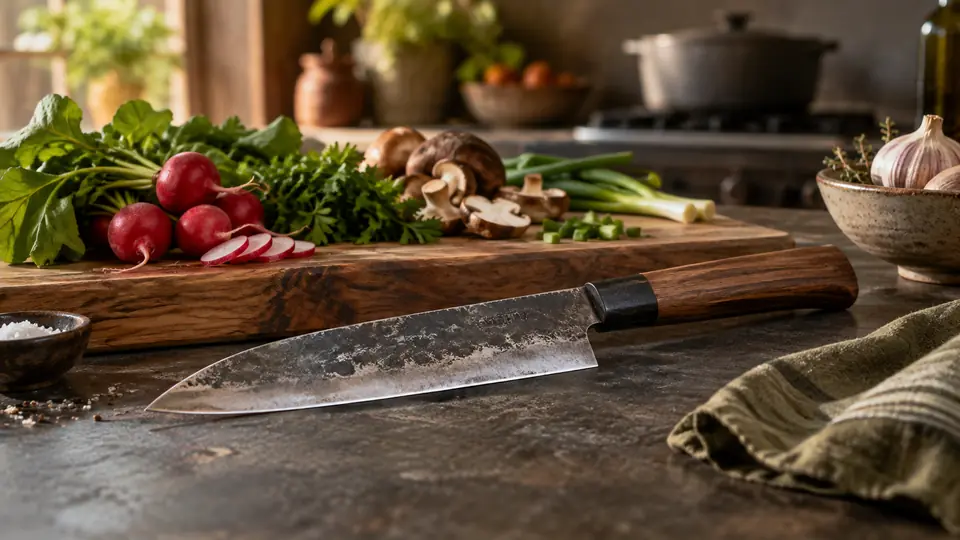
A carbon steel knife develops character quickly, and part of that character comes from the foods it touches. Unlike stainless steel, carbon steel is more reactive. That means certain ingredients can darken the blade, leave streaks, or create a blotchy gray, blue, or even nearly black patina. In some cases, the change is harmless and even helpful. In others, it can point to moisture exposure that should be cleaned up before rust starts.
Understanding what foods can stain a carbon steel knife matters because not every mark is a problem. Cutting an onion, lemon, or steak can change the blade color within minutes, but that is very different from orange rust or pitting. New owners often assume any discoloration means damage, then over-polish the blade or avoid using it on foods that are perfectly fine. A little knowledge makes carbon steel much easier to live with.
This article breaks down which foods are most likely to stain a carbon steel knife, why those stains happen, what a healthy patina looks like, and how to tell the difference between normal reactivity and actual corrosion. It also covers simple habits that keep a knife in good shape without trying to keep it looking factory-new forever.
Quick Answer
Foods that most often stain a carbon steel knife are acidic foods, sulfur-rich foods, and moisture-heavy ingredients. Common examples include onions, garlic, citrus, tomatoes, apples, potatoes, mustard, vinegar-based foods, and many proteins such as raw meat or fish. These foods react with the exposed carbon steel surface and can leave gray, blue, black, or rainbow-like discoloration. That staining is usually a patina, not damage.
A patina is a thin layer of oxidation that forms during normal use. It can actually help protect the knife from more aggressive rusting. What you want to watch for is orange or reddish rust, rough spots, or pitting. Those signs suggest the blade stayed wet too long or was not cleaned and dried promptly.
So, what foods can stain a carbon steel knife? Mostly foods with acid, sulfur compounds, salt, or a lot of moisture. The stain risk is highest when the food sits on the blade, the knife is left dirty on the board, or the blade is stored damp. Quick washing, thorough drying, and occasional light oiling are usually enough to manage it.
Why Carbon Steel Knives Stain So Easily
Carbon steel takes a very sharp edge and is loved for its cutting feel, but it is less corrosion-resistant than stainless steel. Stainless alloys contain more chromium, which forms a protective barrier. Carbon steel has less of that built-in protection, so the blade reacts more readily with food, water, and air.
That reaction is basically a form of oxidation. In plain terms, the metal surface changes when it meets certain compounds, especially acids and sulfur. The result may be a darkened area, a streaky pattern, or a full blade patina after repeated use.
This is why a carbon steel knife can look different after cutting one onion or slicing a few lemons. The blade is not necessarily failing. It is responding exactly the way reactive steel tends to respond.
What Foods Can Stain a Carbon Steel Knife Most Often
Some foods are much more reactive than others. The table below gives a quick overview of the main categories and the kind of discoloration they often cause.
| Food Type | Examples | Why It Reacts | Typical Effect on Blade |
|---|---|---|---|
| Acidic foods | Lemons, limes, oranges, tomatoes, vinegar, pickles | Acid speeds up surface oxidation | Gray, dark blue, black, mottled stains |
| Sulfur-rich foods | Onions, garlic, shallots, leeks | Sulfur compounds react strongly with steel | Dark streaks, blue-gray patches |
| Moisture-heavy produce | Apples, potatoes, pears, cucumbers | Water plus plant acids and minerals encourages reactivity | Spotting, light gray patina |
| Proteins | Beef, chicken, pork, fish | Moisture, salts, and proteins can darken steel | Blue-gray or dark patches |
| Salty or fermented foods | Soy sauce ingredients, cured meats, kimchi, olives | Salt and acid increase corrosion risk | Fast darkening, possible rust if left wet |
| Highly pigmented condiments | Mustard, hot sauce, some fruit juices | Acid and color compounds cling to reactive steel | Dark stains, blotchy patina patterns |
Acidic Foods That Commonly Stain Carbon Steel
Citrus Fruits
Lemons, limes, oranges, and grapefruit are some of the fastest-reacting foods for carbon steel. Their juice is acidic enough to darken a blade almost immediately, especially on a freshly polished or lightly used knife.
If you slice a lemon and leave the juice on the blade for a few minutes, the knife may show a strong gray or blue patch by the time you wash it. This is one reason many cooks reach for stainless when doing a lot of citrus prep.
Tomatoes
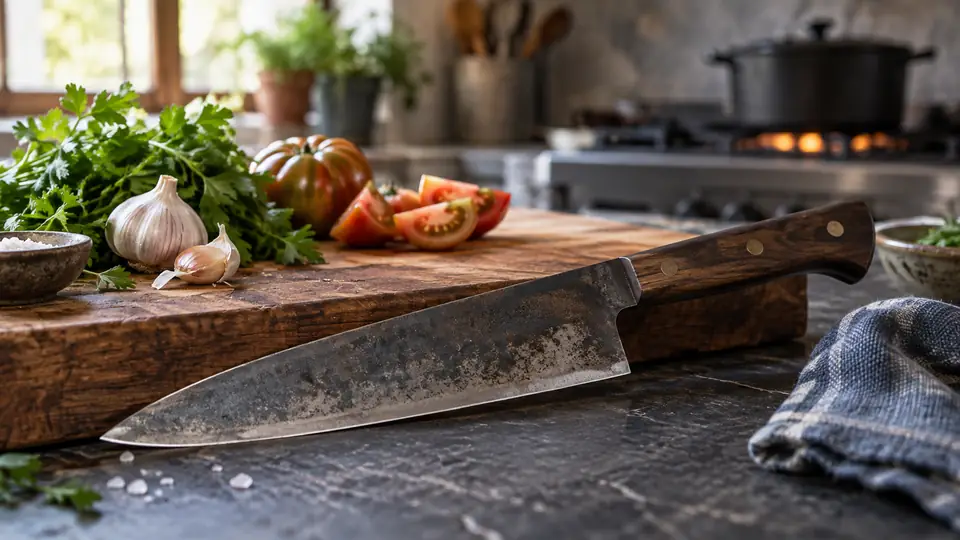
Tomatoes are both acidic and wet, which makes them a reliable source of staining. A carbon steel blade used for tomatoes may develop long dark streaks along the cutting edge where juice remains in contact with the steel.
The effect is often more visible on a bright, polished blade than on a knife that already has a mature patina. The blade may still perform perfectly well, but its appearance will change quickly.
Vinegar and Pickled Foods
Vinegar is highly reactive with carbon steel. Cutting pickles, slicing vegetables that have been dressed in vinegar, or trimming food while working around pickling brine can all leave strong discoloration.
This is less about the act of cutting and more about contact time. If a vinegar-based liquid sits on the blade, it pushes the steel closer to corrosion rather than just harmless patina.
Apples and Other Fruit
Apples often surprise people because they seem mild, but they can definitely stain a carbon steel knife. Apples contain acids and moisture, and a freshly cut apple surface can react enough to darken both the fruit and the knife.
Pears, peaches, plums, and similar fruits can have a similar effect, though usually less dramatic than citrus or tomatoes.
Sulfur-Rich Foods That Darken the Blade Fast
Onions
Onions are probably one of the most famous foods for creating a patina on carbon steel knives. They contain sulfur compounds that react with the blade and produce dark gray or bluish streaks very quickly.
It is common to see a knife change color after one prep session involving onions. That does not mean the knife is damaged. In fact, many owners first notice a stable patina developing after repeated onion work.
Garlic, Shallots, and Leeks
These all belong to the same general family and can behave similarly. Garlic can leave a blotchy pattern, while shallots and leeks may create more subtle darkening.
The sharper and cleaner the blade finish, the more noticeable the discoloration tends to be. Rougher forge-finish areas often hide it better than polished bevels.
Moisture-Heavy Vegetables and Starchy Foods
Potatoes
Potatoes are known for reacting with carbon steel. They contain water and compounds that can create a gray residue or spotting on the blade. If you cut several potatoes and let the knife sit, the discoloration becomes more obvious.
Potatoes can also show discoloration where the cut surface touches the knife, which sometimes makes people think the knife is dirty. In reality, it is usually just a reaction between the food and the steel.
Cucumbers and Similar Produce
Cucumbers, zucchini, and other watery vegetables are milder than citrus, but they still keep moisture on the blade. If the knife is not wiped down during prep, you can see faint patina development or spotty staining.
These foods are less likely to create dramatic black patches, but they contribute to overall darkening over time.
Proteins That Can Stain a Carbon Steel Knife
Raw Meat
Beef, pork, and poultry can all stain carbon steel. Blood, moisture, and natural salts contribute to the reaction. You may notice a blue-gray tone after trimming meat, especially on a polished edge section.
Unlike onions or citrus, meat does not always produce an immediate dramatic stain, but repeated use can deepen a patina significantly.
Fish and Seafood
Fish can be especially reactive because of moisture and salt content. Some seafood prep leaves a darker or more uneven patina than meat does. This is one reason traditional carbon steel and reactive Japanese knives often develop distinctive patterns based on what they are used for most.
Prompt cleaning is important here. Saltwater-related residue is less forgiving than a little onion juice.
Condiments and Prepared Foods That Cause Strong Reactions
Mustard
Mustard is famous for forcing a patina on carbon steel. It combines acidity with strong surface contact, so it can create sharp dark spots or patterns where it touches the blade. Some knife owners intentionally use mustard to darken a blade, but results can look uneven.
If mustard accidentally dries on the steel, the reaction can become harsher and closer to etching than normal kitchen patina.
Hot Sauce and Fermented Foods
Hot sauce, kimchi, sauerkraut, and other fermented foods often combine acid, salt, and moisture. That is a strong recipe for staining. A brief contact may only deepen the patina, but longer exposure raises the risk of actual rust.
Olives and Brined Ingredients
Brined foods bring salt into the equation. Salt does not just discolor steel. It can also accelerate corrosive damage if the blade is not washed and dried soon after use.
What a Normal Patina Looks Like
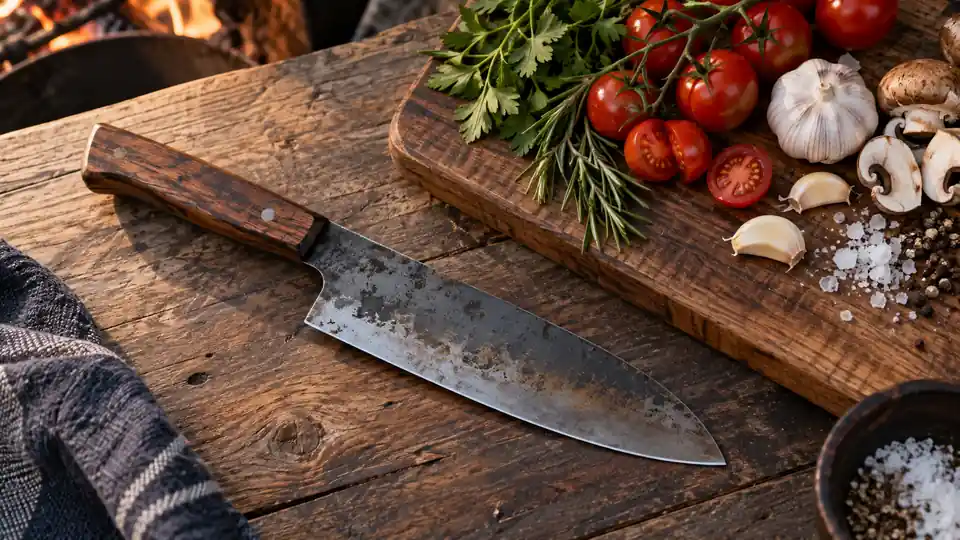
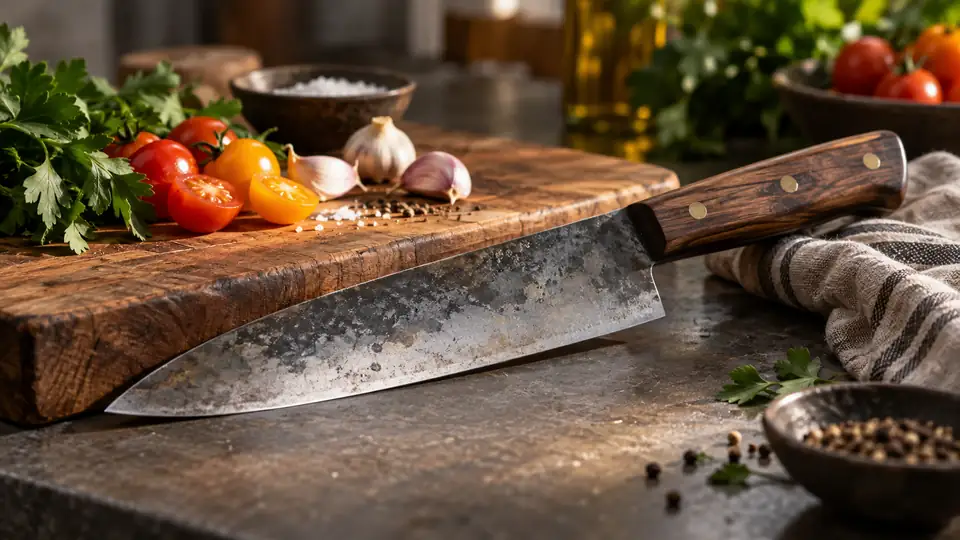
Not all stains on a carbon steel knife are bad. A healthy patina can look:
- Blue-gray
- Charcoal gray
- Dark silver
- Blackened in patches
- Rainbow-like in early stages
The pattern may be even or uneven. It often follows how the knife is used. A knife used mostly for onions and proteins may show one type of patina, while one used for fruit and herbs may show another.
Patina usually feels smooth. It is part of the surface, not a crust sitting on top. It can help slow future rust by creating a more stable layer between the raw steel and the environment.
How to Tell Patina From Rust
This distinction matters more than the stain itself. A carbon steel knife is expected to patina. It should not be left to rust.
| Surface Change | Typical Color | Texture | Is It a Problem? |
|---|---|---|---|
| Patina | Gray, blue, dark purple, black | Smooth | Usually normal and protective |
| Light rust | Orange or reddish-brown | May feel dusty or slightly rough | Yes, should be removed |
| Active corrosion | Orange, brown, sometimes black pits | Rough, pitted, uneven | Yes, needs attention |
If the blade shows orange spotting, that is not the same as harmless food staining. It usually means water, acid, or salty residue sat on the steel too long.
Why Some Foods Create Blotchy Stains Instead of Even Color
An even patina is nice to look at, but carbon steel does not always age evenly. Different parts of the blade can react differently based on finish, grind, thickness behind the edge, and how moisture sits on the steel.
A freshly sharpened edge section often reacts faster than the upper blade because the steel there is newly exposed. Fingerprints, board contact, and little droplets of juice also create isolated patches. That is why slicing a few onions can leave spotted blue-gray marks rather than one uniform color.
This is normal. A knife used regularly tends to develop a more blended appearance over time.
What Foods Can Stain a Carbon Steel Knife More Severely
Most kitchen staining is harmless patina. A few situations are more likely to become a real problem:
- Leaving lemon or tomato juice on the blade for a long time
- Letting mustard or vinegar dry on the steel
- Using the knife on salty foods, then not washing it promptly
- Cutting acidic fruit and storing the knife without drying it
- Leaving the knife dirty on a damp towel or wooden board
The food itself is only part of the issue. Contact time is what turns a cosmetic stain into active corrosion.
How to Reduce Staining Without Avoiding Reactive Foods
You do not need to reserve a carbon steel knife for only dry foods. It helps to build a few habits into normal prep.
Wipe the Blade During Long Prep Sessions
If you are cutting a pile of onions, apples, or tomatoes, pause occasionally and wipe the blade with a dry or slightly damp cloth, then dry it again. That keeps reactive juices from sitting too long.
Wash Soon After Use
Do not leave the knife in the sink or on the counter covered in food residue. Wash it by hand with mild soap and warm water, then dry it thoroughly right away.
Dry the Knife Completely
This sounds obvious, but it is where many problems start. Water near the handle junction, along the edge, or around the heel can linger and lead to rust spots.
Use a Light Coat of Oil for Storage
If the knife will be stored for a while, a very thin coat of food-safe mineral oil can help protect the blade. This is especially useful in humid kitchens.
Accept Patina as Part of Ownership
Trying to keep carbon steel looking like polished stainless often leads to frustration. A working patina is normal. The goal is not zero color change. The goal is preventing damaging corrosion.
Common Mistakes That Lead to Ugly Stains or Rust
Leaving the Knife Wet After Cutting Fruit or Onions
This is one of the fastest ways to get orange spots. A quick rinse without thorough drying is not enough for carbon steel.
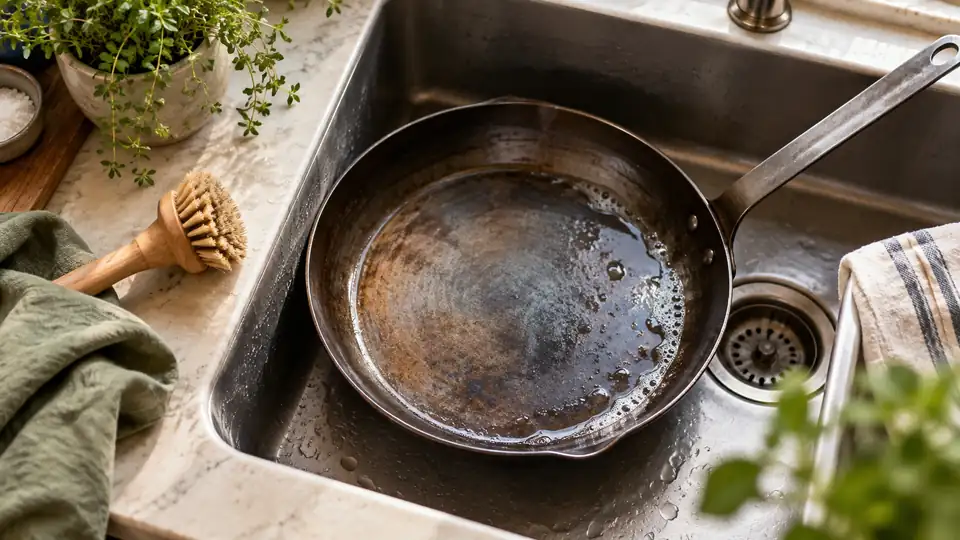
Putting the Knife in the Sink
A sink is a bad environment for any sharp knife and even worse for reactive steel. It keeps the blade wet, may expose it to acidic scraps, and can chip the edge if it hits other utensils.
Scrubbing Off Every Patina Mark
Some owners polish away each gray patch because they think it is damage. Repeatedly stripping the blade back to bright steel just restarts the reactivity cycle and can make staining look worse after the next use.
Using Harsh Cleaners
Abrasive pads and aggressive chemical cleaners can scratch the blade or remove stable patina unnecessarily. For normal kitchen staining, gentle cleaning is usually enough.
Storing in a Leather Sheath Long Term
Leather can trap moisture and tanning chemicals. Short transport is one thing, but long-term storage of a carbon steel knife in leather can encourage corrosion.
Should You Force a Patina to Prevent Food Stains?
Some knife owners deliberately create a patina using mustard, vinegar, or cut fruit. The idea is to give the blade a starting layer of protection before regular use. This can work, but it is not required.
A natural patina formed through cooking tasks is usually more gradual and often looks more organic. Forced patinas can be patchy, dramatic, or a bit harsh if left on too long. If appearance matters to you, natural development is usually the safer route.
If function matters more than looks, a forced patina is acceptable as long as it is done carefully and the blade is cleaned and dried well afterward.
Do All Carbon Steel Knives React the Same Way?
No. Different steels, finishes, heat treatments, and grind styles can affect how quickly a knife stains. A polished blade often shows every color change. A kurouchi or darker forge finish may hide much of the reaction except near the exposed edge.
Some carbon steels also seem slightly more reactive in kitchen use than others, though all true carbon steels are more reactive than most stainless kitchen knives. Even two knives made from similar steel can age differently based on finish and use pattern.
If you are still choosing one, this overview of the best Japanese carbon steel knife styles can help explain why different blade types develop patina differently in practice.
Best Practices for Using a Carbon Steel Knife on Reactive Foods
- Cut acidic or sulfur-rich foods, but do not leave residue sitting on the blade
- Wipe the knife during long prep sessions
- Hand wash only
- Dry immediately and completely
- Use a thin coat of oil if storing the knife for extended periods
- Learn to recognize healthy dark patina versus orange rust
- Do not panic over gray or blue discoloration
Frequently Asked Questions
Can onions stain a carbon steel knife?
Yes. Onions are one of the most common foods that stain a carbon steel knife because their sulfur compounds react quickly with the blade. The result is usually a gray, blue, or dark patina rather than harmful rust.
Will cutting lemons damage a carbon steel knife?
Cutting lemons will not usually damage the knife if you wash and dry it promptly. Lemon juice can stain the blade very quickly, but that is often just patina. Damage is more likely if the juice is left on the steel for too long.
Is black staining on a carbon steel knife bad?
Usually not. Black or dark gray staining is often normal patina. It becomes a concern only if the surface is rough, flaky, or accompanied by orange rust or pitting.
What foods should I avoid with a carbon steel knife?
You do not need to completely avoid reactive foods, but you should be careful with highly acidic, salty, or sulfur-rich foods such as citrus, tomatoes, onions, vinegar-based foods, and brined ingredients. The key is prompt cleaning and drying.
Can a patina protect a carbon steel knife?
Yes. A stable patina can help reduce further reactivity and provide some protection against rust. It is not a substitute for proper care, but it is generally a good sign on a working carbon steel knife.
Final Thoughts
Knowing what foods can stain a carbon steel knife makes ownership much less stressful. The usual culprits are acidic foods like citrus and tomatoes, sulfur-rich foods like onions and garlic, moisture-heavy produce like apples and potatoes, and salty or protein-rich ingredients such as fish, meat, and fermented foods. Most of the discoloration these foods cause is normal patina, not damage.
The real issue is not the stain itself. It is leaving reactive residue and moisture on the blade long enough for rust to start. If you wash, dry, and store the knife properly, a carbon steel blade can handle a wide range of kitchen tasks while developing the darker working finish that many owners appreciate. A few stains are part of the material. Orange rust is the part to prevent.


Leave a Reply