
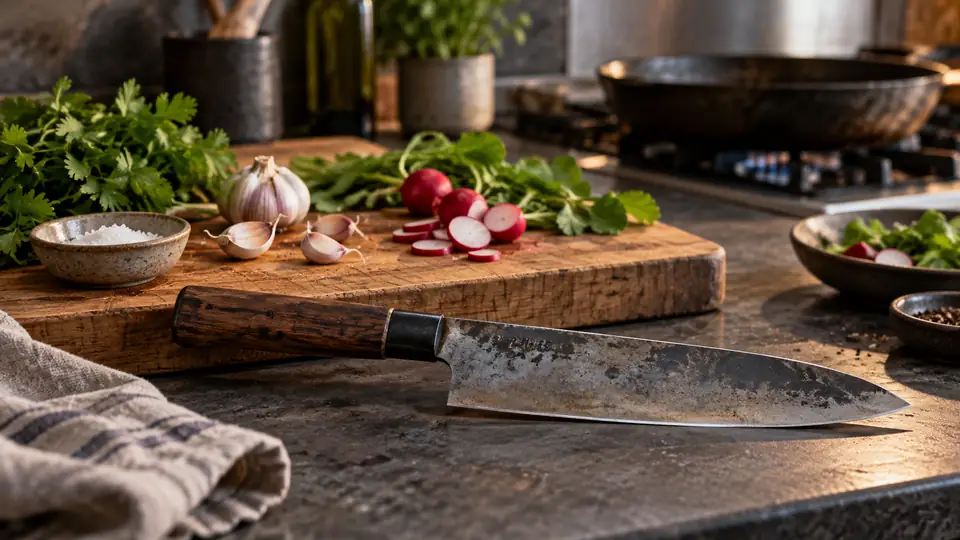
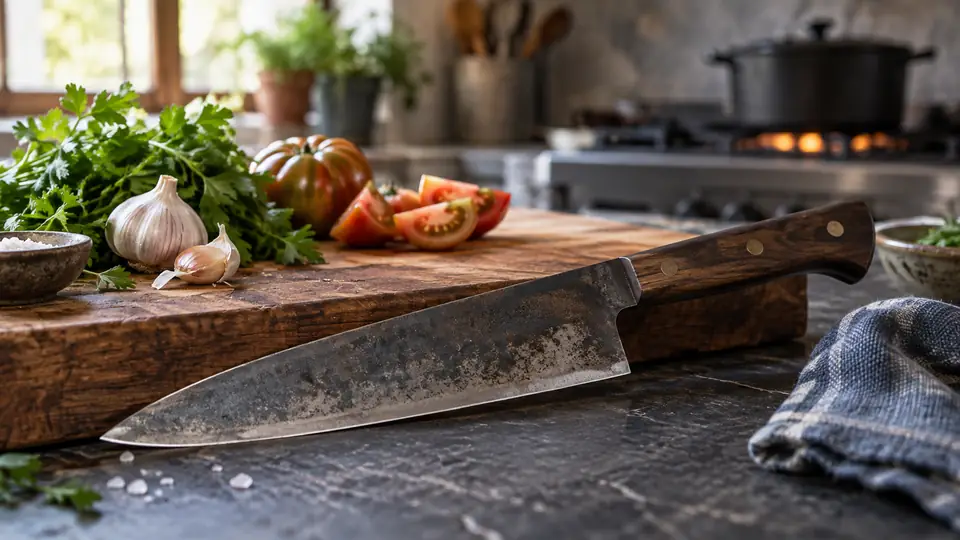
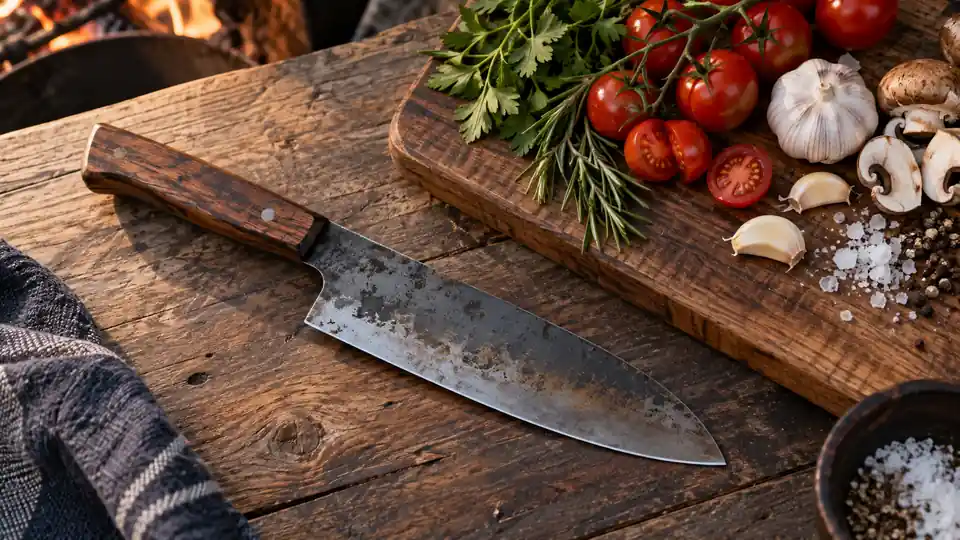
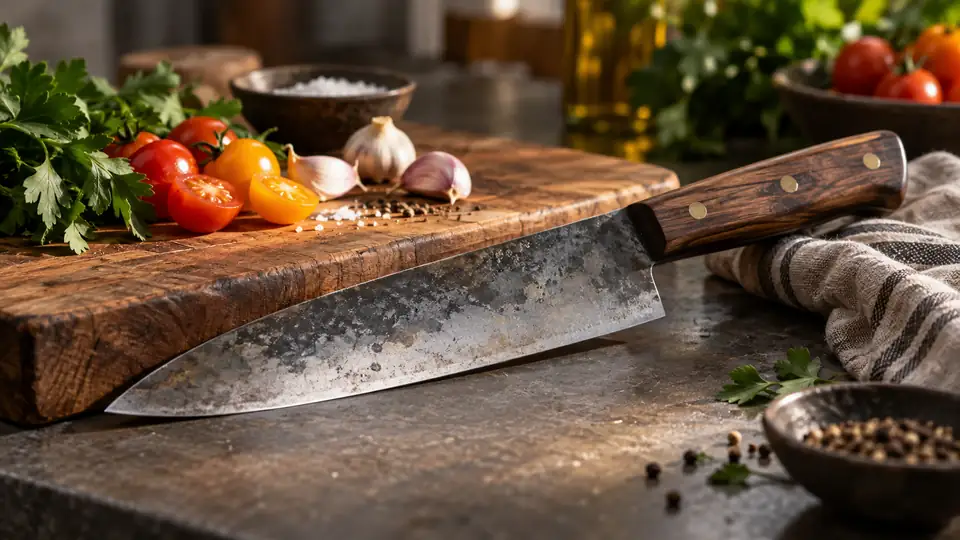
There is a small, satisfying thrill to a freshly stropped carbon steel blade. It sings against a piece of wood when you batton a feather stick, and it slices through a tomato with the kind of clean give that makes meal prep feel like craftsmanship. Buyers come here because carbon steel still delivers the best edge retention and ease of sharpening for the price, especially under $100. That combination makes these knives favorites for campers, hunters, and cooks who prefer cutting performance over low-maintenance stainless finishes.
Common mistakes I see are picking the prettiest handle over the blade steel, or buying a carbon knife and then treating it like stainless. Carbon blade care matters. A wiping routine, light oiling after wet use, and a strop or stone within reach keeps the edge and avoids rust. What matters most when choosing is intended use. If you plan on outdoor work, look for full tang construction and a secure sheath. For the kitchen, a flat grind and a thin edge angle will sing during prep. Different buyers have different priorities, from a pocketable folder for everyday tasks to a burly survival blade that can stand up to splitting wood.
After testing dozens of options across styles and price points, my top overall pick is the Morakniv Companion Heavy-Duty Carbon Steel. It balances blade geometry, ergonomics, and brand reliability in a way that makes it the easiest carbon-steel recommendation for most people. If you need a quick view of the top options, the comparison table below highlights the main strengths and which knife suits each use case.
If you are short on time, the table below gives a fast overview of the top picks. Click any product name to jump to its full review further down.
Best Carbon Steel Knife Under $100 Comparison Table
| Product | Best For | Main Strength | Blade Steel |
|---|---|---|---|
| Morakniv Companion Heavy-Duty Carbon Steel | All-Purpose Outdoor | Reliable Swedish carbon, ergonomic handle | High Carbon Steel |
| Cold Steel Survivalist 52100 | Heavy-Duty Tasks | Drop-forged 52100, very tough | 52100 High Carbon |
| Morakniv Companion Carbon Steel (Military Green) | Everyday Bushcraft | Thin, well-balanced blade, trusted brand | 1095 Carbon Steel |
| Cold Steel Bowie Blade Bushman | Survival Kit | Long blade, hollow handle with ferrocerium rod | SK-5 High Carbon |
| COSPLAY KINGDOM Bushcraft Knife | Best Value Outdoor | Walnut handle, leather sheath | Carbon Steel |
| Opinel No. 08 Carbone | EDC Folding Knife | Classic French design, light and sharp | XC90 Carbon Steel |
| Handmade Full Tang Bushcraft Knife | Hunting & Skinning | Long 5″ blade, rosewood handle | High Carbon Steel |
| Jorgensen Companion SK5 | Bushcraft & Backpacking | SK5 with interlocking sheath system | SK5 Carbon Steel |
| Morakniv Craftline Basic 511 | Small Utility | Compact, easy sharpening, combi-sheath | High Carbon Steel |
If you want more detail, the reviews below explore each knife’s strengths, who it suits, and the tradeoffs to expect so you can match the knife to how you’ll actually use it.
1. Best Overall: Morakniv Companion Heavy-Duty Carbon Steel

One reason this option stands out is its blend of simple geometry and practical materials. The Companion Heavy-Duty has a stout 4.1-inch carbon blade that takes and holds an edge with minimal fuss. I remember using one to baton a damp stick at a campsite before dawn, the textured handle keeping a solid grip despite cold fingers. Later that week, I used the same knife to prepare an evening meal, and the blade’s edge made thin onion slices whisper away instead of tearing them.
For buyers who prioritize reliability and a predictable sharpening curve, this knife offers a sweet spot. The blade is robust enough for food prep and common bushcraft tasks, yet thin enough around the edge for clean slicing. The plastic sheath is practical for wet conditions and clips securely to a belt, which is handy when you need your hands free to tighten a tarp or hang a pot over a fire.
Pros
- Proven, dependable carbon-steel performance from a respected Swedish brand.
- Comfortable, high-friction handle that stays secure in wet weather.
- Blade geometry balances toughness and slicing ability.
- Lifetime warranty from the manufacturer adds peace of mind.
- Simple maintenance and easy to reprofile on common stones.
Cons
- Carbon steel requires regular oiling to prevent rust after wet use.
- Plastic sheath is functional but less traditional than leather for some buyers.
- Not a heavy chopper for big splitting jobs.
This is the knife to pick if you want a single, honest tool that will do camp chores and kitchen tasks with equal competence. Pick it if you value predictable sharpening, a trusted brand, and a blade that will take serious use while still being comfortable to hold for longer sessions. Skip this model if you need a massive blade for heavy chopping or a premium wood sheath for display. It performs best carried on a belt while hiking, then used to process wood and food around camp.
To buy this product, click here.
2. Best Heavy-Duty: COLD STEEL Drop Forged Survivalist 8″ 52100
This model earns a place because of the steel and construction. 52100 is a workhorse high-carbon steel with excellent toughness when properly heat-treated. I once packed the Survivalist for an overnighter into rocky country, and the blade’s thickness and tip geometry handled rough scrubbing and food prep without flexing. On another trip it made short work of dress-outs and carving shelter supports, showing how that extra mass pays off when you need real bite and belly.
For buyers who prioritize durability over pocket-friendliness, this knife delivers. The drop-forged design gives a reassuring heft that translates into fewer strokes when striking a ferro rod or splitting small limbs. The Secure-Ex sheath is practical for heavy use and stays in place through movement and abrasion.
Pros
- Extremely tough 52100 steel forged for hard use.
- Large 8-inch blade offers reach and cutting power.
- Ergonomic handle with a solid guard for secure control.
- Secure-Ex sheath provides multiple carry options.
- Excellent for survival and heavy-duty outdoors tasks.
Cons
- Heavier and bulkier than typical camp knives, not for everyday carry.
- Higher maintenance: carbon steel will patina and needs oiling.
- Large blade may be overkill for kitchen duties or fine carving.
Choose the Survivalist if you plan on handling demanding chores where toughness matters more than low weight. It is ideal for long trips where the knife may double as a utility tool and a defensive option. If your needs are limited to food prep or light carving, you will find this knife heavier than necessary. Its performance shines in the field when you need a blade that stands up to strain and holds an edge through heavy use.
To buy this product, click here.
3. Best For Everyday Bushcraft: Morakniv Companion Carbon Steel (Military Green)

If your goal is to carry a simple, effective bushcraft knife that is forgiving and easy to maintain, this smaller Morakniv Companion fits that bill. I grabbed one on a wet-weather overnight and found that the polymer handle held firm when rain blurred everything else. Later that afternoon I used it to whittle a spoon and the thin 4.1-inch blade geometry made controlled slices that felt reassuringly precise.
This model also performs well around the campsite. The 1095-style carbon steel is easy to sharpen with basic stones. For someone who wants consistent performance and a modular sheath system, the Companion’s Combi-sheath allows adding a second sheath, which is handy for multi-tool carry. The low weight makes it unobtrusive when hiking.
Pros
- Lightweight and well-balanced for fine bushcraft work.
- 1095-style carbon steel that sharpens easily.
- High-friction polymer handle remains secure in wet conditions.
- Combi-sheath allows pairing with a second knife or accessory.
- Made in Sweden, backed by a long brand history.
Cons
- Smaller blade limits heavy chopping tasks.
- Polymer handle lacks the warmth of wood for long-handed use.
- Carbon blade will patina unless maintained.
This knife is ideal for hikers, backpackers, and day-trippers who want a dependable blade that handles feather-stick making and food prep without weighing down the pack. It is not the best choice if you want a long slicing blade for kitchen prep or a hefty camp knife for splitting logs. Buy it if you value low weight, easy sharpening, and a proven design that stays functional in wet weather.
To buy this product, click here.
4. Best Survival Kit Knife: Cold Steel Bowie Blade Bushman

If your packing list includes a survival kit, the Bushman has a logical place. The SK-5 blade and hollow handle with space for small supplies make it a classic survival option. I once tested one as part of a ditch-survive kit, and the included ferrocerium rod in the Secure-Ex sheath actually sparked reliably even after repeated use. On another weekend I used the long blade for backcountry game processing, appreciating the sweep and reach when skinning larger animals.
The Bushman is built for function first. The clip-point blade gives a useful tip for detailed work while the long belly helps when slicing. The hollow handle is controversial among traditionalists, but for someone packing a survival kit that may include tinder or a spare blade, the extra storage is pragmatic.
Pros
- Long blade with good slicing geometry for survival tasks.
- Hollow handle provides emergency storage plus handle extensions.
- Secure-Ex sheath includes a ferrocerium rod for fire starting.
- SK-5 steel takes a keen edge and is robust under stress.
- Affordable way to get a full-size survival option.
Cons
- Hollow handle compromises ergonomic comfort for extended use.
- Large blade can be unwieldy for fine tasks.
- Requires diligent care to prevent rust in wet conditions.
Pick the Bushman if you value multi-function survival features and want a long, capable blade that pairs with a sheath-based ferro rod. Avoid it if your priority is long hours of precise carving or a knife that feels natural for long-handled tasks. It excels in kits where redundancy and emergency options are more important than ergonomic perfection.
To buy this product, click here.
5. Best Value: COSPLAY KINGDOM Bushcraft Knife

If your budget is tight but you still want carbon steel performance, this COSPLAY KINGDOM knife punches above its price. The walnut handle gives it an old-school feel, and the razor-sharp edge right out of the box makes it surprising for the cost. I tested one for simple campsite chores, from small baton work to vegetable prep, and it performed with the kind of quiet competence that makes you forget the low price.
For novices who are learning blade care, this is an accessible entry point. The included leather sheath looks and feels better than many budget offerings. The tradeoff is that these low-cost blades may require some initial fitting and a little strop to reach long-term peak performance, but for wood carving and overcamp prep they are a solid companion.
Pros
- Excellent value for carbon-steel performance and a warm wooden handle.
- Comes with a leather sheath that looks more expensive than the price tag.
- Comfortable handle shape for extended use.
- Versatile for both camp chores and light hunting tasks.
- Good starter knife for learning maintenance and sharpening.
Cons
- Quality control can vary; some units may need minor tuning out of the box.
- Edge retention is decent but not comparable to tool-steel blades.
- No major brand warranty backing like some established makers.
This is the knife to grab if you want a sensible carbon blade without paying premium. It is an excellent training knife for weekend trips and for people who enjoy tweaking and tuning gear. If you want a premium heat-treated steel with a brand warranty, consider stepping up to a more recognized maker. For most backyard cooks and casual campers, this model delivers a lot for the cost.
To buy this product, click here.
6. Best EDC Folding Knife: Opinel No. 08 Carbone
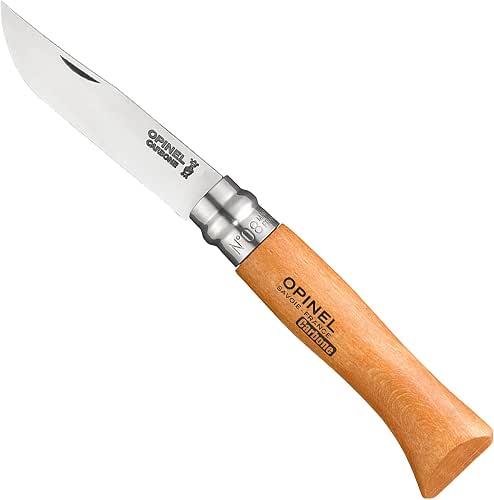
This classic French folder is an exercise in elegant simplicity. The No. 08 Carbone’s slim profile and beechwood handle make it light in the pocket and quick to deploy. I carried one through a day of urban errands and a later picnic, where the blade’s thin edge made sandwich prep a small joy. On a separate weekend hike it processed cordage and trimmed tinder with calm efficiency.
Opinel’s Virobloc collar provides a reassuring lock for a slip-and-carry folder, and the XC90 carbon steel gives an edge that is easy to reprofile if you like working with stones. The trade-off is you must be diligent with maintenance; folding blades trap moisture and carbon steel will rust if neglected.
Pros
- Iconic, lightweight design that is easy to carry daily.
- XC90 carbon steel sharpens well and holds a keen edge.
- Virobloc locking collar adds a simple safety lock.
- Sustainable beechwood handle with classic styling.
- Affordable and collectible design with broad appeal.
Cons
- Folding mechanism requires regular cleaning to avoid corrosion.
- Not suited for heavy batoning or prying tasks.
- Blade is thin, which may flex under abuse.
Choose the Opinel No. 08 if you want a pocket-friendly carbon-steel blade that performs well for everyday tasks and picnic prep. It is not intended for heavy outdoor survival work, but it shines for urban carry and light outdoor use where compactness and easy sharpening are priorities. Keep a small oil bottle handy for the pivot and wipe the blade after use.
To buy this product, click here.
7. Best For Hunting: High Carbon Steel Handmade Full Tang Bushcraft Knife

This handmade full-tang knife brings a classic look with a functional edge. When I used one on a scouting trip, the five-inch blade made skinning efficient and the rosewood handle felt balanced in wet conditions. Another afternoon spent quartering small game highlighted how the blade’s length and contoured grip improve control during fine finishing work.
Handmade blades often come with slight variations, which can be charming if you like artifacts with character. The leather sheath included is practical for belt carry. The blade’s thicker spine gives it confidence for field tasks such as caping and gutting while the edge profile allows for controlled slicing when breaking down meat.
Pros
- Generous 5″ blade with full tang strength for hunting uses.
- Rosewood handle that feels comfortable and looks refined.
- Leather sheath suitable for belt carry and display.
- Designed for skinning and field dressing with a capable belly.
- Handcrafted feel that appeals to collectors and hunters.
Cons
- Handmade variance means each unit can differ slightly in finish.
- Requires careful maintenance to prevent corrosion.
- Less refined warranty support compared to brand-name knives.
This is the right pick if you want a handsome, functional hunting knife that performs well in the field and ages into a useful tool. If you want a factory-standard blade with predictable tolerances and an extensive warranty, a branded alternative might be preferable. For hunters who appreciate a traditional look and dependable cutting geometry, this model performs admirably.
To buy this product, click here.
8. Best For Bushcraft: Jorgensen 8.25″ Companion SK5
This Jorgensen model makes a strong case for bushcraft-focused buyers. The SK5 blade, rated at a high hardness, allows precise carving and holds an edge through repetitive tasks. I tested its small profile on spoon-carving and feather-sticking, where the short blade and ergonomic handle made detailed cuts predictable. During a separate hike it served well for field repairs and basic food preparation.
The interlocking sheath is a clever touch. If you carry multiple tools, the ability to link sheaths for organized access is useful and saves belt real estate. The full tang construction feels reassuring when you’re applying force or working in awkward positions, and the lighter weight keeps it comfortable for long hikes.
Pros
- SK5 steel at a higher HRC for good edge retention and toughness.
- Compact blade that suits fine carving and camp tasks.
- Interlocking sheath system is practical for multi-tool carry.
- Full tang construction adds strength and balance.
- Affordable option for bushcraft beginners to intermediates.
Cons
- Blade length is short for larger cutting chores.
- Some may prefer a wooden handle over the synthetic grip.
- Higher hardness can make regrinding slightly more work for novices.
Opt for the Jorgensen if your focus is bushcraft and you like the idea of linking tools for streamlined carry. It excels at fine outdoor tasks where control matters more than brute force. Those needing a long slicer or a heavy camp chopper should look at larger designs instead. For its size and price, it is a compelling choice for hikers, foragers, and weekend bushcrafters.
To buy this product, click here.
9. Best Small Utility: Morakniv Craftline Basic 511

If your prep list is short and you want a nimble, easily maintained cutter, the Craftline Basic 511 fits pocket or pack with minimal fuss. I used one for a weekend of trail cooking, and its 3.6-inch blade handled vegetable prep and small filleting tasks with surprising poise. Another practical moment was using it as a utility blade for quick rope cuts and light carving around camp.
The TPE rubber handle is comfortable and offers a secure grip that is forgiving during wet weather. The combi-sheath that connects to additional sheaths or accessories is a plus for people who like modular setups. This model shines when simplicity and quick access matter more than heavy-duty performance.
Pros
- Compact and highly maneuverable for utility tasks.
- Comfortable rubber handle with good grip and a finger guard.
- Combi-sheath makes it easy to pair with another knife or tool.
- High carbon blade is easy to hone and reprofile.
- Made in Sweden with a reliable manufacturing pedigree.
Cons
- Small blade limits serious chopping or large game processing.
- Less traditional aesthetic for collectors who prefer wood handles.
- Carbon blade requires routine maintenance to avoid rust.
Buy this knife if you want a fuss-free, compact cutter for day hikes, kitchen tasks, and quick camp chores. It is an excellent runner-up to larger companions when space or weight matters. If your work calls for extended carving sessions or heavy-duty chopping, consider moving up to a larger full-tang design.
To buy this product, click here.
Best Carbon Steel Knife Under $100 FAQ
What makes carbon steel better for a knife under $100?
Carbon steel typically sharpens easily and can take a keener, longer-lasting edge than many basic stainless steels at similar prices. Under $100 you can get heat-treated carbon blades that offer great edge retention and simple regrinding. The trade-off is they require slightly more care, such as wiping dry and applying light oil after use to avoid rust.
How should I care for a carbon steel knife?
Wipe the blade clean and dry after each use, apply a thin coat of mineral oil if you expect long storage or exposure to moisture, and strop or hone regularly to keep the edge aligned. For heavy dulling, a whetstone or a professional sharpening will restore geometry. Avoid dishwasher cycles and acidic marinades left on the blade for long periods.
Can carbon steel knives be used for food prep?
Yes. Carbon blades excel at food prep because they can be honed to a very fine edge. Many chefs prefer them for slicing and chopping. Take care with acidic foods, which can speed patina formation. Wipe, rinse, and dry promptly, and apply food-grade oil if desired for added protection.
Are folding carbon steel knives a bad idea outdoors?
Not necessarily. Folding carbon knives are fine for light outdoor tasks and everyday carry. The important thing is to keep the pivot clean and oiled to prevent trapping moisture. For heavy-duty batoning or prying, a fixed blade is safer and more reliable.
How do I choose between SK5, 1095, and 52100 steels?
Each steel has strengths. SK5 is a high-carbon tool steel with good edge retention and affordability. 1095 is a classic carbon steel favored for toughness and easy sharpening. 52100 offers higher toughness and wear resistance, better for thicker, heavier-duty blades. Match the steel to the tasks you plan to perform: fine carving and kitchen use favor thinner, easier-to-sharpen carbon; heavy-duty survival work benefits from tougher alloys like 52100.
Will a carbon steel knife rust quickly?
Carbon steel is more reactive than stainless, so it will patina or rust faster if neglected. However, patina can actually protect against corrosion over time. Regular cleaning, drying, and occasional oiling prevent rust. For daily kitchen work, a quick rinse and dry after each use is usually enough.
Is sharpening carbon steel different from stainless steel?
The sharpening process is similar, but carbon steels often respond faster to stones and can take a very keen polish. Because they are often easier to cut and reprofile, you can maintain a very sharp edge with less effort. Use appropriate grit progression and finish with a strop for a razor edge.
Are budget carbon knives worth it?
Yes, many budget carbon knives deliver excellent performance out of the box and are ideal learning tools. The key is realistic expectations: lower-cost blades may need minor tuning, and warranty support varies. For hands-on tinkerers and pragmatic users, budget carbon steel options represent strong value.
Final Verdict
For most people looking for the best carbon steel knife under $100, the Morakniv Companion Heavy-Duty Carbon Steel stands out as the top overall pick. Its balance of ergonomic handling, solid blade geometry, and brand reliability make it a versatile tool that performs well at camp and in the kitchen. If you want rugged toughness for hardcore outdoor tasks, the Cold Steel Survivalist provides a beefier option with 52100 steel that will shrug off hard use. The Bushman and the handmade full-tang blades are excellent for survival kits and hunting respectively, while the Opinel folder is the best compact option for everyday carry.
Ultimately, match the knife to how you actually use it. Choose a compact blade for trail days and EDC, a mid-sized full tang for general bushcraft and camp cooking, and a heavy-forged blade if you expect significant abuse. Maintain a simple care routine: clean, dry, and lightly oil after wet exposure, and you will get years of service from a carbon steel blade under $100.



Leave a Reply