

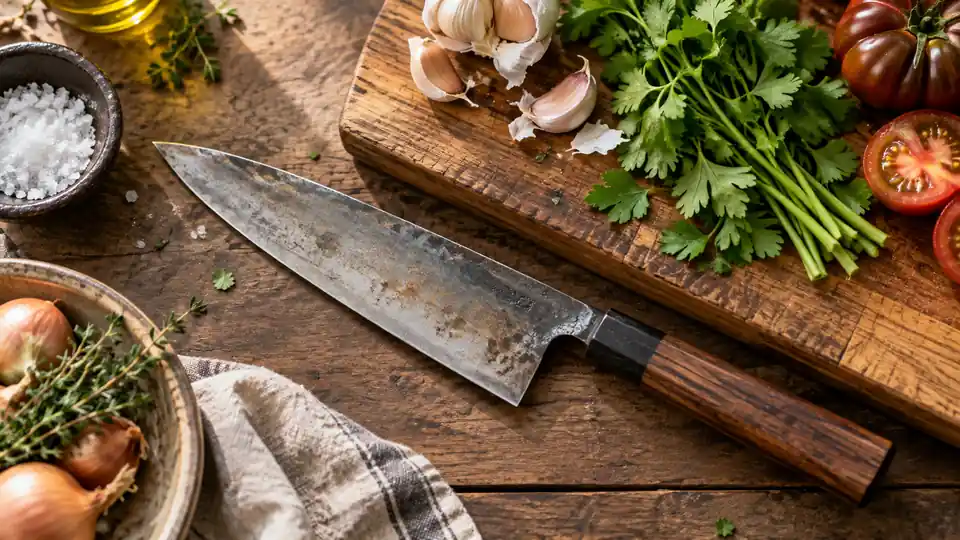
A sharp edge is one of the biggest advantages of owning a carbon steel knife. Carbon steel takes a very keen edge, responds well to stones, and is often easier to sharpen than many wear-resistant stainless steels. The tradeoff is that carbon steel also asks for a bit more care. If you sharpen carelessly, leave water on the blade, or use the wrong angle, you can shorten edge life or invite rust.
Learning how to sharpen a carbon steel knife is less about complicated technique and more about consistency. A steady angle, the right grit progression, and light finishing strokes usually matter more than expensive gear. Once you understand the process, routine touch-ups become quick, predictable, and far less intimidating than they first appear.
This guide explains how to sharpen a carbon steel knife step by step, what tools you need, how to avoid common mistakes, and how to keep the edge performing well between sharpening sessions.
Quick Answer
To sharpen a carbon steel knife, use a whetstone and hold the blade at a consistent angle, usually around 12 to 20 degrees per side depending on the knife style. Start with a coarse stone only if the edge is dull or damaged. For routine sharpening, a medium stone in the 800 to 1,500 grit range is often enough. Sweep the edge across the stone so the full bevel contacts the surface, then sharpen both sides until you raise a burr. After that, switch sides, reduce pressure, and finish on a finer stone to refine the edge.
Rinse or wipe the blade dry immediately after sharpening because carbon steel can rust quickly if moisture sits on it. A light coat of food-safe mineral oil can help protect the blade during storage. Honing and stropping can maintain sharpness between full sharpening sessions, but once the knife struggles to bite into tomatoes, onions, herbs, or meat cleanly, it is time to sharpen again.
Why Sharpening a Carbon Steel Knife Matters
Carbon steel knives are known for edge quality. They can become extremely sharp and often sharpen faster than many stainless alternatives because the steel abrades more easily on a stone. That makes them appealing for cooks who want precise slicing, clean push cuts, and fine control.
But carbon steel also gives honest feedback. A neglected edge starts dragging through onions, crushing herbs, or slipping on tomato skin. A dull knife is not just inconvenient. It usually requires more force, which reduces control and can make cutting less safe.
Proper sharpening also helps preserve the blade over time. Repeatedly hacking away at a dull edge or relying on aggressive pull-through sharpeners can remove more metal than necessary. Good stone technique removes only what is needed and keeps the edge geometry in better shape for years of use.
Tools and Materials Needed
You do not need a huge sharpening setup to learn how to sharpen a carbon steel knife well. A few basic tools are enough.
Essential Tools
- Whetstones, ideally a medium grit and a fine grit
- Stone holder or damp towel to keep the stone from sliding
- Water for water stones, or the correct lubricant if your stone type requires something else
- Clean towel for wiping the blade and hands
- Permanent marker, optional but helpful for checking your angle
Helpful but Optional Tools
- Coarse stone for chips, very dull edges, or reprofiling
- Leather strop for refining and deburring
- Angle guide if you struggle to hold a steady angle
- Flattening plate or lapping stone for keeping water stones flat
Recommended Grit Ranges
| Stone Grit | Best Use | Notes |
|---|---|---|
| 200 to 600 | Repairing chips, fixing very dull edges, changing bevel angle | Removes metal quickly. Use only when needed. |
| 800 to 1,500 | General sharpening | The most useful range for regular maintenance. |
| 2,000 to 4,000 | Refining the edge | Improves cutting smoothness and push-cut performance. |
| 5,000 to 8,000+ | Polishing and finishing | Useful for very fine edges, but not always necessary for kitchen work. |
Choosing the Right Sharpening Angle
The correct angle depends on the knife’s design and intended use. Many kitchen knives do well around 15 degrees per side. Heavier Western-style knives may be sharpened closer to 18 to 20 degrees per side for a little more edge stability. Thinner Japanese-style carbon steel knives often use lower angles for finer cutting performance.
If you are not sure what angle to use, matching the existing bevel is usually the safest approach. Coloring the bevel with a marker helps. After a few strokes on the stone, check where the ink is removed. If the marker disappears near the edge but not the shoulder, your angle is too low. If it disappears near the shoulder but not the edge, your angle is too high.
Consistency matters more than chasing a perfect number. A steady 16 degrees per side will usually outperform a constantly changing angle that ranges from 10 to 22 degrees.
How to Sharpen a Carbon Steel Knife Step by Step
1. Prepare the Stone and Work Area
Set the stone on a stable, non-slip surface. If you are using a water stone, soak it if the manufacturer recommends soaking, or splash water on it if it is a splash-and-go type. Keep a towel nearby because sharpening gets wet and messy.
Good lighting helps a lot. You want to see the bevel, the stone surface, and any burr that forms along the edge. A rushed setup often leads to poor angle control.
2. Inspect the Knife Edge
Before sharpening, look at the blade carefully. Check for chips, flat spots, rolled sections, or rust near the edge. A knife that is only losing bite may need just a medium stone and light refinement. A knife with visible damage may need a coarser stone first.
This step helps you avoid over-sharpening. Carbon steel is pleasant to sharpen, but it is still easy to remove more metal than needed if you treat every edge like a repair job.
3. Start With the Appropriate Grit
Use the least aggressive stone that will do the job. For normal kitchen maintenance, a medium stone is often enough. If the edge is very dull, chipped, or has been neglected for a long time, start coarse and then move upward.
Starting too coarse creates extra work because you then need to erase deeper scratches and rebuild refinement on finer stones. Starting too fine on a badly dull knife can waste time and lead to frustration.
4. Set the Sharpening Angle
Place the knife on the stone and raise the spine until you reach your target angle. Lock your wrist and try to keep that angle through the stroke. Some people sharpen edge-leading, where the edge moves into the stone. Others use a controlled sweeping stroke that follows the blade’s curve. Both methods can work if contact and angle stay consistent.
For curved chef’s knives, lift slightly as you move toward the tip so the belly of the blade also contacts the stone properly. If you keep the blade flat while moving through the tip, that section often stays dull.
5. Sharpen the First Side Until You Raise a Burr
Use moderate pressure at first. Move the blade across the stone so the entire edge, from heel to tip, gets sharpened evenly. Work in sections if that feels easier, especially on longer blades.
Your goal is to create a burr, which is a thin fold of metal pushed to the opposite side of the edge. You can usually feel it by gently brushing your finger from the spine toward the edge, never along the edge. Once you have a continuous burr from heel to tip, the first side is ready.
6. Repeat on the Second Side
Flip the knife and sharpen the other side at the same angle. Again, work until you form a burr along the entire opposite side. Try to give both sides similar attention unless the knife has an intentionally asymmetric bevel.
Uneven work is a common reason knives feel sharp in one spot and dull in another. Heel and tip sections are often the most neglected.
7. Use Lighter Alternating Strokes
Once both sides have formed a burr, begin alternating sides every stroke or every few strokes. Reduce pressure gradually. This helps center the edge and shrink the burr rather than just flipping it back and forth.
Heavy pressure at this stage often leaves a wire edge. That kind of edge can feel sharp at first, then collapse quickly in actual kitchen use.
8. Move to a Finer Stone
If you want a cleaner, more refined edge, repeat the same process on a finer stone. You do not need to spend as long here as on the first stone unless you are chasing a very polished finish. Focus on smooth, controlled strokes and light pressure.
For many home cooks, a medium stone followed by a fine stone creates an edge that slices onions, proteins, herbs, and vegetables very well. An ultra-polished edge is not always better for every kitchen task. Some tooth from a medium-fine finish can actually help with tomatoes, pepper skins, and crusty foods.
9. Deburr the Edge
Deburring is one of the most important parts of sharpening. If the burr remains attached, the knife may seem sharp but lose performance quickly. Use very light alternating strokes on the finishing stone. A few edge-trailing strokes on a strop can also help remove the last remnants.
Some sharpeners lightly slice into soft wood, cork, or folded paper before the final finishing strokes to knock off a stubborn burr. Use a gentle touch. The goal is refinement, not edge damage.
10. Clean and Dry the Knife Immediately
After sharpening, rinse or wipe the blade thoroughly and dry it right away. Carbon steel can oxidize fast, especially around a newly exposed edge. Apply a very thin layer of food-safe mineral oil if the knife will be stored for a while or lives in a humid environment.
This is one area where carbon steel demands more attention than stainless. A freshly sharpened edge left wet on the counter can develop discoloration or rust surprisingly quickly.
How to Tell if the Knife Is Actually Sharp
A good edge should cut cleanly with little force. You do not need risky tests to check it.
- Paper test: The knife should slice paper smoothly without snagging badly.
- Tomato test: It should bite into tomato skin without crushing the fruit.
- Onion test: It should enter the onion cleanly and make thin cuts without slipping.
- Visual check: A dull edge reflects light. A properly apexed edge usually does not show bright flat spots.
If one section catches or slides, that part of the edge probably did not fully reach the apex. Go back to the stone and focus only on that section rather than restarting the whole knife from scratch.
Common Mistakes When Sharpening a Carbon Steel Knife
Using Too Much Pressure
Heavy pressure feels productive, but it usually creates a rougher edge and a larger burr. Carbon steel often responds well to moderate pressure early and very light pressure later.
Failing to Raise a Burr
If you never apex the edge on the first stone, finer stones cannot fix the problem. You may polish the bevel without actually sharpening the knife.
Inconsistent Angle Control
A changing angle creates a rounded bevel and weaker cutting performance. This is one reason beginners sometimes feel like they are sharpening for a long time with little result.
Skipping Deburring
A leftover burr can make the edge feel sharp for a short time, then fold over in the first prep session. Proper deburring often makes the difference between a sharp knife and a durable sharp knife.
Sharpening Too Often on Coarse Stones
Coarse stones are useful, but they remove metal fast. Routine maintenance should usually happen on medium or fine stones, with coarse sharpening reserved for true repair work.
Leaving Moisture on the Blade
Carbon steel is prone to oxidation. Water, sharpening slurry, or damp towels left in contact with the blade can lead to rust spots. Drying immediately is part of the sharpening process, not an optional extra.
Whetstone vs Honing Rod vs Pull-Through Sharpener
| Tool | What It Does | Good for Carbon Steel? | Main Drawback |
|---|---|---|---|
| Whetstone | Actually sharpens by removing metal and recreating the edge | Yes, this is the best all-around method | Requires practice and angle control |
| Honing rod | Realigns or lightly refreshes the edge | Sometimes, depending on blade hardness and rod type | Does not replace real sharpening |
| Pull-through sharpener | Quickly grinds a preset angle | Usually not ideal | Can remove too much metal and create a rough edge |
| Leather strop | Refines the edge and removes tiny burr remnants | Yes, very useful after stones | Will not fix a truly dull knife |
For most carbon steel kitchen knives, stones are the preferred approach. They give you better control over angle, finish, and metal removal. Pull-through sharpeners are quick, but they are often too blunt an instrument for a knife that can take such a fine edge.
Maintenance Tips After Sharpening
Sharpening is only part of edge care. Daily habits have a major effect on how long the knife stays sharp.
Keep the Blade Dry
Wash by hand, wipe thoroughly, and do not leave the knife in a sink. Carbon steel’s reactivity is one of its defining traits. Patina is normal, but orange rust is not.
Use the Right Cutting Surface
Cut on wood or softer plastic boards. Glass, granite, ceramic, or metal surfaces will dull the edge quickly.
Store It Carefully
A saya, blade guard, magnetic strip, or knife block helps protect the edge from impact. Loose storage in a drawer is a fast way to undo sharpening work.
Touch Up Before It Gets Very Dull
Light maintenance on a fine stone or strop is easier than rebuilding a neglected edge from scratch. Frequent gentle touch-ups usually remove less steel over the life of the knife.
Watch for Rust Near the Edge
The sharpened edge is thin and vulnerable. If you notice rust, address it early. Mild rust can often be removed before it causes pitting or edge damage. For broader care, a guide to Japanese carbon steel knives can also help clarify why thin reactive blades need consistent drying and storage habits.
How Often Should You Sharpen a Carbon Steel Knife?
There is no single schedule that fits every knife. Frequency depends on blade hardness, edge angle, board material, cutting habits, and how often the knife is used.
| Usage Pattern | Typical Maintenance | Typical Full Sharpening |
|---|---|---|
| Light home use | Strop or fine touch-up every few weeks | Every few months |
| Regular home cooking | Touch-up every 1 to 3 weeks | Every 1 to 3 months |
| Heavy daily prep | Touch-up weekly or more | As needed, sometimes monthly or sooner |
Rather than following the calendar alone, watch performance. If the knife starts slipping on tomato skin, tearing herbs, or crushing scallions instead of slicing cleanly, the edge is fading.
Can You Use a Honing Rod on a Carbon Steel Knife?
Sometimes, yes, but it depends on the knife and the rod. Softer European-style carbon steel knives may respond well to smooth honing rods or fine ceramic rods. Harder, thinner Japanese-style carbon steel knives can be more vulnerable to damage if used aggressively or on a coarse steel rod.
If you use a rod, use light pressure and few passes. Think of it as maintenance, not repair. Once the edge truly dulls, go back to stones.
Single-Bevel vs Double-Bevel Carbon Steel Knives
Most home cooks are sharpening double-bevel knives, which means the knife has an edge bevel on both sides. The method described in this guide fits that style. Single-bevel knives, common in some traditional Japanese knife types, require a different approach because one side is sharpened very differently from the other.
If you own a single-bevel knife, be careful about following generic instructions. The bevel geometry, flattening work on the back side, and finishing process are more specialized. For a standard chef’s knife, gyuto, santoku, petty, or utility knife with a double bevel, the process here is the right starting point.
Frequently Asked Questions
What is the best stone grit for sharpening a carbon steel knife?
For regular maintenance, a medium stone around 1,000 grit is often the most useful. If the knife is very dull or chipped, start coarser. If you want a smoother finished edge, follow with a finer stone in the 3,000 to 6,000 range.
Is carbon steel easier to sharpen than stainless steel?
In many cases, yes. Carbon steel often abrades more readily on stones, so it can form an edge faster. The exact feel depends on the steel type and hardness, but many users find carbon steel friendlier to sharpen than highly wear-resistant stainless steels.
Do I need to oil a carbon steel knife after sharpening?
Not always, but it can help. If the knife is going back into immediate kitchen use, a dry blade is usually enough. If it will be stored, or if your environment is humid, a very thin layer of food-safe mineral oil offers extra protection.
Can I sharpen a carbon steel knife with an electric sharpener?
You can, but it is usually not the best choice for edge control or long-term blade preservation. Electric sharpeners can remove metal quickly and may not suit thinner or harder carbon steel knives well. Stones give you more control.
Why does my carbon steel knife get dull again so quickly after sharpening?
The most likely causes are incomplete deburring, too much pressure during finishing, an unstable sharpening angle, or an edge that is too thin for the knife’s use. Cutting on hard surfaces or leaving the knife loose in a drawer can also shorten edge life.
Final Thoughts
Learning how to sharpen a carbon steel knife is mostly about building repeatable habits. Use the least aggressive stone that makes sense, match the existing angle, sharpen until you reach a full burr, then refine and deburr with lighter strokes. A simple medium-and-fine stone setup is enough for most home cooks.
Carbon steel rewards careful sharpening with excellent edge quality, but it also expects good maintenance. Dry the blade immediately, store it properly, and touch it up before it becomes completely dull. With that routine, a carbon steel knife stays easier to sharpen, more pleasant to use, and better protected from the rust issues that often frustrate new owners.


Leave a Reply