
A fresh carbon steel pan does not need dozens of heavy seasoning coats to work well. That is where a lot of confusion starts. New owners often see videos showing five, ten, or even more layers and assume more is always better. In practice, carbon steel responds better to a thinner, more controlled approach.
The real goal of seasoning is not to build a thick shell on the pan. It is to create a thin, bonded layer of oil that protects the steel from rust and improves release over time. A pan with two or three well-applied layers often performs better than one with six thick, uneven layers that flake or turn sticky.
Understanding how many layers of seasoning carbon steel needs matters because too little seasoning can leave bare metal exposed, while too much can create a blotchy surface that cooks poorly. The good news is that carbon steel is forgiving. You do not need a perfect first seasoning session. You need a good starting base, then regular cooking and maintenance to keep improving the surface.
Quick Answer
How many layers of seasoning does carbon steel need? For most pans, 2 to 3 thin layers are enough to get started. That gives the metal basic rust protection and a usable cooking surface. After that, the seasoning continues to build naturally through cooking, especially when preparing foods with oil or fat.
If the pan is brand new and completely bare, some cooks prefer 3 to 4 very thin layers for a little extra initial protection. More than that is usually unnecessary and can cause problems if the oil is applied too heavily. Thick seasoning often becomes sticky, uneven, or prone to flaking.
The key point is that thin layers matter more than a high number of layers. A properly heated pan with two thin coats usually performs better than a pan with many thick coats. Carbon steel seasoning is also not a one-time event. It develops over weeks and months of cooking, which is why a well-used pan often looks and cooks better than a freshly seasoned one.
Why Layer Count Gets So Much Attention
Seasoning sounds simple, but the way people talk about it often makes it seem more complicated than it is. Layer count is easy to measure, so it becomes the focus. The problem is that the quality of each layer matters much more than the number.
Seasoning forms when a very thin film of oil is heated until it changes into a hardened, bonded coating. This process is often described as polymerization. In plain terms, the oil stops acting like wet grease and starts becoming part of the cooking surface. If the oil layer is too thick, the transformation is incomplete and the surface stays tacky or soft.
That is why two pans with the same number of layers can behave very differently. One may be smooth and dry to the touch. The other may feel sticky and smoke excessively on the stove. The difference is usually not the number of coats. It is the thickness of each one and whether the pan got hot enough for the oil to bond properly.
How Many Layers of Seasoning Does Carbon Steel Need for Different Situations
There is no single number that applies to every pan and every cook, but a practical range works for most cases.
| Situation | Recommended Layers | Why |
|---|---|---|
| Brand new bare carbon steel pan | 2 to 3 thin layers | Enough to prevent rust and create a usable starting surface |
| Pan used in a humid environment | 3 to 4 thin layers | Extra early protection helps reduce rust risk |
| Pre-seasoned pan from the factory | 0 to 2 additional layers | Often ready to cook, though some owners add a light reinforcing coat |
| Pan restored after rust removal | 2 to 3 thin layers | Rebuilds the protective base on newly exposed steel |
| Pan that cooks regularly | No fixed number | Routine cooking continues building seasoning naturally |
For most home cooks, stopping after three good layers is sensible. That gives enough protection without increasing the chance of buildup problems. If the pan still looks patchy after that, it does not automatically mean the seasoning failed. Carbon steel often looks uneven during the early stages, especially around the sidewalls and cooking center.
What a “Layer” Actually Means
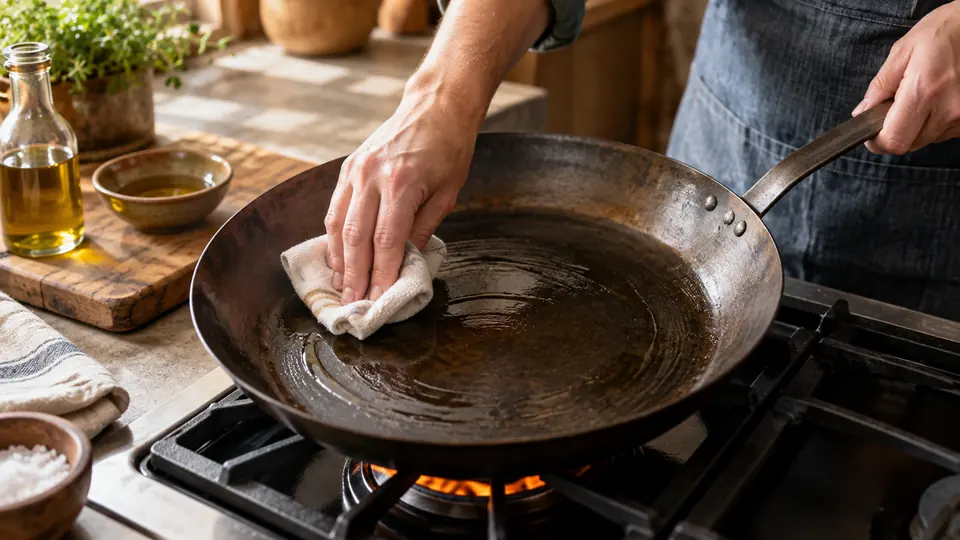
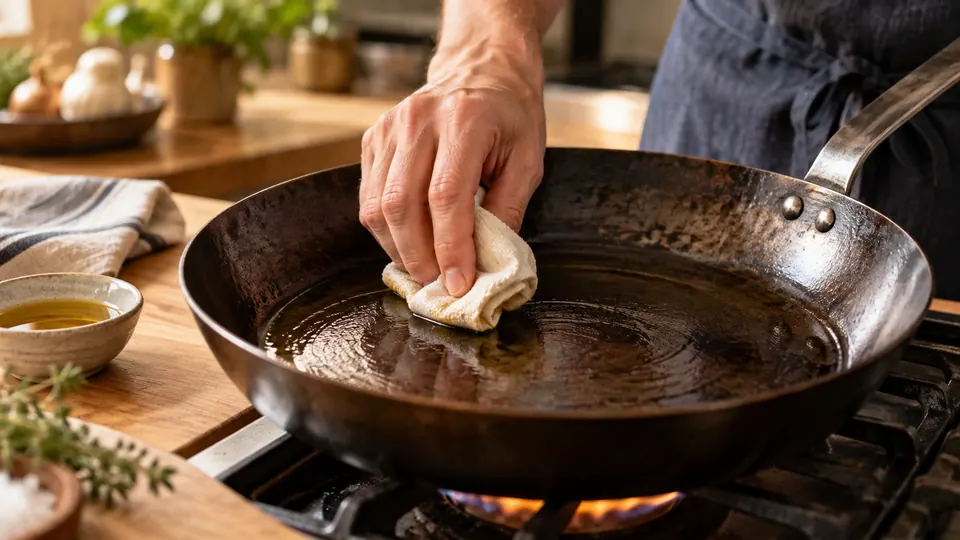
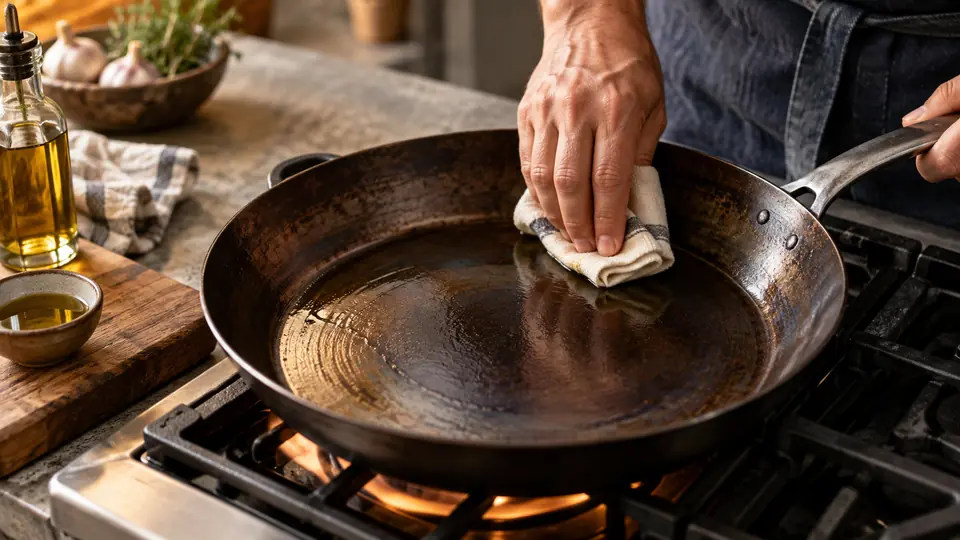
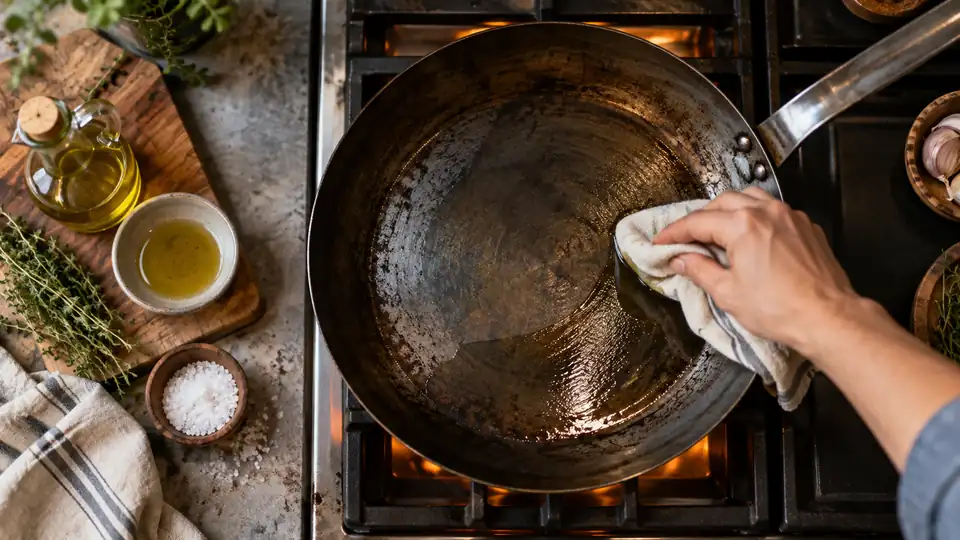
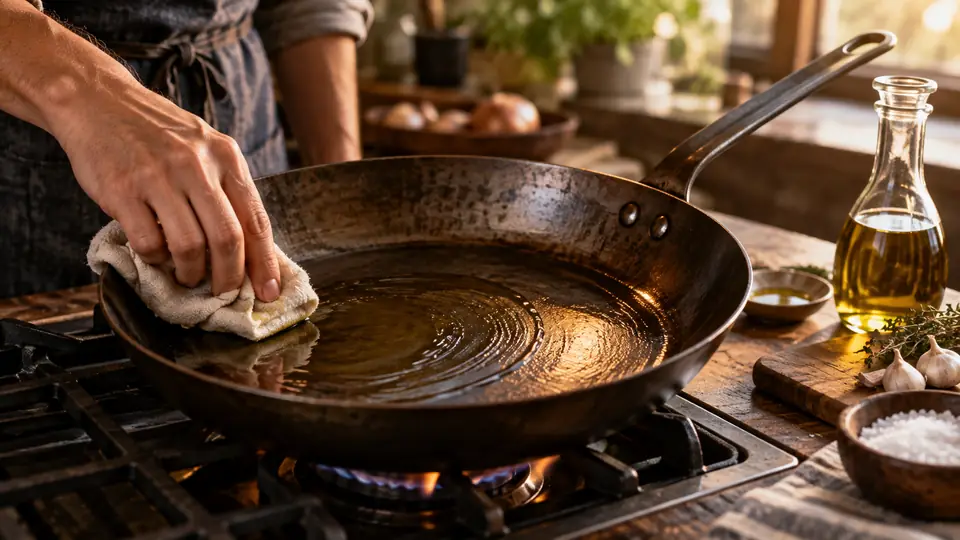
A seasoning layer is not supposed to be visible like paint. In fact, the best applied layers are often so thin that they barely look like anything before heating. You wipe on oil, then wipe most of it back off until the pan appears almost dry. That tiny remaining film is what turns into seasoning.
This is where many first attempts go wrong. People think more oil will create stronger protection. Instead, it usually creates blotches, drips, and sticky residue. Carbon steel does better with restraint. If you can clearly see a wet coating before heating, there is a good chance too much oil is still on the surface.
Each successful layer is usually dry, hard, and thin. It may deepen the color slightly, but it does not need to turn the pan jet black immediately. That darker, more mature look tends to develop with time and repeated use.
Why Thin Layers Work Better Than Many Thick Ones
Better bonding to the metal
Thin oil films heat more evenly and are more likely to bond directly to the steel. Thick oil pools can partly bake, partly burn, and partly remain gummy. That weakens the seasoning instead of strengthening it.
Less sticking and flaking
Thick seasoning has a greater chance of lifting off during cooking. This often happens after high-heat searing, acidic ingredients, or aggressive scrubbing. A thinner foundation tends to be more stable.
More predictable cooking performance
Carbon steel works best when the surface is smooth and responsive. Thick, uneven layers can create rough spots and hot spots. Thin seasoning lets the metal perform the way it is supposed to.
Easier repairs
If a thin layer wears down in one area, it is easy to touch up. If a thick layered surface starts peeling, you may need to strip more of the pan and start over in that area.
Why You Do Not Need a Perfectly Black Pan Right Away
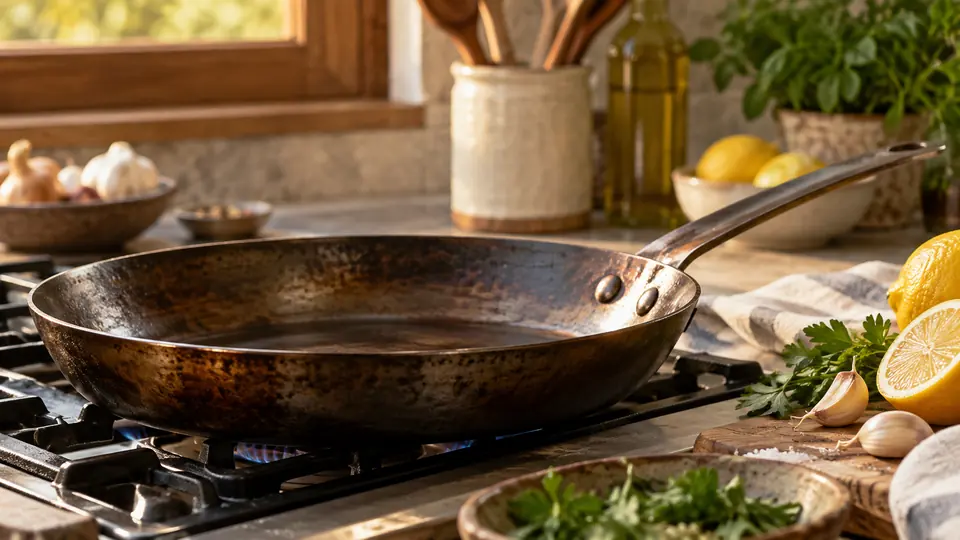
One of the biggest misconceptions about carbon steel is that a new pan should become evenly black after the first seasoning session. That is rarely how real pans behave. The initial finish is often brown, bronze, blue-black, or patchy. None of that automatically means something went wrong.
Color change depends on the steel, the oil used, the heat source, and how the pan was manufactured. Smooth pans, textured pans, factory-coated pans, and hand-finished pans can all season a little differently. The cooking surface also usually darkens faster than the upper sidewalls because it gets more direct heat and more contact with oil and food.
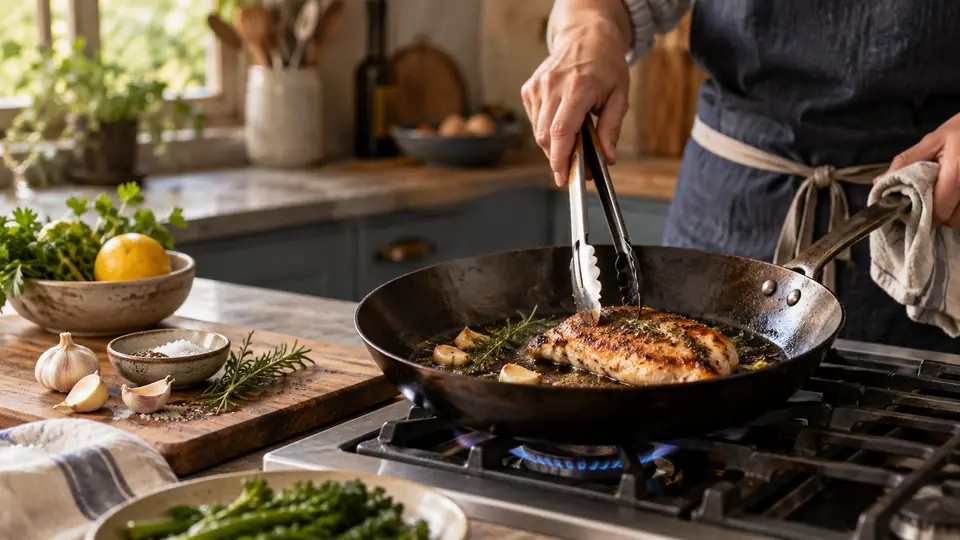
What matters most is whether the seasoning feels dry and the pan cooks reasonably well. Good carbon steel seasoning is earned through use. The pan improves as you fry potatoes, saute vegetables, cook pancakes, or sear proteins with proper heat control.
How Seasoning Builds After the Initial Layers
The first 2 to 3 layers are only the foundation. The more durable, useful seasoning comes later through regular cooking. That is why experienced carbon steel owners often care less about the first day and more about the first month.
Foods that help early seasoning include:
- Potatoes cooked in oil
- Onions sauteed with fat
- Cornbread or similar baked dishes in carbon steel bakeware
- Eggs cooked after proper preheating and light oiling
- Pancakes or flatbreads cooked with moderate fat
During these sessions, tiny amounts of oil continue bonding to the surface. Some areas will strengthen faster than others. The center of the pan often matures first because it sees the most heat.
This gradual buildup is normal. Carbon steel is not like factory nonstick cookware, where performance is fixed from day one. It becomes better with use, provided it is cleaned and dried properly between meals.
Signs Your Carbon Steel Has Enough Seasoning
Instead of counting layers forever, it helps to watch for practical signs that the pan is ready.
- The surface feels dry, not sticky.
- The pan does not rust after washing and drying.
- Food release improves with preheating and a small amount of oil.
- The cooking surface starts darkening over time.
- Minor marks or color variation do not affect performance.
A seasoned pan does not need to look flawless. In fact, some of the best-working carbon steel pans look blotchy, matte, and uneven. Performance matters more than appearance.
Signs You Have Applied Too Many Layers or Too Much Oil
Too many thin layers usually are not a disaster, but too many poorly applied layers can cause trouble. In real kitchen use, thickness is usually the problem disguised as “too many layers.”
Sticky or tacky surface
If the pan feels sticky after cooling, the oil likely went on too thick or did not reach the right temperature long enough. A seasoned pan should feel dry.
Blotchy, raised patches
Dark patches are not always bad, but raised or gummy spots often mean excess oil hardened unevenly. Those areas may smoke, smell off, or transfer residue to food.
Flaking or peeling
If bits of dark coating start coming off, the seasoning may have built up too thickly. This is especially common when repeated stovetop seasoning sessions use too much oil.
Uneven cooking surface
Overbuilt seasoning can create rough texture that interferes with spatula contact and food release. Carbon steel should feel smoother with use, not lumpier.
How to Decide if You Need Another Layer
After the initial seasoning, ask three simple questions:
- Does the pan have exposed bare gray metal in the main cooking area?
- Does it rust easily after cleaning?
- Does the surface feel dry and stable, or sticky and soft?
If the pan is dry, rust-free, and cooking reasonably well, you probably do not need another full seasoning session right away. Just keep cooking. If you see fresh bare steel, recurring rust, or stripped areas after acidic food or scrubbing, one or two thin touch-up layers may help.
It is easy to overcorrect. A pan that looks imperfect is not automatically under-seasoned. Carbon steel often functions well long before it looks beautiful.
Factors That Change How Many Layers You Might Need
Factory pre-seasoning
Some pans come with a starter seasoning from the manufacturer. That coating may be light, but it can still shorten the setup process. In that case, you may only need one reinforcing layer or none at all before cooking.
Humidity and storage conditions
If your kitchen is humid or the pan is stored in a damp area, an extra thin layer or two can give more short-term rust protection. Drying the pan thoroughly is still more important than stacking on coat after coat.
How often you cook
A pan used several times a week develops seasoning faster through normal meals. A rarely used pan may benefit from a slightly stronger initial base because it has less opportunity to improve naturally.
Cooking style
If you mostly cook eggs, fish, or delicate foods, you may care more about a smooth early surface and do a few careful layers before heavy use. If you mostly sear meat or saute vegetables, routine cooking will build the pan quickly.
Heat source
Gas, electric, induction, and oven seasoning can all work, but they heat differently. Uneven burners may create patchier early results, which sometimes leads people to add unnecessary extra layers. Patchiness alone does not always mean the pan needs more seasoning.
Best Practice for Initial Seasoning
If the goal is to get the layer count right, the process matters more than the number. A sensible approach looks like this:
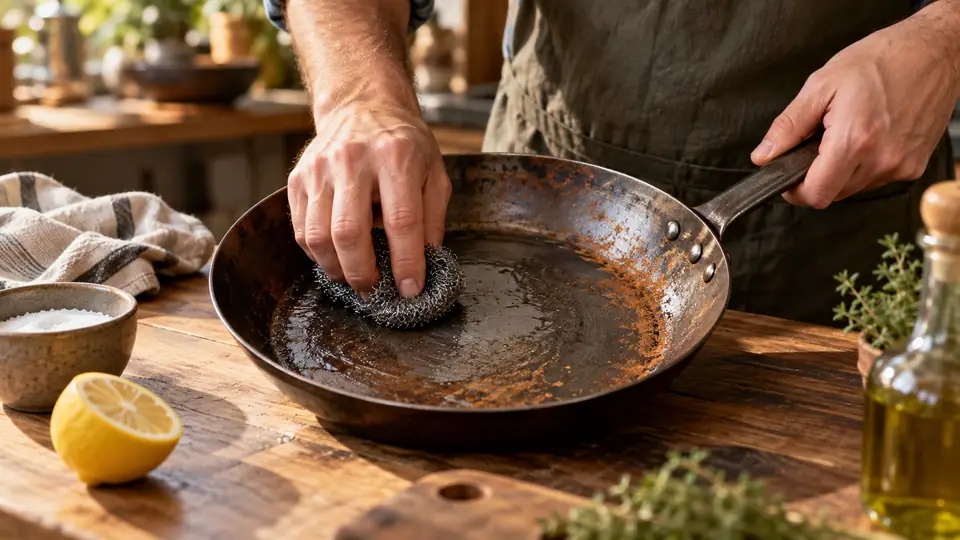
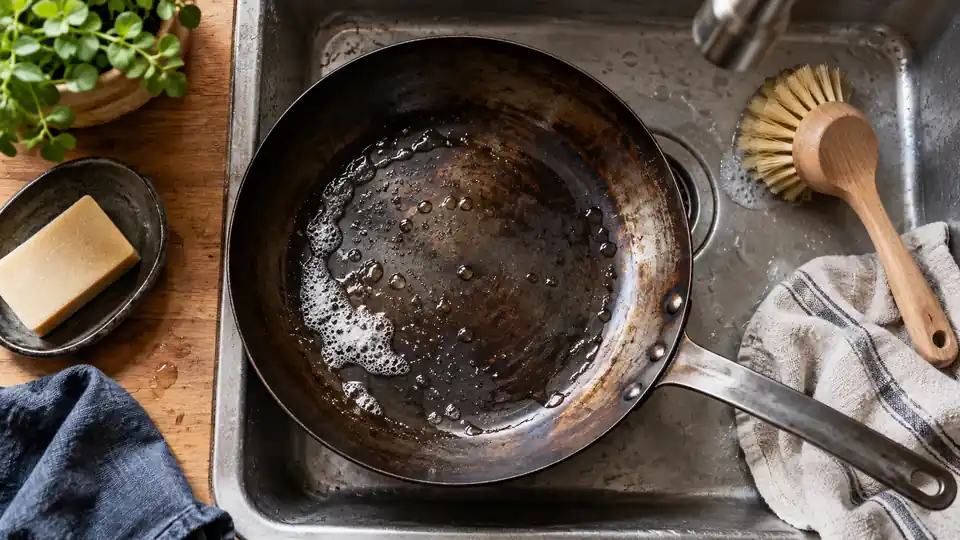
- Wash off any factory wax, oil, or protective coating.
- Dry the pan completely, including around the handle joint and rim.
- Warm the pan slightly so oil spreads easily.
- Apply a very small amount of oil.
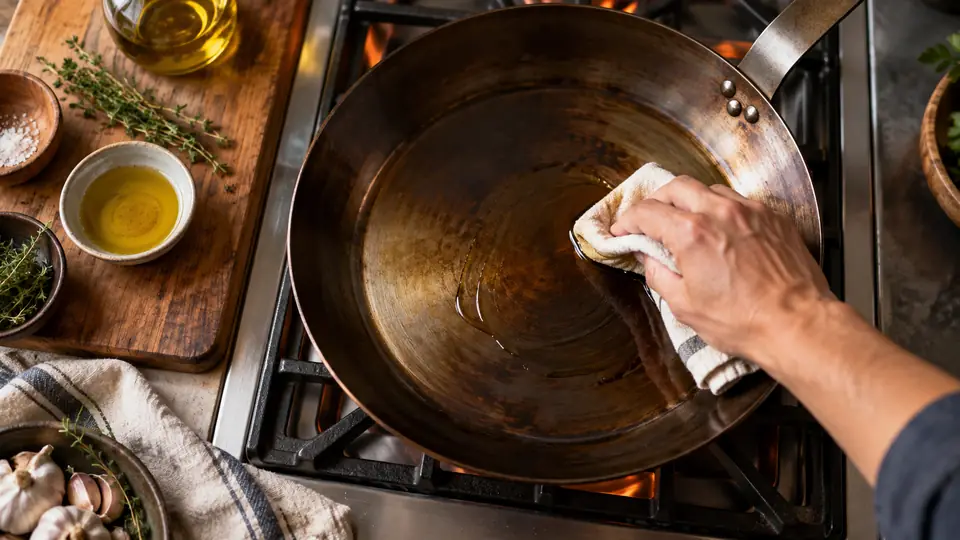
- Wipe it around the entire pan, then wipe again until it looks nearly dry.
- Heat the pan until the oil darkens and bonds.
- Let it cool slightly, then repeat 2 to 3 times if needed.
That process produces a better result than chasing a large layer count. If you want a deeper guide on starter surfaces, pre-seasoned cookware can reduce the amount of initial work, and some cooks prefer to begin with one of these pre-seasoned carbon steel pans.
Common Mistakes People Make With Seasoning Layers
Using too much oil
This is the most frequent issue. The pan should not look wet before heating. Excess oil turns into sticky residue instead of durable seasoning.
Trying to build a black finish in one day
Carbon steel develops character gradually. Forcing it with many heavy coats often backfires.
Confusing appearance with performance
A blotchy pan can still cook very well. A shiny, evenly dark pan can still stick if heat management is poor.
Ignoring preheating
Even a seasoned pan can stick if food is added to cold metal or if oil goes in at the wrong stage. Seasoning helps, but technique still matters.
Seasoning repeatedly instead of cooking
Some owners spend more time applying coats than making meals. After a sound base is established, regular use is often the best way to improve the pan.
Do Different Oils Change the Number of Layers Needed?
Not usually. Different oils can affect how easily a layer forms and how much smoke is produced, but they do not drastically change the basic answer to how many layers of seasoning carbon steel needs. You still want a few thin starter coats, not a large stack of heavy ones.
What matters more is choosing an oil that can handle seasoning temperatures and applying it sparingly. Common choices include grapeseed oil, canola oil, sunflower oil, and similar neutral oils. Some cooks use flaxseed oil, but it can be more brittle on certain pans if applied too heavily or heated improperly.
No matter which oil you use, moderation is the rule. A good oil used too generously still creates a bad seasoning layer.
Do Woks, Skillets, and Griddles Need Different Numbers of Layers?
The general rule stays similar, but the shape and intended use of the cookware can influence your approach.
| Cookware Type | Typical Starting Layers | Notes |
|---|---|---|
| Skillet or frying pan | 2 to 3 | Main cooking surface seasons fastest with daily use |
| Wok | 2 to 3 | Bottom darkens first, upper walls may stay lighter longer |
| Griddle | 3 to 4 | Large flat area may benefit from one extra thin pass for uniform protection |
| Restored rusted pan | 2 to 3 | Treat like bare steel and rebuild from scratch |
Woks often look especially uneven at first because the sides do not receive the same sustained contact heat as the bottom. That does not mean you need to keep adding layers until the entire wok matches in color.
What Happens if You Stop at Just One Layer?
One good layer can provide some rust protection, and it may be enough to begin cooking if you plan to use the pan immediately and often. Still, one layer is a fairly light foundation. It can wear away quickly, especially if the first few meals are acidic, wet, or stuck-on.
That is why two or three thin layers are usually recommended. They give the pan a little more margin for error without overbuilding the surface. If you stop at one layer and the pan performs fine, that is not a failure. It just means you may need to reinforce it sooner.
What Happens if You Apply Five, Six, or More Layers?
If every layer is genuinely thin, fully bonded, and evenly heated, the pan may still be fine. The issue is that most home cooks start applying oil more heavily as they repeat the process, especially once the pan darkens and becomes harder to read visually.
Beyond three or four layers, the benefit usually drops off. You spend more time seasoning without getting a major improvement in cooking performance. The risk of uneven buildup also rises. This is why experienced users often suggest a few careful coats, then actual cooking.
In other words, more layers are not automatically harmful, but they are often unnecessary.
How to Maintain Seasoning Without Constant Full Re-Seasoning
Carbon steel stays in good shape through routine habits more than repeated full seasoning sessions.
- Preheat the pan before adding oil
- Use enough cooking fat for the food and technique
- Clean with hot water and a soft scrubber when needed
- Dry the pan thoroughly after washing
- Apply a trace amount of oil after cleaning if the surface looks dry
- Avoid storing the pan damp or with moisture trapped inside
Short stovetop touch-ups work well when a patch wears down. You do not need to strip and rebuild the entire pan every time the finish changes color. Carbon steel seasoning is dynamic. It shifts, strengthens, and sometimes thins in spots depending on how you cook.
Frequently Asked Questions
Can you season carbon steel too many times?
Yes, especially if each session uses too much oil. The problem is usually not the number itself, but the buildup from repeated thick applications. Too much seasoning can turn sticky, rough, or flaky.
Is 3 layers of seasoning enough for carbon steel?
Yes. For most new pans, 3 thin layers are enough to create a solid starting point. After that, regular cooking usually does more for long-term performance than adding many more coats.
Should a new carbon steel pan be black after seasoning?
No. A new pan may look bronze, brown, blue-black, or patchy. Full darkening usually happens gradually with use. Color alone does not determine whether the seasoning is working.
Why is my carbon steel pan sticky after seasoning?
Sticky seasoning usually means too much oil was left on the pan or the oil did not fully bond during heating. A properly seasoned surface should feel dry. Lightly reheating or scrubbing back the excess can often fix it.
Do I need to re-season carbon steel after every use?
No. Most of the time you only need to clean, dry, and optionally wipe on a very thin film of oil. Full re-seasoning is usually only necessary after rust, major stripping, or repeated sticking caused by surface damage.
Final Thoughts
How many layers of seasoning does carbon steel need? In most cases, 2 to 3 thin layers are enough to start, and 3 to 4 may make sense for a completely bare pan or a humid kitchen. More than that is rarely necessary unless the coats are exceptionally light and controlled.
The more useful lesson is that carbon steel does not need a thick, dramatic coating to perform well. It needs a dry, bonded base layer and steady use. A pan that cooks often, gets cleaned properly, and is dried carefully will usually develop better seasoning than one that is endlessly re-coated on the stove.
If your pan is rust-free, dry to the touch, and improving with cooking, it already has enough seasoning to move forward. From there, meals do the rest of the work.

Leave a Reply