

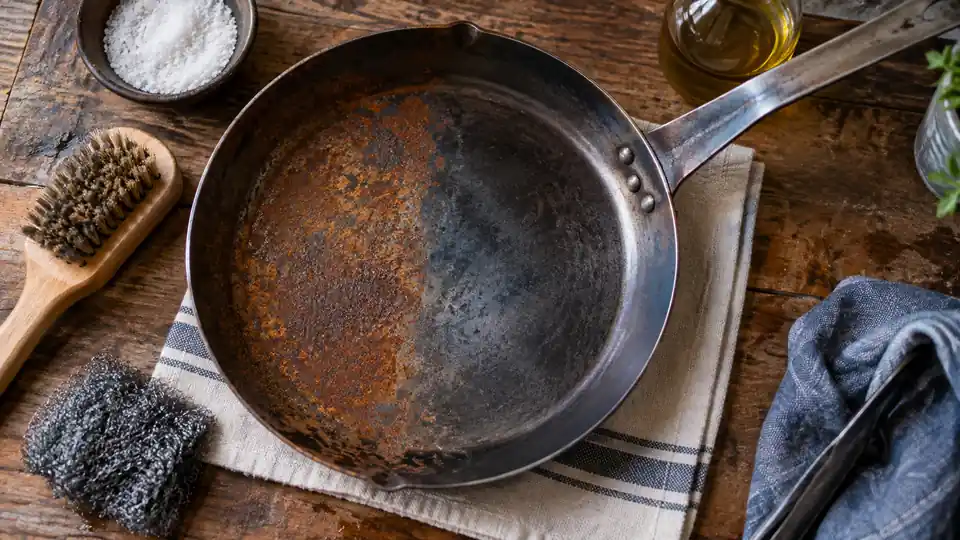
Rust on carbon steel looks alarming, but it rarely means the pan is ruined. In most cases, can carbon steel be saved after rust has a simple answer: yes, as long as the rust is only on the surface and the metal has not been deeply eaten away. Carbon steel cookware is reactive bare metal under its seasoning layer, so if moisture sits on it for too long, oxidation can form quickly. That can happen after air drying, soaking, storing the pan while still damp, or putting it away with a damaged seasoning layer.
The good news is that light rust and even moderate rust are usually repairable with basic cleaning, drying, and re-seasoning. What matters is knowing how much rust you are dealing with and removing it without damaging the pan further. A small orange patch is very different from heavy flaking, pitting, or structural damage.
Most rust problems are really maintenance problems, not end-of-life problems. Once you understand why carbon steel rusts and how to reverse it, restoring a neglected pan becomes straightforward. In many kitchens, a rusty carbon steel pan can be brought back into regular use the same day.
Quick Answer
Can carbon steel be saved after rust? Yes, most carbon steel cookware can be saved after rust, especially if the rust is light or moderate. Surface rust can usually be scrubbed off with an abrasive pad, steel wool, coarse salt, or a baking soda paste. Heavier rust may need a vinegar soak for a short period, followed by scrubbing, thorough drying, and a full re-seasoning.
The pan may not be worth saving if rust has caused deep pitting, holes, cracks, severe thinning, or warping. Those problems are less common than people think. Orange discoloration, rough brown patches, and even widespread surface rust often look worse than they really are.
After rust removal, the key steps are simple: remove all active rust, dry the pan completely, heat it to drive off hidden moisture, then apply a thin coat of oil and build a fresh seasoning layer. If you skip the drying or seasoning step, the rust usually comes back. In other words, carbon steel is forgiving, but only if you finish the restoration properly.
Why Carbon Steel Rusts So Easily
Carbon steel does not have the corrosion resistance of stainless steel. It contains iron, and iron reacts with oxygen and moisture to form rust. Seasoning helps protect the surface, but seasoning is not permanent. It can wear down, flake, or be stripped by acidic foods, harsh scrubbing, or long exposure to water.
This is why carbon steel often performs beautifully in cooking but asks for a little maintenance in return. A seasoned pan has a thin protective layer of polymerized oil. That layer reduces direct contact between the steel and moisture, but once it is compromised, rust can form surprisingly fast.
Common causes include:
- Air drying after washing instead of towel drying and heating
- Soaking the pan in water for an extended period
- Storing the pan while damp
- Cooking acidic foods that strip seasoning
- Using too much soap or aggressive scouring on a weak seasoning layer
- Living in a humid climate or storing pans in a damp cabinet
In practical terms, rust usually means the pan was exposed, not destroyed. That is an important distinction. Carbon steel is more repairable than many people expect.
How to Tell if Rust Is Cosmetic or Serious
Before you start scrubbing, determine what kind of rust you are dealing with. Not every rusty-looking pan is in the same condition. Some only need a quick surface cleanup, while others need more aggressive restoration.
| Condition | What It Looks Like | Can It Be Saved? | Typical Fix |
|---|---|---|---|
| Light surface rust | Small orange spots or thin haze | Yes | Scrub, dry, re-season |
| Moderate rust | Larger orange-brown patches, rough texture | Usually yes | Stronger scrubbing, possible vinegar, re-season |
| Heavy surface rust | Widespread rust layer, dull and rough all over | Often yes | Strip rust fully, dry thoroughly, full re-seasoning |
| Pitting | Small craters or eaten-away spots in the metal | Sometimes | Depends on depth and location |
| Structural damage | Cracks, holes, severe thinning, warping | Usually no | Replace the pan |
If the surface feels rough but solid, that is usually manageable. If you see actual cavities in the metal, or the pan looks thinned out around the rusted areas, inspect it more carefully. A cooking surface with minor pitting can still be usable, but deep deterioration near the base or handle attachment raises safety and performance concerns.
Can Carbon Steel Be Saved After Rust in Most Cases?
Yes. For most home cooks, the answer to can carbon steel be saved after rust is still yes, because the rust is usually superficial. Carbon steel pans are thick enough to tolerate rust removal, and their seasoning can be rebuilt from scratch. Unlike nonstick coatings, which cannot be restored once damaged, carbon steel often recovers well.
This is one reason experienced cooks keep old carbon steel pans in service for years. A neglected pan can look terrible after being left wet in the sink or stored in a basement, yet still return to normal with a bit of work. The metal itself is durable. The real issue is removing oxidation completely and re-establishing protection.
The biggest mistake is assuming orange discoloration means the pan is finished. The second biggest mistake is doing a partial cleanup, then putting the pan away before re-seasoning it. That often leads to fresh rust within hours.
Step-By-Step Solution for Saving Rusty Carbon Steel
1. Inspect the Pan First
Look for warping, cracks, deep pits, or loose handle rivets. If the rust is only on the surface, continue. If the metal has become dangerously thin or cracked, restoration is probably not worth the effort.
Pay close attention to the cooking surface, the bottom exterior, the rim, and the handle junction. These spots often hold moisture longer than expected.
2. Wash Off Loose Debris
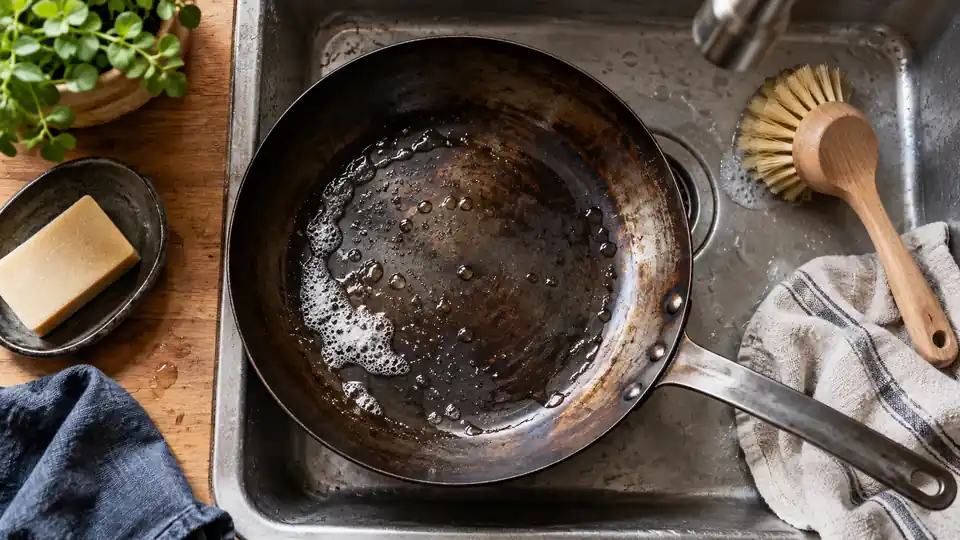
Rinse the pan with warm water and use a sponge or scrubber to remove dust, loose flakes, old oil residue, or food buildup. This first rinse is just to clear the surface so you can work directly on the rust.
Do not soak the pan for a long period. Brief contact with water is fine. Leaving it submerged is not helpful.
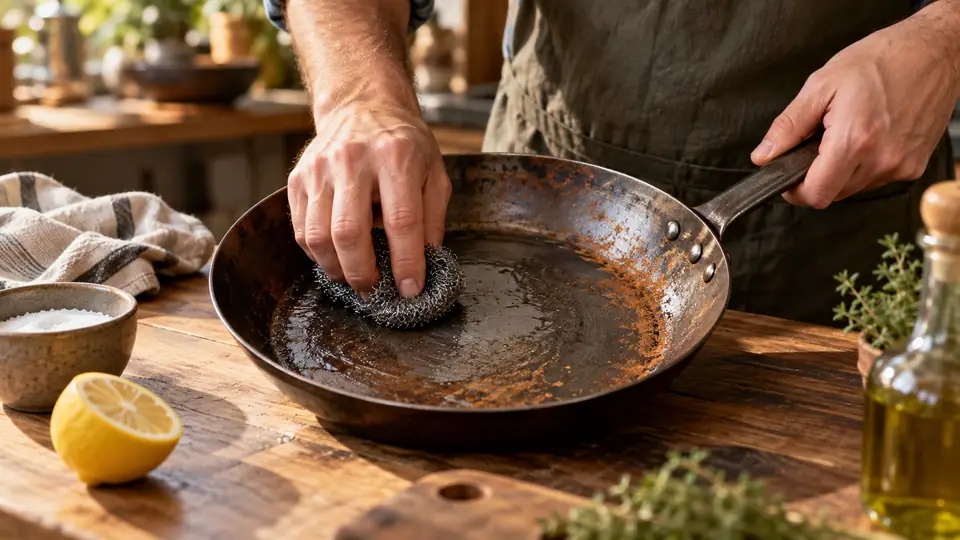
3. Scrub Away Surface Rust
For light rust, use one of these methods:
- Steel wool
- A non-scratch or mildly abrasive scrub pad
- Coarse salt with a small amount of oil or water
- Baking soda paste
Scrub until the orange or brown rust is gone and clean bare metal appears. On a heavily rusted pan, you may need more pressure and more time than expected. That is normal. Carbon steel can handle firm scrubbing during restoration.
If you are removing rust from the inside cooking surface, keep going until it feels smooth or uniformly raw rather than gritty. A few dark stains may remain even after rust is gone. Staining is not the same as active rust.
4. Use Vinegar Only if Needed
If scrubbing alone is not enough, white vinegar can help dissolve stubborn rust. Use it carefully. Vinegar is acidic, so it removes rust but can also attack bare steel if left too long.
A practical method is to soak a cloth or paper towel in vinegar and lay it over rusted areas, or use a short soak in a 1:1 vinegar-water mixture. Check the pan every 10 to 15 minutes. For heavier rust, some pans may need more time, but avoid forgetting about it for hours.
Once the rust loosens, scrub again. Rinse thoroughly right away.
5. Dry the Pan Completely
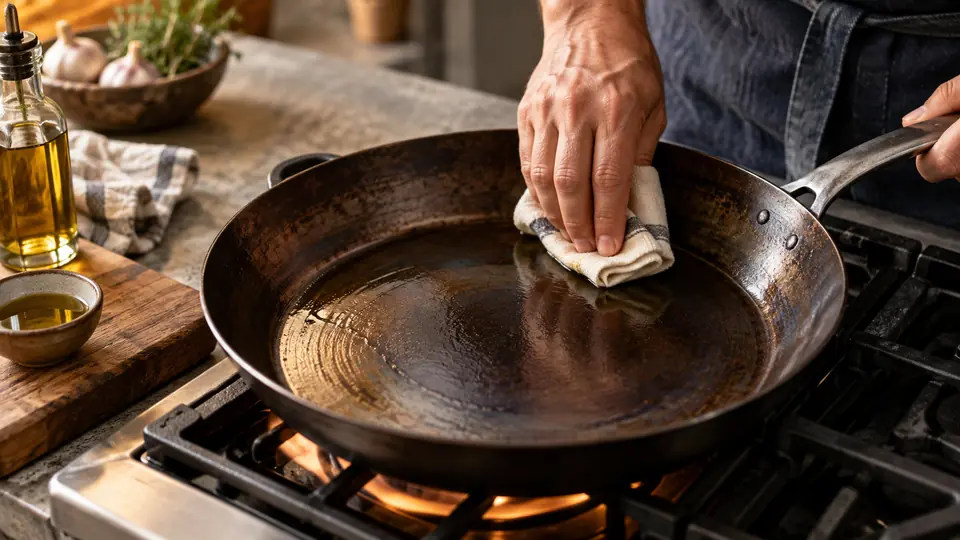
This step matters as much as rust removal. Towel dry the pan immediately, then place it on the stove over low to medium heat for several minutes. Heating drives off hidden moisture from pores, seams, and handle joints.
If a pan flashes rust right after cleaning, it usually means a trace of moisture was left on the bare steel. That can happen quickly, especially in humid kitchens.
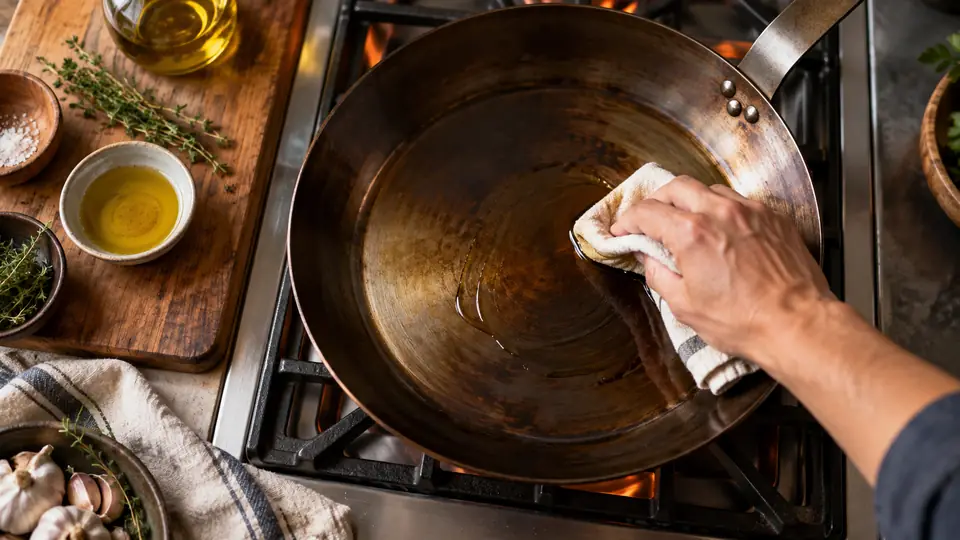
6. Apply a Very Thin Coat of Oil
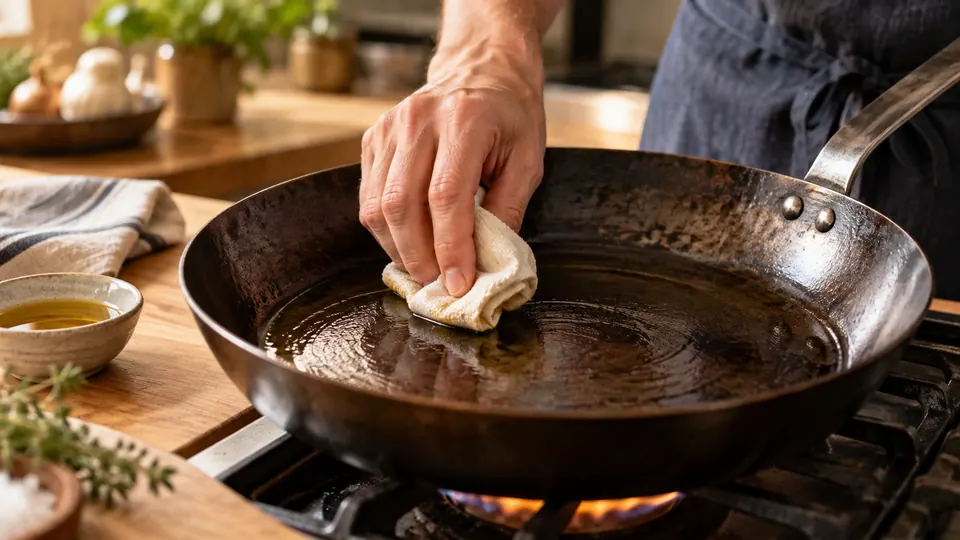
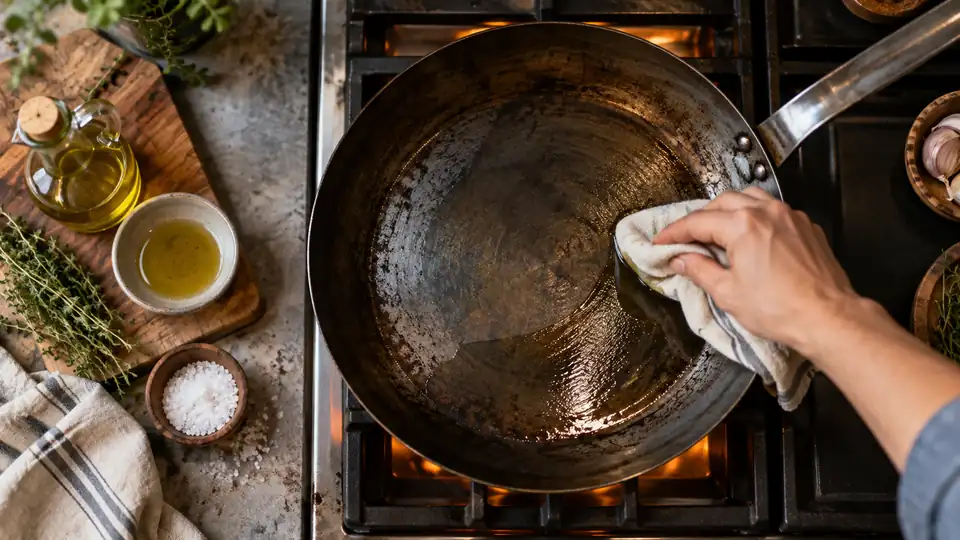
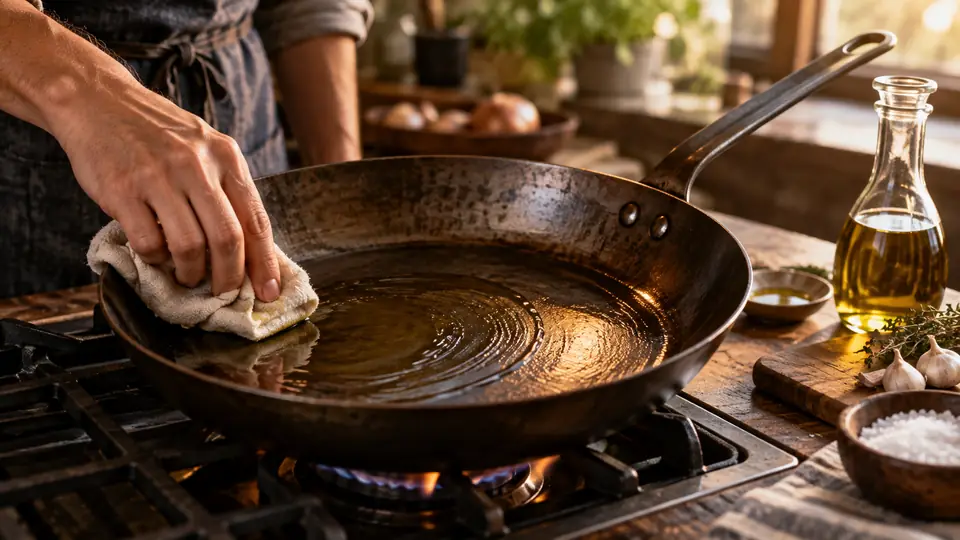
Once the pan is fully dry and slightly warm, rub on a very thin coat of high-smoke-point oil. Wipe off as much as you can with a clean cloth or paper towel. The surface should look barely coated, not wet or sticky.
Too much oil is a common error. Excess oil turns gummy and uneven instead of forming a hard seasoning layer.
7. Re-Season the Pan
Heat the lightly oiled pan until the oil darkens and bonds to the surface. This process is seasoning. In simple terms, the oil transforms under heat into a thin protective layer attached to the steel.
You can do this on the stovetop or in the oven, depending on the pan shape and handle material. A full oven seasoning can be helpful after heavy rust removal because it coats the pan more evenly. For pans that only had a few rusty spots, a stovetop re-seasoning may be enough to get back into use.
If the pan was severely rusted, apply and heat several thin layers rather than one heavy one.
Tools and Materials That Help
You do not need a specialized restoration kit to save rusty carbon steel. Most kitchen rust problems can be fixed with basic household items.
| Tool or Material | Best Use | Notes |
|---|---|---|
| Steel wool | Stubborn surface rust | Effective but abrasive, use during restoration rather than daily cleaning |
| Scrub pad | Light to moderate rust | Good first option |
| Coarse salt | Gentle abrasion | Useful for smaller patches |
| Baking soda paste | Mild rust and residue | Less aggressive than steel wool |
| White vinegar | Heavier rust | Use briefly and monitor closely |
| Dry towels | Immediate drying | Essential after rinsing |
| Neutral cooking oil | Re-seasoning | Apply in very thin layers |
What Not to Do With a Rusty Carbon Steel Pan
Restoration is usually simple, but a few mistakes can make the process slower or less effective.
Do Not Leave Vinegar on Too Long
Vinegar helps dissolve rust, but it does not know when to stop. If left too long, it can dull or etch the steel. Check often and rinse promptly once the rust loosens.
Do Not Re-Season Over Active Rust
Seasoning does not trap rust in a useful way. If orange or crumbly rust remains, the new seasoning will be weak and unstable. Remove all active rust first.
Do Not Air Dry Bare Carbon Steel
After rust removal, bare steel is highly exposed. Air drying invites flash rust. Always towel dry, then heat dry.
Do Not Use Thick Layers of Oil
A glossy, wet-looking oil coat seems protective, but it usually turns sticky. Thin coats bond better and create a stronger surface.
Do Not Assume Dark Spots Mean Rust
After restoration, you may still see gray, blue, black, or brown discoloration. That can be normal. Active rust is usually orange or reddish-brown and often feels powdery or rough.
How Long Does It Take to Restore Rusty Carbon Steel?
Light rust can often be fixed in 15 to 30 minutes, including drying and a basic seasoning pass. Moderate rust may take 30 to 60 minutes. Heavier rust, especially if the whole pan is affected, can take longer because scrubbing and repeated seasoning layers take time.
The good news is that restoration is usually more about patience than skill. Most of the labor is straightforward. Scrub, rinse, dry, oil, heat, repeat if necessary.
That is why many cooks keep using carbon steel even after a few rust scares. Once you understand the process, it becomes routine rather than stressful.
How to Prevent Rust From Coming Back
Saving the pan is only half the job. Preventing repeat rust matters more in the long run.
Dry Immediately After Washing
Never leave carbon steel to drip dry. Wipe it off right away, then give it a short heat dry on the stove.
Apply a Light Protective Oil Film
If you are storing the pan for more than a day or two, especially in humid conditions, wipe on a very thin film of oil after drying. Buff away the excess so it does not become sticky.
Avoid Long Soaks
Soaking is one of the fastest ways to damage seasoning and encourage rust. If food is stuck on, use hot water, a scraper, or simmer a little water briefly to loosen residue.
Rebuild Weak Seasoning Early
If the pan starts looking patchy, dull, or gray in places, add a quick maintenance seasoning before rust appears. Rust is easier to prevent than remove.
Store It in a Dry Space
A damp cabinet, garage shelf, or enclosed stack of cookware can trap moisture. If you stack pans, place a paper towel or cloth between them to reduce trapped condensation and surface rubbing.
Can You Still Cook on a Pan After Rust Removal?
Yes, once all active rust has been removed and the pan has been properly re-seasoned, it is ready to cook on again. The key is that the surface must be clean, dry, and protected. Bare steel without seasoning is not ideal for regular cooking because it rusts easily and sticks more.
After a major restoration, it helps to cook foods that support seasoning rather than challenge it. Frying onions, potatoes, or other moderately fatty foods can help the pan settle back into regular use. Acidic tomato sauces or long wine reductions are better saved for later, after the seasoning has strengthened again.
Some cooks prefer to do two or three thin seasoning rounds before cooking. That is sensible if the pan was heavily rusted or stripped to bare metal.
When a Rusty Carbon Steel Pan Is Not Worth Saving
Most rusty pans are recoverable, but not every piece of carbon steel deserves restoration. There are times when replacement is the better choice.
- Deep pitting across the cooking surface that affects performance or cleaning
- Cracks in the body or handle area
- Severe warping that prevents proper contact with the burner
- Holes or extreme metal thinning
- Unsafe handle attachment due to rust damage around rivets or welds
Even then, cosmetic ugliness alone is not a reason to discard the pan. Carbon steel often looks patchy, dark, or uneven after years of use. That is normal. Structural damage is the real concern.
Signs Your Re-Seasoning Worked
After restoration, you are looking for protection, not perfection. A good recovery does not have to leave the pan looking uniformly black.
Signs that the process worked include:
- The orange rust is gone
- The pan feels dry and smooth, not powdery
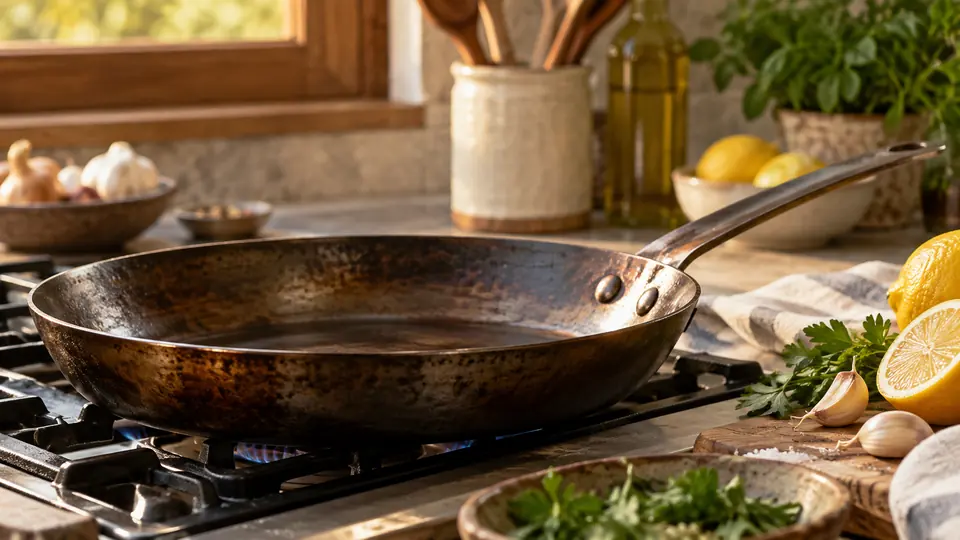
- The surface has a slight sheen or darkened tone
- Water no longer instantly discolors the surface
- The pan heats without showing fresh rust spots
A restored pan may look mottled for a while. That is common with carbon steel. Performance matters more than appearance.
Common Mistakes After Saving a Rusty Pan
Cooking Acidic Food Right Away
Fresh seasoning is more fragile than established seasoning. Tomato sauce, vinegar-heavy dishes, or lemon-based reductions can strip it before it settles in.
Skipping the Maintenance Oil Wipe
Especially after a full strip and re-season, a light oil wipe after cleaning can help prevent another rust cycle.
Expecting a Perfect Black Finish Immediately
Restored carbon steel often goes through a patchy stage. Uneven color is not failure. Repeated cooking gradually evens out the surface.
Using Dishwashers or Harsh Storage Conditions
Dishwashers are particularly rough on carbon steel because they combine water, detergents, and prolonged exposure. Humid storage can undo careful restoration surprisingly quickly.
Frequently Asked Questions
Is rust on carbon steel dangerous?
Light rust on a pan is usually more of a maintenance issue than a serious hazard, but you should still remove it before cooking. The main concern is that a rusty surface is unstable, rough, and unprotected. Once the rust is scrubbed off and the pan is re-seasoned, it can usually be used normally again.
Can I use soap when cleaning rust off carbon steel?
Yes, a small amount of soap during restoration is fine. The bigger issue is removing rust completely and drying the pan thoroughly afterward. Soap is not what ruins the pan. Leaving moisture behind is the real problem.
How do I know if rust is completely gone?
Active rust is usually orange, reddish-brown, or powdery. After removal, the surface should look like bare steel, darkened steel, or fresh seasoning, not flaky orange oxidation. If you wipe the pan and still see orange residue, keep scrubbing.
Can carbon steel flash rust right after cleaning?
Yes. Bare carbon steel can develop flash rust very quickly, sometimes within minutes, especially in humid air. That is why immediate towel drying and stove drying are so important after rinsing.
Do I need to strip the whole pan if only one spot is rusty?
Not always. A small rust spot can often be treated locally, then re-seasoned in that area and blended into the rest of the pan through normal cooking. If rust is widespread or the seasoning is failing in multiple places, a full restoration usually gives better results.
Final Thoughts
For most cookware owners, can carbon steel be saved after rust is not a difficult question. Yes, it usually can. Surface rust, patchy oxidation, and even a heavily neglected finish are often fixable with scrubbing, careful drying, and fresh seasoning.
The deciding factor is not how ugly the pan looks at first glance. It is whether the metal itself is still sound. If the body is solid and the rust has not caused major pitting, cracks, or thinning, restoration is typically worth doing. Carbon steel is one of the more forgiving cookware materials in this respect.
Once restored, consistent drying and light maintenance matter more than chasing a perfect appearance. A carbon steel pan does not need to look flawless to cook well. It just needs to stay dry, seasoned, and free of active rust.

Leave a Reply