

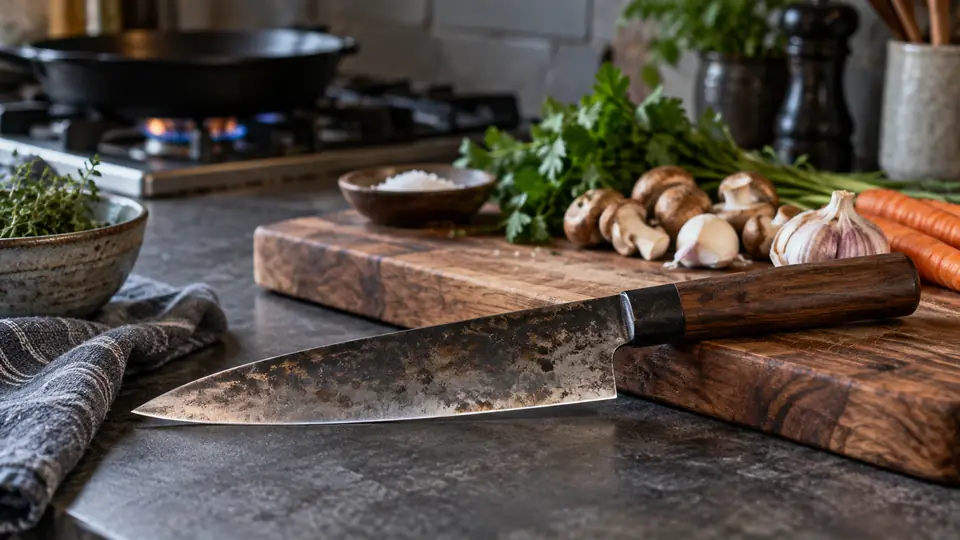
A carbon steel knife can take a very sharp edge and develop character over time, but it asks for more attention than stainless steel. The same reactive qualities that make carbon steel popular with cooks and knife enthusiasts also make it more vulnerable to rust, staining, and edge damage if it is neglected. Good care is not complicated, but it does need to be consistent.
Learning how to care for a carbon steel knife matters because small habits make a huge difference. A knife that is wiped dry right away, stored properly, and sharpened with care can stay reliable for years. A knife that is left wet in the sink or stored dirty can spot, discolor, or rust surprisingly fast. The good news is that daily maintenance usually takes less than a minute.
This guide explains how to care for a carbon steel knife in practical terms. It covers daily cleaning, drying, oiling, storage, patina, rust removal, sharpening, and the mistakes that shorten a knife’s life. If you want a carbon steel blade to perform well without becoming high-maintenance, the key is to build a simple routine and stick to it.
Quick Answer
How to care for a carbon steel knife comes down to a few core habits: wash it by hand, dry it immediately, keep it out of the dishwasher, avoid soaking it, and store it in a dry place. After cutting acidic foods or wet ingredients, wipe the blade clean sooner rather than later because moisture and acids can darken the steel and encourage rust.
For longer storage or in humid kitchens, apply a very light coat of food-safe mineral oil to the blade. Sharpen the knife regularly with appropriate stones or systems, and use a wooden or soft plastic cutting board to protect the edge. If light rust appears, remove it early with a gentle abrasive, then clean and dry the knife thoroughly.
Carbon steel knives naturally develop a patina, which is a gray, blue, or darkened surface layer caused by reaction with food and air. Patina is normal and often helpful because it can slow further reactivity. Bright orange or red rust is different and should be removed. With consistent cleaning, drying, and proper storage, a carbon steel knife is straightforward to maintain.
Why Carbon Steel Knives Need Different Care
Carbon steel is prized for edge quality, ease of sharpening, and a crisp cutting feel. Many cooks like how quickly it can be brought back to a keen edge compared with some harder stainless alloys. That is part of the appeal, especially for prep work where precision matters.
The tradeoff is that carbon steel is more reactive. In plain terms, it interacts more readily with moisture, oxygen, and acidic foods. That reactivity can produce harmless discoloration, called patina, or unwanted corrosion, which shows up as rust.
This is why carbon steel knives reward attentive owners. You do not need a complicated maintenance kit or long cleaning sessions. You need consistency. Neglect causes most problems, not normal use.
Patina vs Rust
New carbon steel owners sometimes worry as soon as the blade darkens. In many cases, that darkening is patina, not damage. Patina usually appears as gray, blue-gray, or mottled dark tones. It can look uneven at first, especially after cutting onions, meat, or fruit.
Rust is different. It is typically orange, reddish, or rough to the touch. Rust means the steel is actively corroding and needs attention. A patina can be beneficial. Rust is not.
| Blade Condition | Appearance | What It Means | What To Do |
|---|---|---|---|
| Clean steel | Bright silver or satin finish | Freshly cleaned or lightly used blade | Keep dry and use normally |
| Patina | Gray, blue, charcoal, or dark mottling | Normal oxidation from use | Leave it alone unless you prefer a polished look |
| Light rust | Orange specks or streaks | Surface corrosion beginning | Remove promptly, then dry and protect blade |
| Heavy rust | Reddish-brown patches, rough texture | More advanced corrosion | Use careful rust removal and inspect edge and surface |
How to Care for a Carbon Steel Knife Day to Day
Daily care matters more than occasional deep maintenance. Most carbon steel knife problems start with a simple mistake, such as letting the blade sit wet after prep or putting it away with food residue still on it. A short routine prevents most issues.
Clean It Right After Use
Wash the knife by hand soon after using it. Warm water, mild dish soap, and a soft sponge or cloth are enough for routine cleaning. There is no need for harsh scrubbers unless you are removing stuck-on residue.
If you cut acidic foods like tomatoes, citrus, apples, or onions, do not let the juices sit on the blade. Wipe or rinse the knife sooner because those ingredients can quickly darken the steel and sometimes leave reactive spots.
Dry It Immediately
This is the single most important habit. After washing, dry the blade and handle thoroughly with a clean towel. Pay attention to the area where the blade meets the handle, because moisture tends to collect there.
Air-drying on a rack is not ideal for carbon steel. A few extra minutes of moisture exposure can be enough to create spotting, especially in humid kitchens.
Do Not Soak It
Leaving a carbon steel knife in the sink is one of the fastest ways to damage it. Soaking exposes the blade to water, detergent, food acids, and accidental contact with other utensils. It can also damage certain handle materials over time.
Clean it, dry it, and put it away. That basic sequence keeps the steel stable and the edge protected.
Use the Right Cutting Surface
Care is not only about rust prevention. Edge care matters too. Use wood or softer plastic cutting boards. Avoid glass, ceramic, granite, or metal surfaces because they dull the edge quickly and can chip a thin, hard edge.
Tools and Supplies That Help
You do not need much to maintain a carbon steel knife well. A few simple supplies cover almost everything.
- Mild dish soap for normal cleaning
- Soft sponge or dish cloth to avoid scratching the blade unnecessarily
- Dry kitchen towel or microfiber cloth for immediate drying
- Food-safe mineral oil for storage protection
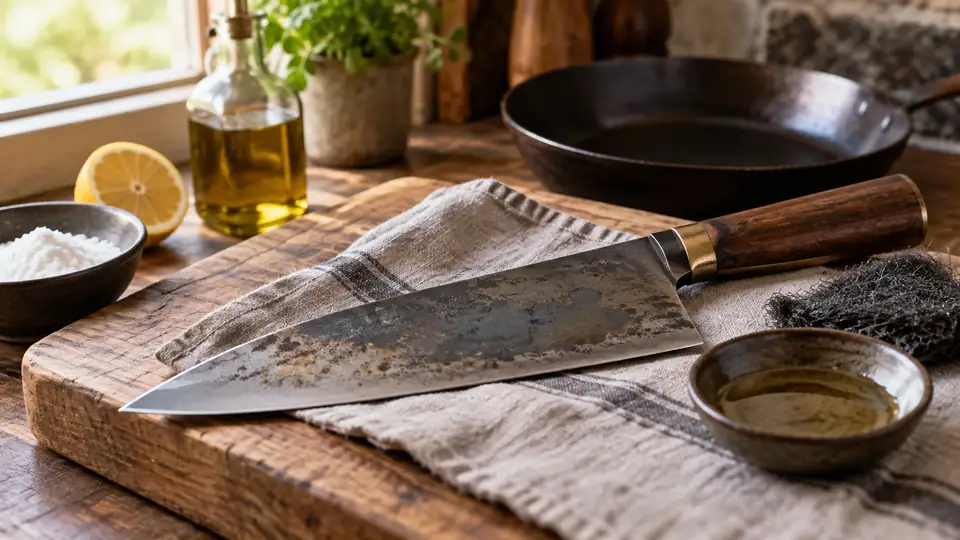
- Rust eraser, baking soda paste, or gentle metal polish for light rust removal
- Sharpening stones or guided sharpening system for edge maintenance
- Wooden saya, blade guard, knife block, or magnetic strip for proper storage
That is enough for most home cooks. Specialized products can be useful, but they are not required for solid maintenance.
Step-by-Step: How to Care for a Carbon Steel Knife
1. Wipe During Prep When Needed
If you are doing a lot of prep, especially with wet or acidic ingredients, keep a towel nearby and wipe the blade occasionally. This is particularly useful during longer sessions where the knife stays in hand for 20 to 40 minutes.
You do not need to stop after every slice. Just avoid letting juices dry on the blade. This small habit reduces staining and keeps the edge cleaner as you work.
2. Hand Wash After Use
Rinse the knife under warm water and use a little dish soap. Wipe from spine to edge carefully to avoid cutting yourself. Clean both sides of the blade and remove any residue near the heel and handle.
If the knife has a wooden handle, keep washing brief. Prolonged water exposure can swell, crack, or loosen natural handle materials over time.
3. Dry Thoroughly
Use a towel to dry the blade immediately. Start with the flats of the blade, then dry the spine, edge area carefully, and the area around the handle junction. If the handle is wood, dry that too.
In humid environments, some owners like to give the blade a final wipe with a separate dry cloth to make sure no moisture remains.
4. Apply a Light Coat of Oil if Needed
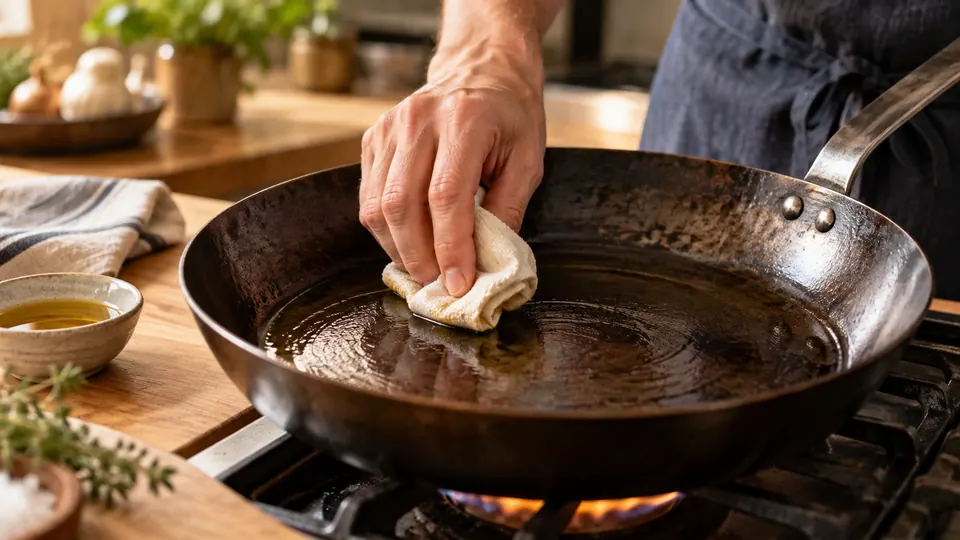
For daily use in a dry kitchen, oiling after every wash is often unnecessary. For longer storage, infrequent use, or humid climates, wipe on a very thin coat of food-safe mineral oil. The layer should be barely visible, not greasy.
This creates a barrier between the steel and moisture in the air. It is especially useful if the knife will sit for days or weeks without use.
5. Store It Safely
Store the knife somewhere dry and protected. A wooden sheath, blade guard, knife block, or magnetic strip all work if they are clean and dry. Avoid tossing the knife into a drawer unprotected, where it can hit other utensils and trap moisture.
If you use a leather sheath for storage, be cautious. Leather can hold moisture and tanning chemicals, which are not ideal for long-term storage of carbon steel. For transport, leather may be fine. For storage, dry wood or a clean guard is often safer.
How to Handle Patina
Patina is a normal part of carbon steel ownership. Some people actively encourage it because a stable patina can make the blade a bit less reactive. Others prefer a brighter, cleaner-looking finish. Both approaches are reasonable.
Should You Remove Patina?
Usually, no. If the patina is even and the blade is clean, there is little reason to polish it off. Removing it repeatedly can mean more work, and the blade will likely develop it again with use.
If appearance matters to you, you can polish some of it away. Just understand that carbon steel is meant to change over time. A spotless, mirror-like blade takes more maintenance.
Can You Force a Patina?
Some knife owners force a patina using vinegar, mustard, or similar acidic methods. This can create a more even look early on, but it is optional. Natural patina from normal food prep is simpler and less risky.
If you are new to carbon steel knives, natural patina is often the better path. It lets the blade age gradually without introducing unnecessary variables.
How to Remove Rust from a Carbon Steel Knife
Even careful owners occasionally find a rust spot. The key is to deal with it early, while it is still on the surface. Light rust is usually easy to remove.
For Light Surface Rust
- Wash and dry the knife first so you can clearly see the affected area.
- Use a rust eraser, a paste of baking soda and water, or a soft cloth with a small amount of gentle metal polish.
- Rub the rusted area lightly until the orange color disappears.
- Wipe away residue, wash again if needed, and dry thoroughly.
- Apply a very light coat of oil if the knife will be stored.
For More Stubborn Rust
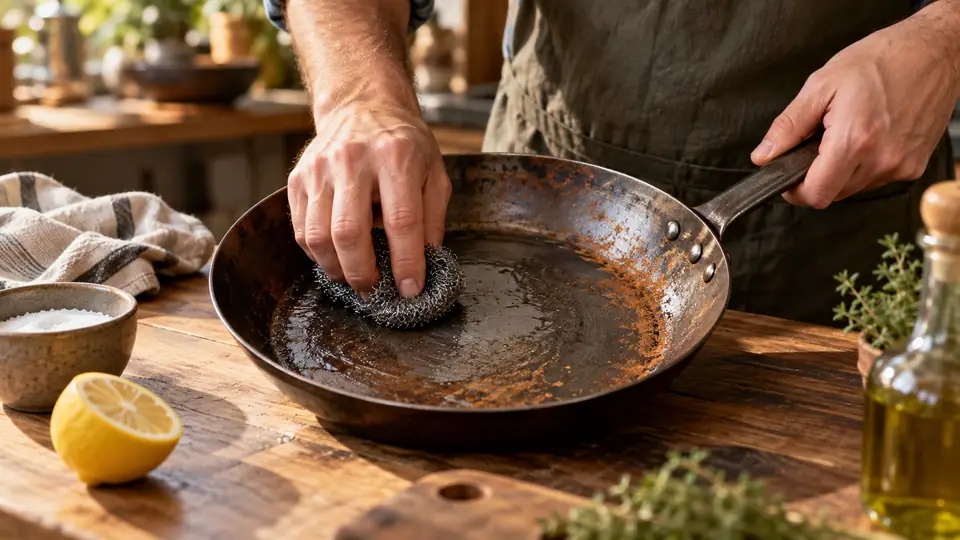
If rust is heavier, you may need repeated gentle treatment rather than aggressive scrubbing. Steel wool can work, but fine abrasives should be used carefully because they can scratch the finish. Coarse abrasives can also alter the appearance of the blade more than expected.
If rust has spread into pits or around the edge, more careful restoration may be necessary. At that point, preserving the geometry of the edge and finish becomes more important than simply scrubbing harder.
What Not to Do
- Do not leave rust in place hoping it will stop on its own
- Do not use the dishwasher as a cleaning shortcut
- Do not use harsh power tools unless you know exactly how to protect the blade geometry
- Do not scrape rust off with random metal objects that can gouge the steel
Sharpening and Edge Maintenance
Part of learning how to care for a carbon steel knife is understanding that edge care and corrosion care go together. A rust-free knife that is left dull is still not performing well. Carbon steel is popular partly because it sharpens efficiently, so routine touch-ups are worth doing.
How Often Should You Sharpen?
That depends on use, cutting technique, board material, and steel hardness. A home cook using one knife a few times a week may only need occasional sharpening with regular touch-ups. Someone doing daily prep may need edge maintenance more often.
Rather than following a rigid schedule, pay attention to performance. If the knife starts crushing herbs, slipping on tomato skin, or requiring more pressure, it is time for maintenance.
Honing vs Sharpening
These terms are often mixed together, but they are not identical. Honing realigns or lightly refines the edge. Sharpening removes metal to create a fresh edge bevel. Some carbon steel knives do well with light stropping or fine stone touch-ups between full sharpening sessions.
Traditional grooved honing rods can be too aggressive for some thinner or harder blades. Smooth ceramic rods, fine stones, or strops are often safer choices depending on the knife.
Best Practices for Sharpening
- Use a consistent angle
- Start with the least aggressive abrasive that will do the job
- Deburr carefully for a cleaner edge
- Dry the knife completely after water stone use
- Keep stones flat and clean for better results
If you are choosing a new blade and want context on styles and steel types, Japanese carbon steel knives are a useful category to understand because they often combine thin geometry with reactive high-carbon steels that benefit from careful maintenance.
Storage Tips That Prevent Problems
Storage affects both safety and blade condition. A well-sharpened knife can lose its edge quickly if it knocks against metal utensils in a drawer. Moisture trapped in a poorly ventilated block or sheath can also cause rust.
Good Storage Options
- Magnetic strip: keeps the blade dry and accessible if the magnet is not overly harsh and the knife is placed gently
- Wooden saya or blade guard: protects the edge during storage or transport
- Knife block: works if the slots are clean and dry inside
- Drawer insert with edge protection: acceptable if each knife is separated and kept dry
Storage Habits to Avoid
- Loose storage in a junk drawer
- Putting the knife away while still damp
- Long-term storage in moisture-retaining leather
- Stacking the knife under heavy utensils or cookware
Care by Handle Type
Not every carbon steel knife has the same handle material, and care should reflect that. The blade gets most of the attention, but handles can deteriorate too.
Wood Handles
Wood looks great and feels warm in hand, but it dislikes prolonged moisture. Dry it well after washing, and occasionally use a suitable food-safe handle oil or wax if the wood starts to look dry. Avoid soaking entirely.
Synthetic Handles
Synthetic materials are usually easier to maintain. They still should not be soaked or dishwashed, but they tolerate routine hand washing well. Pay attention to rivets and seams where moisture can linger.
Traditional Wa-Style Handles
These lightweight handles are common on Japanese knives. They are comfortable and practical, but the junction between handle and blade can collect moisture. Dry that area carefully after washing.
Common Mistakes That Damage Carbon Steel Knives
Most carbon steel knife problems are predictable. Avoiding a few bad habits is easier than fixing the results later.
Putting It in the Dishwasher
Dishwashers combine heat, water, detergent, and impact from other utensils. That is bad for the blade, edge, and often the handle. Carbon steel and dishwashers do not mix.
Leaving It Wet After Cutting Fruit or Onions
Reactive foods can stain the steel quickly. That is not always harmful, but if moisture remains for too long, rust can start. A quick rinse or wipe prevents most of these issues.
Storing It Oiled Like a Frying Pan
A carbon steel knife may benefit from a thin coat of oil, but it does not need a sticky, heavy layer. Too much oil attracts dust, feels messy, and can gum up a sheath or storage area.
Using the Wrong Board
Even a well-maintained blade goes dull fast on glass or stone. If a knife seems to lose sharpness unusually quickly, the cutting surface is often part of the problem.
Ignoring Tiny Rust Spots
Light rust is easier to remove than established corrosion. Small orange dots should be treated as an early warning, not a cosmetic issue to postpone.
Simple Maintenance Schedule
| Task | How Often | Why It Matters |
|---|---|---|
| Hand wash and dry | After every use | Prevents rust, staining buildup, and residue |
| Wipe during acidic prep | As needed | Reduces reactivity and spotting |
| Light oil coat | Before longer storage or in humid climates | Adds corrosion protection |
| Inspect for rust | Weekly or during cleaning | Catches corrosion early |
| Touch up edge | As performance drops | Keeps cutting safe and efficient |
| Full sharpening | Periodically based on use | Restores cutting ability and edge geometry |
Frequently Asked Questions
Can a carbon steel knife rust in one day?
Yes, it can. In a humid environment or after contact with acidic foods, a carbon steel knife can show orange spots very quickly if left wet or dirty. Fast drying is the best prevention.
Is patina bad on a carbon steel knife?
No. Patina is usually a normal reaction layer that forms with use. It often helps reduce further reactivity. Rust is the problem, not patina.
Do I need to oil my carbon steel knife after every use?
Usually not. If you use the knife regularly and store it in a dry kitchen, clean and thorough drying are often enough. A very light coat of food-safe mineral oil is more useful for long-term storage or humid conditions.
Can I cut acidic foods with a carbon steel knife?
Yes, but clean or wipe the blade sooner afterward. Tomatoes, citrus, onions, and apples can accelerate discoloration and increase reactivity. Short contact is fine. Long exposure is what causes problems.
What is the best way to remove light rust from a carbon steel knife?
A rust eraser, baking soda paste, or gentle metal polish usually works well for light surface rust. Remove it with light pressure, then wash, dry, and protect the blade afterward.
Should I force a patina on a new carbon steel knife?
It is optional, not necessary. A natural patina from regular use is the simpler approach for most people. Forced patinas are mostly about appearance and early reactivity control.
Final Thoughts
How to care for a carbon steel knife is less about special products and more about repeatable habits. Wash it by hand, dry it immediately, keep it out of the sink and dishwasher, and store it somewhere clean and dry. Add a light coat of food-safe oil when storage conditions call for it, and deal with rust spots early instead of waiting.
Carbon steel rewards attention with sharp performance and easy edge maintenance, but it does not tolerate neglect well. Once the routine becomes automatic, care feels simple rather than demanding. A few seconds after each use is usually enough to keep a carbon steel knife clean, sharp, and ready for the next prep session.






Leave a Reply