
Olive oil comes up often in carbon steel discussions because it is easy to find, familiar to most home cooks, and perfectly safe to heat for many everyday tasks. The real question is not whether olive oil can touch carbon steel. It is whether it performs well as a seasoning oil and whether it leaves the kind of finish most cooks want on a pan.
For carbon steel, seasoning depends on forming a thin, durable layer of polymerized oil on the surface. That process is influenced by heat, oil thickness, and how the oil behaves as it cooks onto the metal. Olive oil can work in some cases, but it is not always the easiest choice for building a stable seasoning layer.
Quick Answer
Yes, you can use olive oil to season carbon steel, but it is usually not the most practical option. Olive oil can polymerize and create a protective coating, especially if applied in very thin layers and heated properly. The main drawback is that olive oil has a relatively low smoke point and can be less forgiving than oils commonly used for seasoning, which may lead to a sticky or uneven finish if the pan is overheated or the oil is applied too heavily.
If olive oil is what you have, it can be used for light seasoning or maintaining an already seasoned pan. For building a stronger initial layer, many cooks prefer oils that handle seasoning heat more consistently. The key is to use a very thin coat, heat the pan long enough for the oil to bond, and avoid leaving excess oil behind.
How Olive Oil Works on Carbon Steel
Seasoning is not just about putting oil on a pan. The oil needs to undergo polymerization, which means it changes under heat and forms a hard, bonded layer on the metal. That layer helps protect carbon steel from moisture and improves food release over time.
Olive oil can polymerize, so in that sense it is suitable for seasoning. The problem is that olive oil contains more compounds than some neutral oils, and its behavior can be less predictable at seasoning temperatures. Extra virgin olive oil, in particular, may smoke sooner and can leave a softer finish if the application is too thick.
For day-to-day cooking, olive oil is perfectly normal on carbon steel. For seasoning, it works best as a backup option or for maintenance rather than as the first choice in a dedicated seasoning process.
Why Some Cooks Use Olive Oil Anyway
There are a few practical reasons people try olive oil on carbon steel. It is already in the kitchen, it is easy to measure, and it is commonly used for sautéing and pan-frying. If you are touching up a pan after normal cooking, olive oil may be the most convenient oil available.
Some cooks also prefer to use the same oil they routinely cook with, especially when they want a seasoning layer built from familiar ingredients. That approach can work, but it usually requires patience and careful application. A thin, even layer matters more than the specific bottle on the counter.
For a pan that already has a decent base layer, olive oil is often acceptable for maintenance seasoning after use. The issue is less about whether it can work and more about how consistent the result is compared with other seasoning oils.
Best Oils for Seasoning Compared with Olive Oil
Different oils behave differently under heat. A good seasoning oil generally spreads thinly, bonds well to metal, and leaves a hard finish without turning gummy. Olive oil can do some of that, but it is often less predictable than more neutral oils.
| Oil | Seasoning Behavior | Smoke Point | Practical Notes |
|---|---|---|---|
| Olive oil | Can polymerize, but may be less consistent | Moderate, varies by type | Fine for maintenance or light seasoning if applied very thinly |
| Canola oil | Commonly used for even seasoning | Higher | Neutral flavor and generally easy to work with |
| Grapeseed oil | Often forms a hard seasoning layer | Higher | Popular for initial seasoning because it handles heat well |
| Flaxseed oil | Can create a hard layer, but can be temperamental | Low to moderate | Requires careful technique and is more likely to flake if overused |
| Avocado oil | Reliable for high-heat seasoning | High | Often chosen for its heat tolerance |
The table does not mean olive oil is wrong. It means olive oil is usually not the easiest path if your goal is a durable, even seasoning layer. If you already have olive oil in the kitchen, it can still serve the job with a careful approach.
Types of Olive Oil and Their Effect on Seasoning
Not all olive oil behaves the same way. Extra virgin olive oil has more flavor compounds and tends to smoke earlier than refined olive oil. That can be useful for cooking, but it is not always ideal for seasoning a carbon steel pan.
Extra Virgin Olive Oil
Extra virgin olive oil is the most common bottle people reach for, but it is often the least forgiving for seasoning. It can work if you use a very small amount and control the heat carefully. The flavor compounds are not a major advantage for seasoning, since the goal is a thin protective layer rather than taste.
Refined or Light Olive Oil
Refined olive oil usually has a higher smoke point and a cleaner flavor. It is generally more practical than extra virgin olive oil for seasoning carbon steel. Even then, the same rule applies, use a tiny amount and wipe away as much as possible before heating.
How to Season Carbon Steel with Olive Oil
If olive oil is what you want to use, the process matters more than the brand. The biggest mistake is leaving too much oil on the surface. A thick coat does not make a better seasoning layer. It usually creates sticky spots or uneven patches.
Step 1: Clean the Pan Thoroughly
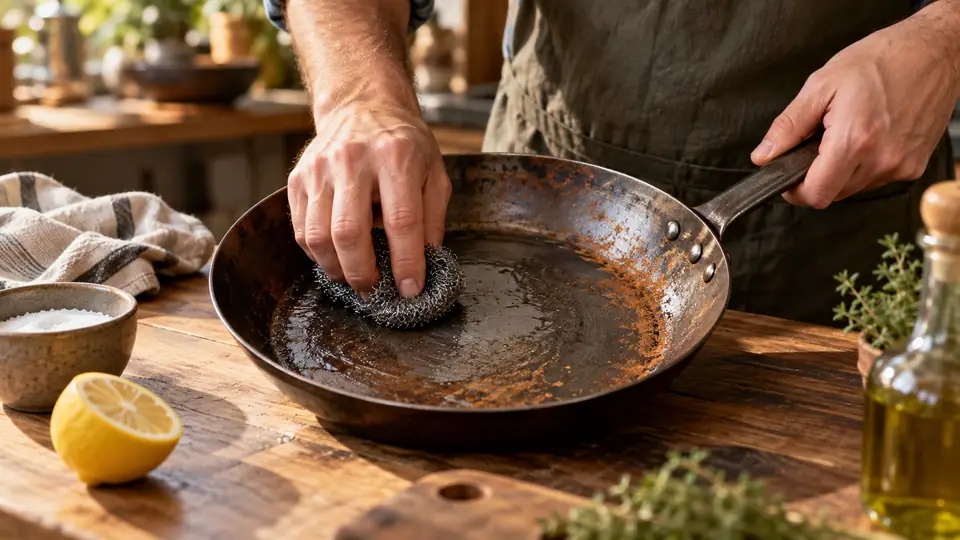
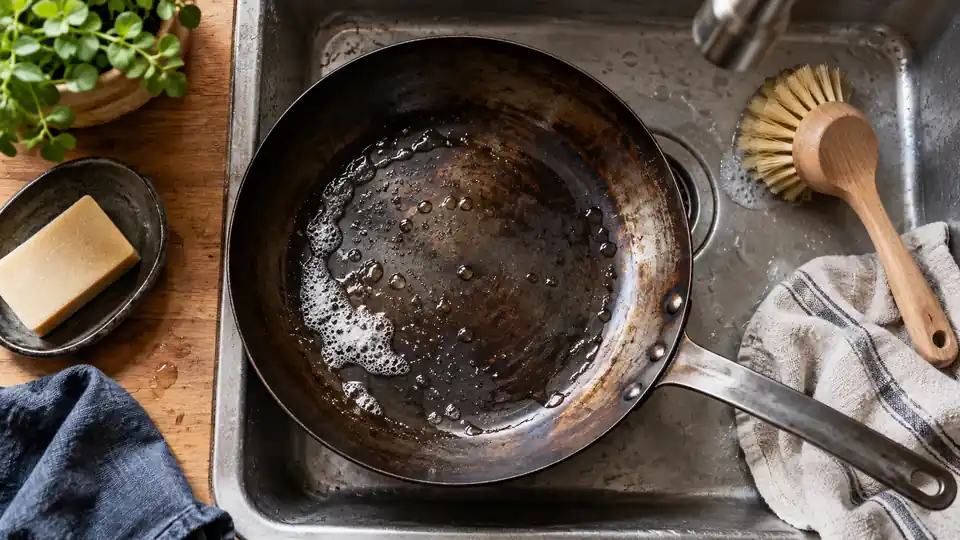
Start with a clean carbon steel pan. Remove factory residue, dust, or old food buildup with hot water and a small amount of soap if needed. Dry the pan completely right away, since carbon steel can rust quickly when moisture is left behind.
Step 2: Heat the Pan Slightly
Warm the pan over low heat for a minute or two. A lightly warm surface helps the oil spread into a thinner film. You do not want the pan blazing hot at this stage, because the oil can smoke too quickly and become difficult to wipe evenly.
Step 3: Apply a Very Thin Layer of Olive Oil
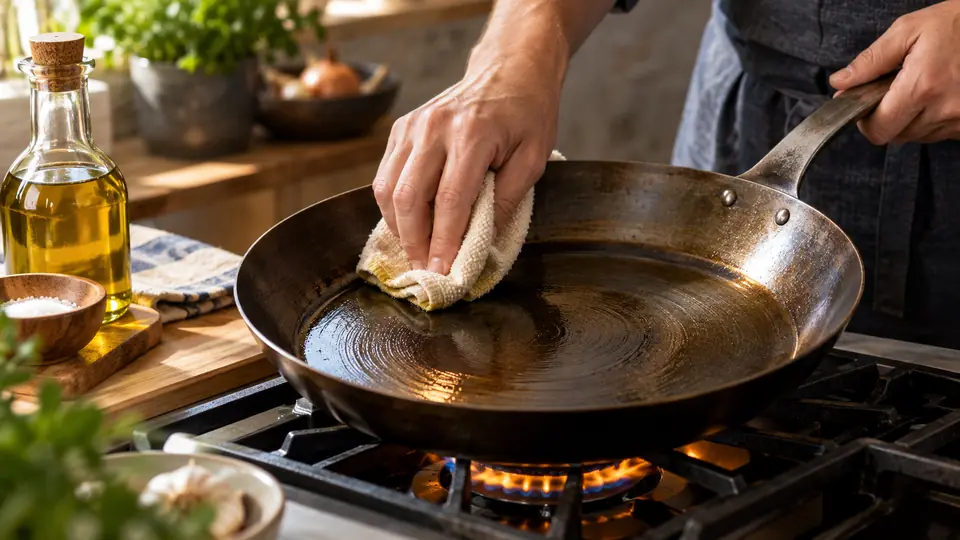
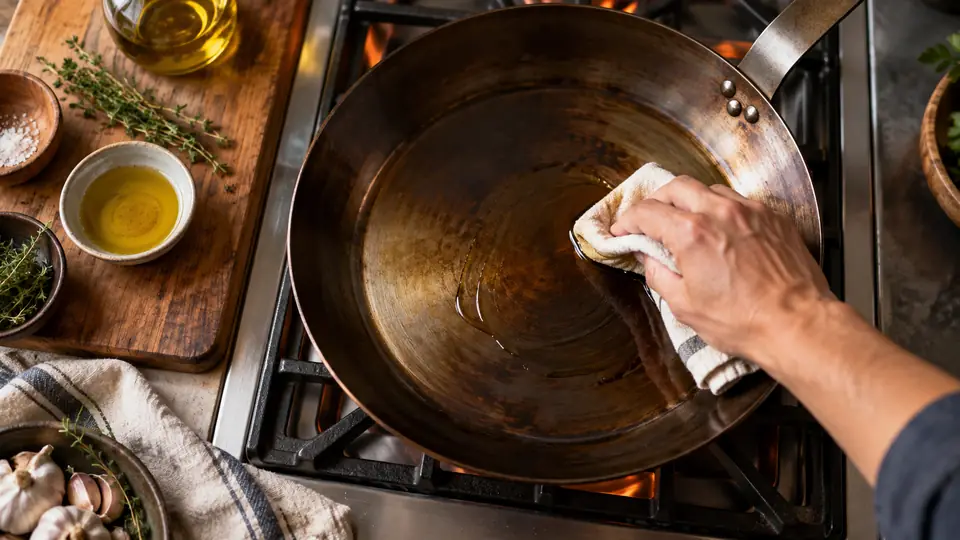
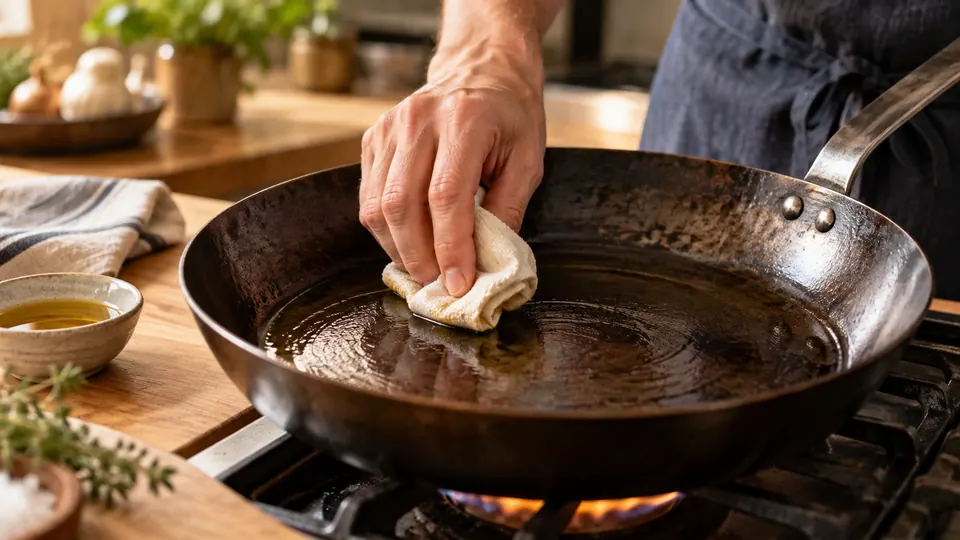
Add a few drops of olive oil and spread them over the entire surface, including the sides if needed. Then wipe again with a clean towel so it looks almost dry. The pan should appear lightly oiled, not glossy or wet.
Step 4: Heat the Pan Until the Oil Bonds
Place the pan in a preheated oven or over controlled stovetop heat until the oil begins to bond to the metal. The exact time depends on the pan and heat source, but the goal is to let the oil smoke lightly and then settle into a dry film. Good ventilation is important here.
Step 5: Cool and Repeat if Needed
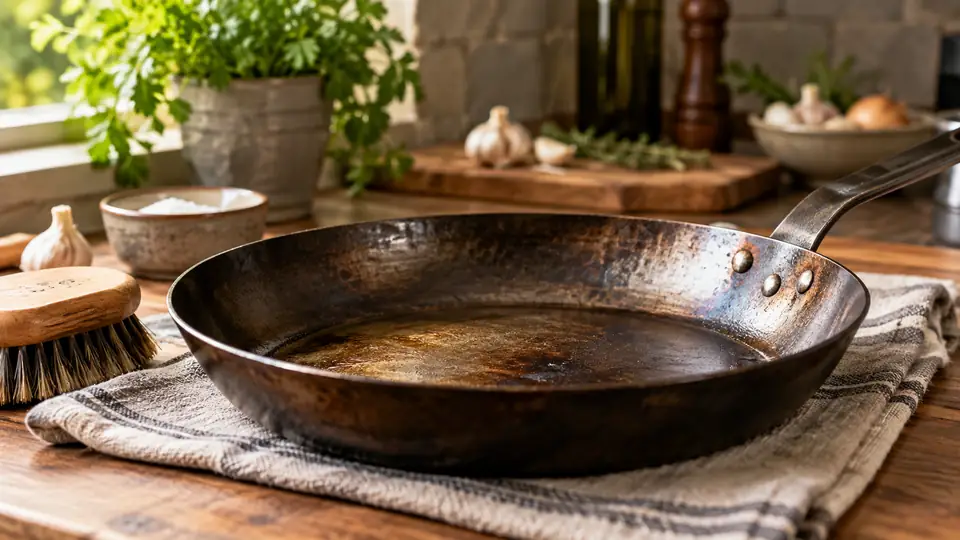
Let the pan cool fully, then inspect the surface. If it looks dull and even, you have a decent base layer. If it looks patchy or tacky, the oil was probably too heavy or the heat was uneven. Several thin rounds usually work better than one thick round.
Common Mistakes When Using Olive Oil for Seasoning
Most seasoning problems with olive oil come from technique, not from the oil alone. The two most common issues are applying too much oil and using heat that is too aggressive.
- Leaving excess oil on the pan: This usually causes a sticky surface instead of a hard seasoning layer.
- Overheating too quickly: Olive oil may smoke early, which can lead to uneven bonding.
- Trying to build too much seasoning at once: Thin layers work better than a heavy coat.
- Skipping the drying step: Any remaining moisture can interfere with seasoning and cause rust later.
- Expecting instant nonstick performance: Seasoning improves over time with repeated use.
If a pan feels sticky after seasoning with olive oil, it usually needs to be heated a bit longer or stripped lightly and started again with thinner applications. That problem is common and usually fixable.
Can Olive Oil Be Used for Regular Cooking on Carbon Steel?
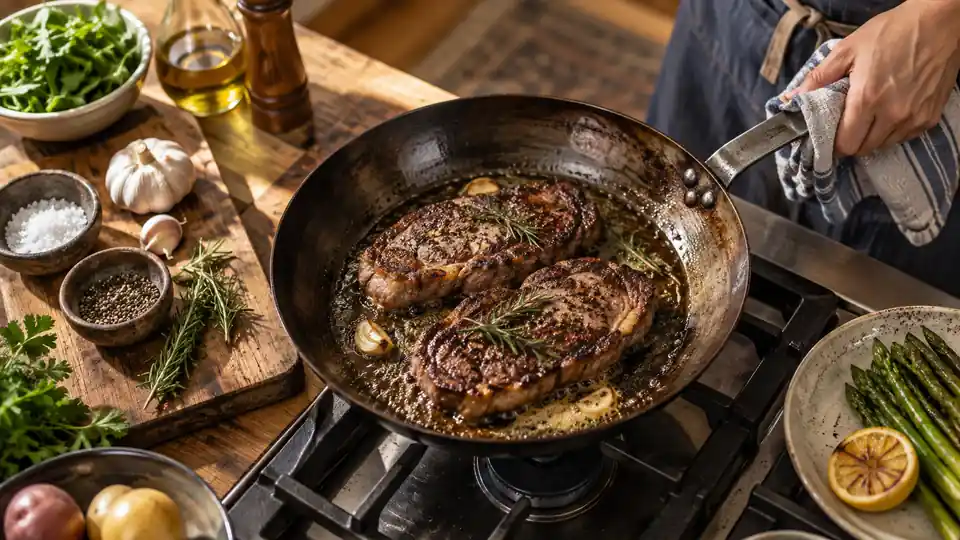
Yes. In fact, olive oil is a normal cooking oil for carbon steel in many kitchens. It works well for sautéing vegetables, browning proteins, and finishing dishes at moderate heat. The pan’s seasoning helps protect the surface while the oil helps with cooking and flavor.
The main distinction is between using olive oil for cooking and using olive oil to season. Cooking with it is straightforward. Seasoning with it asks more of the oil, because the oil must transform into a durable coating rather than simply lubricate the food.
For routine cooking, a carbon steel pan handles olive oil just fine. For maintenance seasoning, it can still be useful after cooking, especially if the pan is already in good shape.
When Olive Oil Makes Sense
Olive oil is a reasonable choice in a few situations. It makes sense if you want to touch up a well-seasoned pan after cooking, if you only season occasionally, or if you do not keep other oils on hand. It can also be useful for low-stress maintenance on a skillet that already has a stable surface.
It is less ideal when you are starting with a bare pan and want to build seasoning from scratch as efficiently as possible. In that case, a more heat-tolerant oil usually makes the process simpler and more reliable.
When to Choose a Different Oil
If your goal is to season a carbon steel pan from bare metal, a neutral, high-smoke-point oil is often easier to manage. These oils tend to spread thinly, handle heat more predictably, and leave less room for a sticky finish.
You may also want a different oil if you cook at very high heat often. A wok or skillet that sees intense heat benefits from seasoning layers that are built cleanly and consistently. That is one reason many cooks prefer a more neutral oil during the initial seasoning process.
Maintaining Carbon Steel Seasoning with Olive Oil
Once a carbon steel pan already has a decent seasoning layer, olive oil can help maintain it. After washing and drying the pan, you can apply a very small amount of oil and heat the pan briefly to protect the surface from moisture. This works best as a light maintenance step, not as a heavy coating.
A practical routine is to wash the pan, dry it fully, warm it briefly, and wipe a tiny amount of oil over the cooking surface. The goal is to leave behind a barely visible protective film. If the pan looks greasy, too much oil was used.
Pros and Cons of Using Olive Oil to Season Carbon Steel
| Pros | Cons |
|---|---|
| Easy to find in most kitchens | Less forgiving than some other seasoning oils |
| Can polymerize and protect the pan | May smoke early, especially extra virgin olive oil |
| Useful for light maintenance seasoning | Too much oil can leave a sticky surface |
| Works fine for regular cooking | Not the simplest option for a first seasoning layer |
Who Should Use Olive Oil and Who Should Skip It
Olive oil is a practical option for cooks who already have a seasoned pan, want a simple maintenance routine, or prefer to use what is already in the pantry. It is also fine for people who are comfortable paying attention to heat and oil thickness during seasoning.
It is not the easiest choice for someone trying to season a bare carbon steel pan for the first time. If you are still learning how much oil to use, a more forgiving oil may reduce frustration. The problem is rarely that olive oil cannot work. It is that the margin for error is narrower than with some alternatives.
Frequently Asked Questions
Can you season a carbon steel pan with extra virgin olive oil?
Yes, but it is usually not the easiest option. Extra virgin olive oil can work if applied in a very thin layer and heated carefully, but it may smoke earlier and leave a less predictable finish than refined oils.
Does olive oil make carbon steel sticky?
It can if too much is left on the surface or if the pan is not heated long enough. A sticky finish usually means the oil layer was too thick. Wiping the pan almost dry before heating helps prevent that problem.
Is olive oil safe to use on carbon steel cookware?
Yes. Olive oil is safe for both cooking and seasoning carbon steel, as long as it is used appropriately. The main concern is performance, not safety.
How many layers should I season with olive oil?
Several very thin layers usually work better than one heavy application. If you are using olive oil, keeping each coat thin gives you a better chance of building a smooth, even surface.
Can I cook with olive oil after seasoning with it?
Yes. Once the seasoning layer is formed and the pan is fully cooled, you can cook with olive oil normally. In fact, olive oil is common for everyday carbon steel cooking.
What should I do if olive oil seasoning feels tacky?
Heat the pan again and see whether the surface dries out. If it remains tacky, the layer was probably too thick. In that case, scrub lightly and re-season with a thinner coat.
Final Thoughts
Can you use olive oil to season carbon steel? Yes, you can, but it is usually better for light maintenance than for building a first seasoning layer. Olive oil can polymerize and protect the pan, yet it is less forgiving than some other oils when the coating is too thick or the heat is not controlled well.
If olive oil is what you have, it is still usable. The key is restraint. Thin layers, careful heating, and patience matter far more than the specific oil in the bottle. For cooks who want a smoother seasoning process from the start, a more neutral oil is often easier to manage. For regular cooking and occasional touch-ups, olive oil fits comfortably into carbon steel care.

Leave a Reply