

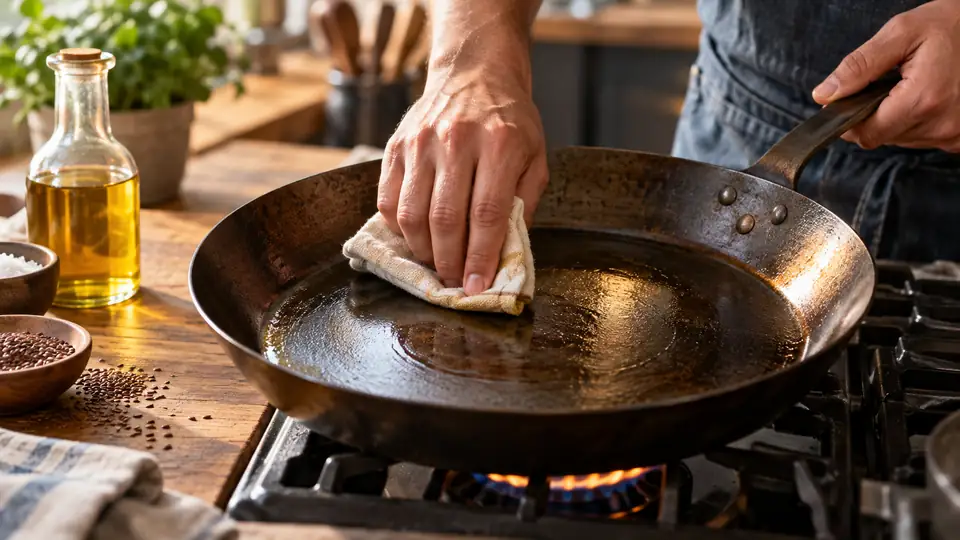
Seasoning carbon steel sounds simple until you start comparing oils. Flaxseed oil is often mentioned because it can form a hard-looking layer, but that does not automatically make it the most practical choice for everyday carbon steel cookware. A pan that seasons easily in the oven can still fail later if the coating turns brittle, flakes, or wears unevenly during normal cooking.
That is why the question can you use flaxseed oil on carbon steel matters more than it first appears. The answer is not just about whether the oil works once. It is about how well that seasoning holds up after searing, frying, washing, and repeated reheating. Carbon steel performs best when its seasoning is thin, durable, and easy to maintain, not when it looks perfect for one cycle and becomes frustrating later.
Flaxseed oil can be used on carbon steel, but it has a mixed reputation among experienced cooks for long-term reliability. Understanding why helps you avoid a seasoning layer that looks good at first but causes extra maintenance later.
Quick Answer
Yes, you can use flaxseed oil on carbon steel, but it is usually not the most forgiving option. Flaxseed oil polymerizes quickly, which means it can create a hard seasoning layer when heated properly. That is the main reason it became popular for seasoning pans.
The drawback is that flaxseed oil can also produce a brittle coating, especially if it is applied too heavily or baked in too many thick layers. On carbon steel, that can lead to chipping, flaking, or uneven patches once the pan is used for real cooking. A seasoning layer needs to handle heat changes, metal expansion, utensils, food acids, and regular cleaning. Flaxseed oil does not always handle that as well as more neutral oils.
If you already have flaxseed oil, you can use it in a very thin layer and with careful technique. Still, many cooks prefer oils such as grapeseed, canola, sunflower, or refined avocado oil because they tend to build a more practical, easier-to-maintain seasoning over time. For most people, flaxseed oil is acceptable, but not ideal.
Why the Choice of Oil Matters for Carbon Steel
Carbon steel seasoning is not just burnt oil sitting on the surface. When oil is heated past a certain point, it begins to break down and bond to the metal in a process often described as polymerization. That bonded layer helps protect the pan from rust and improves release during cooking.
The problem is that not all oils behave the same way during this process. Some create a coating that is flexible and easy to refresh. Others create a harder film that can become fragile if the layer is too thick or stressed by repeated cooking.
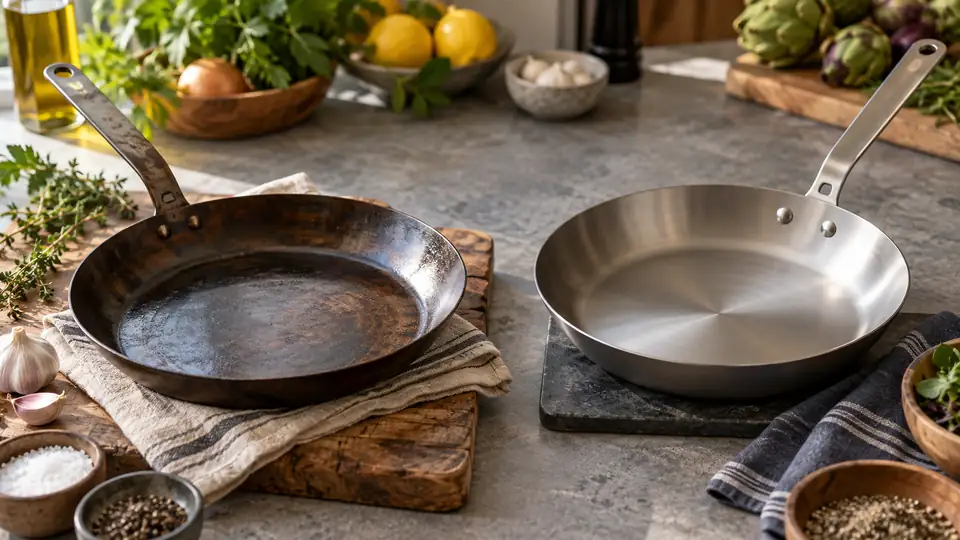
Carbon steel also behaves differently from cast iron in a few practical ways. It is typically smoother and thinner, and it reacts more quickly to changes in burner heat. That responsiveness is one of its strengths, but it also means the seasoning layer experiences fast heating and cooling cycles. An oil that forms a brittle coating may struggle under those conditions.
What Makes Flaxseed Oil Appealing for Seasoning
Flaxseed oil gained popularity because it is a drying oil. Drying oils harden more readily through oxidation and heat exposure than many standard cooking oils. On paper, that sounds useful for seasoning cookware.
In practice, flaxseed oil often creates a dark, even-looking finish after several oven cycles. For a freshly stripped or newly purchased pan, that can be visually impressive. The surface may appear smooth, dry, and well sealed right after seasoning.
That early appearance is what convinces many people that flaxseed oil is the superior option. It can absolutely form seasoning. The issue is what happens after eggs, steaks, onions, pan sauces, or regular stovetop use start testing that layer.
Can You Use Flaxseed Oil on Carbon Steel Successfully?
Yes, but success depends heavily on how it is used and what you expect from the result. If your goal is a temporary initial seasoning coat, flaxseed oil can work. If your goal is the most durable, low-fuss seasoning for daily cooking, it is often not the first choice.
Some cooks use flaxseed oil for the first coat or two, then build the rest of the seasoning through actual cooking with other fats. That approach can reduce some of the brittleness problems, though it does not guarantee them away.
Others avoid flaxseed oil entirely because they have seen it chip or flake after a few uses. Both experiences can be true. The oil is usable, but it is less forgiving than many alternatives.
How Flaxseed Oil Behaves on Carbon Steel
It Polymerizes Quickly
Flaxseed oil forms a coating readily because of its fatty acid profile. That is the scientific reason it is often recommended for seasoning. With the right heat and a very thin application, it can bond to bare steel.
It Can Create a Hard but Brittle Layer
Hard is not always the same as durable. A very hard seasoning layer may look excellent right after oven seasoning, but brittleness becomes a problem once the pan is used, scrubbed, or heated repeatedly. Carbon steel expands and contracts with cooking, and seasoning has to move with it.
It Punishes Thick Applications
All seasoning oils perform poorly when applied too thickly, but flaxseed oil tends to punish this mistake more obviously. Instead of building a resilient surface, it may leave tacky spots, uneven dark patches, or layers that later crack and peel.
It Often Looks Better Early Than It Performs Later
This is the key distinction. A freshly seasoned flaxseed oil pan can look nearly ideal. Real durability only shows up after cooking and cleaning cycles. That is where many users become disappointed.
Flaxseed Oil vs Other Common Oils for Carbon Steel
| Oil | Seasoning Behavior | Ease of Use | Long-Term Durability | Common Issue |
|---|---|---|---|---|
| Flaxseed oil | Forms a hard coating quickly | Less forgiving | Mixed results | Flaking or brittleness |
| Canola oil | Builds seasoning steadily | Easy | Good | Can get sticky if overapplied |
| Grapeseed oil | Thin, even seasoning | Easy | Good | Needs thin coats for best results |
| Sunflower oil | Reliable general seasoning | Easy | Good | Can smoke heavily during oven seasoning |
| Refined avocado oil | Works well at higher heat | Moderate | Good | Using too much can still cause tackiness |
| Vegetable oil blends | Usually effective and practical | Easy | Good | Results vary by blend |
For many home cooks, the oils that win are not the ones that create the darkest initial finish. They are the ones that build seasoning consistently and recover easily from minor mistakes.
Why Flaxseed Oil Sometimes Fails on Carbon Steel
Too Many Oven Cycles
A common mistake is trying to build a perfect black finish immediately. Repeating multiple flaxseed oil coats in the oven can create stacked layers that seem solid at first but separate later. Seasoning tends to hold better when it is thin and gradually reinforced through cooking.
Applying Too Much Oil
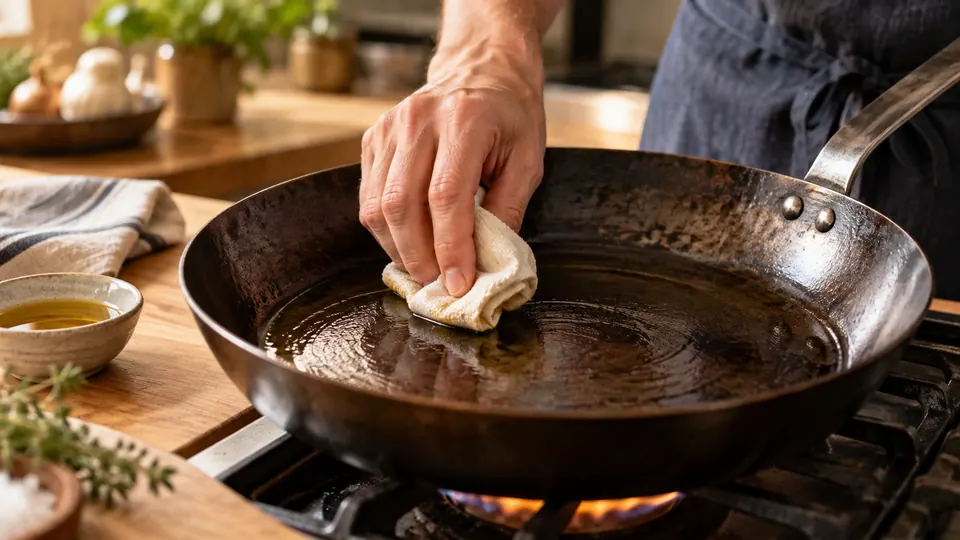
The correct amount of seasoning oil is much less than most people expect. After wiping oil onto the pan, you should wipe again as if trying to remove it all. Any visible wetness is usually too much. Excess oil is one of the main reasons flaxseed oil becomes sticky or patchy.
Using Raw or Low-Heat Seasoning Methods
Flaxseed oil needs sufficient heat to polymerize properly. If the pan never reaches the right temperature range, the coating may stay soft, gummy, or uneven. A weak seasoning layer is then more likely to fail once cooking begins.
Cooking Acidic Foods Too Early
Fresh seasoning is vulnerable, no matter which oil you use. Tomatoes, wine reductions, citrus, and vinegar-heavy sauces can strip a new coating quickly. With flaxseed oil, that can expose weak spots faster and make flaking more obvious.
Expecting Seasoning to Be Permanent
Carbon steel seasoning is always somewhat dynamic. It develops, darkens, thins, and repairs itself over time. Problems start when cooks try to create one flawless, permanent coating instead of a practical working surface.
When Flaxseed Oil May Be Reasonable to Use
- If it is the oil you already have and you want to season a new pan once.
- If you are experienced with very thin oven seasoning coats.
- If you understand that appearance is less important than durability.
- If you plan to maintain the pan through regular cooking afterward.
Used carefully, flaxseed oil is not automatically wrong. It is simply less forgiving than the oils many people already keep in the kitchen.
When It Is Better to Choose Another Oil
- If this is your first carbon steel pan.
- If you want the easiest seasoning process.
- If you tend to overapply oil.
- If you want a seasoning layer that is easier to refresh.
- If you have previously dealt with flaking seasoning.
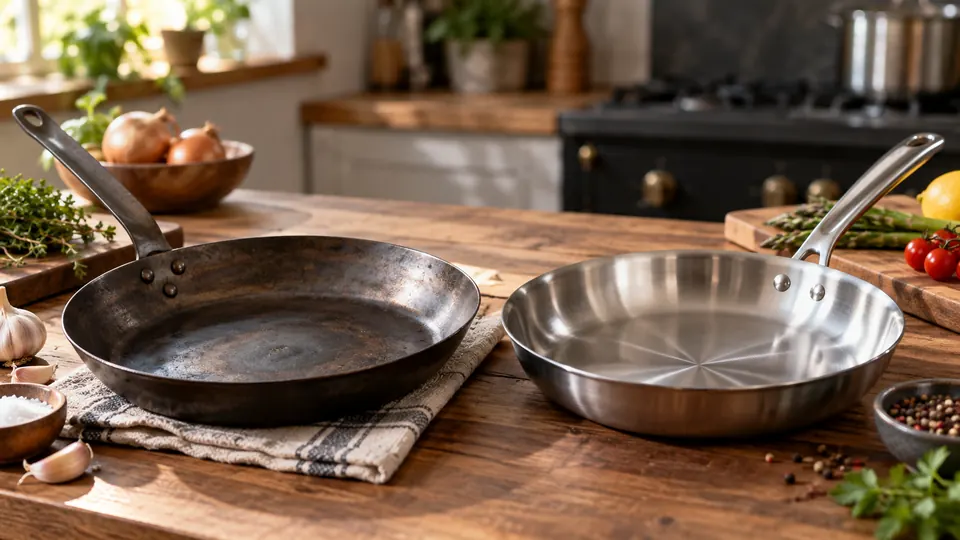
For first-time owners, simpler oils often make the learning curve much easier. If you are still deciding between factory-seasoned and bare pans, pre-seasoned carbon steel pans can reduce some of the early setup work.
How to Use Flaxseed Oil on Carbon Steel If You Decide to Try It
1. Start With a Clean, Dry Pan
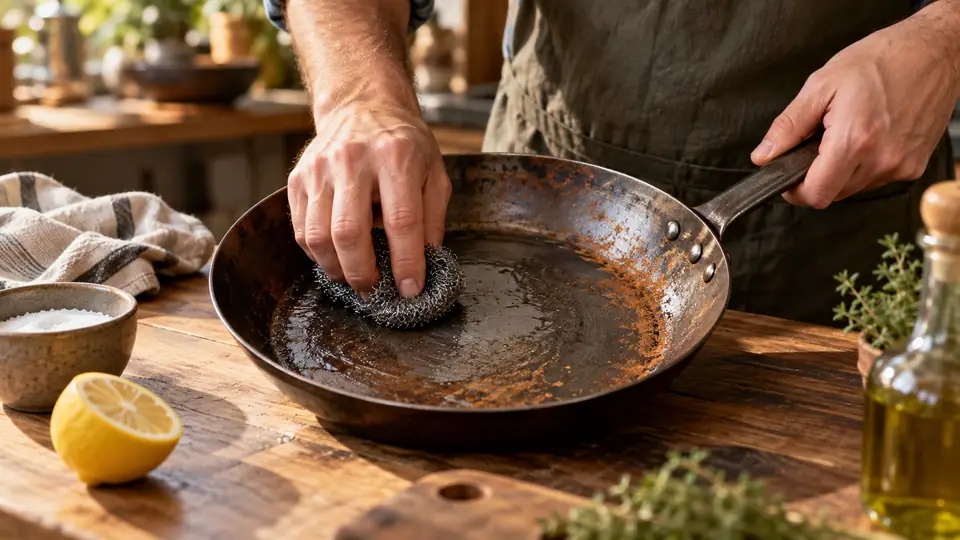
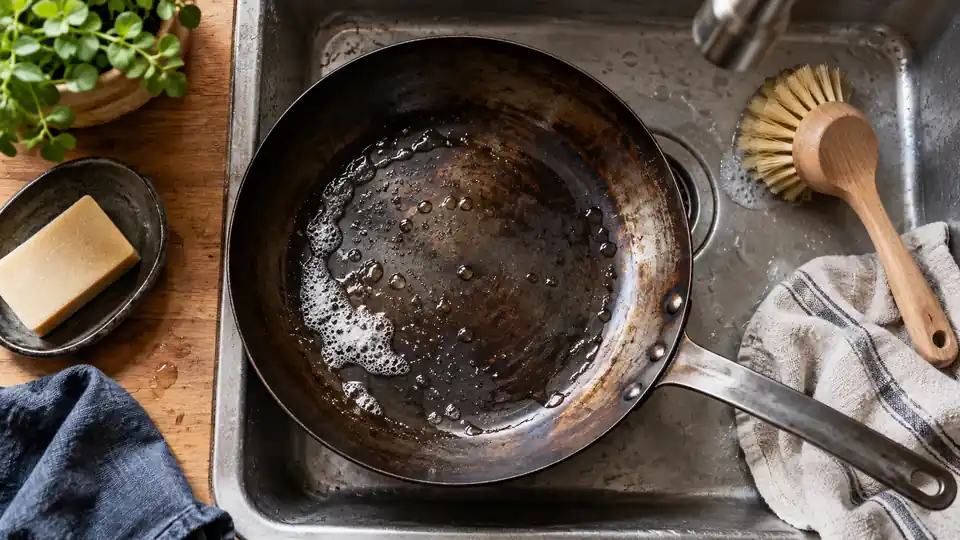
Wash off any factory coating, dust, or residue if the pan is new. If it is an older pan, remove loose rust or flaky seasoning first. Dry the pan completely, including around the handle rivets or welded areas.
2. Warm the Pan Slightly
A gently warmed pan helps the oil spread more evenly. It does not need to be hot. Slight warmth is enough to make wiping easier.
3. Apply a Tiny Amount of Flaxseed Oil
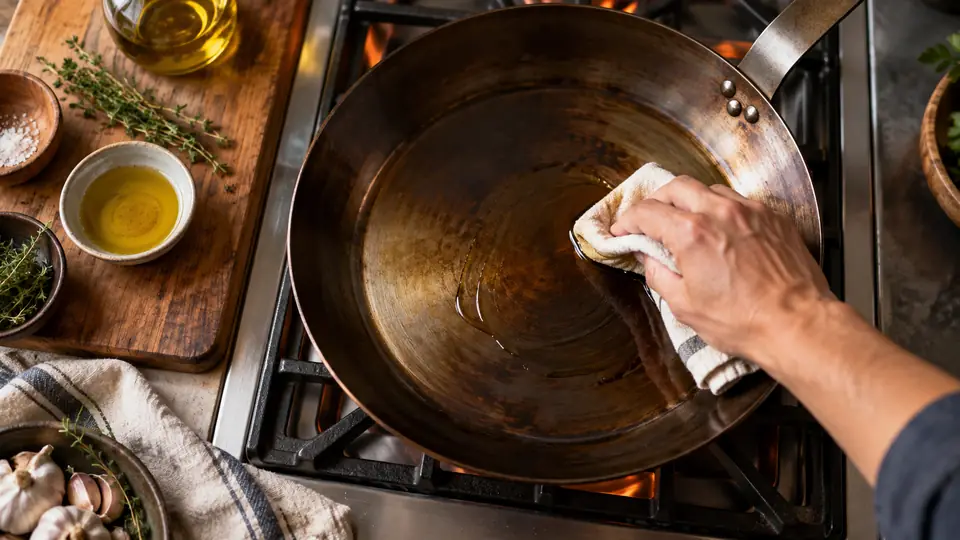
Add only a few drops, then spread them over the entire cooking surface and outer body if desired. After that, wipe aggressively with a clean cloth or paper towel. The pan should look nearly dry, not shiny or wet.
4. Heat the Pan Above the Oil’s Polymerization Range
This is often done in the oven or on the stovetop, depending on the pan shape and handle construction. Maintain enough heat for the oil to fully bond rather than just smoke lightly for a moment.
5. Let It Cool and Inspect the Surface
The finish may look bronze, brown, or patchy after the first coat. That is normal. A first layer does not need to look black or perfectly uniform.
6. Limit the Number of Initial Coats
One to three very thin coats is usually more practical than chasing a deep black appearance. After that, switch to real cooking. Frying onions, cooking potatoes, or sautéing with moderate oil often helps build a more natural working seasoning.
Best Practices After Seasoning With Flaxseed Oil
Cook Foods That Help Build Seasoning
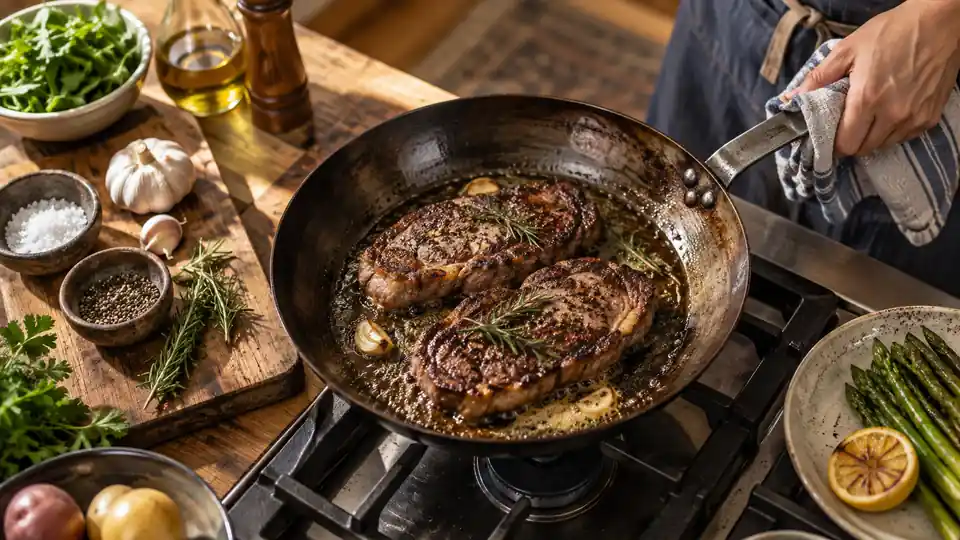
Early cooking sessions should be relatively forgiving. Foods cooked with some fat at medium to medium-high heat usually help. Dry eggs in a barely seasoned pan are more likely to stick and create frustration.
Avoid Harsh Scrubbing at First
You still need to clean the pan, but avoid scraping aggressively at a very new seasoning layer unless food is badly burnt on. Hot water, a soft scrubber, and a light re-oiling afterward are often enough.
Dry the Pan Thoroughly
Carbon steel rusts quickly if moisture is left behind. After washing, heat the pan briefly to evaporate water, then wipe on a trace amount of oil if the surface looks dry.
Do Not Panic Over Uneven Color
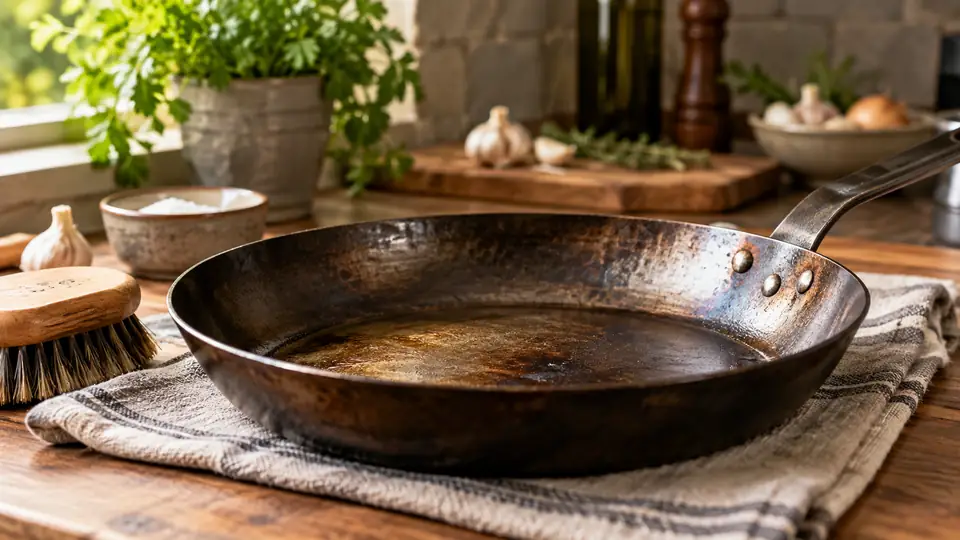
A blotchy look is common, especially in the early weeks. A useful carbon steel pan does not need a uniform cosmetic finish. Performance matters more than appearance.
Common Mistakes With Flaxseed Oil on Carbon Steel
| Mistake | What Happens | How to Fix It |
|---|---|---|
| Using too much oil | Sticky or uneven surface | Heat the pan and wipe thoroughly, or strip and reseason if severe |
| Building too many coats | Thick seasoning that may chip | Use fewer thin coats and let cooking build the rest |
| Insufficient heat | Soft or gummy layer | Reheat properly or remove the failed coat and start over |
| Cooking acidic foods immediately | Seasoning wears away quickly | Cook less reactive foods first and rebuild gradually |
| Expecting a perfect black finish | Unnecessary reseasoning cycles | Focus on cooking performance instead of color |
What to Do If Flaxseed Oil Seasoning Starts Flaking
Flaking usually means the coating is too thick, too brittle, or poorly bonded. Small problem spots do not always require a full strip. If only a few patches are lifting, scrub off loose seasoning, smooth the area, and apply a fresh thin coat.
If the entire pan is chipping or peeling, a reset is often easier. Remove the unstable layer, clean the metal thoroughly, and reseason with very thin coats. Many cooks switch to canola, grapeseed, or another neutral oil at that point because those oils tend to be less temperamental.
It also helps to remember that carbon steel does not need a showroom finish. A pan with some color variation can still cook extremely well. Flaking matters because it affects durability and cleanliness, not because the pan stops being attractive.
Is Flaxseed Oil Better for Oven Seasoning or Stovetop Seasoning?
If you use flaxseed oil at all, oven seasoning is usually the more controlled method. The oven gives a more even heat environment, which can help the oil polymerize across the whole pan. That matters most for skillets with sloped sides, where stovetop heat often concentrates in the center.
Stovetop seasoning can still work, especially on woks or pans that are difficult to fit in an oven. The risk is uneven heating, which can create darker and lighter zones or leave some oil undercured. Since flaxseed oil is already somewhat less forgiving, uneven stovetop heat can make its weaknesses more obvious.
For most home cooks using a standard skillet, careful oven seasoning is the safer route if flaxseed oil is the chosen oil.
Does Flaxseed Oil Make Carbon Steel More Nonstick?
Not necessarily. A pan becomes easier to use over time because of several factors working together:
- A well-bonded seasoning layer
- Proper preheating
- Enough cooking fat
- Good heat control
- Repeated use
Flaxseed oil may create an initial coating, but that does not guarantee superior food release. A smoother, more durable seasoning built gradually through cooking often performs better than a brittle layer that looked darker on day one.
In practical terms, technique usually matters more than the oil choice once the pan has a decent foundation. A properly preheated pan with a modest amount of oil will often outperform a visually perfect pan used with poor heat control.
Does Food Safety Matter With Flaxseed Oil Seasoning?
Fully polymerized seasoning is generally considered safe because the oil has transformed into a bonded coating rather than remaining as liquid oil. The bigger issue is not safety but performance. If the seasoning is undercured, sticky, or flaking into food, it needs attention.
Sticky seasoning usually means the oil was applied too thickly or not heated enough. Flaking means the layer failed structurally. In both cases, the practical fix is to remove the unstable material and reseason correctly.
Who Should Use Flaxseed Oil on Carbon Steel?
Good Candidates
- Cooks who already understand thin-coat seasoning
- People comfortable troubleshooting seasoning problems
- Owners seasoning a pan for appearance and then planning to maintain it carefully
Less Ideal Candidates
- First-time carbon steel owners
- Anyone wanting the easiest, lowest-maintenance setup
- Cooks who prefer to season once and not think much about it again
Carbon steel rewards practical habits more than elaborate first-day seasoning methods. That is why many experienced users favor simple, reliable oils and let repeated cooking do most of the work.
Frequently Asked Questions
Can you use flaxseed oil on carbon steel for the first seasoning?
Yes. Flaxseed oil can be used for an initial seasoning coat on carbon steel. The key is applying an extremely thin layer and heating it properly. Even then, it may be less durable over time than some neutral oils.
Why does flaxseed oil seasoning flake off carbon steel?
Flaking usually happens because the seasoning layer is too thick, too brittle, or not fully bonded to the metal. Multiple heavy coats increase the risk. Flaxseed oil can create a hard coating, but it is also more prone to brittleness than some other options.
Is flaxseed oil better than canola oil for carbon steel?
Not for most people. Flaxseed oil may form a hard-looking initial layer, but canola oil is generally easier to work with and often holds up better in normal cooking. For everyday use, canola is usually the more forgiving choice.
Can you cook with flaxseed oil in a carbon steel pan after seasoning it?
You can, but it is not necessary to keep using flaxseed oil once the pan is seasoned. Many cooks season with one oil and then cook with a range of fats depending on the dish. The important thing is maintaining the pan properly and avoiding moisture buildup.
Should you strip a carbon steel pan if flaxseed seasoning looks patchy?
Not always. Patchy color alone is normal and often harmless. Strip the pan only if the seasoning is sticky, actively flaking, or performing poorly. Cosmetic unevenness is common with carbon steel and does not automatically indicate failure.
Final Thoughts
So, can you use flaxseed oil on carbon steel? Yes, you can. It is capable of creating seasoning, and some cooks get acceptable results with it. The more useful question is whether it is the easiest and most durable option for most people, and that answer is usually no.
Flaxseed oil tends to reward precise technique and punish overapplication. It can leave a hard-looking finish, but that finish is more likely to become brittle than seasoning built with more forgiving oils. For a carbon steel pan that sees regular stovetop use, neutral oils such as canola, grapeseed, sunflower, or refined avocado oil are often simpler to manage and easier to maintain.
If you already used flaxseed oil and the pan is cooking well, there is no reason to panic. Keep the coats thin, cook regularly, avoid letting water sit on the metal, and judge the pan by performance rather than appearance. A working carbon steel pan does not need perfect color. It needs stable seasoning, rust protection, and consistent cooking behavior.

Leave a Reply