
Nonstick pans are easy to like. They release eggs well, require little oil, and make cleanup simple. The tradeoff is that nonstick coatings wear down over time, dislike high heat, and usually need replacement long before the rest of the cookware would wear out. That is why cooks often ask whether carbon steel can do the same jobs without the short lifespan of a coated pan.
Can carbon steel replace nonstick? In some kitchens, yes. In others, only partly. Carbon steel can handle many of the tasks people use nonstick for, especially eggs, pancakes, crepes, fish, and sautéed vegetables, but it works differently. It needs seasoning, careful preheating, and a bit more technique. It also does not behave exactly like a fresh nonstick coating, especially with very delicate foods or rushed weekday cooking.
The real question is not whether carbon steel is identical to nonstick. It is whether the performance, durability, and maintenance tradeoff makes sense for how you cook. Once that distinction is clear, the answer becomes much more practical.
Quick Answer
Carbon steel can replace nonstick for many cooking tasks, but not always perfectly and not for every cook. A well-seasoned carbon steel pan can become quite slick and can cook eggs, omelets, pancakes, fish, and other delicate foods with very good release. It also handles higher heat better than coated nonstick and can last for decades if cared for properly.
That said, carbon steel is not maintenance-free. It needs seasoning, occasional touch-ups, and proper drying to prevent rust. It also requires better heat control and preheating than a nonstick pan. If you want a pan that works with almost no learning curve, a nonstick pan is still easier. If you want a more durable pan that can cover most nonstick jobs while also searing and browning better, carbon steel is a strong alternative.
For most people, the most accurate answer is this: carbon steel can replace nonstick for most everyday cooking, but it will not feel exactly the same. Success depends on your cooking habits, patience, and willingness to learn how the pan behaves.
Comparison Table
| Feature | Carbon Steel | Nonstick |
|---|---|---|
| Food release | Very good when seasoned and used properly | Excellent, especially when new |
| Learning curve | Moderate | Very low |
| High-heat cooking | Excellent | Poor to fair |
| Searing and browning | Very good | Usually weaker |
| Durability | Long-lasting, often decades | Limited lifespan due to coating wear |
| Maintenance | Needs seasoning and rust prevention | Easy day to day, but coating eventually degrades |
| Metal utensil tolerance | Usually yes, with reasonable care | Usually not recommended |
| Dishwasher safety | No | Sometimes marketed as safe, but hand washing is better |
| Acidic foods | Short cooking is usually fine, long simmering is not ideal | Generally fine |
| Best for | Cooks who want versatility and longevity | Cooks who want maximum convenience |
What Carbon Steel Is, and Why It Gets Compared to Nonstick
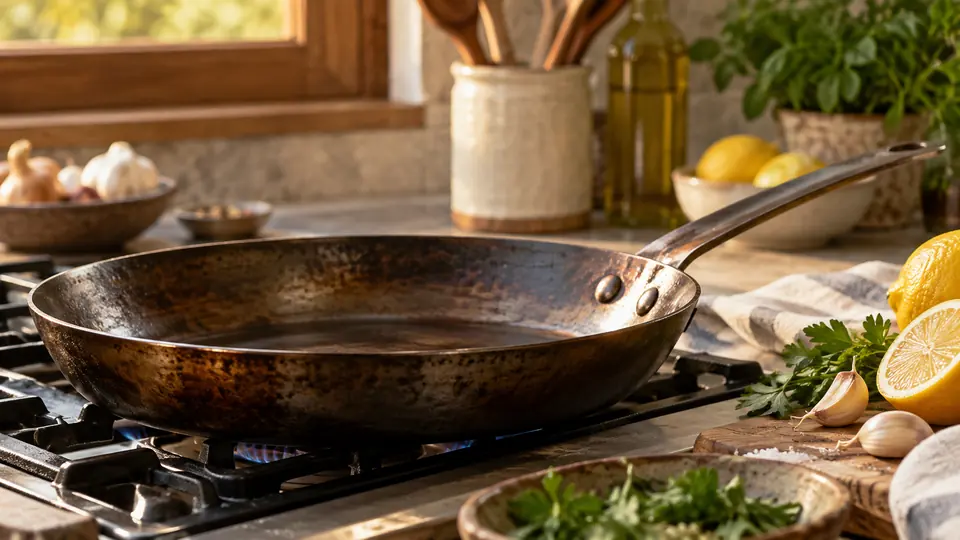
Carbon steel cookware is made from iron and carbon, usually in a thinner and lighter form than cast iron. It starts out relatively smooth, and over time it develops a seasoned layer from oil exposed to heat. That seasoning is not a sprayed-on coating. It is a thin layer of polymerized oil that bonds to the metal surface.
This is why carbon steel is often discussed as a nonstick alternative. As the seasoning builds and stabilizes, the cooking surface becomes more release-friendly. It will not have the same slippery feel as a brand-new coated skillet, but it can become impressively easy to cook on.
Carbon steel also sits in a useful middle ground. It offers some of the toughness and searing ability of cast iron, but it is usually lighter and more responsive. For cooks who are frustrated by the short life of coated pans, that makes it appealing.
What Nonstick Does Better
To judge whether carbon steel can replace nonstick, it helps to be honest about what nonstick pans do extremely well.
Effortless release with little technique
A fresh nonstick pan is very forgiving. You can often cook eggs with minimal oil, less-than-perfect preheating, and fast temperature changes. That convenience matters on busy mornings and for cooks who do not want to think much about pan behavior.
Easy cleanup
Nonstick usually wins on cleanup, especially after sticky foods, sugary sauces, or hurried cooking. A quick wipe or rinse is often enough. Carbon steel can also clean up easily, but only if it was used well and the seasoning is in good shape.
Low-stress cooking for delicate foods
Very delicate omelets, thin fish fillets, and fragile batters are often simpler in nonstick. Carbon steel can do these jobs, but timing, oil amount, and heat level matter more.
No seasoning requirement
Nonstick does not ask you to build or maintain a cooking surface. With carbon steel, that surface is part of ownership. Some cooks enjoy that process. Others do not.
What Carbon Steel Does Better
Carbon steel does not merely imitate nonstick. In several areas, it is the stronger tool.
Higher heat tolerance
Carbon steel is comfortable at temperatures that would be a bad idea for many coated pans. This matters for searing, stir-frying, blistering vegetables, and building strong browning on proteins.
Better browning and crust development
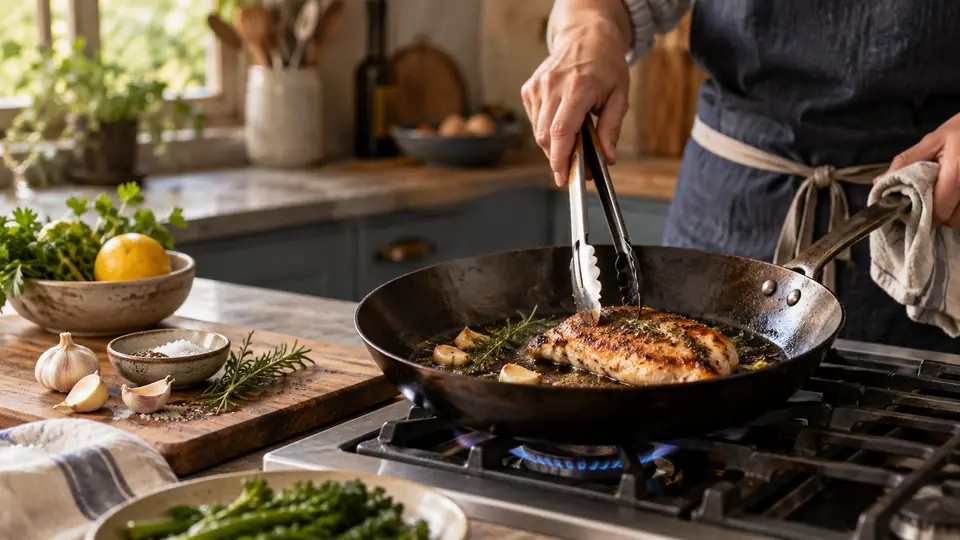
Nonstick coatings tend to limit fond formation and aggressive browning. Carbon steel develops color more easily. That means better seared chicken thighs, better smash burgers, and stronger caramelization on vegetables.
Long-term durability
A carbon steel pan can last decades. If seasoning gets damaged, you repair it. If rust develops, you remove it and reseason. A worn-out nonstick coating usually means the useful life of the pan is close to over.
Versatility
Carbon steel can move from eggs to seared steak to oven finishing without the same limitations found in many nonstick pans. It also tolerates metal utensils better, though reasonable care still helps preserve the surface.
Can Carbon Steel Replace Nonstick for Everyday Cooking?
Can carbon steel replace nonstick in a practical, day-to-day sense? For a large share of households, yes, especially if the pan is used regularly and the cook learns a few habits.
The biggest difference is that carbon steel asks for participation. You do not just put it on the stove and expect perfect release every time, especially early on. You preheat it, add the right amount of fat, and let food release when it is ready. Once that becomes routine, many of the foods people reserve for nonstick become very manageable.
Still, replacement is easier for some cooking styles than others. A cook who sears meat, fries eggs, sautés vegetables, and makes the occasional pancake may find carbon steel covers almost everything. A cook who wants a pan strictly for zero-thought egg cookery and ultra-easy cleanup may still prefer to keep one nonstick skillet around.
How Carbon Steel Performs with Common Nonstick Foods
Eggs
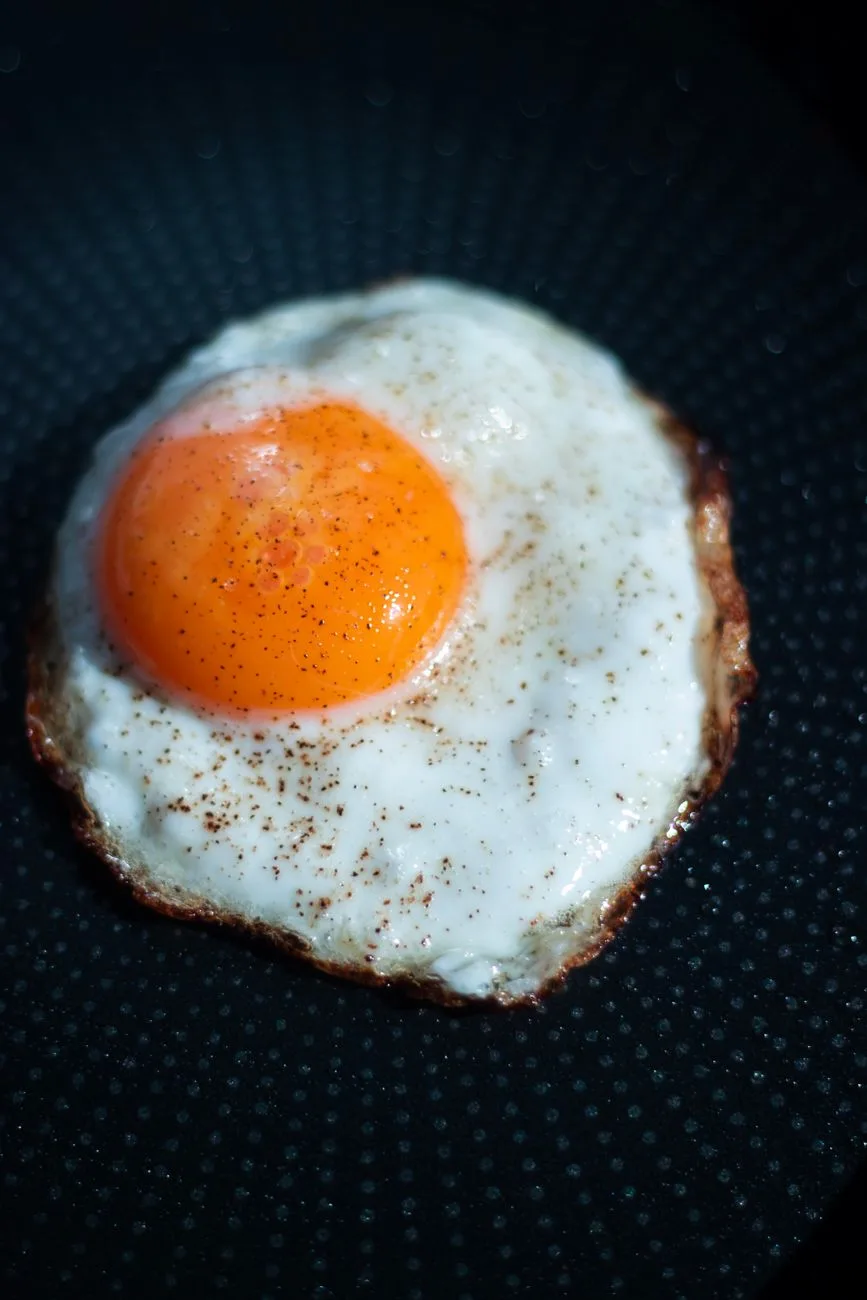
Eggs are the test most people care about. A well-seasoned carbon steel pan can cook fried eggs, scrambled eggs, and omelets very well. The key points are moderate heat, enough preheating, and a little fat. Too little heat often causes sticking. Too much heat can make eggs seize and overcook before they release cleanly.
Many cooks expect carbon steel to behave like a slick coating right away. That is a mistake. New pans often improve noticeably after repeated cooking, especially with foods that help reinforce seasoning.
Pancakes and crepes
Carbon steel can be excellent for pancakes and crepes because it heats evenly enough for browning and develops good release over time. Once dialed in, it often outperforms aging nonstick because the surface can handle more use without coating breakdown.
Fish
Fish is more mixed. Skin-on fillets can do very well in carbon steel if the pan is preheated and the fish is left undisturbed long enough to release naturally. Very delicate fillets, especially lean fish that tend to tear, are often easier in nonstick.
Tofu
Carbon steel handles tofu better than many people expect. With enough oil and proper heat, cubes or slabs can brown nicely and release well. This is an area where carbon steel often surpasses nonstick because it builds stronger crust and color.
Sticky sauces and sugary glazes
These are less ideal. Sweet sauces can scorch or cling more aggressively in carbon steel than in nonstick, especially if heat is too high. If a recipe involves a sticky reduction, a different pan may be easier.
Why Carbon Steel Sometimes Sticks More Than People Expect
When cooks are disappointed by carbon steel, the problem is often not the material itself. It is usually one of a few technique issues.
Not enough preheating
Carbon steel needs time to come up to temperature. If food goes into a cool or unevenly heated pan, sticking becomes more likely. This is especially true for eggs and fish.
Too much heat
There is a common assumption that hotter is always better. For eggs and delicate foods, that often backfires. Medium or medium-low heat is usually more effective once the pan is preheated.
Weak or patchy seasoning
Seasoning does not need to look perfectly black to work well, but a rough, sticky, or uneven surface can interfere with release. Thin, well-bonded layers usually perform better than thick, gummy ones.
Moving food too early
Proteins often release once a crust forms. If you try to flip too soon, sticking gets blamed on the pan when it is really a timing issue.
Using the wrong expectations
Carbon steel is not meant to be a copy of PTFE-style nonstick. It is a seasoned steel surface. It can become very capable, but it rewards technique more than convenience.
Seasoning and the Nonstick-Like Effect
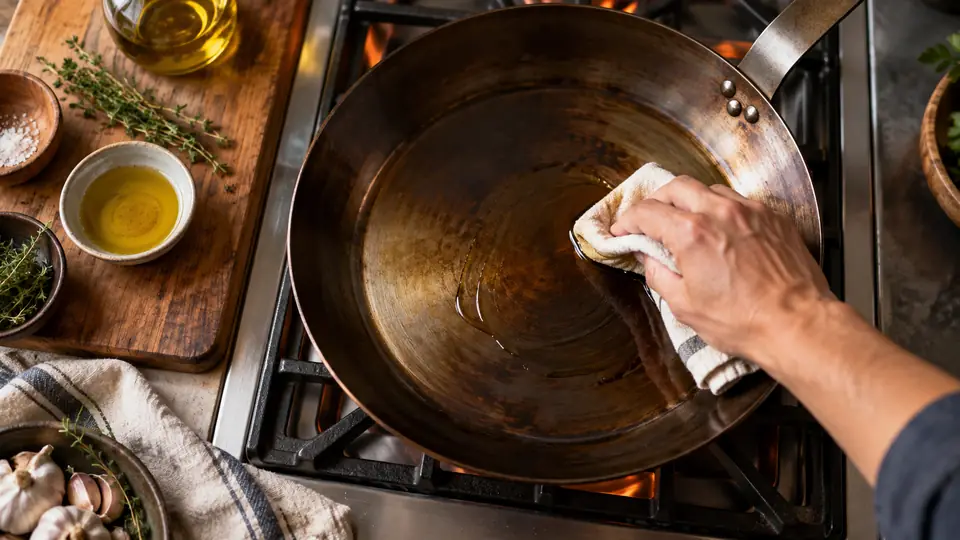
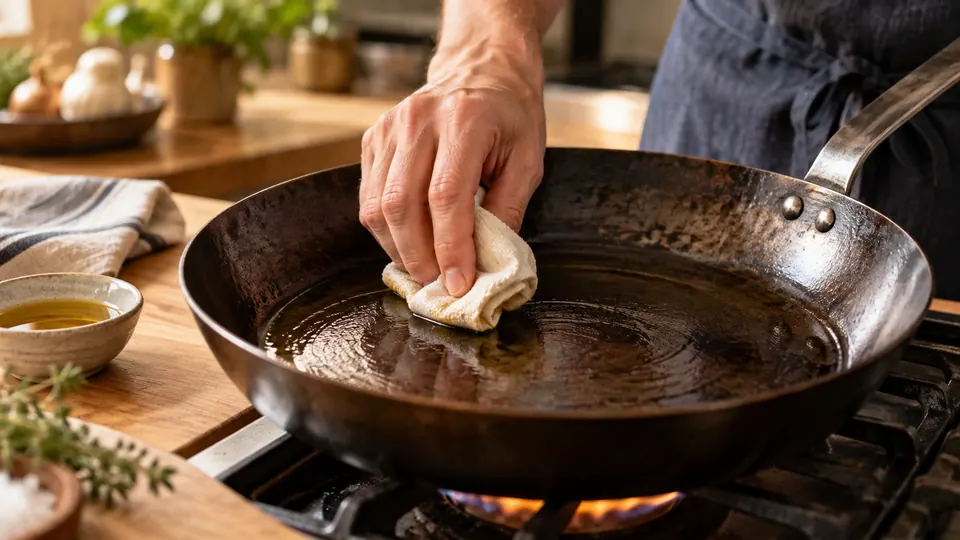
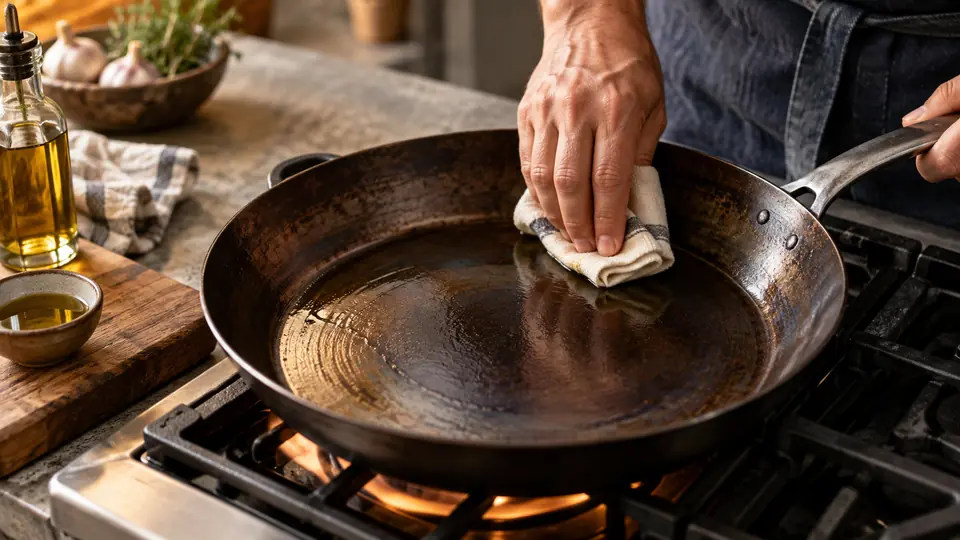
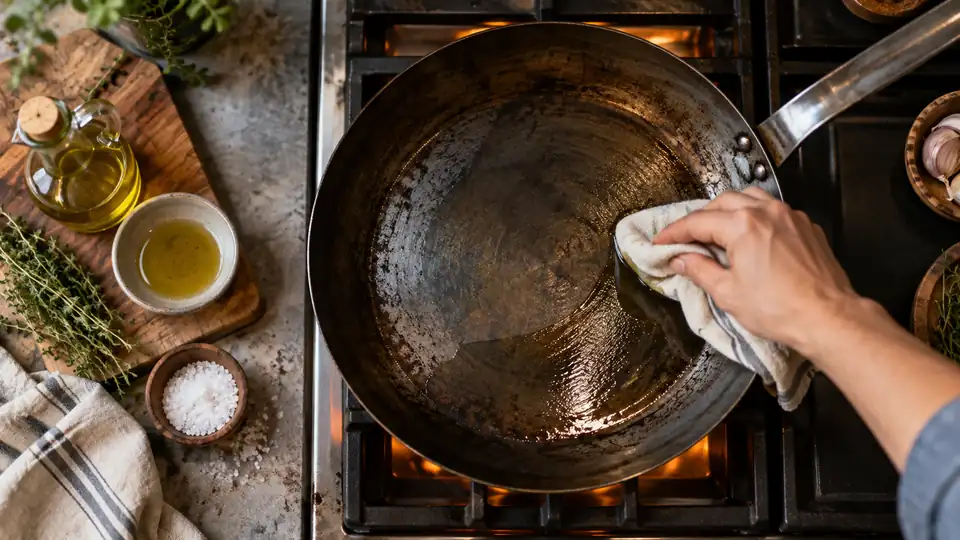
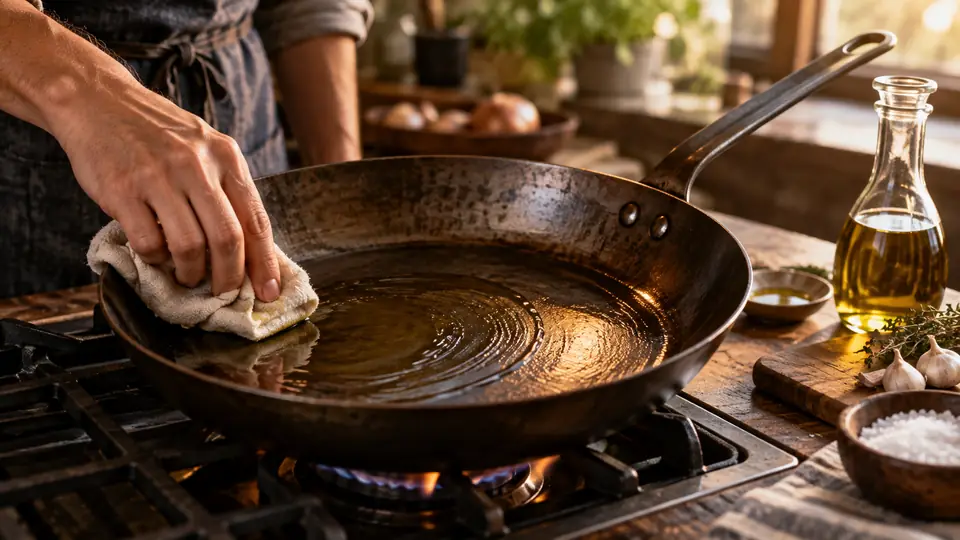
The reason carbon steel gets close to nonstick performance is seasoning. As oil is heated past its smoke point in thin layers, it changes structure and bonds to the metal. This creates a darker protective film that helps reduce sticking and slows rust.
That process is sometimes explained with the word polymerization. In plain terms, the oil transforms into a hardened layer attached to the pan. It is not the same as a factory-applied synthetic coating, and it is not permanent in the same way. It changes with use, can wear in spots, and can be rebuilt.
Good seasoning usually comes less from one dramatic oven session and more from repeated cooking. Frying potatoes, onions, pancakes, or eggs in moderate fat often helps a pan settle into better performance. For new owners, a pre-seasoned model can shorten the learning curve. Readers comparing starter options may find this overview of pre-seasoned carbon steel pans helpful.
Maintenance Comparison
Carbon steel maintenance
Carbon steel needs a few regular habits:
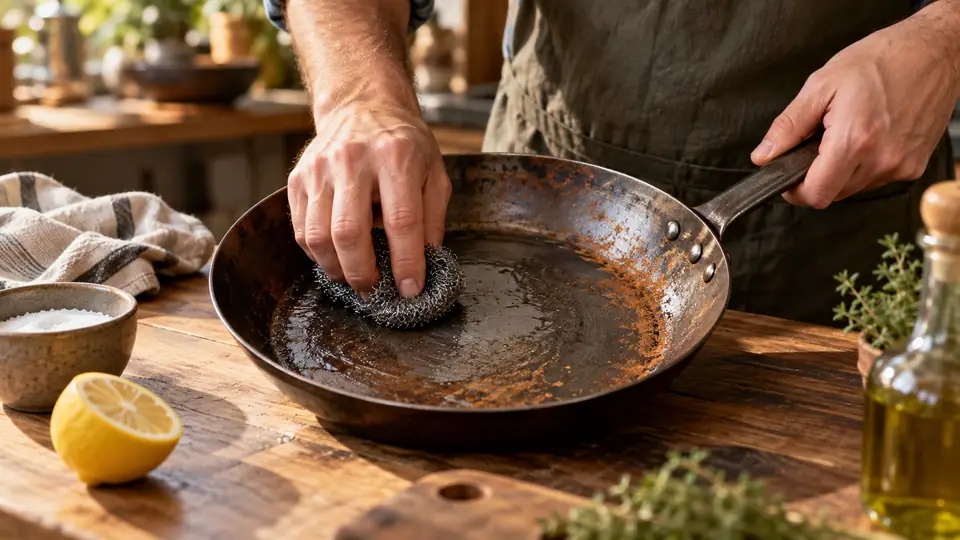
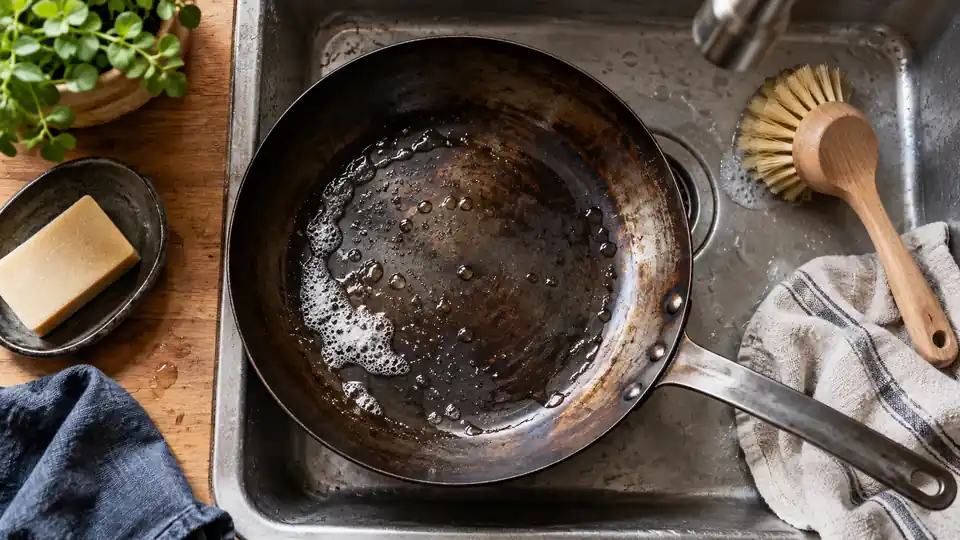
- Wash gently, usually with warm water and a soft sponge or brush
- Dry thoroughly right away
- Apply a very thin film of oil if the surface looks dry
- Touch up seasoning after harsh cleaning or acidic cooking
- Store in a dry place
These tasks are simple, but they are still tasks. If neglected, rust can form. If the pan is overheated or cleaned aggressively, seasoning may thin out.
Nonstick maintenance
Nonstick is simpler in the short term. Wash it gently, avoid overheating, and avoid scratching the coating. The challenge is that careful treatment does not stop normal wear forever. Release performance usually declines with time.
The real tradeoff
Carbon steel asks for more maintenance up front but offers a much longer ownership life. Nonstick asks for less maintenance day to day but has a shorter useful lifespan. Neither option is maintenance-free in the broad sense. They just concentrate effort in different ways.
Durability and Long-Term Value
Durability is where carbon steel pulls ahead clearly. The metal itself is tough, and the surface can be restored. Even if a pan gets rusty or the seasoning becomes a mess, the pan is rarely ruined. Strip it down, reseason, and keep using it.
Nonstick pans are less forgiving. A scratched, worn, or deteriorating coating is not something you can meaningfully rebuild at home. The pan may still function for a while, but it will not return to like-new release.
For people tired of replacing cookware every few years, this is often the strongest reason to switch. The cooking experience may require more skill, but the long-term ownership picture is much better.
Health and Safety Considerations
Some cooks look at carbon steel because they want to avoid reliance on synthetic nonstick coatings. Carbon steel offers a simple material structure: steel plus seasoning oil. That simplicity appeals to people who prefer cookware without a modern applied nonstick layer.
Still, safety discussions should stay practical. A quality nonstick pan used within manufacturer guidelines is different from a damaged, overheated pan used carelessly. Likewise, carbon steel is not maintenance-free just because it is uncoated. Poor seasoning can lead to sticking, burnt oil buildup, or rust if neglected.
From a use perspective, carbon steel’s main safety advantage is heat tolerance. It is more comfortable with high-heat stovetop work and oven use. That reduces the risk of accidentally pushing the pan beyond the limits that many coated skillets have.
Who Can Replace Nonstick with Carbon Steel Most Easily
Carbon steel is usually a strong fit for:
- Cooks who want a pan that lasts a long time
- People who enjoy learning cookware technique
- Home cooks who regularly sear, sauté, pan-fry, or roast
- Anyone frustrated by replacing worn nonstick pans
- Cooks who want one pan that can handle both delicate and high-heat tasks reasonably well
This group often adapts quickly. Once heat control and seasoning become familiar, nonstick feels less essential.
Who Might Still Prefer a Nonstick Pan
Keeping at least one nonstick pan still makes sense for some kitchens.
- People who want the easiest possible egg pan with minimal technique
- Cooks who strongly dislike any maintenance routine
- Households that need fast, low-effort cleanup above all else
- Users who frequently cook very delicate foods and do not want a learning curve
- Those who rarely cook and do not want to maintain seasoning between uses
There is no rule that you must choose only one material. Some kitchens are best served by a mostly carbon steel setup with one small nonstick skillet reserved for specific tasks.
Pros and Cons of Replacing Nonstick with Carbon Steel
| Pros | Cons |
|---|---|
| Can handle many nonstick tasks once seasoned | Requires a learning curve |
| Better high-heat performance | Needs seasoning maintenance |
| Excellent browning and searing | Can rust if not dried properly |
| Much longer lifespan | Not as effortlessly slick as fresh coated nonstick |
| Surface can be restored | Acidic, sticky, or delicate recipes may take more care |
| Usually oven-safe and utensil-tolerant | Often heavier than lightweight nonstick pans |
Best Practices if You Want Carbon Steel to Replace Nonstick
Use it often
Carbon steel improves with regular use. A pan that sits in a cabinet for months does not develop the same stable cooking surface as one that sees steady weekly cooking.
Preheat patiently
Give the pan time to heat evenly before adding fat. Rushing this step is one of the most common causes of sticking.
Cook eggs on moderate heat
Very high heat is not needed for eggs. A moderate burner setting usually gives better release and gentler cooking.
Use enough fat
Carbon steel is not intended to be fully dry and frictionless like a brand-new coated pan. A little butter or oil helps a lot, especially with delicate foods.
Do not obsess over appearance
Seasoning can look blotchy, bronze, brown, or black. Cosmetic variation is normal. Performance matters more than uniform color.
Fix problems early
If the surface becomes sticky, rusty, or rough, address it right away. Small issues are easy to correct before they become frustrating.
Common Mistakes People Make During the Switch
Expecting perfection on day one
A new carbon steel pan may not handle eggs like a mature pan. Performance usually improves after repeated cooking and a few seasoning cycles.
Treating it like stainless steel
Long soaks, dishwasher cleaning, and air drying are poor habits for carbon steel. The pan needs prompt drying and a bit more attention.
Treating it like disposable nonstick
Carbon steel is durable, but it is still a seasoned surface. Burning food repeatedly, leaving acidic sauces for long periods, or storing it wet can create avoidable problems.
Using too much oil during seasoning
Thick oil layers often become gummy instead of slick. Thin layers bond better and perform better.
Giving up too quickly
Some cooks judge carbon steel after two frustrating egg attempts. In practice, the pan often needs a little time, and the cook usually needs one or two small technique adjustments.
Frequently Asked Questions
Can carbon steel cook eggs like nonstick?
Yes, a well-seasoned carbon steel pan can cook eggs very well. It usually needs proper preheating, some fat, and moderate heat. It may not be as forgiving as a fresh nonstick pan, but it can be highly effective once the technique is learned.
Is carbon steel more difficult to clean than nonstick?
Usually, yes, but not dramatically so. Nonstick is still easier for quick cleanup. Carbon steel cleans up well when food release is good, but it also needs immediate drying and occasional oiling.
Can carbon steel fully replace nonstick in every kitchen?
No. Some cooks will be happy using carbon steel for nearly everything, while others will still prefer a dedicated nonstick skillet for fragile eggs or very low-effort cooking. Replacement depends on expectations and cooking habits.
Does carbon steel stay nonstick forever once seasoned?
No. Seasoning changes with use. It can improve, wear in spots, or get damaged. The advantage is that it can be maintained and rebuilt rather than simply wearing out permanently.
Is carbon steel better than nonstick for high heat?
Yes. Carbon steel is much better suited to high-heat searing, browning, and oven finishing. That is one of its clearest advantages over coated nonstick pans.
Final Thoughts
Can carbon steel replace nonstick? For many cooks, yes, and with real advantages. It can handle most of the tasks people buy nonstick for while also offering stronger searing, better heat tolerance, and a much longer working life. The tradeoff is that it asks more from the cook. You need seasoning, heat control, and a little patience.
If your priority is pure convenience, a nonstick pan still has a place. If your priority is a pan that can become naturally slick, survive years of regular use, and do more than just gentle cooking, carbon steel is often a better long-term choice. The best way to think about it is not as an exact copy of nonstick, but as a more durable pan that can cover most nonstick jobs once you learn how to use it well.

Leave a Reply