
Burnt-on food is frustrating on any pan, but carbon steel adds an extra concern. You want to remove the residue without stripping away hard-earned seasoning or encouraging rust. The good news is that most burnt food can be cleaned off safely with a few simple methods, and in many cases the pan will be back in service the same day.
How to remove burnt food from carbon steel depends on how severe the mess is. Light stuck bits often come off with hot water, a scraper, and a soft scrub. Heavier carbonized residue may need a short simmer, a coarse salt scrub, or a brief reset of the affected area followed by drying and a thin layer of oil. The key is to use enough force to lift the burnt food, but not so much that you damage the pan’s surface or leave it wet long enough to rust.
Carbon steel is durable, but its seasoning layer is thinner and more reactive than factory nonstick coatings. That means aggressive soaking, harsh detergents, and prolonged moisture can create new problems while you are trying to fix the old one. A careful cleaning routine removes burnt food effectively and preserves the pan’s cooking performance.
Quick Answer
To remove burnt food from carbon steel, start with the gentlest effective method. Add a little hot water to the pan, bring it to a simmer for a few minutes, then use a wooden spoon, silicone spatula, or pan scraper to loosen the burnt residue. Pour out the water, scrub with a soft brush or non-abrasive scrubber, and repeat if needed.
If stubborn burnt spots remain, add coarse salt and a few drops of oil or water, then scrub the area to lift the residue without over-wetting the pan. For heavier buildup, a chain mail scrubber or firm scraper can help, but use controlled pressure rather than grinding away at the whole surface. Once clean, dry the pan immediately over low heat and wipe on a very thin layer of oil.
If cleaning removes some seasoning, that is not a disaster. Carbon steel seasoning naturally changes over time. After the pan is clean and dry, a light stovetop re-seasoning pass is usually enough to restore the surface. The biggest mistakes are soaking the pan for hours, storing it damp, or using methods so harsh that they create bare steel and rust.
Why Burnt Food Sticks to Carbon Steel
Burnt food on carbon steel usually comes from one of three causes. The pan was too hot, the food was left undisturbed too long, or there was not enough oil between the food and the surface. Sugary sauces, marinades, breadcrumbs, and starchy foods are especially likely to leave burnt patches.
Seasoning also plays a role. A well-used carbon steel pan develops a thin polymerized oil layer that improves release, but seasoning is not the same as a synthetic nonstick coating. Foods can still stick, especially during the first few months of use or after cooking acidic or saucy dishes.
Another factor is heat responsiveness. Carbon steel heats quickly, which is useful for searing and browning, but it also means the pan can overshoot your target temperature faster than heavier cookware. Once residue starts scorching, it bonds tightly to the surface and becomes harder to remove with a normal wash.
How to Judge the Severity of the Burnt Buildup
Before cleaning, it helps to identify what kind of residue you are dealing with. A pan with a few stuck bits needs a different approach than a pan with a black, crusted layer across half the cooking surface.
| Type of buildup | What it looks like | Best approach | Risk to seasoning |
|---|---|---|---|
| Light stuck food | Small browned bits, patchy residue | Hot water, scraper, soft scrub | Low |
| Moderate burnt layer | Darker spots, rough texture, food fused to pan | Short simmer, salt scrub, repeat cleaning | Low to moderate |
| Heavy carbonized crust | Thick black burnt patches, uneven surface | Scraper, chain mail, localized reset if needed | Moderate |
| Burnt residue with rust | Orange-brown spots under or around buildup | Remove residue, dry thoroughly, strip rusted area, re-season | High |
In practice, most home cooks are dealing with the first two categories. Start there. Going straight to harsh scrubbing often removes more seasoning than necessary.
Tools and Materials Needed
You do not need a specialized kit to clean burnt carbon steel. A few basic tools handle most situations well.
- Hot water
- Wooden spoon, silicone spatula, or pan scraper
- Soft dish brush or non-abrasive scrubber
- Coarse kosher salt
- Paper towels or a clean kitchen towel
- A small amount of neutral oil
- Optional: chain mail scrubber for stubborn burnt residue
A small amount of mild dish soap can be used if the pan is greasy or smells smoky after cooking. Modern dish soap is not automatically harmful to carbon steel, especially if used briefly and rinsed off promptly. The problem is not a drop of soap. The problem is prolonged soaking and failure to dry the pan thoroughly afterward.
How to Remove Burnt Food from Carbon Steel Step by Step
1. Let the Pan Cool Slightly, but Do Not Leave It Sitting for Hours
A screaming hot pan should not be plunged into cold water, because rapid temperature change can stress or warp thinner carbon steel. Give it a few minutes to cool so it is still warm but not dangerously hot.
Do not wait until the burnt residue has hardened overnight if you can avoid it. Fresh burnt-on food is easier to loosen than fully dried carbon deposits.
2. Add Hot Water and Simmer
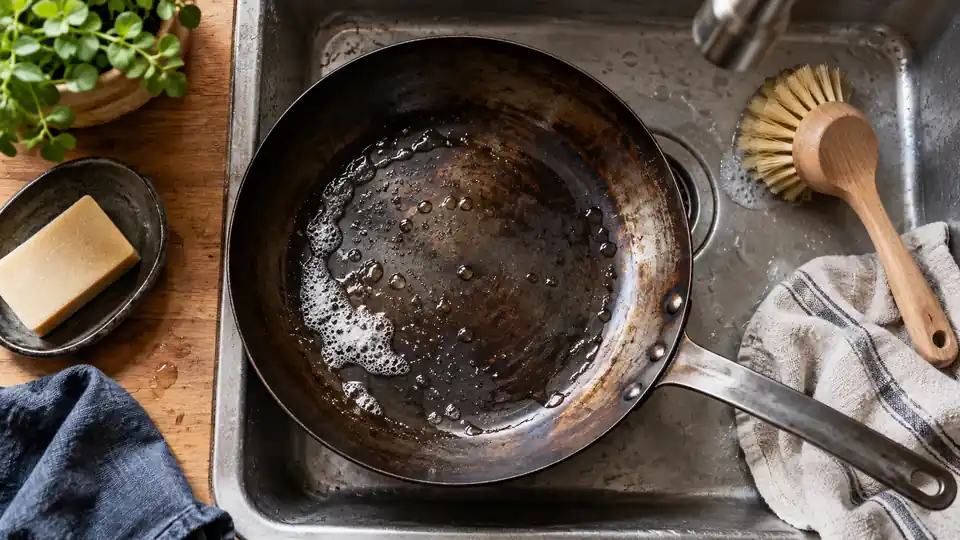
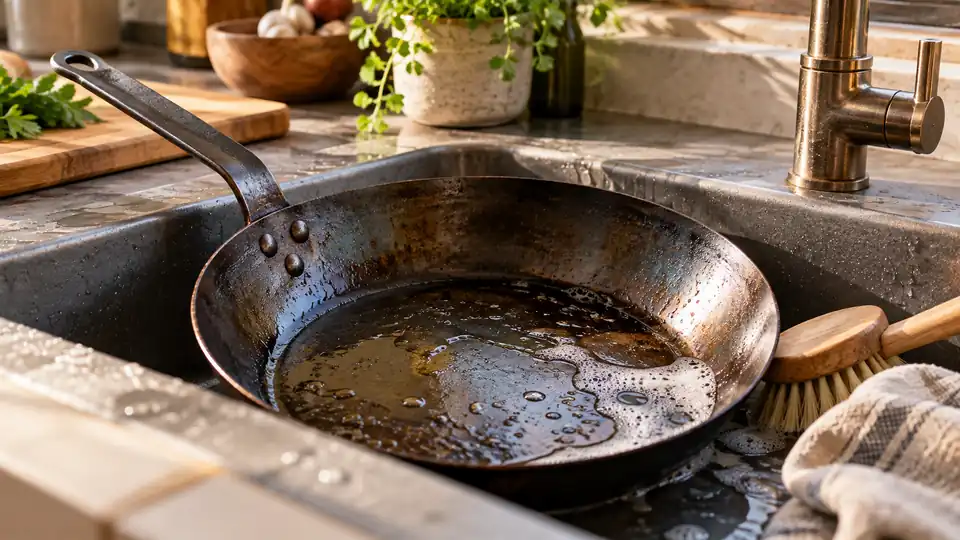
Place the pan on the stove, add enough water to cover the burnt area, and bring it to a gentle simmer for 2 to 5 minutes. This is one of the safest and most effective ways to remove burnt food from carbon steel because it softens residue without requiring extreme scrubbing.
As the water heats, use a wooden spoon or silicone spatula to gently work at the burnt spots. Often, the residue will start releasing in flakes or softened patches. If it comes off easily, pour out the dirty water and move to the next step.
3. Scrape Gently While the Surface Is Still Warm
Use a pan scraper, wooden utensil, or flexible spatula to lift loosened food. Focus pressure on the burnt spots rather than scraping the entire pan. The goal is controlled removal, not polishing the surface back to raw steel.
If the scraper glides over the surface but the residue remains rock hard, return to simmering rather than pressing harder. Repeated light passes work better than one overly aggressive pass.
4. Scrub with a Brush or Non-Abrasive Pad
After the simmering step, rinse and scrub the pan under warm water. A dish brush is often enough to remove loosened residue. If you still feel rough areas, keep scrubbing those spots until the surface feels smoother.
Some dark staining may remain. That is fine. Discoloration is not the same as stuck food. What matters is whether the surface is clean and relatively smooth to the touch.
5. Use a Salt Scrub for Stubborn Spots
If burnt patches remain, sprinkle coarse kosher salt into the pan. Add a few drops of oil or just enough water to make the salt move across the surface, then scrub with a folded paper towel or cloth held with tongs. The salt acts as a mild abrasive and can remove stubborn residue without the harshness of steel wool.
This method works especially well for thin layers of burnt egg, potato starch, or sugary glaze. Keep the scrub targeted. There is no need to scour the entire pan if the problem is isolated to one area.
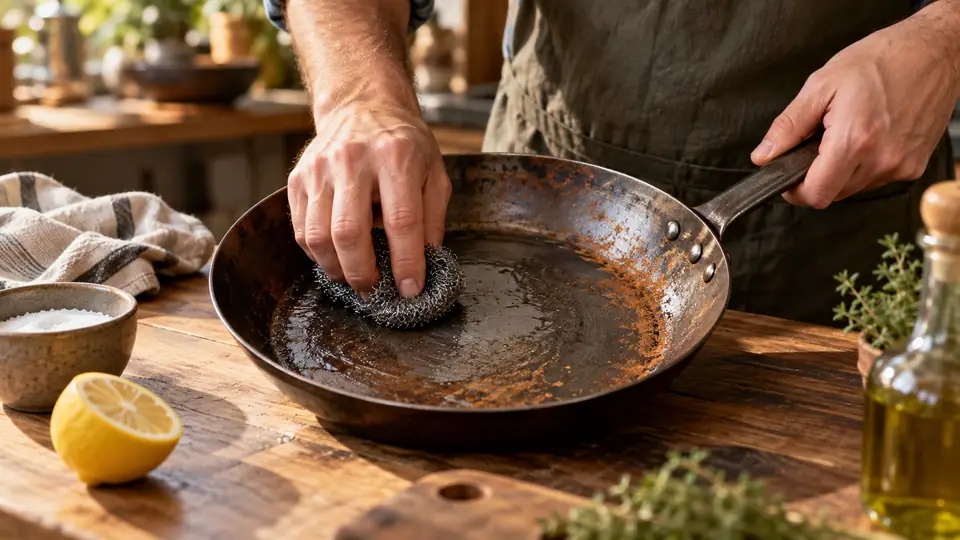
6. Bring in a Chain Mail Scrubber if Needed
For thicker burnt crusts, a chain mail scrubber can be useful. It is more aggressive than a soft sponge but usually gentler on carbon steel than people expect, especially when used with water and moderate pressure.
Use it only as much as necessary. If you lean on it too heavily across the whole pan, you may remove seasoning that did not need to come off. That is not catastrophic, but it creates more restoration work than necessary.
7. Rinse, Dry Immediately, and Heat Dry
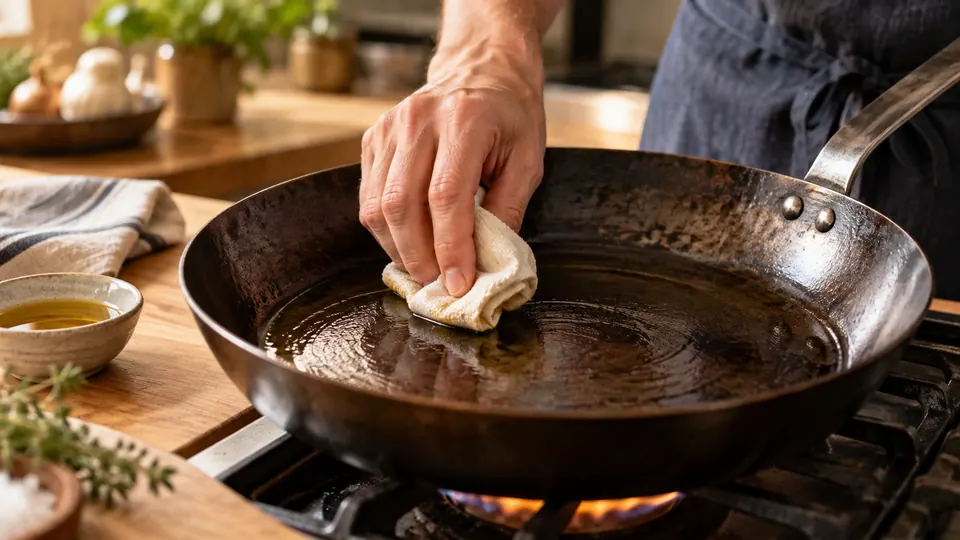
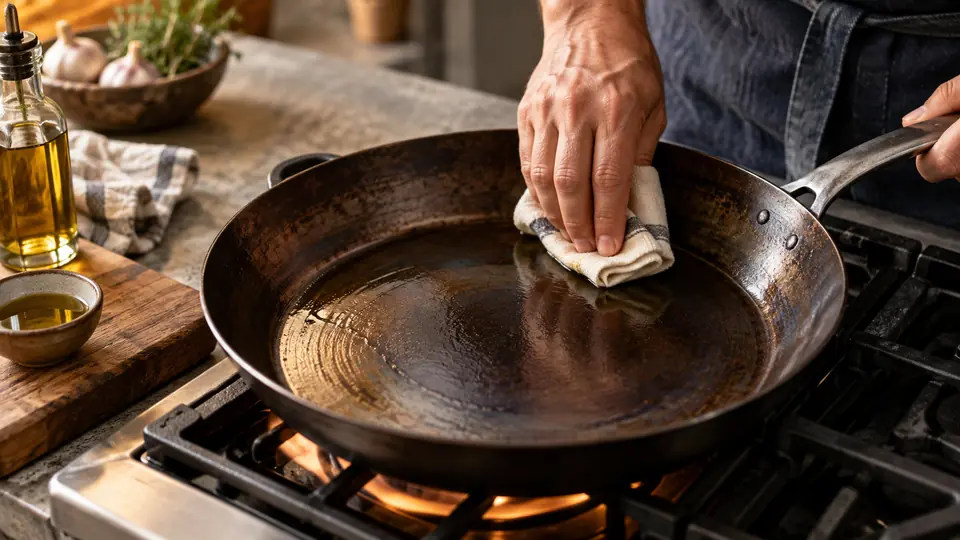
Once the burnt food is gone, rinse the pan and dry it right away with a towel. Then place it over low heat for a minute or two to evaporate any remaining moisture. This heat-dry step matters because tiny droplets left around rivets, handle joints, or surface pores can lead to rust.
8. Apply a Thin Film of Oil
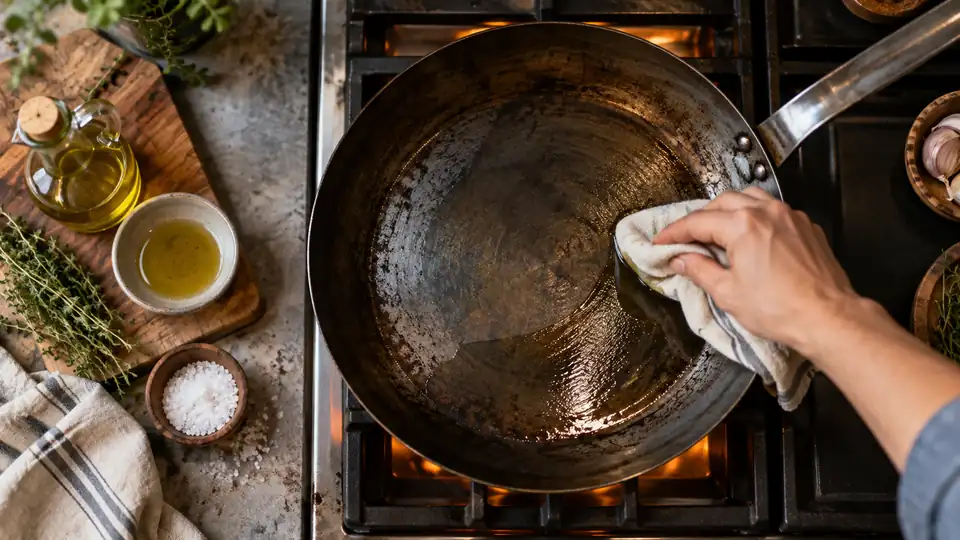
After the pan is fully dry, wipe on a very thin layer of neutral oil. Buff away excess until the surface looks almost dry. This helps protect the pan and refreshes areas where cleaning may have thinned the seasoning.
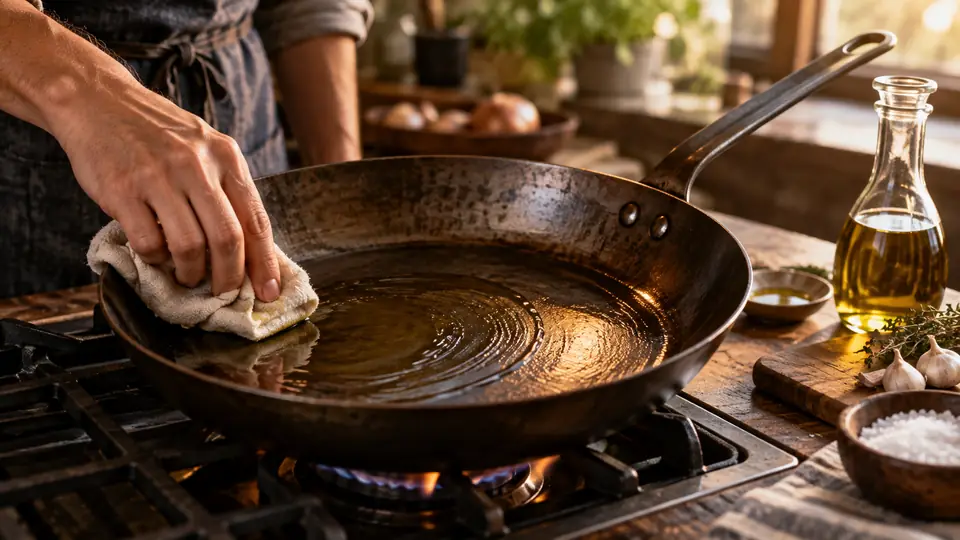
If the cleaned section looks patchy or gray, do a quick stovetop seasoning pass. Heat the pan lightly with a thin oil film until it darkens and looks dry again.
What to Do for Severe Burnt Buildup
Sometimes the residue is not just burnt food. It is a thick layer of charred oil and carbon that has built up over several cooking sessions. In that case, routine cleaning methods may not be enough.
Localized Reset Method
If one area has a black crust that will not release, it can be better to clean that section more aggressively, even if it removes some seasoning. Use a scraper, chain mail, or abrasive scrub targeted only at the buildup until the rough layer is gone. Then wash, dry, and re-season the area.
This is often preferable to cooking over burnt carbon repeatedly. Old char can create uneven contact with food, off flavors, and fresh sticking.
Full Strip Only if the Entire Pan Is Compromised
If the pan has widespread burnt buildup, flaking seasoning, and sticky patches across most of the cooking surface, a full strip and re-season may be the cleaner solution. That is more work, but it gives you a fresh starting point.
Most pans do not need this after a single burnt meal. Reserve full stripping for pans with persistent buildup or layers of failed seasoning, not ordinary stuck food.
Methods to Avoid
Some cleaning habits cause more trouble than the burnt food itself. Carbon steel is forgiving, but it still responds poorly to certain shortcuts.
Long Soaks
Leaving a carbon steel pan submerged in water for hours softens seasoning and increases the risk of rust. A short simmer in the pan is useful. An overnight soak in the sink is not.
Dishwasher Cleaning
Dishwashers combine water, detergent, and long exposure. That is a poor match for carbon steel. It can strip seasoning and produce rust quickly.
Harsh Chemical Cleaners
Oven cleaner and other heavy-duty cleaners may remove burnt residue, but they also strip the pan aggressively. These are more appropriate for a full restoration project than routine cookware maintenance.
Steel Wool as a First Step
Steel wool can remove burnt food, but it also removes seasoning fast. It should not be the first method you reach for unless you already know the pan needs partial stripping and re-seasoning.
Storing the Pan While Damp
A clean pan can rust surprisingly fast if moisture remains on the surface or around the handle attachment points. Drying is part of the cleaning process, not an optional final touch.
Common Mistakes When Removing Burnt Food
- Scrubbing too hard too early. Gentle methods often work if given a little time.
- Confusing dark seasoning with dirt. Not every black mark needs to be removed.
- Trying to keep the seasoning cosmetically perfect. Carbon steel often looks patchy even when it performs well.
- Using too much oil after cleaning. A thick oily layer can become sticky instead of protective.
- Ignoring the cause of the burning. If food is regularly scorching, heat control or oil use may need adjustment.
How to Tell if the Pan Needs Re-Seasoning After Cleaning
Not every cleaning session requires a full seasoning cycle. Carbon steel seasoning naturally develops unevenly, and some lighter spots are normal. What matters is how the surface feels and cooks.
Your pan likely needs a quick re-season if:
- The cleaned area looks dull gray or silvery
- Food starts sticking more than usual in that spot
- The surface feels dry and unprotected after cleaning
- You accidentally scrubbed down to bare metal
A quick stovetop re-season is usually enough. Wipe on a tiny amount of oil, heat the pan until the oil darkens and stops looking wet, then let it cool. A single light coat often restores function after burnt food removal.
Prevention Tips So Burnt Food Is Less Likely Next Time
Cleaning is easier when the pan is used in a way that reduces scorching in the first place. Carbon steel responds well to a few small changes in technique.
Preheat Moderately, Not Aggressively
Carbon steel heats quickly. Medium or medium-low preheating is often enough. If you crank the burner to high and walk away, the surface can become hot enough to scorch oil and food before cooking even starts.
Use Enough Fat for the Food You Are Cooking
Lean proteins, eggs, potatoes, and breaded foods usually need more oil than people expect on carbon steel, especially in newer pans. A dry pan is much more likely to produce burnt patches.
Let Food Release Naturally Before Forcing It
Protein often sticks briefly, then releases once a crust forms. If you try to move it too early, torn bits remain on the pan and burn later. Patience helps reduce residue.
Control Sugary Sauces Carefully
Honey, teriyaki, barbecue glaze, and similar sauces can carbonize fast on carbon steel. Lower the heat and avoid letting sweet sauces sit undisturbed in a dry hot pan.
Clean Soon After Cooking
A quick warm-water cleanup soon after dinner is easier than dealing with hardened char the next morning. This is one of the simplest long-term habits for keeping carbon steel in good condition.
Burnt Food Removal by Type of Residue
| Residue type | Typical cause | Best cleaning method | Extra note |
|---|---|---|---|
| Egg residue | Low oil, insufficient preheat, early flipping | Hot water, soft scrub, salt scrub | Often comes off easily if cleaned while fresh |
| Burnt starch | Potatoes, rice, batter, breadcrumbs | Simmer and scrape | May leave rough patches that need repeat cleaning |
| Sugary glaze | Honey, barbecue sauce, teriyaki | Short simmer, gentle scraping | Avoid overheating during future cooking |
| Charred oil film | Excess oil overheated repeatedly | Salt scrub, chain mail, localized reset | Common on pans used too hot |
| Black crusted buildup | Repeated cooking without enough cleaning | Aggressive targeted scrub, partial re-season | May require seasoning touch-up |
When Burnt Food Removal Turns Into Rust Prevention
Burnt food and rust often appear together because difficult cleanup leads people to leave the pan wet or postpone drying. Once seasoning is thinned by scrubbing, exposed steel is more vulnerable to oxidation.
If you notice orange discoloration after cleaning, act quickly. Light rust can usually be removed with a scrubber and a little oil or warm water, followed by thorough drying and re-seasoning. Do not keep cooking on a rusted patch and assume it will sort itself out.
For readers working through broader maintenance issues, a guide on pre-seasoned carbon steel pans can also help explain why some surfaces are easier to maintain early on, though cleaning technique still matters regardless of factory seasoning.
Frequently Asked Questions
Can I use soap to remove burnt food from carbon steel?
Yes, a small amount of mild dish soap is fine if needed. It is especially useful for greasy burnt residue. Use it briefly, rinse well, and dry the pan immediately. Soap is less of a problem than long exposure to water.
Will removing burnt food ruin my carbon steel seasoning?
Not usually. Gentle cleaning methods often remove the food while leaving most of the seasoning intact. Even if a stubborn spot takes some seasoning with it, that area can be re-seasoned quickly. Carbon steel seasoning is meant to be maintained over time.
Is chain mail safe for carbon steel pans?
Yes, chain mail is generally safe when used with moderate pressure. It is helpful for stubborn buildup, but it should be used only as much as necessary. Heavy scrubbing across the whole pan can thin the seasoning more than needed.
Why does my pan still look black after I remove the burnt food?
Black coloration is often just seasoning, not leftover burnt food. If the surface feels smooth or mostly smooth and does not smell rancid or feel sticky, the pan is likely clean. Carbon steel rarely stays evenly colored.
Can I soak a carbon steel pan for a few minutes?
A brief soak of a few minutes is usually fine, especially during active cleaning, but it is better to use a short simmer in the pan instead. Extended soaking is what creates problems. Always dry the pan thoroughly afterward.
Final Thoughts
Learning how to remove burnt food from carbon steel is mostly about restraint and sequence. Start with hot water, a short simmer, and gentle scraping. Move to salt scrubbing or chain mail only if the residue truly needs it. Then dry the pan completely and protect the surface with a whisper-thin coat of oil.
A patchy-looking pan is not necessarily a damaged pan. Carbon steel develops character through use, cleaning, and repeated seasoning. What matters most is a clean cooking surface, no active rust, and solid performance on the stove. If burnt food removal takes off a little seasoning, that is normal maintenance, not a failure.
Handled this way, even a badly scorched meal usually does not end a pan’s usefulness. It just means the pan needs a careful cleanup and, sometimes, a quick touch-up before the next round of cooking.




Leave a Reply