
Carbon steel has a strong reputation among serious cooks, but that does not automatically make it beginner-friendly in every kitchen. A carbon steel pan heats quickly, develops a naturally seasoned cooking surface over time, and can handle everything from eggs to seared meat once it is used properly. At the same time, it asks more from the owner than a typical nonstick pan. It needs drying after washing, occasional seasoning maintenance, and a little technique to prevent sticking.
That mix of strengths and responsibilities is why the question matters. Some beginners buy carbon steel expecting effortless nonstick performance on day one, then get frustrated when food sticks or rust appears. Others avoid it completely because they assume it is too demanding. The reality sits in the middle. Carbon steel pans can be very good for beginners, but mostly for the kind of beginner who is willing to learn a few basics and accept a short adjustment period.
This guide explains where carbon steel is easy, where it is less forgiving, and who is likely to enjoy starting with one. It also covers the common mistakes new owners make, what skills are actually needed, and when another pan material may be the better first choice.
Quick Answer
Yes, carbon steel pans are good for beginners if the beginner is comfortable learning basic pan care and cooking technique. They are lighter than cast iron, very versatile, and can become naturally slick with proper seasoning and use. They also respond quickly to heat, which helps with sautéing, frying, and searing.
They are not the easiest cookware for someone who wants completely low-maintenance performance right away. A carbon steel pan needs to be dried thoroughly after washing, protected from rust, and used with decent heat control. Early sticking is common if the pan is under-seasoned, overheated, or used incorrectly.
For beginners who enjoy cooking and do not mind a small learning curve, carbon steel is often a very good first “serious” pan. For beginners who want something they can wash casually, leave wet in the sink, and use without technique, nonstick or stainless steel may be less frustrating. In short, carbon steel is beginner-friendly for motivated cooks, but not necessarily for people looking for zero-effort cookware.
Beginner Snapshot: What to Expect From a Carbon Steel Pan
| Factor | How Carbon Steel Feels for Beginners | Why It Matters |
|---|---|---|
| Learning curve | Moderate | You need to learn seasoning, preheating, and drying |
| Cooking versatility | High | Useful for eggs, vegetables, meat, pancakes, and more |
| Maintenance | Moderate | More care than nonstick, less intimidating than many expect |
| Weight | Usually manageable | Lighter than cast iron in many comparable sizes |
| Rust risk | Real but preventable | Leaving moisture on the pan can cause oxidation |
| Stick resistance | Improves with use | It does not behave like factory-coated nonstick on day one |
| Durability | Excellent | No fragile nonstick coating to wear out |
| Best fit | Engaged beginners | Works well for cooks willing to build a little skill |
What Makes Carbon Steel Appealing to New Cooks
It can do a lot with one pan
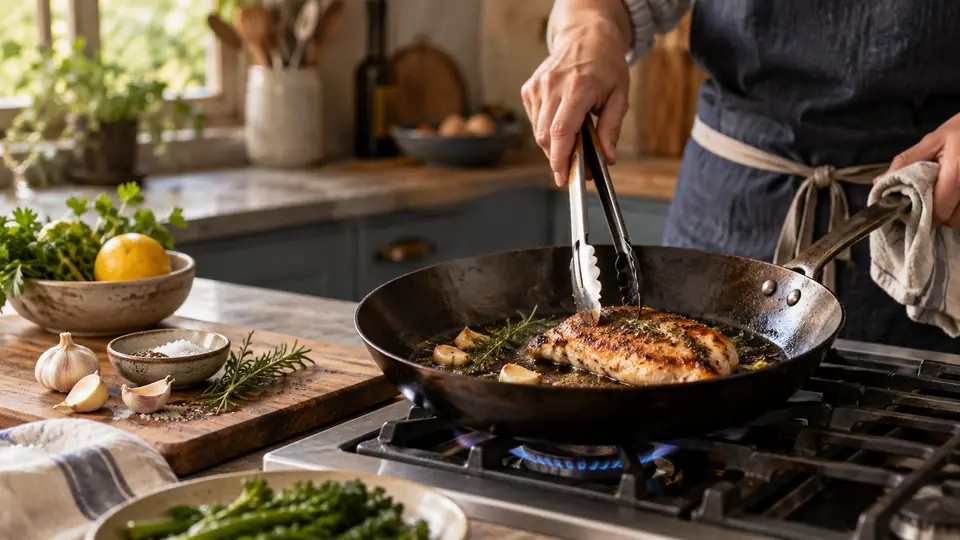
Beginners often benefit from cookware that covers multiple jobs. Carbon steel can sear chicken, sauté vegetables, fry eggs, cook burgers, toast sandwiches, and move into the oven for finishing thicker foods. That versatility helps a new cook build confidence without switching between several specialty pans.
It also teaches transferable cooking habits. Learning how to preheat properly, add oil at the right time, and manage medium versus high heat makes you better with almost any cookware material.
It is usually lighter than cast iron
Cast iron often gets recommended to beginners because it is durable and naturally seasoned, but its weight can be a drawback. Carbon steel usually offers a similar style of cooking surface with faster responsiveness and less heft. That can make tossing vegetables, pouring off fat, or simply washing the pan less awkward.
The difference is especially noticeable for people with smaller hands, limited wrist strength, or compact kitchens where heavy cookware is annoying to move around.
It develops character over time
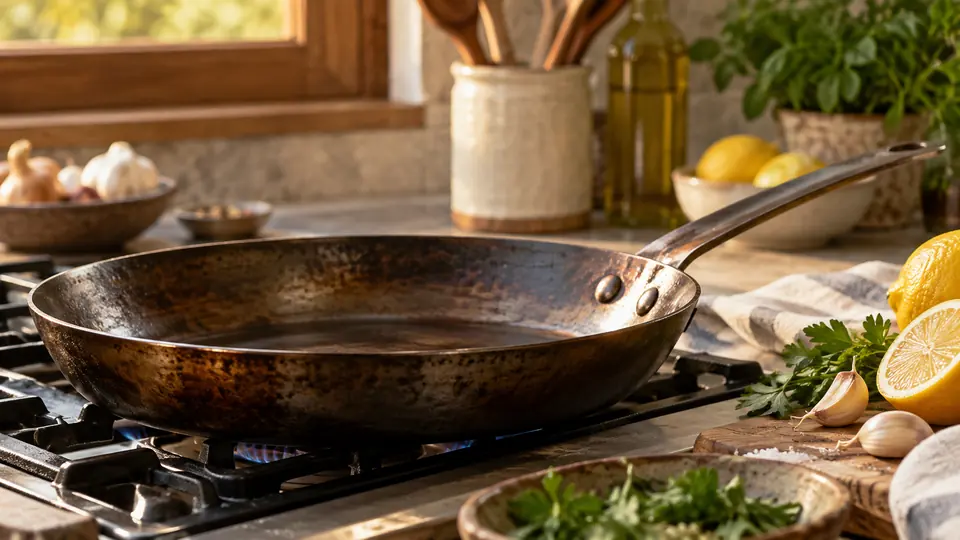
A carbon steel pan changes as you use it. The surface darkens, seasoning builds in patches, and performance often improves rather than declines. For many beginners, this is encouraging once they understand it. Minor uneven coloring is normal and does not mean the pan is being damaged.
That long lifespan is one reason many cooks stay with carbon steel for years. Unlike coated pans that eventually wear out, carbon steel can recover from mistakes such as rust, stuck-on residue, or stripped seasoning.
It rewards good technique
Some cookware hides poor heat control. Carbon steel does that less often. If the pan is too cold, food may stick. If it is too hot, oil may smoke too quickly and delicate foods may scorch. While that sounds like a drawback, it can actually help beginners learn faster.
After a short adjustment period, many people find carbon steel straightforward. The pan gives clear feedback, and once you learn its patterns, results become more consistent.
Why Carbon Steel Can Be Frustrating for Some Beginners
It is not maintenance-free
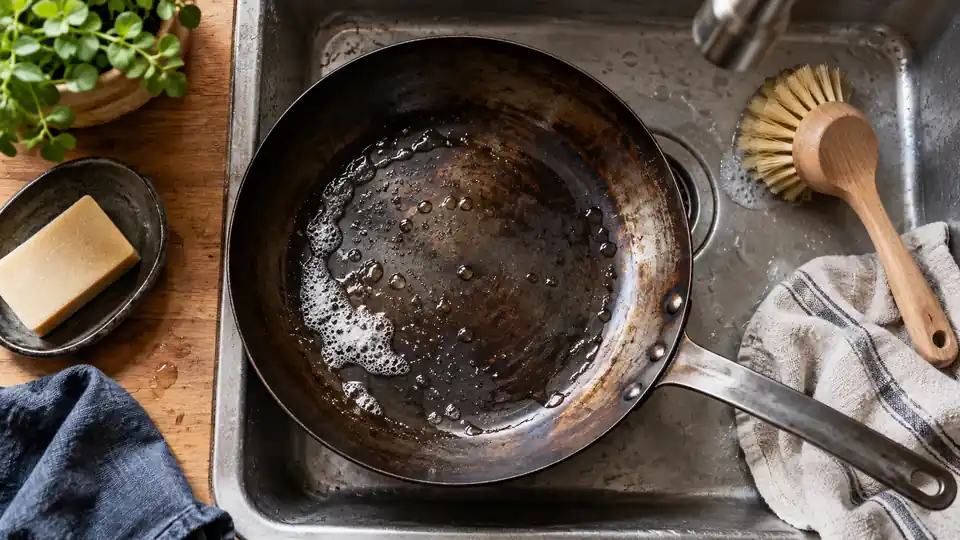
The biggest surprise for new owners is that carbon steel needs care after cooking. You cannot treat it exactly like stainless steel or an inexpensive nonstick skillet. If you wash it and leave it damp, rust can form. If you scrub too aggressively every time, you may weaken the seasoning.
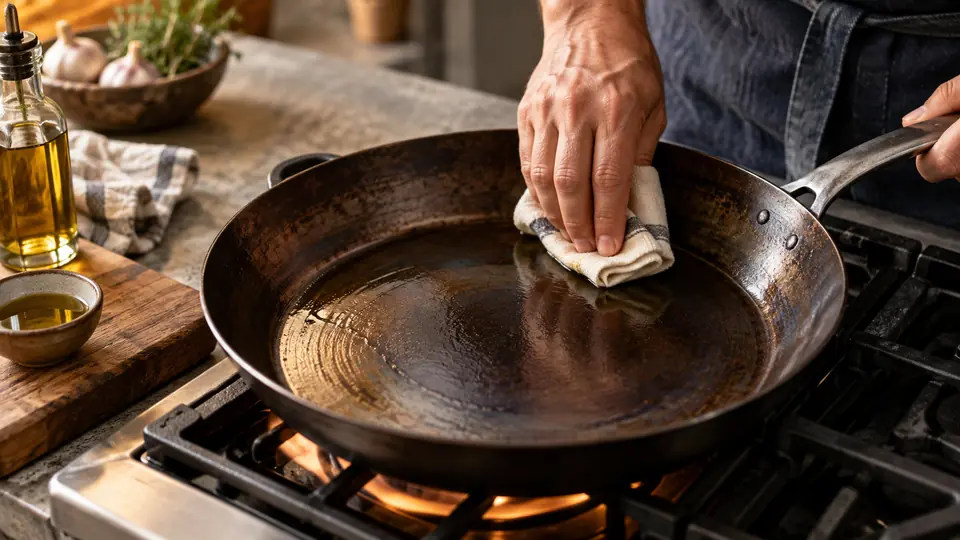
That does not mean upkeep is difficult. It usually means wash, dry thoroughly, and add a very thin film of oil if needed. Still, for someone who wants cookware with no special routine, this can feel like unnecessary work.
The seasoning process confuses people
Seasoning is a thin layer of oil that has bonded to the metal through heat. This layer helps with rust resistance and stick reduction. Beginners often assume a newly seasoned pan should act exactly like synthetic nonstick, which leads to disappointment.
In reality, seasoning improves with repeated cooking, especially with fats and moderately oily foods. A patchy or brownish surface can still perform well. New users sometimes strip and reseason too often because they are chasing a perfect look instead of focusing on cooking performance.
Heat control matters more than people expect
Carbon steel is responsive, which is useful but less forgiving if you tend to crank the burner immediately to high. Hot spots and overheating can make food stick, burn seasoning, or warp thinner pans. Beginners sometimes assume more heat means better searing, but steady preheating over moderate heat often works better.
This is one of the most common reasons people struggle with eggs and pancakes in carbon steel. The issue is often technique, not the material itself.
Acidic foods can interfere with early seasoning
Tomatoes, wine reductions, lemon-heavy sauces, and vinegar-based dishes can strip or weaken seasoning, especially in a newer pan. That does not ruin the cookware, but it can be confusing if a beginner cooks an acidic sauce and notices the surface looks different afterward.
For that reason, carbon steel is usually easier for beginners if they start with eggs, potatoes, grilled cheese, sautéed vegetables, and seared proteins before using it for longer acidic dishes.
Are Carbon Steel Pans Good for Beginners Compared With Other Pan Types?
| Pan Type | Ease for Beginners | Main Strength | Main Drawback |
|---|---|---|---|
| Carbon steel | Moderate | Versatile, durable, improves with use | Needs seasoning and rust prevention |
| Nonstick | Very easy | Simple low-stick cooking right away | Coating wears out over time |
| Stainless steel | Moderate to difficult | Low maintenance, great for sauces and acidity | More sticking if heat and oil timing are wrong |
| Cast iron | Moderate | Excellent heat retention, durable | Heavy and slower to respond |
For pure convenience, nonstick is still easier. For durability and long-term value, carbon steel is often a stronger choice. Compared with stainless steel, carbon steel usually feels friendlier for eggs and delicate foods once seasoning develops. Compared with cast iron, it often feels more agile and easier to maneuver.
So if the question is not “What is the easiest pan?” but rather “What is a good first pan to learn real cooking on?”, carbon steel becomes much more attractive.
Who Will Probably Like Starting With Carbon Steel
Beginners who cook often
Carbon steel rewards frequent use. The more regularly it cooks food, the more stable and useful the seasoned surface tends to become. Someone who cooks several times a week will usually have a better experience than someone who uses the pan once a month.
Regular use also helps new owners learn the pan faster. Heat response, oil amount, and surface feel become familiar after only a handful of meals.
People who want one durable everyday pan
If your goal is to own one pan that can handle stovetop and oven cooking for many years, carbon steel makes sense. It has no delicate interior coating, and it can often be restored even after neglect or surface rust.
This appeals to beginners who want to buy less often and learn one reliable tool well.
Cooks interested in improving technique
Carbon steel is a good teacher. It encourages preheating, patience, and awareness of how food releases from the surface. Those are useful kitchen skills, not just carbon steel skills.
New cooks who enjoy that process often end up preferring carbon steel over time because it feels more responsive and durable than disposable-feeling nonstick cookware.
Anyone considering a pre-seasoned option
A factory pre-seasoned pan can reduce some of the early friction. It does not remove the learning curve completely, but it can help you get cooking sooner. For a new user who feels unsure about the first seasoning session, a pre-seasoned carbon steel pan can be a practical starting point.
Who Might Prefer Another Material First
People who want zero-fuss cleanup
If you often leave pans soaking in the sink, wash dishes later, or want cookware that handles casual treatment without consequence, carbon steel may annoy you. Rust prevention requires some attention every time.
That is not a flaw in the material. It is just a mismatch between the pan and the owner’s habits.
Beginners focused mainly on acidic sauces
If you cook a lot of tomato sauce, lemony braises, shakshuka, or wine-based reductions, stainless steel may be more practical. Carbon steel can handle some acidity, especially once well seasoned, but it is not the most convenient choice for acid-heavy cooking.
People who want flawless egg performance immediately
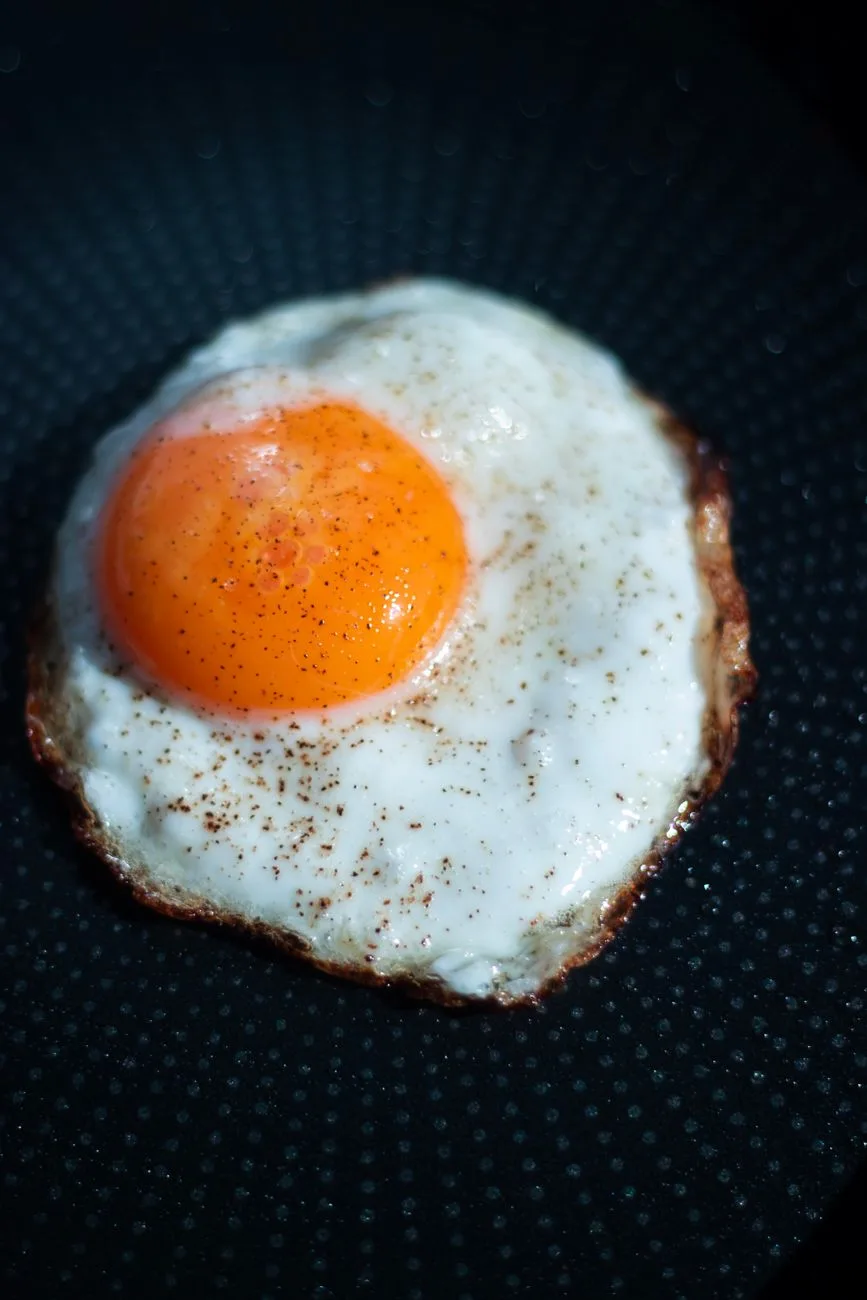
Carbon steel can cook eggs beautifully, but not always on day one and not without technique. If your main goal is effortless omelets with no learning period, a quality nonstick pan is still easier in the short term.
Carbon steel becomes more appealing if you care about longevity and are willing to learn how to preheat and oil the surface correctly.
Common Beginner Mistakes With Carbon Steel Pans
Using high heat right away
Many new owners blast the burner on high, thinking the pan should be treated like restaurant cookware. That can lead to uneven heating, smoking oil, sticking, and sometimes warping in thinner pans. Carbon steel usually performs better with a moderate preheat, then increased heat only if the food and pan actually need it.
Expecting perfect nonstick performance immediately
A freshly seasoned pan is not a miracle surface. Some foods will still need enough fat, proper timing, and patience before release. This is especially true for eggs, fish, and very lean proteins.
Beginners who start with burgers, onions, potatoes, or grilled sandwiches often have a smoother learning experience than those who begin by testing the pan with delicate scrambled eggs.
Leaving water on the pan
Carbon steel rusts because the iron content reacts with moisture and oxygen. That oxidation can happen quickly if the pan is left wet or stored in a humid environment. Drying the pan on the stove for a minute or two after washing is a simple habit that prevents many problems.
Using too much oil during seasoning
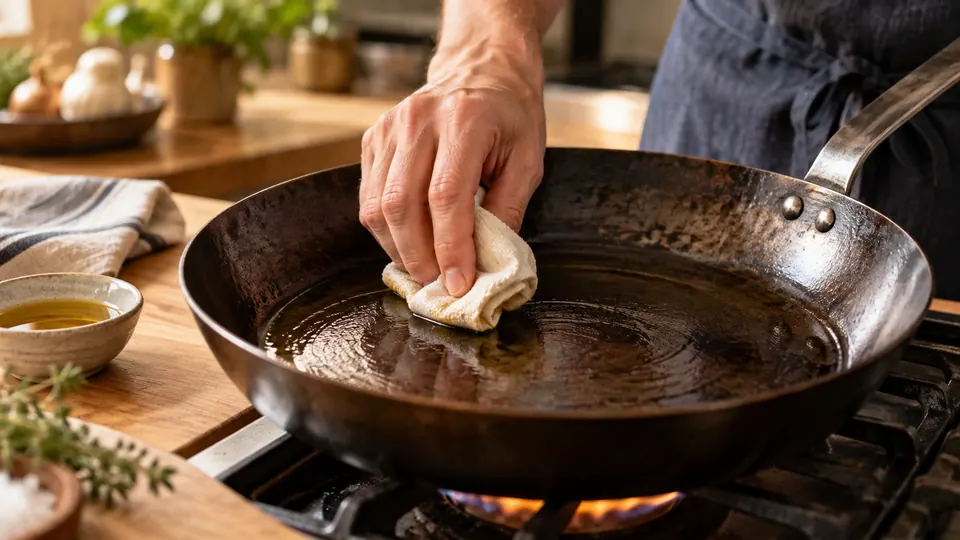
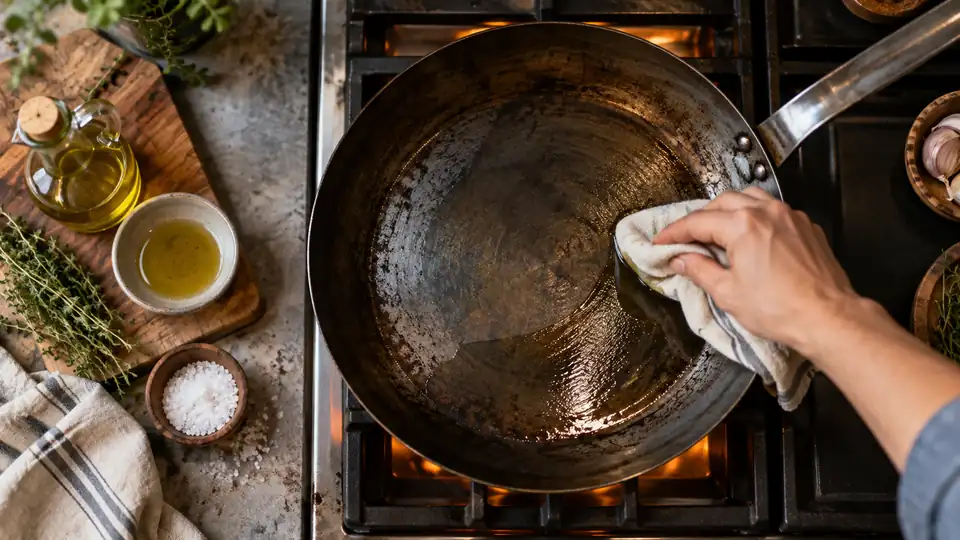
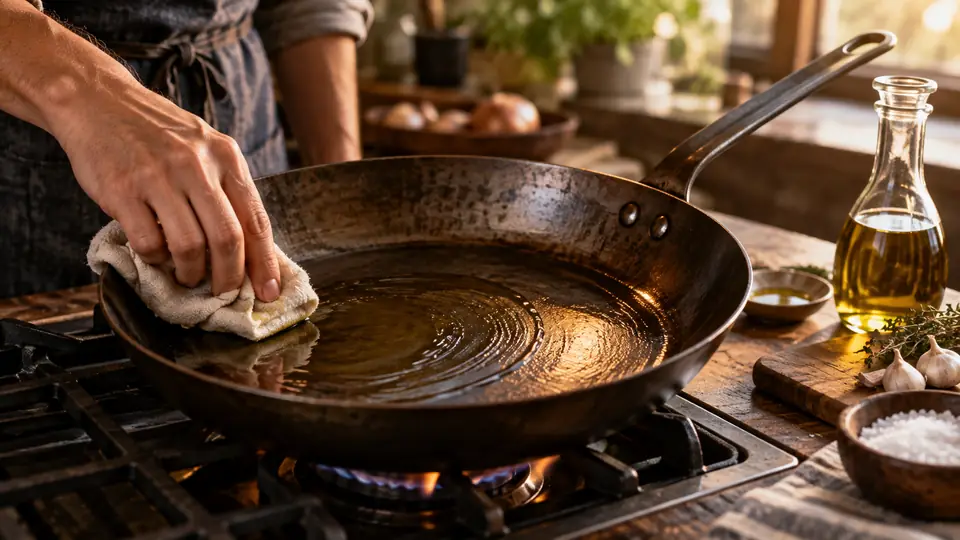
This is a classic mistake. People often coat the entire pan heavily, then bake or heat it, which leaves a sticky surface. A seasoning layer should be very thin. After applying oil, most of it should be wiped away so the pan looks nearly dry before heating.
Scrubbing off useful seasoning after every use
Carbon steel does not need to look pristine after each meal. If food bits remain, clean them off. If the surface is dark and uneven, that is usually normal. Aggressive scrubbing with the goal of returning the pan to bare silver metal often creates extra work and delays improvement.
What Beginners Need to Know About Daily Use
Preheat first, but not aggressively
Place the pan over low to medium heat and give it time to warm gradually. Carbon steel responds faster than cast iron, so it usually does not need an extended preheat. Once the surface is warm, add oil and let it shimmer lightly before adding food.
This step helps reduce sticking because the oil spreads more evenly and the metal surface interacts with food more predictably.
Use enough cooking fat
Even a nicely seasoned pan usually performs better with some oil or butter. Beginners sometimes use too little, especially when trying to imitate nonstick behavior. Carbon steel is not meant to be a dry-contact cooking surface for every food.
Let food release naturally
Protein often sticks at first, then releases once a crust forms. Trying to flip too early tears the food and makes the pan seem worse than it is. This matters with chicken thighs, steaks, burgers, and even some vegetables.
Clean simply, not harshly
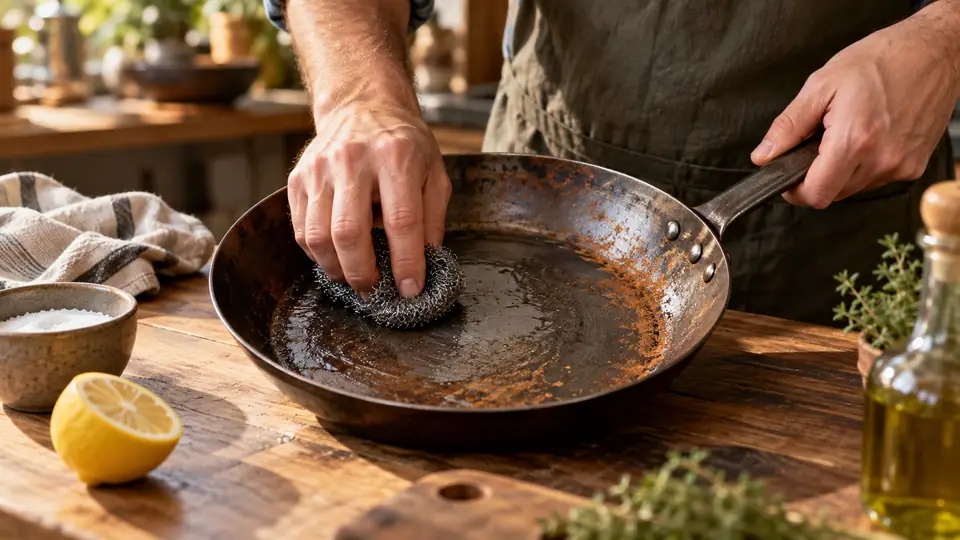
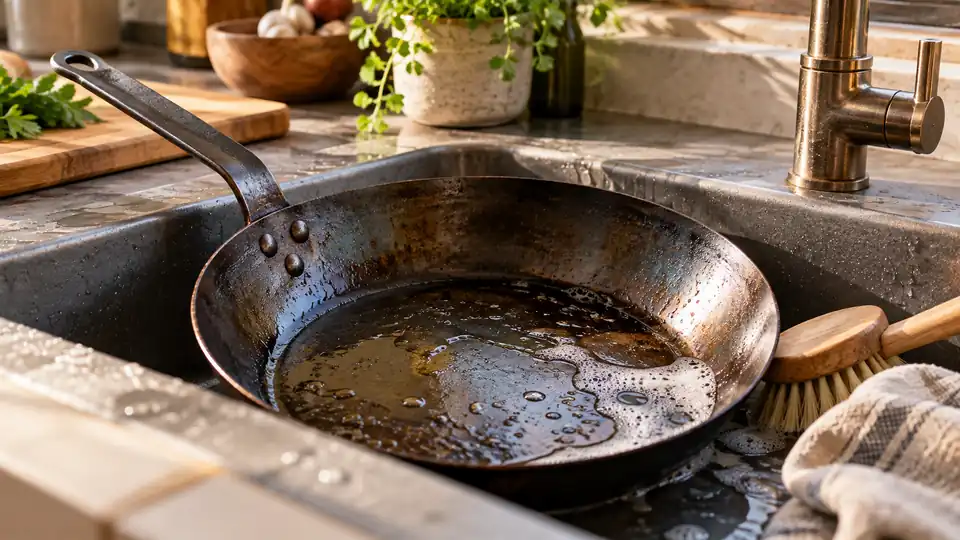
Warm water, a soft scrubber, and a gentle touch are enough for most cleanup. Stuck bits can often be loosened with hot water or coarse salt and a cloth. After washing, dry the pan fully. A light oil wipe is optional but helpful if the surface looks dry or recently scrubbed.
Key Benefits of Carbon Steel for Beginners
- Long lifespan: A carbon steel pan can last for decades with basic care.
- Versatility: It works for stovetop searing, frying, sautéing, and oven finishing.
- Improving performance: The cooking surface often gets better with regular use.
- Lighter handling: Many models are easier to lift than similar cast iron pans.
- No synthetic nonstick coating: There is no coating to flake or wear out in the same way.
- Skill-building: It teaches heat control and better pan technique.
Potential Drawbacks Beginners Should Take Seriously
- Requires maintenance: You need to dry it thoroughly and protect it from rust.
- Early sticking is common: Technique and seasoning take time to develop.
- Not ideal for every dish: Long acidic cooking can interfere with seasoning.
- Visual unevenness can be confusing: The pan may look blotchy even when it is performing well.
- Heat mistakes show quickly: Overheating can cause problems faster than some beginners expect.
A Simple First-Week Plan for New Carbon Steel Owners
Beginners often do better with carbon steel if they avoid trying to prove everything on day one. A simple progression makes the learning curve much smoother.
Days 1 to 2
- Wash off any factory coating if needed
- Apply or confirm seasoning
- Cook something forgiving, such as onions, potatoes, or grilled cheese
Days 3 to 5
- Try burgers, sausages, or sautéed vegetables
- Practice moderate preheating and oil timing
- Notice how the surface changes, but do not chase perfect color
Days 6 to 7
- Test eggs or pancakes once the pan has seen a few oily cooks
- Adjust heat lower than you think you need
- Clean gently and dry thoroughly after each use
This approach helps beginners build seasoning naturally while also learning how the pan reacts. It is usually more effective than repeated full reseasoning sessions between every meal.
Frequently Asked Questions
Do carbon steel pans stick a lot for beginners?
They can stick in the beginning if the pan is not seasoned well, if the heat is too high or too low, or if food is moved too early. With proper preheating, enough fat, and regular use, sticking usually becomes much less of a problem.
Are carbon steel pans easier for beginners than cast iron?
In some ways, yes. Carbon steel is often lighter and more responsive, which makes it easier to maneuver and adjust during cooking. Cast iron is usually more forgiving about heat distribution once fully heated, but its weight can be harder for some new cooks to manage.
Can a beginner ruin a carbon steel pan?
Permanent damage is uncommon. Rust, stripped seasoning, and stuck-on messes can usually be fixed. The most realistic problems are warping from excessive heat and long-term neglect, but even then, many pans remain usable.
Is a pre-seasoned carbon steel pan better for beginners?
It can be. Pre-seasoning may reduce the setup work and help the pan perform better sooner. It does not remove the need for proper use and care, but it can make the first few meals less frustrating.
Should beginners buy carbon steel instead of nonstick?
That depends on priorities. If you want the easiest path to low-stick cooking right away, nonstick is simpler. If you want a more durable pan that can improve over time and handle higher heat, carbon steel is often the better long-term choice.
Final Thoughts
Are carbon steel pans good for beginners? Yes, for the right kind of beginner. They are a strong choice for people who cook regularly, want a durable pan, and do not mind learning a few habits around seasoning, drying, and heat control. They are less suitable for someone who wants instant nonstick performance with no upkeep.
The learning curve is real, but it is not steep enough to avoid the material entirely. Most beginner problems with carbon steel come from expectations, not from the pan itself. If you understand that the surface improves with use and that a little care prevents rust and sticking, carbon steel can be an excellent first serious pan. For many new cooks, it becomes the pan they reach for most once the basics click.

Leave a Reply