
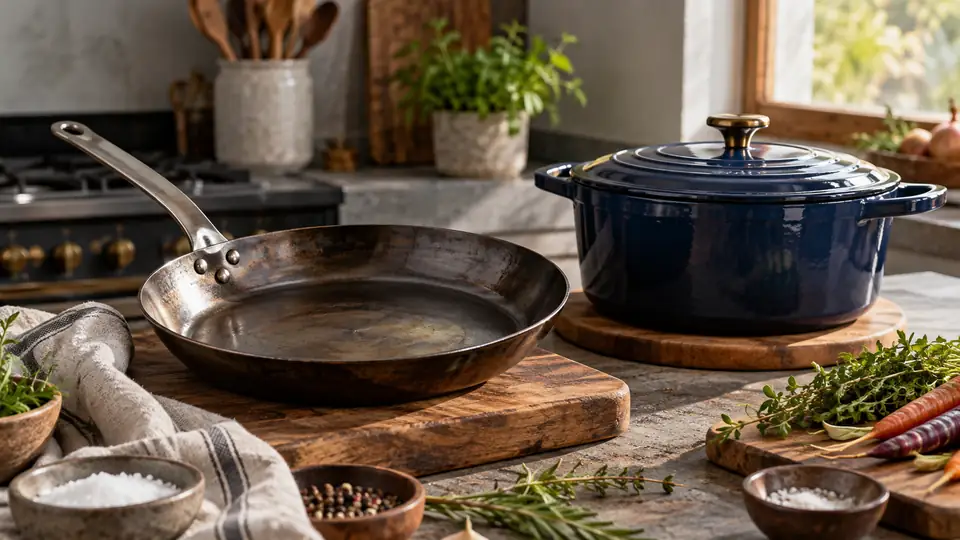
Carbon Steel vs Enameled Cast Iron is a useful comparison because these two materials solve very different kitchen problems. Both are durable, oven-friendly, and capable of excellent browning, yet they behave differently on the stove, demand different care, and suit different cooking styles. A cook deciding between them is not just choosing a pan. They are choosing between a lighter, more responsive surface that develops seasoning over time and a heavier, enamel-coated surface that favors moisture, gentle acidity, and easy cleanup.
Carbon steel is often associated with searing, frying, sautéing, and fast temperature control. Enameled cast iron is better known for braises, stews, baked dishes, and recipes that need steady heat over a longer period. Neither is automatically better in every kitchen. The right choice depends on what you cook most, how much maintenance you are willing to do, and how much weight you want to lift every day.
This guide breaks down Carbon Steel vs Enameled Cast Iron in practical terms so you can decide which one fits your habits, not just which one sounds appealing on paper.
Quick Answer
In Carbon Steel vs Enameled Cast Iron, carbon steel is usually the better choice for high-heat stovetop cooking, quick response, lighter handling, and a naturally seasoned surface that improves with use. Enameled cast iron is usually the better choice for slow cooking, simmering, baking, acidic foods, and lower-maintenance ownership because it does not require seasoning and does not rust as easily when cared for properly.
If you cook eggs, steaks, stir-fries, potatoes, and pan-seared foods several times a week, carbon steel often feels more versatile and easier to maneuver. If you make soups, tomato sauces, braises, chili, casseroles, and bread, enameled cast iron is often more convenient and forgiving.
Carbon steel needs seasoning and can rust if left wet. Enameled cast iron avoids those issues, but it is heavier, slower to react to temperature changes, and the enamel can chip if handled roughly. For many cooks, the decision comes down to this: choose carbon steel for speed and everyday skillet work, and choose enameled cast iron for wet cooking and longer oven dishes.
Carbon Steel vs Enameled Cast Iron at a Glance
| Feature | Carbon Steel | Enameled Cast Iron |
|---|---|---|
| Weight | Lighter than cast iron, easier to lift and toss | Much heavier, especially Dutch ovens and deep skillets |
| Heat Responsiveness | Heats quickly and responds faster to burner changes | Heats more slowly and changes temperature gradually |
| Heat Retention | Good, but less than cast iron | Excellent for steady, prolonged cooking |
| Surface | Seasoned cooking surface that can become naturally slick | Glass-like enamel surface, no seasoning required |
| Acidic Foods | Not ideal for long acidic cooking | Well suited to tomato, wine, vinegar, and citrus-based dishes |
| Maintenance | Needs seasoning, drying, and light oiling | Easier routine care, but enamel must be protected from chips |
| Rust Risk | Can rust if neglected | Outer rims and exposed edges can rust, but main enamel surface resists rust |
| Oven Use | Usually excellent, depending on handle design | Usually excellent, depending on lid knob and handle rating |
| Best Uses | Searing, frying, sautéing, eggs, pancakes, stir-fry | Braising, stews, soups, roasting, bread, casseroles |
| Main Drawback | More upkeep and less suitable for acidic simmering | Heavy and vulnerable to enamel damage |
What Is Carbon Steel?
Carbon steel cookware is made primarily from iron and carbon, usually in a relatively thin sheet compared with cast iron. It is shaped into pans, skillets, woks, and griddles, then often finished with a bare metal surface that needs seasoning. That seasoning is a layer of polymerized oil built up through heat and use. It protects the metal and improves food release.
In practical use, carbon steel sits somewhere between cast iron and stainless steel. It has more natural nonstick potential than stainless steel and more responsiveness than cast iron. It also tends to be lighter than cast iron, which matters if you regularly lift pans one-handed, move them into the oven, or tilt and toss ingredients during cooking.
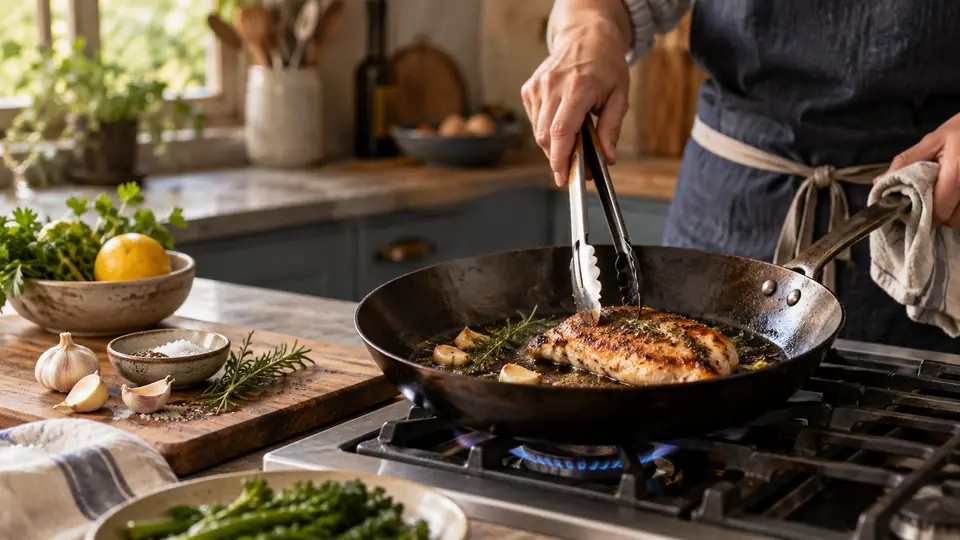
Carbon steel works especially well for cooks who like direct contact cooking. Searing chicken thighs, browning burgers, frying eggs, crisping potatoes, and cooking flatbreads are all tasks where carbon steel tends to feel comfortable and efficient. Over time, a well-used pan often becomes darker and slicker, though seasoning quality varies depending on how it is used and maintained.
What Is Enameled Cast Iron?
Enameled cast iron starts with traditional cast iron, then adds a baked-on enamel coating. That enamel is a form of glass-like protective layer. It covers the cooking surface and usually the exterior as well. Because the iron is sealed beneath enamel, the cookware does not need seasoning the way bare cast iron or carbon steel does.
The biggest practical difference is that the cooking surface is not raw metal. You do not build a patina in the same way, and you do not need to worry about maintaining seasoning after every wash. Enameled cast iron is especially useful for wet cooking, acidic recipes, and dishes that sit in the pan for a while after cooking.
Most cooks associate enameled cast iron with Dutch ovens, braisers, and heavier skillets. Those pieces excel at retaining heat and supporting slow, steady cooking. A pot of chili, a beef stew, a tomato-based braise, or a loaf of crusty bread are classic examples. The tradeoff is weight and slower responsiveness. Once an enameled cast iron pot is hot, it stays hot. That can be helpful or inconvenient depending on the recipe.
Heat Performance Comparison
Heat Responsiveness
Carbon steel reacts faster when you raise or lower the burner. That makes it easier to control delicate tasks such as sautéing vegetables without burning garlic, backing off the heat after a hard sear, or managing pancakes and eggs in quick succession. The pan still gets very hot, but it does not hold onto excess heat as stubbornly as cast iron.
Enameled cast iron is slower to respond. If the pan gets too hot, it takes longer to cool down. That can lead to scorching if you are not careful, especially on powerful burners. For recipes that need precision and frequent temperature adjustments, carbon steel usually feels easier to manage.
Heat Retention
Enameled cast iron holds heat better. This is one of its strongest advantages. In long cooks, heavy braises, oven roasting, or dishes that need a stable cooking environment, the material shines. Once properly preheated, it delivers steady thermal energy that helps maintain an even simmer or a reliable oven roast.
Carbon steel retains heat well enough for strong searing, but it loses heat faster when cold food hits the surface. For a couple of steaks or a batch of cutlets, that is usually not a problem. For very large pieces of cold meat or repeated batches, the lower mass can be noticeable.
Searing and Browning
Both can sear well, but they do it differently. Carbon steel often gives a more nimble stovetop sear because it heats faster and is easier to maneuver. It is a strong choice for browning proteins, crisping skin, and developing color on vegetables.
Enameled cast iron can also brown effectively, especially once fully preheated, but it often feels more deliberate and slower. On the plus side, the steady retained heat can help maintain browning across thicker cuts or oven-finished dishes. On the downside, overheating an empty enameled pan can damage the enamel over time, so high heat should be used more carefully than with many carbon steel pans.
Cooking Surface Comparison
Carbon Steel Surface
A seasoned carbon steel surface can become impressively slick, especially for foods like eggs, crepes, fried rice, and hash browns. That does not mean it behaves exactly like synthetic nonstick cookware, but once the pan is well preheated and lightly oiled, food release can be excellent.
The catch is that the surface has to be developed and maintained. New owners often struggle because they expect instant nonstick results. In reality, sticking usually comes from one of three issues: weak seasoning, poor preheating, or trying to move food before it naturally releases.
Enameled Cast Iron Surface
Enameled cast iron does not season in the same way. Some enamel interiors are smooth and dark, while others are light and slightly textured. Food can still stick, especially if the pan is too cool, too hot, or not properly preheated with fat. It is easier to clean than bare metal in many situations, but it does not automatically behave like a nonstick surface.
Where enamel stands out is compatibility with a wider range of foods. Tomato sauce, wine reductions, vinegar-heavy braises, and lemon-based dishes are all much safer choices in enameled cast iron than in carbon steel for extended cooking.
Acidic Ingredients
This is one of the clearest differences in Carbon Steel vs Enameled Cast Iron. Carbon steel and acidity do not mix well for long cooks. A quick squeeze of lemon at the end of cooking is usually fine, but simmering tomato sauce or braising in wine for an hour can strip seasoning and leave metallic flavors.
Enameled cast iron is better suited for those dishes because the enamel separates the food from the iron beneath it. That makes it a practical choice for soups, shakshuka, braised short ribs with wine, and pasta sauces.
Durability Comparison
Long-Term Toughness
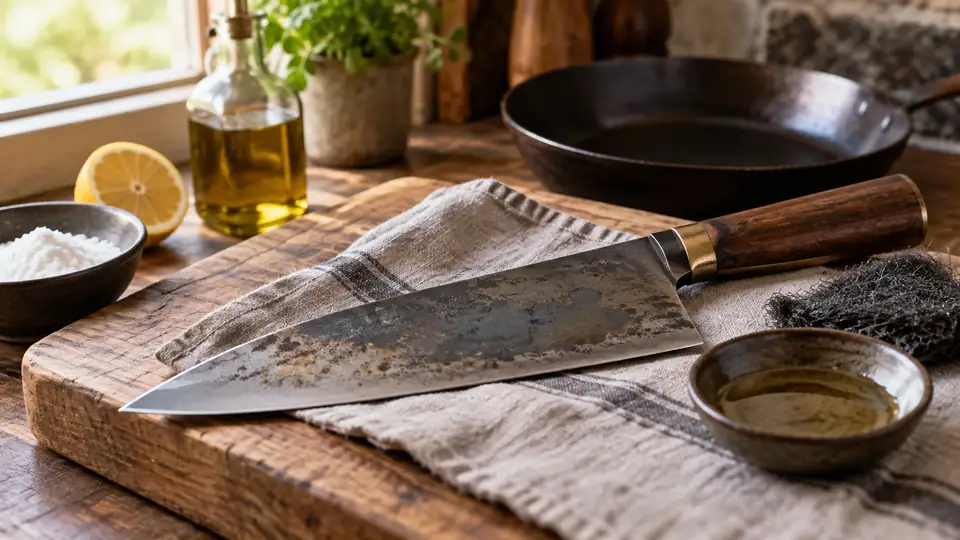
Carbon steel is physically tough. It can warp if badly overheated, especially thinner pans, but it is hard to chip because there is no enamel layer. Surface rust, stripped seasoning, and discoloration are usually repairable. In most cases, a neglected carbon steel pan can be scrubbed, reseasoned, and returned to service.
Enameled cast iron has a strong iron body, but the enamel coating is the vulnerable part. It can chip if dropped, knocked against a sink, or hit with metal tools too aggressively. Once enamel chips badly on the cooking surface, repair is not straightforward. That makes enameled cast iron durable in one sense but less recoverable in another.
Rust and Corrosion
Carbon steel can rust quickly if moisture is left on the pan. That sounds alarming, but light rust is usually fixable. The more important point is that carbon steel rewards consistent habits: wash, dry thoroughly, and apply a thin film of oil when needed.
Enameled cast iron resists rust on its coated surfaces, but it is not immune everywhere. The rim around the pot or lid may expose bare cast iron under a thin protective treatment. If those areas stay wet, rust can still appear. Even so, the routine rust risk is lower than with carbon steel.
Utensil Tolerance
Carbon steel can handle metal utensils better than enamel, though excessive scraping can disturb seasoning. Enameled cast iron is safer with wood, silicone, or other gentler tools. A metal spatula is not automatically forbidden in enamel cookware, but careless use increases the chance of scratches or chips over time.
Maintenance Requirements
Carbon Steel Care
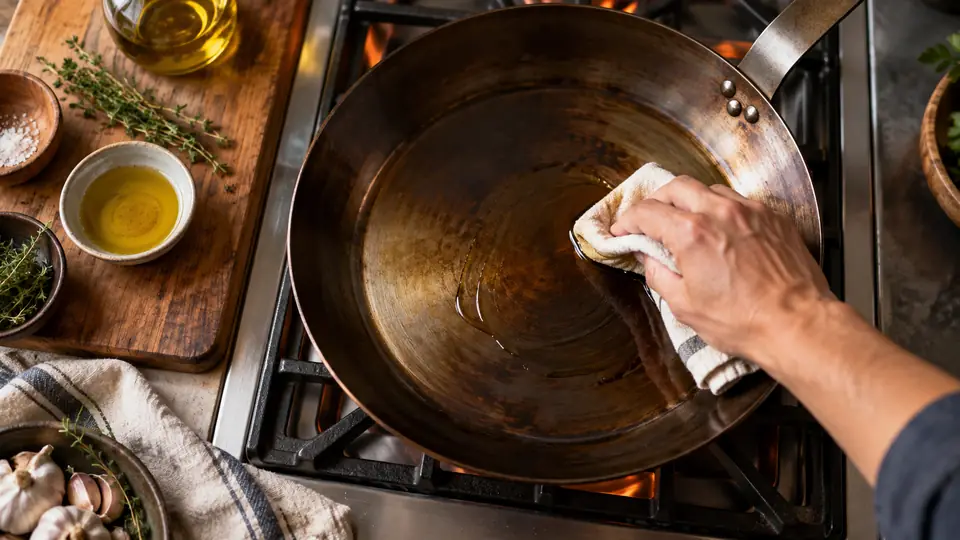
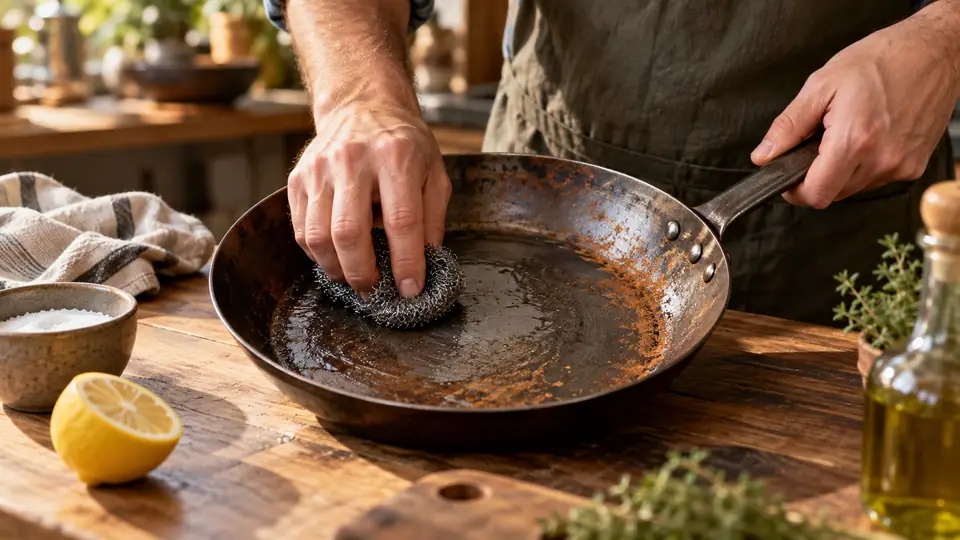
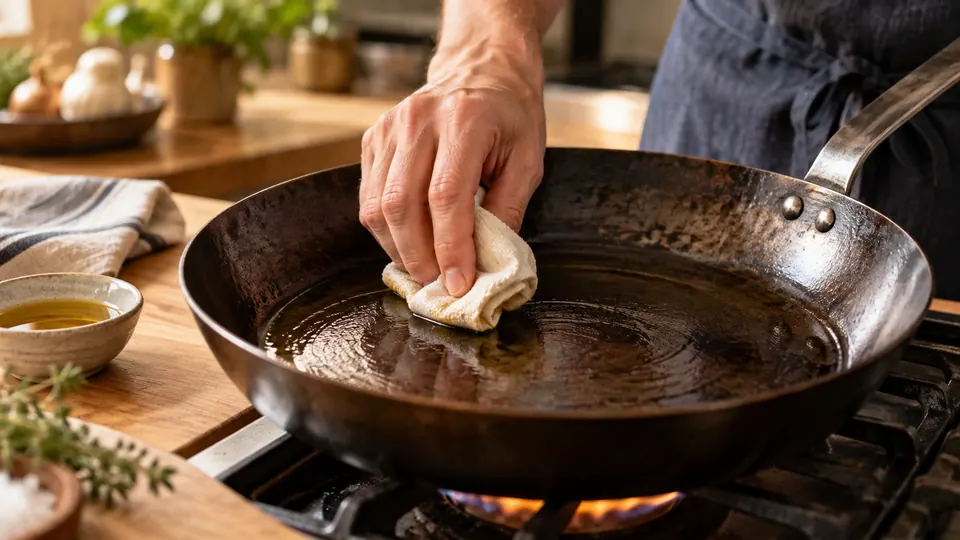
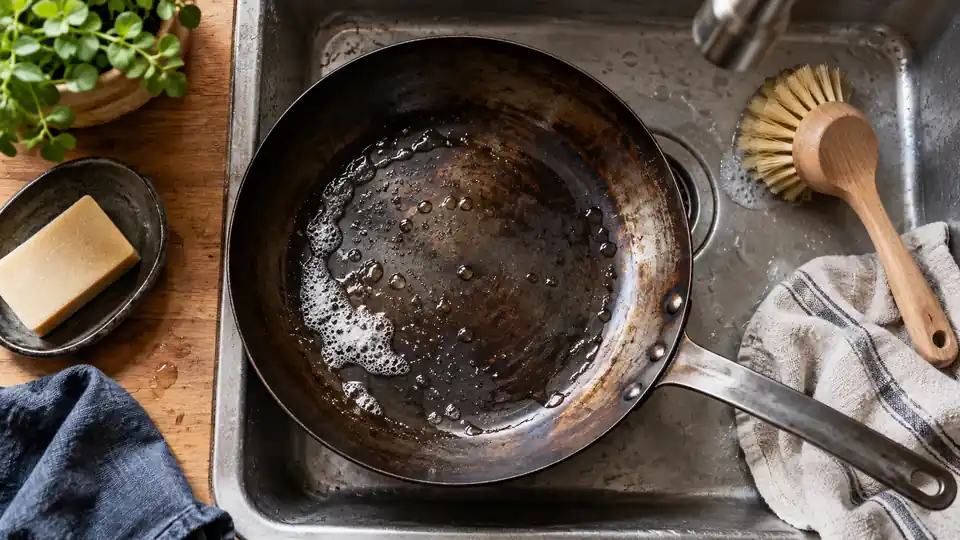
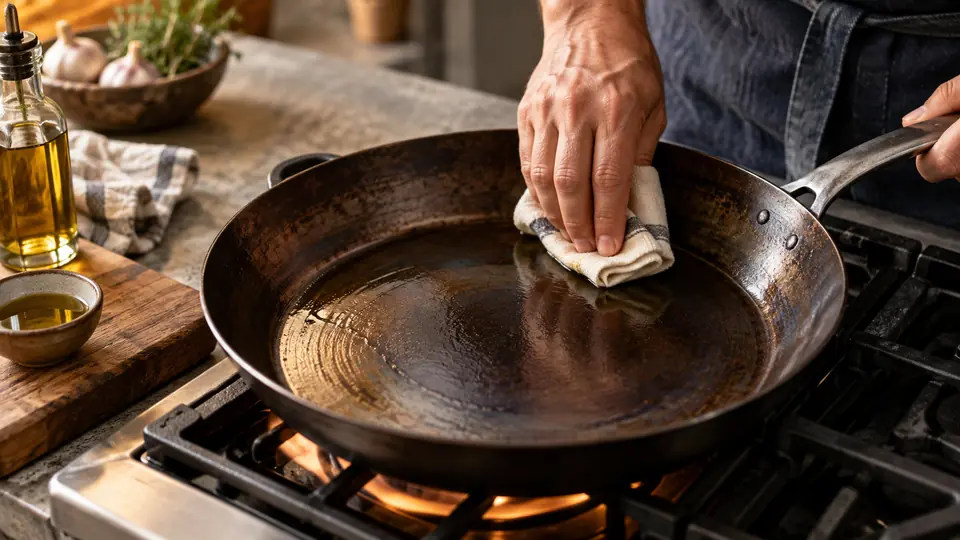
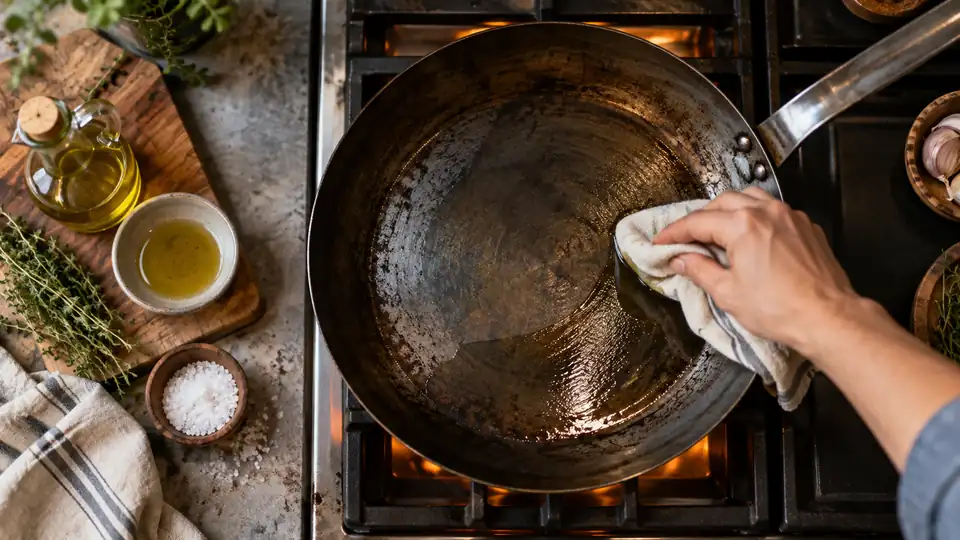
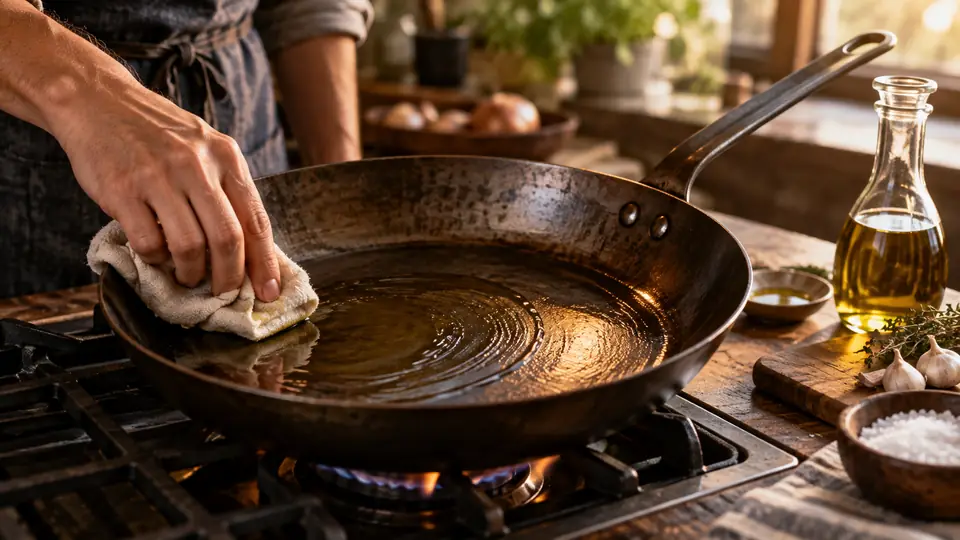
Carbon steel needs more active maintenance. After cooking, it is usually washed with hot water and a soft scrubber, dried completely, then lightly oiled if the surface looks dry or patchy. Harsh soaking and extended contact with water are a bad idea. Seasoning also benefits from regular use, especially cooking with fats.
If the surface gets rough, sticky, or blotchy, that does not always mean the pan is ruined. Thick seasoning buildup can be scrubbed back. Bare spots can be reseasoned. Carbon steel ownership often involves small corrections along the way.
Many people who are new to the material do better with a pre-seasoned carbon steel pan, because it shortens the early learning curve and makes first use less frustrating.
Enameled Cast Iron Care
Enameled cast iron is easier in day-to-day use. You wash it with soap and water, avoid sudden thermal shock, and make sure it does not bang around in storage. There is no seasoning routine and no need for protective oil after each use.
Still, easier does not mean indestructible. Empty preheating over very high heat can weaken enamel over time. Stacking pieces without protection can chip the finish. Scouring with abrasive cleaners can dull the surface. The care routine is simpler, but the consequences of physical damage are more permanent.
Maintenance Comparison Table
| Task | Carbon Steel | Enameled Cast Iron |
|---|---|---|
| Initial Setup | Usually needs seasoning or seasoning reinforcement | Ready to cook after washing |
| After Washing | Dry immediately, often apply thin oil layer | Dry thoroughly, no oiling needed |
| Soaking | Generally avoid | Short soaking is often acceptable |
| Acidic Foods | Use cautiously, especially for long cooks | Generally safe |
| Repairability | Usually easy to strip and reseason | Chipped enamel is difficult to fix |
Weight and Handling
Weight affects cookware more than many buyers expect. A pan can perform well on paper and still become annoying if it is awkward to lift, wash, or move from stove to oven.
Carbon steel is usually the easier daily driver. Skillets are lighter, easier to tip for basting, and more comfortable for tossing vegetables or transferring a finished omelet. That lighter feel is one reason line cooks and serious home cooks often appreciate carbon steel for active stovetop work.
Enameled cast iron is much heavier. A Dutch oven filled with liquid, meat, or beans can be very heavy. A skillet with tall walls can also be cumbersome. If you cook with one hand often, have limited grip strength, or simply dislike hauling cookware around, this difference matters a lot.
On the other hand, the same weight that makes enameled cast iron cumbersome is part of what helps it hold heat so well. The tradeoff is not accidental. It is built into the material.
Best Cooking Applications for Each
Where Carbon Steel Excels
- Pan searing steaks, chops, and chicken
- Frying eggs, pancakes, and crepes once seasoning is established
- Sautéing vegetables over changing heat
- Stir-frying and high-heat skillet cooking
- Roasting foods that benefit from a hot, dry surface
- Cooking foods where easy pan movement matters
Carbon steel is especially satisfying for dry-heat cooking. It rewards rhythm: preheat, oil lightly, cook, deglaze if needed, wipe or wash, dry, and store. For cooks who enjoy that interaction, it feels efficient rather than demanding.
Where Enameled Cast Iron Excels
- Braises, stews, and soups
- Tomato sauces and acidic dishes
- Casseroles and baked pasta
- Bread baking in Dutch ovens
- Beans, chili, and long simmered dishes
- Recipes that move from stove to oven for extended cooking
Enameled cast iron is often the better choice when food spends a long time in the vessel. It supports patience. Brown ingredients first, add liquid, cover, and let time do the rest. That is where its heavy build and enamel lining become real advantages rather than just design details.
Pros and Cons
Carbon Steel Pros
- Lighter and easier to handle
- Faster heat response
- Excellent for searing and sautéing
- Develops a naturally slick seasoned surface
- Usually more recoverable if the surface is neglected
- Works well for frequent stovetop cooking
Carbon Steel Cons
- Needs seasoning and more regular maintenance
- Can rust if left wet
- Less suitable for long acidic cooks
- Seasoning can be frustrating for new users
- Some thinner pans may warp with poor heat management
Enameled Cast Iron Pros
- No seasoning required
- Handles acidic foods well
- Excellent heat retention
- Ideal for braising, simmering, and baking
- Easier routine cleanup for many dishes
- Good choice for one-pot meals
Enameled Cast Iron Cons
- Heavy and less maneuverable
- Slower to respond to temperature changes
- Enamel can chip or crack
- Not as naturally slick as well-seasoned carbon steel
- Overheating can damage enamel over time
Which One Should You Choose?
Choose Carbon Steel If
- You cook mostly on the stovetop
- You value fast response and lighter handling
- You want a pan for eggs, searing, sautéing, and frying
- You do not mind learning seasoning and care basics
- You prefer cookware that can improve with repeated use
Carbon steel tends to suit cooks who are in the pan often, adjusting heat, moving food, and using the same skillet several times a week. It is especially appealing if you like a tool that becomes more personalized over time.
Choose Enameled Cast Iron If
- You make soups, braises, sauces, and oven dishes regularly
- You want less maintenance than carbon steel requires
- You cook with tomatoes, wine, or vinegar often
- You value strong heat retention more than quick responsiveness
- You do not mind the extra weight
Enameled cast iron is often the easier choice for cooks who want reliability with minimal surface management. If your meals involve simmering, covered cooking, or oven finishing more than pan tossing and fast searing, it often makes better sense.
If You Can Only Own One
If you cook mostly dry-heat skillet meals, carbon steel is usually the more flexible single-pan choice. If you cook more one-pot meals, wet dishes, and oven recipes, enameled cast iron is usually the more useful single-piece choice.
For many kitchens, these materials complement each other rather than compete directly. A carbon steel skillet and an enameled cast iron Dutch oven cover very different jobs extremely well.
Common Mistakes People Make in This Comparison
- Assuming carbon steel is nonstick right away. It often takes some use and proper heat control before performance improves.
- Using enameled cast iron on excessively high heat while empty. This can stress the enamel and is rarely necessary.
- Treating carbon steel like stainless steel. Long soaking, air drying, and acidic simmering can create problems.
- Treating enameled cast iron like bare cast iron. It does not need seasoning, and rough treatment can damage the coating.
- Ignoring weight in the buying decision. A heavy pot may perform well but still be inconvenient for everyday use.
- Choosing based on appearance alone. Both materials can be attractive, but function matters more than looks in long-term satisfaction.
Frequently Asked Questions
Is carbon steel better than enameled cast iron for steak?
Carbon steel is often better for steak if you want quick preheating, strong contact searing, and easier stovetop handling. Enameled cast iron can still sear steak well, but it is heavier and slower to adjust if the pan gets too hot.
Can enameled cast iron replace carbon steel?
It can replace some tasks, but not all. Enameled cast iron handles braising, roasting, and simmering better than carbon steel. It does not replace the light feel, fast responsiveness, or seasoned cooking surface that make carbon steel appealing for everyday skillet work.
Is carbon steel easier to clean than enameled cast iron?
Not usually. Carbon steel can clean up quickly after simple cooking, but it requires drying and occasional oiling. Enameled cast iron is often easier overall because it does not need seasoning maintenance, though burnt-on residue can still require soaking and scrubbing.
Which is better for eggs, carbon steel or enameled cast iron?
Carbon steel is usually better for eggs once the seasoning is established and the pan is preheated properly. Enameled cast iron can cook eggs, but it is less forgiving for release and slower to adjust if heat is slightly off.
Does enameled cast iron last longer than carbon steel?
Both can last a very long time, but they fail in different ways. Carbon steel may rust or lose seasoning, yet it is often easy to restore. Enameled cast iron resists rust better in normal use, but serious enamel chips are much harder to fix.
Final Verdict on Carbon Steel vs Enameled Cast Iron
Carbon Steel vs Enameled Cast Iron is not really a contest between a good material and a bad one. It is a choice between two tools built for different strengths. Carbon steel is the stronger option for responsive stovetop cooking, lighter handling, and a seasoned surface that can become excellent for everyday skillet work. Enameled cast iron is the stronger option for slow cooking, acidic ingredients, deep heat retention, and lower-maintenance ownership.
If your cooking revolves around searing, frying, sautéing, and active pan work, carbon steel is likely the better fit. If your kitchen leans toward braises, sauces, soups, baking, and one-pot meals, enameled cast iron is likely the better choice. The more closely you match the material to the way you actually cook, the happier you will be with either one.

Leave a Reply