
Carbon steel sits in an interesting middle ground between pure iron and more complex stainless alloys. That is why cooks, knife users, and metalworkers often hear the term but do not always get a clear explanation of what it actually means. Understanding what carbon steel is made of helps explain why it can season, why it rusts, why it takes a sharp edge so well, and why it behaves differently from stainless steel or cast iron.
For cookware, the material matters because composition affects heat response, durability, seasoning performance, and maintenance needs. For knives and tools, it affects hardness, edge retention, toughness, and corrosion resistance. Carbon steel is not one single formula. It is a family of steel types built around the same basic idea: iron plus carbon, with relatively low amounts of alloying elements compared with stainless steel.
Once you know the core ingredients and what each one does, the behavior of a carbon steel pan or knife becomes much easier to understand in everyday use.
Quick Answer
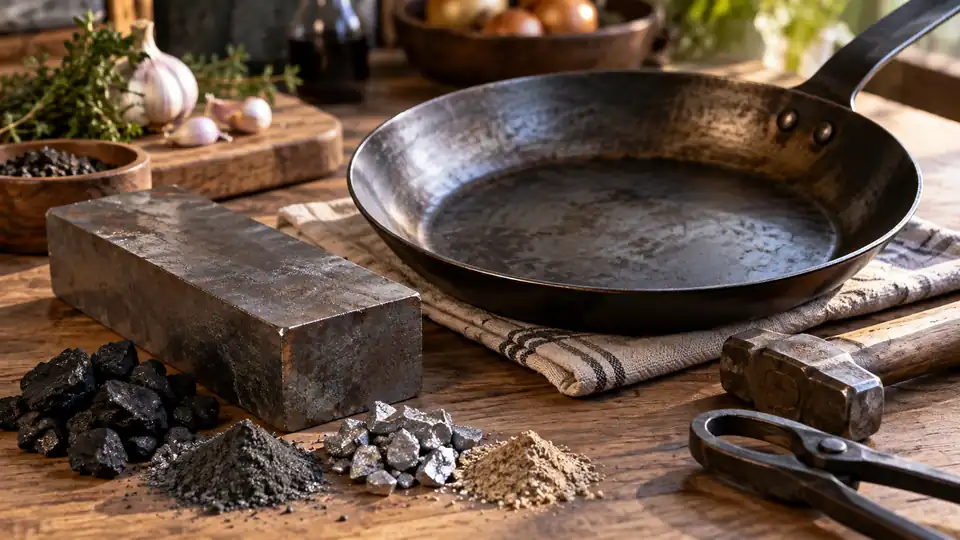
What is carbon steel made of? Carbon steel is made primarily of iron and carbon. Iron is the base metal, and carbon is added in controlled amounts to increase hardness, strength, and performance. Most carbon steel also contains small amounts of other elements such as manganese, silicon, phosphorus, and sulfur, either from the manufacturing process or because they serve specific purposes in the finished steel.
What separates carbon steel from stainless steel is not just the presence of carbon. It is the lack of high chromium content. Stainless steel usually contains at least about 10.5 percent chromium, which helps it resist rust. Carbon steel does not have enough chromium to be considered stainless, so it can oxidize and rust if not dried, oiled, or seasoned properly.
In cookware, carbon steel is usually a low-to-medium carbon steel formed into sheets, pans, or woks. In knives and tools, the carbon content may be higher to support a harder edge. That simple iron-and-carbon foundation is what gives carbon steel its useful mix of strength, responsiveness, and vulnerability to corrosion.
What Is Carbon Steel Made Of?
At its simplest, carbon steel is made of iron with carbon added. That sounds basic, but the amount of carbon has a major effect on how the steel performs. Even small changes in carbon percentage can change hardness, flexibility, wear resistance, and ease of sharpening.
Most carbon steels also contain trace or modest amounts of other elements. These are usually not present in the high levels you would see in stainless steel or specialized alloy steels, but they still matter. In practical terms, carbon steel remains an iron-dominant material whose defining strengthening ingredient is carbon.
The Main Ingredients
| Element | Typical Role in Carbon Steel | Why It Matters in Real Use |
|---|---|---|
| Iron | Base metal | Forms the structure of the steel |
| Carbon | Increases hardness and strength | Helps knives take a keen edge and helps steel resist deformation |
| Manganese | Improves strength and hardenability | Supports durability and manufacturing consistency |
| Silicon | Used during steelmaking, can improve strength | Common minor ingredient in many steels |
| Phosphorus | Usually kept low | Too much can make steel brittle |
| Sulfur | Usually controlled carefully | Can improve machinability, but excess may reduce toughness |
Iron Is the Foundation
Iron makes up the vast majority of carbon steel. On its own, pure iron is relatively soft for demanding cookware and cutting applications. It needs another ingredient to become more useful. That is where carbon comes in.
The iron structure gives carbon steel its weight, magnetic properties, and ability to conduct and respond to heat. In cookware, that means a pan can heat quickly and tolerate high temperatures. In knives, it means the blade can be shaped, hardened, and sharpened effectively.
Carbon Is the Key Strengthening Element
Carbon is present in a much smaller amount than iron, but it has an outsized effect. Adding carbon makes steel harder and stronger than plain iron. It also influences how the steel responds to heat treatment, which is especially important for knives and tools.
As carbon content rises, steel generally becomes harder and better at holding an edge, but also less ductile. In plain English, higher-carbon steel can perform better in cutting tasks, but it may also be less forgiving if misused. For cookware, manufacturers usually balance carbon content for strength and formability rather than maximum hardness.
Typical Carbon Content in Carbon Steel
The word carbon steel covers a wide range of steel compositions. The exact carbon percentage can vary depending on whether the steel is intended for sheet metal, cookware, blades, springs, or industrial parts.
A common general range is roughly 0.05 percent to 2.0 percent carbon. In practice, cookware and knives usually occupy different parts of that range.
Common Carbon Steel Categories
| Category | Approximate Carbon Content | Common Uses |
|---|---|---|
| Low-carbon steel | About 0.05% to 0.30% | Sheet steel, cookware bodies, formed metal parts |
| Medium-carbon steel | About 0.30% to 0.60% | Some tools, structural parts, tougher wear applications |
| High-carbon steel | About 0.60% to 1.00% or more | Knives, cutting tools, springs, wear-resistant parts |
These categories are broad, and exact cutoffs can vary by source. Still, they are useful for understanding how carbon steel products differ. A carbon steel skillet and a carbon steel chef knife are not necessarily made from the same exact grade.
Cookware Usually Uses Lower Carbon Content
Carbon steel pans, woks, and griddles are commonly made from low-carbon sheet steel. That makes the material easier to stamp, spin, press, and shape into cookware. It also leaves the pan tough enough for everyday use without being overly brittle.
The pan does not need knife-like hardness. What it needs is a durable cooking surface, good heat response, and the ability to handle stovetop and oven temperatures. Lower-carbon steel meets those needs while remaining practical to manufacture.
Knives Often Use Higher Carbon Content
Carbon steel knives usually use medium- to high-carbon steel grades because a blade benefits from greater hardness. More carbon allows the steel to be heat treated to a level that supports a fine, long-lasting edge.
That is why knife discussions often mention specific steel types such as 1095. Those grades are chosen not just because they are carbon steel, but because their carbon levels suit cutting performance. If you are comparing blade steels, a guide to 1095 carbon steel knives can help show how composition affects edge behavior in actual use.
What Other Elements Are Found in Carbon Steel?
Although iron and carbon are the defining ingredients, carbon steel is almost never made of only those two elements. Small amounts of additional elements are common. Some are intentionally added. Others remain from the steelmaking process.
These elements usually stay low enough that the steel is still classified as carbon steel rather than alloy steel or stainless steel.
Manganese
Manganese is one of the most common additions. It can improve strength and help the steel respond better during hardening and manufacturing. In everyday terms, it helps make the steel more dependable and usable.
You will not notice manganese directly while cooking an egg or slicing an onion, but it contributes to the steel’s overall structure and durability.
Silicon
Silicon is often present in small amounts because it is used during steel production as a deoxidizer. It can also contribute to strength. Usually, it is not the element consumers focus on, but it is part of why real-world steel formulas are more complex than simply iron plus carbon.
Phosphorus and Sulfur
Phosphorus and sulfur are generally kept fairly low. Too much phosphorus can make steel more brittle. Sulfur can improve machinability in some cases, but too much may reduce toughness.
For cookware and kitchen knives, balance matters. Manufacturers want a steel that performs predictably, not a material loaded with impurities that weaken it.
Small Alloying Additions in Some Steels
Some steels marketed broadly as carbon steel may also contain modest amounts of elements such as chromium, vanadium, or molybdenum, but not enough chromium to make the steel stainless. This can blur the line between plain carbon steel and low-alloy steel, especially in knives.
That is one reason steel discussions can get confusing. In cookware, the term usually refers to relatively simple carbon steel sheet. In knives, naming conventions can overlap with alloy steel classifications.
How Carbon Steel Differs From Stainless Steel
The easiest way to understand carbon steel is to compare it with stainless steel. Both are iron-based steels. Both contain carbon. The major difference is that stainless steel contains enough chromium to form a protective layer that slows rust and staining.
Carbon steel does not have that same built-in corrosion resistance. This explains most of its maintenance quirks.
| Feature | Carbon Steel | Stainless Steel |
|---|---|---|
| Main ingredients | Iron, carbon, small supporting elements | Iron, carbon, chromium, often nickel and other alloys |
| Rust resistance | Low without seasoning or oil | Much higher due to chromium |
| Seasoning ability | Yes | No, not in the same way |
| Edge potential in knives | Often very high | Varies widely |
| Maintenance | More involved | Generally easier |
Why Chromium Matters
Chromium is the main reason stainless steel resists corrosion better. At sufficient levels, it forms a very thin passive layer on the surface. That layer helps protect the steel from oxygen and moisture.
Carbon steel lacks that protection, so exposure to water, humidity, salt, or acidic foods can lead to oxidation. On cookware, seasoning helps compensate for that. On knives, drying and oiling are often enough for routine care.
Why Carbon Steel Can Rust
Knowing what carbon steel is made of also explains why it rusts so easily compared with stainless steel. Iron reacts with oxygen and moisture. Without enough chromium to prevent that reaction, rust can form on exposed steel surfaces.
This is not a defect. It is simply part of the material’s nature. Owners who understand the composition usually find the maintenance much less mysterious.
Oxidation in Plain English
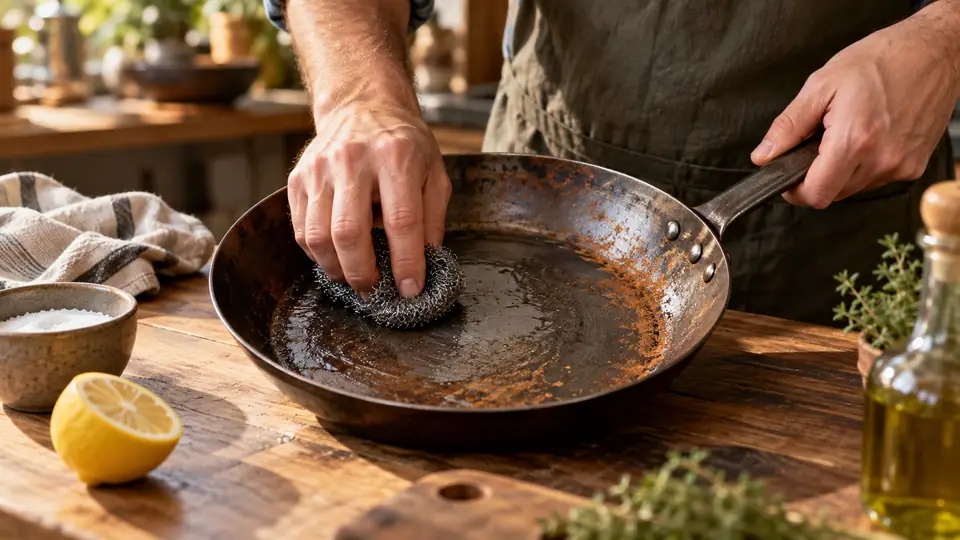
Oxidation is the reaction between iron, oxygen, and moisture. The reddish rust you see is one result of that reaction. A damp sink, air drying, or storing a pan before it is fully dry can all create conditions for rust.
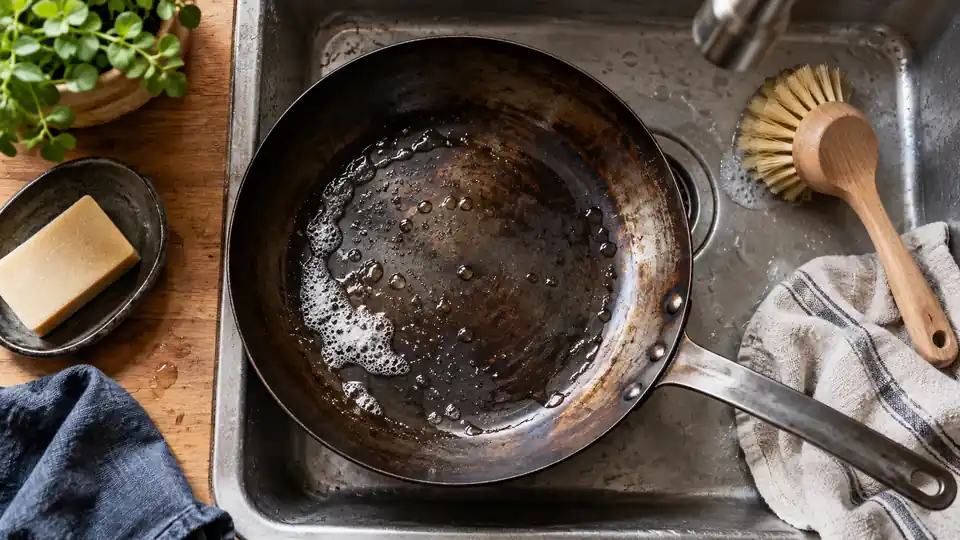
That is why carbon steel cookware should be dried promptly after washing. It is also why carbon steel knives should not be left wet on a cutting board or in a sink.
Patina and Seasoning Are Different From Rust
Carbon steel often darkens with use. That darkening may be a harmless patina or a layer of seasoning, depending on the product and use. A patina is a surface color change that can develop on knives and pans. Seasoning is a more deliberate protective layer formed when oil bonds to heated steel.
Rust is different. Rust is active corrosion. It is flaky, rough, or orange-red, and it should be removed.
How Composition Affects Carbon Steel Cookware
For pans, skillets, woks, and griddles, the composition of carbon steel helps explain both its strengths and its limitations. Even though cookware-grade carbon steel is relatively simple in chemical terms, it performs in a very useful way in the kitchen.
Heat Responsiveness
Carbon steel is valued for heating more quickly and responding faster than cast iron. That is partly due to the way cookware is made. Carbon steel pans are usually thinner than cast iron pans, so they change temperature more quickly when the burner is adjusted.
The material itself, combined with pan thickness, gives carbon steel a practical balance. It gets hot enough for searing and stir-frying but still feels more agile than heavy cast iron.
Seasoning Performance
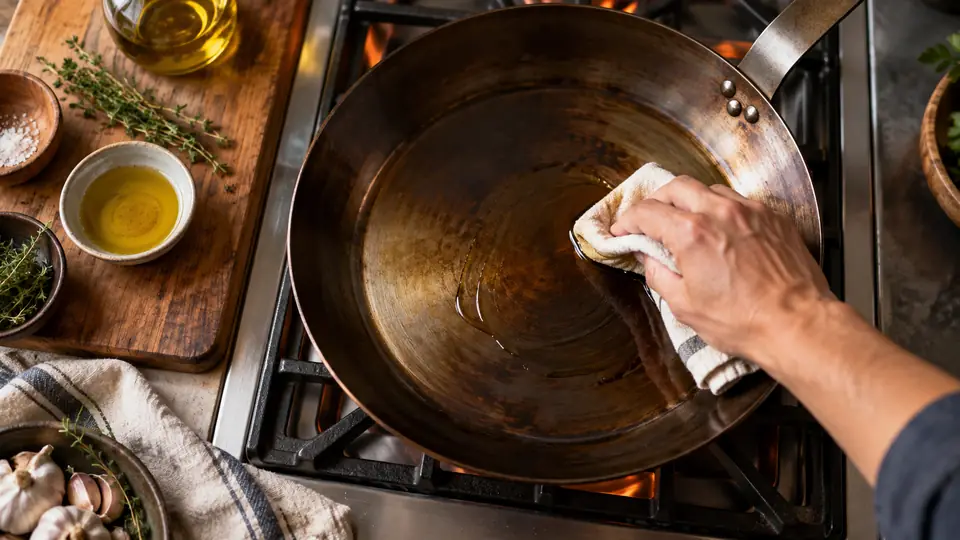
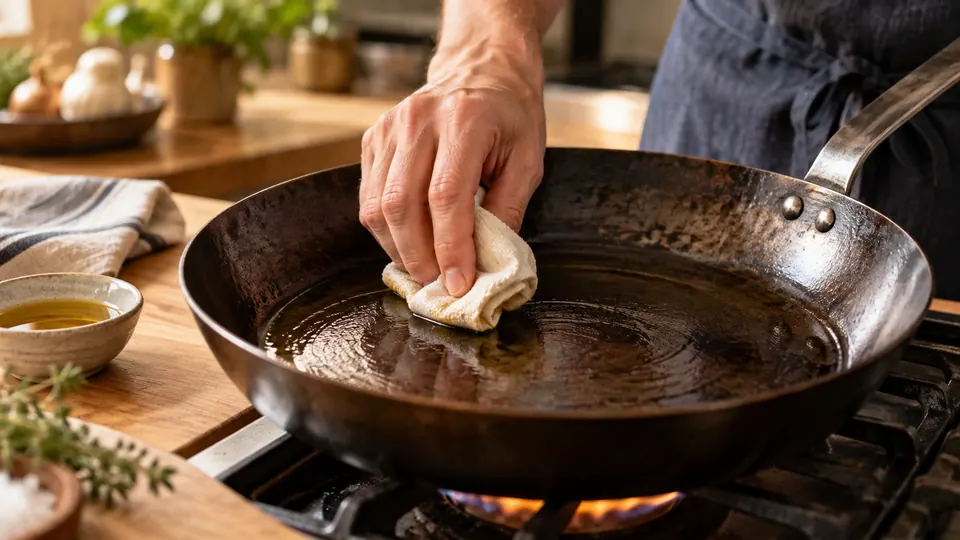
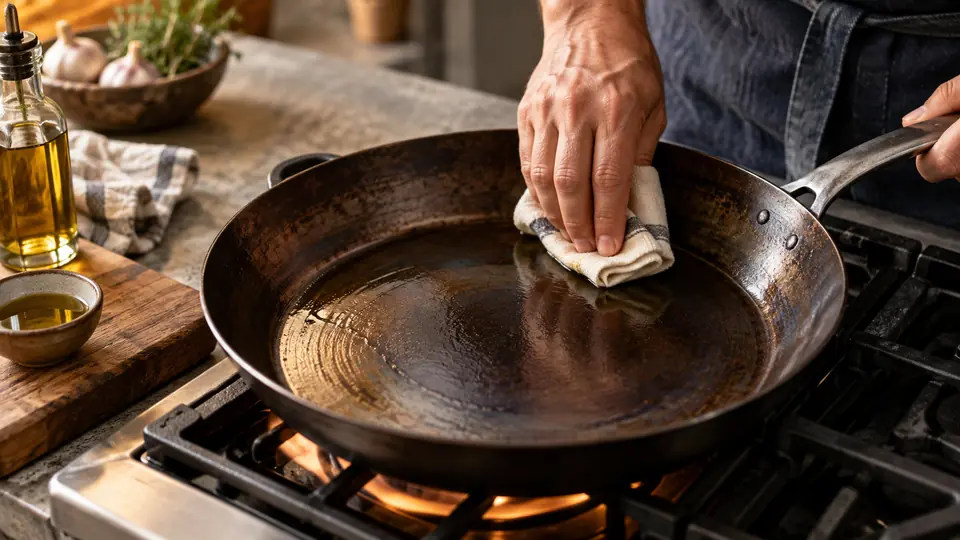
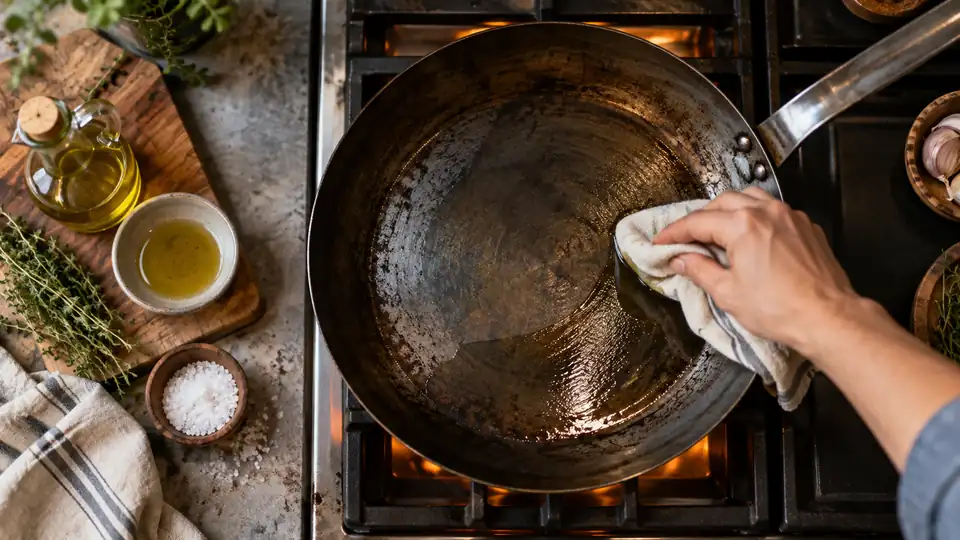
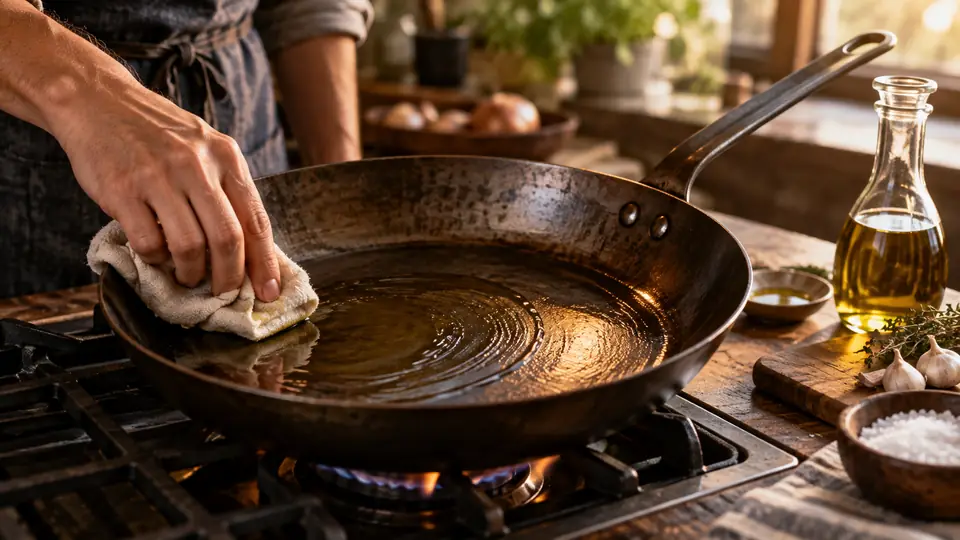
Because carbon steel contains iron and lacks a stainless protective layer, its surface can bond with heated oil. This process is called polymerization. The oil changes chemically under heat and forms a thin, darker coating on the metal.
That coating helps reduce sticking and adds some protection against moisture. It is one of the reasons carbon steel pans improve with regular use. A well-used pan often cooks more smoothly than a brand-new one.
Surface Durability
Carbon steel cookware does not have a synthetic nonstick coating to chip or peel. That makes it durable in a different way. The surface can scratch, discolor, or lose some seasoning, but the pan itself remains usable for a very long time if rust is managed.
In real kitchens, this is one of its practical strengths. A carbon steel pan often looks worn long before it is actually worn out.
Reactive Surface Considerations
Freshly seasoned or bare carbon steel can react with acidic foods such as tomatoes, wine, or vinegar. This can lighten seasoning, affect flavor slightly, or cause uneven surface color. A mature seasoning layer helps, but carbon steel is still less chemically resistant than stainless steel.
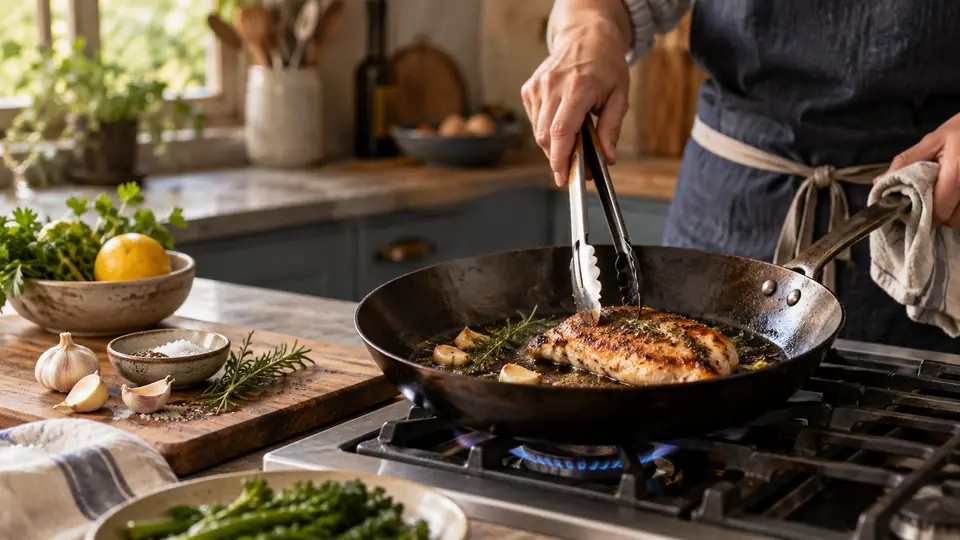
That is why it is often better for high-heat dry cooking, eggs, potatoes, pancakes, stir-fries, and seared meats than for long acidic braises or tomato-heavy sauces.
How Composition Affects Carbon Steel Knives
In knives, the role of carbon is even more obvious. Higher-carbon steel can be hardened more effectively, which allows a blade to take a very fine edge. That is one reason many cooks and sharpeners appreciate carbon steel knives.
Sharpness and Edge Retention
A good carbon steel blade can become extremely sharp. It can also be pleasant to sharpen because the steel often responds predictably on stones. For users who care about edge refinement, this is a major practical benefit.
That does not mean every carbon steel knife outperforms every stainless knife. Heat treatment, grind, blade geometry, and overall construction all matter. Still, the material composition gives carbon steel strong potential for cutting performance.
Patina Development
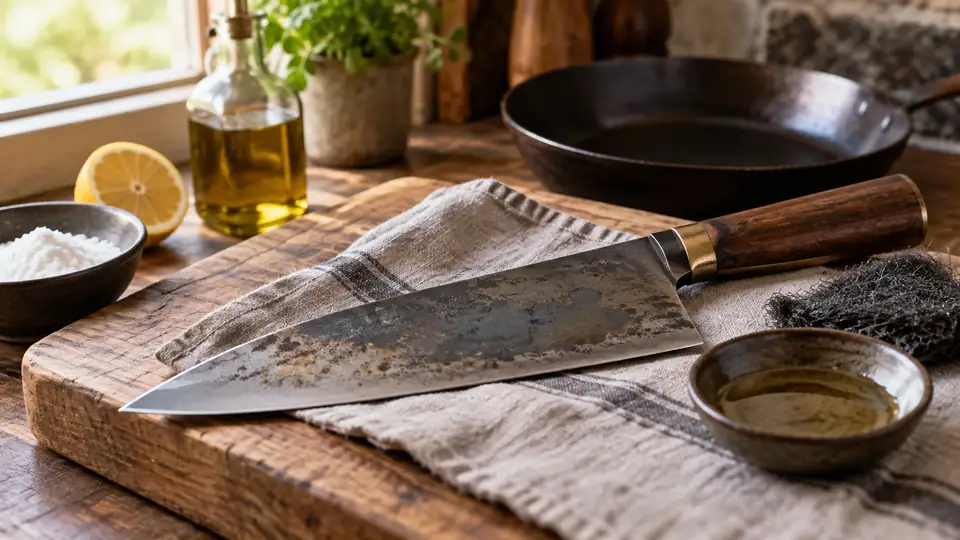
Carbon steel knives often develop a gray, blue, or dark patina with use, especially after cutting onions, citrus, or proteins. This is normal. In fact, a stable patina can offer a little extra protection compared with totally bare steel.
New users sometimes mistake patina for damage. It is usually just a sign that the steel is reacting naturally to food and air.
More Maintenance Than Stainless
The drawback is straightforward. Carbon steel knives need more attention. They should be washed by hand, dried promptly, and not stored wet. If neglected, they can spot, stain, or rust.
That extra care is directly tied to what the steel is made of. A knife with low chromium content simply has less built-in corrosion resistance.
Plain Carbon Steel, High Carbon Steel, and Alloy Carbon Steel
The language around steel types can be messy because sellers, makers, and users do not always use the same terms in the same way. It helps to separate a few broad categories.
Plain Carbon Steel
Plain carbon steel usually refers to steel where carbon is the primary alloying addition, with only small amounts of manganese, silicon, sulfur, and phosphorus. This is the classic iron-and-carbon concept most people mean when talking about carbon steel cookware.
High Carbon Steel
High carbon steel simply means the carbon content is on the higher end of the carbon steel range. This is more common in knives, blades, and cutting tools than in frying pans. More carbon generally supports more hardness, though exact performance still depends heavily on heat treatment.
Low-Alloy Carbon-Based Steels
Some steels include additional elements in modest amounts to fine-tune performance. They may still be casually called carbon steel, especially in knife discussions, even though the chemistry is more complex than plain carbon steel.
For cookware buyers, this distinction is usually less important than it is for knife buyers. Most cookware users mainly need to know whether the pan behaves like traditional carbon steel, meaning it can season and can rust.
Common Misunderstandings About What Carbon Steel Is Made Of
It Is Not Pure Carbon
Carbon steel is mostly iron, not mostly carbon. Carbon is important, but it is present in relatively small percentages. The name reflects carbon’s role as the defining strengthening ingredient, not the majority ingredient.
It Is Not the Same as Cast Iron
Cast iron also contains iron and carbon, but it usually has a much higher carbon content and a different manufacturing process. Cast iron is poured into molds in molten form. Carbon steel cookware is usually formed from sheets of steel.
This difference affects thickness, weight, brittleness, and responsiveness. Carbon steel pans tend to be lighter and quicker to react than cast iron pans.
It Is Not Automatically Better Than Stainless Steel
Some cooks prefer carbon steel for seasoning and heat responsiveness. Others prefer stainless steel for lower maintenance and better resistance to acidic foods. The composition of carbon steel gives it distinct strengths, but also clear trade-offs.
Not All Carbon Steel Products Use the Same Grade
A wok, skillet, machete, and chef knife may all be labeled carbon steel while using different exact compositions. The broad category is useful, but product-specific steel grades can still matter, especially for blades.
Why Knowing the Composition Helps in Everyday Use
Knowing what carbon steel is made of makes care instructions easier to remember. If the steel is mostly iron with limited corrosion resistance, it makes sense to dry it thoroughly. If carbon improves hardness and edge behavior, it makes sense that knives sharpen well but can also rust if ignored.
This knowledge also helps set realistic expectations. A new carbon steel pan may discolor, darken, or cook unevenly until the seasoning matures. That is normal. A carbon steel knife may form a patina after one meal prep session. That is also normal.
People often run into trouble when they expect carbon steel to behave like stainless steel. It is a different material family with different strengths. Once you understand the composition, the maintenance habits feel much more logical.
Frequently Asked Questions
Is carbon steel made only of iron and carbon?
No. Carbon steel is mainly iron and carbon, but it usually also contains small amounts of elements such as manganese and silicon. Trace amounts of phosphorus and sulfur are also common. These extra elements are usually present in much smaller amounts than the main ingredients.
How much carbon is in carbon steel?
It varies by grade. Carbon steel can range from very low carbon levels to around 1 percent or more in some high-carbon steels. Cookware often uses lower-carbon sheet steel, while knives and tools may use higher-carbon grades for added hardness.
Why does carbon steel rust so easily?
It rusts because it is iron-based steel without enough chromium to resist corrosion like stainless steel. Water, humidity, and oxygen can react with the surface and form rust. Seasoning, drying, and light oiling help reduce that risk.
Is carbon steel stronger than stainless steel?
That depends on the exact steel grades and the application. Carbon steel can be very hard and strong, especially in knives and tools, but stainless steel can also be extremely strong. The more practical difference for most kitchen users is that carbon steel usually needs more maintenance but can season and often sharpens very well.
Is carbon steel natural or man-made?
Carbon steel is a man-made alloy. Iron ore is processed into iron, and carbon plus other controlled elements are added during steelmaking to create the desired properties. It is not a naturally occurring ready-to-use metal.
Does all carbon steel cookware have the same composition?
No. Most carbon steel cookware is made from low-carbon steel, but exact grades can vary by manufacturer and product. Thickness, forming method, and finishing also affect how a pan performs, even when the basic material category is the same.
Final Thoughts
What is carbon steel made of? At its core, it is made mostly of iron and carbon, with smaller amounts of supporting elements such as manganese and silicon. That simple composition explains nearly everything people notice in real use. Carbon steel can season, respond well to heat, take a sharp edge, and last a long time. It can also rust if neglected because it lacks the chromium protection found in stainless steel.
For cookware, this means a material that rewards proper preheating, seasoning, and drying. For knives, it means strong cutting potential with a little extra care required. Once the material itself is clear, the behavior of carbon steel stops feeling unpredictable. It starts to make practical sense, both at the stove and on the cutting board.

Leave a Reply