

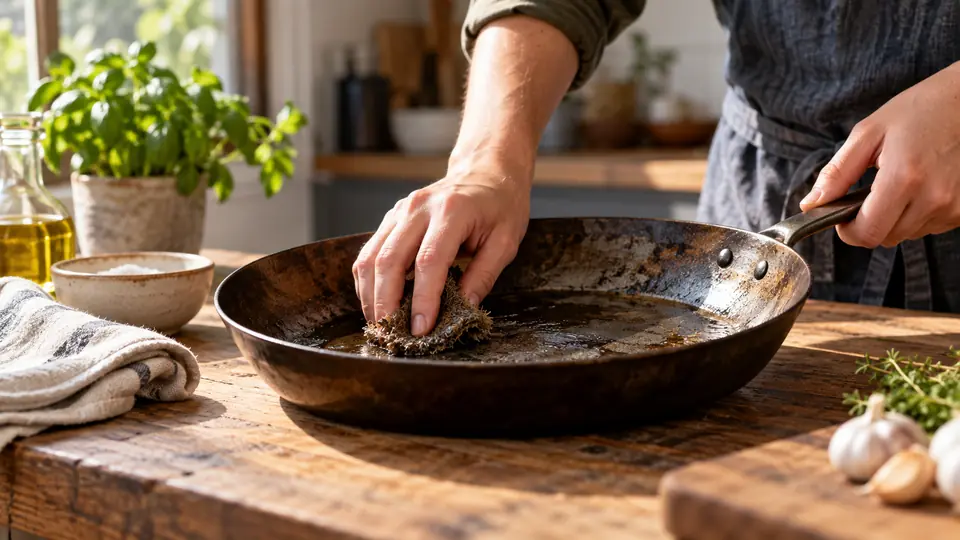
Carbon buildup on carbon steel usually starts as a small problem. A little burned-on oil near the sides of the pan, a dark sticky patch in the center, or a rough ring left behind after high-heat cooking can slowly turn into a hard layer that affects performance. Food starts to catch on raised spots, seasoning becomes uneven, and cleaning gets more difficult after every use.
Knowing how to remove carbon buildup from carbon steel matters because not every dark area is a problem. A well-used carbon steel pan naturally darkens over time, and that deep brown or black patina is often healthy seasoning. Carbon buildup is different. It tends to feel thick, crusty, bumpy, or sticky rather than smooth and dry. Removing only the unwanted buildup, without damaging the pan more than necessary, is the key.
The good news is that most carbon deposits can be removed with simple tools and a gradual approach. In many cases, hot water, a scraper, coarse salt, or a non-abrasive scrubber will do the job. For heavier buildup, you may need to strip part of the seasoning and reseason the pan afterward. The process is straightforward once you know what to look for and which methods are safe for carbon steel.
Quick Answer
To remove carbon buildup from carbon steel, start with the least aggressive method first. Heat the pan slightly, add hot water, and use a wooden spatula, pan scraper, or non-metal scrubber to loosen the burned layer. If that does not work, scrub with coarse salt and a small amount of oil or water. For stubborn deposits, simmer water in the pan for a few minutes to soften the buildup, then scrape and scrub again.
If the carbon buildup is thick, rough, or bonded to the surface, you may need to use steel wool or a more thorough stripping process. This will likely remove some seasoning along with the carbon, so dry the pan completely and apply a fresh thin layer of oil afterward. The goal is not to make carbon steel look brand new. The goal is to remove raised, flaky, sticky, or uneven carbon while preserving or rebuilding a smooth cooking surface.
A smooth dark patina is normal. A crusty layer that catches food, feels rough, or flakes off is not. That difference helps you decide how aggressive your cleaning method should be.
Why Carbon Buildup Happens
Carbon buildup forms when oil, food residue, and heat combine repeatedly on the pan surface. Instead of forming a thin, stable layer of seasoning, some of that material burns into thicker deposits. This often happens around the sidewalls, near the rim, or in hot spots where oil pools and overheats.
Carbon steel handles high heat well, but high heat can also create problems if the pan is left empty too long, if sugary marinades burn, or if excess oil is used during seasoning. Tiny residues that are not fully removed after cooking can harden with each use. Over time, those layers become blackened carbon rather than useful seasoning.
Common causes of carbon buildup
- Using too much oil during seasoning. Thick oil layers turn gummy, then burn into uneven deposits.
- Cooking on very high heat repeatedly. This is especially common with searing, stir-frying, or preheating too long.
- Leaving food residue behind. Small bits of protein, starch, or sauce can carbonize during later cooking sessions.
- Burning sugary ingredients. Glazes, teriyaki-style sauces, and reduced marinades can leave stubborn baked-on patches.
- Not cleaning the pan thoroughly enough. Carbon steel does not need harsh cleaning every time, but it does need residue removed before it hardens.
Seasoning vs Carbon Buildup
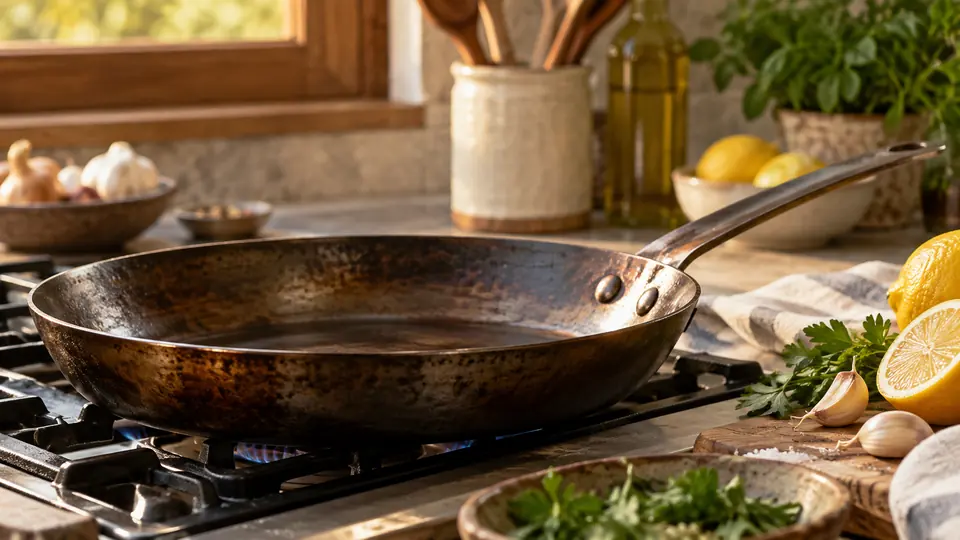
This is where many owners get stuck. Carbon steel seasoning is supposed to darken, so people often leave heavy deposits alone because they assume the pan is just developing character. In reality, a well-seasoned surface should feel mostly smooth, dry, and firmly bonded to the metal.
Carbon buildup usually feels different. It may be raised, crusty, patchy, sticky, or slightly tacky. Sometimes it looks like thick black flakes around the sides of the pan. In other cases, it forms a rough disk in the middle where food makes direct contact.
How to tell the difference
| Surface Condition | Likely Seasoning | Likely Carbon Buildup |
|---|---|---|
| Dark brown or black color | Yes, often normal | Also possible |
| Smooth to the touch | Yes | Usually no |
| Dry, hard finish | Yes | Sometimes |
| Sticky or tacky patches | No, usually poorly set seasoning | Possible |
| Raised bumps or crusty rings | No | Yes |
| Flaking or chipping areas | No | Yes |
| Food catches on rough spots | Not typical | Very common |
If the surface is dark but smooth and cooks well, leave it alone. If it is uneven and interfering with cooking, cleaning, or seasoning, it is time to remove the buildup.
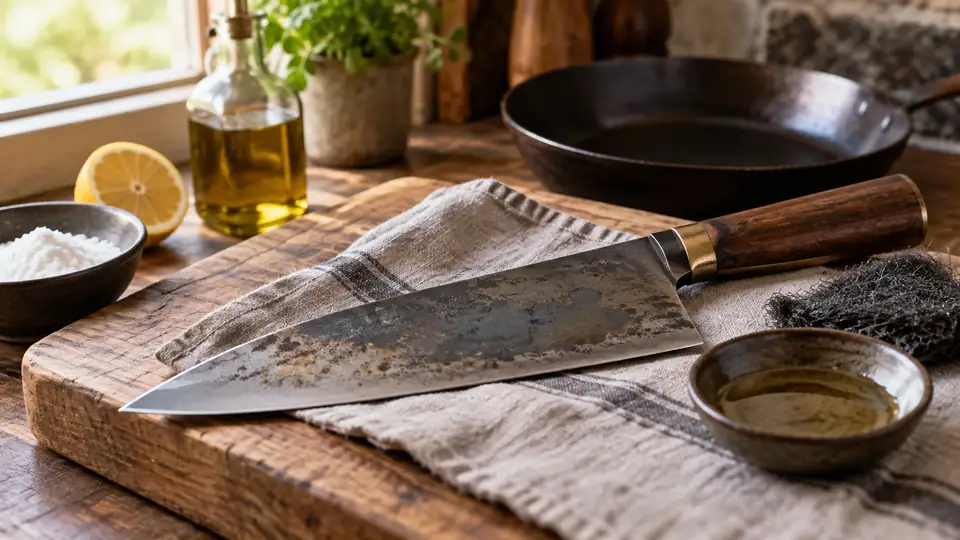
Tools and Materials Needed
You do not need specialty chemicals for most cases. A few basic kitchen tools are enough.
- Hot water
- Wooden spatula or pan scraper
- Non-scratch scrub pad
- Coarse kosher salt
- Paper towels or clean cloths
- Mild dish soap, if needed
- Steel wool or fine metal scrubber for severe buildup
- Neutral high-smoke-point oil for reseasoning
Optional but helpful items include a chain mail scrubber designed for cookware and a stovetop burner to simmer water directly in the pan. Avoid harsh chemical oven cleaners unless you are intentionally doing a full strip and know the handle and pan construction can tolerate it. For most carbon steel cookware, simpler methods are safer and easier to control.
How to Remove Carbon Buildup from Carbon Steel Step by Step
The best approach is progressive. Start with the gentlest method and move up only if the buildup remains.
Step 1: Inspect the surface
Run your fingers lightly across the pan once it is cool and dry. Look for rough spots, raised patches, thick dark rings, sticky areas, and anything that flakes under pressure. This tells you whether you are dealing with light residue, moderate carbon buildup, or a heavy crust that may require partial stripping.
Step 2: Use hot water and scraping first
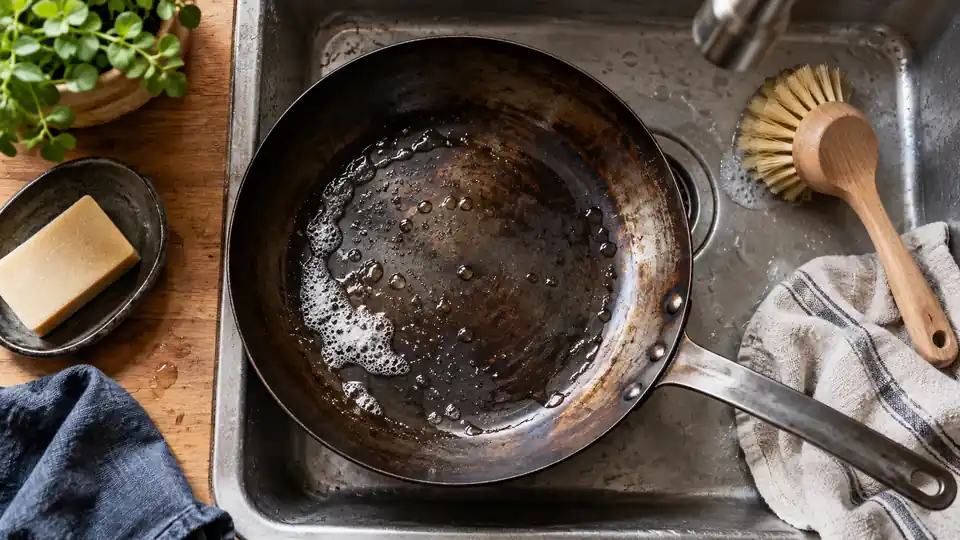
Place the pan under very hot running water or fill it with hot water for a few minutes. The heat helps loosen stuck residue. Then use a wooden spatula, silicone scraper, or pan scraper to work at the affected spots.
This method is often enough for fresh buildup that has not fully hardened over repeated uses. It is also the lowest-risk option because it removes loose material without taking off much seasoning.
Step 3: Simmer water in the pan
If the buildup is still attached, put a shallow layer of water in the pan and bring it to a low simmer for several minutes. The moisture and heat can soften hardened residue significantly. Once the pan is cool enough to handle safely, pour out the water and scrape again.
This step works particularly well after cooking proteins, potatoes, or sugary sauces that leave a bonded layer on the cooking surface.
Step 4: Scrub with coarse salt
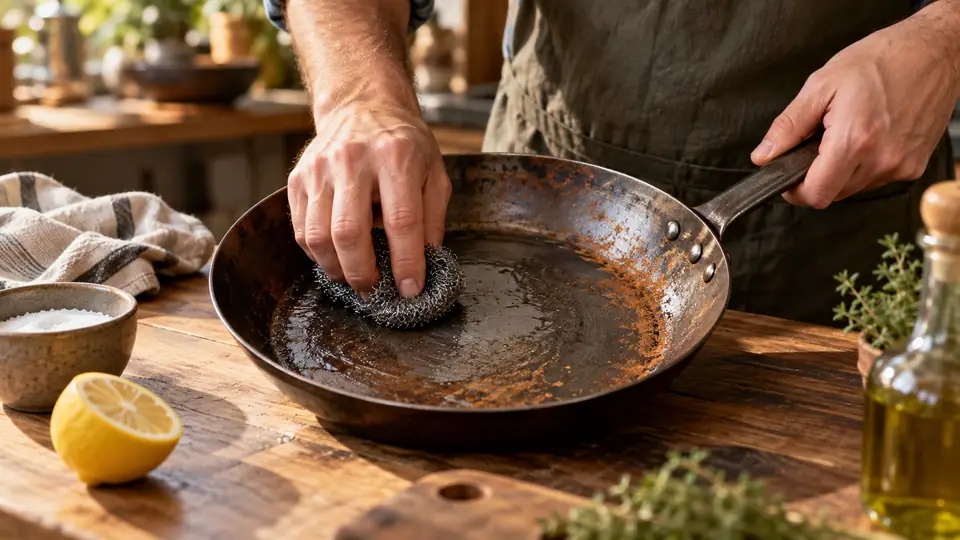
Add a tablespoon or two of coarse kosher salt to the warm pan. Use a folded paper towel, clean cloth, or scrub pad to rub the salt over the problem areas. You can add a few drops of oil or a little water to help the salt move across the surface.
Salt acts as a mild abrasive. It can remove carbon deposits and sticky seasoning without being as aggressive as steel wool. This is a good middle-ground method for rough but not extreme buildup.
Step 5: Wash and reassess
Rinse the pan, dry it completely, and feel the surface again. If the pan is now smooth, the buildup is gone. If small rough patches remain, repeat the simmer-and-salt method once more before moving to anything harsher.
Step 6: Use mild soap if grease is part of the problem
There is no need to avoid soap entirely. A small amount of mild dish soap can help remove greasy residue that traps carbon or makes the surface feel gummy. Modern dish soap does not strip well-bonded seasoning the way older lye-heavy soaps could.
Use soap especially if the buildup is mixed with soft, sticky oil residue rather than a fully hardened crust.
Step 7: Use steel wool for stubborn carbon
For thick, hard carbon that will not come off with scraping, simmering, and salt, use fine steel wool or a metal scrubber. Apply firm but controlled pressure only where needed. This will almost certainly remove some seasoning along with the carbon.
That is not a failure. In severe cases, partial stripping is the right move because cooking on thick carbon buildup causes more long-term problems than briefly resetting part of the pan.
Step 8: Rinse, dry, and reseason
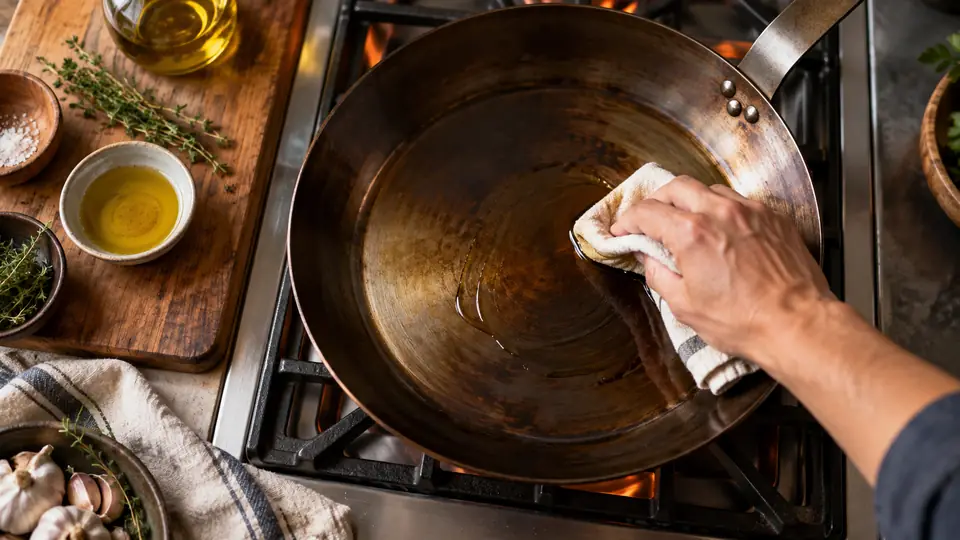
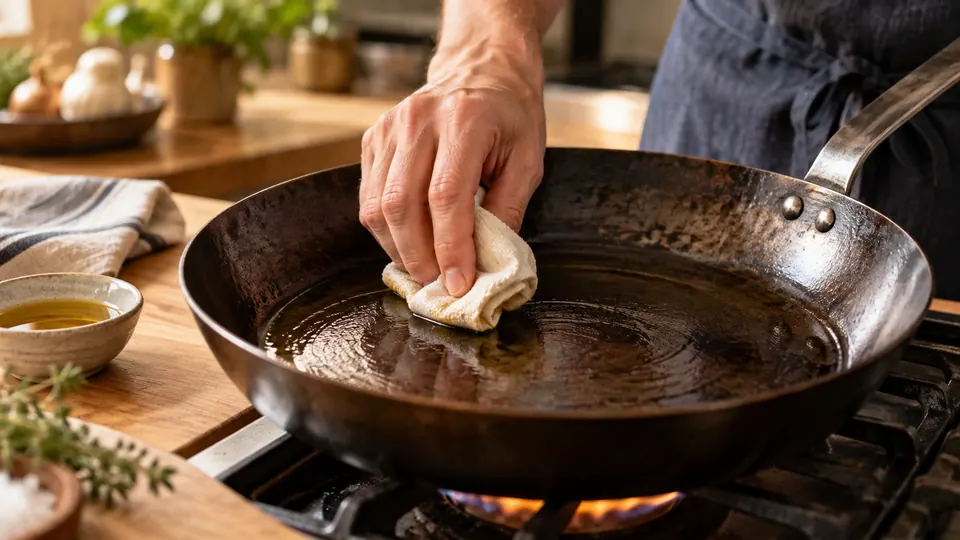
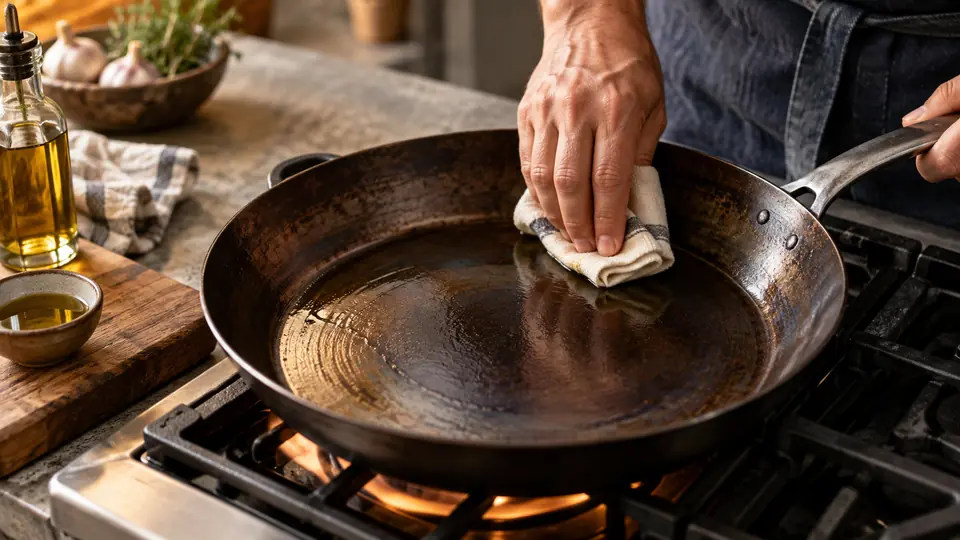
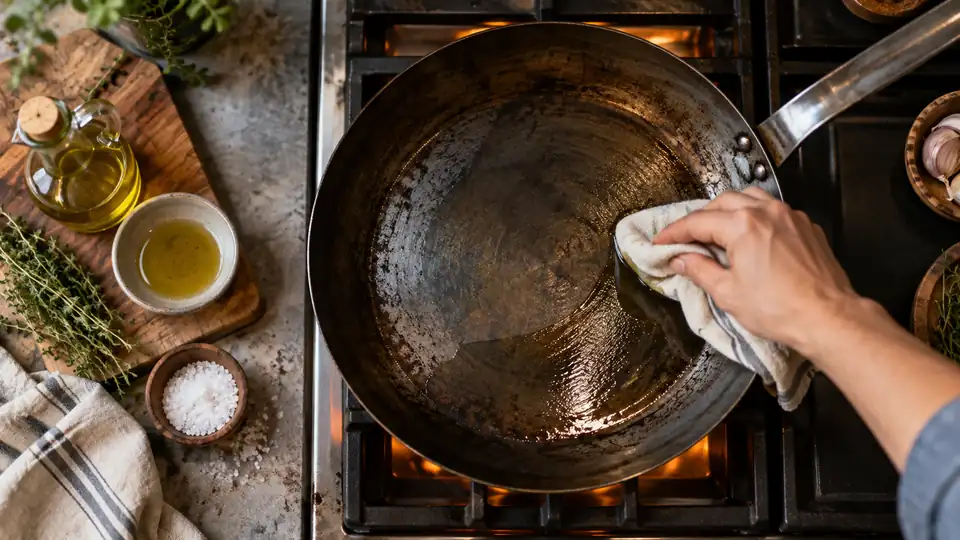
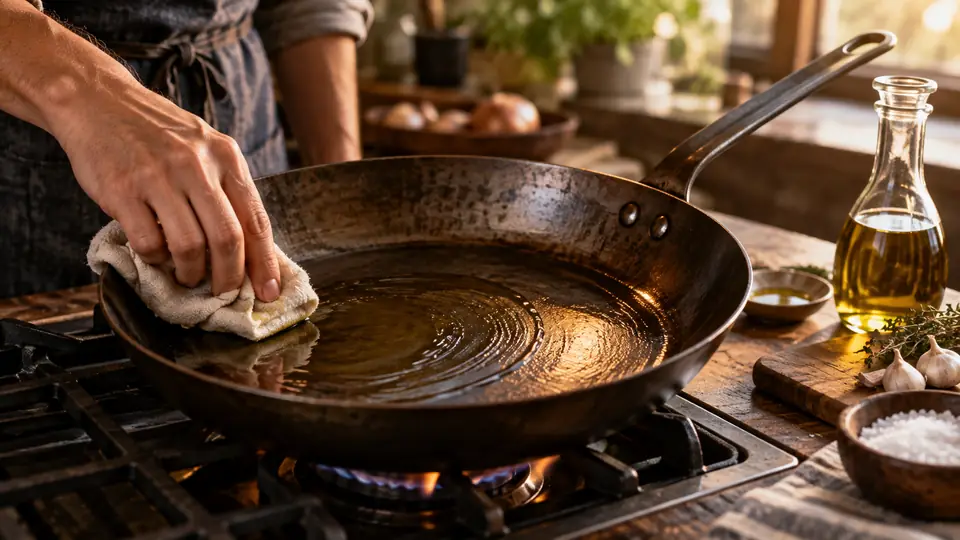
Once the surface is smooth, rinse the pan well and dry it immediately over low heat or with a towel followed by gentle heat. Then apply a very thin layer of oil across the entire surface, buff off the excess, and heat the pan until the oil sets.
If you had to use steel wool or if bare gray steel is showing, the pan needs fresh seasoning before storage or cooking. If you only removed a small amount of buildup and the rest of the surface remains stable, one light maintenance coat is usually enough.
How Aggressive Should You Be?
Not every pan needs a full reset. Carbon steel often looks uneven during normal use, especially after acidic foods, high-heat searing, or frequent frying. The right level of cleaning depends on the condition of the surface, not on appearance alone.
| Buildup Level | What It Looks Like | Best Method |
|---|---|---|
| Light | Slight roughness, small stuck spots | Hot water, scraper, light scrub |
| Moderate | Visible rough patches, burned rings, sticky sections | Simmer water, coarse salt, mild soap |
| Heavy | Thick crust, flaking black deposits, raised carbon layer | Steel wool or partial stripping, then reseason |
If the pan cooks well and feels smooth, leave the dark patina alone. If the surface is physically uneven, flakes, or traps food, it needs attention even if the color looks normal.
What to Do After Removing the Buildup
Once you have removed the carbon, the next priority is protecting the exposed steel and restoring an even cooking surface. Carbon steel rusts quickly when bare metal is left damp, so drying thoroughly is essential.
Basic post-cleaning routine
- Rinse away all loosened residue.
- Dry with a towel.
- Place the pan on low heat for a minute or two to remove hidden moisture.
- Apply a few drops of oil.
- Wipe the oil until the pan looks almost dry.
- Heat briefly to set the oil.
That thin oil layer helps rebuild protection. If you exposed large bare areas, give the pan one or two proper seasoning rounds before cooking something delicate like eggs or fish.
When You Should Strip the Pan Completely
Sometimes spot cleaning is not enough. If the entire cooking surface is thick, uneven, or sticky, a full strip may be faster than chasing individual patches. The same goes for pans with layered failed seasoning that keeps flaking and reforming.
Signs a full strip makes sense
- The surface is rough across most of the pan
- Carbon flakes off in multiple areas
- Seasoning is sticky and patchy after repeated attempts to fix it
- Food catches everywhere, not just in one spot
- The pan has old burned residue built up around the walls and rim
After a full strip, wash, dry, and reseason from scratch. For readers working through that process, a guide on pre-seasoned carbon steel pans can also help explain how a stable starting surface should look, although even pre-seasoned pans still need proper maintenance over time.
Common Mistakes When Removing Carbon Buildup
Most damage happens not because people clean too much, but because they clean inconsistently or use the wrong method at the wrong stage.
Mistake 1: Treating all black color as bad
A dark pan is not automatically dirty. Carbon steel naturally develops a deep patina. Stripping every bit of color each time only makes seasoning harder to maintain.
Mistake 2: Ignoring rough texture
The opposite mistake is assuming every black layer is seasoning. If the surface feels raised, flaky, or crusty, it is likely carbon buildup that should be removed.
Mistake 3: Using too much oil afterward
After cleaning, many people apply a heavy coat of oil to protect the pan. That often creates sticky residue and starts the buildup cycle again. A very thin layer is enough.
Mistake 4: Storing the pan while damp
Freshly scrubbed areas are especially vulnerable to rust. Even a little leftover moisture around the rivets, handle junction, or pan edge can create rust spots by the next day.
Mistake 5: Preheating an empty pan for too long
Overheating an empty carbon steel pan can burn old oil residue into new carbon. It can also warp thinner pans. Preheat with control, especially on powerful burners.
Mistake 6: Letting residue bake on repeatedly
Small stuck bits are easier to remove right after cooking than after three or four more meals. Quick maintenance prevents major buildup.
Prevention Tips
The easiest way to remove carbon buildup from carbon steel is to keep it from accumulating in the first place. A few habits make a big difference.
Clean while the pan is still manageable
You do not need to scrub immediately while the pan is blazing hot. Let it cool slightly, then wipe out oil and food residue before it hardens fully. Warm pans clean more easily than cold neglected ones.
Use thin layers of oil
During both cooking and seasoning, excess oil is a frequent cause of sticky or burned deposits. Carbon steel performs better with restraint. Thin coats bond better and leave less residue to carbonize.
Avoid repeated sauce reduction in the same uncleaned pan
Sticky sauces, sugars, and marinades can burn into a hard film. After cooking those foods, give the pan extra attention instead of assuming the residue will improve with the next heat cycle.
Scrape gently after cooking
A wooden spatula used during and after cooking can remove a surprising amount of stuck material before it becomes true carbon buildup.
Do occasional maintenance scrubs
If the pan starts feeling slightly rough, use hot water and coarse salt before the problem grows. Light corrective maintenance is easier than a full reset.
How Carbon Buildup Affects Cooking Performance
Some owners tolerate heavy buildup because they assume any dark layer improves nonstick performance. In reality, uneven carbon often does the opposite. It creates high spots where food grabs, interferes with smooth oil distribution, and makes fresh seasoning less stable.
Carbon steel works best when the surface is thinly seasoned and relatively even. That allows better contact between food, oil, and metal. Thick carbon deposits can also produce hot spots because the surface is no longer uniform. While this effect is not always dramatic, it becomes noticeable with delicate foods and high-contact cooking like eggs, pancakes, or fish fillets.
A pan with a smooth dark patina usually performs better than a pan with thick black crust, even if the crust looks more seasoned at first glance.
Frequently Asked Questions
Can I use steel wool on carbon steel?
Yes, but only when needed. Steel wool is effective for stubborn carbon buildup, rust, or failed seasoning. It will remove some seasoning, so plan to dry and reseason the pan afterward. For light buildup, start with gentler methods first.
Does dish soap ruin carbon steel seasoning?
Mild dish soap does not usually ruin well-bonded seasoning. It can help remove grease and soft residue. Harsh scrubbing is more likely than soap itself to strip the surface. If the pan loses some seasoning during cleaning, a light oiling and reheating step usually restores protection.
Why does my carbon steel pan feel sticky after cleaning?
Sticky texture usually comes from too much oil, either during seasoning or after maintenance. The oil layer did not fully polymerize and remained on the surface. Wash or scrub off the tacky residue, dry the pan, and apply a much thinner coat next time.
Should I remove all the black color from my carbon steel pan?
No. A dark patina is normal and often desirable. Remove only the raised, flaky, sticky, or rough buildup that interferes with cooking. A smooth dark surface is usually healthy seasoning, not a problem.
Can carbon buildup make food stick more?
Yes. Thick or uneven buildup creates rough areas and prevents the cooking surface from staying smooth. That can make eggs, fish, and other delicate foods stick more than they would on an evenly seasoned pan.
How often should I deep clean carbon steel?
Only as needed. Routine cleaning after each use should prevent most major buildup. A deeper scrub is useful when the surface feels rough, starts flaking, or develops sticky carbonized patches. Some pans go months without needing more than normal maintenance, while others need attention sooner depending on how they are used.
Final Thoughts
Learning how to remove carbon buildup from carbon steel is mostly about recognizing what should stay and what should go. Healthy seasoning is dark, thin, and fairly smooth. Problem buildup is thick, uneven, rough, sticky, or flaky. Once you can tell the difference, the cleaning process becomes much simpler.
Start gently with hot water, scraping, and salt. Move to stronger methods only if the buildup remains. If a stubborn patch takes some seasoning with it, that is manageable. A clean, smooth carbon steel surface is easier to reseason and usually cooks better than a pan covered in old carbon deposits.
Good maintenance is less about keeping the pan pretty and more about keeping it functional. Remove the crust, protect the steel, use thin oil layers, and the pan will continue to improve with use instead of becoming harder to manage.


Leave a Reply