
Carbon steel cookware rewards the right kind of owner. It heats quickly, develops a naturally slick seasoned surface over time, and handles high-heat cooking better than most coated pans. It also asks for a little cooperation. You need to dry it promptly, use it often, and accept that the pan will change color, darken, and pick up marks as it ages.
That is why who should buy carbon steel cookware is a more useful question than simply asking whether carbon steel is good. For some cooks, it becomes a reliable everyday tool for searing, frying, sautéing, roasting, and even baking. For others, the maintenance feels unnecessary, especially if they prefer low-effort cookware that can sit in the sink, go through the dishwasher, or handle acidic sauces without much thought.
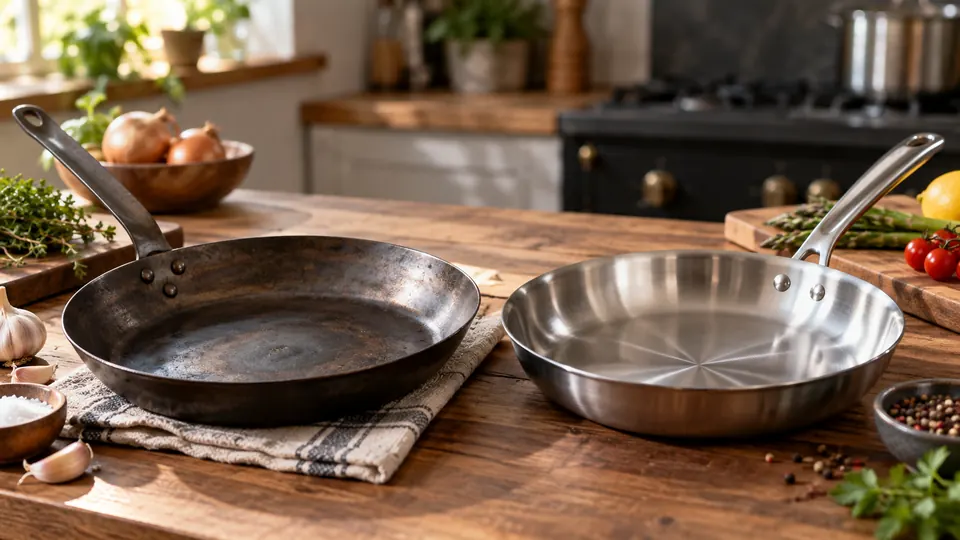
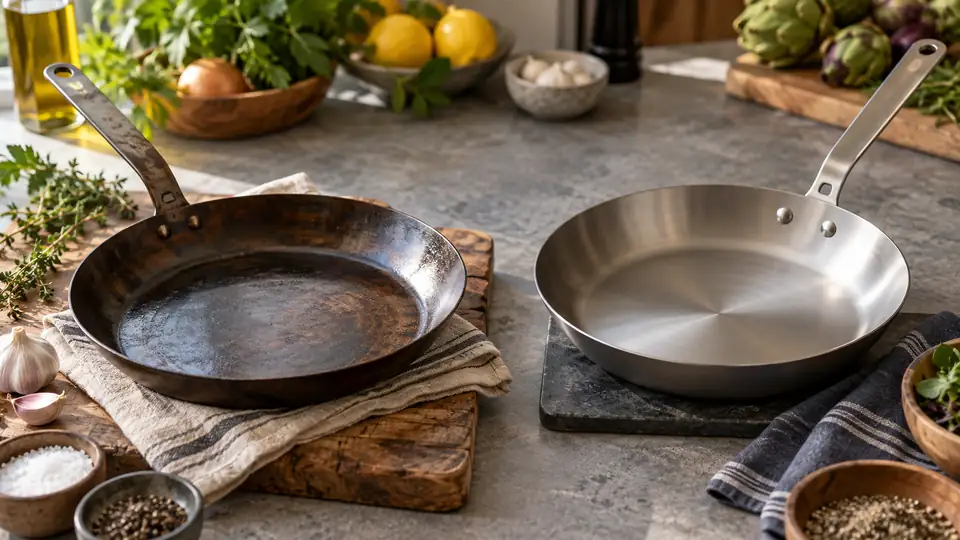
Carbon steel sits in an interesting middle ground between cast iron and stainless steel. It is usually lighter and more responsive than cast iron, but it still needs seasoning and rust prevention. It is tougher at high heat than nonstick, but it is not as carefree as stainless steel. Choosing it makes sense when your cooking style matches its strengths.
Quick Answer
Who should buy carbon steel cookware? Carbon steel cookware is a good fit for cooks who want strong searing performance, fast heat response, oven-safe versatility, and a pan that improves with use. It suits people who regularly cook eggs, steaks, burgers, stir-fries, hash browns, pancakes, and other foods that benefit from a hot cooking surface and a gradually built seasoning layer.
It is especially well suited to home cooks who do not mind a bit of maintenance. You should be comfortable hand washing, drying the pan right away, and occasionally wiping on a thin layer of oil. Carbon steel also works well for cooks who prefer durable cookware over disposable coated pans.
It is probably not the best choice for anyone who wants dishwasher-safe convenience, cooks a lot of long-simmered acidic dishes in the same pan, or expects a perfectly nonstick surface from day one. If you want low maintenance above all else, stainless steel or modern nonstick may be a better match. If you enjoy cookware that develops character and performs better as you learn it, carbon steel is worth serious consideration.
How Carbon Steel Fits Into a Kitchen
Carbon steel cookware is made from iron and a small amount of carbon. In practical use, that means it behaves a lot like cast iron in some ways, but with less bulk and faster responsiveness. The material can take very high heat, making it useful for browning and crisping foods that struggle in delicate coated pans.
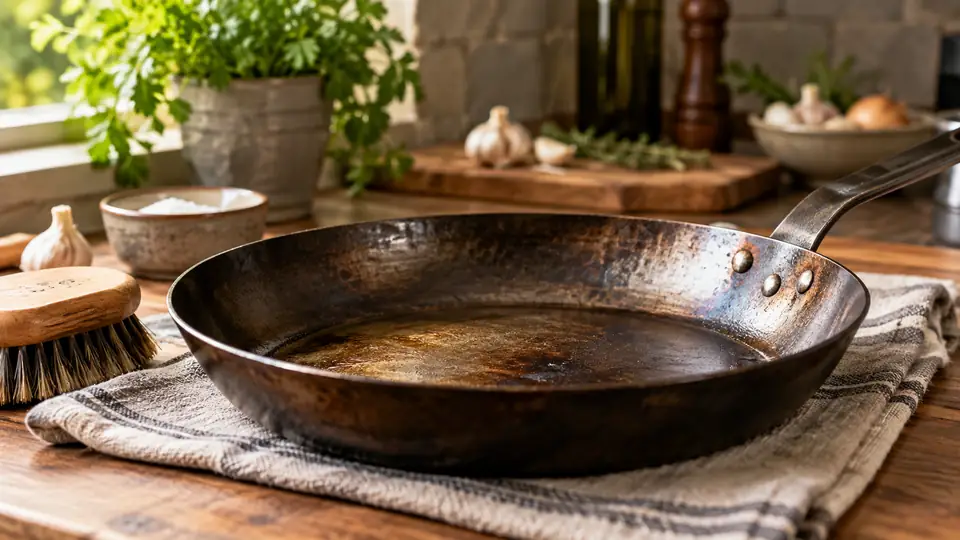
Most carbon steel pieces start relatively smooth and darken over time as seasoning builds. Seasoning is the thin layer of polymerized oil baked onto the surface. That layer helps reduce sticking and provides some rust protection. Unlike synthetic nonstick coatings, seasoning is not permanent and perfectly uniform. It develops gradually through cooking and maintenance.
Because of that, carbon steel tends to appeal to cooks who view cookware as a tool to be learned, not just a neutral container for food. It can be forgiving once seasoned well, but it still needs the right habits.
A Quick Buyer Profile Table
| Type of Cook | Carbon Steel Match | Why |
|---|---|---|
| Home cook who sears meat often | Excellent | Handles high heat well and browns efficiently |
| Egg and breakfast cook willing to season a pan | Very good | Can become quite slick with use and proper preheating |
| Stir-fry enthusiast | Excellent | Fast heat response and strong high-heat performance suit wok cooking |
| Cook who wants dishwasher-safe cookware | Poor | Carbon steel should be hand washed and dried promptly |
| Cook who makes lots of tomato sauces in one pan | Fair to poor | Acidic foods can weaken seasoning, especially during long cooking |
| Minimal-maintenance cookware owner | Poor | Needs routine care to prevent rust and maintain seasoning |
| Cook replacing worn-out nonstick pans | Good | Offers durability and high heat capability, but with a learning curve |
| Person with limited wrist strength | Depends | Lighter than cast iron, but some pans are still heavy |
Key Benefits of Carbon Steel Cookware
Strong high-heat performance
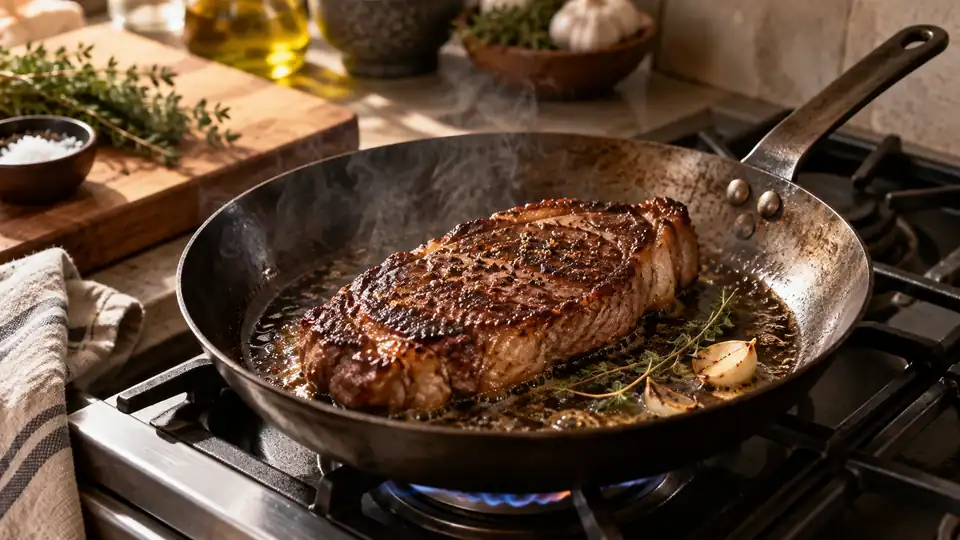
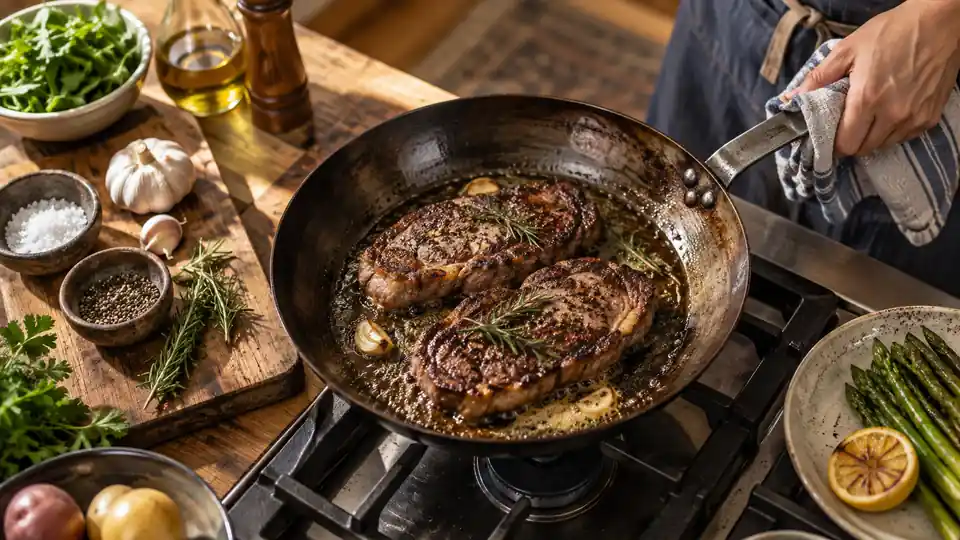
Carbon steel is built for heat. You can use it for searing steaks, crisping chicken skin, charring vegetables, and developing color on burgers without worrying about damaging a delicate coating. That alone makes it appealing to cooks who feel limited by standard nonstick pans.
This matters in everyday cooking because browning drives flavor. A hot pan evaporates surface moisture quickly and helps food develop a crust instead of steaming. Carbon steel does that job very well once it is properly preheated.
Faster heat response than cast iron
Cast iron holds heat extremely well, but it can feel slow to adjust. Carbon steel usually responds faster when you lower or raise the burner. That makes it easier to manage foods that benefit from heat control, such as eggs, fish, pancakes, or sautéed vegetables.
It still retains heat better than many lighter pans, but it is generally more agile than cast iron. For cooks who like cast iron results but want a little more responsiveness, carbon steel can be an attractive middle ground.
Improves with use
A good carbon steel pan often gets better the more it is used correctly. As seasoning builds, sticking tends to decrease, especially with fatty foods and common skillet tasks. The surface rarely looks perfect, but appearance is not the same as performance.
This appeals to people who enjoy ownership over time. Instead of discarding a pan once a coating degrades, you maintain and restore the cooking surface yourself.
Durable and long-lasting
Carbon steel does not rely on a fragile synthetic nonstick layer. If the seasoning gets patchy, you can rebuild it. If rust appears, it can often be scrubbed off and the pan re-seasoned. That makes carbon steel useful for buyers who want cookware measured in years or decades rather than short coating lifespans.
Versatile across cooking methods
Many carbon steel pans can move from stovetop to oven. They are useful for shallow frying, roasting, baking cornbread, finishing frittatas, and even reheating pizza with a crisp base. Woks, skillets, crepe pans, griddles, and paella pans can all be made from carbon steel, so the material adapts well to different cooking styles.
Potential Drawbacks You Should Take Seriously
It needs routine maintenance
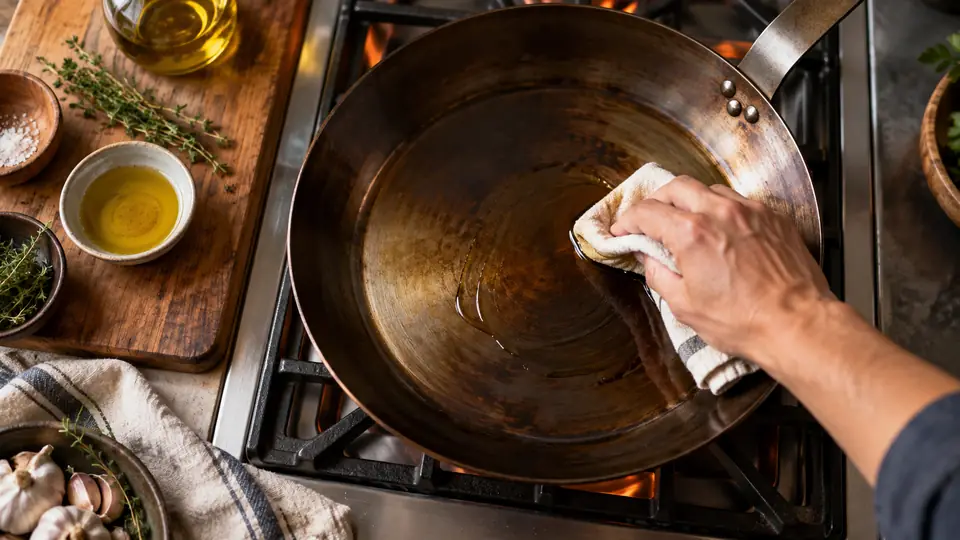
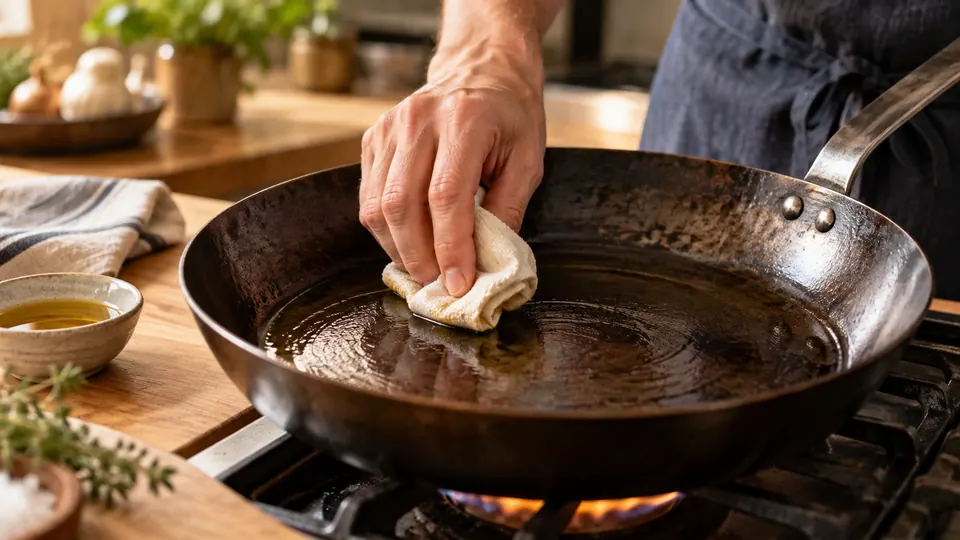
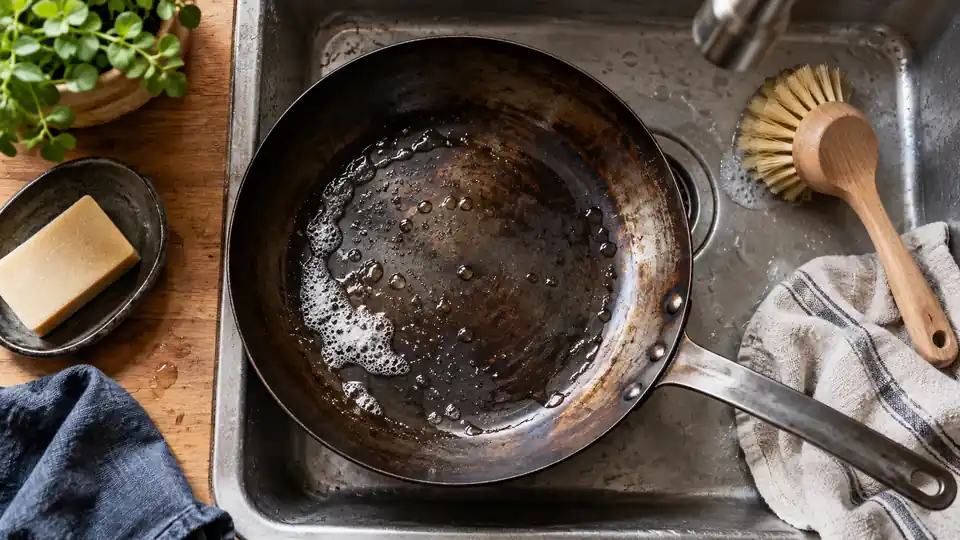
Carbon steel is not difficult to care for, but it does require consistency. After washing, the pan should be dried completely. In many kitchens, that means towel drying and sometimes warming it briefly on the stove to remove hidden moisture. A very light film of oil may be useful after cleaning, especially if the seasoning is new or the air is humid.
For some people, that care feels minor. For others, it becomes an annoyance they never fully accept.
Seasoning has a learning curve
New owners sometimes expect carbon steel to behave like a factory-coated nonstick pan. That often leads to disappointment. The surface may grab food early on, especially if the pan is underheated, overheated, or seasoned unevenly.
The good news is that most carbon steel sticking problems come from technique. Proper preheating, enough cooking fat, and patience during the first few weeks make a big difference.
Acidic foods can interfere with seasoning
Tomatoes, wine, citrus, and vinegar-heavy sauces can strip or weaken seasoning, especially if they simmer for a long time. A quick deglaze is often fine in a well-used pan, but a long tomato braise is usually better in stainless steel or enameled cookware.
This does not make carbon steel fragile. It just means it is optimized for some tasks more than others.
It can rust
Rust is simply oxidation caused by moisture. If a carbon steel pan is left wet, stored damp, or exposed to prolonged humidity without protection, rust can form. Usually this is fixable, but it is still a hassle.
Weight varies more than some buyers expect
Carbon steel is usually lighter than cast iron, but not always light in an absolute sense. A thick 12-inch carbon steel skillet can still feel substantial, especially with a long handle and food inside. If wrist comfort matters, pan thickness and diameter deserve attention.
Who Should Buy Carbon Steel Cookware
Cooks who want a durable alternative to nonstick
If you are tired of replacing coated pans every few years, carbon steel is worth a look. It can handle higher heat, metal utensils more safely in many cases, and regular use without the same long-term concerns associated with worn synthetic coatings.
It does not replace nonstick perfectly on day one, but it can fill much of the same role after seasoning develops. That is especially true for eggs, potatoes, pancakes, and pan-fried proteins.
People who cook over medium-high to high heat regularly
Carbon steel shines in cooking styles that reward heat. Searing, blistering, crisping, and wok cooking are natural matches. If your meals often involve fast browning rather than gentle simmering, the material makes sense.
For stir-fry fans, carbon steel is especially relevant because classic woks are commonly made from it. If that is your main use case, a dedicated wok may be more appropriate than a flat skillet, and a resource on the best carbon steel wok for home use can help explain common sizing and shape considerations.
Home cooks who like cookware that develops character
Some owners enjoy the visual and practical changes that happen over time. Carbon steel will darken unevenly, build seasoning in patches, and show signs of real use. For many enthusiasts, that is part of the appeal rather than a flaw.
If you prefer cookware that stays cosmetically uniform, carbon steel may feel messy or unfinished even when it is working well.
Cooks willing to learn pan technique
Good carbon steel results depend on basic habits. Preheat the pan gradually. Add oil at the right time. Let food release naturally before forcing it. Clean without soaking. Dry thoroughly. Those are simple skills, but they still require attention.
People who like understanding how and why cookware behaves a certain way often appreciate carbon steel. People who want a pan to work the same regardless of technique may not.
Anyone building a practical, multi-use cookware setup
Carbon steel fits well as part of a broader kitchen rather than as the only pan you own. A common setup is stainless steel for acidic sauces and boiling, carbon steel for searing and eggs, and perhaps enameled or cast iron for long braises.
Buyers with that mindset tend to be happier because they are not expecting one pan material to do every job perfectly.
Who Might Prefer Something Else
People who want dishwasher-safe convenience
If cookware regularly goes into the dishwasher, carbon steel is a poor match. Dishwashers promote rust and strip seasoning. Stainless steel is much more forgiving for that lifestyle.
Cooks who make lots of acidic dishes in the same pan
If your usual meals involve shakshuka, tomato-heavy braises, wine reductions, or lemony pan sauces that simmer for a while, stainless steel or enameled cast iron is often easier to live with. Carbon steel can handle brief contact with acids, but it is not the most relaxed tool for that kind of cooking.
People who want perfect low-stick performance with no setup
Carbon steel can become quite slick, but not with zero effort. If you want a pan that behaves predictably with delicate eggs from the first use and needs almost no thought, a quality nonstick pan may suit you better for that single purpose.
Owners who rarely cook
Carbon steel tends to reward regular use. Frequent cooking helps maintain seasoning and keeps the pan in active rotation. If a pan may sit for long periods in a damp cabinet or be used only occasionally, it may be more prone to neglected rust or a frustrating restart each time.
People sensitive to heavier pans
Even though carbon steel is often marketed as lighter than cast iron, that comparison can be misleading in daily use. A large skillet still has real weight. If wrist strain or one-handed lifting is a concern, compare dimensions and gauge carefully before buying.
Real-World Cooking Scenarios Where Carbon Steel Makes Sense
Weeknight skillet cooking
A carbon steel skillet is very effective for chicken thighs, pork chops, burgers, sautéed greens, fried rice, and crisp-edged potatoes. These are common dinners where fast heating and solid browning matter more than sauce simmering.
Breakfast foods
Once the seasoning is established and the cook learns heat control, carbon steel can be excellent for fried eggs, omelets, crepes, pancakes, and home fries. Breakfast is often where owners first notice the benefits of a well-used pan.
Oven finishing
Because many carbon steel pans are oven-safe, they are useful for dishes that begin on the stove and finish under heat. Frittatas, Dutch babies, skillet cornbread, or seared meat finished in the oven all fit the material well.
High-heat vegetable cooking
Brussels sprouts, green beans, mushrooms, cabbage wedges, and sliced peppers benefit from contact with a hot pan. Carbon steel can produce blistering and caramelization without the heat limitations of many coated pans.
Situations Where Carbon Steel Is Less Practical
Long simmering and braising with acidic liquid
A quick tomato splash is one thing. A 45-minute simmer in wine and crushed tomatoes is another. Seasoning can thin out, and the pan may take on metallic flavors if the coating is weak. Better tools exist for these jobs.
Boiling and steaming as a main task
Carbon steel can handle moisture briefly, but it is not the most convenient choice for cookware that will constantly boil, steam, and sit wet. Stainless steel is easier for pots and saucepans in that role.
Households where pans are often soaked in the sink
If cookware frequently sits under water for hours, carbon steel will become frustrating. That habit almost guarantees rust or seasoning damage at some point.
What Kind of Buyer Usually Gets the Most Satisfaction
The happiest carbon steel owners usually share a few traits. They cook fairly often, appreciate a pan that can sear well, and do not mind spending an extra minute on cleanup and drying. They also understand that seasoning is functional, not decorative.
Another useful trait is patience during the first phase of ownership. A new carbon steel pan may not perform at its best right away. Buyers who treat the first several uses as part of the setup process tend to end up much more satisfied than those expecting instant perfection.
Signs Carbon Steel Will Probably Frustrate You
- You want to wash every pan in the dishwasher.
- You dislike cookware that changes color or develops a worn appearance.
- You mainly cook sauces, soups, and acidic braises.
- You want a surface that behaves like nonstick immediately and indefinitely.
- You often leave pans soaking overnight.
- You prefer one-pan convenience over material-specific strengths.
Signs Carbon Steel Is Likely a Good Fit
- You sear meat, fry eggs, or cook potatoes regularly.
- You value high heat performance.
- You are comfortable hand washing and drying cookware.
- You like durable kitchen tools that can last a long time.
- You do not mind a short learning curve.
- You want something between cast iron and nonstick in daily use.
Buying Considerations Before You Commit
Pan shape and intended use
A sloped-sided skillet behaves differently from a wok or flat griddle. Before deciding that carbon steel suits you, it helps to know what you actually want the pan to do. Egg cooking, stir-frying, crepe making, burger smashing, and roasting vegetables may call for different shapes.
Thickness and weight
Thicker pans resist warping and hold heat more steadily, but they also weigh more and respond a bit more slowly. Thinner pans feel lively and lighter, but they can be more prone to hot spots or movement on powerful burners if poorly designed.
Handle design
Some carbon steel pans have long welded handles that stay cooler for part of stovetop cooking. Others use riveted construction or helper handles. Comfort matters more than many buyers realize, especially on larger pans.
Pre-seasoned versus bare steel
Pre-seasoned carbon steel can shorten the early learning phase, but it does not eliminate the need for good technique. A factory seasoning is a starting point, not a finished destination.
Your stove type
Gas, electric, and induction can all work with carbon steel, but performance varies with burner size, power, and pan flatness. Large skillets on small electric burners may heat unevenly. On induction, flat contact matters.
Common Buying Mistakes
Expecting it to replace every other pan
Carbon steel is versatile, but no cookware material is ideal for every job. Buyers are more satisfied when they treat it as part of a smart kitchen setup rather than a total replacement for stainless steel, nonstick, and enameled cookware.
Choosing too large a pan first
A very large carbon steel skillet can feel awkward if you are new to the material. It may also heat unevenly on smaller burners. Starting with a manageable size is often the better experience.
Judging seasoning by looks alone
New owners often panic when the pan looks blotchy, bronze, blue, brown, or patchy black. That appearance is normal. Performance matters more than visual uniformity.
Using too much oil during initial seasoning
Excess oil can create sticky spots instead of a thin, hard layer. Carbon steel seasoning works best in very thin coats with heat high enough to polymerize the oil.
Cleaning too aggressively or too timidly
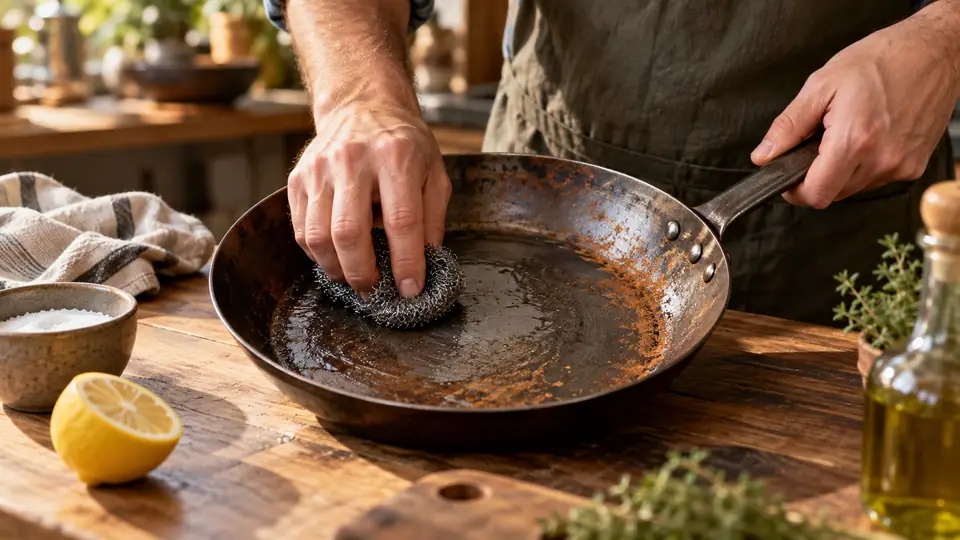
Some people scrub so hard they remove useful seasoning after every meal. Others are afraid to clean the pan at all and leave burnt residue that causes sticking later. The goal is a clean surface with intact seasoning, not a dirty pan preserved in the name of seasoning.
Frequently Asked Questions
Is carbon steel cookware good for beginners?
It can be, as long as the beginner is willing to learn a few habits. Carbon steel is not difficult, but it is less forgiving than stainless steel in some ways and less instantly slick than nonstick. A beginner who cooks often and wants to understand pan technique can do very well with it.
Should I buy carbon steel instead of cast iron?
That depends on what you value. Carbon steel is usually lighter and faster to respond to heat changes. Cast iron usually holds heat longer and can feel more stable for some tasks. If you want a seasoning-based pan but dislike cast iron’s bulk, carbon steel is often the better choice.
Can carbon steel replace a nonstick pan?
For many cooks, it can replace much of what a nonstick pan does, especially for eggs, pancakes, and everyday frying. It will not behave exactly the same on day one, and it needs maintenance. Think of it as a durable low-stick alternative rather than an identical substitute.
Who should not buy carbon steel cookware?
Anyone who wants dishwasher-safe convenience, cooks lots of acidic foods in the same pan, or dislikes routine maintenance may be happier with another material. It is also not ideal for owners who rarely cook and may leave the pan stored damp for long stretches.
Does carbon steel take a long time to season properly?
It takes some time to build a mature cooking surface, but the pan does not need to be perfect before it becomes useful. A basic initial seasoning gets it started. Regular cooking with oil, especially fatty foods and moderate stovetop use, usually improves the surface steadily.
Final Thoughts
Who should buy carbon steel cookware? The strongest candidates are cooks who value heat performance, durability, and a pan that improves through use rather than wearing out through use. Carbon steel makes the most sense for people who sear, sauté, fry, and roast often, and who are comfortable with hand washing, prompt drying, and occasional seasoning maintenance.
It is less suitable for buyers who want zero-maintenance cookware, frequently cook acidic dishes for long periods, or expect a perfect nonstick experience without any learning curve. In other words, carbon steel is not for everyone, but it can be a very practical choice for the right kitchen habits.
If your cooking style matches its strengths, carbon steel cookware often becomes the pan you reach for most. If convenience matters more than performance and longevity, another material will probably serve you better.

Leave a Reply