
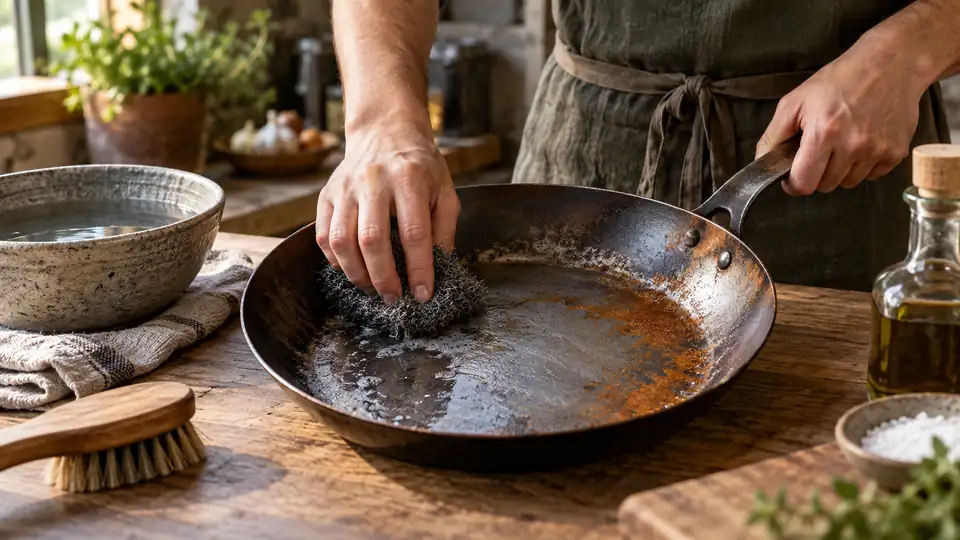
Water is one of the few things carbon steel really does not tolerate well. If carbon steel gets wet and stays wet, it can begin to rust surprisingly fast, sometimes within hours depending on humidity, temperature, and how much protective seasoning is on the surface. That matters for pans, woks, griddles, and carbon steel knives because moisture attacks bare steel directly and can also weaken the seasoning layer that normally helps protect it.
The good news is that getting carbon steel wet is not automatically a disaster. Washing a carbon steel pan is fine. Rinsing a knife is fine. The real problem is leaving moisture behind. A quick wash followed by thorough drying usually causes no lasting harm. Long soaking, air-drying, dishwasher cycles, or storing carbon steel while damp are what create trouble.
Understanding what happens if carbon steel gets wet helps you respond calmly. Sometimes all that is needed is drying and a light coat of oil. In other cases, the pan may need a small seasoning touch-up or light rust removal. Knowing the difference makes carbon steel much easier to own and maintain.
Quick Answer
What happens if carbon steel gets wet depends on how long it stays wet and how protected the surface is. Brief contact with water usually is not a problem if you dry the item immediately. Carbon steel cookware is meant to be washed. Carbon steel knives can also be rinsed and cleaned safely. The issue starts when moisture sits on the steel.
If a carbon steel pan, wok, or knife stays wet, oxygen and water react with the iron in the steel and create rust. You may first notice dull gray spots, orange discoloration, rough patches, or a sticky, uneven surface if the seasoning begins to break down. With longer exposure, rust can spread and become harder to remove.
In most cases, wet carbon steel is still recoverable. Dry it thoroughly, warm it to drive off hidden moisture, and inspect the surface. If there is no rust, add a thin coat of oil. If light rust appears, scrub it off and re-season the area. Carbon steel is durable, but it rewards fast drying and punishes neglect.
Why Water Causes Problems for Carbon Steel
Carbon steel contains iron, and iron reacts with moisture and oxygen. That reaction is oxidation, which shows up as rust. Unlike stainless steel, carbon steel does not have the same level of corrosion resistance, so it depends much more on seasoning, oil, and proper storage for protection.
Seasoning helps, but it is not a waterproof shell. A seasoned carbon steel pan has a thin layer of polymerized oil baked onto the surface. That layer acts as a barrier and improves cooking performance, but it can wear down, especially after cooking acidic foods, scrubbing aggressively, or leaving the pan wet in the sink.
That is why two carbon steel pans can react differently to the same amount of water. A well-seasoned, well-maintained pan may be fine after a quick rinse. A newer pan with patchy seasoning may show orange rust spots after being left damp overnight.
What Happens If Carbon Steel Gets Wet in Different Situations
A Quick Rinse or Wash
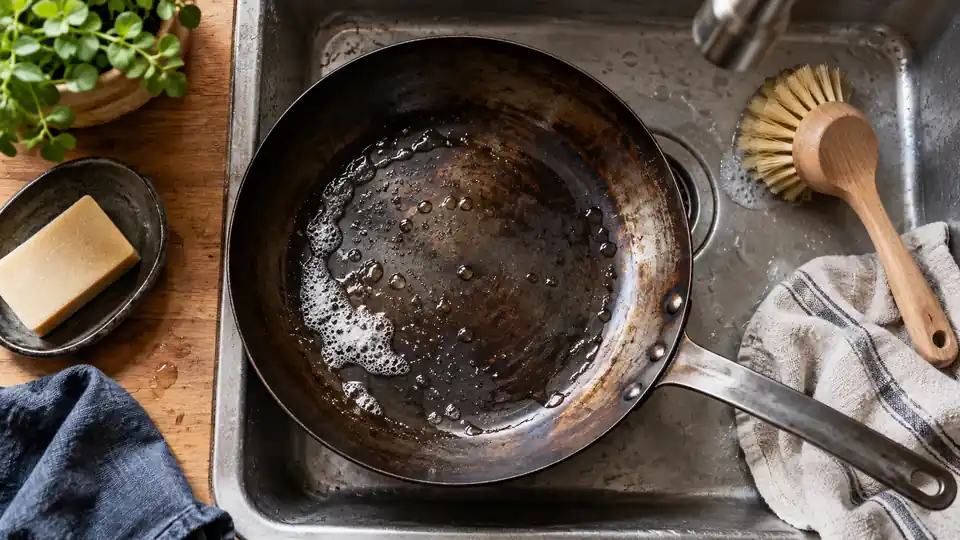
This is usually harmless. Carbon steel cookware is not damaged by normal washing as long as you dry it right away. The same applies to carbon steel knives after cutting meat, vegetables, or fruit. Water contact alone is not the issue. Lingering moisture is.
For cookware, drying with a towel is a good first step, but heating the pan briefly on the stove is even better because it evaporates moisture from tiny pores, rivets, and edges. For knives, hand-drying immediately with a clean towel is usually enough.
Leaving It Wet in the Sink
This is where trouble often starts. A pan forgotten after dinner or a knife left beside the faucet may develop rust quickly. In a damp kitchen, even a few hours can be enough for visible oxidation to appear, especially on exposed steel near the rim, handle attachment points, or interior cooking surface where seasoning is thin.
Sink conditions are especially harsh because water may mix with salt, food acids, and soap residue. Those can speed up corrosion and also strip seasoning from cookware.
Soaking in Water
Soaking is one of the worst habits for carbon steel. It softens food residue, but it also gives moisture time to work under weak spots in the seasoning. A soaked pan may come out with discoloration, a dull finish, or orange rust. A carbon steel knife left soaking can stain, spot, and begin rusting along the edge.
If stuck-on food is the problem, it is better to use hot water briefly, a soft scrubber, and gentle scraping than to leave carbon steel submerged.
Air-Drying on the Rack
Air-drying is not ideal for carbon steel. Even if the surface looks dry, small droplets often remain around handles, rims, rivets, and corners. Those hidden damp areas can create tiny rust spots that spread over time.
This is a common mistake because air-drying works fine for stainless steel and many other kitchen materials. Carbon steel needs a more deliberate routine.
Going Through the Dishwasher
Dishwashers are especially rough on carbon steel. Hot water, detergent, prolonged moisture, and steam can strip seasoning and expose raw steel. Rust may appear after a single cycle, and the pan may need substantial re-seasoning afterward. Carbon steel knives also suffer in the dishwasher because the edge, finish, and handle can all be affected.
For both cookware and knives, dishwasher use should be avoided.
Signs That Wet Carbon Steel Has Been Damaged
Not every wet pan or knife needs major restoration. A quick inspection usually tells you how serious the issue is.
| Sign | What It Usually Means | Typical Fix |
|---|---|---|
| Surface looks normal after drying | No real damage | Apply a very light coat of oil if needed |
| Dull gray or faded patches | Seasoning weakened or partially stripped | Dry well and do a light seasoning touch-up |
| Orange spots | Light surface rust | Scrub off rust, dry, and re-season |
| Brown or dark rough areas | More developed corrosion or uneven seasoning damage | More thorough scrubbing and re-seasoning |
| Flaking, pitting, or rough metal texture | Longer exposure to moisture and rust | Strip problem area, clean to bare metal if needed, then re-season |
For knives, also look for spotting near the edge and discoloration where the blade meets the handle. Those are common moisture trouble zones.
What Happens If Carbon Steel Gets Wet and Then Dries on Its Own
Letting carbon steel dry on its own is different from drying it properly. Natural evaporation is slow, and that gives moisture extra time to react with the metal. Water droplets also leave concentrated minerals or salts behind, which can create uneven spotting.
On cookware, self-drying often leads to small rust freckles or a patchy finish. On knives, it can leave stains that are not dangerous but do affect appearance and can become corrosion if ignored. A pan that air-dries repeatedly may also lose some of the smooth, dark look associated with stable seasoning.
This is why experienced carbon steel owners often treat drying as part of the cleaning process, not an optional final step.
How Fast Does Carbon Steel Rust After Getting Wet?
There is no single timeline, but carbon steel can rust faster than many people expect. In dry conditions with a strong seasoning layer, brief moisture exposure may leave no trace. In humid conditions, or on steel with weak seasoning, rust can begin forming within a few hours.
Several factors affect speed:
- Humidity: Damp air keeps moisture on the surface longer.
- Seasoning quality: Better seasoning slows rust, though it does not stop it completely.
- Water chemistry: Salty or mineral-heavy water is harsher than clean water.
- Acid exposure: Tomato, vinegar, citrus, and wine can weaken seasoning before water exposure.
- Surface condition: Scratched or bare spots rust first.
A useful rule is simple: if carbon steel is wet, deal with it now rather than later.
Step-By-Step Solution If Your Carbon Steel Got Wet
1. Dry It Immediately
Use a clean towel to remove visible water. Pay attention to the full surface, not just the center. Edges, handles, rivets, and the underside are often missed.
2. Use Gentle Heat for Cookware
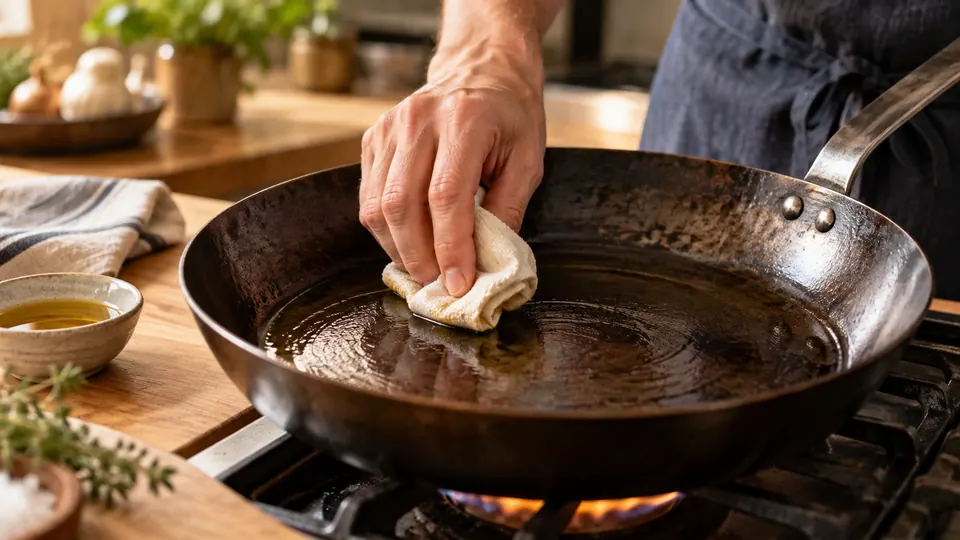
For a pan, wok, or griddle, place it on low heat for a minute or two after towel-drying. This drives off moisture you cannot easily see. The surface should look completely dry before it goes back into storage.
For knives, avoid heating. Just dry thoroughly and leave the knife out briefly in a dry area if needed before storing.
3. Inspect the Surface
Look for orange spots, roughness, faded seasoning, or sticky areas. If the pan or knife still looks dark, smooth, and even, it probably just needs a little protective oil.
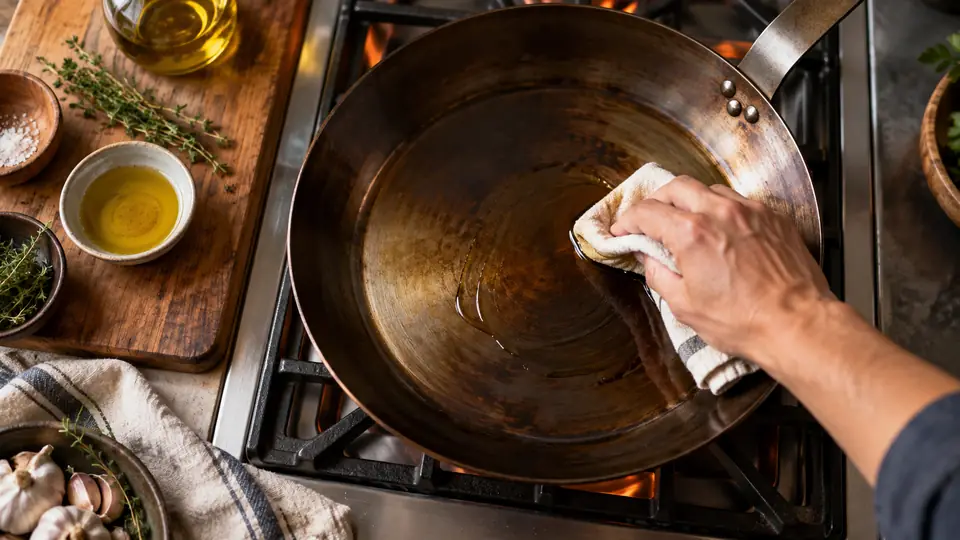
4. Add a Thin Layer of Oil
If the surface is clean and rust-free, wipe on a very thin coat of neutral oil. For cookware, this helps maintain the seasoning. For knives, it adds temporary corrosion protection, especially if the knife will be stored for a while.
The oil layer should be extremely light. A greasy film can become sticky over time.
5. Remove Rust if Needed
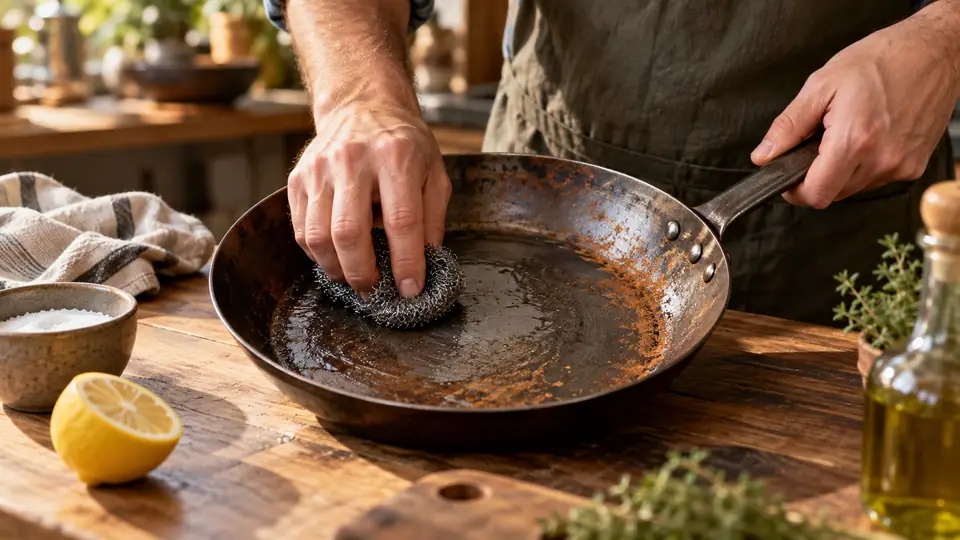
If you see light rust, scrub it off with a non-abrasive scrubber, fine steel wool, or a paste of baking soda and water, depending on the severity. Once the rust is gone, rinse quickly if necessary, dry thoroughly, and restore the surface.
6. Re-Season Cookware if the Surface Was Affected
If a carbon steel pan has bare-looking spots or faded seasoning after getting wet, apply a seasoning touch-up. That usually means a very thin coat of oil followed by heating until the oil darkens and bonds to the surface. A full re-seasoning is only needed if the damage is widespread.
If you need a deeper refresher on the process, many owners prefer to start with a pan that already has some factory help from pre-seasoned carbon steel pans, but even those still need proper drying and ongoing care.
How to Remove Rust Caused by Moisture
Light Rust
Light rust usually appears as orange dust-like spotting. This is the easiest stage to fix.
- Scrub the area with a soft scrubber, coarse salt, or baking soda paste.
- Rinse briefly if needed.
- Dry completely.
- Heat cookware to remove hidden moisture.
- Apply a thin coat of oil and re-season the affected spot.
Moderate Rust
Moderate rust may feel rough and cover larger areas. In that case, use more abrasion. Fine steel wool or a scrubbing pad is often appropriate.
Remove all visible rust before re-seasoning. If any corrosion remains, it can continue spreading under the oil layer.
Heavier Rust
If a pan was left wet for a long time, you may need to strip a larger area back to bare metal. That sounds serious, but carbon steel is very recoverable. Once the rust is gone, you can rebuild seasoning from scratch.
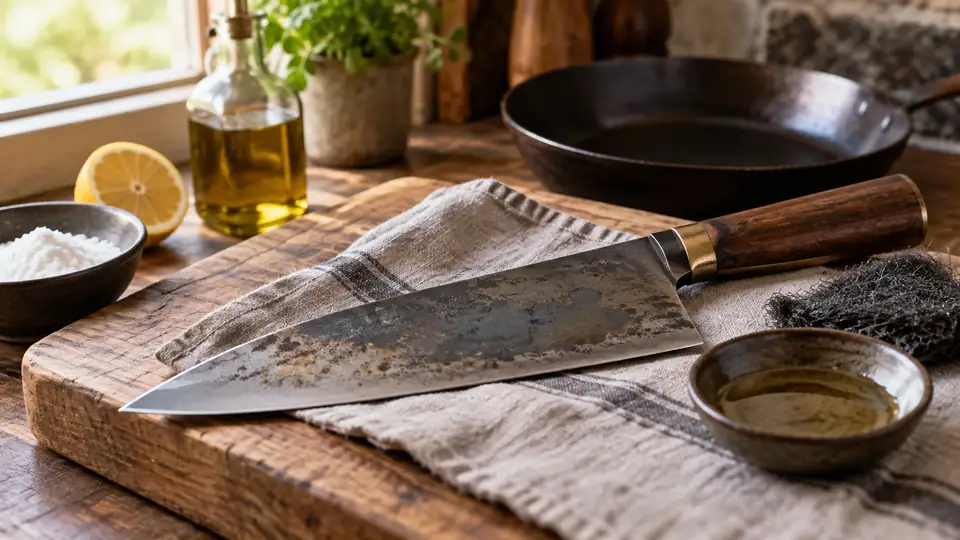
For knives, heavier rust should be handled carefully to avoid damaging the edge or finish. Serious pitting near the edge may require more specialized sharpening or restoration.
What Moisture Does to Seasoning
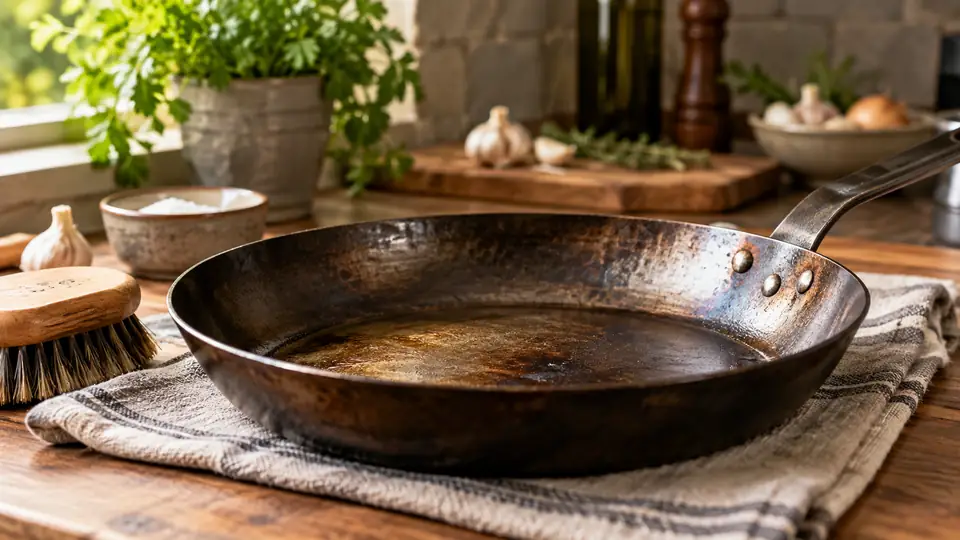
Seasoning is often described as a protective coating, but it is not as impermeable as enamel. It is a thin layer of oil that has polymerized under heat and bonded to the steel. It improves release, adds some rust resistance, and helps the pan develop its dark patina.
When carbon steel gets wet repeatedly, especially after acidic cooking or strong scrubbing, the seasoning can soften, thin out, or break in patches. You may notice:
- Uneven color
- Food sticking more than usual
- Matte or gray areas instead of a darker sheen
- Rust appearing only in certain spots
That does not mean the pan is ruined. It usually means the seasoning needs maintenance. Carbon steel works best when owners view seasoning as something that evolves with use rather than a perfect finish that stays unchanged forever.
Carbon Steel Cookware vs Carbon Steel Knives After Water Exposure
| Item | Main Risk from Water | Best Immediate Response | Long-Term Concern |
|---|---|---|---|
| Carbon steel pan | Rust and seasoning damage | Towel-dry, heat-dry, oil lightly | Patchy seasoning and recurring rust spots |
| Carbon steel wok | Rust in bowl shape, rim, and handle joints | Dry fully, use low heat, re-oil | Interior rust and stripped seasoning |
| Carbon steel griddle | Rust on flat cooking surface and corners | Dry all edges and underside | Large rusted sections if stored damp |
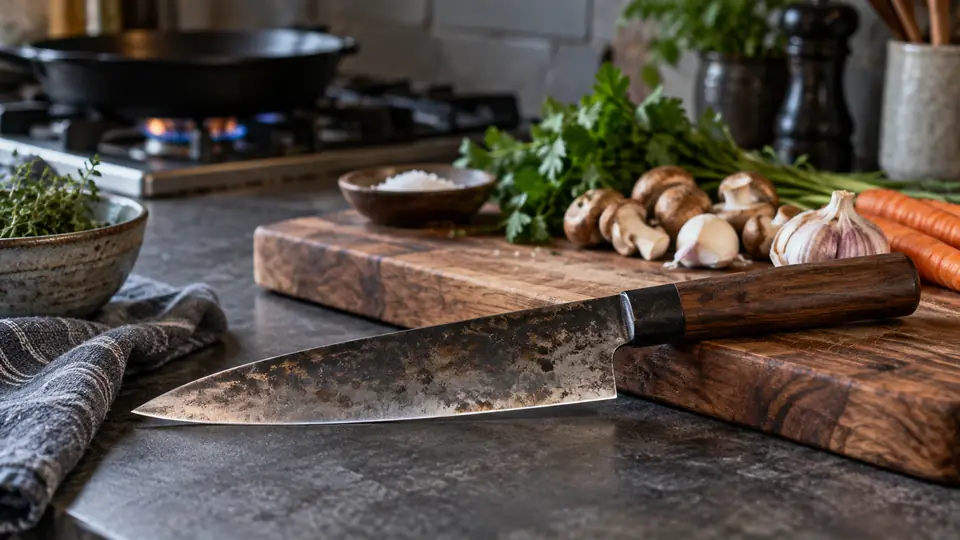
| Carbon steel knife | Spotting, rust, and edge corrosion | Hand-dry immediately, oil lightly if storing | Pitting near edge and staining around handle |
Cookware usually has the advantage of easy heat-drying on the stove. Knives need more careful towel-drying and storage discipline because you cannot simply heat them to remove moisture.
Prevention Tips So Wet Carbon Steel Does Not Turn Into Rust
Dry Immediately Every Time
This is the habit that matters most. Quick washing is fine. Delayed drying is what creates problems.
Use Heat-Drying for Pans and Woks
After washing, brief stovetop heat is one of the simplest ways to protect carbon steel cookware. It also helps prepare the surface for a very thin oil wipe if needed.
Avoid Soaking
If food is stuck, loosen it with hot water for a short time while you actively clean, rather than leaving the pan submerged. For knives, soaking should be avoided completely.
Keep Seasoning in Good Shape
A stronger seasoning layer gives water less chance to reach bare steel. Regular cooking with oil and occasional maintenance coats help.
Store in a Dry Area
Even after drying, storage matters. Avoid trapping carbon steel in a damp cabinet or stacking pieces while moisture is still present. For knives, ensure blade guards or sheaths are dry inside before use.
Do Not Put Carbon Steel in the Dishwasher
This remains one of the fastest ways to damage seasoning and encourage rust.
Common Mistakes After Carbon Steel Gets Wet
- Assuming it is ruined: Most moisture damage is fixable, especially if caught early.
- Only drying the inside: The underside, handle area, and rim can rust too.
- Skipping heat-drying on cookware: Towel-drying alone often leaves hidden moisture.
- Using too much oil afterward: Thick oil layers turn sticky and attract dust.
- Re-seasoning over active rust: Rust must be removed first.
- Letting minor orange spots sit: Light rust is easiest to fix right away.
- Storing knives damp in blocks or sheaths: Moisture trapped near the blade can keep corrosion going.
When Wet Carbon Steel Is Still Safe to Use
Carbon steel that got wet is usually safe to use once it is cleaned, dried, and free of active rust. A little discoloration or a faded seasoning patch is mostly a maintenance issue, not a safety issue. Light surface rust can be removed, and the pan or knife can return to service.
If the steel has deep pitting, heavy flaking rust, or structural damage, the situation is more serious. That is uncommon with normal kitchen neglect, but it can happen after long-term moisture exposure. In those cases, the surface may need extensive restoration, and a knife edge with corrosion damage may need professional attention.
Frequently Asked Questions
Can carbon steel get wet during washing?
Yes. Washing carbon steel is fine. The important part is drying it immediately and thoroughly afterward. For cookware, a short stint on low heat helps remove hidden moisture.
Will one night of being wet ruin a carbon steel pan?
Usually not, but it may cause rust or seasoning damage. Most pans can be restored with scrubbing, drying, and re-seasoning. The sooner you address it, the easier the fix.
Is a little orange rust on carbon steel dangerous?
Light surface rust is generally a maintenance issue rather than a sign the item is unusable. Remove the rust completely, wash if needed, dry thoroughly, and restore the surface before cooking again.
Why did my seasoned carbon steel pan rust anyway?
Seasoning helps protect the metal, but it is not perfect. Thin spots, acidic cooking, harsh scrubbing, or long moisture exposure can let water reach the steel and start oxidation.
Should I oil carbon steel after every wash?
A very thin coat is often helpful, especially for cookware stored for a while or knives kept in humid conditions. It does not need to be thick. Too much oil can become sticky.
Final Thoughts
What happens if carbon steel gets wet is usually straightforward. Brief water exposure is manageable. Staying wet is the real problem. That is when rust forms, seasoning weakens, and the surface starts to change.
For most pans, woks, griddles, and knives, the fix is simple if you act quickly: dry thoroughly, remove any rust, and restore protection with oil or seasoning as needed. Carbon steel is not low-maintenance like stainless steel, but it is forgiving in a different way. Even when moisture causes visible damage, the material can often be brought back with basic care.
If you treat drying as part of the cleaning routine rather than an afterthought, wet carbon steel stops being a major concern and becomes just another manageable part of ownership.

Leave a Reply