

Carbon steel can become impressively slick, but it does not get there by seasoning alone. A pan that feels sticky, patchy, or frustrating usually needs a combination of better seasoning, better heat control, and better day-to-day cooking habits. That is why two people can own similar carbon steel pans and have very different results.
Learning how to make carbon steel more nonstick matters because sticking is rarely caused by just one problem. A pan may be under-seasoned, overheated, used before it is fully preheated, or cleaned in a way that strips away weak layers of seasoning. Foods like eggs, fish, and potatoes also expose every weakness in the surface.
The good news is that carbon steel improves with use. Unlike disposable nonstick coatings, the cooking surface develops gradually as thin layers of oil polymerize and bond to the metal. With a few adjustments, most carbon steel pans can become much easier to cook on, especially for everyday tasks like frying eggs, sautéing vegetables, browning meat, and reheating leftovers.
Quick Answer
How to make carbon steel more nonstick starts with thin, repeated seasoning layers, proper preheating, and using the right amount of fat for the food you are cooking. A carbon steel pan becomes more nonstick as oil is heated into a bonded seasoning layer, but that surface works best only when the pan is brought to temperature gradually and food is added at the right moment.
To improve performance quickly, clean the pan well, apply a very thin coat of high smoke point oil, heat it until the oil darkens and bonds, then repeat as needed. During cooking, preheat the pan for a minute or two, add oil after the pan is warm, and let food release naturally before trying to move it. Avoid thick gummy seasoning, sudden high heat, and acidic simmering in a newly seasoned pan.
Carbon steel will not behave exactly like modern PTFE nonstick cookware, especially with delicate foods on day one. But if the seasoning is smooth and thin, the heat is controlled, and the pan is used regularly, carbon steel can become reliably low-stick for many common cooking tasks.
Why Carbon Steel Is Not Fully Nonstick Right Away
Carbon steel is bare metal under the seasoning. Unlike factory-coated nonstick pans, it depends on a layer of polymerized oil to separate food from the steel. That layer builds over time, and it gets better when it is thin, hard, and evenly bonded.
New owners often expect the pan to perform like coated nonstick cookware immediately. That expectation causes disappointment, especially with eggs and fish. Even a well-made carbon steel pan usually needs some cooking time, several seasoning cycles, and a bit of technique before it feels easy to use.
The surface also changes with use. A pan may be slightly sticky after one seasoning round, smoother after a few weeks, and much more forgiving after regular cooking with oil and moderate heat. This is normal. Carbon steel rewards consistency more than shortcuts.
What Actually Makes Carbon Steel More Nonstick
Several factors work together. If one is missing, the pan may still stick even if the others are correct.
| Factor | Why It Matters | What Good Results Look Like |
|---|---|---|
| Thin seasoning layers | Creates a smooth bonded surface instead of a gummy one | Dark, dry, mostly even finish |
| Proper preheating | Helps food contact a stable hot surface | Food releases more easily and browns evenly |
| Oil added at the right time | Improves separation between food and metal | Oil shimmers lightly instead of smoking heavily |
| Moderate heat control | Prevents burning, hot spots, and weak seasoning | Steady cooking without aggressive sticking |
| Regular use | Builds and reinforces seasoning gradually | Surface becomes darker and more reliable |
| Smart cleaning | Removes residue without stripping stable seasoning | Clean pan with dry, smooth feel after oiling |
How to Make Carbon Steel More Nonstick Step by Step
1. Remove Wax, Factory Coating, or Old Residue
Some new carbon steel pans arrive with a protective coating, often wax, lacquer, or oil, to prevent rust during shipping. If that layer is not removed fully, seasoning will not bond well. You may end up with blotchy or sticky spots that never perform properly.
Wash the pan thoroughly with hot water, dish soap, and a scrubber. For stubborn factory coatings, hotter water and repeated scrubbing may be necessary. Dry the pan immediately and heat it briefly to evaporate hidden moisture.
2. Apply a Very Thin Coat of Oil
This is where many seasoning attempts go wrong. More oil does not create a better surface. Thick oil leaves behind tacky patches that feel sticky and cook poorly.
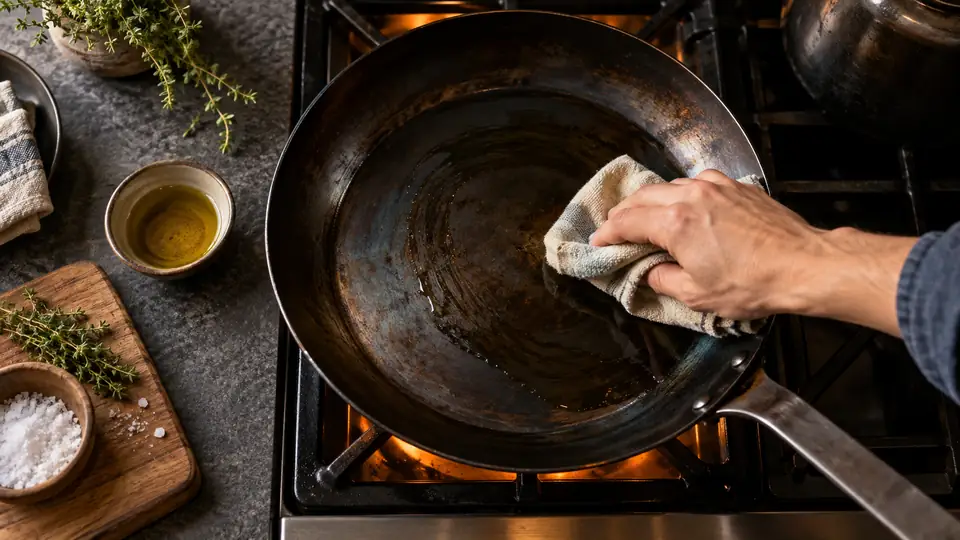
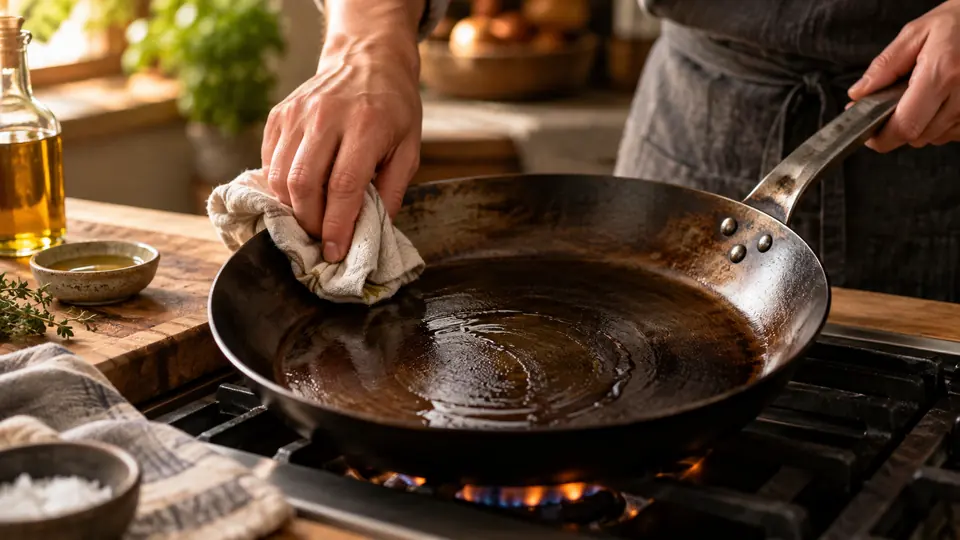
Use a high smoke point oil such as grapeseed, canola, sunflower, or refined avocado oil. Rub a small amount over the entire pan, then wipe it off aggressively until the pan looks almost dry. If the pan appears glossy or wet, there is still too much oil on it.
3. Heat the Pan Until the Oil Bonds
Seasoning works because heat transforms a thin film of oil into a harder layer that bonds to the steel. This process is often described as polymerization. In simple terms, the oil changes from a liquid film into part of the cooking surface.
You can do this on the stovetop or in the oven, depending on the pan shape and handle material. On the stovetop, rotate the pan so all areas get heated, especially the sides. In the oven, place it upside down if the manufacturer allows it, which helps prevent oil pooling.
Once heated properly, the pan usually darkens. It may develop blue, bronze, brown, or black tones. Color variation is normal. Perfectly even cosmetic seasoning is less important than a dry, smooth finish.
4. Repeat With Thin Layers Instead of One Heavy Layer
Several light seasoning rounds work better than one thick one. Two to four thin cycles are often enough to make a new pan much easier to use. After that, cooking itself continues to improve the surface.
This gradual approach creates a harder and smoother base. It is especially helpful if you plan to cook eggs, pancakes, or delicate fish early on.
5. Cook Foods That Help Build the Surface
Once the first seasoning is in place, choose foods that reinforce it. Sautéed onions, potatoes cooked with oil, grilled sandwiches, and fatty proteins tend to be good early choices. They give the pan useful cooking exposure without stressing a weak surface too much.
Tomato sauce, wine reductions, and long acidic simmering are better saved for later or handled in other cookware. Acid can weaken fresh seasoning before it has had time to mature.
Best Oils for a More Nonstick Carbon Steel Surface
The best oil is not always the one that creates the darkest color. What matters most is a thin application, a suitable smoke point, and consistent technique.
| Oil | Works Well for Seasoning? | Notes |
|---|---|---|
| Grapeseed oil | Yes | Popular choice, light texture, easy to apply thinly |
| Canola oil | Yes | Common and practical, good for repeated seasoning rounds |
| Sunflower oil | Yes | Useful if refined and high smoke point |
| Refined avocado oil | Yes | High smoke point, but still use very small amounts |
| Flaxseed oil | Sometimes | Can create a hard layer, but some users see flaking |
| Olive oil | Less ideal for initial seasoning | Fine for cooking, less consistent for building seasoning |
| Butter | No for primary seasoning | Good for cooking, not ideal for seasoning base layers |
For actual cooking, do not overthink it. A well-seasoned pan can perform nicely with butter, neutral oils, or rendered fat, as long as heat is controlled. The seasoning process and the cooking fat do not always need to be the same.
Preheating Is a Big Part of How to Make Carbon Steel More Nonstick
A seasoned pan can still stick badly if it is used at the wrong temperature. Heat management is one of the biggest differences between frustrating carbon steel and enjoyable carbon steel.
Why Preheating Helps
As metal heats, its surface behavior changes. A cold or unevenly heated pan encourages proteins and starches to grab onto the steel. A properly warmed pan, with oil added at the right time, gives food a better chance to release cleanly.
This does not mean blasting the burner on high. Carbon steel responds quickly, so medium or even medium-low heat is often enough. Too much heat can burn oil, damage fresh seasoning, and create patchy sticking.
A Simple Preheating Routine
- Place the dry pan over low to medium heat.
- Let it warm gradually for 1 to 3 minutes, depending on size and stove strength.
- Add oil once the pan is warm, not smoking hot.
- Swirl the oil to coat the cooking surface.
- Add food when the oil looks loose and lightly shimmery.
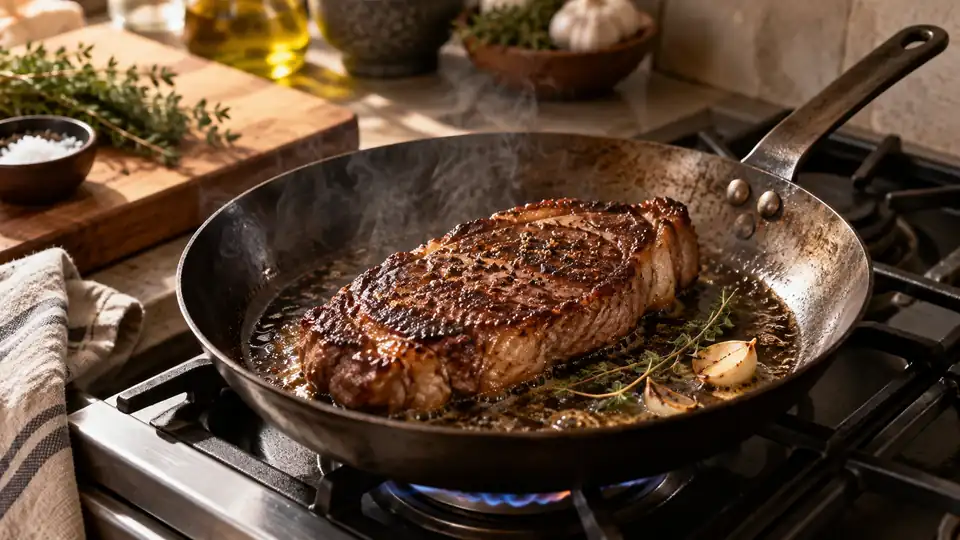
For eggs, many cooks get better results with slightly lower heat than they expect. For steaks or hard searing, higher heat can work well, but the pan still benefits from a steady preheat rather than a sudden blast.
Cooking Techniques That Make Carbon Steel Feel More Nonstick
Use Enough Fat for the Food
Carbon steel is low-stick, not no-fat. Very lean or delicate foods often need a bit more oil or butter than people expect. That is especially true while the pan is still developing its surface.
Eggs, fish fillets, and diced potatoes benefit from a visible but not excessive layer of cooking fat. Over time, as the seasoning improves, you may find you can use a little less.
Let Food Release Naturally
Protein often sticks at first and releases later once browning develops. This is normal with carbon steel, cast iron, and stainless steel. If you try to force the food too early, you tear the surface and leave residue behind.
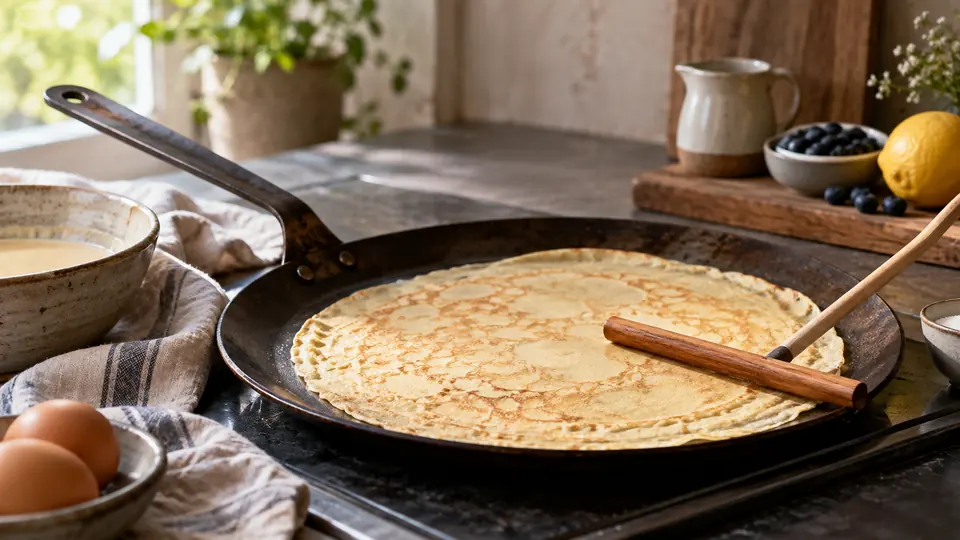
Give chicken, fish, burgers, and pancakes enough contact time. Once a crust forms, the food usually moves more easily.
Avoid Crowding the Pan
Too much food at once drops the pan temperature and creates steam. Steam interferes with browning and increases the chance of sticking. In a crowded pan, moisture gets trapped and the surface behaves more like a damp plate than a hot skillet.
Cook in batches if necessary. This is especially useful for mushrooms, potatoes, and sliced meat.
Match the Heat to the Food
Different foods need different settings. Eggs do better on lower heat. Stir-frying and searing can tolerate more. If the oil smokes hard before the food goes in, the pan is probably too hot for delicate cooking.
Many carbon steel sticking problems come from treating every recipe like a high-heat sear.
Foods That Help Build a Better Surface
Some foods make early carbon steel ownership easier than others. If your pan is still young, start with forgiving tasks.
- Onions and shallots: Good for light sautéing and gentle seasoning reinforcement.
- Potatoes with oil: Useful for building the surface, though they can stick if heat is too high.
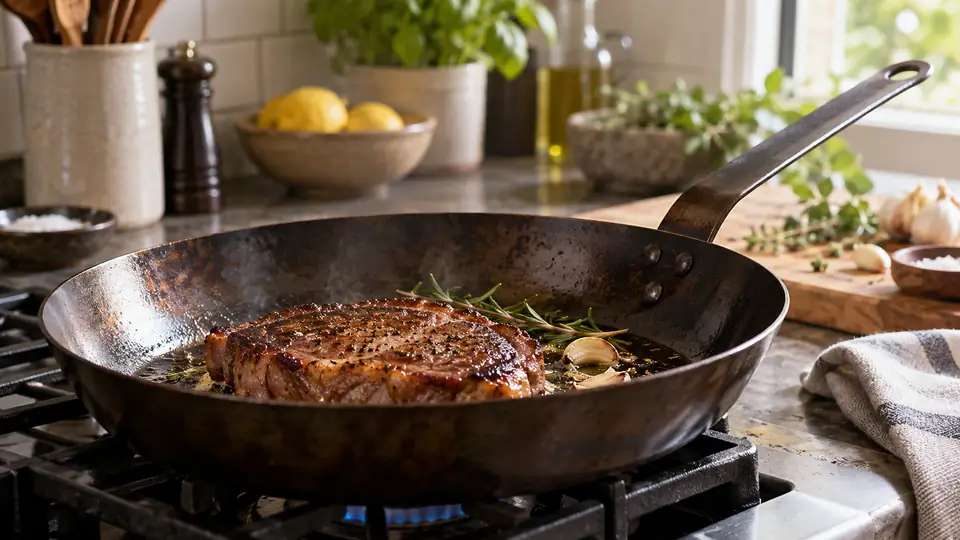
- Burgers and sausages: Fatty proteins often leave the pan in better condition than lean foods.
- Grilled sandwiches and quesadillas: Easy way to use moderate heat and fat.
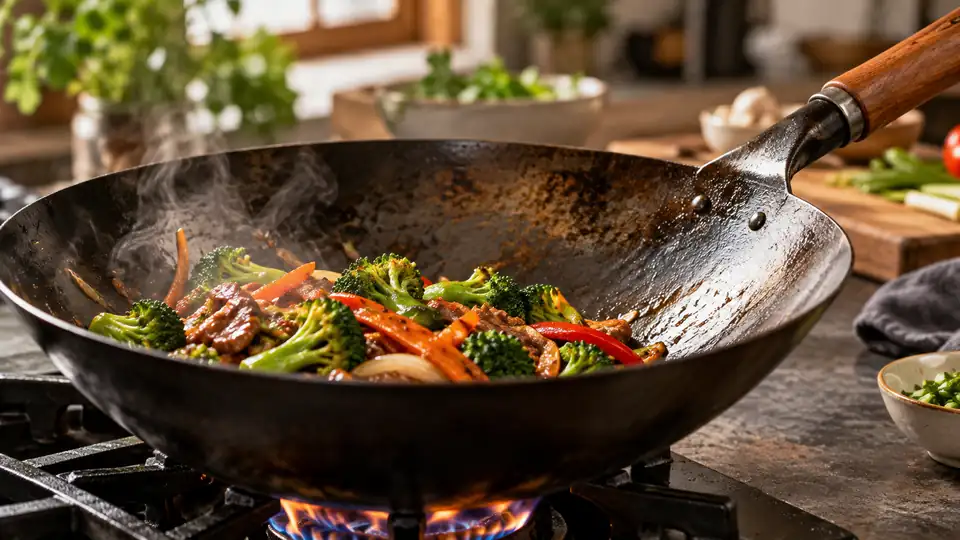
- Fried rice and stir-fry: Works well once the pan has a decent base seasoning.
Some cooks also use a sacrificial first few sessions to improve the pan before trying eggs. That approach can be helpful, especially with smooth-surfaced skillets.
Foods That Commonly Stick, Even in Good Carbon Steel
A more nonstick surface does not mean every food will behave effortlessly. Some ingredients are simply more demanding.
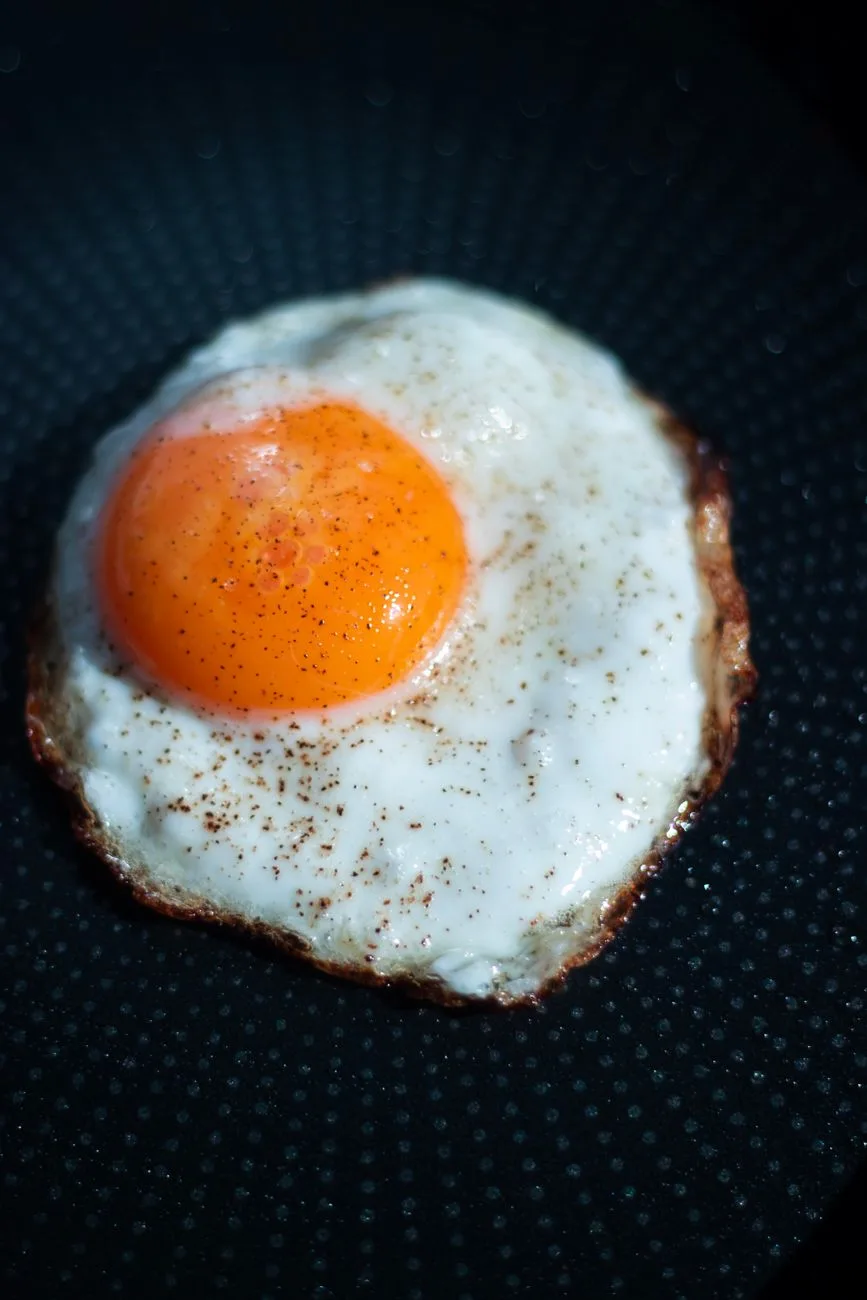
- Eggs: The classic test. They reveal weak seasoning and poor temperature control immediately.
- White fish: Delicate proteins can tear if the pan is not ready.
- Cold tofu: Moisture and fragility increase sticking risk.
- Unrinsed or very wet potatoes: Surface starch can glue them down.
- Sugary marinades: Burned sugars stick even on seasoned pans.
If these foods are giving you trouble, it does not always mean the pan is poorly seasoned. It may just need better drying, better preheating, a little more fat, or lower heat.
Common Seasoning Mistakes That Make Carbon Steel Less Nonstick
Using Too Much Oil
This is the most frequent issue. Heavy oil creates sticky, uneven buildup. That surface feels wrong under a spatula and often performs worse than a lighter seasoning layer.
Chasing a Perfect Black Finish Too Early
Color is not the same as performance. A blotchy brown or dark bronze pan can cook beautifully. A shiny black pan with gummy buildup can cook poorly.
Focus on a dry, smooth surface and reliable cooking behavior. Appearance usually improves with use.
Cooking Acidic Foods Too Soon
Fresh seasoning is easier to strip. Tomato, vinegar, citrus, and wine can weaken the surface before it fully develops. A mature pan handles occasional acidic cooking better, but newly seasoned carbon steel is more vulnerable.
Cleaning Too Gently
Some people are so afraid of damaging seasoning that they leave stuck residue in place. Burned bits and old oil create rough patches that make future sticking worse.
You should remove food debris after cooking. Stable seasoning stays attached to the steel. Loose burnt residue should not.
Using Heat That Is Too High
Carbon steel is responsive. It does not always need the burner strength people use for heavier cast iron. High heat can smoke oil excessively, create uneven polymerization, and make delicate foods stick harder instead of less.
How to Fix a Carbon Steel Pan That Still Sticks
If your pan is not improving, diagnose the issue instead of adding endless seasoning layers.
| Problem | Likely Cause | What to Do |
|---|---|---|
| Sticky or tacky surface | Too much oil during seasoning | Scrub lightly, heat the pan, reseason with much less oil |
| Patchy bare spots | Normal wear or weak early seasoning | Keep cooking, add a thin maintenance seasoning if needed |
| Eggs always stick | Heat too high or too low, not enough fat, immature seasoning | Lower heat slightly, preheat better, use butter or oil, keep using the pan |
| Food burns and sticks | Pan overheated | Reduce burner setting and preheat more gradually |
| Rough black buildup | Carbonized food residue | Scrub it smooth, then apply a thin oil layer after drying |
| Seasoning flakes off | Layer too thick or poorly bonded | Remove loose seasoning and rebuild with thinner coats |
Cleaning Habits That Help Carbon Steel Stay More Nonstick
A cleaner surface usually becomes a better surface. Good maintenance preserves what works and removes what does not.
Clean While the Pan Is Still Warm
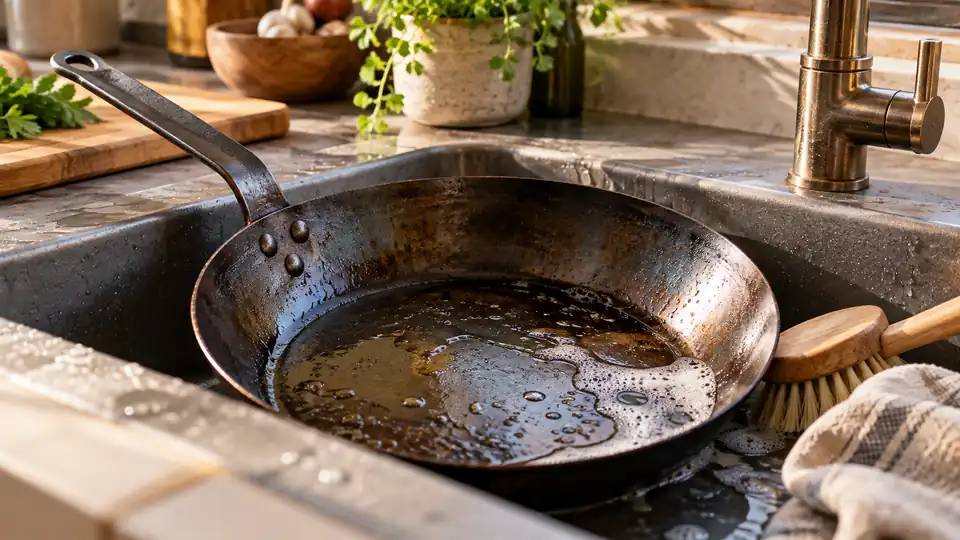
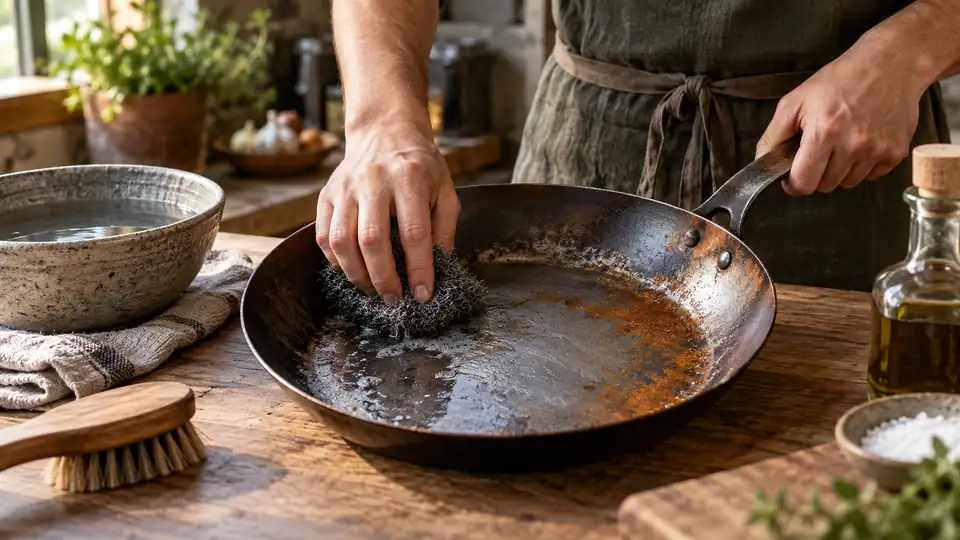
Warm residue loosens more easily than hardened residue. After cooking, let the pan cool slightly, then wipe it out or rinse it with warm water. A soft brush, sponge, chain mail scrubber, or non-abrasive pad can be useful depending on what is stuck.
Use Soap When Needed
Modern dish soap will not instantly destroy solid seasoning. If the pan is greasy or dirty, use a small amount. The real risk is leaving moisture behind or scrubbing off weak layers that were not bonded properly in the first place.
Dry Thoroughly
Water is the enemy of bare carbon steel. After washing, dry the pan fully with a towel, then place it over heat for a minute or two to remove remaining moisture.
Apply a Light Protective Film After Cleaning
Once the pan is dry, a tiny amount of oil rubbed over the surface can help prevent rust and maintain the finish. Wipe off excess so it does not turn sticky in storage.
Do You Need to Reseason Often?
Usually not. A lot of owners reseason more often than necessary because they assume every discoloration or light spot is a failure. In reality, carbon steel pans often look irregular while still cooking well.
Reseason when the surface feels sticky, rust appears, bare areas are widespread, or cooking performance clearly worsens. Otherwise, regular use may be all the maintenance the pan needs.
For cooks who want a simpler starting point, pre-seasoned carbon steel pans can reduce the early learning curve, though technique still matters.
How Long Does It Take for Carbon Steel to Become More Nonstick?
It depends on the pan, the stove, the foods you cook, and how well the first seasoning layers were applied. Some pans become noticeably easier to use after one careful seasoning session and a few rounds of cooking. Others take a couple of weeks of regular use before they feel reliably slick.
Daily egg performance is often the last thing to become easy. Searing meat and sautéing vegetables usually work well much earlier. If your goal is a pan that can handle omelets smoothly, patience and repetition matter.
Frequently Asked Questions
Can carbon steel ever be as nonstick as coated nonstick cookware?
Not in exactly the same way. PTFE-style nonstick coatings are designed to be slick from the start with very little oil. Carbon steel can become very low-stick, but it still depends more on seasoning, heat, and technique.
Why do eggs stick to my carbon steel pan even after seasoning?
Egg sticking usually points to temperature or oil issues more than a total seasoning failure. The pan may be too hot, not hot enough, or lacking enough butter or oil. Fresh seasoning also tends to improve after more regular cooking.
Should I strip and restart if my seasoning looks blotchy?
Not always. Blotchy seasoning is common and often harmless. If the pan feels smooth and cooks reasonably well, keep using it. Strip and restart only if the surface is sticky, flaky, or covered in rough carbon buildup.
Is oven seasoning or stovetop seasoning better for making carbon steel more nonstick?
Both can work. Oven seasoning often gives more even coverage on skillets with oven-safe handles, while stovetop seasoning is convenient for quick maintenance coats. The key is thin oil and enough heat, not the method alone.
Can I use metal utensils on carbon steel?
Yes. Metal utensils may leave light marks in the seasoning, but carbon steel is durable and the surface can recover with use. Gentle scraping is often part of normal cooking.
Final Thoughts
How to make carbon steel more nonstick is really about building a good surface and using it correctly. Thin seasoning layers, gradual preheating, moderate heat, and enough cooking fat will do more for performance than repeatedly baking on thick coats of oil.
Carbon steel improves through use, not perfection. A pan can look uneven and still cook very well. If you keep the surface clean, avoid gummy buildup, and let seasoning develop over time, carbon steel becomes far easier to cook on and much more dependable for everyday meals.
For most people, the biggest shift is simple: stop chasing a flawless appearance and start focusing on smooth seasoning, sensible heat, and repeated use. That is what makes carbon steel more nonstick in real kitchens.

Leave a Reply