
Carbon steel is prized for something few cookware materials balance as well: it can get very hot, very quickly, while still staying durable enough for repeated high-heat cooking. That matters because some of the foods carbon steel handles best, such as steaks, stir-fries, smash burgers, blistered vegetables, and pan-seared fish, depend on intense heat for browning rather than gentle cooking.
The question is not just how hot can carbon steel get, but how much heat it can handle safely in actual kitchen use. Stove type, pan thickness, handle material, oven use, seasoning, and how long the pan sits empty over a burner all affect the practical limit. Carbon steel itself tolerates high temperatures well, but the cookware as a whole may have lower limits because of coatings, welded handles, or manufacturer guidance.
Understanding those limits helps prevent warped pans, damaged seasoning, burnt oil, and overheated handles. It also makes it easier to use carbon steel the way it performs best, which is with controlled high heat rather than uncontrolled overheating.
Quick Answer
Carbon steel cookware can generally handle very high cooking temperatures, often in the range of 500 to 700 degrees Fahrenheit in practical kitchen use, and the steel itself can tolerate far more than that before the material becomes the limiting factor. In normal home cooking, a carbon steel pan can easily reach searing temperatures of 400 to 600 degrees Fahrenheit on the stovetop or in the oven.
That said, the real limit is usually not the steel alone. It is the pan design, seasoning, handle construction, and manufacturer’s maximum oven rating. A bare carbon steel pan with a metal handle can usually take intense heat, including broiler use in many cases. A pan with a coated or wrapped handle may have a lower safe limit.
For most cooking tasks, you do not need to push carbon steel to its maximum possible temperature. The sweet spot is high enough to brown food efficiently, but not so hot that the oil smokes excessively, seasoning burns unevenly, or the pan overheats empty for long periods. Carbon steel handles high heat well, but it performs best with intentional heat control.
Why Proper Heat Use Matters
High heat is one of the main reasons cooks choose carbon steel over nonstick cookware. A carbon steel pan can develop a hard sear, support quick stir-frying, and tolerate the kind of heat that would damage many coated pans. That gives it a broader cooking range than materials designed mainly for low to medium heat.
Still, there is a difference between high heat and excessive heat. Carbon steel responds quickly to burner changes, especially thinner pans and woks. That responsiveness is useful, but it also means the pan can overshoot the target temperature faster than some cooks expect.
Excessive heat can cause several problems:
- Seasoning breakdown, where the protective oil layer becomes patchy or flakes
- Warping, especially in thinner pans heated too aggressively on powerful burners
- Burnt oil and smoke, which can create sticky residue instead of good seasoning
- Uneven heating, where the center overheats before the rest of the pan catches up
- Discoloration, which is often cosmetic but sometimes signals repeated overheating
Used well, carbon steel benefits from high temperatures. Used carelessly, it can still be damaged or at least made harder to cook with.
How Hot Can Carbon Steel Get in Real Cooking?
In practical kitchen terms, carbon steel easily reaches the temperature ranges needed for nearly any stovetop or oven cooking method used at home. The steel itself is not the weak point. Instead, the practical maximum depends on how the cookware is being used.
Typical Temperature Ranges
| Cooking Use | Approximate Pan Surface Temperature | How Carbon Steel Performs |
|---|---|---|
| Gentle sautéing | 250 to 325°F | Very easy to control |
| General frying | 325 to 400°F | Excellent |
| Searing meat | 400 to 500°F | One of carbon steel’s strengths |
| High-heat searing or wok cooking | 500 to 650°F | Usually well within capability |
| Broiler exposure | Often 500°F and above | Usually fine if the handle and pan design allow it |
These are practical ranges, not exact fixed limits. A pan on a powerful gas burner or induction cooktop can exceed these numbers, especially if preheated empty for too long.
The Steel Can Take More Than the Seasoning Usually Can
Carbon steel as a metal can withstand temperatures far beyond anything used in normal cooking. You are not going to melt a carbon steel pan on a kitchen burner. But cookware performance depends on more than the raw material.
The seasoning layer, which is a thin film of polymerized oil, is much more sensitive than the steel underneath. At high heat, seasoning can darken, strengthen, thin out, or burn off depending on the oil, the pan’s history, and how the heat is applied. That is why a carbon steel pan may survive a very hot burner physically, yet come away with blotchy seasoning or a sticky surface.
Empty Preheating Is Where Trouble Starts
Most overheating problems happen when the pan is heated empty for too long, especially on high power from a cold start. Carbon steel heats faster than cast iron, so it can reach damaging temperatures in a relatively short time. The center may become much hotter than the edges, which raises the risk of warping in thinner pans.
A short preheat is useful. An extended empty preheat over high flame or strong induction is where many pans get stressed.
What Affects How Hot Carbon Steel Can Get Safely?
Pan Thickness
Thicker carbon steel pans generally tolerate aggressive heat better because they resist rapid temperature spikes and are less prone to warping. Thinner pans heat up faster and respond more quickly, which can be helpful for eggs or quick sautéing, but they can also overheat faster.
A thin wok is designed for rapid heat changes and high flame cooking, but its shape and use pattern are different from a flat skillet. A thin flat skillet on a powerful burner may be more likely to develop a slight wobble if repeatedly blasted with high heat while empty.
Stove Type
Different heat sources affect carbon steel differently:
- Gas: Heats quickly and visibly. Great for carbon steel, but a strong flame concentrated in the center can overheat smaller pans fast.
- Induction: Very efficient and fast. Excellent for carbon steel, but one of the easiest ways to overheat a pan if you start on maximum power.
- Electric coil: Slower to respond, but can still create hot spots and maintain residual heat after you lower the setting.
- Smooth-top electric: Works well, though heat changes can lag. Flat-bottomed pans are especially important here.
Induction deserves extra caution. Because it transfers energy directly into the pan, carbon steel can heat faster than expected. A moderate setting is usually better for preheating than jumping straight to full power.
Handle Material and Construction
When people ask how hot carbon steel can get, they usually mean the pan body. But the safe limit may be determined by the handle. A bare metal handle usually tolerates higher oven and broiler temperatures than a handle with silicone, wood, plastic, or epoxy-coated parts.
Some pans are marketed as oven safe, but only to a specific temperature. That number matters more than general assumptions about carbon steel. If the manufacturer says 450°F, follow that even if the steel itself could withstand more.
Seasoning Condition
A well-established seasoning layer often handles cooking heat better than a freshly seasoned pan with a thick or uneven coating. New owners sometimes try to create seasoning by using too much oil over very high heat. That often backfires and leaves a gummy surface.
Thin layers of seasoning built gradually tend to perform better during repeated high-heat cooking. If you need a refresher on surface buildup and oil behavior, articles about pre-seasoned carbon steel pans can also help explain how seasoning affects early use.
Pan Size Relative to Burner Size
A small pan on a large burner can overheat quickly in the center. A large pan on a small burner may heat unevenly and tempt you to turn the heat too high to compensate. Matching the pan to the burner improves control and reduces stress on the metal.
Carbon Steel vs Other Cookware at High Heat
| Cookware Material | High-Heat Tolerance | Heat Responsiveness | Best Use at High Heat | Main Limitation |
|---|---|---|---|---|
| Carbon steel | Very high | High | Searing, stir-frying, broiling | Can warp or lose seasoning if overheated empty |
| Cast iron | Very high | Low to moderate | Deep searing, oven use | Slower to adjust |
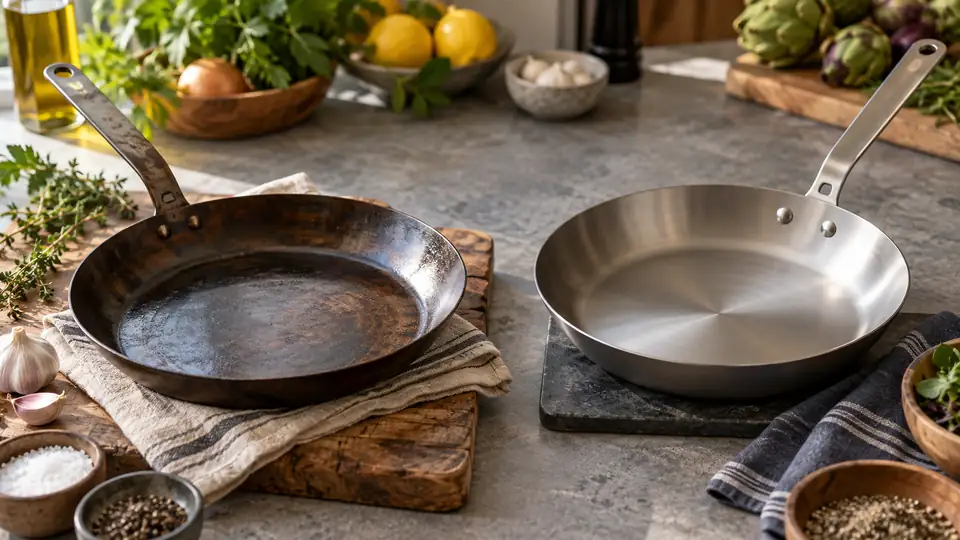
| Stainless steel | High | Moderate | Searing, sauce work | Can stick more if technique is off |
| Traditional nonstick | Low to moderate | Moderate | Eggs, delicate foods | Not suited to intense heat |
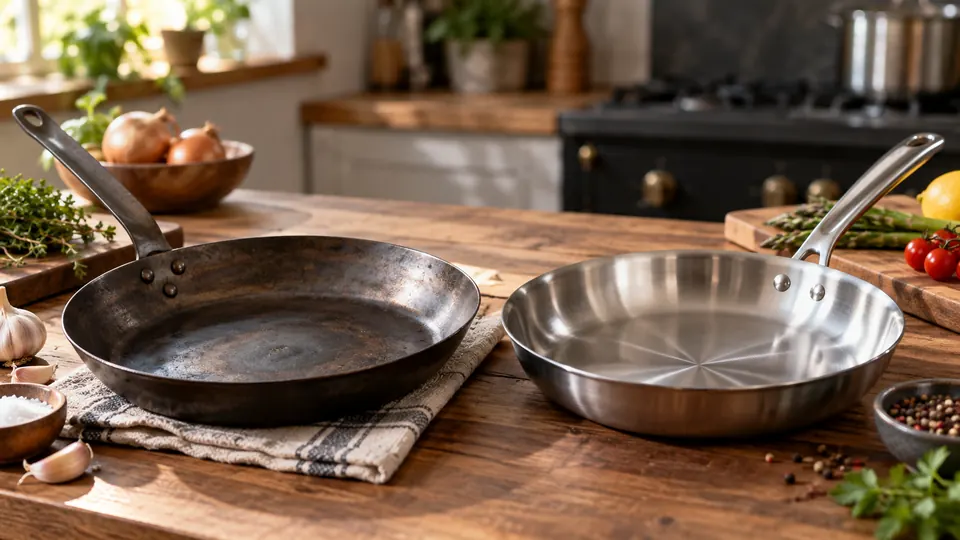
Carbon steel stands out because it combines high-heat durability with quick response. Cast iron can also handle strong heat, but it is slower to heat and cool. Nonstick pans are the least suitable for high-heat searing because excessive heat can shorten coating life and affect performance.
Best Temperature Range for Common Carbon Steel Cooking Tasks
Searing Steak
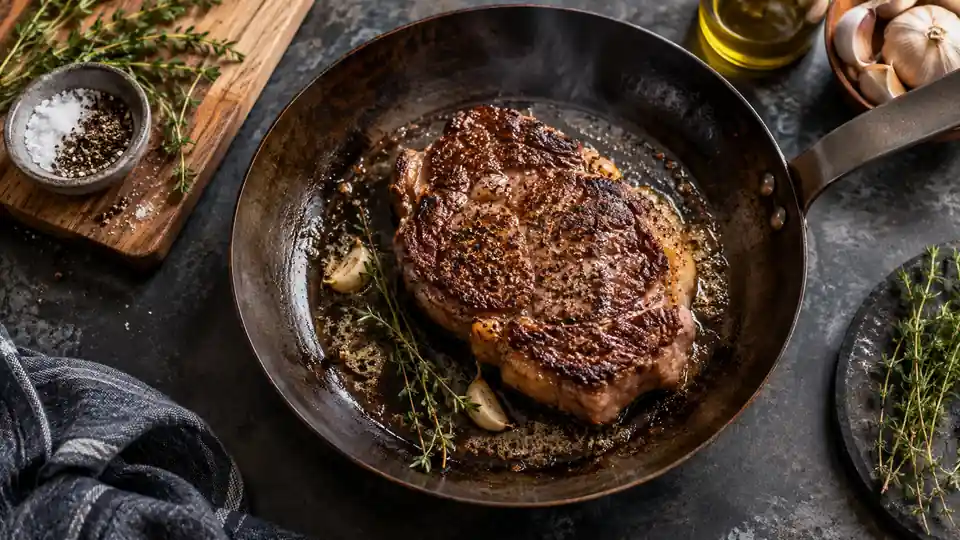
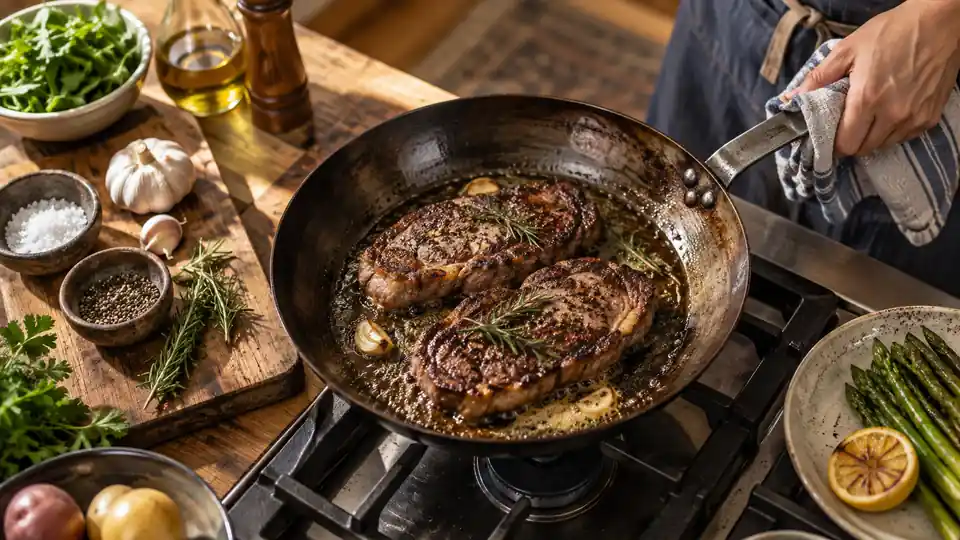
For steak, the pan surface is often best around 400 to 500°F. That is hot enough to encourage browning and crust formation without instantly burning oil or seasoning. A drop of neutral oil should shimmer quickly, but the pan should not sit smoking heavily for long before the meat goes in.
Going much hotter can work for certain searing styles, but it narrows the margin for error. In home kitchens, a slightly lower but controlled sear often produces better results than a pan heated as hot as possible.
Stir-Frying
Carbon steel woks and skillets are well suited to the 450 to 650°F range often associated with fast stir-frying. Because ingredients are moved constantly, the pan benefits from strong heat without staying empty long. This is a more natural high-heat use case for carbon steel than leaving a skillet unattended over a burner.
Smash Burgers
For smash burgers, many cooks aim for roughly 400 to 475°F. That range helps create a browned crust quickly. Too cool, and the meat steams. Too hot, and the fond may burn before the burger develops good contact with the surface.
Eggs and Delicate Foods
Carbon steel can cook eggs well, but usually not at extreme heat. Moderate temperatures of 275 to 350°F are more useful here. This is a good reminder that carbon steel can get very hot, but it does not need to for every job.
Oven Roasting and Broiler Finishing
Many carbon steel pans work well in ovens at 400 to 500°F, and some can handle broiler use. This is excellent for dishes that start on the stovetop and finish in the oven. Just confirm the handle and manufacturer rating first.
Signs Your Carbon Steel Pan Is Too Hot
It is easy to assume more heat always means better browning. In practice, overheated carbon steel often performs worse. Watch for these signs:
- Oil smokes aggressively within seconds, especially before food is added
- Patchy rainbow or blue discoloration, which can happen with intense heat
- Food scorches before it browns properly
- Seasoning turns sticky or flakes after cooking
- The pan bottom develops a slight wobble, suggesting heat stress or warping
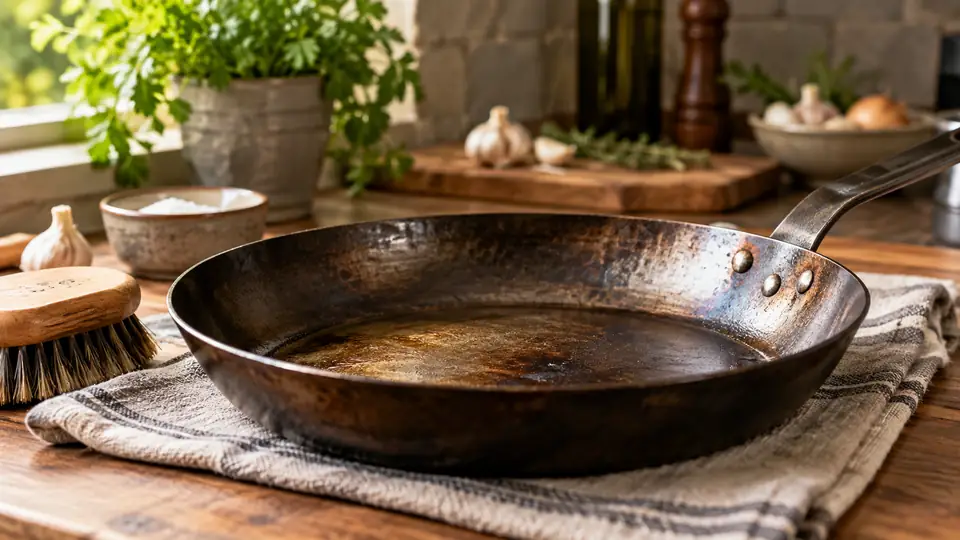
Some discoloration is normal in carbon steel and not automatically a problem. Bluing, darkening, and uneven early seasoning are common. The real concern is repeated overheating that hurts cooking performance or changes the pan shape.
How to Heat Carbon Steel Without Damaging It
Start Lower Than You Think
Carbon steel often performs better if you preheat on medium or medium-high rather than maximum heat. This gives the metal time to warm more evenly. Once the pan is hot, you can raise or lower the heat as needed.
Preheat Briefly, Not Indefinitely
A short preheat helps reduce sticking and improves browning. Long empty heating sessions do not usually improve performance. Instead, they increase the risk of hot spots, smoke, and warping.
Add Oil at the Right Time
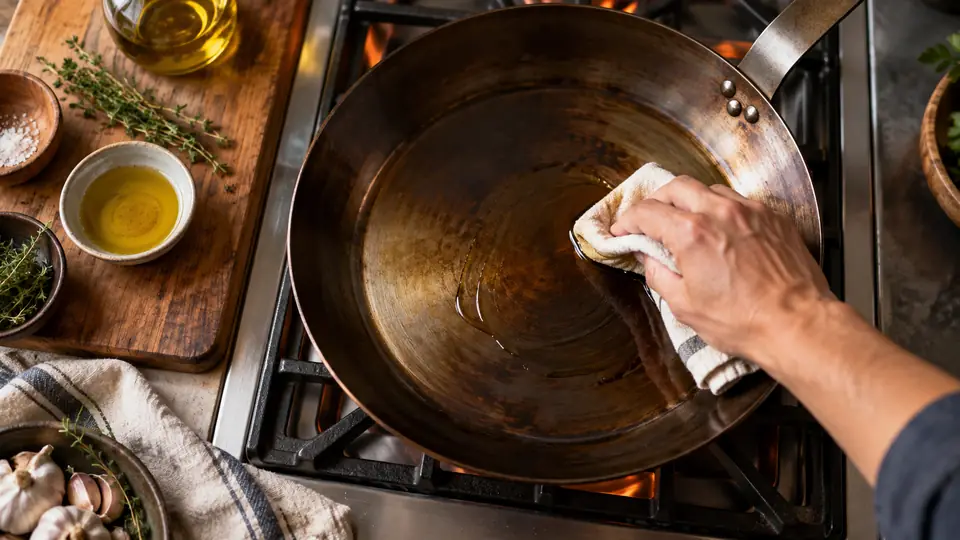
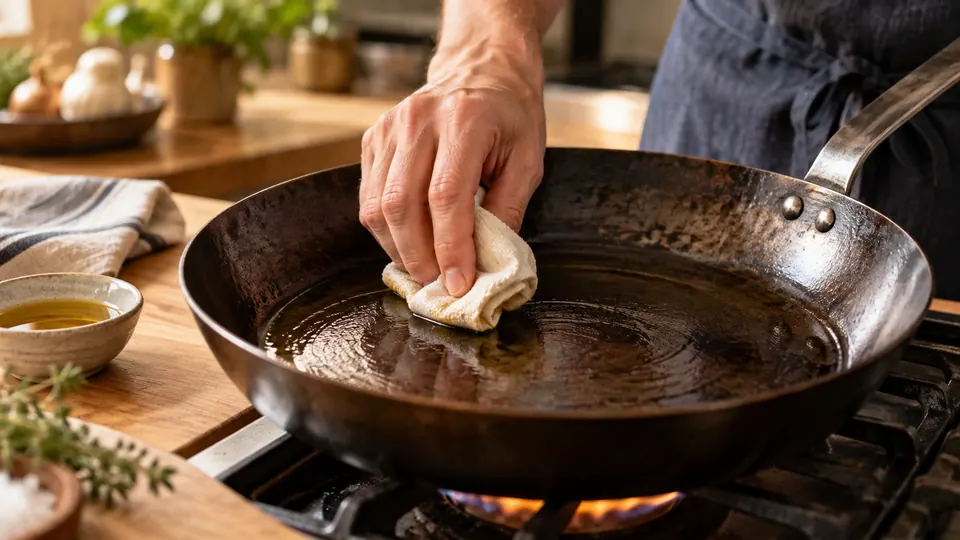
Once the pan is warm enough, add a small amount of oil and watch how it behaves. It should loosen and shimmer. If it instantly smokes hard, the pan is likely too hot for most tasks. Back off the heat and let it settle for a moment.
Use Enough Fat for the Cooking Task
Carbon steel is not a coated nonstick pan. Even with good seasoning, some foods need a bit of oil or fat to cook cleanly. High heat with too little oil can lead to sticking and rough seasoning wear.
Match Heat to the Food
Steaks, burgers, and stir-fried vegetables benefit from strong heat. Eggs, pancakes, or delicate fish usually need less. The ability of carbon steel to get very hot is useful, but not every meal improves by using that upper range.
Can Carbon Steel Go Under the Broiler?
Often, yes. Many carbon steel pans are suitable for broiler use because the pan body and metal handle tolerate intense radiant heat. This makes carbon steel useful for finishing steaks, charring vegetables, or melting toppings after stovetop cooking.
Still, broiler safety depends on the specific pan. Check for:
- All-metal construction
- No silicone or plastic handle components
- Manufacturer approval for broiler or very high oven heat
Also remember that broilers heat the top surface and handle aggressively. Even if the pan is safe, handle temperature can become extreme very quickly. Use heavy oven mitts and plan where the hot pan will go before removing it.
Can Carbon Steel Warp From High Heat?
Yes, it can. Carbon steel is durable, but not immune to warping. This is especially true with thinner pans, flat-bottom designs, and powerful burners. Warping does not always mean dramatic damage. Sometimes it is a slight spin or wobble that becomes noticeable on smooth cooktops.
Common Causes of Warping
- Heating an empty pan over high heat for too long
- Using a burner much larger than the pan base
- Starting on full induction power from a cold pan
- Rapid temperature shock, such as running cold water into a very hot pan
How to Reduce the Risk
- Preheat gradually
- Avoid maximum heat unless the cooking task truly needs it
- Let the pan cool naturally before washing
- Choose thicker cookware if you often cook at high temperatures
Does High Heat Ruin Carbon Steel Seasoning?
Not necessarily. In fact, repeated cooking at moderate to high temperatures often helps seasoning mature. The issue is not high heat by itself. It is excessive or poorly controlled heat, especially combined with too much oil or long empty preheats.
Seasoning forms when very thin layers of oil polymerize on the steel surface. That process benefits from heat, but it does not benefit from puddles of oil burning into sticky varnish. If the pan gets hot enough to scorch oil repeatedly, the seasoning can become uneven, brittle, or partially burn away.
This is why experienced carbon steel users often focus less on chasing a perfectly black surface and more on building a functional surface through normal cooking. A pan with patchy coloring can still perform very well if the seasoning is thin, dry, and stable.
Common Mistakes With High Heat and Carbon Steel
Using Maximum Burner Power as the Default
Carbon steel is high-heat capable, but that does not mean every preheat should start at full blast. This is one of the fastest ways to overheat the center of the pan.
Trying to Create Better Seasoning by Overheating Oil
More smoke does not mean better seasoning. Thick oil layers and extreme heat usually create sticky residue or burnt spots rather than a smooth cooking surface.
Leaving the Pan Empty While Getting Ingredients Ready
A carbon steel pan can go from properly preheated to overheated while you are still chopping or seasoning food. Have ingredients ready before the pan reaches the final cooking temperature.
Ignoring the Handle Limit
Even if the pan body can take intense heat, the handle may not. Always check oven and broiler limits if they are provided.
Cooling the Pan Too Fast
Running cold water into a ripping-hot pan can stress the metal and damage seasoning. Let the pan cool down first.
Frequently Asked Questions
Can carbon steel get hotter than cast iron?
Both materials can handle very high cooking temperatures, but carbon steel usually heats up faster. In practice, that means carbon steel can reach searing temperatures more quickly, while cast iron tends to hold heat longer once fully heated.
Is carbon steel safe at 500 degrees Fahrenheit?
In many cases, yes. A plain carbon steel pan with an all-metal handle is often safe at 500°F, but you should still check the manufacturer’s rating. The steel itself is usually not the issue. Handle materials and pan construction are the usual limiting factors.
Can I use carbon steel on high heat every day?
Yes, as long as the heat is controlled and appropriate for the cooking task. Carbon steel is designed for regular use at moderate to high temperatures. Problems usually come from overheating an empty pan, not from normal repeated cooking.
How do I know when my carbon steel pan is hot enough?
Look for visual cues. The pan should feel evenly heated, oil should spread easily and shimmer, and food should sizzle on contact without instantly burning. If oil smokes hard right away, the pan may be hotter than necessary.
Can carbon steel go in a pizza oven or over open flame?
Sometimes, but only if the manufacturer allows it and the pan is built for that kind of use. Carbon steel itself handles intense heat well, but extreme environments can stress the pan, seasoning, and handle. For open flame or specialty uses, pan thickness and design matter a lot.
Final Thoughts
How hot can carbon steel get? In normal cooking, very hot. Carbon steel can comfortably reach the temperatures needed for searing, stir-frying, roasting, and broiler finishing, often in the 400 to 600°F range and sometimes beyond depending on the setup. The steel itself is highly heat tolerant, which is one reason it has such a strong reputation in both home and professional kitchens.
The practical limit is usually the cookware design rather than the metal alone. Handle materials, pan thickness, seasoning condition, burner strength, and how the heat is applied all matter. Carbon steel rewards cooks who use strong heat with control, not cooks who leave the pan empty on maximum power.
If your goal is better browning, faster response, and more flexibility than traditional nonstick cookware offers, carbon steel’s ability to handle high temperatures is a genuine advantage. Use that heat deliberately, and the pan will usually perform better, last longer, and be easier to maintain.

Leave a Reply