
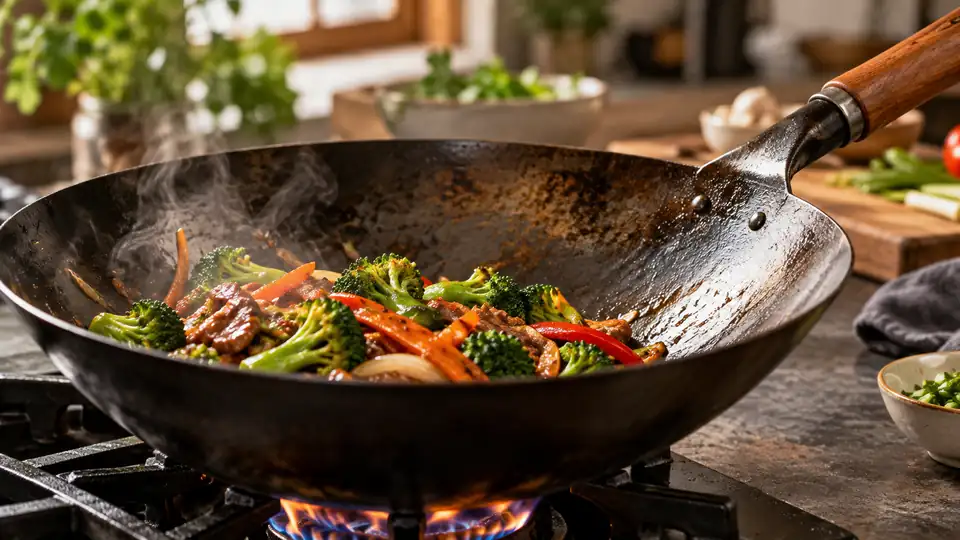
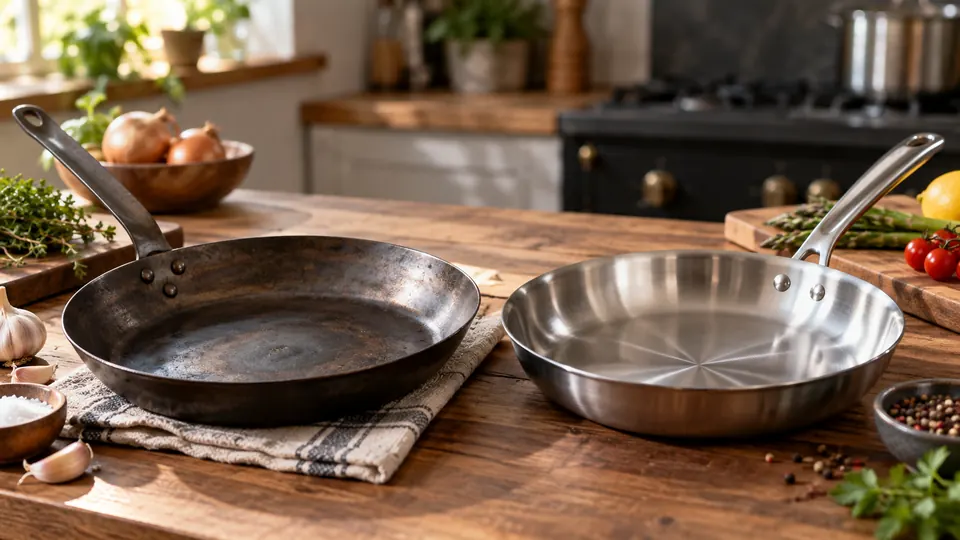
A wok only works as well as its material allows, and the difference between a carbon steel wok vs cast iron wok is easy to feel the first time you lift, heat, and cook with both. These two materials can produce excellent stir-fries, fried rice, noodles, and seared vegetables, but they do not behave the same on the stove. One heats faster and feels more agile in the hand. The other stores more heat and tends to feel more stable once fully heated.
That matters because wok cooking is not just about shape. It is also about how quickly the pan responds when food hits the surface, how easy it is to toss ingredients, and how much maintenance you are willing to accept. A material that works beautifully for shallow frying or braising may feel clumsy for fast stir-frying. On the other hand, a heavier wok can be useful for cooks who want steadier heat and do not mind slower response.
Choosing between these materials is less about which one is universally better and more about matching the wok to your cooking style, stove type, and tolerance for upkeep. Understanding the trade-offs makes the decision much easier.
Quick Answer
In most cases, carbon steel is the better all-around wok material for traditional stir-frying. A carbon steel wok is lighter, heats up faster, responds more quickly to flame adjustments, and is easier to toss and maneuver. Those qualities are especially useful for high-heat cooking, where ingredients need to move constantly and cook in short bursts.
A cast iron wok holds heat longer and can deliver strong searing once fully heated, but it is usually much heavier and slower to respond. That makes it less nimble for tossing food and less convenient for cooks who want the classic wok-cooking feel. Cast iron can still work well for certain tasks, including deep frying, braising, and longer cooking methods where steady heat matters more than speed.
If your goal is authentic stir-fry technique, quick preheating, and easier handling, carbon steel usually makes more sense. If you prefer maximum heat retention, do not mind extra weight, and often cook methods that benefit from a stable hot surface, cast iron may suit you better. For most home cooks comparing carbon steel wok vs cast iron wok, carbon steel is the more practical choice.
Carbon Steel Wok vs Cast Iron Wok at a Glance
| Feature | Carbon Steel Wok | Cast Iron Wok |
|---|---|---|
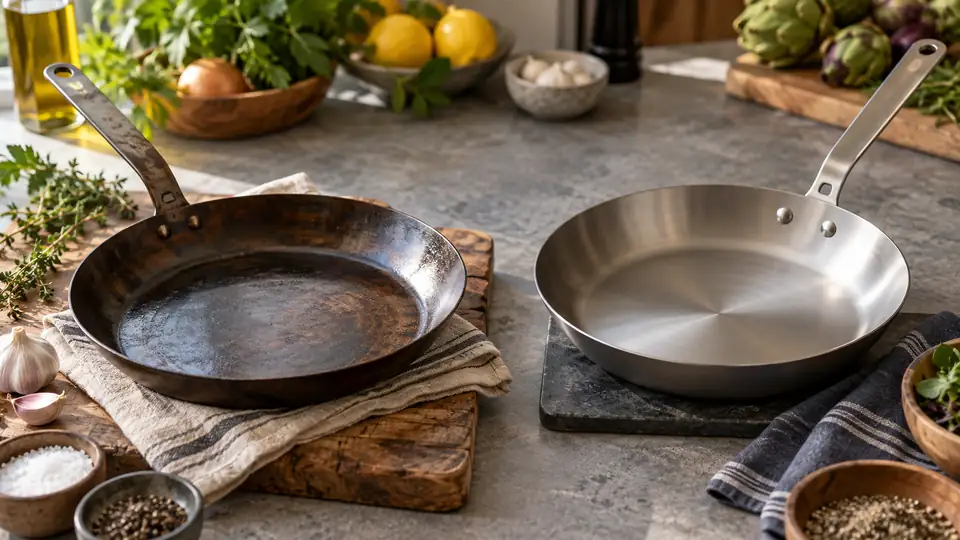
| Weight | Lighter and easier to lift | Heavier and harder to toss |
| Heat-up speed | Fast | Slow to moderate |
| Heat responsiveness | Very responsive | Less responsive |
| Heat retention | Good | Excellent |
| Best for stir-frying | Excellent | Good, but less agile |
| Best for tossing food | Excellent | Poor to fair |
| Seasoning requirement | Yes | Yes |
| Rust risk | Yes, if not dried and oiled properly | Yes, if not dried and oiled properly |
| Surface smoothness | Usually smoother from the start | Varies by finish, can be rougher |
| Best fit for home cooks | Most users | Users who prioritize heat retention over maneuverability |
What Is a Carbon Steel Wok?
A carbon steel wok is made from iron and a small amount of carbon. In practical cooking terms, that gives you a pan that is thinner and lighter than cast iron, while still being durable and capable of handling very high heat.
This is the wok material most closely associated with classic stir-frying. Restaurants and experienced wok cooks often prefer it because it heats quickly, cools down quickly when needed, and lets the cook control the temperature with more precision.
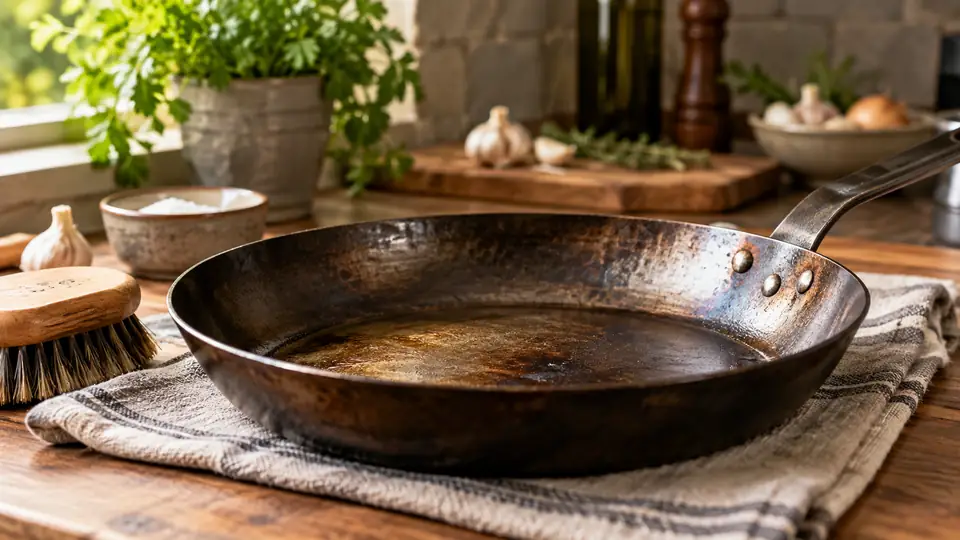
Carbon steel also develops seasoning over time. Seasoning is the dark layer that builds when thin coats of oil bond to the metal through heat. That layer helps reduce sticking and offers some protection against rust. It is not a permanent coating, but with regular cooking it becomes more effective.
For a lot of home kitchens, carbon steel provides the best balance of performance, weight, and maintenance. If you are specifically looking at wok shapes and stove compatibility, a guide to the best carbon steel wok for home use can help clarify what features matter beyond the material itself.
What Is a Cast Iron Wok?
A cast iron wok is made from molten iron poured into a mold. Compared with carbon steel, cast iron is generally thicker, heavier, and better at storing heat. Those qualities can be useful, but they also change how the wok behaves.
Once a cast iron wok gets hot, it tends to stay hot. That can help with searing and can reduce temperature drops when adding food, especially if the wok has enough preheat time. It also makes cast iron useful for cooking methods that benefit from steady heat rather than constant rapid adjustment.
Like carbon steel, cast iron needs seasoning and can rust if left wet. Some cast iron woks come smoother, while others have a rougher surface texture. A rougher surface can still work well over time, but it may take longer to build a slick seasoning layer.
Traditional Chinese cast iron woks can be thinner than the heavy Western-style cast iron cookware many people know. Still, even thinner cast iron versions usually feel less nimble than carbon steel during active stir-frying.
Heat Performance Comparison
Heat-Up Speed
Carbon steel heats faster than cast iron in most cases. That matters because wok cooking often starts with an empty, thoroughly preheated pan before oil and aromatics go in. Faster heat-up means less waiting and easier timing.
Cast iron takes longer to absorb enough heat throughout the body of the wok. If you rush the process, the center may get hot while the overall pan still feels sluggish. This is one reason some cooks think cast iron stir-fries poorly. In many cases, it simply was not fully preheated.
Heat Retention
Cast iron wins clearly on heat retention. Once hot, it holds onto heat better than carbon steel. That can help when cooking larger batches or when ingredients release moisture and would normally cool the pan down.
Carbon steel still retains enough heat for excellent wok cooking, but it gives up heat faster when cold food is added. That is not always a disadvantage. In fast cooking, quick recovery and quick adjustment can matter more than sheer stored heat.
Heat Responsiveness
This is where carbon steel usually feels more natural as a wok. If you raise or lower the flame, carbon steel reacts faster. You can shift from intense searing to gentler cooking more easily.
Cast iron responds more slowly. If it is too hot, it stays too hot for longer. If you lower the burner to protect garlic or scallions from burning, the wok may not calm down as quickly as you want. That lag can make timing more difficult during multi-step dishes.
Which Matters More for Wok Cooking?
For classic stir-frying, responsiveness often matters more than maximum heat retention. Wok cooking is dynamic. Ingredients move from the hottest spot to cooler sides, sauces are added late, and aromatics can go from fragrant to scorched in seconds. Carbon steel handles that style better.
Cast iron becomes more attractive if your wok use leans toward frying, simmering, steaming, or braising, where stable heat can be helpful and constant tossing matters less.
Cooking Surface and Seasoning
How Seasoning Works
Both carbon steel and cast iron rely on seasoning rather than a factory-applied nonstick coating. When oil is heated in very thin layers, it polymerizes and forms a bonded film on the metal. That film darkens over time and improves release, especially for foods cooked with enough preheat and oil.
Neither material becomes completely nonstick in the same way as PTFE-coated cookware. Technique still matters. Cold food added to a cool wok is more likely to stick, especially during the early seasoning phase.
Surface Feel
Carbon steel woks often start smoother than cast iron woks. That smoother surface can make seasoning feel easier to build and can reduce the rough drag that some rough-textured cast iron has at first.
Cast iron can still become very usable, but some pans need more cooking and repeated seasoning before they feel consistently slick. This is especially noticeable with eggs or delicate foods, though those are not the usual test foods for wok cooking.
Sticking and Food Release
For quick stir-fries, carbon steel tends to release food more predictably once properly preheated. The combination of fast heat response and smoother surface helps. Meat can still stick briefly during searing, but it often releases once a crust forms.
Cast iron can also develop a good cooking surface, but because it retains more heat and reacts more slowly, it is easier to overheat oil or scorch sugary sauces if you are not paying attention. That can create residue that feels like sticking even on a seasoned pan.
Weight and Handling
Weight is one of the biggest deciding factors in the carbon steel wok vs cast iron wok debate. A wok is not just a bowl-shaped pan. It is a tool designed for movement.
Carbon steel is much easier to lift, tilt, swirl, and toss. If you like to flip noodles, move vegetables up the sides, or pull food away from the center heat zone, the lighter build makes a real difference. This is especially true for larger woks.
Cast iron woks are harder to maneuver. On paper, that may seem like a minor inconvenience. In practice, it changes the entire cooking style. Instead of moving the wok constantly, many cooks with cast iron woks end up stirring in place with a spatula or ladle. That can still work, but it is not the same experience.
For cooks with wrist or grip limitations, a heavy cast iron wok may simply be impractical. Even cleaning and drying it can feel like more effort.
Durability Comparison
Resistance to Warping
Cast iron is less likely to warp under normal kitchen use. Its thickness and stiffness make it structurally stable. Carbon steel, especially thinner carbon steel, can warp if exposed to thermal shock or mismatched burner patterns, though well-made woks are generally resilient within normal use.
Warping is more of a concern on flat-bottom woks used on powerful burners or glass cooktops. Round-bottom woks supported properly are less likely to have this issue.
Resistance to Cracking and Chipping
Carbon steel is less brittle than cast iron. If dropped or knocked hard, carbon steel is more likely to dent than crack. Cast iron, although very durable in daily cooking, is more brittle. A hard fall can cause cracking or breakage.
This matters less for careful kitchen use and more for long-term ownership. Heavy cookware gets banged around. Lids hit sinks, handles clip counters, and pans sometimes slip while drying.
Long-Term Wear
Both materials can last for decades. Neither has a delicate synthetic coating that will peel away with age. If rust appears, both can often be restored with scrubbing, drying, and reseasoning.
That said, carbon steel tends to be easier to rehabilitate because its thinner body and smoother surface make rust removal and reseasoning more straightforward. Cast iron is also restorable, but rougher surfaces and heavier mass can make the process feel slower.
Maintenance and Care
| Maintenance Task | Carbon Steel Wok | Cast Iron Wok |
|---|---|---|
| Initial seasoning | Required | Required unless factory seasoned |
| Dry immediately after washing | Yes | Yes |
| Light oil after cleaning | Helpful, especially early on | Helpful, especially early on |
| Rust removal if neglected | Usually straightforward | Usually straightforward but can be slower |
| Dishwasher safe | No | No |
| Acidic sauces for long simmering | Not ideal | Not ideal |
Daily Cleaning
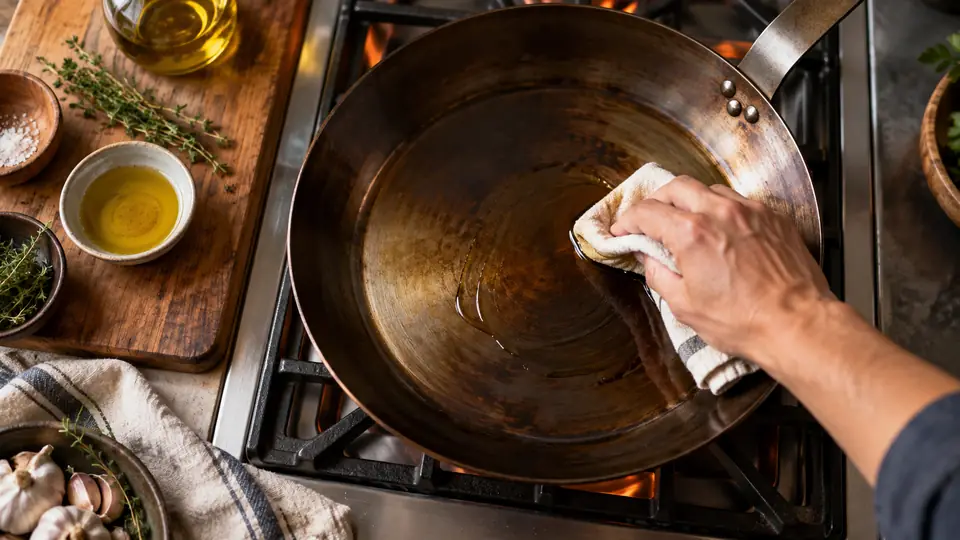
Both woks are fairly similar here. Wash with hot water, use a soft scrubber or brush as needed, dry completely, and apply a very thin film of oil if the surface looks dry. Short contact with mild soap is generally fine for a well-seasoned wok, though heavy soaking is a bad idea.
The most common maintenance mistake is leaving moisture behind. That is how rust starts, especially around rivets, handles, and the bottom rim.
Seasoning Upkeep
Carbon steel often builds seasoning faster through normal cooking. Stir-frying with oil, onions, scallions, and fatty meats helps gradually darken and protect the surface.
Cast iron keeps seasoning well, but if the surface is rough or the pan is heavily preheated, seasoning can become uneven in spots before it evens out. This is not always a problem, just part of ownership.
Acidic Foods
Neither material loves long cooking with acidic ingredients like tomatoes, vinegar-heavy sauces, or wine-based reductions. Short exposure is usually fine, especially in a mature seasoned pan. Long simmering can weaken seasoning and bring metallic flavors into the food.
If you make a lot of acidic stir-fry sauces, the practical answer is not to avoid these woks completely. It is simply to keep the exposure brief and reseason if needed afterward.
Cooking Applications
Stir-Frying
Carbon steel is better suited for classic stir-frying. It heats quickly, responds quickly, and is easier to move. If your main goal is seared vegetables, fast-cooked sliced meat, fried rice, or noodles, carbon steel fits the technique better.
Cast iron can stir-fry, but it tends to work best if you cook smaller batches and accept a less toss-focused style. It is more of a stationary stir-fry approach.
Deep Frying
Cast iron has an advantage here because strong heat retention helps maintain oil temperature. If you use a wok for frying chicken, tempura, or fritters, cast iron can feel stable and steady once heated.
Carbon steel also deep-fries well, especially in smaller quantities, but the oil temperature may dip more when food is added.
Searing and Browning
Both can sear effectively. Cast iron stores more heat, which can help maintain contact temperature with meat. Carbon steel, however, often produces better practical results in a wok shape because you can move food in and out of the hottest zone more easily.
Steaming, Braising, and Simmering
If you use your wok as a multipurpose vessel for steaming or short braises, either material can work. Cast iron’s stability can be an advantage for longer stovetop sessions. Carbon steel is easier to handle if you are lifting racks, draining liquid, or moving the wok frequently.
How Stove Type Affects the Decision
Gas Stoves
Gas is where carbon steel really shines. Open flame complements a wok’s shape and rewards quick heat response. You can increase or reduce flame and feel the result quickly.
Cast iron also works on gas, but the heavier body makes it slower to adapt. If you use a powerful gas burner and cook in quick bursts, carbon steel usually feels more natural.
Electric Coil and Smooth-Top Stoves
Home electric stoves complicate wok cooking because they usually provide less concentrated side heat than gas. In this setting, cast iron’s heat retention can seem appealing. It may help compensate for a weaker burner once the wok is fully heated.
Still, the extra weight and slower response remain. Many home cooks on electric stoves still prefer carbon steel because it is easier to handle and quicker to preheat. A flat-bottom carbon steel wok is often the more balanced choice.
Induction
Both materials can work on induction if the wok has a compatible flat base. Cast iron’s ferrous construction is naturally induction-friendly. Carbon steel is also induction-compatible, but the base design matters.
On induction, the rapid energy transfer can make carbon steel very responsive, sometimes almost too responsive for inexperienced users. Cast iron tempers that with steadier stored heat. Neither is automatically better. It depends on whether you value control speed or heat stability more.
Pros and Cons
Carbon Steel Wok Pros
- Lighter and easier to maneuver
- Heats up quickly
- Responds fast to burner changes
- Well suited to traditional stir-fry technique
- Usually smoother cooking surface
- Easier to toss food and control hot and cool zones
Carbon Steel Wok Cons
- Retains less heat than cast iron
- Can warp if misused, especially thinner models
- Needs seasoning and careful drying
- Temperature can drop more with large cold batches
Cast Iron Wok Pros
- Excellent heat retention
- Stable for deep frying and steady-heat cooking
- Less prone to warping
- Can produce strong browning once fully heated
- Very durable over long ownership
Cast Iron Wok Cons
- Much heavier
- Slower to heat and slower to cool
- Less responsive during fast cooking
- Harder to toss and maneuver
- Can crack if dropped hard
- Still requires seasoning and rust prevention
Which One Should You Choose?
Choose Carbon Steel if You Want Traditional Wok Performance
If you picture quick stir-fries, constant motion, fast preheating, and active heat control, carbon steel is usually the right call. It is the better fit for cooks who want the classic wok experience rather than just a deep pan with sloped sides.
Carbon steel is especially appealing if you cook on gas, make stir-fries frequently, or want a wok that feels practical for everyday use instead of occasional specialty cooking.
Choose Cast Iron if You Value Heat Retention More Than Agility
A cast iron wok makes more sense if tossing is not important to you and you prefer a heavier pan that holds steady heat. It can work well for shallow frying, deep frying, braising, and stir-frying smaller amounts with more stirring than flipping.
It may also appeal to cooks who already enjoy cast iron care routines and do not mind the extra heft.
Choose Based on Your Physical Comfort Too
This point gets overlooked. The best wok is one you will actually use. If a cast iron wok feels awkward, too heavy to wash comfortably, or difficult to move when hot, its theoretical advantages do not matter much. A lighter wok that gets used often is usually the more useful tool.
Common Buying Mistakes
Assuming Heavier Always Means Better
Heavy cookware often feels premium, but wok cooking is not the same as skillet cooking. In a wok, excessive weight can get in the way of normal technique.
Ignoring Stove Compatibility
A round-bottom wok on the wrong stove can be frustrating no matter what material it is made from. Flat-bottom models are usually more practical for most home kitchens unless you have a proper wok ring and suitable burner setup.
Expecting Instant Nonstick Performance
Both materials need seasoning, proper preheating, and some technique. A new wok may look patchy or stick a bit at first. That does not mean it is defective.
Buying a Wok for One Task Only
Some cooks focus so much on stir-frying that they overlook how they actually cook during the week. If you mostly steam dumplings, fry cutlets, or simmer one-pan meals, your ideal wok choice may be different from someone chasing restaurant-style wok hei.
Frequently Asked Questions
Is a carbon steel wok better than a cast iron wok for beginners?
For most beginners, yes. A carbon steel wok is lighter, easier to handle, and more responsive on the stove. It usually makes the learning curve smoother, especially for stir-frying.
Does cast iron give better sear than carbon steel in a wok?
Cast iron can maintain strong searing heat because it retains more heat. However, carbon steel still sears very well in real cooking and often feels easier to control. For wok-style cooking, that control is often more useful than extra stored heat.
Which wok rusts more easily, carbon steel or cast iron?
Neither has a major advantage if both are cared for properly. Both can rust if left wet or stored in a humid environment without protection. Drying thoroughly after washing matters more than the material difference.
Can you use soap on a carbon steel or cast iron wok?
A small amount of mild soap is usually fine, especially on a well-seasoned wok. The bigger problems are soaking, leaving the wok wet, or scrubbing aggressively enough to strip seasoning repeatedly.
Is a cast iron wok too heavy for regular use?
For some cooks, yes. That depends on the wok’s size and style, but cast iron often feels much heavier than carbon steel in day-to-day cooking. If you want to lift, toss, or tilt the wok often, the weight can become a real drawback.
Final Verdict on Carbon Steel Wok vs Cast Iron Wok
For most home cooks, the better choice in the carbon steel wok vs cast iron wok comparison is carbon steel. It is lighter, faster to heat, quicker to respond, and much closer to the traditional feel that makes wok cooking effective and enjoyable. Those qualities matter more than maximum heat retention for the majority of stir-fry dishes.
Cast iron still has a place. It can be useful for cooks who prefer steady heat, do more frying or braising, and do not mind the extra weight. It is not a bad wok material. It is simply less versatile for the fast, active style that woks are known for.
If your goal is a wok that handles quick weeknight stir-fries, responds well to burner changes, and feels easier to live with long term, carbon steel is usually the more practical and better-matched option.

Leave a Reply