
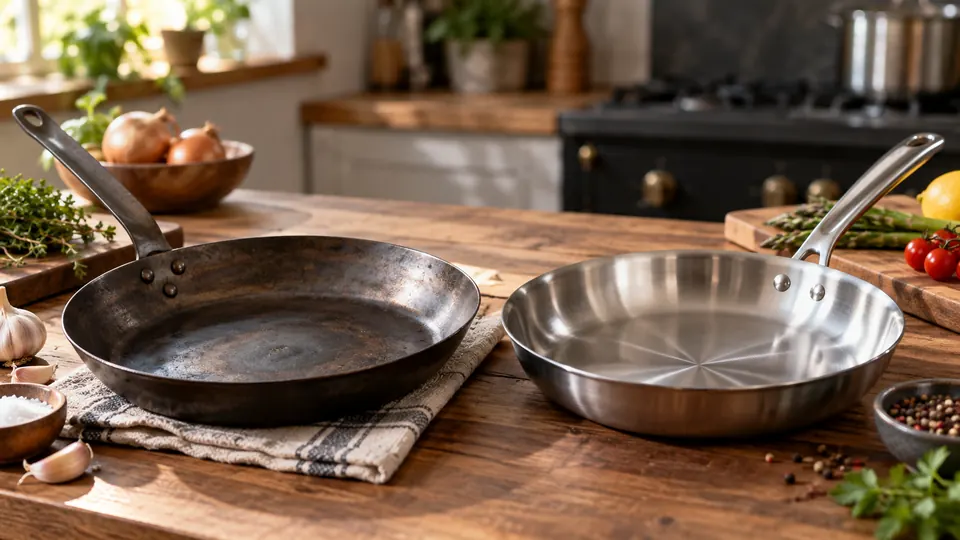
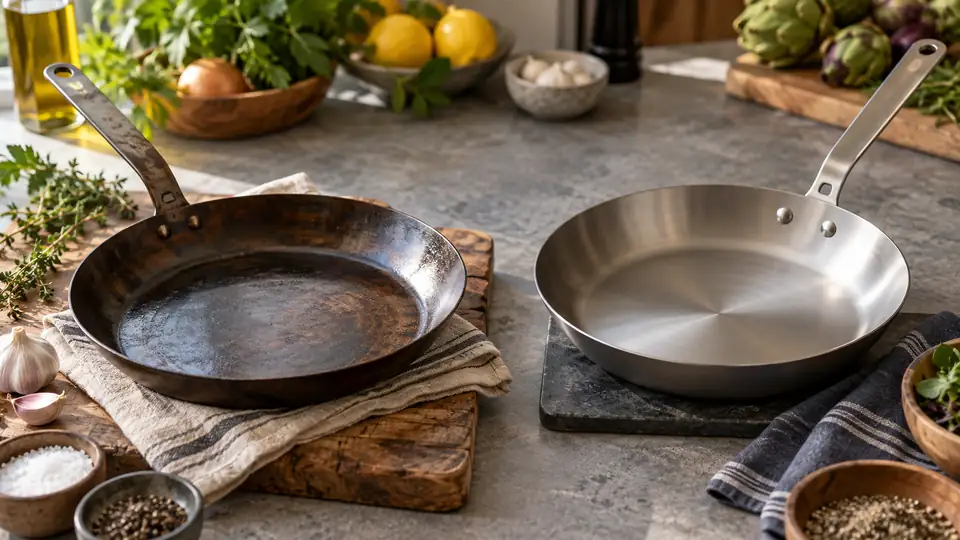
Carbon steel and copper sit at opposite ends of the cookware spectrum in some important ways. One is valued for toughness, high-heat cooking, and a seasoning-based surface that improves with use. The other is prized for speed, precision, and elegant responsiveness on the stove. Comparing them directly matters because they solve different cooking problems, and a pan that feels perfect for searing steaks can be frustrating for delicate sauces, while a pan that excels at temperature control may feel less practical for everyday rough use.
In a carbon steel vs copper cookware comparison, the right choice depends less on which material is “better” and more on how you cook, how much maintenance you are comfortable with, and what kind of performance you expect. A serious home cook may end up appreciating both. Still, most kitchens benefit more from understanding where each material shines before spending money or changing habits.
Quick Answer
Carbon steel vs copper cookware comes down to durability and high-heat versatility versus fast, precise heat control. Carbon steel is usually the better choice for searing, frying, sautéing, wok cooking, and other tasks where high heat and a gradually improving seasoned surface are useful. It is tough, relatively light compared with cast iron, and can last for decades, but it needs seasoning and careful drying to avoid rust.
Copper cookware is usually the better choice for delicate cooking that depends on quick temperature changes, such as sauces, candy, custards, and certain egg dishes. It heats and cools very quickly, which gives the cook excellent control. However, copper cookware is often more expensive, usually requires more polishing if appearance matters, and most lined copper pieces are not intended for the same kind of very high-heat, hard-use cooking that carbon steel handles well.
If you want one practical workhorse pan for everyday stovetop cooking, carbon steel often makes more sense. If you care most about responsiveness and precision, especially for sauce work, copper has a clear advantage.
Comparison Table
| Feature | Carbon Steel | Copper Cookware |
|---|---|---|
| Core strength | High-heat durability and versatility | Excellent heat responsiveness and control |
| Heat-up speed | Fast | Very fast |
| Heat responsiveness | Good | Excellent |
| Heat retention | Moderate to good | Moderate |
| Best uses | Searing, stir-frying, eggs after seasoning, roasting, skillet cooking | Sauces, sugar work, custards, gentle sautéing, precise temperature cooking |
| Surface type | Seasoned cooking surface that develops over time | Usually lined with stainless steel or tin |
| Maintenance | Needs seasoning, drying, rust prevention | Needs lining awareness and exterior polishing if desired |
| Rust risk | Yes | No rust like carbon steel, but tarnish is common |
| Durability | Very durable, tough, hard to damage in normal cooking | Durable but softer metal, can dent more easily |
| Weight | Moderate, usually lighter than cast iron | Varies, often substantial due to thickness and lining |
| Induction compatibility | Usually yes | Only if designed with a magnetic stainless or induction-compatible base |
| Price range | Usually moderate | Usually expensive |
What Is Carbon Steel?
Carbon steel cookware is made primarily from iron and carbon. In practical kitchen terms, it behaves like a lighter, smoother cousin to cast iron. It can handle high temperatures, develop seasoning over time, and move from stovetop to oven with very few limitations in most designs.
The seasoning on carbon steel is a thin layer of polymerized oil that bonds to the metal through heat. That layer helps reduce sticking and adds some protection against rust. It is not identical to a factory nonstick coating, and it does not stay perfectly even forever. Instead, it changes as the pan is used, cleaned, and reheated.
Carbon steel is especially common in skillets, woks, crêpe pans, paella pans, and griddles. Cooks often choose it because it combines strength, relatively quick heating, and a cooking surface that improves with familiarity and regular use.
What Is Copper Cookware?
Copper cookware refers to pots and pans made with a substantial copper body, usually lined on the inside with another material. Bare copper reacts with many foods, especially acidic ingredients, so most practical copper cookware is lined with stainless steel or tin.
The reason cooks seek out copper is simple. Copper responds to changes in heat exceptionally fast. If you lower the burner, the pan reacts more quickly than heavier, slower materials. That makes it useful for cooking where precision matters and where overheating can ruin texture, consistency, or flavor.
Copper cookware is most often seen in saucepans, sauté pans, jam pans, and specialty pieces. It can certainly be used for general cooking, but its strengths are clearest in tasks that reward close temperature control rather than brute heat tolerance.
Carbon Steel vs Copper Cookware Heat Performance
Heat Responsiveness
This is where copper clearly stands out. Heat responsiveness means how quickly a pan reacts when the burner is raised or lowered. Copper excels here, which is why it has long been associated with sauces, reductions, caramel, and delicate stovetop work.
Carbon steel is responsive too, especially compared with heavy cast iron, but it does not match copper’s speed or precision. If you overshoot the temperature in copper, you can usually correct it faster. With carbon steel, the pan still responds reasonably well, but the adjustment is less immediate.
Heat Retention
Carbon steel generally holds heat better than copper in typical cookware use, especially in pans built with a bit of thickness. That matters for searing, browning, and maintaining pan temperature when cold food hits the surface.
Copper’s strength is not long heat retention. Its strength is control. It comes up to temperature fast, and it backs off fast too. For a pan sauce, that is helpful. For a steak that needs a hard, sustained sear, that is less of an advantage.
High-Heat Tolerance
Carbon steel is more comfortable in high-heat cooking. It is widely used for stir-frying, aggressive sautéing, and deep browning. It tolerates flames, hot ovens, and repeated hard use well.
Copper cookware can be heated strongly, but many lined copper pans are not ideal for the same rough, high-heat treatment. Tin-lined copper is especially worth treating with care because tin has a lower melting point than the base metal. Stainless-lined copper is more durable, but most cooks still do not reach for it the way they would a carbon steel skillet over very high heat.
Cooking Surface Comparison
Carbon Steel’s Seasoned Surface
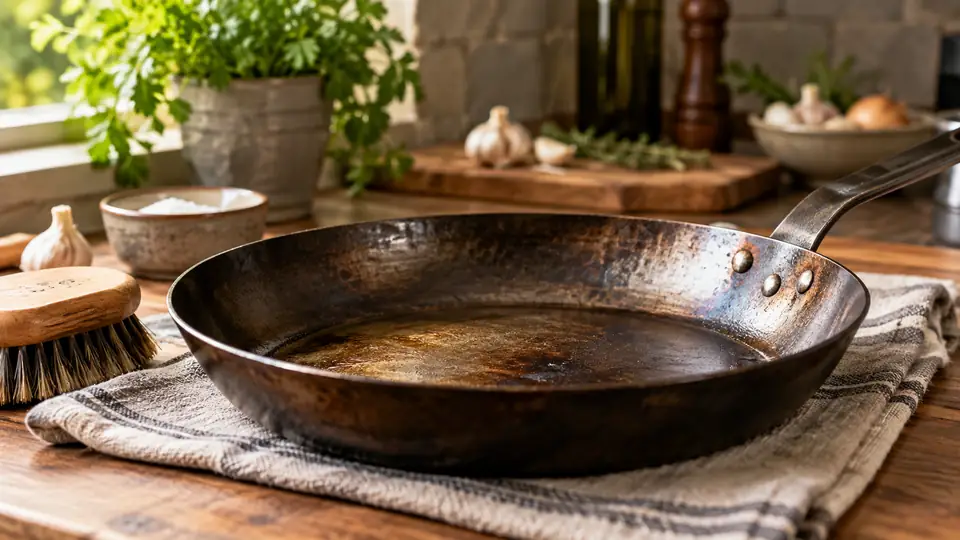
A well-used carbon steel pan develops a semi-nonstick surface over time. This happens as thin layers of oil polymerize and build a darker patina. Eggs, pancakes, fish, and potatoes can all release surprisingly well once the pan is properly preheated and maintained.
That said, the surface is technique-dependent. Poor preheating, too little fat, or acidic cooking can interfere with performance. Seasoning is useful, but it is not magic. Carbon steel rewards good habits more than it rewards convenience.
Copper’s Lined Interior
The interior cooking surface on copper cookware depends on the lining. Stainless-lined copper behaves somewhat like stainless steel in contact with food. It is durable, non-reactive, and easy to clean, but not naturally nonstick. Tin-lined copper offers a smoother, somewhat gentler release, but it is softer and requires more care.
This means copper cookware does not usually offer the evolving, naturally slick character that carbon steel can develop. Instead, it offers predictable conduction beneath whatever lining you are cooking on.
Reactivity With Food
Carbon steel can react with acidic ingredients, especially if the seasoning is new or thin. Long simmers of tomato sauce, wine-heavy reductions, or citrusy braises are usually not the best fit in a seasoned carbon steel pan. The acid can strip seasoning and leave metallic flavors.
Properly lined copper cookware handles acidic foods much better because the lining separates the food from the copper itself. That gives copper an important advantage for sauces and reductions that include wine, vinegar, lemon, or tomatoes.
Durability Comparison
Which Material Takes More Abuse?
Carbon steel is the tougher workhorse. It can handle metal utensils in many cases, high oven temperatures, repeated preheating, and frequent use without much concern for cosmetic damage. If the seasoning gets patchy, you can repair it. If rust appears, you can usually remove it and re-season the pan.
Copper is durable in the sense that a good piece can last for decades, but it is not as rugged. Copper is softer than steel and more likely to dent, warp from misuse, or show wear visually. Tin linings can wear down over time and may eventually need re-tinning. Stainless-lined copper avoids that specific issue but still does not invite the same rough treatment as carbon steel.
Long-Term Ownership
Carbon steel ages in a practical way. It darkens, spots, and builds character through use. For most owners, that is normal and even desirable. The pan may look uneven for a long time while still cooking very well.
Copper ages differently. Unpolished exteriors develop a darker patina and tarnish. Some cooks enjoy that look, while others prefer bright polished copper and the extra upkeep that comes with it. Functionally, the cookware can still perform well, but aesthetically it asks more of the owner if appearance matters.
Maintenance Comparison
Carbon Steel Maintenance
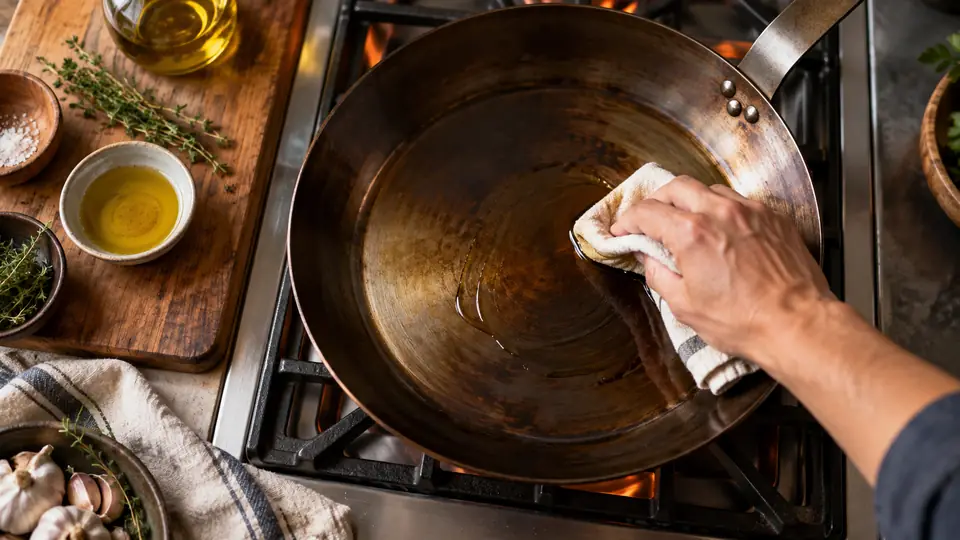
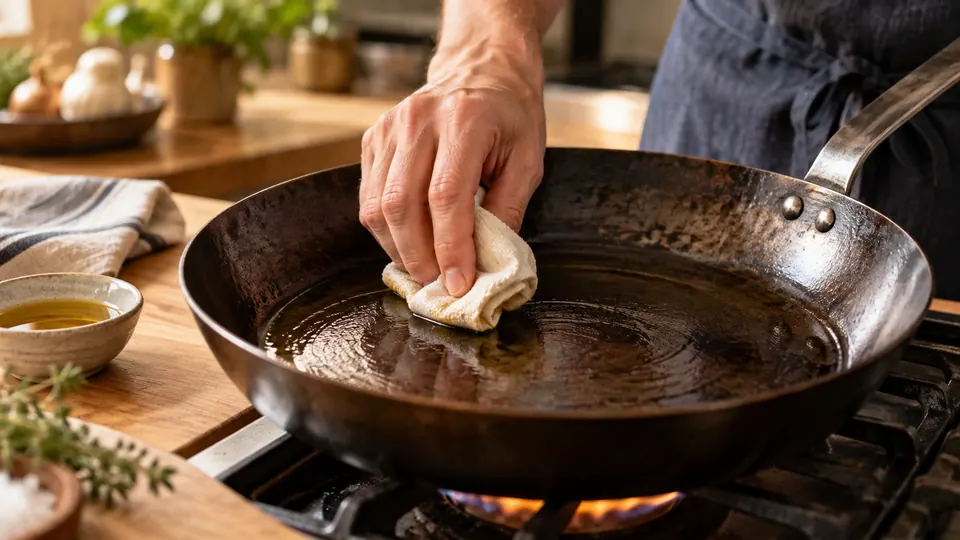
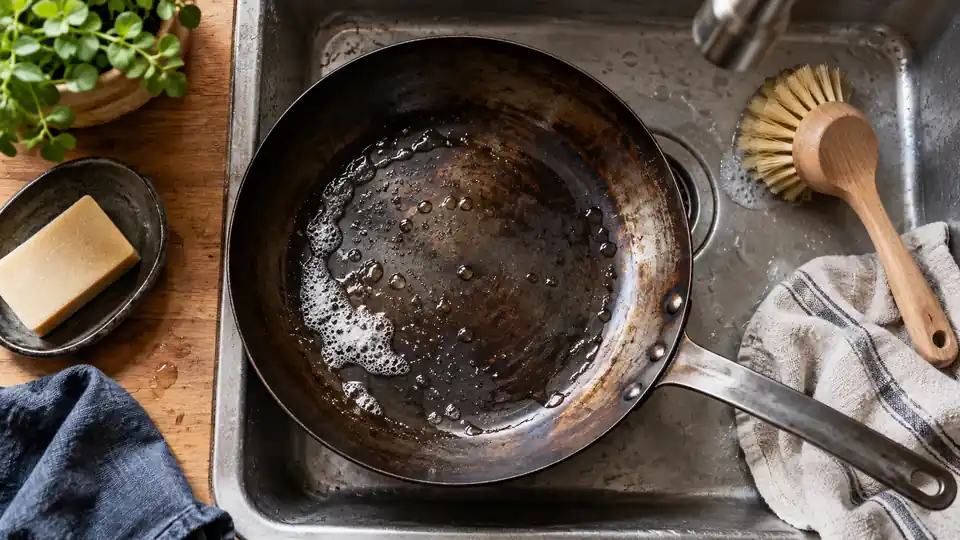
Carbon steel requires more active maintenance in day-to-day use. After washing, it should be dried thoroughly. Many owners also warm it briefly on the stove to drive off hidden moisture, then wipe on a very thin film of oil. Without that routine, rust can develop surprisingly quickly.
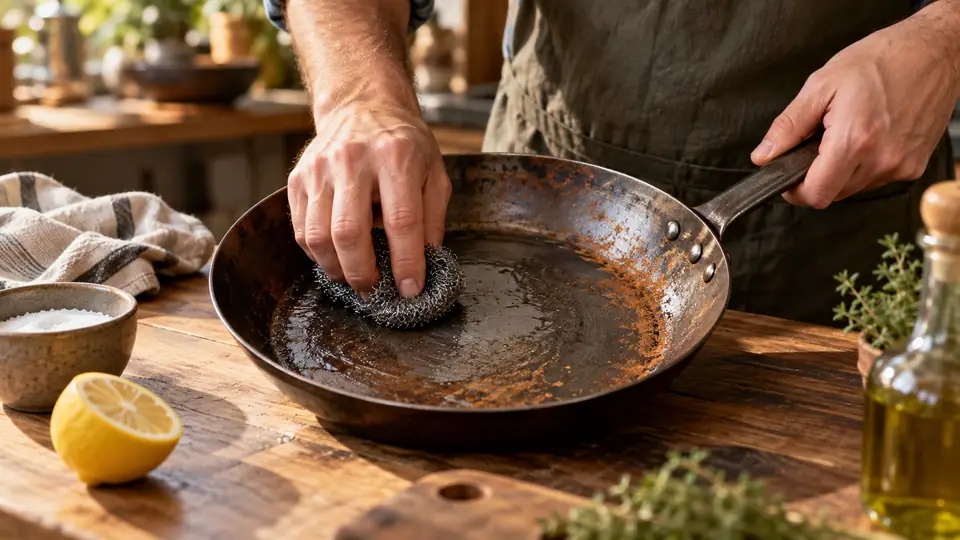
Seasoning also needs occasional reinforcement. That may mean cooking with oil regularly, doing a stovetop touch-up, or fully re-seasoning after heavy rust removal or repeated acidic cooking.
For readers comparing skillet materials, pre-seasoned carbon steel pans can reduce the learning curve, though they still need regular care after purchase.
Copper Maintenance
Copper does not rust the way carbon steel does, but it comes with its own form of upkeep. The exterior tarnishes over time, and polished copper loses its shine quickly. This is mostly cosmetic, not a performance problem.
The more important maintenance issue is the lining. Stainless-lined copper is relatively straightforward. Tin-lined copper requires gentler handling, lower heat, and awareness that the lining can wear with years of use.
Which Is Easier to Live With?
For everyday maintenance, stainless-lined copper is often easier than carbon steel because it does not require seasoning or rust prevention. For heavy-duty use and repairability, carbon steel is easier because you can restore it from neglect more readily than you can restore a worn tin lining.
So the answer depends on what kind of inconvenience bothers you more. If you dislike drying, oiling, and seasoning, copper may feel easier. If you dislike polishing, babying a softer pan, or thinking about lining material, carbon steel may feel more practical.
Weight and Handling
Carbon steel pans are usually lighter than cast iron but still substantial enough to feel stable on the stove. Their balance varies by brand and design. In skillets, they often strike a useful middle ground between heft and maneuverability.
Copper cookware weight varies more than many people expect. Thick, high-quality copper with lining can feel quite heavy, especially in larger saucepans and sauté pans. A small copper saucepan may feel nimble, but a large lined copper pan can be noticeably weighty.
Handle comfort also matters. Carbon steel skillet handles are sometimes long and designed to stay cooler, though this depends on the stove and cooking time. Copper cookware often uses cast stainless, cast iron, or brass handles, and those can become hot during extended cooking. The material comparison alone does not tell the whole story, but in general carbon steel is often the more practical choice for tossing, flipping, and one-handed skillet work.
Cooking Applications
Where Carbon Steel Excels
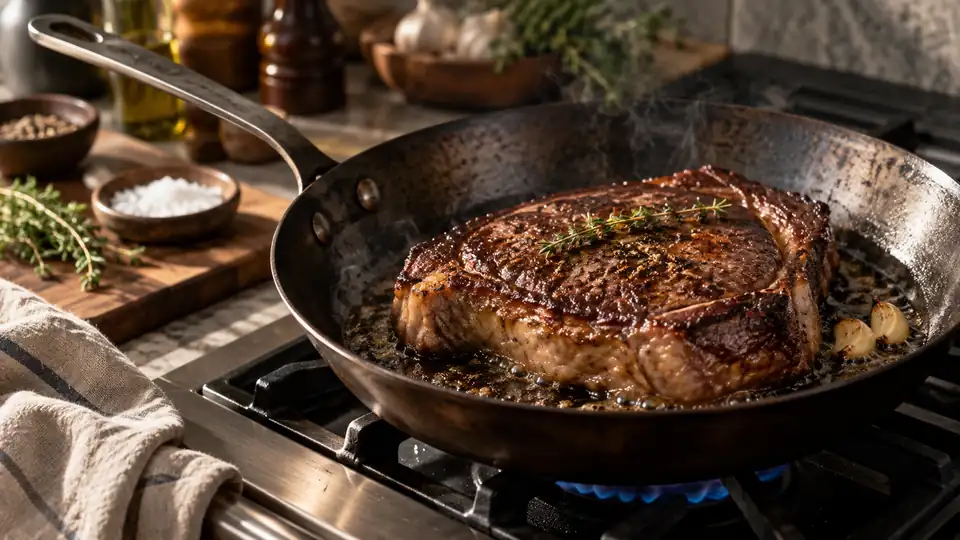
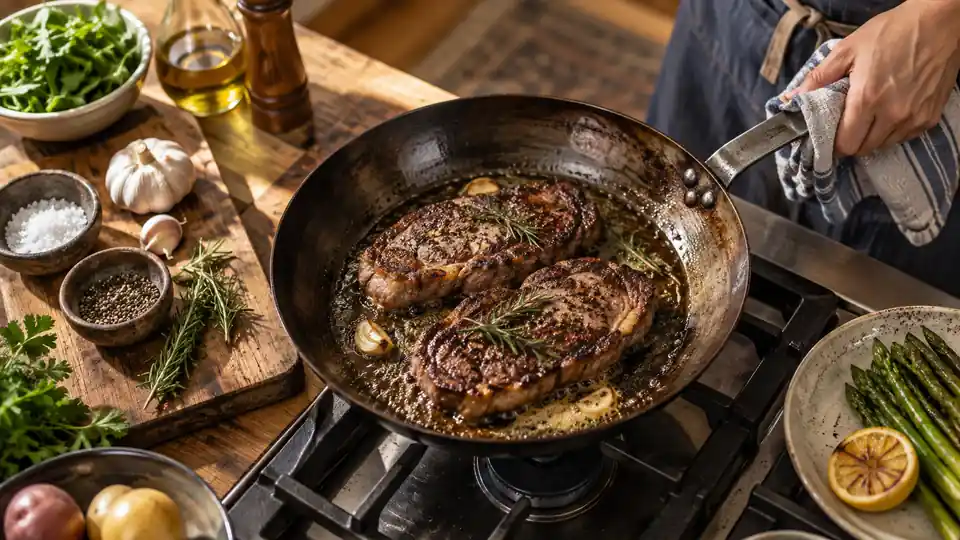
- Searing meat: Carbon steel handles high heat well and maintains contact heat nicely for browning.
- Eggs and omelets: Once seasoned and preheated properly, it can release delicate foods well.
- Stir-frying: Carbon steel’s fast heating and durability make it a natural wok material.
- Roasting and oven finishing: Many carbon steel pans move easily from burner to oven.
- General skillet cooking: Burgers, hash, cutlets, and pan-roasted vegetables are all strong use cases.
Where Copper Excels
- Sauces and reductions: Fine control helps prevent scorching and over-reduction.
- Custards and dairy-based preparations: Quick heat adjustments reduce the risk of curdling or scorching.
- Candy and sugar work: Even heating and responsiveness help with precision.
- Delicate proteins: Gentle control can be useful for fish and soft egg dishes, depending on the lining.
- Acidic cooking: Lined copper is more comfortable with wine, tomatoes, and citrus than seasoned carbon steel.
Where They Overlap
Both materials can sauté vegetables, cook chicken cutlets, handle pan sauces, and perform daily stovetop tasks. The difference is usually not whether they can do the job. The difference is how naturally they do it.
Carbon steel tends to favor assertive, hotter cooking with a more hands-on relationship to seasoning. Copper favors control, adjustment, and consistency in tasks where a narrow temperature window matters.
Pros and Cons
Carbon Steel Pros
- Excellent for high-heat cooking
- Very durable and repairable
- Develops a seasoned surface over time
- Usually more affordable than copper
- Works well for stovetop and oven use
- Often lighter and easier to maneuver than cast iron
Carbon Steel Cons
- Requires seasoning and rust prevention
- Can react with acidic foods
- Not instantly nonstick
- Appearance can be blotchy or uneven during seasoning development
Copper Cookware Pros
- Outstanding heat responsiveness
- Excellent control for delicate cooking
- Usually suitable for acidic foods if properly lined
- Highly effective for sauces, candy, and precision tasks
Copper Cookware Cons
- Often expensive
- Usually less suited to rough high-heat use than carbon steel
- Exterior tarnishes unless polished
- Some versions require attention to lining type and long-term maintenance
- Induction compatibility is not guaranteed
Which One Should You Choose?
Choose Carbon Steel If
- You want a versatile everyday skillet or wok material
- You regularly sear, fry, sauté, or cook at high heat
- You do not mind seasoning and basic maintenance
- You want cookware that can take hard use for many years
- You prefer function and durability over polished appearance
Choose Copper Cookware If
- You care deeply about precise temperature control
- You make sauces, custards, caramel, or reductions often
- You cook a lot of acidic foods and want a lined, responsive pan
- You are comfortable paying more for performance in specialized tasks
- You value the look and craftsmanship of copper cookware
Choose Both If Your Cooking Style Supports It
For many serious home kitchens, these materials are complementary rather than directly interchangeable. A carbon steel skillet and a copper saucepan make a very sensible pairing. One handles hard searing and daily pan work. The other handles delicate temperature-sensitive tasks with more finesse.
If you are only buying one piece first, think about your most frequent cooking job rather than the most impressive cookware material. A cook who makes pan sauces and pastry fillings every week may notice copper’s benefits quickly. A cook who sears chicken thighs, fries eggs, and cooks hash most mornings will probably get more daily value from carbon steel.
Common Buying Mistakes in the Carbon Steel vs Copper Cookware Debate
Confusing Conductivity With Overall Performance
Copper conducts heat better than carbon steel, but that does not mean it is automatically better cookware for every purpose. Fast heat movement is excellent for control, but not every cooking task needs that level of sensitivity.
Ignoring Lining Material in Copper Cookware
Not all copper cookware behaves the same. Stainless-lined copper and tin-lined copper have different care requirements, temperature limits, and cooking feel. Anyone comparing copper to carbon steel should look at the lining, not just the outer metal.
Expecting Carbon Steel to Behave Like Teflon
A seasoned carbon steel pan can become very slick, but it still depends on preheating, oil amount, and technique. Buyers sometimes assume seasoning creates a permanent, maintenance-free nonstick surface. That leads to disappointment.
Underestimating Maintenance Preferences
Performance matters, but so does the kind of upkeep you are willing to do. Some cooks do not mind wiping oil onto a still-warm carbon steel pan. Others would rather wash and dry a lined copper saucepan and be done. Neither preference is wrong, but it should influence the decision.
Frequently Asked Questions
Is copper better than carbon steel for everyday cooking?
Not usually for general skillet work. Copper is excellent for precise heat control, but carbon steel is often more practical for everyday searing, frying, sautéing, and oven use. Copper shines more clearly in sauces and delicate stovetop tasks.
Can carbon steel replace copper cookware?
Only partly. Carbon steel can handle many everyday jobs very well, but it does not match copper’s responsiveness for sauce work, sugar cooking, or other precision tasks. If those tasks matter to you, copper still offers something distinct.
Does copper cookware need seasoning like carbon steel?
No. Lined copper cookware does not need seasoning the way carbon steel does. Carbon steel relies on a polymerized oil layer for protection and better food release, while copper cookware depends on its interior lining.
Which is better for eggs, carbon steel or copper?
For a skillet-style egg pan, well-seasoned carbon steel is often the more natural choice. It can develop very good release over time. Copper can cook eggs well too, especially with careful heat control, but its lining will determine how much sticking occurs.
Is copper cookware worth the extra cost?
It can be, but mainly for cooks who benefit from its responsiveness. If you frequently make sauces, confections, or delicate stovetop dishes, the control may justify the price. If you mostly want a durable pan for searing and daily meals, carbon steel usually offers better value.
Final Verdict
Carbon steel vs copper cookware is not a simple contest between a budget material and a premium one. They are designed around different strengths. Carbon steel is the more rugged, versatile, and high-heat-friendly option. It works especially well as a daily-use skillet or wok material, and it rewards cooks who do not mind seasoning and regular care.
Copper cookware offers a level of responsiveness that carbon steel cannot match. For sauces, sugar work, custards, and other precision cooking, that difference is real and useful. Still, copper is often less practical as an all-purpose workhorse, especially if cost and upkeep matter.
If your cooking leans toward searing, frying, and skillet meals, carbon steel is usually the smarter first choice. If your kitchen habits focus on control, finesse, and sauce-making, copper may deserve a place on the stove. The better material is the one that matches the way you actually cook.

Leave a Reply