
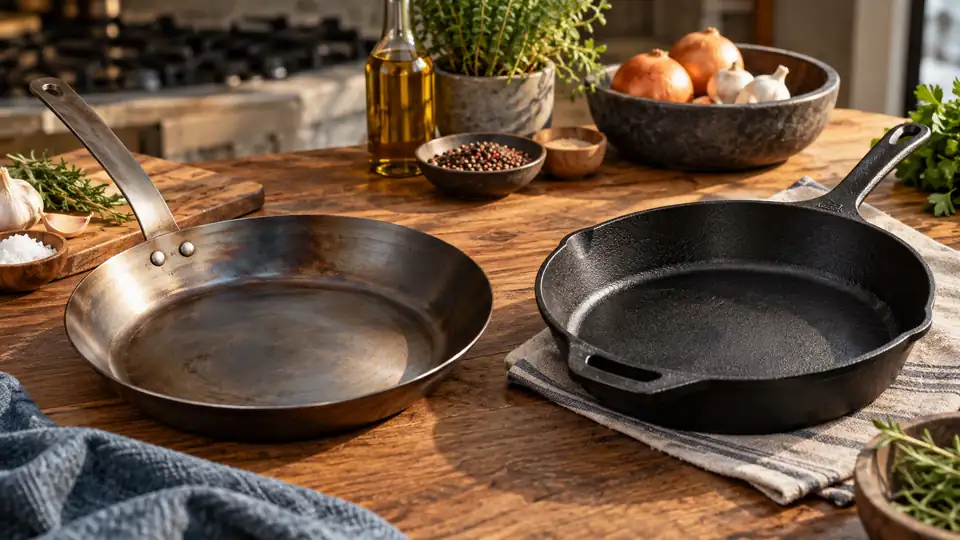
Carbon steel and cast iron occupy the same part of the kitchen for a reason. Both are durable, both can develop a naturally slick seasoned surface, and both handle high heat far better than delicate nonstick cookware. Yet they do not feel the same on the stove, and they do not reward the same cooking habits.
The difference matters most once you start using them regularly. A pan that feels excellent for searing steaks may feel clumsy for tossing vegetables. A skillet that holds heat beautifully for cornbread may be slower to respond when you want precise control over eggs or fish. Maintenance is also similar in broad terms, but the day-to-day experience can be noticeably different.
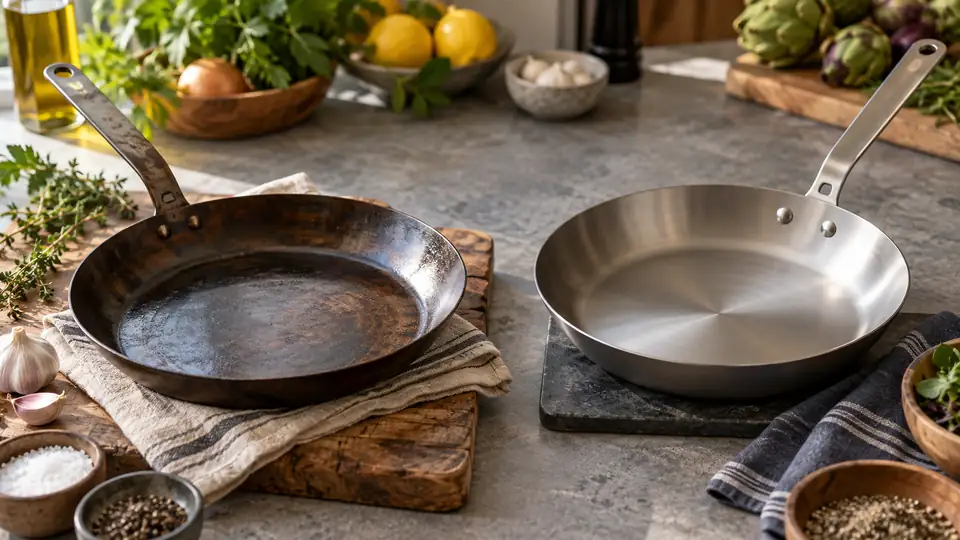
In a practical Carbon Steel vs Cast Iron comparison, the real question is not which material is universally better. It is which one fits your cooking style, stovetop, comfort with maintenance, and preference for weight, responsiveness, and surface feel. For some kitchens, carbon steel becomes the everyday workhorse. In others, cast iron remains the more forgiving and versatile choice.
Quick Answer
In a Carbon Steel vs Cast Iron comparison, carbon steel is usually better if you want a lighter pan, faster heat response, and easier handling for daily stovetop cooking. It is especially useful for sautéing, frying, tossing food, and techniques that benefit from quick temperature changes.
Cast iron is usually better if you want stronger heat retention, excellent performance for searing and baking, and a pan that feels especially stable once hot. It tends to be heavier, slower to heat, and slower to cool, which can be an advantage for thick cuts of meat, cornbread, and oven cooking.
Both materials need some care. Both can rust if left wet. Both improve with seasoning, which is the thin layer of polymerized oil baked onto the surface. Neither is ideal if you want a completely maintenance-free pan. If you cook often on the stovetop and value agility, carbon steel often feels easier to live with. If you want a rugged pan with excellent heat retention and do not mind the weight, cast iron is often the stronger fit.
If carbon steel already sounds closer to the way you cook, our guide to the best carbon steel frying pans compares options for different stovetops, cooking styles, and everyday uses.
Carbon Steel vs Cast Iron at a Glance
| Feature | Carbon Steel | Cast Iron |
|---|---|---|
| Weight | Lighter | Heavier |
| Heat-up speed | Generally faster | Generally slower |
| Heat responsiveness | Better | Slower to respond |
| Heat retention | Good | Excellent |
| Seasoning | Needed for best performance | Needed for best performance |
| Rust risk | Can rust if left wet | Can rust if left wet |
| Surface texture | Usually smoother from the start | Often rougher unless machined or polished |
| Best uses | Sautéing, eggs, stir-fry, fast stovetop cooking | Searing, baking, frying, thick cuts, oven use |
| Handling | Easier to lift and maneuver | More effort to move |
| Learning curve | Can be trickier at first for seasoning and heat control | Often more forgiving once seasoned |
What Is Carbon Steel?
Carbon steel cookware is made from iron and carbon, much like cast iron, but the manufacturing process is different. Instead of being cast into a mold, carbon steel is typically stamped or spun from sheets of metal. That gives it thinner walls and a lighter overall feel.
Most carbon steel pans have sloped sides, a relatively smooth cooking surface, and a shape that works well for stovetop movement. They are popular in restaurant kitchens because they can take high heat, build seasoning over time, and transition from delicate frying to hard searing without much fuss.
Although carbon steel is often compared to cast iron, it behaves more like a bridge between cast iron and stainless steel. You still get a seasoned cooking surface and strong durability, but with more agility and faster response to burner changes.
What carbon steel is good at
- Pan frying and sautéing
- Cooking eggs once the seasoning is developed
- Browning proteins with more control
- Tossing vegetables and quick skillet dishes
- High-heat cooking on gas or powerful induction
Where carbon steel can frustrate some cooks
- It often needs a bit more attention during the early seasoning period
- Thin pans can develop hot spots if preheated too aggressively
- Acidic foods can strip seasoning more quickly than in some well-established cast iron pans
- It is not maintenance-free
What Is Cast Iron?
Cast iron cookware is also made primarily from iron and carbon, but it is poured into molds in a molten state. That process creates thicker, heavier pans with more mass. The extra mass is the reason cast iron is known for heat retention.
A cast iron skillet tends to take longer to preheat, but once fully hot it stays hot well. That makes it especially useful for searing meat, shallow frying, baking, and recipes where stable heat matters more than quick adjustments.
Traditional cast iron surfaces are often rougher than carbon steel, especially on modern mass-produced skillets. That does not mean they cook poorly. It just means the pan may need more time, more use, and more seasoning layers before it develops a smoother release.
What cast iron is good at
- Searing steaks and chops
- Baking cornbread, cobblers, and skillet desserts
- Deep or shallow frying
- Retaining heat for hearty dishes
- Oven cooking and broiler use
Where cast iron can frustrate some cooks
- It is heavy and awkward for some users
- It responds slowly when you lower or raise heat
- Large skillets can be cumbersome at the sink
- The rougher surface can be less pleasant for delicate stovetop tasks at first
Heat Performance in Carbon Steel vs Cast Iron
Heat performance is one of the biggest practical differences in Carbon Steel vs Cast Iron. Both can reach high temperatures and both can sear effectively, but they get there differently and behave differently once hot.
Heat-up speed
Carbon steel generally heats faster because it is thinner and lighter. That can be helpful on busy weeknights when you want the pan ready quickly. It also means the pan reacts faster if the burner is stronger than expected.
Cast iron takes longer to preheat properly. A common mistake is assuming the pan is ready just because the handle feels warm or the center is hot. Cast iron benefits from a slower, longer preheat so the whole pan comes up to temperature more evenly.
Heat retention
Cast iron usually wins clearly here. Once heated, it holds onto energy well. Drop a cold steak into a hot cast iron skillet and the temperature dip is often less dramatic than it would be in a lighter pan. That helps maintain crust-building heat.
Carbon steel still retains heat well compared with many other materials, especially stainless steel pans with lighter construction. But if your cooking depends on a pan staying very hot through heavy food loads, cast iron has the advantage.
Heat responsiveness
Carbon steel responds faster when you change the burner setting. If onions are browning too quickly, reducing the heat gives you a more noticeable effect sooner. That makes carbon steel easier for cooking styles that need adjustment along the way.
Cast iron is slower to change direction. That can be helpful for consistency, but less helpful for delicate timing. If a cast iron pan gets too hot, it may stay too hot for a while.
Hot spots and evenness
Neither material is automatically perfect at heat distribution. Burner size, pan thickness, and preheating habits matter a lot. Thin carbon steel can form hot spots over small burners, especially if blasted on high heat too early. Cast iron can also heat unevenly if rushed.
In practice, both perform better with a moderate preheat rather than a sudden blast of maximum heat. Carbon steel especially rewards patience during the first few minutes.
Cooking Surface Comparison
Seasoning and natural nonstick behavior
Both materials benefit from seasoning. Seasoning is not just oil sitting on the surface. It is oil that has transformed through heat into a hardened layer bonded to the metal. That layer helps protect against rust and improves food release.
Carbon steel often starts with a smoother surface, so once seasoning builds, it can feel very slick for eggs, omelets, and delicate fish. This is one reason cooks often reach for it as an everyday frying pan.
Cast iron can also become quite nonstick over time, but a rougher starting texture may mean the process feels slower. A well-used cast iron skillet can perform beautifully, but some new cast iron pans require patience.
Acidic foods
Neither carbon steel nor cast iron is ideal for long simmering acidic dishes such as tomato sauce, wine-heavy braises, or citrus reductions. Acid can weaken seasoning and may pull a metallic flavor into food if the seasoning is thin.
For a quick splash of lemon juice or a short pan sauce, a mature seasoned pan is usually fine. For long acidic cooking, stainless steel is the safer choice.
Sticking risk
Sticking depends less on the material name and more on seasoning, heat control, and fat use. Carbon steel is often praised for being more nonstick-like, but it can still grab badly if the pan is underheated, overheated, or newly seasoned.
Cast iron can release food well too, especially for searing proteins that naturally release once crusted. Eggs and thin fish fillets are usually easier in a well-seasoned carbon steel pan than in a rougher cast iron skillet.
Durability Comparison
Both materials are durable enough to last for decades, and both can survive use that would ruin delicate coated cookware. Still, durability is not exactly the same.
Resistance to warping and cracking
Carbon steel is less brittle than cast iron. If dropped, it is less likely to crack. However, thinner carbon steel pans can warp if exposed to severe thermal shock or if heated too aggressively on a strong burner, especially induction.
Cast iron is very resistant to warping because of its thickness, but it is more brittle. Drop a cast iron skillet hard enough and it can crack or chip.
Utensil use
Metal utensils are fine with both materials. In fact, using a spatula can sometimes help smooth seasoning over time. You do not need to baby either surface the way you would with traditional nonstick coatings.
Longevity
In terms of lifespan, both are excellent. Surface rust, dull seasoning, or cooked-on residue usually do not mean the pan is ruined. In most cases, you can scrub, dry, reseason, and keep using it.
This recoverability is one of the biggest reasons cooks stay loyal to both materials. Problems that would send other pans to the trash are often fixable here.
Maintenance Requirements
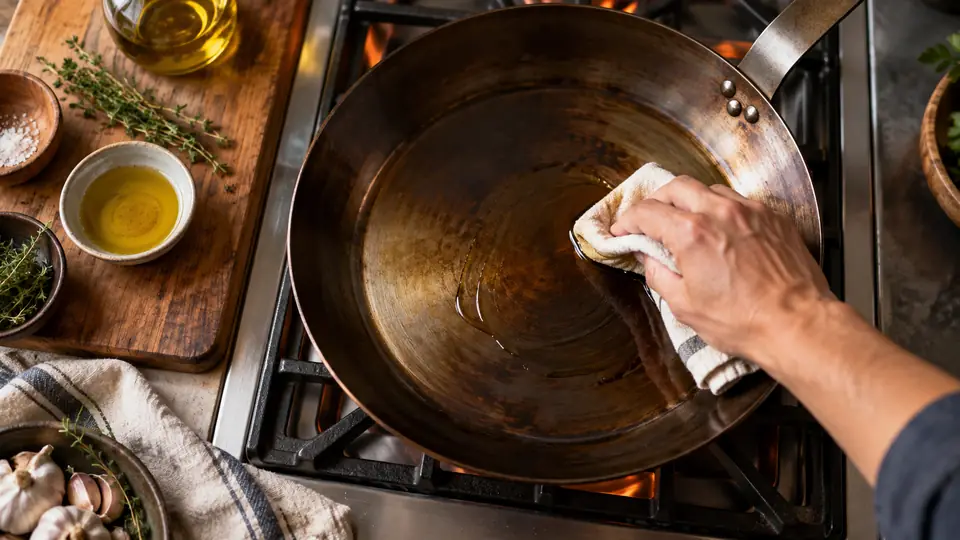
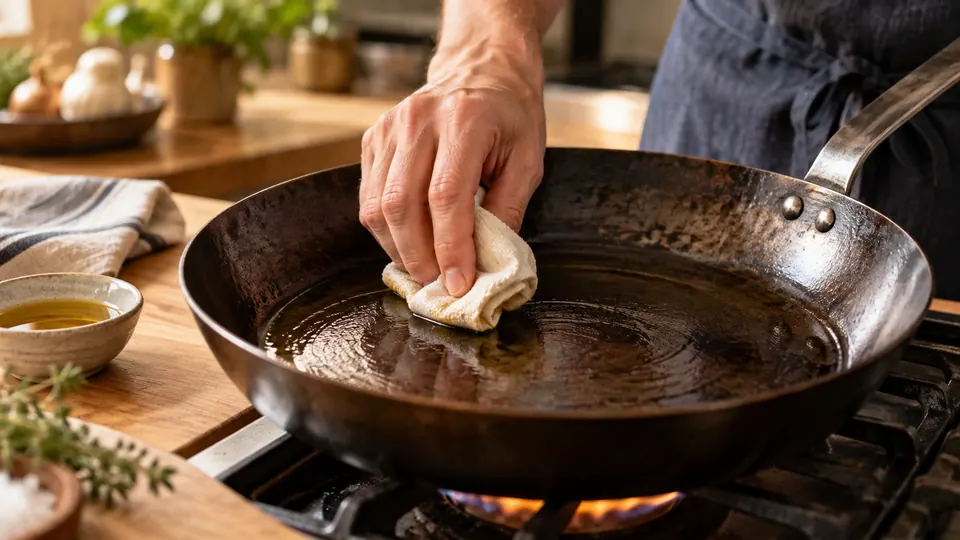
Carbon steel and cast iron share a similar care routine. Neither should be left wet in the sink. Both benefit from thorough drying. Both may need a thin coat of oil after cleaning, especially in humid kitchens or during the early seasoning phase.
| Maintenance Task | Carbon Steel | Cast Iron |
|---|---|---|
| Wash with soap | Usually fine in small amounts if seasoning is established | Usually fine in small amounts if seasoning is established |
| Dry immediately | Very important | Very important |
| Light oil after cleaning | Helpful, especially early on | Helpful, especially early on |
| Oven reseasoning | Occasionally useful | Occasionally useful |
| Rust recovery | Usually fixable | Usually fixable |
| Dishwasher safe | No | No |
Cleaning
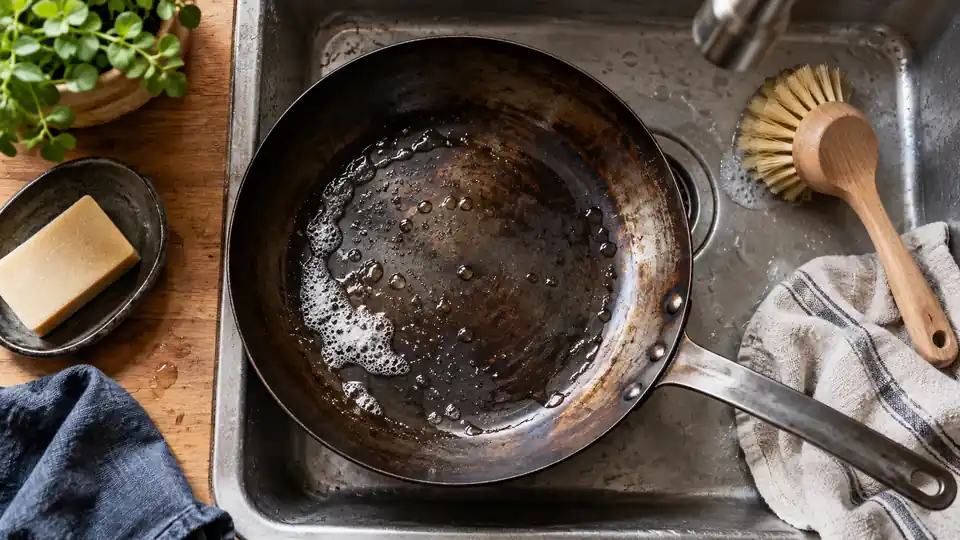
Modern advice on cleaning is more flexible than older kitchen lore. A small amount of mild dish soap is generally fine if the seasoning is established. The bigger issue is prolonged soaking, harsh moisture exposure, and failing to dry the pan fully.
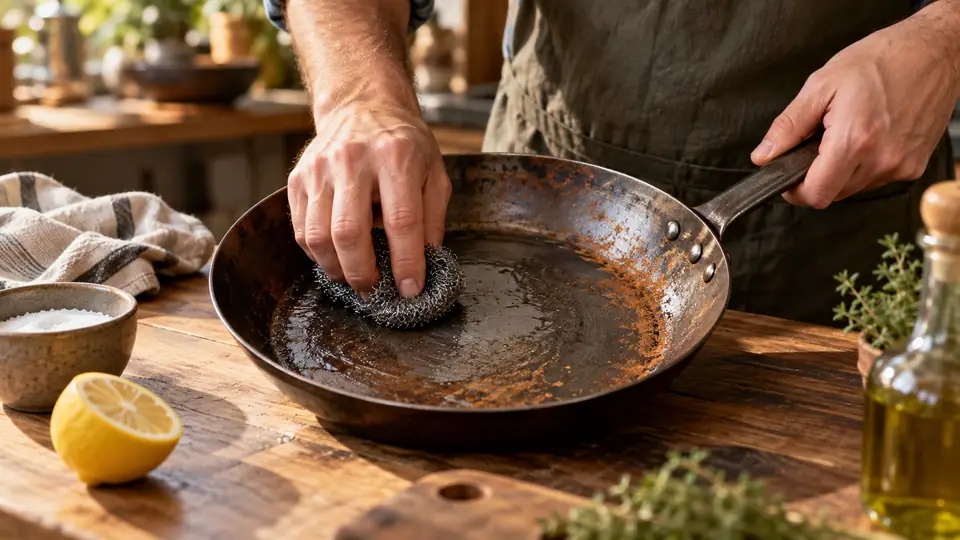
For stuck bits, hot water and a scraper or brush usually work. Coarse salt can help with stubborn residue. Chainmail scrubbers are often more common with cast iron, though they can be used on carbon steel too.
Seasoning upkeep
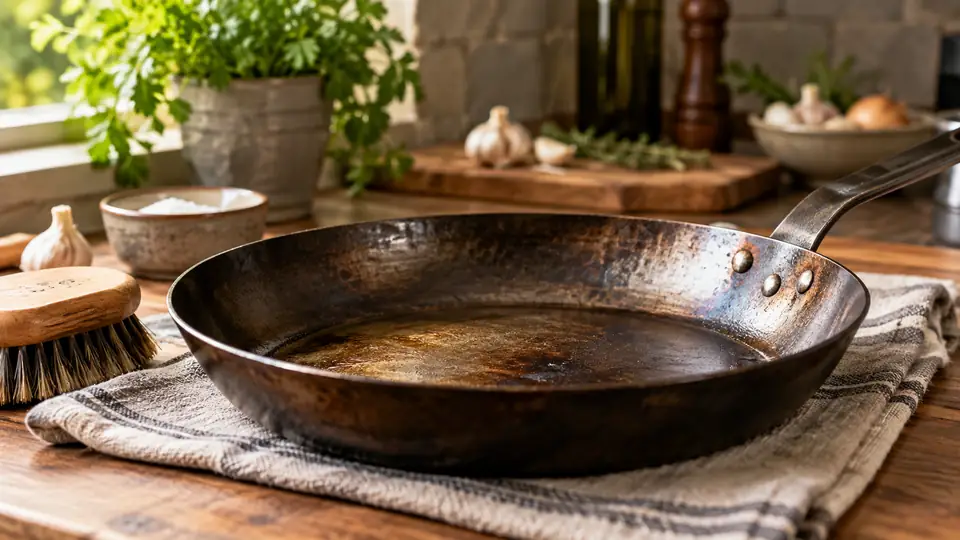
Carbon steel often goes through a more visibly uneven seasoning phase. The pan may darken in patches, lighten in the center, or look blotchy after acidic foods. That is normal. New owners sometimes think they have damaged the pan when they have only interrupted the seasoning layer.
Cast iron usually hides these cosmetic changes better because the pan is darker and thicker to begin with. But it still needs the same basic protection.
Some cooks prefer to start with pre-seasoned carbon steel pans because they reduce the early learning curve, though even pre-seasoned cookware still improves with regular use.
Rust prevention
Rust forms when bare iron meets moisture and oxygen. That process is oxidation. Seasoning slows it down, but it does not make the pan invincible. The best prevention is simple: wash, dry completely, and store in a dry place.
If a pan develops light rust, it is usually salvageable. Scrub the rust away, dry the pan thoroughly, and rebuild seasoning.
Weight and Handling
This is the section where preferences often become immediate. A 10-inch or 12-inch cast iron skillet can feel solid and reassuring to one person, and uncomfortably heavy to another.
Carbon steel is generally easier to lift, tilt, pour from, and move around the stove. That matters if you toss vegetables, flip food by wrist motion, or move the pan from burner to oven and back frequently.
Cast iron feels more planted. That can be useful for stable searing or baking, but less pleasant if you wash by hand in a small sink or have limited wrist strength.
Why weight affects cooking style
- Carbon steel suits active stovetop cooking, especially movement-heavy dishes.
- Cast iron suits more stationary cooking where the pan stays put and does the work through stored heat.
For some households, weight is not a minor detail. It is the deciding factor.
Cooking Applications
Best uses for carbon steel
Carbon steel shines in cooking that benefits from speed and control. Pan-roasted vegetables, fried eggs, thin burgers, chicken cutlets, and quick sauces all feel natural in it. The lighter weight also makes it better for skillets with flared sides and for wok-style movement.
It is often the stronger pick for daily stovetop work if you cook smaller portions and want a pan that responds quickly.
Best uses for cast iron
Cast iron shines in applications where heat retention matters more than agility. Thick steaks, pork chops, skillet cornbread, Dutch babies, roasted potatoes, and shallow frying all benefit from the pan’s ability to stay hot.
It is also excellent for oven-to-table cooking and recipes where a heavy pan helps maintain steady browning.
Eggs, pancakes, and delicate foods
Many people assume cast iron is automatically poor for eggs and delicate foods. That is not exactly true. A well-seasoned cast iron skillet can do them well. Still, carbon steel usually gives you an easier time because the smoother surface and lighter feel allow better control.
If your goal is one pan for frequent omelets, crepes, or quick breakfast cooking, carbon steel often feels more natural.
High-heat searing
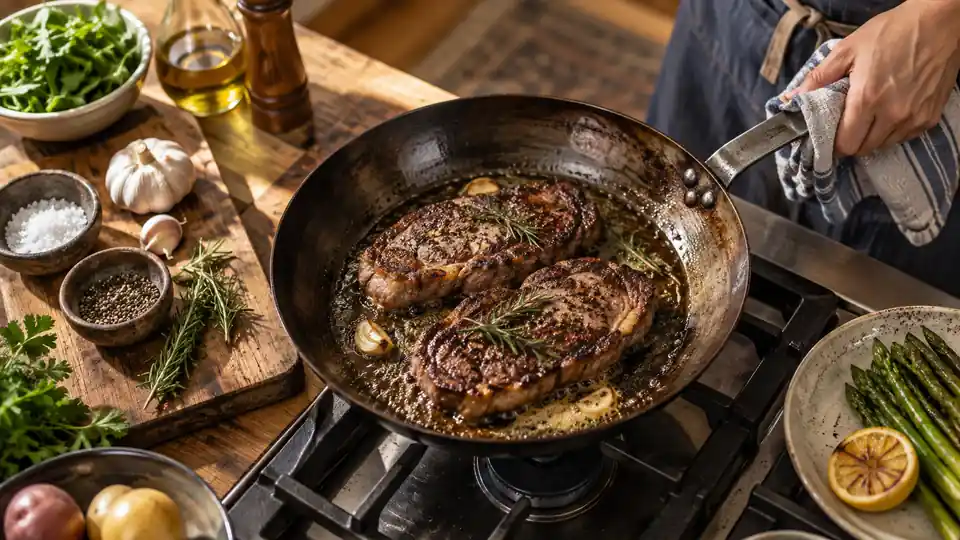
Both are strong choices for searing. If you want the deepest crust on a thick steak and do not need to adjust heat much once cooking starts, cast iron often has the edge. If you want to sear and then quickly moderate the heat to finish more gently, carbon steel may feel easier.
Pros and Cons
Carbon steel pros
- Lighter and easier to maneuver
- Faster heat response
- Smoother cooking surface on many pans
- Excellent for daily stovetop cooking
- Can become very slick with good seasoning
Carbon steel cons
- Can warp if abused with high heat or thermal shock
- Seasoning may look patchy and inconsistent early on
- Usually retains less heat than cast iron
- Can be less forgiving for new users who overheat the pan
Cast iron pros
- Excellent heat retention
- Very strong for searing, frying, and baking
- Generally resistant to warping
- Long lifespan and easy to restore
- Stable and dependable once fully preheated
Cast iron cons
- Heavy and harder to handle
- Slower to heat and cool
- Often rougher surface at the start
- Can crack if dropped
- Less convenient for tossing and movement-based cooking
Which One Should You Choose?
The best choice depends less on reputation and more on how you actually cook.
Choose carbon steel if
- You want a lighter pan for everyday use
- You cook mostly on the stovetop
- You like to toss, shake, or move the pan while cooking
- You often make eggs, sautéed vegetables, cutlets, or quick skillet meals
- You want a seasoned pan that feels closer to a chef’s skillet
Choose cast iron if
- You want maximum heat retention
- You frequently sear thick meats
- You bake in your skillet often
- You prefer a heavy pan that stays put
- You do not mind slower heat response or extra weight
Choose both if you have space
For many cooks, the most practical answer is not one or the other. Carbon steel and cast iron complement each other well. Carbon steel can cover quick stovetop jobs, while cast iron handles heavy searing and baking.
If you only want one pan, think about your most common meals, not your occasional specialty dishes. The pan used four times a week matters more than the pan that sounds impressive in theory.
Common Mistakes in Carbon Steel vs Cast Iron Comparisons
Assuming carbon steel is just “lighter cast iron”
The materials are related, but the cooking experience is not identical. Carbon steel changes temperature faster and often encourages a more active style of cooking.
Assuming cast iron is always more nonstick
Seasoning quality matters more than the material label alone. A neglected cast iron skillet can stick badly. A well-used carbon steel pan can release eggs with very little trouble.
Ignoring burner strength and pan thickness
A heavy carbon steel pan may behave more like cast iron than a very thin one. Likewise, a powerful gas burner or induction hob can change how each material performs. Pan design matters, not just category.
Focusing only on searing tests
Searing steaks is useful, but most home cooking includes much more than that. Breakfasts, weeknight vegetables, reheating leftovers, pan sauces, and one-pan meals may reveal differences more clearly than a single high-heat test.
Frequently Asked Questions
Is carbon steel better than cast iron for eggs?
Often, yes. A well-seasoned carbon steel pan usually makes eggs easier because the surface is smoother and the pan is easier to control. Cast iron can cook eggs well too, but carbon steel tends to feel more nimble and forgiving for this task.
Does cast iron last longer than carbon steel?
Both can last for decades with basic care. Neither has a clear advantage in normal kitchen longevity. Carbon steel is less brittle, while cast iron is thicker and very resistant to general wear.
Which is easier to maintain, carbon steel or cast iron?
They are broadly similar. Both need drying after washing and occasional seasoning upkeep. Cast iron may feel easier cosmetically because seasoning changes are less noticeable, while carbon steel often shows patchiness more clearly.
Can carbon steel replace cast iron completely?
For some cooks, yes. If most of your cooking is stovetop-focused and you prefer a lighter pan, carbon steel can cover nearly everything you need. If you regularly bake or want very strong heat retention for searing, you may still prefer having cast iron as well.
Which is better for steak, carbon steel or cast iron?
Cast iron often has the edge for thick steaks because of its heat retention. Carbon steel is also very good, especially for thinner cuts or when you want more temperature control during the cook.
Final Verdict on Carbon Steel vs Cast Iron
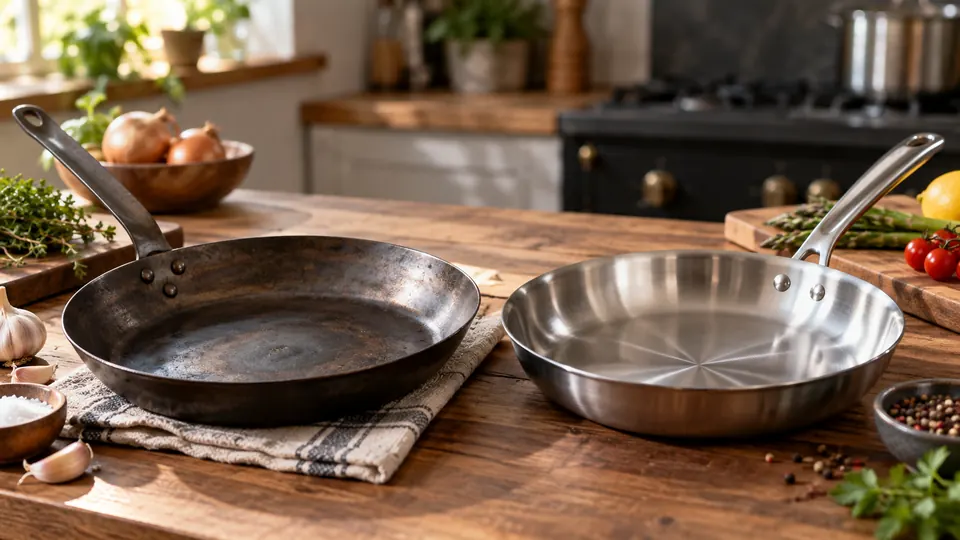
Carbon Steel vs Cast Iron is less about picking a winner and more about matching the pan to the job. Carbon steel offers quicker response, lighter handling, and a smoother path to everyday stovetop cooking. Cast iron offers stronger heat retention, impressive searing power, and excellent performance in baking and heavier skillet work.
If you want one pan for active daily cooking, carbon steel is often the more practical choice. If you value heat retention, oven versatility, and a sturdier feel over easy handling, cast iron is often the better fit. Both are durable, both reward proper care, and both can earn a permanent place in the kitchen.
A good choice is the one that suits how you cook on an ordinary Tuesday, not just how you cook on special occasions.

Leave a Reply