
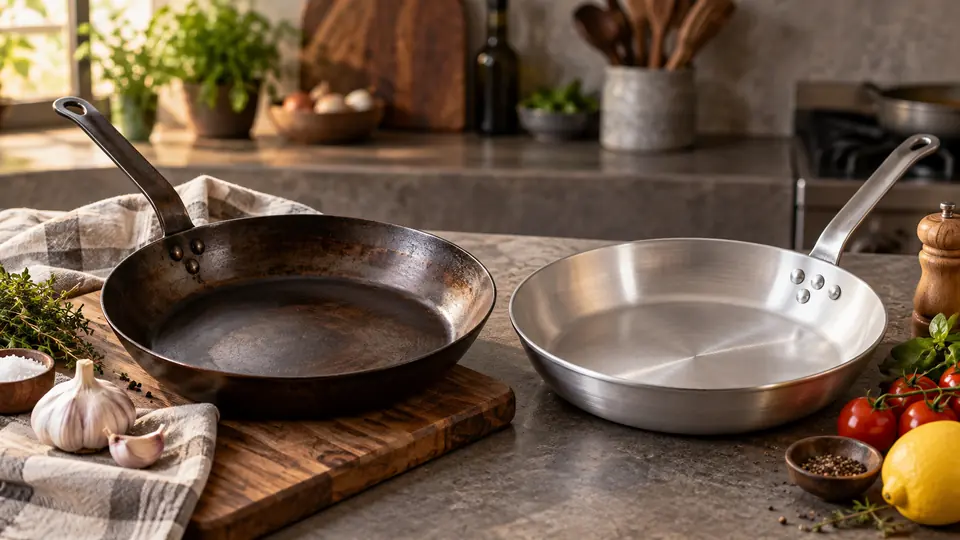
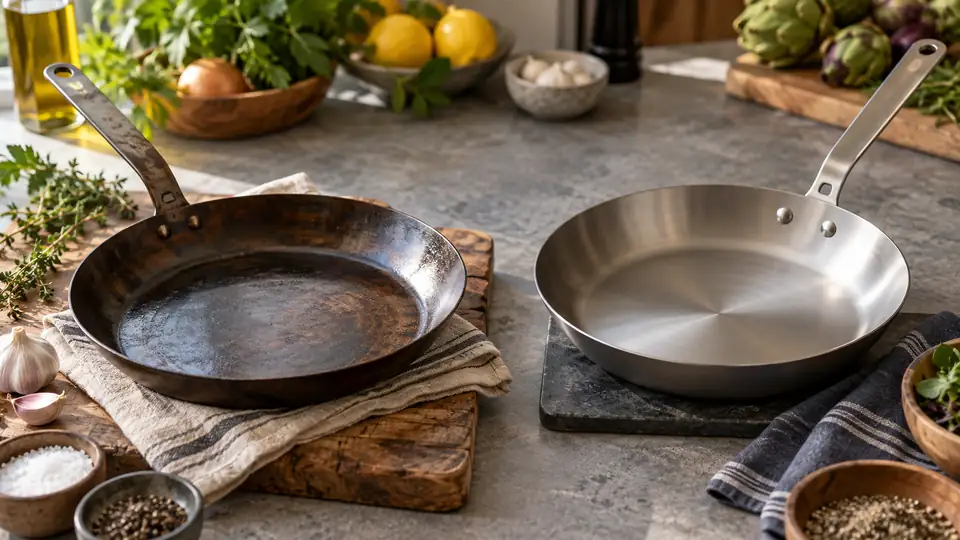
Carbon Steel vs Aluminum Cookware is a practical comparison because these two materials solve very different kitchen problems. One leans toward high-heat searing, durability, and long-term use. The other is known for light weight, quick heating, and everyday convenience. If you are deciding between them, the right choice depends less on brand names and more on how you cook, how much maintenance you are willing to do, and what type of stovetop performance you expect.
Both materials appear in frying pans, sauté pans, griddles, woks, and specialty cookware. Yet they behave very differently once heat is applied. Carbon steel can develop a seasoned cooking surface and handle intense burner heat. Aluminum reacts quickly, stays easy to lift, and is often paired with nonstick coatings or stainless steel cladding to improve usability.
Choosing well matters because cookware that fits your habits gets used often, while cookware that fights your routine tends to collect dust. A cook who wants hard browning and oven-safe simplicity may be happier with carbon steel. A cook who values low weight and fast weekday cooking may prefer aluminum. Understanding the tradeoffs makes the decision much easier.
Quick Answer
In the Carbon Steel vs Aluminum Cookware comparison, carbon steel is usually better for high-heat cooking, searing, browning, and long-term durability, while aluminum cookware is usually better for light weight, fast responsiveness, and easy everyday handling. Carbon steel can build seasoning over time, which improves food release and adds some rust protection, but it needs regular care and cannot be left wet. Aluminum does not rust, heats very quickly, and is easier to lift, though bare aluminum is less common today and many aluminum pans rely on nonstick coatings that wear out faster than carbon steel.
If you cook steaks, fried eggs in a seasoned pan, stir-fries, roasted potatoes, or skillet cornbread, carbon steel often has the advantage. If you want a pan that feels light, heats up quickly for weeknight meals, and asks less from you in maintenance, aluminum cookware is often the easier choice. Neither material is automatically better in every kitchen. The better option depends on the foods you cook, your preferred heat level, and how much upkeep you are willing to accept.
Carbon Steel vs Aluminum Cookware Comparison Table
| Feature | Carbon Steel | Aluminum Cookware |
|---|---|---|
| Heat-up speed | Moderate to fast | Very fast |
| Heat retention | Good | Lower than carbon steel unless heavily constructed |
| Heat responsiveness | Good | Excellent |
| Best for high heat | Excellent | Good to very good, depends on construction and coating |
| Seasoning capability | Yes | No traditional seasoning surface |
| Rust risk | Yes | No rust |
| Weight | Moderate | Light |
| Durability | Very high with proper care | Varies, body is durable but coatings may wear |
| Maintenance | Higher | Usually lower |
| Acidic foods | Not ideal for long cooking | Usually fine if lined or coated |
| Oven use | Often excellent | Depends on handle and coating |
| Expected lifespan | Decades | Varies widely by construction and coating |
What Is Carbon Steel Cookware?
Carbon steel cookware is made primarily from iron with a small amount of carbon. In the kitchen, it sits somewhere between cast iron and stainless steel in how it feels and performs. It is usually thinner and lighter than cast iron, but still strong enough to handle high burner heat and oven use.
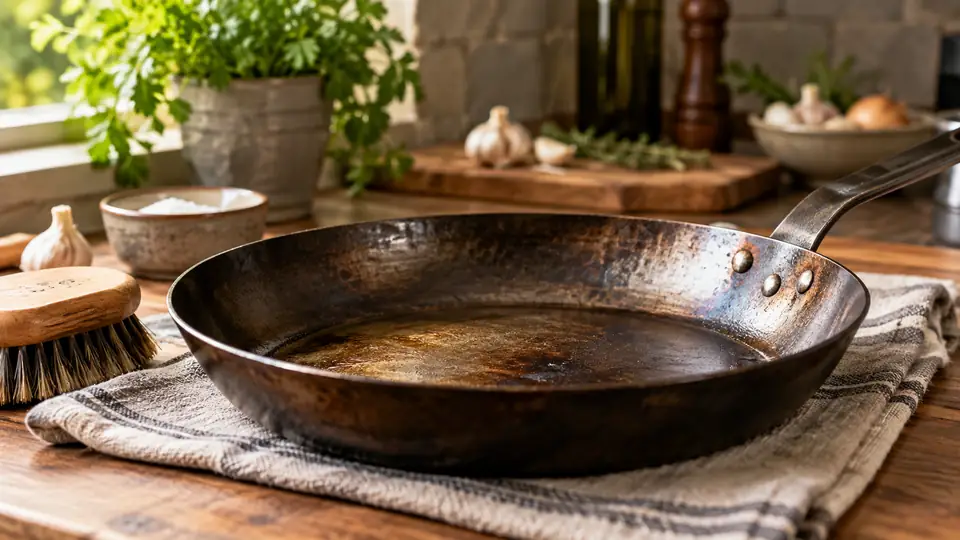
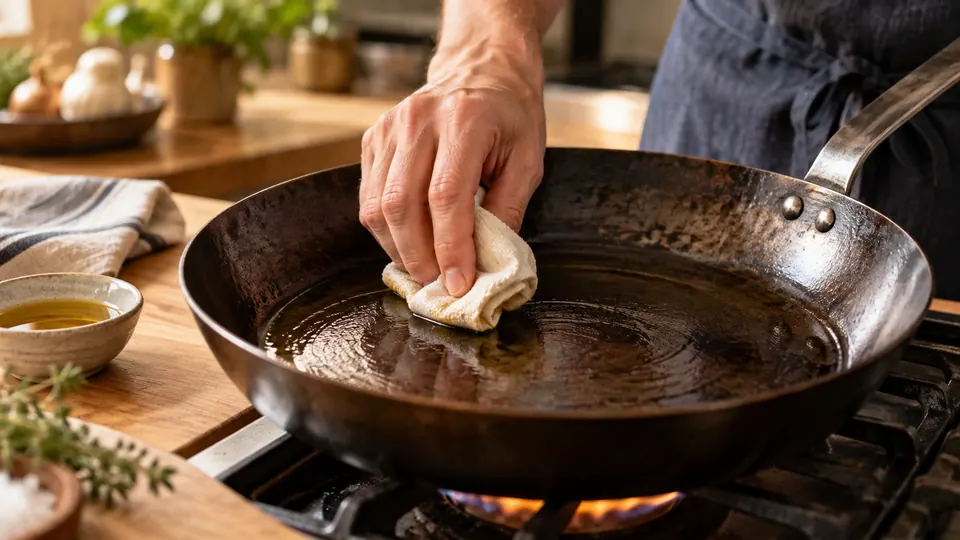
The surface of carbon steel changes with use. After seasoning, which is the process of bonding thin layers of oil to the metal through heat, it develops a darker patina. That patina helps reduce sticking and offers some protection against moisture. Over time, a well-used carbon steel pan often becomes easier to cook with, especially for eggs, pancakes, sautéed vegetables, and proteins that benefit from solid browning.
Carbon steel is common in professional kitchens because it heats well, tolerates rough use, and can move from stovetop to oven without much concern. The tradeoff is maintenance. It must be dried promptly after washing, and its seasoning can be weakened by acidic sauces, harsh scrubbing, or long soaks.
What Is Aluminum Cookware?
Aluminum cookware is made from aluminum, a light metal with excellent heat conductivity. It heats quickly and spreads heat well, which is one reason it has been widely used in cookware for decades. A pan made from aluminum usually feels much lighter in the hand than a carbon steel pan of similar size.
There are several forms of aluminum cookware. Some pans are bare aluminum, though that is less common in home kitchens now. Many are hard-anodized aluminum, which means the surface has been treated to make it harder and more resistant to wear. Others use aluminum as the core or body and add a stainless steel interior or exterior. A large share of aluminum cookware also includes a nonstick coating.
This matters because “aluminum cookware” is a broad category. A thick hard-anodized sauté pan behaves differently from a thin stamped aluminum skillet. In general, though, aluminum is valued for quick responsiveness, low weight, and ease of use. It does not rust, and it usually requires less routine maintenance than carbon steel.
Heat Performance Comparison
Heat-up speed
Aluminum wins on raw speed. It conducts heat very efficiently, so it warms up quickly and responds quickly when you lower or raise the burner. That is useful for foods that need quick adjustments, such as delicate sauces, vegetables, or pan-seared fish where overheating can cause sticking or uneven cooking.
Carbon steel also heats reasonably fast, especially compared with cast iron, but not as fast as aluminum. It needs a little more preheating time to get the surface evenly hot. That extra preheat is often worth it for searing and browning, but it does require a bit more patience.
Heat retention
Carbon steel generally holds heat better than aluminum, especially in pans built with thicker steel. That helps when food hits the pan and pulls down the temperature. A carbon steel skillet is less likely to lose heat immediately when you add a cold steak, chicken thigh, or a pile of sliced mushrooms.
Aluminum can lose heat more quickly, particularly if the pan is thin. Thick aluminum cookware performs better here, but lighter aluminum pans often cool down fast once food is added. For quick sautéing this is not always a problem. For aggressive searing, it can be a limitation.
High-heat cooking
Carbon steel is one of the better materials for high-heat cooking. It is well suited to hard searing, stir-frying, blistering vegetables, and crisping skin-on proteins. The metal itself handles heat well, and many carbon steel pans are simple enough in construction that there is little to worry about beyond the seasoning.
Aluminum cookware can handle decent heat, but the real limit is often the coating, handle material, or pan design. Nonstick aluminum pans are not the best choice for very high heat because coatings can degrade faster under repeated high-temperature use. Bare or hard-anodized aluminum has fewer concerns, but many home cooks still use aluminum mainly for moderate-heat tasks rather than the hottest searing work.
Cooking Surface Comparison
Carbon steel develops seasoning
The cooking surface is one of the biggest differences in Carbon Steel vs Aluminum Cookware. Carbon steel can build a natural seasoning layer through repeated oil-and-heat cycles. This process is sometimes described with the word polymerization, which simply means the oil changes under heat and bonds to the metal surface.
A seasoned carbon steel pan does not behave exactly like a new synthetic nonstick pan, but it can become quite slick with use. Fried eggs, omelets, hash browns, and crepes all benefit from a mature seasoning layer. In practical terms, carbon steel often improves the more you cook with it, as long as you care for it properly.
Aluminum often depends on a factory surface
Aluminum does not build the same kind of seasoning layer in normal use. Instead, aluminum cookware usually relies on one of three surface approaches: bare aluminum, hard-anodized aluminum, or a nonstick coating. Each has benefits, but none ages in quite the same way as seasoned carbon steel.
Nonstick aluminum pans are very convenient for eggs and delicate foods, especially when new. The drawback is that coatings eventually wear down. Hard-anodized surfaces are tougher, but they still do not develop the same self-renewing patina that carbon steel can build over time.
Food release and sticking
Freshly seasoned carbon steel can still stick if preheating, oiling, or temperature control is off. This is a common surprise for new owners. Carbon steel rewards technique. If the pan is preheated properly and the food is not moved too early, sticking often becomes much less of an issue.
Aluminum nonstick pans are easier for low-skill food release in the short term. They are forgiving with scrambled eggs, fish fillets, and reheated leftovers. That convenience is real, but it depends heavily on the condition of the coating. Once the coating starts to wear, performance usually declines.
Durability Comparison
Carbon steel is built for long service
A carbon steel pan can last for decades. It can survive metal utensils, strong burner heat, oven use, and repeated reseasoning. If the seasoning is damaged, the pan is rarely ruined. It can usually be scrubbed, dried, and seasoned again.
Rust is the main long-term threat, but rust on carbon steel is often fixable unless it has been neglected badly for a long time. This repairability is part of carbon steel’s appeal. The pan is not disposable just because it looks rough.
Aluminum durability depends on construction
The aluminum body itself is not fragile, but aluminum cookware varies a lot. Thin aluminum can warp more easily than heavier cookware. Nonstick-coated aluminum pans often reach the end of their useful life because the coating wears out, not because the metal body fails.
Hard-anodized aluminum is tougher than plain aluminum, and clad aluminum cookware can be very durable. Still, in many real kitchens, aluminum cookware is less likely than carbon steel to become a decades-long piece of equipment. It can last a long time, but its lifespan is more tied to surface treatment and build quality.
Maintenance Comparison
Carbon steel needs regular care
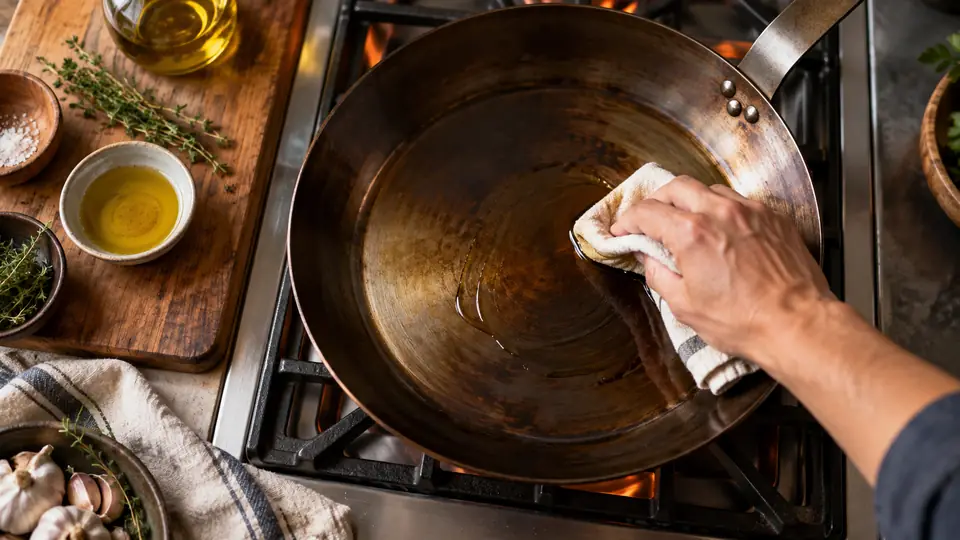
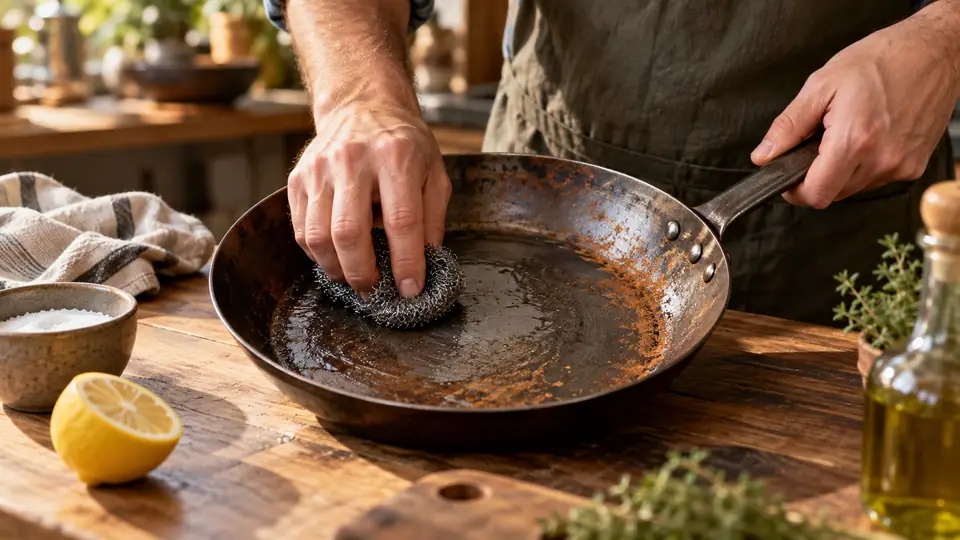
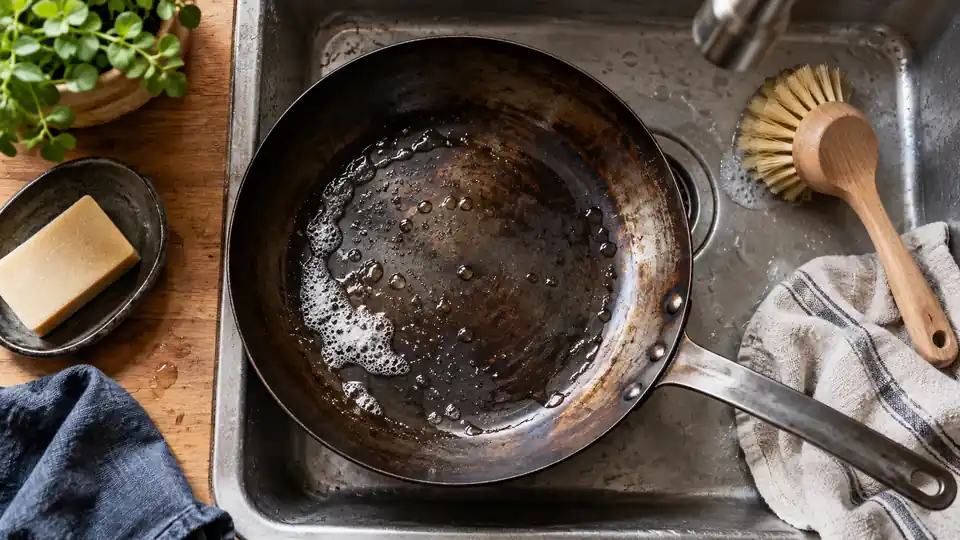
Carbon steel is not difficult to maintain, but it does ask for consistency. After washing, it should be dried fully. A thin film of oil may be applied after cleaning, especially if the pan is new or used less often. Long soaks, dishwashers, and moisture left on the surface can lead to oxidation, which is simply rust forming on exposed metal.
Acidic foods like tomato sauce, wine reductions, or long lemon-based braises can also strip seasoning. Short contact is usually manageable, but carbon steel is not ideal for simmering acidic dishes for extended periods.
Aluminum is usually lower maintenance
Aluminum does not rust, so it is less fussy after washing. That alone makes it easier for many households. If the pan is coated, though, there are different forms of care to consider. High heat, abrasive pads, and metal utensils can shorten the life of a nonstick surface.
So while aluminum is generally easier to maintain day to day, that does not mean it is immune to wear. It simply has a different type of wear pattern than carbon steel. Carbon steel asks for routine care but can be restored. Aluminum often asks for less routine care but may be less recoverable if the surface degrades.
Maintenance snapshot
| Task | Carbon Steel | Aluminum Cookware |
|---|---|---|
| Dry immediately after washing | Yes, important | Helpful, but not critical for rust prevention |
| Regular seasoning upkeep | Yes | No |
| Dishwasher safe | Usually no | Varies, but many coated pans should still be hand washed |
| Acidic food tolerance | Limited | Often better |
| Restorable after surface damage | Often yes | Sometimes limited, especially with worn coatings |
Weight and Handling
Aluminum has a clear advantage in weight. For people with wrist fatigue, limited grip strength, or a dislike of heavy pans, this can be the deciding factor. A large aluminum sauté pan is usually easier to lift, tilt, wash, and store than a similarly sized carbon steel pan.
Carbon steel is lighter than cast iron, but it is still not especially light compared with aluminum. A 12-inch carbon steel skillet can feel solid and somewhat front-heavy, especially with a long metal handle. That extra mass helps with heat retention, yet it may feel less convenient for quick one-handed movement.
Handling also depends on shape. Carbon steel pans often have sloped sides that help tossing and turning food. Aluminum pans vary widely, from shallow frying pans to deep sauté pans. If daily comfort matters more than maximum heat performance, aluminum often fits more easily into routine cooking.
Cooking Applications
Where carbon steel performs well
Carbon steel shines in cooking jobs that benefit from concentrated heat and durable surface recovery. It is especially strong for:
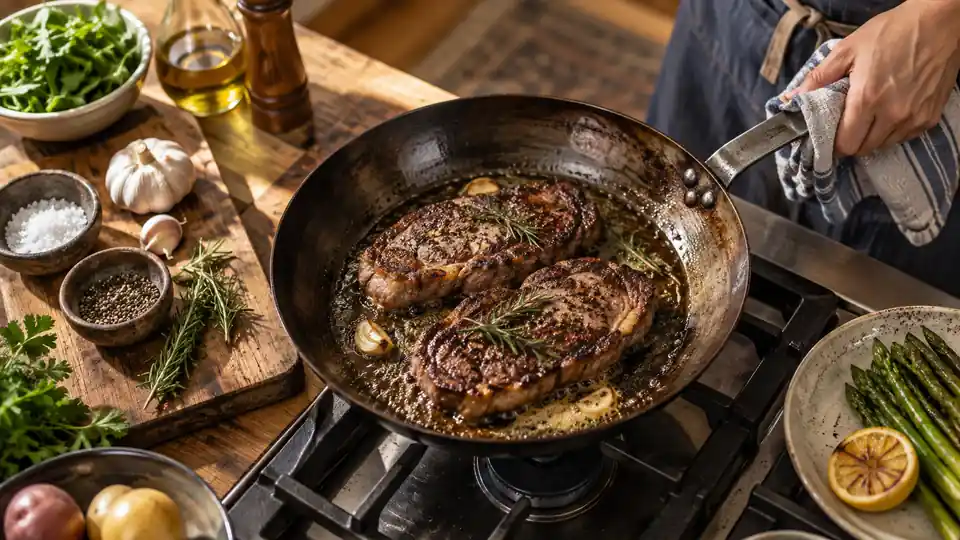
- Steak and burger searing
- Pan-roasting chicken pieces
- Fried eggs in a seasoned pan
- Potatoes and hash
- Stir-frying and wok-style cooking
- Skillet cornbread and oven finishes
- Crepes and omelets once well seasoned
Its strengths show up most clearly when browning matters. If you want crisp edges, dark fond, or a pan that can go from stovetop to oven without fuss, carbon steel is a strong fit. For wok cooking in particular, the material’s responsiveness and heat tolerance are a major reason it remains popular. Readers comparing wok styles may also find it useful to review carbon steel wok options for home use.
Where aluminum performs well
Aluminum cookware is a practical choice for fast, everyday cooking tasks. It often works well for:
- Weeknight sautéing
- Delicate fish
- Vegetables that need quick heat changes
- Pancakes and eggs in coated pans
- Pasta sauces in lined or coated aluminum cookware
- Large pans that would feel too heavy in other materials
Its quick responsiveness is useful when foods can go from perfect to overcooked in a short window. Aluminum is also practical for cooks who want straightforward cleanup and do not want to think much about seasoning care.
Pros and Cons
Carbon steel cookware pros
- Excellent for high-heat cooking and searing
- Can develop a naturally seasoned cooking surface
- Very durable and often restorable
- Usually oven-friendly
- Good balance of heat retention and responsiveness
Carbon steel cookware cons
- Can rust if left wet
- Requires seasoning and regular care
- Not ideal for long acidic cooking
- May stick if preheating and oil use are poor
- Heavier than aluminum
Aluminum cookware pros
- Very light and easy to handle
- Heats quickly and responds fast to burner changes
- Does not rust
- Usually easier for daily convenience
- Widely available in many shapes and styles
Aluminum cookware cons
- Often less suited to extreme heat than carbon steel
- Thin pans may warp or heat unevenly
- Many versions rely on coatings that wear over time
- Less likely to improve with age in the way carbon steel does
- Heat retention is often lower
Which One Should You Choose?
Choose carbon steel if
- You want strong searing and browning performance
- You cook often over medium-high to high heat
- You like cookware that can last for decades
- You do not mind seasoning and drying the pan carefully
- You want a surface that can improve with use
Carbon steel tends to suit cooks who enjoy technique and do not mind a little maintenance. It rewards regular use. People who cook meat, potatoes, eggs, and stir-fries often get the most from it.
Choose aluminum cookware if
- You want lighter pans that are easy to lift
- You prefer quick heating and fast temperature response
- You want less maintenance and no rust concerns
- You cook a lot of delicate foods or quick weekday meals
- You value convenience over long-term seasoning development
Aluminum is often the better fit for cooks who want simple, fast, low-fuss cookware. It is especially appealing in larger pans where weight quickly becomes noticeable.
For many kitchens, both materials make sense
This comparison does not always end with a single winner because carbon steel and aluminum can complement each other well. A kitchen might use a carbon steel skillet for searing and oven finishing, plus an aluminum sauté or nonstick pan for delicate eggs and quick cleanup. If you cook a wide range of foods, having both can be more practical than trying to force one material to do everything.
Frequently Asked Questions
Is carbon steel healthier than aluminum cookware?
Neither material is automatically “healthier” in a broad sense when used properly. Carbon steel is simple, with no synthetic coating on the cooking surface once seasoned. Aluminum cookware is also widely used safely, especially when anodized, coated, or lined. The bigger difference is usually cooking style, maintenance, and whether a coated pan is still in good condition.
Does carbon steel cook more evenly than aluminum?
Not always. Aluminum usually has better raw heat conductivity, so it often spreads heat more evenly, especially in thicker pans. Carbon steel can develop hot spots if preheated too quickly or used on a burner much smaller than the pan base. Still, carbon steel often performs better for sustained browning because it retains heat more effectively.
Why do restaurants often use carbon steel instead of aluminum?
Restaurants often value carbon steel for its ability to handle high heat, repeated use, metal utensils, and stovetop-to-oven cooking. It is durable and can be reseasoned rather than replaced when the surface gets rough. Aluminum is also used in commercial kitchens, especially for pots and sheet pans, but for line cooking and hard searing, carbon steel is a common choice.
Can aluminum cookware replace carbon steel for searing?
It can handle some searing, especially if the aluminum pan is thick and uncoated or hard-anodized. But for repeated high-heat searing, carbon steel is usually the stronger option. It holds up better to intense burner heat and tends to maintain surface performance longer under that style of cooking.
Is carbon steel harder to clean than aluminum cookware?
Usually yes, at least in terms of routine attention. Carbon steel should be dried thoroughly and protected from moisture. Aluminum cookware, especially coated aluminum, is often easier to wash and put away. On the other hand, carbon steel is more recoverable if the surface gets rough, while a worn nonstick aluminum pan is harder to restore.
Final Verdict on Carbon Steel vs Aluminum Cookware
Carbon Steel vs Aluminum Cookware is less about one material being universally better and more about matching the pan to the job. Carbon steel is the better choice for cooks who want high-heat performance, strong browning, seasoning development, and a pan that can stay in service for many years. Aluminum cookware is the better choice for cooks who prioritize light weight, quick heating, easier handling, and lower day-to-day maintenance.
If your cooking leans toward steaks, fried eggs in a seasoned skillet, stir-fries, and oven-finished dishes, carbon steel usually offers more long-term value. If your priority is speed, low weight, and practical convenience for everyday meals, aluminum is often the easier fit. For many home kitchens, the most useful answer is not choosing one forever. It is knowing which material does which job better, then using each where it makes the most sense.

Leave a Reply