
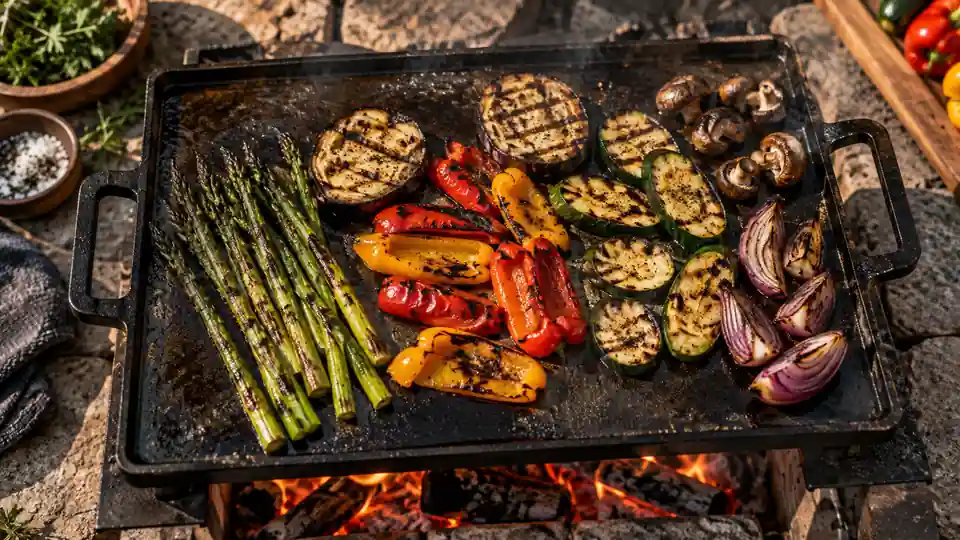
Carbon steel handles heat in a way that makes it especially appealing for outdoor cooking. It heats quickly, tolerates high temperatures, and develops a seasoned surface that works well for foods like burgers, vegetables, fajitas, shrimp, and seared meats. That leads to a practical question: can you grill on carbon steel, or is it better kept on the stovetop?
The short answer is yes, you can grill on carbon steel. In fact, carbon steel is often an excellent choice for grilling, especially if you are using a griddle, skillet, plancha-style plate, wok, or grill pan over charcoal, gas, or live fire. The main limitation is that not every carbon steel item is designed for every outdoor setup. Handle construction, thickness, seasoning condition, and exposure to moisture all matter. Used properly, carbon steel can bring the high-heat control of restaurant-style cooking to a backyard grill.
Grilling on carbon steel is not the same as placing food directly on grill grates. It creates a flat, hot cooking surface that improves browning, prevents small foods from falling through, and helps manage flare-ups. It also changes how grease, smoke, and heat behave. Knowing those differences helps you get better results and avoid warping, rust, or seasoning damage.
Quick Answer
Yes, you can grill on carbon steel, and it often works very well. Carbon steel is highly suited to grill use because it handles high heat, responds quickly to temperature changes, and builds seasoning that improves cooking performance over time. It is especially useful on a gas grill, charcoal grill, flat-top setup, or open-fire cooking system when used as a skillet, griddle, wok, or steel plate.
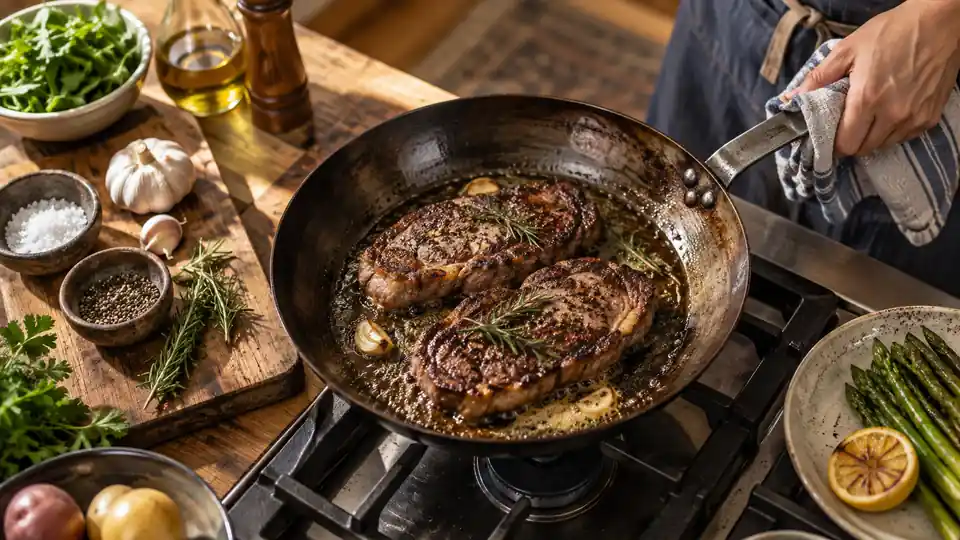
The best uses for carbon steel on a grill include smash burgers, sliced vegetables, seafood, fajitas, fried rice, breakfast foods, and delicate items that would stick to or fall through standard grates. A carbon steel surface also helps create even browning and makes it easier to cook with oil, butter, sauces, and rendered fat.
There are a few cautions. Very thin pans can warp under intense direct heat. Wooden or coated handles may not be safe over open flame. Carbon steel also needs seasoning and basic rust prevention after outdoor use. If you grill on carbon steel with the right piece of cookware, preheat it properly, and dry and oil it after cleaning, it can be one of the most useful tools in an outdoor cooking setup.
Why Proper Use Matters
Carbon steel is durable, but outdoor heat is more aggressive than typical indoor cooking. A grill can create hot spots, direct flame exposure, and fast temperature changes that put more stress on cookware than a home burner. That does not mean carbon steel is fragile. It means technique matters.
The biggest reason to use carbon steel correctly is to protect the pan and improve results at the same time. A well-heated carbon steel surface can give excellent browning and controlled searing. A poorly heated one can warp, burn off seasoning in patches, or create sticking that people often blame on the material rather than the setup.
Outdoor use also exposes cookware to humidity, grease smoke, ash, and occasional rain or condensation. Carbon steel can tolerate hard use, but it does not tolerate neglect especially well. Leaving it dirty or damp after grilling is one of the fastest ways to create rust spots.
Can You Grill on Carbon Steel in Different Forms?
Carbon steel is not limited to one shape or style. The answer changes slightly depending on whether you are using a skillet, griddle, wok, grill pan, or steel plate.
| Carbon Steel Type | Can It Be Used on a Grill? | Best For | Main Caution |
|---|---|---|---|
| Skillet or frying pan | Yes | Burgers, seared meat, vegetables, eggs, seafood | Handle heat and possible warping in thinner pans |
| Flat griddle or BBQ plate | Yes | Smash burgers, fajitas, breakfast, chopped vegetables | Needs even support and gradual preheating |
| Wok | Yes | Stir-fry over powerful flame, fried rice, noodles | Best on high-output burners or specialized grill setups |
| Grill pan | Yes | Indoor-outdoor grill marks, smaller portions | Can smoke heavily and is harder to clean |
| Roasting or paella-style pan | Yes | Shellfish, paella, mixed grill dishes | Wide pans need balanced heat zones |
How Carbon Steel Performs on a Grill
High Heat Tolerance
One of carbon steel’s strengths is its ability to work over high heat. That is why it is commonly used in restaurant kitchens and why it translates well to outdoor cooking. It can sear meat, brown onions, blister peppers, and crisp edges on potatoes without the fragile feel of coated cookware.
That said, high heat tolerance does not mean careless heat exposure. If a thin carbon steel pan is placed over a ripping hot grill and left empty for too long, it may warp. Preheating in stages is a better approach than blasting it immediately.
Fast Heat Response
Compared with cast iron, carbon steel usually responds faster when the heat changes. That matters on a grill, where opening the lid, moving food, shifting burners, or adjusting vents can change the cooking environment quickly. Carbon steel lets you react more easily.
This responsiveness is especially useful when cooking foods that need both a sear and some control, such as shrimp, sliced steak, mushrooms, or fried rice. You can push the pan hard, then back off before things scorch.
Seasoned Surface
Carbon steel develops seasoning through repeated heating of thin layers of oil. Over time, that seasoning creates a darker, smoother, more semi-nonstick cooking surface. On a grill, this helps with proteins and starchy foods that might otherwise stick.
Seasoning is not a permanent coating. Very acidic ingredients, aggressive scraping, soap-heavy cleaning, and extreme heat can weaken it. Outdoor cooking often exposes the pan to higher heat than stovetop use, so occasional touch-up seasoning is normal.
Best Foods to Cook on Carbon Steel on a Grill
Carbon steel shines on a grill when direct grate cooking is inconvenient or when you want a hot metal surface for contact browning.
- Smash burgers: Great crust, controlled grease, and easy pressing.
- Fajitas: Sliced onions and peppers cook evenly without falling through grates.
- Shrimp and scallops: Strong sear with less risk of losing small pieces.
- Fried rice and noodles: Especially good in a wok over high outdoor heat.
- Breakfast foods: Eggs, hash browns, bacon, and pancakes on a flat steel surface.
- Mushrooms and vegetables: Better browning and easier tossing.
- Thin cuts of steak or chicken: Quick contact searing and pan sauce potential.
- Fish fillets: Less sticking than bare grates when the seasoning is in good shape.
Direct grate grilling is still better for some foods, especially large steaks, bone-in cuts, and foods where you specifically want open-flame grill marks and dripping fat. Carbon steel adds another method rather than replacing grill grates entirely.
Best Practices for Grilling on Carbon Steel
Choose the Right Piece
Not all carbon steel cookware is equally suited to grill use. A thick griddle plate or sturdy skillet is generally a safer choice than a very thin pan with a delicate handle. Outdoor cooking tends to favor heavier pieces because they resist temperature shock better and distribute heat more evenly.
If your goal is a flat-top style surface on a gas grill, a purpose-built plate or griddle is often the simplest option. For readers comparing formats, a carbon steel griddle for gas grill setup is usually more practical than balancing a round skillet over wide burners.
Preheat Gradually
This is one of the most important habits. Set the pan or griddle on the grill and let it heat in stages rather than dropping it onto extreme heat. On a gas grill, start with medium heat for a few minutes before increasing. On charcoal, avoid setting a thin pan directly over the hottest concentrated zone right away.
Gradual preheating helps reduce warping and gives the steel time to expand more evenly. It also protects existing seasoning from burning unevenly in one spot while the rest of the surface is still cool.
Use Enough Oil, But Not Too Much
Carbon steel needs a thin film of cooking fat to perform well, especially for delicate foods. Too little oil can lead to sticking. Too much can pool, smoke heavily, or fry food when you intended to sear it.
On a grill, high smoke levels are common, so neutral oils with decent heat tolerance are usually easier to manage. Apply just enough to lightly coat the surface once the pan is hot.
Manage Heat Zones
A grill gives you more flexibility than a stovetop if you use it well. One side can be hotter for searing, while another side stays lower for holding cooked food or finishing thicker pieces. Carbon steel benefits from this because it responds quickly to changes in position and burner settings.
For example, you can sear sliced steak on the hottest area, then slide the pan or move the food to a cooler zone while adding onions or a sauce. This is harder to control if the entire grill is set to maximum heat.
Avoid Prolonged Empty Heating
Leaving carbon steel empty over very high grill heat is one of the easier ways to damage seasoning and increase the risk of warping. Once the surface is hot enough, add oil or food soon after. If you need a very hot surface for searing, monitor it closely rather than walking away.
Use Suitable Utensils
Metal utensils are generally fine on carbon steel, especially on heavier griddles and skillets. They can even help smooth a seasoned surface over time. Still, aggressive gouging or repeated scraping in one area can wear seasoning down faster.
A sturdy spatula, tongs, scraper, or wok turner usually works well. For smash burgers or chopped griddle cooking, a flat-edged metal spatula is practical and safe for the steel.
Common Mistakes
Using a Handle That Is Not Grill-Safe
Some carbon steel cookware has epoxy-coated, painted, or wooden handles that are not meant for prolonged open-flame exposure. Those handles can discolor, weaken, or become unsafe. Always check how the handle is built before placing the pan on a grill.
Putting a Cold Thin Pan Over Extreme Heat
This is a frequent cause of warping. Carbon steel expands as it heats. If one area gets screaming hot before the rest catches up, the pan can distort. A small amount of movement in very thin pans is not unusual, but severe warping affects performance.
Assuming Seasoning Is Indestructible
A mature seasoning layer is helpful, but it can still be damaged by very high heat, acidic marinades, or long soaks after cooking. If the pan comes off the grill looking patchy or bronze in places, that does not always mean it is ruined. It usually means the seasoning needs a quick refresh.
Leaving the Pan Wet After Cleaning
Outdoor cooking often ends with the pan sitting around while the grill cools, guests eat, or cleanup gets delayed. That is exactly how rust starts. Carbon steel should be dried thoroughly after washing, then wiped with a very thin layer of oil before storage.
Cooking Highly Sugary Sauces Too Early
Sugary barbecue sauces can burn quickly on a hot steel surface. It is usually better to sear the food first, then lower the heat or move to a cooler zone before adding sauce. This keeps the seasoning from getting covered in burnt residue and makes cleanup easier.
How to Grill on Carbon Steel Step by Step
- Choose a stable carbon steel piece. A grill-safe skillet, griddle, wok, or BBQ plate is ideal.
- Check the handle and construction. Make sure it is safe for grill heat and open flame exposure.
- Set up heat zones. Create a hot area for searing and a medium or lower area for finishing.
- Preheat gradually. Start over moderate heat for several minutes.
- Add a thin coat of oil. Once hot, coat the surface lightly.
- Add food and let it contact the steel. Avoid moving it too soon if you want browning.
- Adjust position as needed. Slide the pan or shift food between hotter and cooler zones.
- Scrape and clear residue between batches. This helps prevent burnt buildup.
- Clean while still warm if possible. Warm residue is easier to remove than fully hardened grease.
- Dry thoroughly and oil lightly. This protects against rust before storage.
Carbon Steel vs Grill Grates
Using carbon steel on a grill creates a different cooking style from placing food directly on grates. Neither method is better in every case. Each has strengths.
| Cooking Method | Strengths | Limitations |
|---|---|---|
| Directly on grill grates | Open-flame flavor, classic grill marks, strong airflow around food | Small foods fall through, delicate foods stick, flare-ups can be harder to control |
| On carbon steel | Better for browning, small foods, rendered fat, pan sauces, chopped cooking | Less smoke circulation around food, fewer classic grate marks, requires pan maintenance |
In practice, many cooks get the best results by using both. Grill larger meats directly on the grates, then use carbon steel for onions, peppers, mushrooms, seafood, or finishing steps.
Does Grilling Damage Carbon Steel Seasoning?
It can, but not always. Grilling puts carbon steel under higher heat stress, and some seasoning loss is normal over time. The most vulnerable situations are empty preheating over extreme heat, cooking acidic ingredients for long periods, and letting burnt residue sit on the surface.
If the seasoning becomes uneven, sticky, or patchy, you usually do not need to strip the pan completely. Clean it well, dry it, apply a very thin coat of oil, and heat it until the oil darkens into a new layer. Repeated cooking and light maintenance will rebuild the finish.
Outdoor cooking often makes seasoning look rougher than it really is. Discoloration alone is not a problem. The questions that matter are whether the surface is smooth enough to cook on, whether food is sticking badly, and whether rust is forming.
Cleaning Carbon Steel After Grilling
While the Pan Is Still Warm
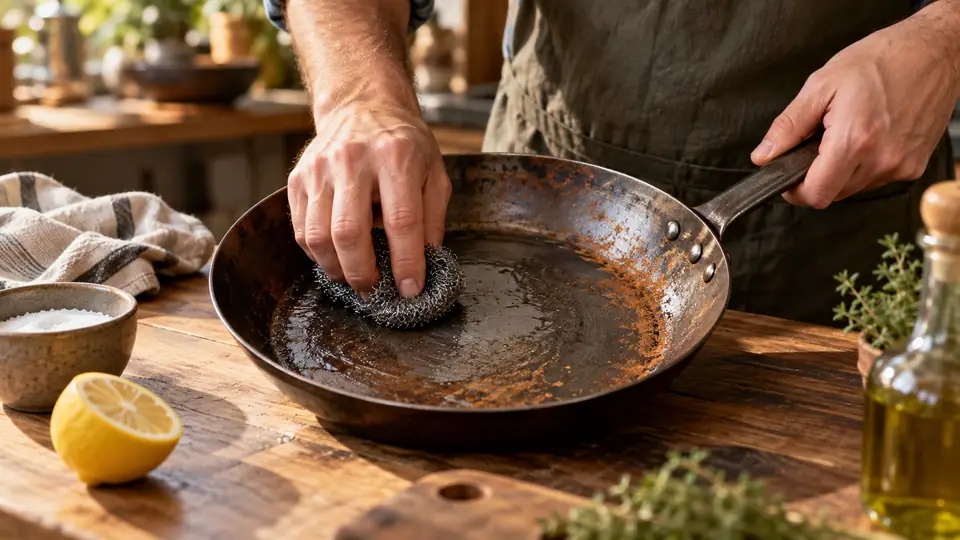
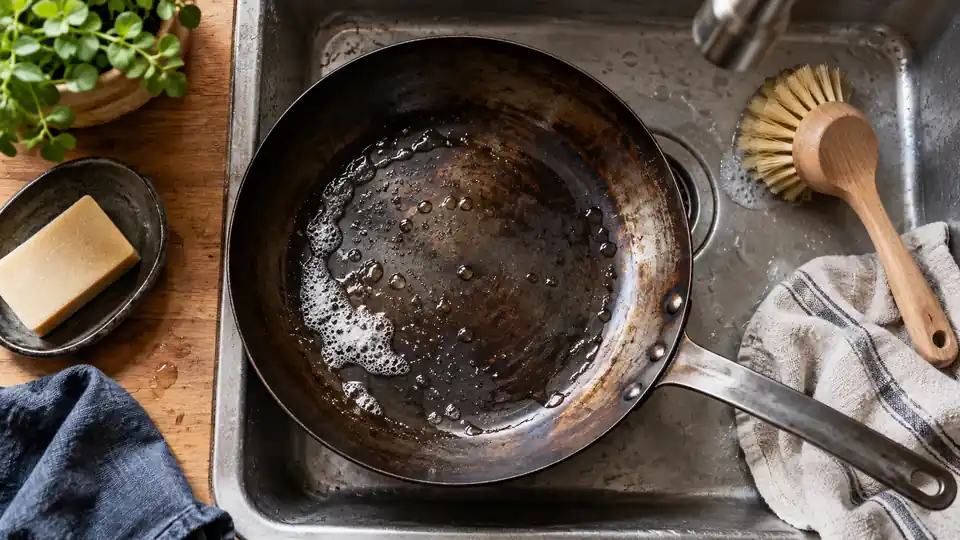
Warm carbon steel is easier to clean than cold carbon steel coated in hardened grease. Once the pan is safe to handle, scrape out food residue and wipe excess grease with paper towels or a cloth. If residue is stubborn, add a little hot water and loosen it gently.
Avoid Long Soaks
Soaking carbon steel in water is a poor habit, and it is especially risky after outdoor cooking because seasoning may already be stressed. A short rinse is fine. A long soak encourages oxidation, which is simply the rusting process starting on bare or weakened areas.
Dry Completely
After washing, dry the pan fully over heat or with a towel followed by brief warming. Moisture left around rivets, edges, or the handle joint can create rust spots later.
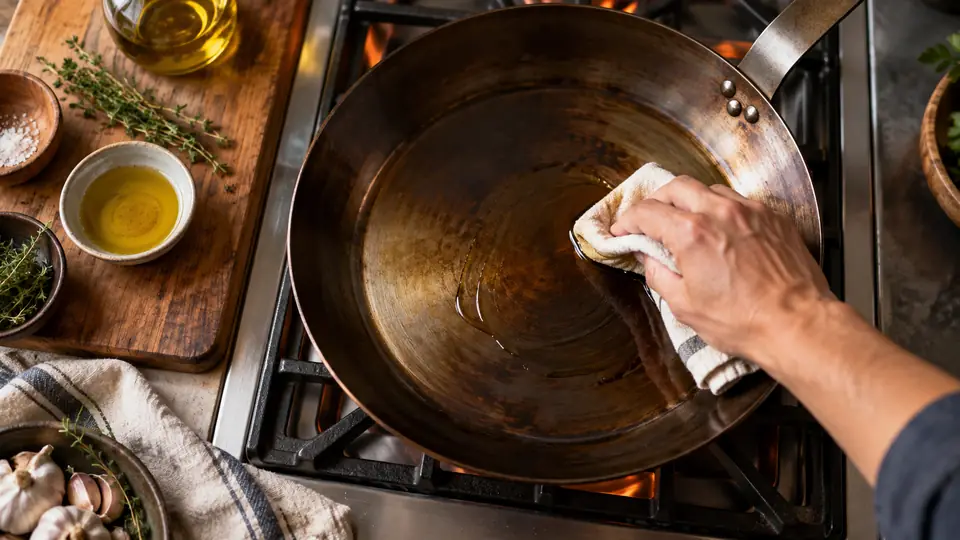
Apply a Thin Protective Oil Layer
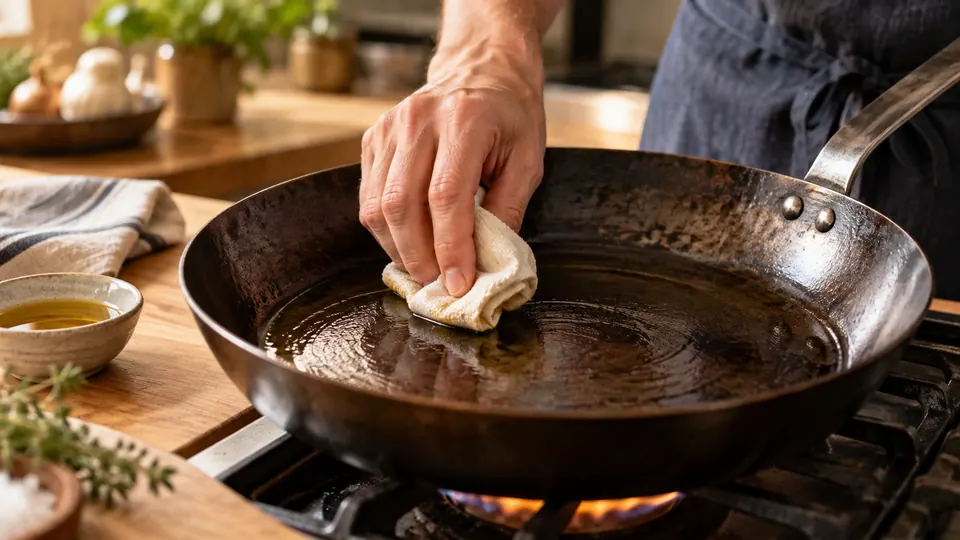
Once dry, wipe on a very thin film of oil. This is not the same as heavy seasoning. It is just enough to protect the surface during storage. If the pan looks dull and dry after a hard grilling session, this quick step helps preserve it.
Can You Put Carbon Steel Directly Over Open Flame?
Yes, many carbon steel pans, woks, and griddles can be used over open flame, including charcoal and fire-based cooking setups. Carbon steel has a long history in high-flame cooking. The issue is not whether the steel can take it. The issue is whether the specific pan design can handle it well.
A round-bottom wok, for example, can perform beautifully over a powerful flame if supported properly. A very thin skillet perched unevenly over a fire ring may be more likely to warp. Stability matters just as much as heat tolerance.
Open flame also increases soot, smoke, and uneven heating. That means cleaning and seasoning maintenance become more important than they would be on a stovetop.
Who Should Use Carbon Steel on a Grill?
- Cooks who want a flat-top grilling surface without buying a dedicated outdoor griddle appliance
- People who cook small or delicate foods that do not work well on open grates
- Anyone who likes high-heat searing with more grease and flare-up control
- Outdoor cooks comfortable with basic maintenance such as drying and oiling after use
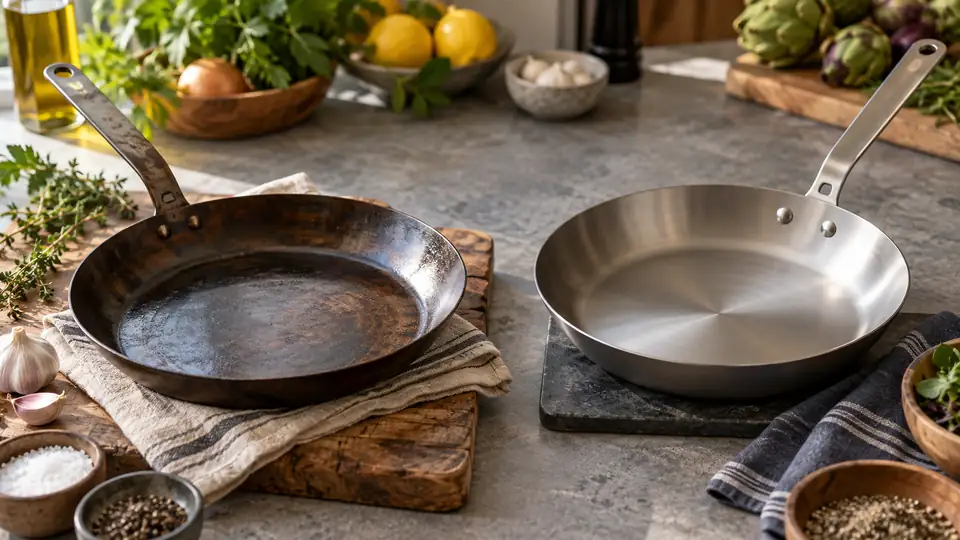
Carbon steel may be less appealing to someone who wants zero-maintenance cookware left outdoors between uses. Stainless steel or enameled surfaces are usually more forgiving in that kind of environment.
Frequently Asked Questions
Can you grill steaks on carbon steel?
Yes. Carbon steel is excellent for steaks, especially thinner cuts or sliced steak for tacos, sandwiches, or fajitas. A very thick steak may benefit from direct grate grilling first or a reverse-sear approach, but carbon steel is strong for crust development.
Can you put a carbon steel pan on a gas grill?
Yes, a gas grill is one of the easiest ways to use carbon steel outdoors. It provides steady heat and lets you create zones by adjusting burners. Just make sure the pan and handle are grill-safe.
Will carbon steel rust after grilling?
It can rust if left wet, stored dirty, or exposed to humidity without a light protective oil layer. Proper drying and a thin wipe of oil after cleaning usually prevent this.
Is carbon steel better than cast iron for grilling?
Not always better, but often easier to handle. Carbon steel usually heats and cools faster and is often lighter than cast iron. Cast iron retains heat longer and can be more stable against warping, especially in very thick pieces.
Can you use carbon steel on a charcoal grill?
Yes. Charcoal grills work well with carbon steel, especially for high-heat searing and griddle-style cooking. The key is to avoid shocking a thin cold pan with intense concentrated heat.
Final Thoughts
Can you grill on carbon steel? Yes, and in many situations it is one of the most practical ways to expand what a grill can do. Carbon steel gives you a hot, responsive cooking surface that works especially well for burgers, vegetables, seafood, stir-fry, breakfast foods, and any ingredient that benefits from direct contact with seasoned steel rather than open grates.
The main tradeoff is maintenance. Carbon steel needs sensible heat management, proper drying, and occasional seasoning touch-ups. If you use a grill-safe piece, preheat it gradually, and care for it after cooking, it can perform extremely well outdoors for years. For cooks who want more control, fewer lost ingredients, and better browning on a grill, carbon steel is not just usable. It is often a very smart fit.

Leave a Reply