
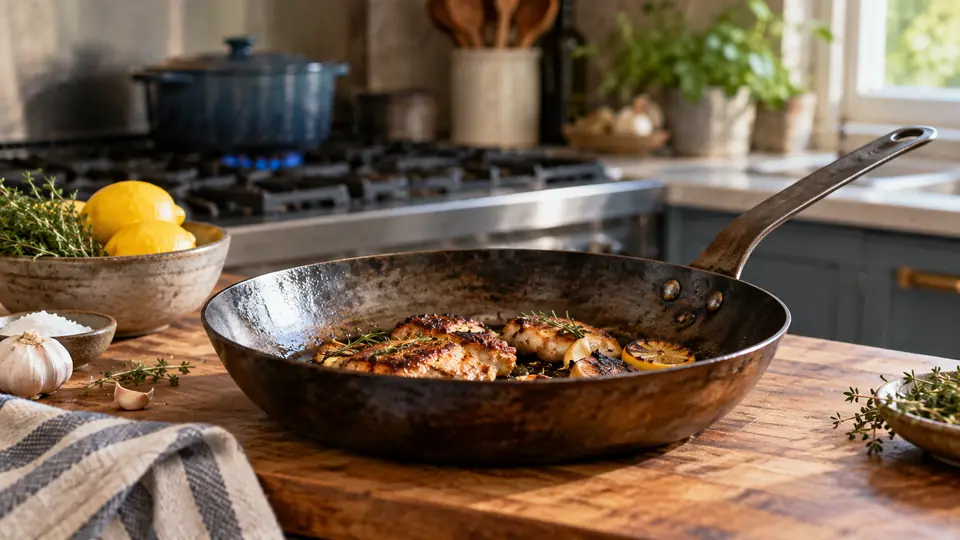
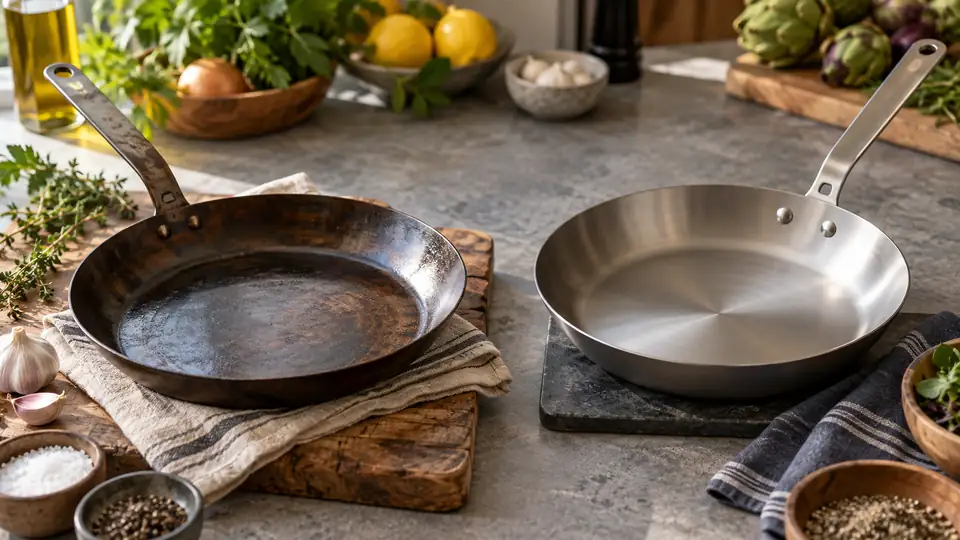
Carbon steel and cast iron overlap so much in real cooking that it is reasonable to ask whether one can replace the other. Both are iron-based, both can build seasoning, both handle high heat well, and both work for searing, frying, roasting, and stovetop-to-oven cooking. The differences show up in feel and behavior rather than in completely separate uses.
Can carbon steel replace cast iron? In many kitchens, yes. A well-made carbon steel pan can do most of what a cast iron skillet does, especially for everyday stovetop cooking. It sears well, develops a naturally slick surface over time, and usually feels lighter and quicker to handle. Still, cast iron keeps a few advantages. It generally holds heat longer, tolerates rough treatment well, and often works better for deep crusts, baking, and situations where steady heat matters more than speed.
If you are deciding between the two, the better question is not whether carbon steel can replace cast iron in theory. It is whether it can replace it for the way you cook. For some cooks, carbon steel becomes the daily pan and cast iron moves to occasional use. For others, carbon steel complements cast iron rather than replacing it entirely.
Quick Answer
Carbon steel can replace cast iron for most common cooking tasks, but not perfectly in every situation. If you want a pan for searing meat, frying eggs once seasoned, sautéing vegetables, making pan sauces, and moving quickly between burners, carbon steel is often a strong substitute. It heats faster, weighs less, and feels more responsive than cast iron, which makes it easier to use every day.
Cast iron still has strengths that carbon steel does not fully match. It usually retains heat better because it is thicker and heavier. That makes it especially good for foods that benefit from stable heat, such as cornbread, deep sears on large steaks, and some oven dishes. Cast iron is also less likely to warp under misuse, while thinner carbon steel can be more sensitive to overheating or rapid temperature changes.
So the practical answer is this: yes, carbon steel can replace cast iron for many cooks, but it depends on your cooking style. If you value lighter weight and quicker response, carbon steel may cover almost everything you need. If you rely on heavy heat retention, rustic oven baking, or extra durability, cast iron may still deserve a place in your kitchen.
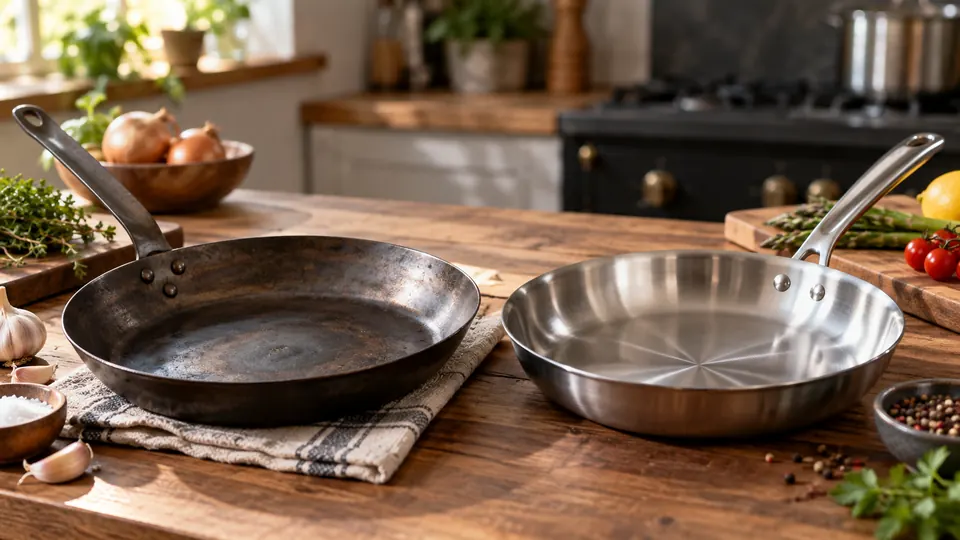
Carbon Steel vs Cast Iron at a Glance
| Feature | Carbon Steel | Cast Iron |
|---|---|---|
| Weight | Lighter, easier to lift and toss | Heavier, more tiring for some users |
| Heat-up speed | Usually faster | Usually slower |
| Heat retention | Good | Very strong |
| Heat responsiveness | Better, changes temperature faster | Slower to respond |
| Seasoning | Builds seasoning well | Builds seasoning well |
| Surface texture | Smoother from the start | Often rougher unless machined smooth |
| Searing | Very good | Excellent |
| Eggs and delicate foods | Often easier once seasoned | Can do it well, but surface may be less forgiving |
| Warp resistance | Can warp if overheated, especially thinner pans | Very resistant to warping |
| Rust risk | Yes, if neglected | Yes, if neglected |
| Best use style | Daily stovetop cooking | High-retention heat and oven use |
What Carbon Steel Is
Carbon steel cookware is made from iron and a small amount of carbon. In practical kitchen terms, it behaves like a thinner, smoother, lighter relative of cast iron. It is usually stamped or spun from sheets of metal rather than poured into a mold, which helps explain its lower weight and sleeker shape.
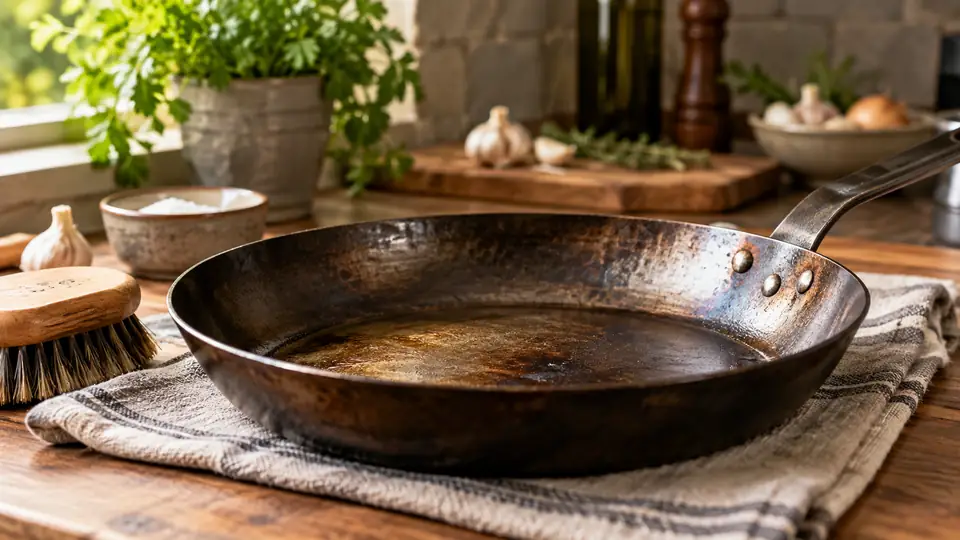
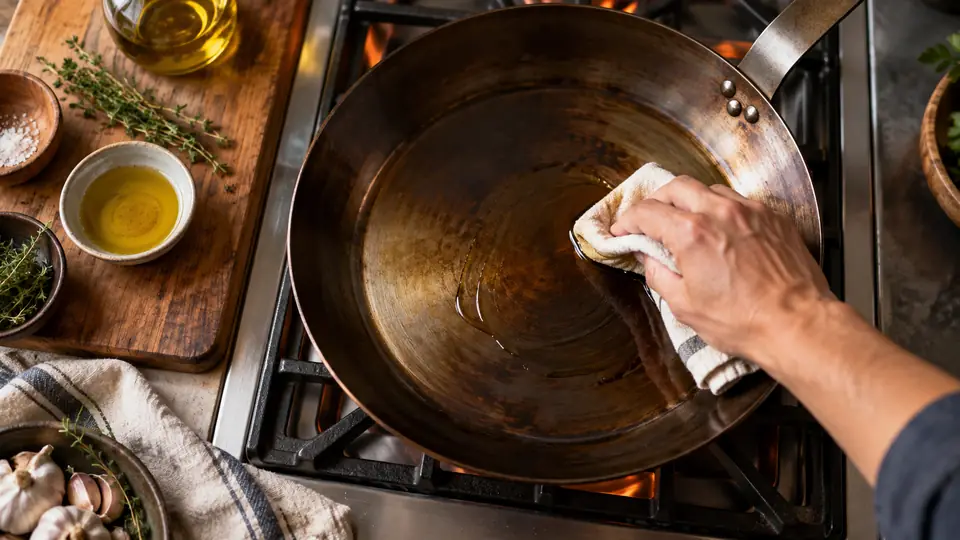
Most carbon steel pans need seasoning, just like cast iron. Seasoning is the thin layer of oil that bonds to the pan through heat. That bonded layer helps protect the metal from rust and gradually improves food release. Over time, repeated cooking and light oiling create the dark patina many cooks want.
Carbon steel is especially popular in restaurant kitchens because it heats quickly, can handle high temperatures, and is easier to move around than heavy cast iron. That does not mean it is automatically better. It simply has a different feel in use.
What Cast Iron Is
Cast iron cookware is also made primarily from iron and carbon, but the manufacturing process is different. Molten metal is poured into molds, which produces thicker, heavier cookware with a more substantial body. That extra mass is what gives cast iron its trademark heat retention.
Like carbon steel, bare cast iron needs seasoning and can rust if left wet. Enameled cast iron is a separate category and behaves differently, so it is not the main focus here. For this comparison, the meaningful overlap is between bare cast iron and carbon steel.
Cast iron has a long track record in home kitchens because it is sturdy, versatile, and forgiving in terms of rough handling. It is common to see old cast iron skillets still in use decades later. Thickness is part of that durability, although it also contributes to the weight that some people find frustrating.
Can Carbon Steel Replace Cast Iron for Everyday Cooking?
For many people, yes. Carbon steel can cover most of the day-to-day jobs that make cast iron useful in the first place. It can sear chicken thighs, brown burgers, fry potatoes, cook pancakes, blister vegetables, and move from stovetop to oven without much trouble.
In fact, some cooks find themselves reaching for carbon steel more often simply because it is easier to lift, wash, dry, and put away. A pan that feels convenient tends to get used more. That matters in real kitchens more than small differences in performance charts.
Where the replacement question becomes more nuanced is in edge cases. If your favorite use for cast iron is baking thick skillet cornbread, roasting large cuts of meat, or getting a very deep sear without the pan cooling down much, cast iron may still do those jobs better. If your cast iron mostly handles eggs, chops, vegetables, and weeknight meals, carbon steel can often step in without much compromise.
Heat Performance Comparison
Heat Retention
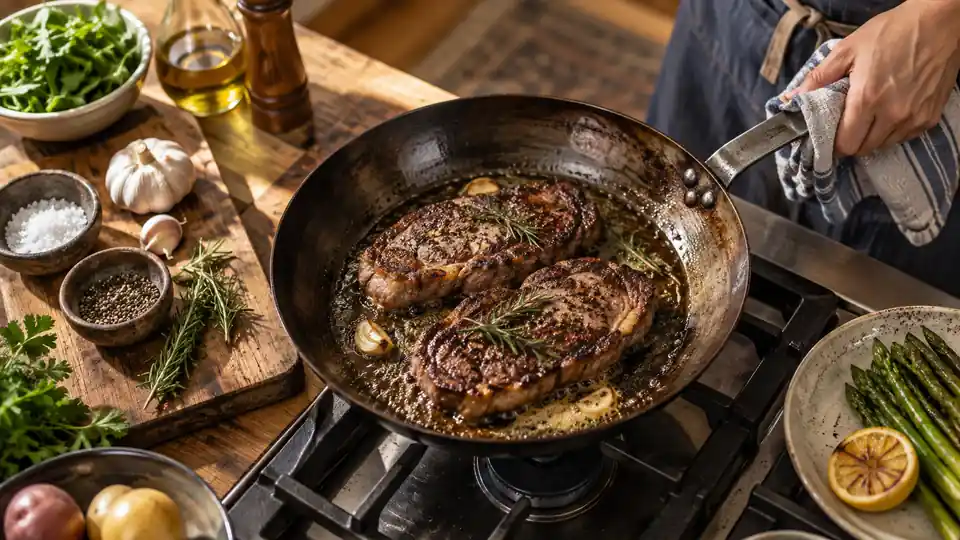
Cast iron usually wins here. Because it is thicker and heavier, it stores more heat and loses it more slowly. Put a cold steak into a hot cast iron skillet and the pan temperature tends to dip less than it would in a lighter carbon steel pan of similar size.
That is one reason cast iron is prized for hard searing. The stored heat helps maintain browning even when the food initially cools the surface. In oven cooking, that same quality can produce stable results for dishes that benefit from consistent heat.
Carbon steel still retains heat well compared with many other pan materials, just not usually at the same level as cast iron. For one steak or a few pork chops, the difference may not matter much. For larger batches or very cold food, cast iron’s extra thermal mass becomes more noticeable.
Heat Responsiveness
Carbon steel usually feels more responsive. Turn the heat up or down, and the pan reacts faster than cast iron. That can be very useful when cooking foods that need more control, such as fish, eggs, thin cutlets, or vegetables that go from pale to scorched quickly.
This faster response also makes carbon steel easier to manage on the stovetop if your burner runs hot. Cast iron can keep pushing heat into food even after you lower the flame because it holds so much stored energy.
For cooks who like a more active style of pan cooking, carbon steel often feels easier to read and adjust.
Heat-Up Time
Carbon steel generally heats faster than cast iron. That can be convenient on busy nights, but it comes with a caution. Fast heating is not the same as even heating. A carbon steel pan can develop hot spots if blasted over high heat before it has warmed gradually.
Cast iron is slower to preheat, but that slower climb can make it feel steadier once fully hot. Good results with either pan come from patient preheating rather than rushing.
Cooking Surface and Food Release
Why Carbon Steel Often Feels Smoother
Most carbon steel pans start with a smoother cooking surface than standard cast iron skillets. That does not make them nonstick right out of the box, but it often helps seasoning build into a more even, slick layer. Foods like eggs and omelets often become easier to manage sooner on carbon steel than on rough-textured cast iron.
That is one reason some home cooks switch and never look back. A lighter pan with a smoother surface can feel more approachable for everyday cooking.
Why Seasoning Still Matters More Than Material Alone
Neither carbon steel nor bare cast iron is automatically nonstick. Food release depends on seasoning quality, preheating, oil amount, and cooking technique. A poorly seasoned carbon steel pan can stick badly. A well-seasoned cast iron skillet can release eggs beautifully.
Seasoning is formed when very thin layers of oil polymerize under heat, meaning they bond into a harder surface film. That film improves with use, but it is not indestructible. Acidic foods, scrubbing, moisture, and cooking habits all affect it.
So while carbon steel often gets the edge for feel and smoothness, cast iron can absolutely perform well too if it is seasoned and used properly.
Durability Comparison
Resistance to Damage
Cast iron is usually tougher in terms of shape retention. It is thick and rigid, so it is less likely to warp if overheated. Carbon steel, especially thinner pans, can warp if placed over very high heat too quickly or if heated unevenly on a powerful burner.
That does not mean carbon steel is fragile. Good carbon steel cookware is durable and can last for decades. It just tends to demand a little more respect in how it is heated. This is especially relevant on induction or glass cooktops, where strong concentrated heat can stress the pan base.
Risk of Cracking or Breaking
Cast iron is strong but brittle. Drop it hard enough and it can crack. Carbon steel is less brittle and more likely to dent or bend rather than fracture. In everyday use, dropping either pan is a bad day, but they fail in different ways.
Rust Resistance
Bare carbon steel and bare cast iron are similar here. Neither likes moisture. Both need to be dried thoroughly and lightly oiled when necessary. If either pan develops rust, it can usually be restored by scrubbing off the rust and reseasoning.
Owners who want fewer maintenance headaches sometimes lean toward nitrided or pre-seasoned carbon steel options. For those comparing formats, pre-seasoned carbon steel pans can shorten the break-in period, though they still need proper care.
Maintenance Comparison
From a care perspective, carbon steel and bare cast iron are close relatives. Both should be dried promptly after washing. Both benefit from occasional light oiling. Both can lose seasoning if soaked, left wet, or scrubbed too aggressively.
| Maintenance Task | Carbon Steel | Cast Iron |
|---|---|---|
| Initial seasoning | Usually needed unless pre-seasoned | Usually needed or improved with extra layers |
| Drying after washing | Important | Important |
| Light oil after cleaning | Helpful | Helpful |
| Acidic food tolerance | Limited on fresh seasoning | Limited on fresh seasoning |
| Dishwasher safe | No | No |
| Restoration after rust | Usually straightforward | Usually straightforward |
The maintenance difference is less about the rules and more about frequency of use. Because carbon steel is lighter and often easier to handle, some people find it less annoying to clean and dry. That can improve long-term ownership, especially if the pan gets used daily.
Cast iron has a reputation for being rugged, but that does not mean maintenance-free. A neglected cast iron skillet will rust just as surely as a neglected carbon steel pan.
Weight and Handling
This is one of the biggest practical reasons people move from cast iron to carbon steel. Carbon steel is usually much easier to lift with one hand, tilt for basting, or move from stove to oven. If you cook often, this difference adds up fast.
A heavy 12-inch cast iron skillet can be awkward for some users, especially when full of food. Pouring off fat, transferring vegetables, or washing the pan can feel more like a chore. Carbon steel is not feather-light, but it is often noticeably more manageable.
That said, some cooks like the planted, solid feel of cast iron. A heavier pan sits very steadily on the burner and can feel reassuring during high-heat searing or oven roasting. Handling preference is personal, but it strongly influences whether carbon steel can replace cast iron in your kitchen.
Best Uses for Each
Where Carbon Steel Often Replaces Cast Iron Well
- Weeknight stovetop cooking
- Eggs, omelets, and crepes after proper seasoning
- Sautéing vegetables
- Pan-frying cutlets or fish
- Searing smaller cuts of meat
- Stir-fry and high-movement cooking
- Situations where lighter weight matters
Where Cast Iron Still Has an Edge
- Deep searing on thick steaks
- Baking cornbread or skillet pies
- Oven roasting where heat stability matters
- Cooking large cold items that drop pan temperature
- Rougher use with less concern about warping
There is still plenty of overlap. A carbon steel pan can sear steak well, and a cast iron skillet can cook eggs well. These are not hard limits. The point is that each material tends to shine in slightly different ways.
Common Mistakes When Trying to Replace Cast Iron with Carbon Steel
Expecting Identical Heat Behavior
Carbon steel is not just lighter cast iron. If you cook the same way with both pans, results may differ. Carbon steel warms faster and reacts faster, so it often benefits from a slightly gentler preheat and closer attention during cooking.
Using Extremely High Heat Too Soon
People switching from cast iron sometimes put carbon steel over full blast immediately. That can create hot spots, damage seasoning, or even warp thinner pans. Moderate preheating is safer and usually cooks better anyway.
Assuming Seasoning Solves Everything
Good seasoning helps, but technique still matters. If the pan is not properly preheated, or if food is moved before it naturally releases, sticking can happen on either material.
Ignoring Cooktop Compatibility Details
Not every carbon steel pan behaves the same on every stove. Gas tends to be forgiving. Electric coil and glass tops can create concentrated heat. Induction can heat very powerfully and quickly, which is useful but sometimes harsh on thinner pans if used carelessly.
Who Can Replace Cast Iron with Carbon Steel Most Easily?
Carbon steel is most likely to replace cast iron successfully for cooks who mainly use a skillet on the stovetop and value speed, control, and lower weight. If your typical meals include eggs, chicken thighs, burgers, vegetables, hash, or quick pan dinners, carbon steel can often take over with little sacrifice.
It is also a practical switch for anyone who avoids using cast iron simply because it feels too heavy. A pan that sits unused in a cabinet is not helping your cooking. Carbon steel often solves that problem without forcing you into delicate cookware.
Restaurant-style cooks, people who toss food in the pan, and anyone who likes a more responsive surface also tend to prefer carbon steel.
Who May Still Want to Keep Cast Iron?
If you bake often in a skillet, love very heavy searing, or want a pan that tolerates rough heat abuse better, cast iron may still deserve a place in your kitchen. It is especially useful for cooks who value thermal mass more than agility.
Cast iron can also make sense if you already own a good skillet and enjoy using it. Replacing it is not always necessary. In many homes, the smartest setup is not choosing one forever. It is using carbon steel for daily cooking and cast iron for the tasks where its weight becomes an advantage.
Pros and Cons of Replacing Cast Iron with Carbon Steel
Advantages
- Lighter weight: easier to lift, maneuver, and clean
- Faster response: easier temperature control on the stovetop
- Smoother surface: often better feel for eggs and delicate foods
- Very versatile: handles searing, frying, sautéing, and oven use
- Similar seasoning benefits: develops a naturally slick patina over time
Drawbacks
- Less heat retention: not always as strong for very heavy searing
- Warp risk: thinner pans can deform if overheated
- Still needs maintenance: not a zero-care replacement
- Can be less forgiving: demands a bit more awareness during preheating
How to Decide Between Carbon Steel and Cast Iron
A simple way to decide is to think about what annoys you most and what matters most in your cooking.
- If weight is the biggest issue, carbon steel has a clear advantage.
- If maximum heat retention matters most, cast iron usually wins.
- If you cook mostly on the stovetop, carbon steel often feels better day to day.
- If you use the pan often for baking and roasting, cast iron may still be more satisfying.
- If you want one pan to do almost everything and feel easier to use, carbon steel is often the better compromise.
There is also a middle-ground answer. You do not have to fully replace cast iron for carbon steel to be worth owning. A lot of cooks find that carbon steel becomes the daily pan while cast iron stays available for specific jobs.
Frequently Asked Questions
Is carbon steel better than cast iron for eggs?
Often, yes, especially once the pan has developed a good seasoning layer. Carbon steel usually has a smoother surface and better heat responsiveness, which can make eggs easier to control. Technique still matters, though. Proper preheating and enough fat are just as important as the material.
Can carbon steel sear steak as well as cast iron?
It can sear steak very well, but cast iron often holds a slight edge for thick cuts because it retains more heat. For one or two steaks, carbon steel is usually more than capable. For large, cold steaks or repeated batches, cast iron may maintain browning more consistently.
Does carbon steel need the same care as cast iron?
Broadly, yes. Both need seasoning, prompt drying, and protection from prolonged moisture. Carbon steel and bare cast iron are similar in maintenance, even though carbon steel may feel easier to handle during cleanup.
Will carbon steel warp more easily than cast iron?
Yes, that is one of the real trade-offs. Thin or medium-gauge carbon steel can warp if heated too aggressively or unevenly. Cast iron is much less likely to warp because it is thicker and more rigid.
Should you replace cast iron with carbon steel or keep both?
If you cook a wide variety of foods, keeping both can make sense. Carbon steel is excellent for daily stovetop work, while cast iron remains useful for heavy searing, baking, and heat-stable oven dishes. If you want to simplify and value lighter handling, carbon steel can often take over most tasks on its own.
Final Verdict
Can carbon steel replace cast iron? For a lot of cooks, yes. It can handle most of the same meals, develops similar seasoning benefits, and usually feels easier to live with because it is lighter and more responsive. That makes it a very practical replacement for everyday skillet cooking.
Still, replacement does not mean perfect duplication. Cast iron remains stronger in pure heat retention, heavy searing, and some baking applications. Carbon steel is better understood as a more agile alternative that overlaps heavily with cast iron rather than copies it exactly.
If your cast iron sees daily stovetop duty and you wish it were lighter and quicker to control, carbon steel is a strong substitute. If your favorite pan jobs rely on maximum thermal mass and rugged simplicity, cast iron still earns its space. The best choice depends less on the materials themselves and more on how you actually cook.

Leave a Reply