
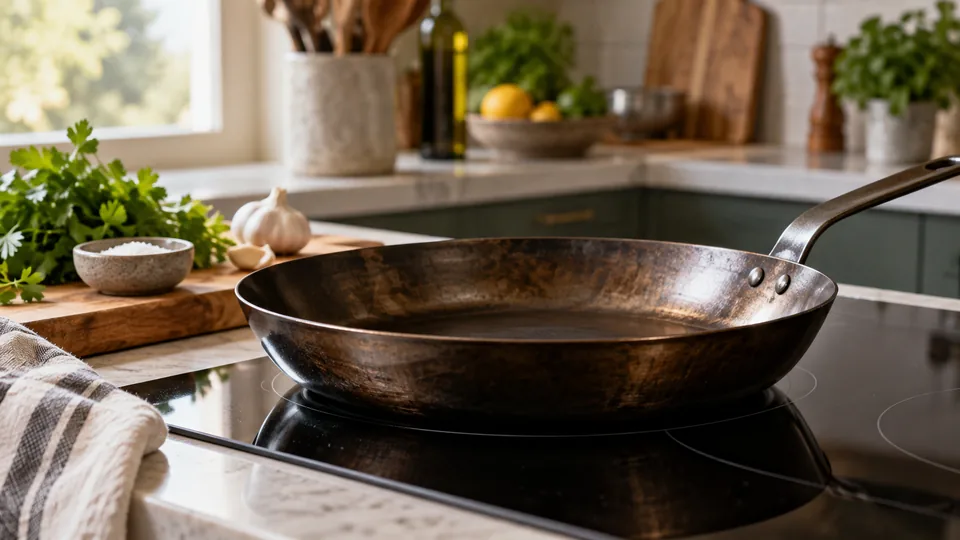
Induction cooking changes the way cookware heats, so material compatibility matters more than it does on gas or standard electric ranges. That is why the question can carbon steel be used on induction is worth answering clearly before you buy a pan or move one from another stove to an induction cooktop.
Carbon steel usually works very well on induction because it contains iron. Induction burners create a magnetic field that heats magnetic cookware directly, and carbon steel fits that requirement. In practice, a carbon steel skillet, frying pan, griddle, or many flat-bottom woks can heat quickly and perform efficiently on induction.
That said, compatibility is not the only issue. Shape, base flatness, pan thickness, burner size, and heating habits all affect results. A round-bottom wok may not work properly. A warped pan may make weak contact or heat unevenly. And because induction is very fast, preheating carbon steel too aggressively can damage seasoning or even distort a thinner pan. Understanding those details helps you get the advantages of carbon steel on induction without the usual frustration.
Quick Answer
Yes, carbon steel can be used on induction in most cases. Carbon steel is a ferromagnetic material, which means induction cooktops can detect it and generate heat through it. If your carbon steel pan has a reasonably flat bottom and matches the burner size well enough, it will usually heat effectively on an induction stove.
The main exceptions involve cookware shape and condition. Round-bottom carbon steel woks generally do not work on flat induction cooktops unless paired with a special induction setup designed for them. Pans that are badly warped may also perform poorly because they do not sit flat enough on the glass surface. Very small pans on oversized burners can also cause detection problems.
In everyday use, carbon steel is often a strong match for induction. It responds quickly, can reach high temperatures, and develops a naturally seasoned cooking surface over time. To get the best results, start with moderate heat instead of blasting the burner on high, let the pan preheat gradually, and avoid sliding rough cookware across the glass top.
Why Proper Use Matters
Induction and carbon steel are compatible, but the way induction delivers heat is different from gas flames or electric coils. The burner does not slowly warm a broad surface in the same way. Instead, it transfers energy directly into the pan, often very quickly. That speed is convenient, but it can also expose bad habits.
On gas, a cook might get away with placing an empty carbon steel pan over high heat for a while. On induction, that same approach can cause trouble faster. Thin carbon steel can overheat in the center, seasoning can scorch unevenly, and extreme temperature changes can contribute to warping.
Proper use matters because carbon steel rewards control. Once you learn how it behaves on induction, it can handle searing, sautéing, eggs, pancakes, stir-frying in the right pan shape, and high-heat browning very well. The goal is not just to know that it works, but to know how to make it work well.
How Induction Heating Works With Carbon Steel
Induction cooktops do not heat cookware by direct contact alone. They create an electromagnetic field under the glass surface. When a magnetic pan sits on the cooking zone, that field generates heat inside the cookware itself.
Carbon steel contains enough iron to interact with that magnetic field, so it is generally induction-compatible. This is the same basic reason cast iron works on induction. Stainless steel is more mixed because only some stainless alloys are magnetic, but carbon steel is usually straightforward in this regard.
That compatibility answers the basic question, but performance depends on more than magnetism. The pan also needs a shape that allows good contact with the cooktop. A flat-bottom pan gives induction the best chance to heat evenly and consistently.
Why magnetism matters
If a magnet sticks firmly to the bottom of a pan, that is a good sign the cookware will work on induction. Most carbon steel pans pass this test easily. The cooktop can recognize the pan and start transferring heat.
This simple magnet test is helpful if packaging is unclear, especially with older cookware or imported pieces that do not prominently mention induction compatibility.
Why flatness matters too
Induction cooktops work best when the cookware base sits close and level against the glass. If the bottom is rounded, bowed, or badly warped, the burner may not transfer heat as efficiently. In some cases the cooktop may even pulse, shut off, or fail to detect the pan properly.
That is one reason some carbon steel pans are excellent on induction while others are only acceptable, even though both are magnetic.
Can Carbon Steel Be Used on Induction for All Cookware Types?
Not every carbon steel cookware shape performs equally well on induction. The material itself is usually compatible, but the design of the cookware changes the result.
| Carbon steel cookware type | Usually works on induction? | Notes |
|---|---|---|
| Flat-bottom skillet or frying pan | Yes | Usually the easiest and most reliable option |
| Sauté pan | Yes | Good contact area and stable heating |
| Flat-bottom wok | Usually yes | Works better than round-bottom woks on flat cooktops |
| Round-bottom wok | Usually no | Not suitable for most flat induction ranges |
| Griddle | Sometimes | Depends on size, flatness, and burner coverage |
| Paella pan | Sometimes | Large diameter may exceed effective induction zone |
| Roasting pan | Sometimes | Works only if the base design suits the induction surface |
Skillets and frying pans
This is where carbon steel usually shines on induction. A flat-bottom skillet gives solid contact with the cooking zone, heats quickly, and responds well when you lower or raise power. For everyday stovetop use, this is the safest bet.
Woks
A carbon steel wok can work on induction if it has a flat bottom. A traditional round-bottom wok usually does not work properly on a flat induction cooktop because there is too little contact area and the shape does not align with the burner.
If you are specifically choosing cookware for this setup, a pan designed for induction makes life easier. Readers comparing shapes and bases may find carbon steel pans made for induction cooking useful to review.
Griddles and oversized pans
Large carbon steel griddles can be more complicated. Some induction cooktops heat only within clearly defined zones, so a large pan may heat strongly in the center but less at the edges. This does not make the griddle unusable, but it does change expectations.
Oversized pans are usually better on induction surfaces that offer bridge elements or larger cooking zones.
Benefits of Using Carbon Steel on Induction
Carbon steel has several qualities that pair well with induction cooking. Some of these are practical advantages you notice on day one, while others become clearer after repeated use.
Fast heating
Induction is known for speed, and carbon steel responds quickly. You do not need a long preheat for most tasks. For sautéing vegetables, frying eggs in a well-seasoned pan, or searing a cut of meat, the pan can be ready sooner than many cooks expect.
That quick response also means you need to pay closer attention. It is an advantage, but only if you use moderate power and avoid overheating an empty pan.
Good responsiveness
Carbon steel is often valued because it reacts faster than cast iron when heat levels change. On induction, that responsiveness can feel even more noticeable. Lower the setting, and the pan tends to calm down faster than heavier cookware.
This helps with foods that burn easily after the initial sear, such as fish, delicate vegetables, or eggs.
Strong searing ability
Once properly preheated, carbon steel can build high surface heat for browning. On induction, that can produce a very effective sear on steaks, burgers, chops, or mushrooms. The pan does not need to be thick and heavy like cast iron to create good color.
Lighter than cast iron
Many cooks want induction-compatible cookware that is easier to lift than cast iron. Carbon steel often fills that role. It still has some heft, but it is usually easier to maneuver, tilt, and wash.
Seasoned cooking surface
Carbon steel develops seasoning over time. This is a thin layer of oil that has bonded to the metal through heat, a process often called polymerization. With proper use, the surface becomes darker, smoother-feeling, and more naturally nonstick for many foods.
That seasoned surface can be especially useful on induction because the pan can go from cool to hot quickly. A good seasoning layer helps reduce sticking during that transition.
Potential Drawbacks of Carbon Steel on Induction
Carbon steel works on induction, but it is not perfect. A few challenges come up often, especially for cooks moving from gas.
Thin pans can heat unevenly
Some carbon steel pans are relatively thin. On induction, the heating pattern may concentrate strongly over the burner zone. That can create a hotter center before the rest of the pan catches up.
This is not always a deal-breaker, but it does mean technique matters. Preheating gradually and giving the pan a little time helps distribute heat better.
Warping risk
Warping is one of the biggest concerns with carbon steel on induction. Rapid, intense heating can stress the metal, especially if the pan is thin or if it is heated empty at full power. A warped pan may spin, rock, or lose good contact with the cooktop.
This risk is higher on induction than many people expect because the burner can heat the pan very aggressively.
Seasoning can become patchy
Seasoning on carbon steel often looks uneven anyway, especially early on. Induction can exaggerate this because the strongest heat may sit in a defined circular zone. You may see darker patches, lighter rings, or center discoloration after repeated use.
That does not always mean anything is wrong. It is often cosmetic. But if the pan is repeatedly overheated, the seasoning can become brittle, flake, or burn off in spots.
Not ideal for every wok style
Traditional wok cooking often depends on a round-bottom shape and flame climbing the sides. A flat induction surface cannot replicate that experience fully. Flat-bottom carbon steel woks can still be useful, but the cooking dynamic is different.
Glass cooktop concerns
Carbon steel is not usually as rough as bare cast iron, but it can still scratch a glass induction top if dragged carelessly. Smooth, deliberate movement is better than sliding the pan around.
Best Practices for Using Carbon Steel on Induction
Good technique solves most of the problems people blame on the pan. These habits make carbon steel easier to manage on induction.
Start at medium or medium-low heat
The biggest mistake is treating induction like a weaker electric coil and immediately turning it to maximum. Carbon steel usually does not need that much power for preheating. Starting around medium allows the metal to warm more evenly.
Once the pan has preheated, you can adjust upward if needed for searing.
Preheat gradually
Give the pan a minute or two to warm instead of blasting it empty on high. This reduces the chance of hot spots, preserves seasoning better, and lowers the risk of warping.
If the handle becomes hot unusually fast or oil starts smoking almost immediately, the preheat is probably too aggressive.
Match pan size to burner size
A small pan on an oversized induction zone can sometimes behave unpredictably, and a very large pan on a small zone may heat mainly in the center. Better sizing improves performance and helps maintain a more even cooking surface.
Use oil after a short preheat
For most cooking, let the pan warm briefly, then add oil. On a properly preheated carbon steel pan, the oil should loosen and move freely but should not smoke violently right away.
This is especially important for eggs, fish, and pancakes, where temperature control matters more than sheer heat.
Avoid sudden temperature shocks
Do not take a ripping hot carbon steel pan and run it under cold water. That can stress the metal and contribute to warping. Let it cool somewhat first, then clean it.
Lift more, drag less
If you need to reposition the pan, lift it when possible instead of grinding it across the glass surface. This helps protect both the cooktop and the cookware bottom.
How to Check if Your Carbon Steel Pan Will Work on Induction
You do not need a complicated test. A few quick checks usually tell you what to expect.
- Use a magnet. If a magnet sticks firmly to the base, the pan is likely induction-compatible.
- Check the bottom shape. A flat-bottom pan works better than a rounded one.
- Look for warping. Set the pan on a flat counter or cooktop and see if it rocks.
- Check the diameter. Make sure the pan is not dramatically smaller or larger than the induction zone.
- Read the manufacturer guidance. Some pans are labeled as induction-ready, and some specify burner limitations.
If your pan passes the magnet test but performs poorly, the issue is often not basic compatibility. It is usually flatness, thickness, or size mismatch.
Common Mistakes With Carbon Steel on Induction
Several problems show up repeatedly with this combination. Most are avoidable.
Heating an empty pan on high power
This is probably the most common error. Because induction heats quickly, the center of the pan can get far hotter than expected before the rest of the metal catches up. That can scorch seasoning, create sticking problems later, or warp thinner pans.
Assuming more power always means better searing
Strong searing comes from proper preheat and dry food surface, not just maximum burner output. Too much heat can burn oil before the food makes proper contact.
Using a round-bottom wok on a flat induction cooktop
This setup usually disappoints. Even if the metal is magnetic, the shape prevents effective heating. A flat-bottom wok is the better choice for most home induction ranges.
Expecting perfectly even coloring in seasoning
Carbon steel seasoning often looks blotchy, especially at first. Induction can produce visible rings or darker central areas. Uneven color does not necessarily mean poor performance.
Leaving moisture on the pan after cleaning
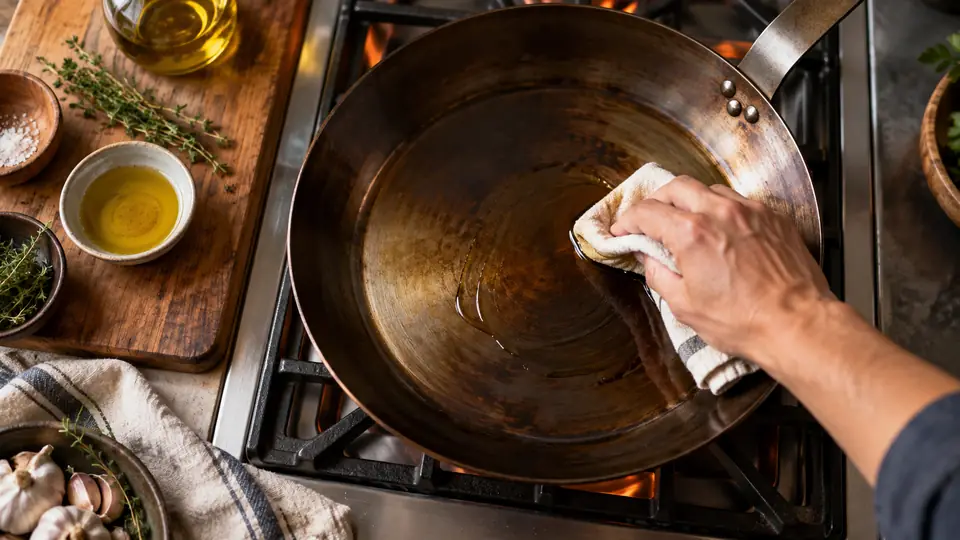
Carbon steel can rust if it stays wet. After washing, dry it fully and apply a very light film of oil if needed. This matters on any stove type, but it is still part of long-term success with the pan.
Carbon Steel vs Other Induction-Compatible Cookware
Induction users often compare carbon steel with cast iron, stainless steel, and nonstick cookware. Each behaves differently.
| Cookware material | Works on induction? | Heat response | Maintenance | Best for |
|---|---|---|---|---|
| Carbon steel | Usually yes | Fast and responsive | Needs seasoning and drying | Searing, sautéing, eggs after seasoning |
| Cast iron | Yes | Slower, retains heat longer | Needs seasoning and drying | Heavy searing, baking, heat retention |
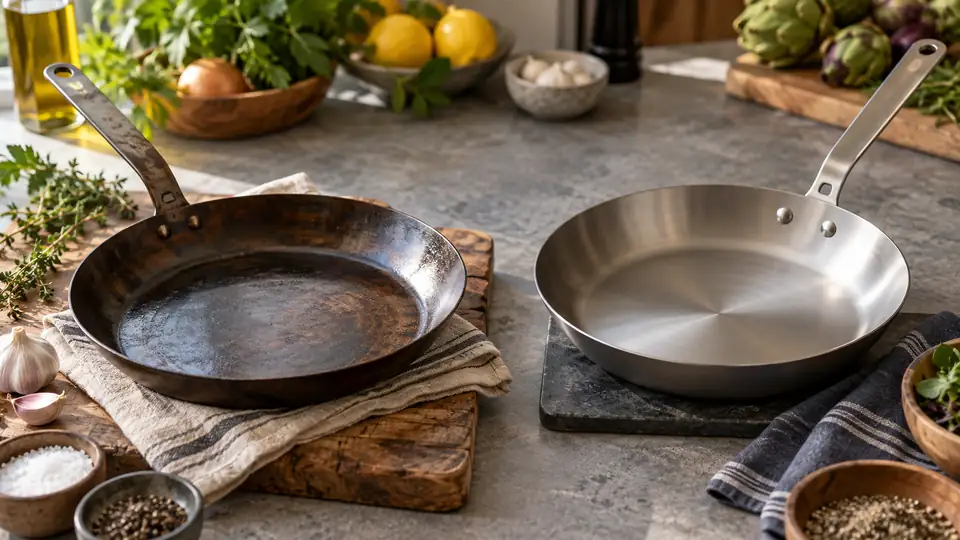
| Magnetic stainless steel | Sometimes yes | Varies by construction | Low maintenance | Sauces, acidic foods, general use |
| Traditional aluminum nonstick | Usually no, unless induction base added | Quick | Easy but coating wears over time | Low-stick convenience |
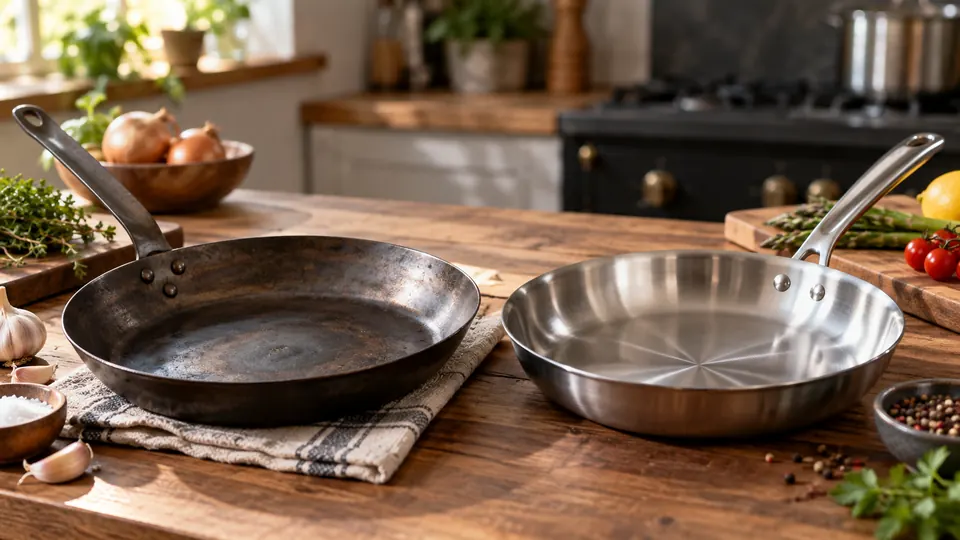
Compared with cast iron
Carbon steel is usually lighter and more responsive. Cast iron holds heat longer and can feel more stable for deep searing, but it is heavier and slower to adjust. On induction, both work, but carbon steel often feels more nimble.
Compared with stainless steel
Stainless steel is easier to maintain and handles acidic ingredients without concern for seasoning. Carbon steel offers a more naturally low-stick surface once seasoned, but it requires more care. For induction, both can be useful, just in different roles.
Compared with nonstick
Nonstick is convenient for delicate foods, but coatings wear with time and generally should not be pushed to very high heat. Carbon steel takes more effort upfront, yet it tolerates high heat better and can last much longer if maintained properly.
Seasoning and Induction Performance
Seasoning is central to how carbon steel behaves, especially for sticking and cleanup. A well-seasoned pan on induction usually performs better than a freshly stripped or poorly maintained one.
How seasoning helps
Seasoning forms when very thin layers of oil bond to the metal under heat. Over time, this creates a darker protective surface that helps resist rust and improves food release. It is not the same as a factory nonstick coating, but it can become quite effective with regular cooking.
Why induction can affect seasoning appearance
Because induction often heats in a concentrated zone, seasoning may darken more in the center than near the edges. That is common. A visually uneven pan can still cook very well.
How to protect seasoning on induction
- Preheat gradually
- Use thin layers of oil
- Avoid letting oil smoke heavily for long periods
- Cook with enough fat for the food you are making
- Dry the pan fully after washing
If the surface becomes sticky, the seasoning may have been applied too thickly. If it flakes, it was likely overheated or poorly bonded.
Who Should Use Carbon Steel on Induction
Carbon steel is a good fit for cooks who want a durable pan that can handle high heat and improve with use. It is especially appealing if you like searing meat, browning vegetables, making pan-fried potatoes, or building a seasoned surface over time.
It also suits cooks who want something lighter than cast iron but still compatible with induction. A carbon steel skillet can cover a lot of daily stovetop cooking once you learn its heat behavior.
Good candidates for carbon steel on induction
- Cooks who like high-heat browning
- People comfortable with seasoning and basic maintenance
- Anyone wanting a lighter alternative to cast iron
- Home cooks who prefer long-lasting cookware over disposable coatings
Who might prefer another material
- Cooks who want zero-maintenance cleanup
- People who regularly simmer acidic sauces for long periods
- Anyone unwilling to preheat carefully on induction
- Users who want traditional round-bottom wok performance on a flat stove
Frequently Asked Questions
Does all carbon steel work on induction?
Most carbon steel cookware works on induction because it is magnetic. The main exceptions are pieces with unsuitable shapes, such as round-bottom woks, or pans with enough warping that they do not sit properly on the cooktop.
Can a carbon steel wok be used on induction?
A flat-bottom carbon steel wok usually can. A round-bottom wok usually cannot on a standard flat induction cooktop. Even with a flat-bottom wok, the cooking feel is different from gas because the heat does not climb the sides in the same way.
Why did my carbon steel pan warp on induction?
Warping usually happens from heating too fast or too aggressively, especially with an empty pan on high power. Thin carbon steel is more vulnerable. Gradual preheating and moderate starting heat reduce the risk.
Can carbon steel scratch an induction cooktop?
Yes, it can if dragged roughly across the glass. The risk is lower if the pan bottom is smooth and you lift it instead of sliding it. Keeping the cooktop and pan bottom clean also helps prevent scratches.
Is carbon steel better than cast iron for induction?
Not universally. Carbon steel is usually lighter and more responsive, while cast iron retains heat longer and can feel steadier for some tasks. If you want faster response and easier handling, carbon steel often has the edge. If you want maximum heat retention, cast iron may suit you better.
Final Thoughts
Can carbon steel be used on induction? Yes, and in many kitchens it is a very practical combination. Carbon steel is usually magnetic enough for induction, heats quickly, and offers the kind of responsiveness that makes everyday cooking easier once you adjust your technique.
The main things to watch are pan shape, flatness, and heat management. A flat-bottom carbon steel skillet or sauté pan usually performs well. A round-bottom wok usually does not. And because induction delivers heat fast, gradual preheating matters more than many people expect.
If you want induction-compatible cookware that can sear hard, develop seasoning over time, and avoid the weight of cast iron, carbon steel is often a strong choice. Use moderate heat, keep the pan dry, and let performance matter more than perfectly even seasoning color. That approach usually leads to the best results.

Leave a Reply