
Carbon steel cookware has a reputation for high heat cooking, fast searing, and long service life. It also raises a practical health question. Are carbon steel pans healthy to cook with every day, or do they introduce risks that people should know about first?
For most home cooks, carbon steel pans are a healthy cookware option when they are made well and used properly. The material itself is primarily iron and carbon, with no synthetic nonstick coating on traditional bare carbon steel pans. That means there is no coating to flake off under normal use, and the pan can handle very high temperatures that would damage many coated alternatives.
That said, healthy cookware is not only about the base metal. It also depends on seasoning, cleaning habits, rust prevention, the quality of the pan, and how acidic foods are handled. A carbon steel pan that is well seasoned and kept dry is generally safe and reliable. A pan with rust, poorly bonded coatings, or harsh chemical residue from improper cleaning deserves more caution.
Quick Answer
Yes, carbon steel pans are healthy for most people when used correctly. Traditional carbon steel pans are made from iron and carbon and usually do not contain synthetic nonstick coatings like PTFE. That makes them a strong option for cooks who want cookware that can handle high heat without coating breakdown.
Carbon steel can also develop a natural seasoned surface from oil polymerization, which reduces sticking over time. In normal cooking, small amounts of iron may transfer into food, especially with acidic ingredients. For many people, that is not harmful and may even slightly increase dietary iron intake. However, people with iron overload conditions should ask a healthcare professional before relying heavily on iron cookware.
The main health concerns are usually indirect rather than inherent to the material itself. Problems come from rust left untreated, overheating oil until it smokes excessively, cooking highly acidic foods for long periods in a weak seasoning layer, or using a low-quality pan with an unknown coating or finish. If you choose a plain, well-made carbon steel pan and maintain it properly, it is generally considered a healthy cookware choice.
What Makes a Pan “Healthy” in the First Place?
To judge whether carbon steel pans are healthy, it helps to define what healthy cookware means. Most people are really asking a few separate questions at once.
- Does the pan release harmful substances into food?
- Can it be used safely at normal and high cooking temperatures?
- Is the cooking surface stable over time?
- Does it require coatings or treatments that raise concerns?
- Can it be cleaned and maintained without leaving problematic residue?
A pan does not have to be perfect in every category to be a sensible choice. It needs to be stable, predictable, and practical in everyday cooking. Carbon steel generally performs well by that standard, especially compared with cookware that depends on delicate synthetic coatings.
What Carbon Steel Pans Are Made Of
Traditional carbon steel pans are made mostly from iron with a small amount of carbon. The carbon content is higher than in pure iron but lower than in cast iron. This gives the pan strength and responsiveness while keeping it thinner and lighter than most cast iron cookware.
From a health perspective, this simple composition matters. Plain carbon steel does not rely on a built-in chemical nonstick layer. Instead, it becomes more naturally nonstick over time through seasoning.
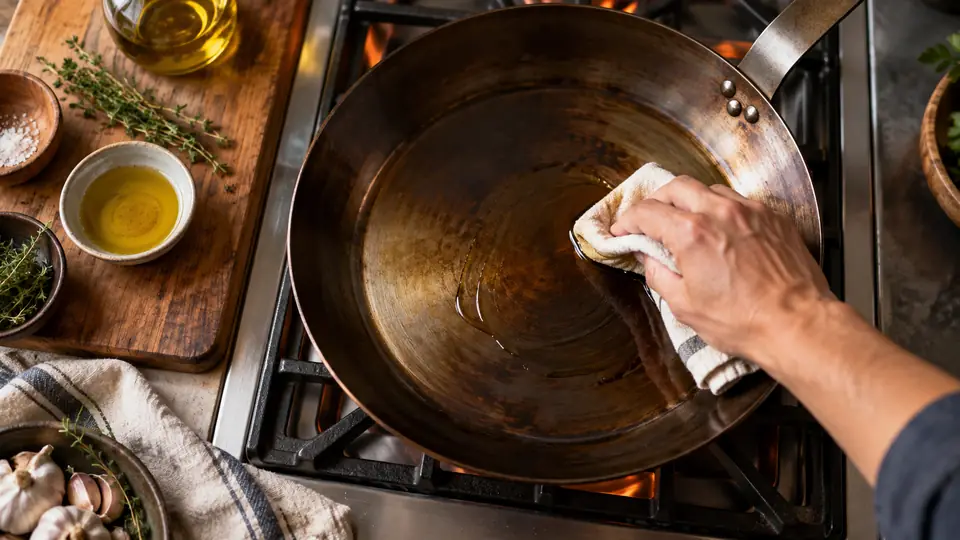
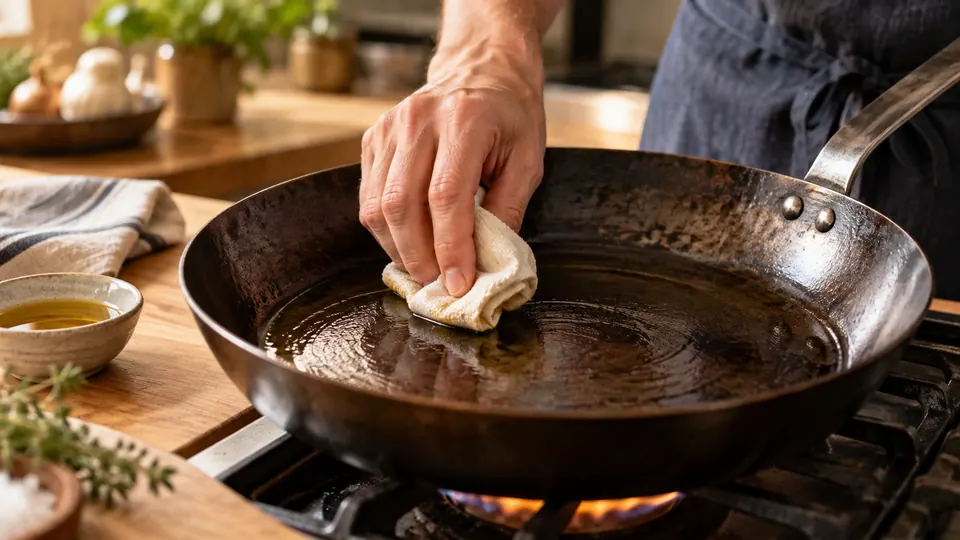
Seasoning happens when very thin layers of oil are heated until they bond to the metal surface. This process is called polymerization. The result is a darkened cooking surface that helps reduce sticking and provides some protection against rust.
Not every pan sold as carbon steel is identical, though. Some are preseasoned, some are wax coated for shipping, and some may include special surface treatments such as nitriding. Those differences do not automatically make a pan unhealthy, but they do affect how the pan should be prepared before cooking.
Are Carbon Steel Pans Healthy Compared With Other Cookware?
| Cookware Type | Typical Cooking Surface | High Heat Tolerance | Main Health Consideration | Overall Health Profile |
|---|---|---|---|---|
| Carbon steel | Seasoned iron surface | Excellent | Iron transfer, rust if poorly maintained | Generally healthy when maintained properly |
| Cast iron | Seasoned iron surface | Excellent | Iron transfer, rust if neglected | Generally healthy when maintained properly |
| Stainless steel | Bare metal alloy surface | Excellent | Possible metal leaching in certain conditions | Generally healthy for most users |
| PTFE nonstick | Synthetic nonstick coating | Moderate | Coating wear and overheating concerns | Can be safe in normal use, less ideal for very high heat |
| Ceramic nonstick | Sol-gel ceramic-style coating | Moderate to high | Performance decline over time | Often fine initially, depends heavily on coating condition |
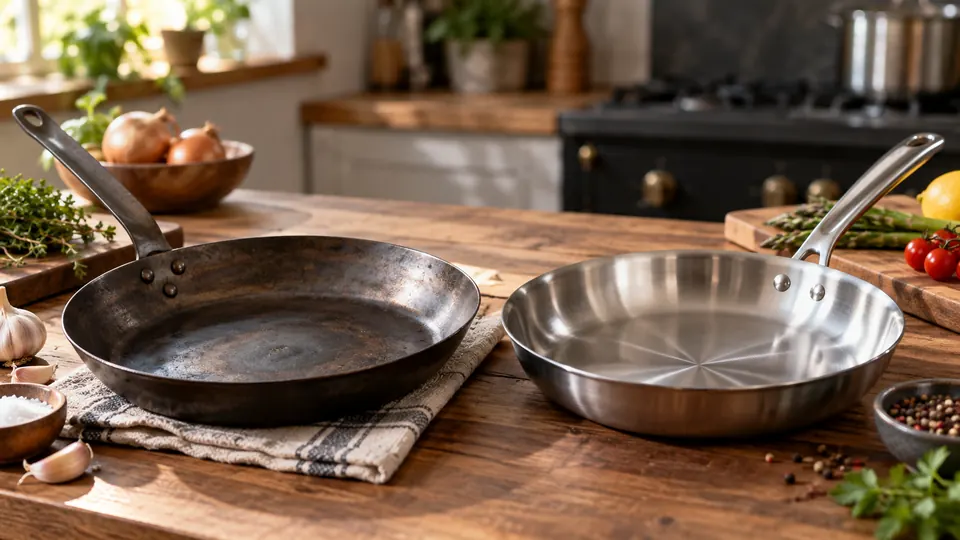
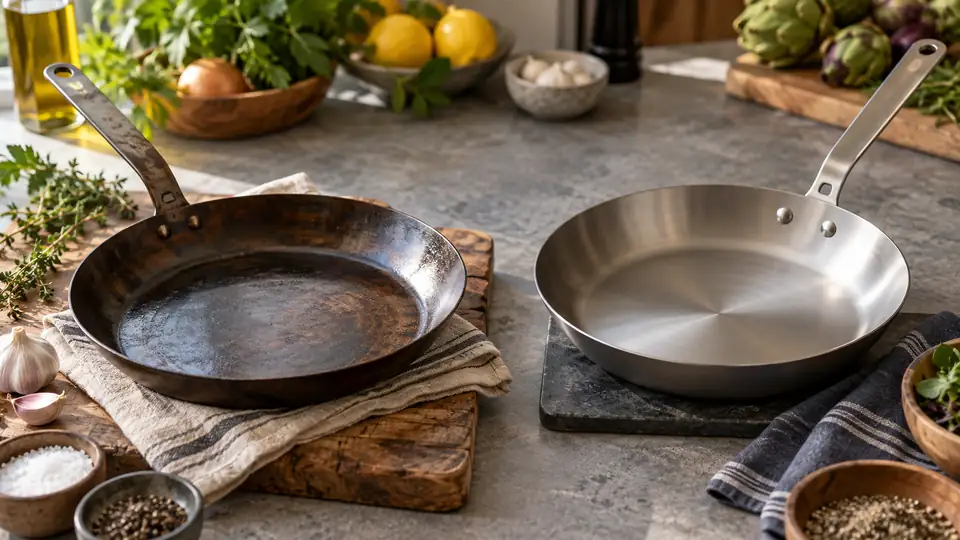
Carbon steel lands in a favorable spot for people who prefer simple materials and high heat cooking. It shares many of the same strengths as cast iron, but it is usually lighter and more responsive. It also avoids the short service life that often comes with coated nonstick pans.
Why Many People Consider Carbon Steel Pans a Healthy Choice
No Traditional Synthetic Nonstick Coating
One of the biggest reasons carbon steel appeals to health-conscious cooks is that bare carbon steel pans typically do not have a PTFE-style coating. Instead of relying on a factory-applied slick layer, they use seasoning built from oil and heat.
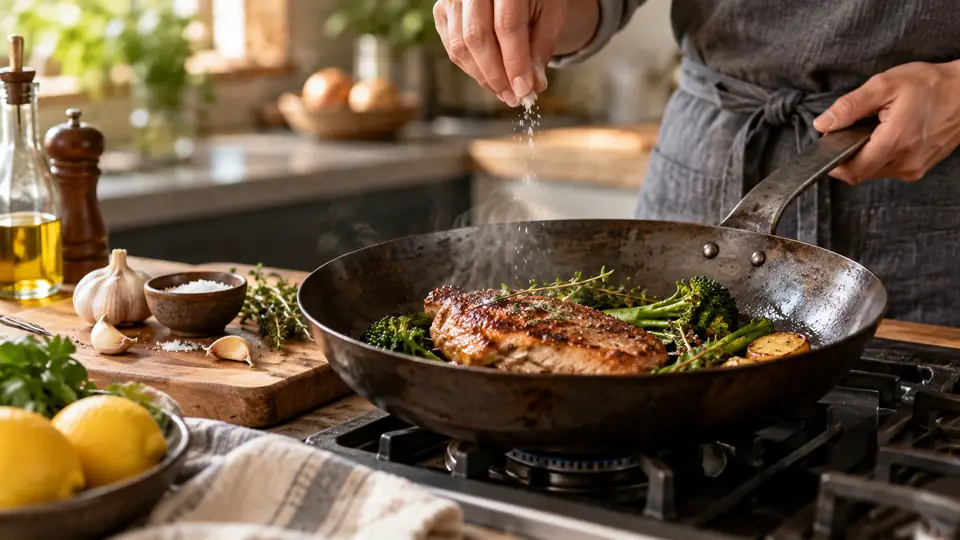
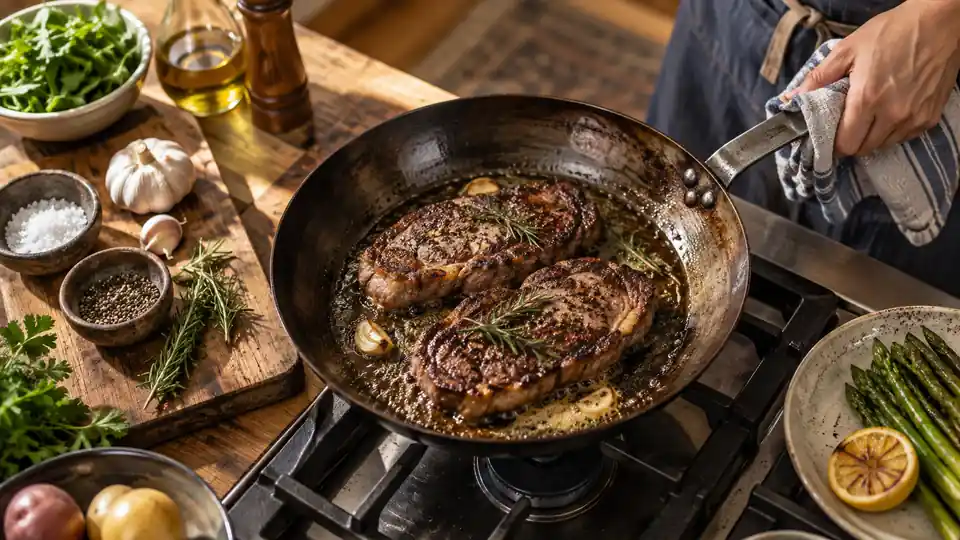
This matters most for people who cook over high heat. Searing steaks, charring vegetables, and stir-frying are all situations where carbon steel performs well without depending on a delicate nonstick finish.
Strong High Heat Performance
Carbon steel heats quickly and tolerates temperatures that would be too aggressive for many coated pans. A healthy pan should remain stable during the way people actually cook, not just under gentle conditions.
High heat itself is not automatically healthier, but a pan that can safely handle it gives you more control. That is useful for browning food efficiently instead of steaming it in overcrowded or underheated cookware.
A Naturally Built Cooking Surface
The seasoned layer on carbon steel is created through repeated use and thin layers of oil. Over time, this surface becomes darker, smoother, and more resistant to sticking. It is not the same as a sprayed-on factory coating.
Because seasoning is part of normal maintenance, it can also be renewed. If the surface gets damaged, stripped, or uneven, the pan can usually be restored instead of discarded.
Long Service Life
A healthy cookware choice is not just about what happens during one meal. It is also about whether the pan stays functional for years without breaking down. Carbon steel pans are known for longevity, especially if they are dried thoroughly and protected from rust.
That long lifespan means cooks are less likely to cycle through worn-out pans with deteriorating surfaces.
Potential Health Concerns to Understand
Carbon steel is generally a healthy option, but it is not completely free from issues. Most concerns are manageable, and none are especially mysterious once you understand how the material behaves.
Iron Transfer Into Food
Because carbon steel is iron-based, small amounts of iron can move into food during cooking. This tends to happen more with wet or acidic dishes, especially if the seasoning is new or weak.
For many people, this is not a problem. In some cases, extra iron intake from cookware is seen as a minor benefit. However, it is not ideal for everyone.
People with conditions related to excess iron storage, such as hemochromatosis, should be more careful with frequent use of iron cookware. Carbon steel is not automatically off limits, but medical guidance is sensible in that situation.
Acidic Foods Can Affect the Seasoning
Tomato sauce, wine reductions, vinegar-based dishes, and citrus-heavy recipes can strip or weaken seasoning, especially on a newer pan. If the seasoning comes off, the food may take on a metallic taste and the bare steel becomes more exposed.
This is more of a cooking surface issue than a toxic safety issue, but it still matters. A damaged seasoning layer can lead to rust, sticking, and off flavors if the pan is not restored.
Short acidic cooking is often fine in a well-seasoned pan. Long simmering of very acidic foods is better left to stainless steel or enameled cookware.
Rust Is Not Something to Ignore
Rust is one of the most common maintenance issues with carbon steel. It usually develops when the pan is left damp, air-dried poorly, or stored before all moisture has evaporated.
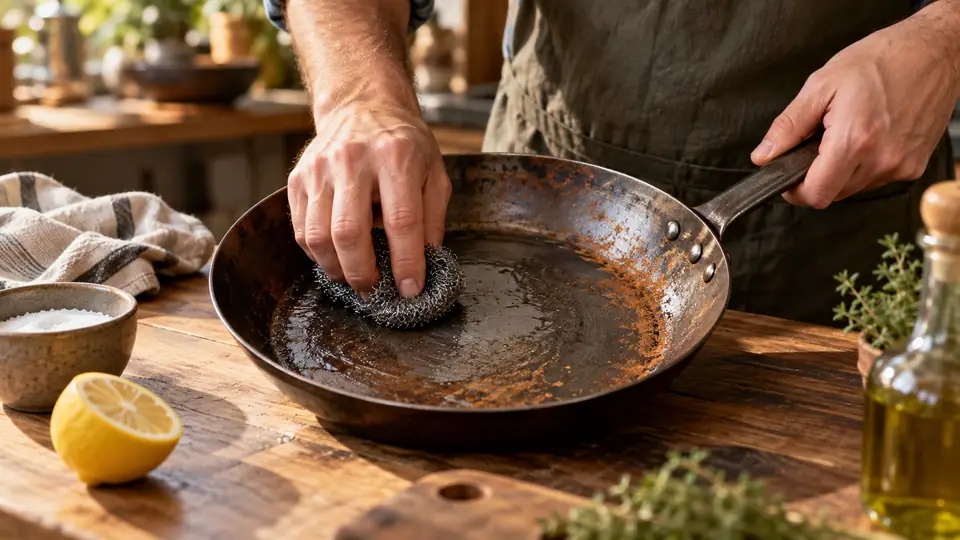
A little surface rust does not mean the pan is ruined, but it should be removed before cooking. Rust is a sign that the protective seasoning failed or that moisture remained on the metal. A rusty cooking surface is not something you want in contact with everyday meals.
If rust appears, the solution is usually straightforward. Scrub the rust away, dry the pan completely, and reseason it. For a deeper guide, a preseasoned option can shorten the learning curve for new owners, especially if you are comparing best pre-seasoned carbon steel pans.
Smoke From Overheated Oil
Carbon steel is often used for high heat cooking, but that does not mean oil should be heated carelessly. If oil is pushed far past its smoke point, it begins to break down and produce unpleasant smoke and compounds you do not want to inhale regularly.
This is not a carbon steel problem alone. It applies to any pan. Still, because carbon steel heats quickly and is often used aggressively, it is easier to overheat the surface if you walk away from an empty pan or add too little fat.
Low-Quality Coatings or Unknown Finishes
Plain carbon steel is simple. The concern starts when a pan includes an unknown nonstick finish, decorative coating, or poorly documented treatment. That is why it is worth checking whether the pan is bare carbon steel, wax-protected for shipping, preseasoned with oil, or treated in some other way.
Reputable makers usually explain this clearly. If the pan arrives with a protective layer, wash and prepare it according to the manufacturer’s instructions before the first use.
Seasoning and Health: What You Should Know
What Seasoning Actually Is
Seasoning is a thin film of oil that has bonded to the metal through heat. It is not the same as greasy residue. Good seasoning feels dry or nearly dry to the touch, not sticky.
This distinction matters for health and cooking performance. Sticky residue often means too much oil was used or the oil did not fully polymerize. That can lead to uneven cooking, unpleasant smells, and a surface that attracts dust or rancid fat during storage.
Is the Seasoned Layer Safe?
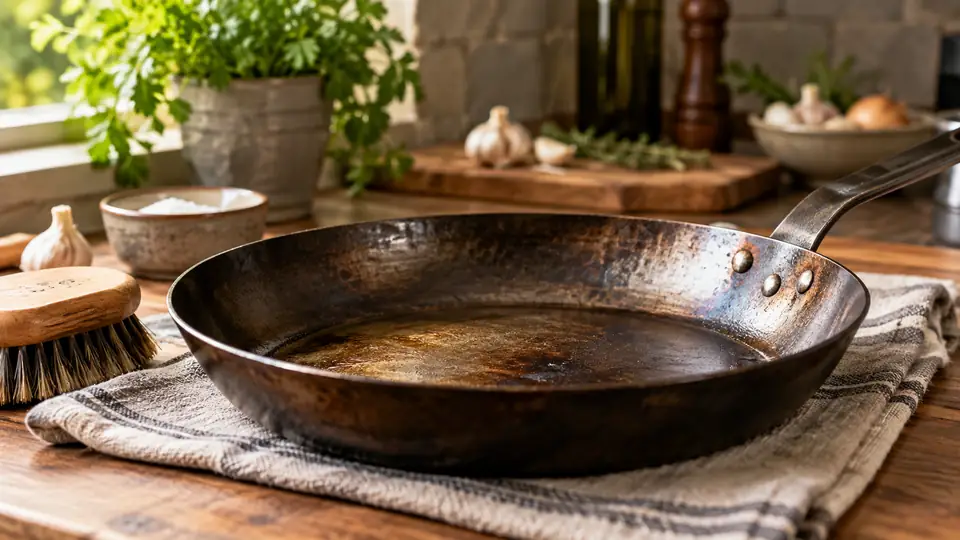
In normal use, a properly built seasoning layer is considered safe. It is made from cooking oil transformed by heat into a hard, bonded film. Over time, this layer can darken and look blotchy. That appearance is usually normal.
What matters is whether the surface is stable and clean. Flaking, gummy buildup, or thick carbonized residue is different from smooth seasoning. If a pan develops rough black crusts, that is usually burnt food and excess oil, not healthy seasoning. It should be scrubbed back and rebuilt.
Best Practices for a Healthy Seasoned Surface
- Use very thin layers of oil when seasoning.
- Heat the pan enough to bond the oil, but do not leave it smoking heavily for long periods.
- Clean away burnt food rather than seasoning over it.
- Dry the pan thoroughly after washing.
- Apply only a light protective film of oil before storage if needed.
How to Use Carbon Steel Pans in a Healthy Way
Preheat With Control
Carbon steel responds fairly quickly to heat, especially compared with cast iron. That is useful, but it also means the pan can get hotter than expected if preheated unattended.
Moderate preheating is usually enough for eggs, vegetables, fish, and most sautéing. Save very high heat for tasks that actually need it, such as searing or stir-frying.
Choose the Right Oil
Use an oil suited to your cooking temperature. Neutral oils with higher smoke points are often better for searing and general seasoning than delicate oils that burn quickly.
Burnt oil is not a sign of good cooking. If the pan is producing a lot of harsh smoke, reduce the heat and let the surface come back under control.
Avoid Long Acidic Simmers
Short bursts of acidity are usually manageable in a seasoned pan. A quick pan sauce with a splash of vinegar or lemon often causes no serious problem, especially on a mature seasoning layer.
Long simmering tomato sauces or braises with wine and vinegar are different. These dishes can strip seasoning and expose more bare metal. For those meals, stainless steel or enameled cookware is usually the better tool.
Keep the Pan Clean, But Not Over-Stripped
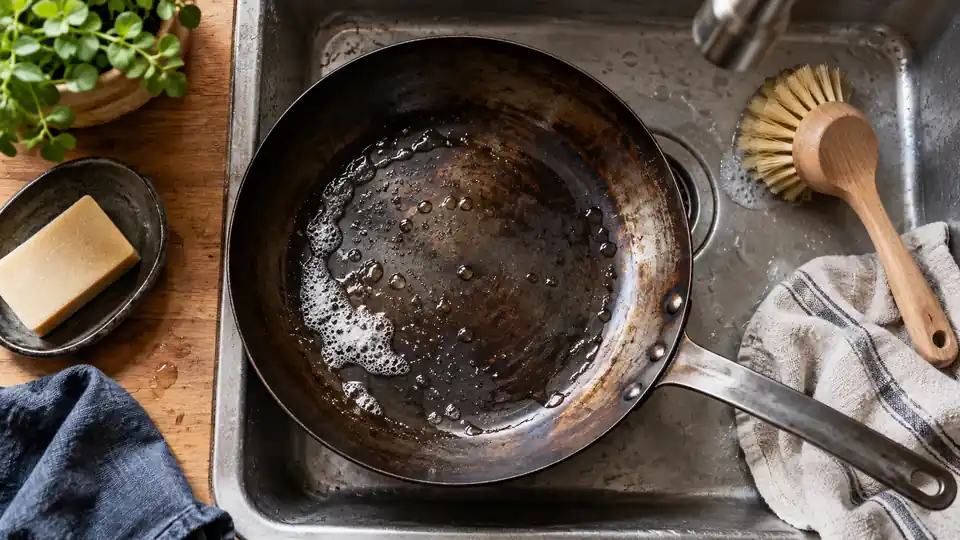
Healthy use does not mean babying the pan so much that old grease and burnt bits build up. After cooking, remove food residue with hot water, a soft scrubber, and a chain mail scrubber or brush if needed.
A small amount of mild soap is generally fine on modern seasoning if needed. The real enemy is prolonged soaking, dishwasher use, and storing the pan damp.
Common Misunderstandings About Carbon Steel and Health
“Black Color Means the Pan Is Dirty”
A dark brown or black patina is normal on seasoned carbon steel. This is part of the pan’s development. Color alone does not mean the surface is unsanitary.
What you want to watch for is texture. A smooth, dark surface is usually fine. A sticky film or raised flaky patches suggest buildup that should be cleaned.
“Rust Means the Pan Is Unsafe Forever”
Rust needs attention, but it does not usually ruin the pan. Surface rust can often be scrubbed off completely, followed by drying and reseasoning. Carbon steel is more restorable than many coated pans, which is one reason some cooks prefer it.
“More Seasoning Is Always Better”
Heavy layers of oil do not create better seasoning. They often create a tacky, uneven coating that traps residue and can smell off during cooking. Thin, repeated layers work better than thick ones.
“Carbon Steel Is Naturally Nonstick Like a Coated Pan”
Carbon steel can become fairly slick, but it is not identical to a fresh synthetic nonstick pan. It rewards technique. Proper preheating, enough cooking fat, and a stable seasoning layer make a big difference.
For health, this is worth mentioning because unrealistic expectations cause people to over-oil, overheat, or season incorrectly. Carbon steel works best when treated as a durable, high-performance cooking surface, not as a maintenance-free coating.
Who Should Feel Good About Using Carbon Steel?
Carbon steel is a sensible healthy cookware choice for people who:
- Prefer cookware without traditional synthetic nonstick coatings
- Cook at medium-high to high heat regularly
- Want a pan that can last for years with proper care
- Do not mind basic maintenance such as drying and occasional reseasoning
- Mostly cook eggs, vegetables, meats, potatoes, pancakes, stir-fries, and sautés rather than long acidic sauces
It is especially appealing for cooks who want a simple material and are comfortable learning a pan’s behavior over time.
Who Might Prefer a Different Pan?
Carbon steel is not automatically the best fit for every kitchen. Another cookware type may suit you better if you:
- Frequently cook tomato sauces, shakshuka, wine braises, or vinegar-heavy dishes for long periods
- Want a pan that can be left wet in the sink without damage
- Do not want to maintain seasoning
- Need the slickest possible surface for delicate foods with minimal technique
- Have a medical reason to limit iron exposure from cookware
In those cases, stainless steel, enameled cast iron, or another material may be more practical. Healthy cookware is also about choosing the right tool for your own habits.
Practical Signs a Carbon Steel Pan Is Being Used Safely
| Good Sign | What It Usually Means |
|---|---|
| Surface is dark but mostly smooth | Seasoning is developing normally |
| No orange spots after washing | Pan is being dried thoroughly |
| Only light smoke during high heat cooking | Oil and temperature are under control |
| Food releases better over time | Seasoning and technique are improving |
| No sticky residue in storage | Oil layers are thin and stable |
Frequently Asked Questions
Do carbon steel pans release toxins?
Traditional bare carbon steel pans are not known for releasing synthetic coating-related toxins because they usually do not have that type of coating. The main material is iron-based steel. The larger concerns are rust, poor maintenance, or overheating oil, not inherent toxicity from the pan itself.
Is it safe to cook eggs and everyday meals in carbon steel?
Yes. Carbon steel is widely used for everyday cooking, including eggs, vegetables, meats, and pancakes. A well-seasoned pan and proper preheating make these foods much easier to cook cleanly.
Can carbon steel add too much iron to food?
It can add some iron, especially with acidic or wet foods. For most people, that is not considered harmful. People with iron overload disorders should talk with a healthcare professional if they plan to use iron-based cookware frequently.
Is rust on a carbon steel pan dangerous?
Rust should be removed before cooking, but it does not usually mean the pan is permanently ruined. Surface rust can often be scrubbed off, followed by thorough drying and reseasoning. The key is not to keep cooking on a rusty surface without fixing it.
Are preseasoned carbon steel pans healthy?
Usually yes, provided the pan comes from a reputable maker that clearly states how it is seasoned. Preseasoning is generally just an initial layer of oil-based seasoning. It still needs normal maintenance, and it is worth washing off any shipping residue or wax according to the manufacturer’s instructions before use.
Can you use soap on a carbon steel pan safely?
Yes, a small amount of mild soap is generally fine if needed, especially on established seasoning. The bigger problems are soaking the pan, putting it in the dishwasher, or failing to dry it thoroughly afterward.
Final Thoughts
Are carbon steel pans healthy? For most kitchens, yes. A plain carbon steel pan is a healthy cookware option because it is made from simple materials, handles high heat well, and does not depend on a traditional synthetic nonstick coating. It can serve for years, sometimes decades, if it is kept dry, seasoned properly, and used with reasonable care.
The tradeoff is maintenance. Carbon steel is not a set-it-and-forget-it material. You need to manage seasoning, prevent rust, and be realistic about acidic cooking. Those are manageable habits, not major barriers, but they do matter.
If you want durable cookware with a straightforward cooking surface and you do not mind basic upkeep, carbon steel is a strong and generally healthy choice. If you prefer zero maintenance or cook long acidic dishes often, another pan may fit your routine better.

Leave a Reply