

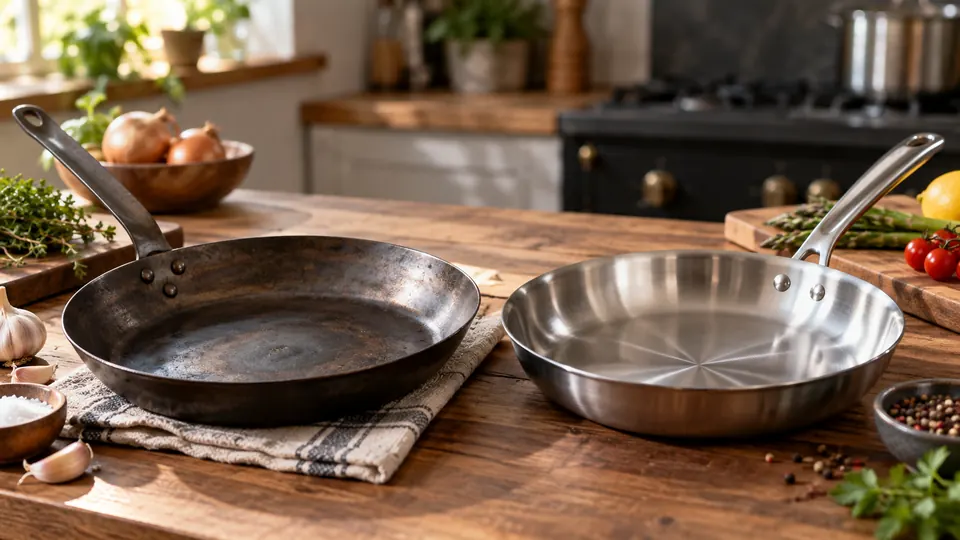
Carbon steel and stainless steel often end up compared because they fill similar roles in the kitchen while behaving very differently on the stove. Both can sear, sauté, fry, and handle high heat, but the experience of cooking with them is not the same. One develops seasoning and asks for a little maintenance. The other stays low-maintenance and resists rust, but usually needs better technique to keep food from sticking.
That difference matters more than it first appears. A pan that excels at browning steaks may not be the one you want for simmering tomato sauce. A skillet that tolerates neglect may still frustrate you if you want easy egg release. Choosing between the two is less about which material is “better” in general and more about which one matches your cooking habits, stove, and tolerance for upkeep.
In a practical carbon steel vs stainless steel comparison, carbon steel usually appeals to cooks who want strong searing performance, lighter weight than cast iron, and a seasoning-based cooking surface that improves with use. Stainless steel suits cooks who want durability, easy cleaning, sauce-friendly cooking, and minimal maintenance. The details below make that choice much clearer.
Quick Answer
In the carbon steel vs stainless steel debate, carbon steel is usually better for high-heat searing, fast response, and a naturally slick seasoned surface, while stainless steel is usually better for low-maintenance cooking, acidic foods, and everyday versatility.
Carbon steel pans are made mostly of iron with a small amount of carbon. They heat quickly, can build a dark seasoned layer over time, and are especially useful for eggs, steaks, fried rice, and other foods that benefit from a semi-nonstick surface and strong browning. The tradeoff is that carbon steel can rust, lose seasoning, and needs drying and light oiling after washing.
Stainless steel pans do not need seasoning and do not rust easily. They handle acidic ingredients such as wine, tomatoes, and lemon juice far better than carbon steel. They are also easier to maintain long term. The tradeoff is that stainless steel is more prone to sticking if preheating and fat use are not handled well.
If you want performance and do not mind care, choose carbon steel. If you want convenience and flexibility with fewer maintenance concerns, choose stainless steel. Many experienced cooks keep both because they complement each other rather than fully replace each other.
Carbon Steel vs Stainless Steel at a Glance
| Category | Carbon Steel | Stainless Steel |
|---|---|---|
| Base material | Iron with a small amount of carbon | Steel alloy with chromium, often with aluminum or copper core in cookware |
| Seasoning required | Yes | No |
| Rust resistance | Low without proper care | High |
| Stick resistance | Improves with seasoning | Technique-dependent |
| Acidic food compatibility | Limited, especially during long cooks | Excellent |
| High-heat searing | Excellent | Very good to excellent, depending on pan construction |
| Heat responsiveness | Fast | Varies, but quality clad pans are responsive |
| Maintenance | Moderate | Low |
| Cleaning | Gentle cleaning, dry immediately | More forgiving, can handle soaking better |
| Weight | Usually lighter than cast iron, often similar to or slightly lighter than comparable stainless pans | Varies by ply and thickness, often moderate to heavy |
| Best uses | Eggs, steaks, burgers, stir-fry, potatoes | Pan sauces, pasta sauces, braising, acidic dishes, general cooking |
What Is Carbon Steel?
Carbon steel cookware is made primarily from iron and carbon, without the chromium that gives stainless steel its corrosion resistance. In cookware terms, that means a relatively simple metal that can take very high heat and build seasoning over time.
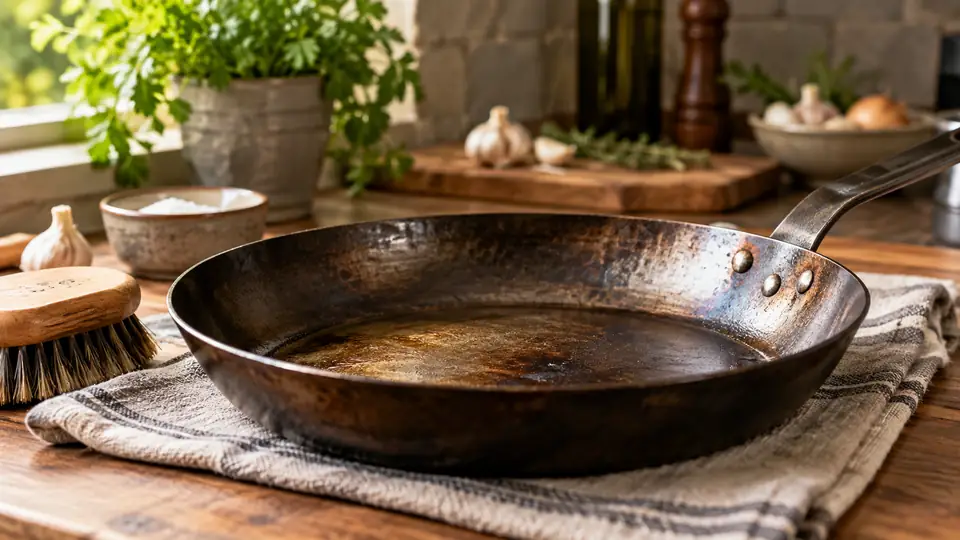
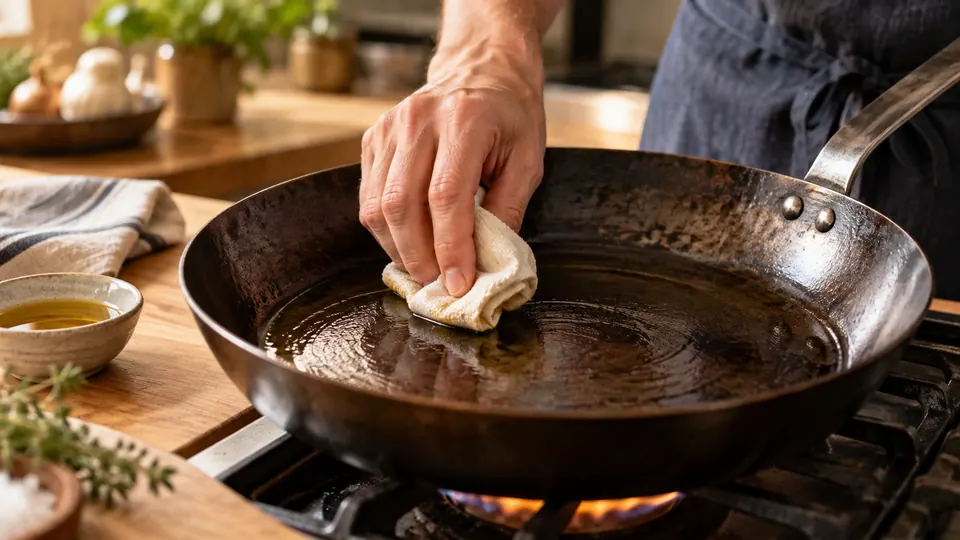
Seasoning is the thin layer of oil that polymerizes on the surface during cooking and heating. In plain English, oil bonds to the metal and forms a dark protective coating. That coating helps reduce sticking and slows rust, though it is not permanent in the way a factory-applied nonstick coating is.
Carbon steel pans are often favored for tasks where strong contact heat matters. Searing meat, frying eggs in a well-seasoned skillet, blistering vegetables, and cooking over live flame all suit the material well. The surface tends to improve with regular use, which is part of the appeal for many cooks.
At the same time, carbon steel is not carefree cookware. Leave it wet, and rust can appear quickly. Cook a long tomato braise in it, and the acid can strip seasoning and leave the food with a metallic note. It rewards attention, but it does ask for it.
What Is Stainless Steel?
Stainless steel cookware contains chromium, which forms a protective layer that resists corrosion and staining. That is why stainless pans do not rust easily and can handle water, acidic ingredients, and more aggressive cleaning than carbon steel.
Most quality stainless steel cookware is not just a single slab of stainless. Many pans use aluminum or copper cores sandwiched between stainless layers. That matters because stainless itself is not a great heat conductor. The added core improves heat distribution and responsiveness.
Unlike carbon steel, stainless steel does not build a true seasoning layer that becomes the main cooking surface. It stays stainless. Food release depends more on proper preheating, using enough oil or butter, and letting proteins naturally release when browned.
Stainless steel is often the workhorse choice for cooks who want one pan to handle searing, sautéing, deglazing, simmering, and sauce-making with very little fuss. It may not feel as naturally slick as seasoned carbon steel, but it is far more forgiving about what you cook and how you clean it.
Heat Performance Comparison
Heat retention and searing
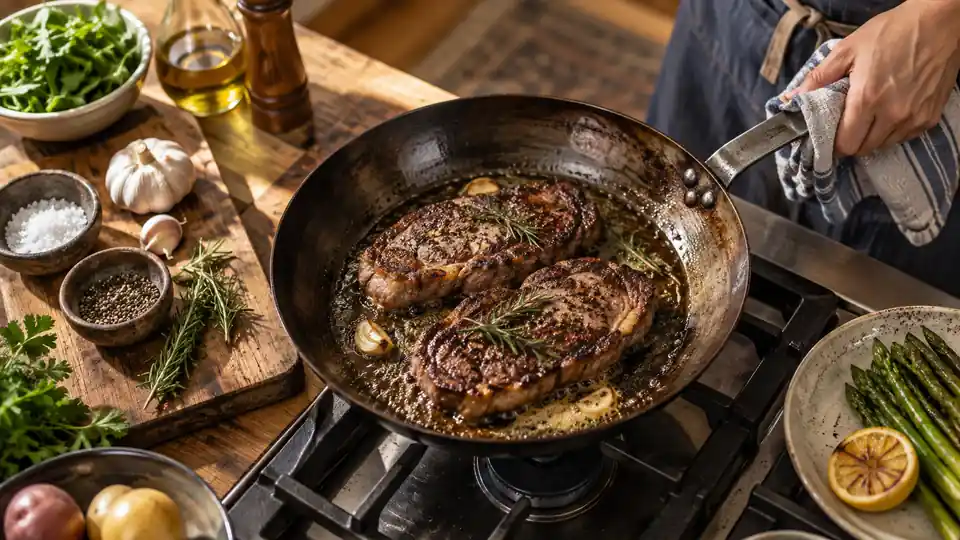
Carbon steel and stainless steel can both sear well, but they do it in slightly different ways. Carbon steel usually excels because it combines decent heat retention with fast heat response and direct contact cooking. A good carbon steel skillet gets hot quickly and develops excellent browning on steaks, chops, burgers, and potatoes.
Stainless steel can also sear very effectively, especially if the pan has a thick aluminum or copper core. In practice, a heavy tri-ply or five-ply stainless pan can produce a beautiful crust. The difference is that stainless often requires more attention to heat management and fat choice so proteins do not glue themselves to the surface before proper browning occurs.
For pure searing feel, many cooks prefer carbon steel. It tends to offer a more straightforward path to high-heat cooking.
Heat responsiveness
Responsiveness refers to how quickly a pan reacts when you raise or lower the burner. Carbon steel is known for responding quickly, especially compared with cast iron. That makes it useful for cooking techniques where you want control, such as moving from a hard sear to a gentler finish.
Stainless steel responsiveness depends heavily on construction. A thin, cheap stainless pan may heat unevenly and respond poorly. A well-made clad stainless pan can be very responsive and even. This is one category where “stainless steel” as a label hides a lot of variation.
In many home kitchens, carbon steel still feels more direct and immediate. It rewards attentive cooking and changes pace quickly on the burner.
Even heating
This is one area where stainless steel often has an advantage, especially higher-quality clad cookware. Because many stainless pans are built with conductive cores, they can distribute heat more evenly across the cooking surface.
Carbon steel can develop hot spots, particularly if the pan is thin or the burner is small relative to the pan size. That does not make it poor cookware, but it does mean preheating matters. Taking an extra minute to let the pan heat gradually can significantly improve results.
On electric and induction stoves, pan thickness and flatness also matter. Some carbon steel pans perform beautifully, while others are more prone to warping if overheated empty. For induction users, a flatter, heavier base tends to help. If that is your setup, a guide to the best carbon steel pan for induction may be useful.
Cooking Surface Comparison
Seasoned carbon steel develops a semi-nonstick surface
The biggest appeal of carbon steel is the seasoned surface. After repeated cooking with oil, especially with foods like onions, pancakes, or fatty proteins, the pan starts to feel smoother and release food more easily. Eggs and omelets are the classic examples. In a mature carbon steel pan, they can slide quite well with only modest fat.
That said, seasoning is not magic. A new carbon steel pan may stick badly until the seasoning stabilizes. Acidic ingredients, harsh scrubbing, or long simmering can remove part of that layer. The performance is excellent, but it is earned over time.
Stainless steel relies more on technique
Stainless steel does not become seasoned in the same way. Food release depends on temperature control. If the pan is properly preheated and the cooking fat is added at the right moment, many foods release much more cleanly than people expect.
The common mistake is starting with a cold stainless pan, adding food too early, then trying to force it loose. Proteins often stick at first and release on their own once a crust forms. That learning curve turns some cooks away from stainless, but it is manageable with practice.
Which is better for eggs and delicate foods?
Carbon steel usually wins here. Once seasoned, it handles fried eggs, omelets, crepes, and lightly battered foods more comfortably than stainless steel. Stainless can do these jobs, but it demands tighter control over heat and fat.
For fish fillets, both can work. Carbon steel may offer easier release, while stainless may be preferable if you plan to build a lemon-butter or wine pan sauce afterward.
Durability Comparison
Carbon steel is tough but reactive
Carbon steel is physically durable. It can handle metal utensils, high heat, oven use, and plenty of daily cooking. It is hard to “wear out” in the usual sense. If the seasoning gets damaged, you can usually rebuild it.
Its weakness is chemical reactivity. Moisture causes oxidation, which is just rust forming on exposed iron. Acidic foods can strip seasoning and sometimes react with the pan surface. That means carbon steel is durable, but not carefree.
Stainless steel is highly resilient
Stainless steel is one of the most forgiving cookware materials in terms of long-term ownership. It resists rust, tolerates acidic ingredients, handles scrubbing better, and generally shrugs off the kind of kitchen use that makes carbon steel fussy.
It can discolor, develop heat tint, or show burnt-on residue, but those are usually cosmetic or removable issues rather than damage. In day-to-day life, stainless steel is often easier to keep looking and functioning consistently.
Warping and structural issues
Both materials can warp if poorly made or overheated, but thinner carbon steel pans are especially known for movement if blasted over high heat while empty, especially on powerful burners or induction. Gradual preheating helps.
Stainless steel can warp too, especially if the pan has a thin base or experiences thermal shock. Quality matters with both materials, though construction tends to matter even more with stainless because of its layered design.
Maintenance Comparison
Carbon steel requires ongoing care
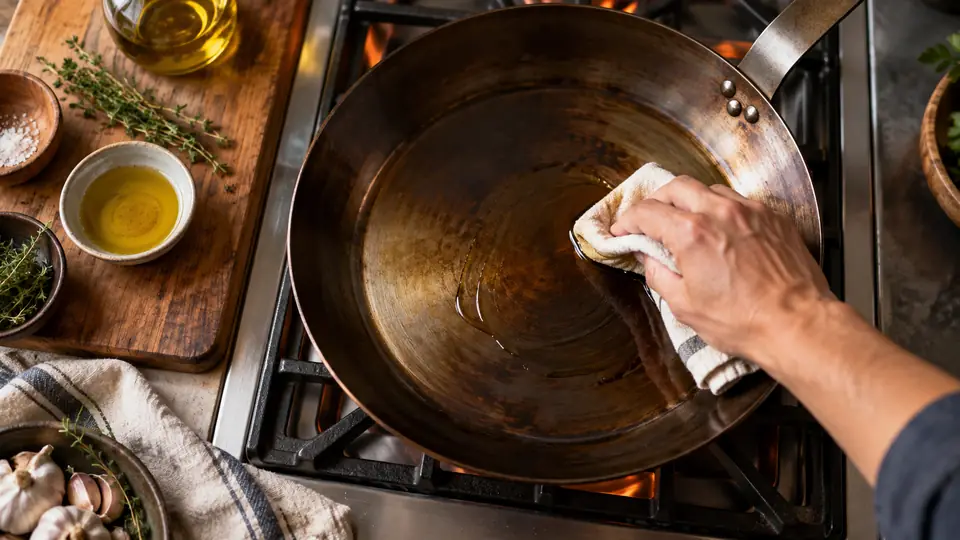
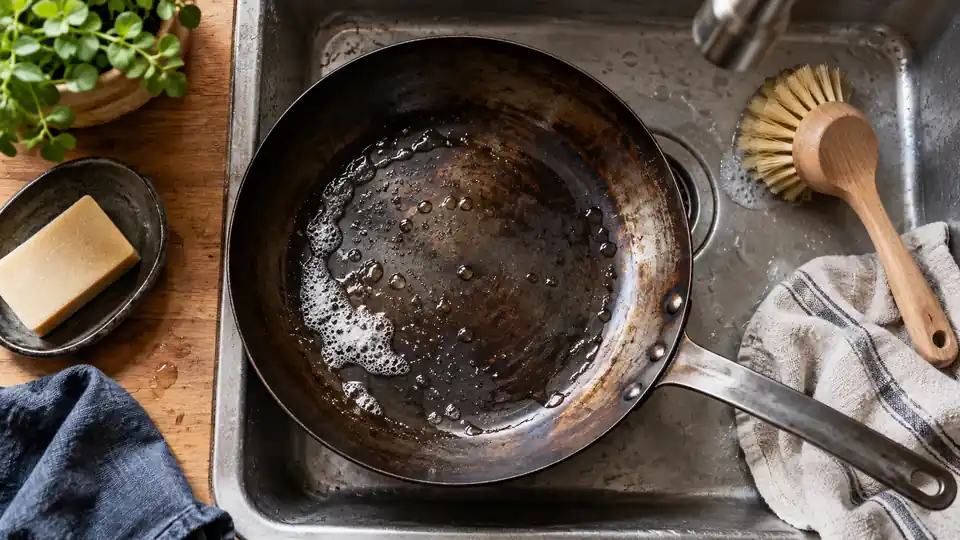
Carbon steel maintenance is simple, but it is continuous. After cooking, the pan usually needs to be washed gently, dried thoroughly, and lightly oiled if the surface looks dry. If seasoning becomes patchy, a touch-up session may be needed.
Rust prevention is the main job. The routine does not take long, but it does require consistency. That is why some people love carbon steel and others slowly stop reaching for it.
Stainless steel is easier to live with
Stainless steel is far less demanding. You can wash it with soap, scrub stuck bits more aggressively, cook acidic sauces without worry, and leave it drying on the rack without thinking much about it.
This ease matters in a busy kitchen. If you cook often and do not want cookware maintenance to become part of the routine, stainless steel is usually the more practical choice.
Cleaning comparison
| Cleaning Task | Carbon Steel | Stainless Steel |
|---|---|---|
| Use dish soap | Usually fine in moderation, but heavy degreasing can weaken fresh seasoning | Fully fine |
| Soak in water | Not recommended | Usually fine |
| Cook acidic foods | Short contact only, use caution | Excellent choice |
| Dry immediately | Yes, important | Helpful but not critical |
| Light oil after cleaning | Often recommended | Not needed |
| Restore surface if damaged | Re-seasoning may be needed | Usually just clean thoroughly |
Weight and Handling
Carbon steel is often described as lighter than cast iron, which is true, but compared with stainless steel the answer is less absolute. Some carbon steel skillets are relatively light and agile. Others, especially thicker models, are not especially light at all.
Stainless steel cookware also varies widely. A lightweight single-ply stainless pan feels very different from a heavy multi-ply sauté pan. As a broad rule, carbon steel frying pans often feel nimble for tossing and sautéing, while heavy clad stainless can feel more substantial and planted.
Handle design also matters. Carbon steel skillet handles are often long and angled for stovetop maneuverability. Stainless cookware ranges from skillet handles to helper handles on larger pans. If you toss food frequently, carbon steel often feels more natural in the hand.
Cooking Applications: Where Each Material Works Best
Best uses for carbon steel
- Steaks and chops: Excellent crust development and high-heat tolerance.
- Eggs and omelets: A well-seasoned surface can release delicate foods well.
- Burgers and sausages: Strong browning with straightforward cleanup if seasoning is solid.
- Stir-frying: Fast heat response is useful, especially in wok-style cooking.
- Potatoes and pancakes: Good surface contact and browning.
Best uses for stainless steel
- Pan sauces: Fond builds well, and deglazing with wine or stock is easy.
- Tomato-based dishes: No concern about stripping seasoning.
- Lemon, vinegar, and wine cooking: Acid is not a problem.
- Braising and simmering: Longer cooks are less stressful than in carbon steel.
- General-purpose cookware: Strong all-around performance with low maintenance.
Where they overlap
For chicken cutlets, vegetables, burgers, or simple sautéing, both materials can work very well. The better choice often depends on what happens after the initial browning. If the dish ends with a pan sauce or acidic reduction, stainless steel tends to be better. If the goal is dry-heat browning and clean release from a seasoned surface, carbon steel often feels better.
Pros and Cons
Carbon steel pros
- Excellent high-heat performance
- Builds a seasoned surface that can become quite slick
- Usually lighter and more responsive than cast iron
- Very durable in terms of structural toughness
- Works well for searing, eggs, and stir-fry style cooking
Carbon steel cons
- Can rust if not dried properly
- Requires seasoning and routine maintenance
- Not ideal for long acidic cooks
- Performance can be frustrating early on before seasoning improves
- Some pans may warp if overheated carelessly
Stainless steel pros
- Rust-resistant and low maintenance
- Excellent for acidic ingredients and sauces
- Very durable and forgiving long term
- No seasoning required
- Good all-purpose cookware, especially in quality clad construction
Stainless steel cons
- More prone to sticking if technique is off
- Can be less intuitive for eggs and delicate foods
- Performance varies a lot by construction quality
- Burnt-on residue can require scrubbing
- Some heavier pans feel cumbersome for quick tossing motions
Which One Should You Choose?
Choose carbon steel if
- You enjoy high-heat stovetop cooking.
- You want a pan that improves with seasoning.
- You cook a lot of eggs, steaks, burgers, potatoes, or stir-fried foods.
- You do not mind drying and oiling a pan after cleaning.
- You prefer a more traditional, hands-on cookware experience.
Choose stainless steel if
- You want cookware that is easy to maintain.
- You frequently cook with tomatoes, wine, citrus, or vinegar.
- You make pan sauces often.
- You want one material that handles a wide range of recipes with little fuss.
- You do not want to think about seasoning, rust, or touch-up care.
Choose both if you cook often
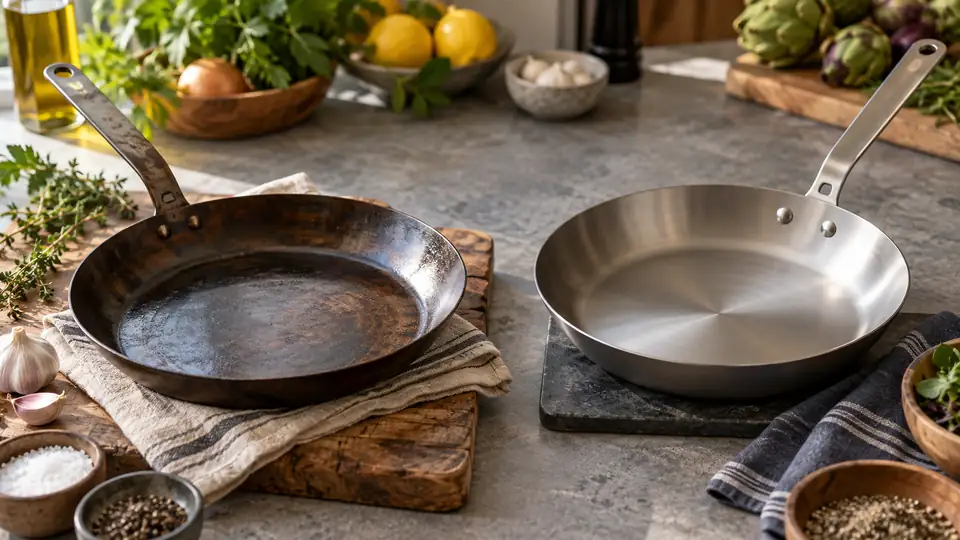
For many kitchens, this is the most practical answer. A carbon steel skillet handles eggs, hard searing, and everyday frying beautifully. A stainless steel skillet or sauté pan covers acidic dishes, pan sauces, and recipes where easy maintenance matters more than a seasoned surface.
These materials are less like direct rivals and more like complementary tools. If you cook regularly, having one of each often makes more sense than trying to force a single pan to do everything equally well.
Common Mistakes People Make in the Carbon Steel vs Stainless Steel Decision
Assuming carbon steel is maintenance-free once seasoned
Seasoning helps, but it does not make carbon steel immune to rust or abuse. A seasoned pan still needs drying and occasional care.
Buying stainless steel expecting it to behave like nonstick
Stainless can release food well, but not through the same mechanism. It needs proper heat and timing. If that expectation is off, early frustration is common.
Using carbon steel for long acidic simmering
This is one of the easiest ways to damage seasoning and create a poor cooking experience. Quick tomato contact may be fine in some cases, but extended acidic cooking is better left to stainless steel.
Judging either material after only one or two uses
Carbon steel gets better as seasoning develops. Stainless steel gets easier as technique improves. Both reward a little patience.
Frequently Asked Questions
Is carbon steel better than stainless steel for steak?
Carbon steel is often preferred for steak because it heats quickly, tolerates high temperatures well, and develops strong browning. Stainless steel can also cook excellent steak, especially in a heavy clad pan, but carbon steel often feels more direct and forgiving for hard searing.
Is stainless steel healthier than carbon steel?
Both are generally considered safe for normal cooking use. The practical difference is not about one being broadly “healthier” than the other. It is more about maintenance and reactivity. Stainless steel is non-reactive with acidic foods, while carbon steel can react if seasoning is weak or stripped.
Can carbon steel replace stainless steel completely?
Not for most cooks. Carbon steel can cover many frying and searing tasks, but stainless steel is usually the better choice for acidic sauces, deglazing, and lower-maintenance all-purpose use. Carbon steel is versatile, but it does not fully replace stainless in every kitchen job.
Why does food stick more in stainless steel?
Sticking usually happens because the pan was not preheated properly, the cooking fat was added at the wrong time, or the food was moved before it naturally released. Stainless steel rewards temperature control more than carbon steel does.
Does carbon steel last longer than stainless steel?
Both can last for decades. Carbon steel is extremely durable structurally, but it is more vulnerable to rust if neglected. Stainless steel is easier to keep in service because it resists corrosion and handles a wider range of cooking conditions with less care.
Final Verdict on Carbon Steel vs Stainless Steel
A practical carbon steel vs stainless steel decision comes down to cooking style more than material hype. Carbon steel is the stronger choice for cooks who value searing power, quick response, and a seasoned surface that gets better with use. Stainless steel is the stronger choice for cooks who want flexibility, easy maintenance, and no worries about acidic ingredients or rust.
If your meals lean toward steaks, eggs, fried rice, hash, and quick stovetop cooking, carbon steel is likely to feel more rewarding. If you cook tomato sauces, pan sauces, braises, or simply want one pan that asks very little from you, stainless steel will usually be the more practical fit.
For a lot of kitchens, the smartest answer is not choosing one forever. It is understanding what each material does well, then using carbon steel and stainless steel where they make the most sense.

Leave a Reply