
Price is one of the first surprises people notice when shopping for carbon steel cookware. A material that looks simple, relatively thin, and less polished than some stainless steel pans can still carry a premium price tag. That often leads to a fair question: why are carbon steel pans expensive if they seem so basic?
The short answer is that the price is not just about the raw steel. It also reflects how the pan is formed, how thick it is, how evenly it heats, how durable the handle connection is, whether it is pre-seasoned, where it is made, and how well it performs over many years of use. A good carbon steel pan is a tool built for high heat, repeated seasoning, and long service life. That combination can cost more than shoppers expect, especially compared with mass-market nonstick cookware.
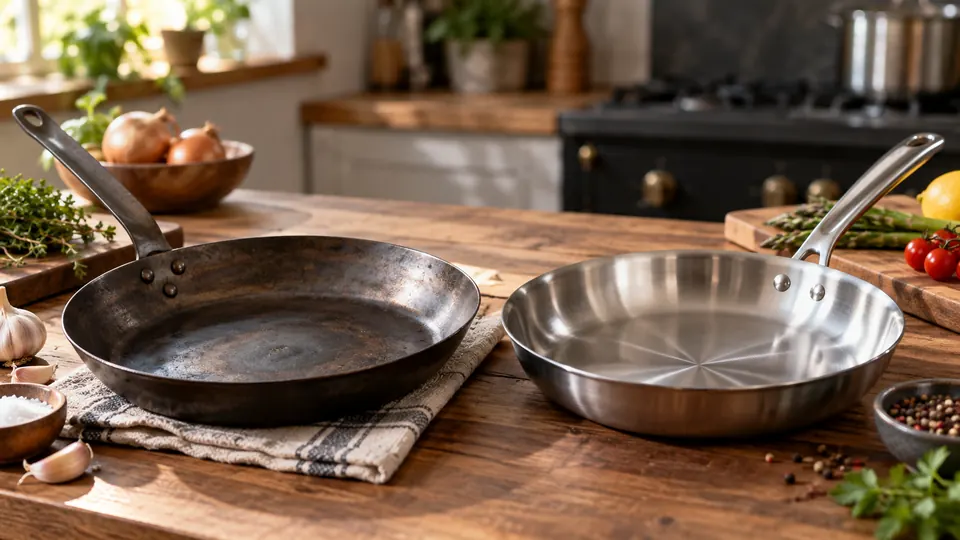
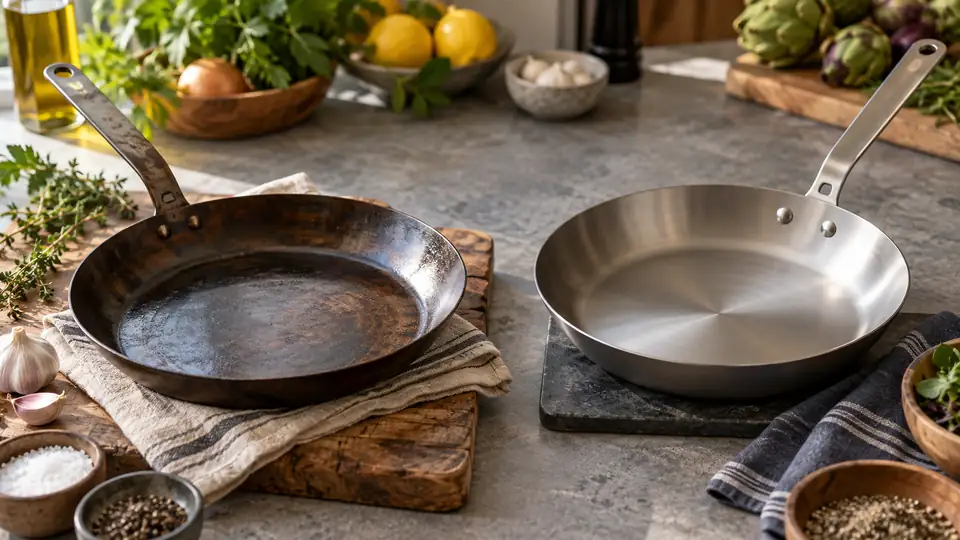
It also helps to compare carbon steel to the products it usually competes with. Many buyers are looking at nonstick aluminum pans on one side and stainless steel or cast iron on the other. Carbon steel sits in a middle ground. It is lighter than cast iron, more naturally slick over time than stainless steel, and far more durable than typical nonstick cookware. Those tradeoffs shape the price.
Quick Answer
Why are carbon steel pans expensive? They cost more because you are paying for more than sheet metal. A quality carbon steel pan needs the right steel thickness, careful shaping, strong handle attachment, flatness, balance, and finishing so it performs properly on the stove and lasts for years. Manufacturing details matter a lot. A pan that warps, seasons unevenly, or has weak rivets is cheaper to make, but it will not work as well.
Carbon steel pans can also seem expensive because they are often compared with inexpensive nonstick pans, which are usually mass-produced from lighter materials and designed for a shorter lifespan. Carbon steel is closer to a long-term piece of cookware. It can handle high heat, oven use, metal utensils in many cases, and repeated re-seasoning. Better versions are often made in smaller production runs, sometimes in Europe or specialty factories, which increases labor and shipping costs.
So while the upfront price may feel high, the value question is different from the sticker price question. A carbon steel pan is often more expensive because it is designed to be repaired, maintained, and used for decades rather than replaced every few years.
What You Are Actually Paying For
People often assume cookware pricing is mostly about the material itself. With carbon steel, that is only part of the story. The steel matters, but pan performance depends heavily on design and manufacturing quality.
Two pans may both be labeled carbon steel, yet behave very differently in real cooking. One may sit flat, heat evenly enough for searing, and build seasoning well. Another may spin on a glass cooktop, develop hot spots too aggressively, or feel awkward because the handle angle is poorly designed. Those differences affect cost.
- Steel thickness, which affects durability, warp resistance, and heating behavior
- Pan shape, including the slope of the sides and cooking surface size
- Handle design, including comfort, oven safety, and attachment method
- Factory finishing, such as deburring, polishing, or pre-seasoning
- Manufacturing consistency, especially flatness and balance
- Country of manufacture, labor standards, and production scale
That is why carbon steel pans with a similar diameter can vary so much in price. The label alone does not tell you how much work went into the pan.
Why Are Carbon Steel Pans Expensive Compared With Nonstick?
This is the comparison that makes carbon steel seem most expensive. If you are used to seeing aluminum nonstick pans at low prices, carbon steel can feel overpriced. But the two are built for very different ownership timelines.
| Feature | Carbon Steel Pan | Typical Nonstick Pan |
|---|---|---|
| Expected lifespan | Often many years to decades with care | Often a few years before coating wear |
| High-heat cooking | Very good | Usually limited |
| Surface | Seasoned natural patina | Synthetic nonstick coating |
| Metal utensil tolerance | Often acceptable | Often discouraged |
| Maintenance | Requires seasoning and drying | Usually easier day to day |
| Replacement cycle | Low if maintained | Higher over time |
A low-cost nonstick pan is usually made to be convenient and affordable, not necessarily to last. Carbon steel is often built as a more permanent cooking tool. That longer lifespan raises the initial cost, even if it may reduce replacement costs later.
There is also a manufacturing difference. Many inexpensive nonstick pans are stamped from aluminum and coated at very large scale. Carbon steel pans, especially better ones, may use thicker steel and more demanding shaping and finishing steps. They are not always made in the same kind of high-volume, low-cost production environment.
Steel Thickness Plays a Big Role
One of the main reasons some carbon steel pans cost more is thickness. Thicker steel usually means more raw material, more weight, and often better resistance to warping. It can also improve heat stability during searing.
Very thin carbon steel is cheaper to produce and easier to lift, but it can be less forgiving on powerful burners. A thin pan may overreact to heat changes, develop stronger hot spots, or warp if heated too aggressively. That does not mean all thin pans are bad. Woks are a good example where thinner material can be useful. But for skillets and frying pans, thickness often affects quality.
How Thickness Changes Performance
- Thicker pans usually resist warping better and hold heat more steadily
- Thinner pans heat faster but can be more prone to temperature spikes
- Heavier steel can improve searing consistency but makes the pan less nimble
Manufacturers that use heavier gauge steel are spending more on material and shipping. The result is a sturdier pan, but also a higher retail price.
Forming the Pan Is More Complex Than It Looks
A carbon steel pan may look plain, but making one properly is not as simple as cutting and bending metal. The shape of the cooking surface, the curve of the walls, the pan’s depth, and the way the handle meets the body all affect how it cooks and how it feels in the hand.
Some pans are stamped quickly from sheet steel. Others are spun, pressed more carefully, or finished with extra steps to improve symmetry and flatness. Better forming can reduce weak points and create a more balanced pan. That adds cost.
Flatness matters especially on induction and smooth glass cooktops. A pan that does not sit flat transfers heat less evenly and can wobble. Keeping a carbon steel base flat through production and shipping is not free. If a pan has enough thickness to help resist movement under heat, that raises material and freight costs too.
Handle Construction Adds Cost
Handle design is an easy detail to overlook until you use the pan regularly. Carbon steel gets hot, and these pans are often used for searing, sauteing, roasting, and oven finishing. A poor handle can make a pan frustrating or unsafe.
Manufacturers spend money on handle shape, angle, length, coatings, and attachment methods. Riveted handles, welded handles, and oven-safe metal handles all have different costs and tradeoffs.
Why Handles Affect Price
- Secure attachment requires stronger rivets or reliable welding
- Comfortable shape takes more design and sometimes more finishing
- Oven-safe construction often means no cheap plastic or weak coatings
- Balance matters because a badly weighted pan feels heavier than it is
A well-designed handle may not stand out on a store shelf, but it often shows up in the price. The difference becomes obvious after months of moving the pan from stovetop to oven and back.
Pre-Seasoning and Surface Finishing Cost Money
Some carbon steel pans arrive bare, while others are sold with a factory-applied seasoning layer or protective coating. Neither option is automatically better for every cook, but extra finishing steps usually increase cost.
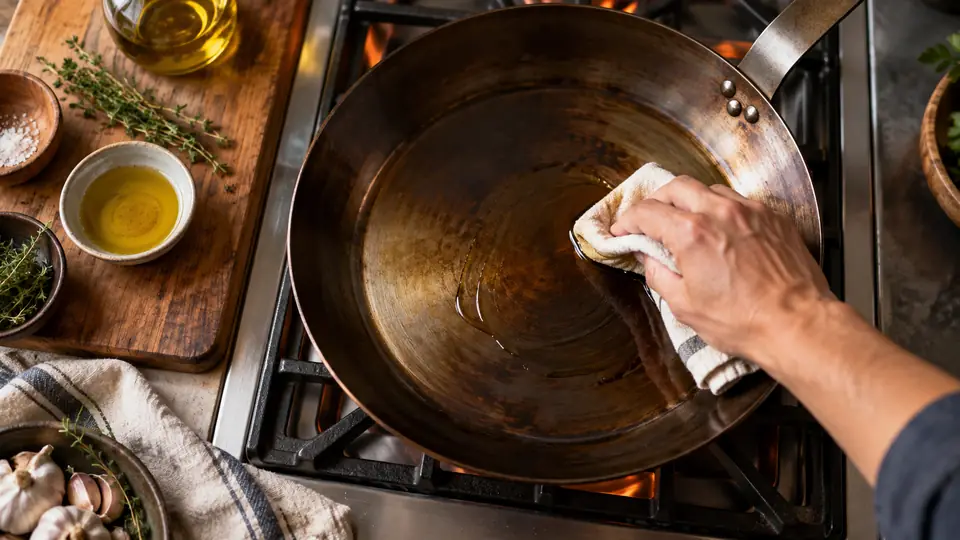
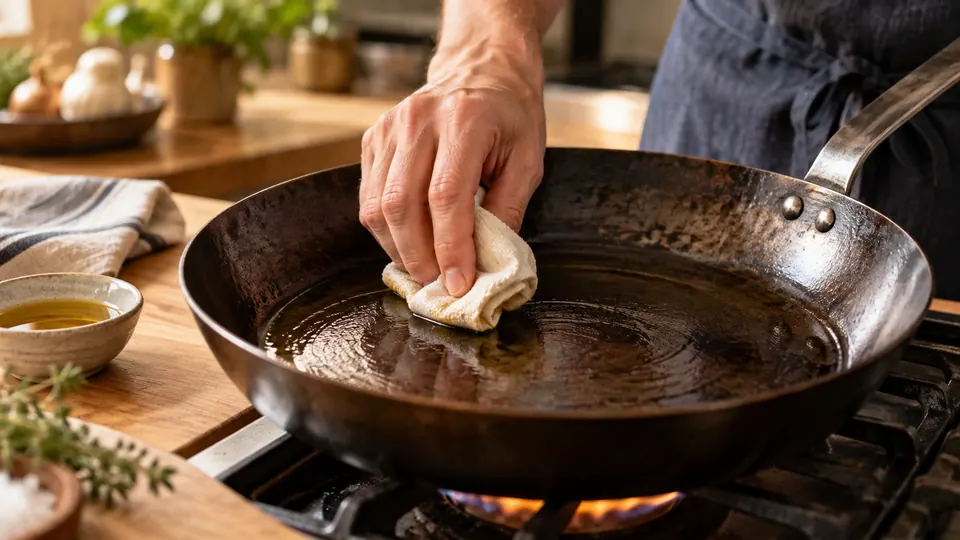
Pre-seasoning can shorten the setup process and make the pan less intimidating for first-time users. It does not eliminate the need for continued seasoning, but it helps the pan start developing a usable cooking surface. Applying that finish consistently at the factory takes time and labor.
Surface finishing can also include smoothing rough edges, cleaning off mill scale, applying beeswax or oil coatings for shipping protection, or polishing certain areas. These details may seem small, but they contribute to a more refined pan and a higher price.
For shoppers interested in factory-finished options, pre-seasoned models are often part of the conversation because they reduce some of the early learning curve. A good overview of that category can be found here: Best Pre-Seasoned Carbon Steel Pans.
Country of Manufacture and Labor Costs Matter
Where a carbon steel pan is made has a major effect on price. Pans produced in countries with higher labor costs, stricter workplace standards, or smaller-scale manufacturing will usually cost more than pans made in large factories focused on volume and lower production costs.
This does not mean expensive always equals better, or cheap always equals poor quality. Some affordable pans perform very well. Still, country of origin often explains part of the pricing gap.
| Cost Factor | How It Can Affect Price |
|---|---|
| Labor rates | Higher wages usually raise manufacturing cost |
| Production scale | Smaller runs often cost more per pan |
| Quality control | More inspection and tighter tolerances add expense |
| Shipping distance | Heavy cookware is costly to transport |
| Import duties | Tariffs and fees can raise retail prices |
Heavy cookware is expensive to move through the supply chain. That is especially true for thicker carbon steel. The pan itself may not be highly complex, but weight affects shipping from factory to warehouse and from retailer to customer.
Brand Reputation and Quality Control Raise Prices Too
Some of the price difference comes from less visible areas like consistency, warranty support, and inspection standards. A well-established cookware brand may reject more flawed pans during production, maintain flatter tolerances, or use more reliable packaging to prevent shipping damage. Those costs show up in the final price.
Carbon steel cookware is sensitive to small quality issues. If the pan arrives slightly warped, has a poorly aligned handle, or contains rough finishing around the rim, owners tend to notice immediately. Better quality control reduces those issues, but not for free.
This is one reason two pans with nearly identical dimensions can have noticeably different prices. One may be built with stricter standards and better after-sale support.
Carbon Steel Is a Niche Category in Some Markets
Nonstick and stainless steel dominate many big-box cookware aisles. Carbon steel, while increasingly popular, is still a more specialized category for many home cooks. Lower mass-market demand often means fewer economies of scale.
If a company makes millions of nonstick pans each year, it can spread tooling, packaging, and distribution costs across a huge volume. Carbon steel brands often sell far fewer units of each model. That tends to increase per-pan cost.
Specialty cookware also attracts buyers who are willing to pay more for long-term performance. Retailers know that and may position carbon steel as a premium category, even when the material itself is not rare.
Performance Expectations Are Higher
People buy carbon steel for specific cooking strengths. They want strong searing, fast response to heat adjustments, oven compatibility, and a seasoning layer that improves with use. Meeting those expectations consistently requires careful design.
A pan that is too thin may brown unevenly. A pan with poor sidewall geometry may be awkward for tossing food. A handle that traps too much heat becomes annoying during stove work. These are practical performance issues, not cosmetic ones.
What Buyers Expect From a Good Carbon Steel Pan
- Fast enough heat response for active cooking
- Enough heat retention for browning proteins
- A surface that improves as seasoning builds
- Strength under repeated high-heat use
- Long service life with basic maintenance
Those expectations place carbon steel in a different class from inexpensive replaceable cookware. The pan is expected to work like a serious kitchen tool, and that affects how it is built and priced.
Why Cheap Carbon Steel Pans Can Be Disappointing
A very low price can be appealing, but budget carbon steel pans sometimes cut corners in ways that matter. This is where shoppers start to understand why some carbon steel pans are expensive. The added cost often goes toward avoiding the common failures of cheap versions.
Common Problems With Lower-Cost Carbon Steel
- Warping on strong burners or induction cooktops
- Thin hot spots that make the center much hotter than the edges
- Rough finishing around rims or rivets
- Weak seasoning performance if the surface prep is poor
- Uncomfortable handles that feel badly balanced
- Poor flatness that causes wobbling on smooth stoves
Not every affordable pan has these issues, and not every expensive pan is perfect. Still, the cheapest end of the market often reveals why construction quality matters so much with carbon steel.
Why Are Carbon Steel Pans Expensive if They Need More Maintenance?
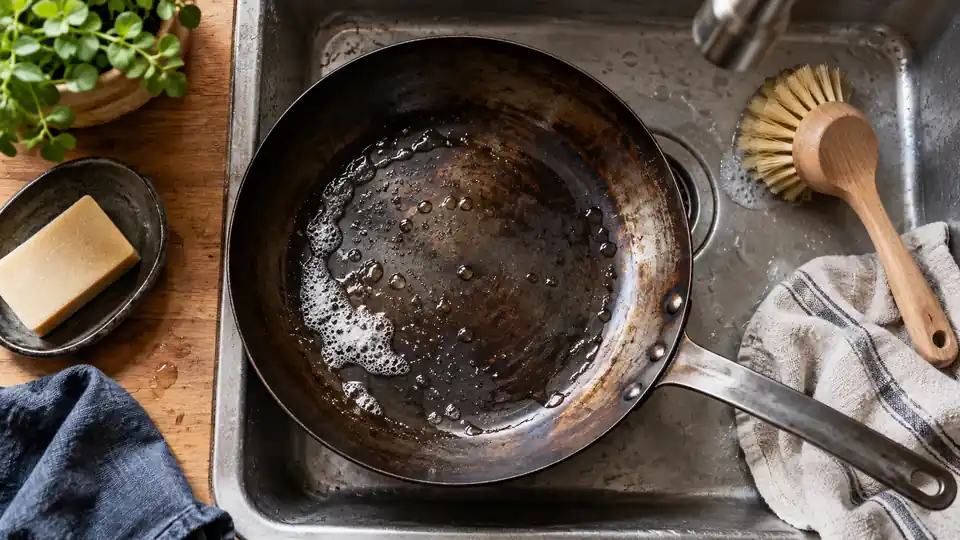
This is a fair objection. Carbon steel requires seasoning, drying after washing, and occasional touch-up care. That can make the price feel harder to justify compared with lower-maintenance stainless steel or easy-to-use nonstick.
The answer is that you are paying for a different type of value. Carbon steel combines high-heat performance and long life with a naturally developing cooking surface. It asks more from the owner, but it also keeps working far longer than many coated pans.
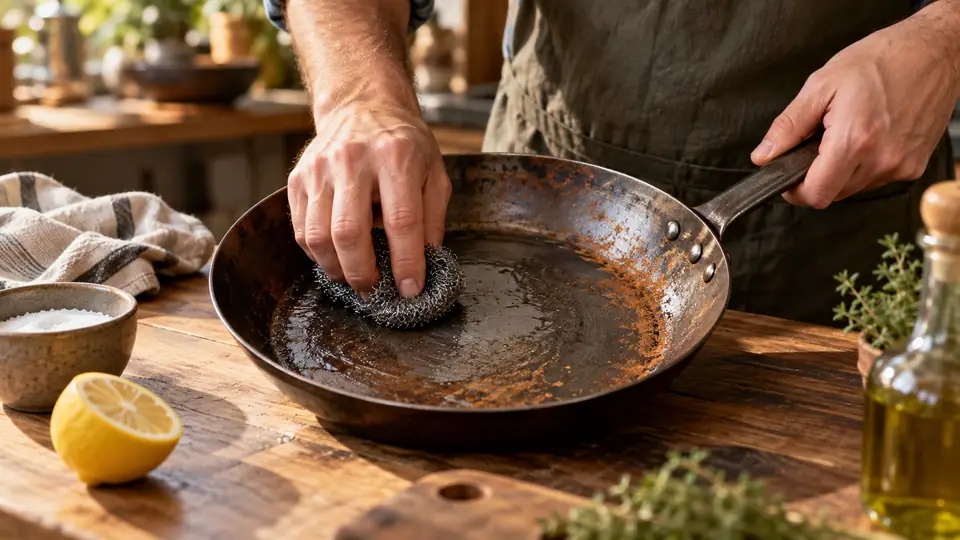
Maintenance is part of the ownership model. A carbon steel pan is not expensive because it is effortless. It is expensive because it is durable, repairable, and capable of improving with use. If seasoning gets patchy, you can correct it. If the pan rusts lightly, you can remove the rust and reseason it. That is very different from a pan whose coating is failing and cannot realistically be restored.
The Long-Term Cost Can Be More Reasonable Than It Looks
Sticker price and long-term cost are not the same thing. A carbon steel pan may cost noticeably more upfront than a standard nonstick pan, but if it lasts for many years, the economics can look different over time.
That does not automatically make carbon steel cheaper for everyone. If a pan is bought, used twice, then left in a cabinet because the owner dislikes seasoning, it is poor value no matter how durable it is. But for cooks who actually use and maintain it, carbon steel often spreads its cost over a much longer ownership period.
| Cookware Type | Upfront Price Tendency | Typical Long-Term Pattern |
|---|---|---|
| Budget nonstick | Low | Lower entry cost, more frequent replacement |
| Carbon steel | Moderate to high | Higher entry cost, long use if maintained |
| Stainless steel | Moderate to high | Long life, less seasoning care, different cooking behavior |
| Cast iron | Low to moderate | Long life, heavy, often slower to respond |
The real value depends on your cooking style. A person who sears meat regularly, fries eggs with a developed seasoning layer, and likes stovetop-to-oven versatility may get a lot from carbon steel. Someone who wants a pan that can go through the dishwasher and be ignored afterward probably will not.
What Makes Some Carbon Steel Pans More Expensive Than Others?
Within the category itself, price differences often come down to a combination of build quality and brand positioning. Here are the most common reasons one carbon steel pan costs more than another of similar size.
1. Thicker Steel
More material raises cost and weight, but often improves stability and warp resistance.
2. Better Forming and Flatness
A pan that sits properly on the stove and stays stable under heat usually reflects tighter manufacturing control.
3. More Refined Handle Design
Comfort, angle, balance, and secure attachment are all details that can raise price.
4. Higher-End Finishing
Pre-seasoning, smoother edges, protective coatings, and cleaner welds or rivets all add labor.
5. Smaller-Batch or Domestic Manufacturing
Lower production volume and higher labor costs typically increase retail price.
6. Brand Support and Warranty
Established companies often build customer service and defect handling into their pricing.
Are Expensive Carbon Steel Pans Worth It?
Sometimes yes, sometimes no. Higher cost can buy better construction, flatter bases, more comfortable handles, and better finishing. Those upgrades matter if you cook often and care about how the pan behaves.
But there is a point where price also reflects branding, aesthetics, or collector appeal rather than meaningful cooking improvement. A pan does not need to be the most expensive option in order to perform well. In practical kitchen use, a solid mid-range carbon steel pan can often do nearly everything most home cooks need.
What matters most is not prestige. It is whether the pan has the right thickness, shape, build quality, and fit for your stove and cooking style.
Who Should Spend More on Carbon Steel
A higher-priced carbon steel pan can make sense for certain cooks.
- Frequent stove users who want a pan for regular searing and sauteing
- Cooks with powerful burners or induction who need better warp resistance
- People replacing nonstick repeatedly and looking for a longer-lasting alternative
- Anyone sensitive to handle comfort and balance during daily use
- Home cooks who value oven use and rugged construction
For these buyers, paying more can lead to fewer frustrations and better long-term satisfaction.
Who Might Be Better Off Spending Less or Choosing Another Material
Not everyone benefits from paying extra for carbon steel.
- Occasional cooks who only need a basic egg or reheating pan
- People who dislike maintenance such as drying and seasoning
- Anyone wanting maximum convenience with minimal learning
- Cooks who mostly simmer acidic foods, which are not ideal for seasoning
For some kitchens, stainless steel or a simple nonstick pan may be a better match. Carbon steel is a useful tool, but not the right tool for every person or every dish.
How to Judge Price Without Overpaying
If you are shopping and trying to decide whether a carbon steel pan is fairly priced, focus on build details rather than marketing language.
Signs the Price May Be Justified
- Reasonable steel thickness for the pan size
- Flat cooking base
- Secure handle attachment
- Comfortable handle angle and length
- Clean finishing around rim and interior
- Clear care instructions and solid warranty support
Signs You May Be Paying Mostly for Branding
- Little information about thickness or construction
- Heavy emphasis on appearance rather than function
- Premium price without meaningful design advantages
- Vague claims about performance
A fair price is one that matches construction quality and intended use. A carbon steel pan does not have to be cheap to be good value, but it should offer something tangible for the money.
Frequently Asked Questions
Why is carbon steel more expensive than cast iron in some cases?
Cast iron is often cheaper because it can be mass-produced through well-established casting processes at very large scale. Carbon steel pans may require more shaping, finishing, and handle work. They are also often sold in a more specialized cookware market.
Do expensive carbon steel pans last longer?
They can, but price alone does not guarantee it. Better materials, thicker steel, flatter bases, and stronger handle construction usually improve durability. Still, some mid-priced pans last a very long time if they are well made and cared for properly.
Is a cheap carbon steel pan still worth buying?
It can be, especially if the pan is from a reputable maker and has sensible thickness for its size. The risk is that very cheap pans may warp more easily, heat less evenly, or feel poorly balanced. Reading the construction details matters more than chasing the absolute lowest price.
Why do restaurant kitchens use carbon steel if it is expensive?
Professional kitchens value speed, high-heat performance, and durability. Carbon steel responds quickly, handles heavy use, and can be restored rather than discarded when the surface needs attention. The upfront cost can make sense when the pan is used constantly.
Does pre-seasoning make a carbon steel pan more expensive?
Usually yes, at least slightly. Factory pre-seasoning adds labor and processing steps. It can be worthwhile for cooks who want an easier start, but it does not remove the need for continued maintenance and seasoning development over time.
Final Thoughts
Why are carbon steel pans expensive? Because the price reflects durability, construction quality, and long-term performance more than the raw material alone. Thickness, flatness, shaping, handle design, finishing, labor costs, and quality control all contribute to what you pay.
They can look deceptively simple, which makes the price surprising at first. But carbon steel is not competing only on appearance. It is competing as a serious cooking tool that can handle high heat, build a natural seasoning layer, and stay in service for years. That does not make every expensive pan a smart buy, and it does not mean every cook needs one. It does mean the higher price usually has practical reasons behind it.
If you want low maintenance and instant convenience, carbon steel may not feel worth the cost. If you want a pan that can develop with use and hold up over the long term, the price starts to make more sense.

Leave a Reply