
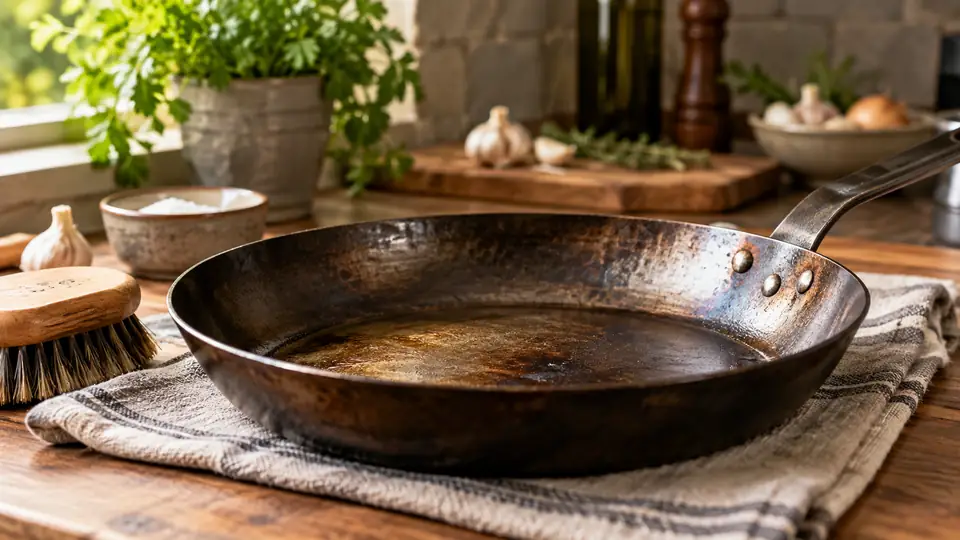
Rust is the main enemy of carbon steel. A carbon steel pan can handle high heat, develop a naturally slick seasoned surface, and last for years, but it will rust quickly if water sits on bare or poorly seasoned metal. That is not a defect in the material. It is simply how reactive steel behaves when moisture and oxygen are allowed to work together.
Learning how to prevent rust on carbon steel is mostly about a few consistent habits. Dry it thoroughly, keep the seasoning intact, avoid long exposure to water, and store it in a low-moisture environment. Most rust problems come from small routine mistakes, such as air-drying a pan in the sink, putting it away damp, or scrubbing away the protective oil layer without replacing it.
The good news is that rust prevention is easier than rust removal. Once you understand what causes oxidation and how seasoning protects the metal, carbon steel becomes much less intimidating to own. Good maintenance does not have to be complicated, but it does need to be consistent.
Quick Answer
How to prevent rust on carbon steel comes down to four essentials: keep the surface dry, maintain seasoning, apply a very thin coat of oil when needed, and store the pan where moisture cannot collect. After cooking, wash the pan quickly, dry it immediately with a towel, then heat it briefly on the stove to drive off hidden moisture. If the surface looks dry or patchy, wipe on a tiny amount of oil before storing.
Rust forms when bare steel is exposed to water and oxygen. Seasoning helps prevent this by creating a protective layer of polymerized oil on the metal. That layer is not permanent, so it needs occasional reinforcement, especially after acidic foods, aggressive scrubbing, or repeated use.
To avoid rust, do not soak carbon steel, do not leave it wet in the sink, do not store it with trapped moisture, and do not run it through the dishwasher. A little attention after each use is usually enough. If light rust does appear, it can often be removed, dried, and re-seasoned before serious damage occurs.
Why Carbon Steel Rusts
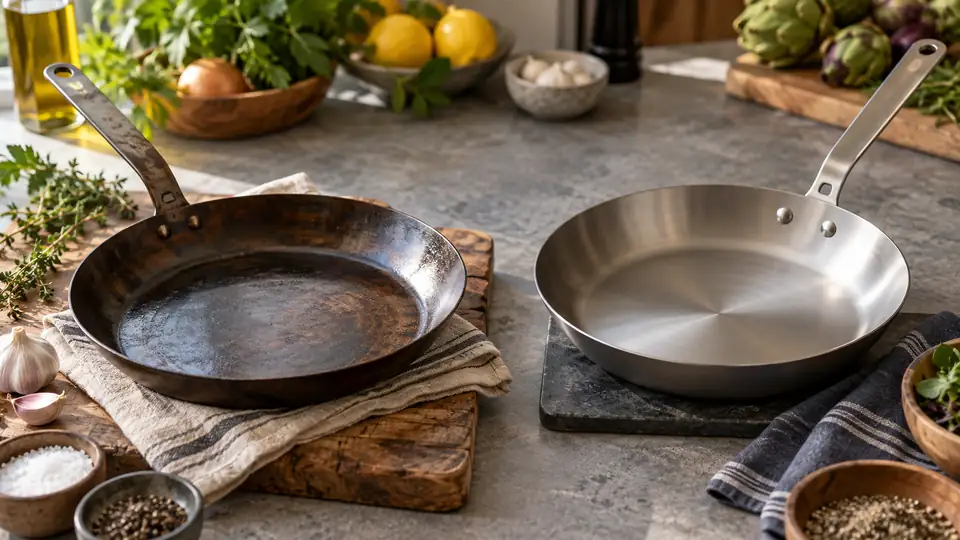
Carbon steel contains iron, and iron reacts with moisture and oxygen. That reaction creates rust, which is a form of oxidation. Unlike stainless steel, carbon steel does not have enough chromium to resist corrosion on its own, so it relies heavily on seasoning and proper care.
This is why a brand-new carbon steel pan often looks vulnerable before it has built up a good cooking patina. Bare steel has very little protection. Once water sits on it, especially in humid kitchens or under food residue, rust can start surprisingly fast.
The good news is that rust is usually preventable. In most kitchens, rust develops because of a broken routine rather than because the pan is difficult to maintain.
The role of seasoning
Seasoning is a thin layer of oil that has been heated until it bonds to the steel. This process, often described as polymerization, turns liquid oil into a harder protective film. That film does two important jobs. It helps reduce sticking, and it limits the steel’s exposure to moisture.
A well-seasoned pan is not rust-proof forever, but it is much more resistant than bare metal. If seasoning becomes uneven, stripped, or burned away in spots, those exposed areas are where rust tends to start.
Why small amounts of moisture matter
Visible water is not the only problem. Steam, humidity, droplets around the rivets, moisture trapped under stacked cookware, and water left along the rim can all cause oxidation. A pan may feel dry at first glance and still hold enough moisture to create rust overnight.
This is why stove-drying is so effective. A towel removes most water, but gentle heat removes what you cannot easily see.
Common Situations That Cause Rust
Most carbon steel rust problems happen in familiar kitchen situations. The pan gets used correctly, then one small step is skipped. Knowing the usual causes helps prevent repeat problems.
| Situation | Why It Causes Rust | Better Habit |
|---|---|---|
| Leaving the pan in the sink | Water sits on the steel and around the edges | Wash promptly and dry right away |
| Air-drying on the rack | Moisture remains in tiny droplets and seams | Towel-dry, then heat-dry |
| Soaking to loosen food | Long water exposure attacks weak seasoning | Use hot water briefly and loosen residue with a brush or scraper |
| Cooking acidic foods often | Acid can wear down seasoning | Re-oil or re-season as needed |
| Putting it away while still warm and damp | Moisture gets trapped in storage | Let it dry fully after heat-drying |
| Stacking pans without protection | Scratches remove seasoning and trap humidity | Use a paper towel or pan protector between pieces |
| Dishwasher cleaning | Detergent and water exposure strip protection | Hand-wash only |
How to Prevent Rust on Carbon Steel Step by Step
The best rust prevention method is a simple post-cooking routine. It takes only a few minutes and addresses the real causes of oxidation.
1. Clean the pan soon after cooking
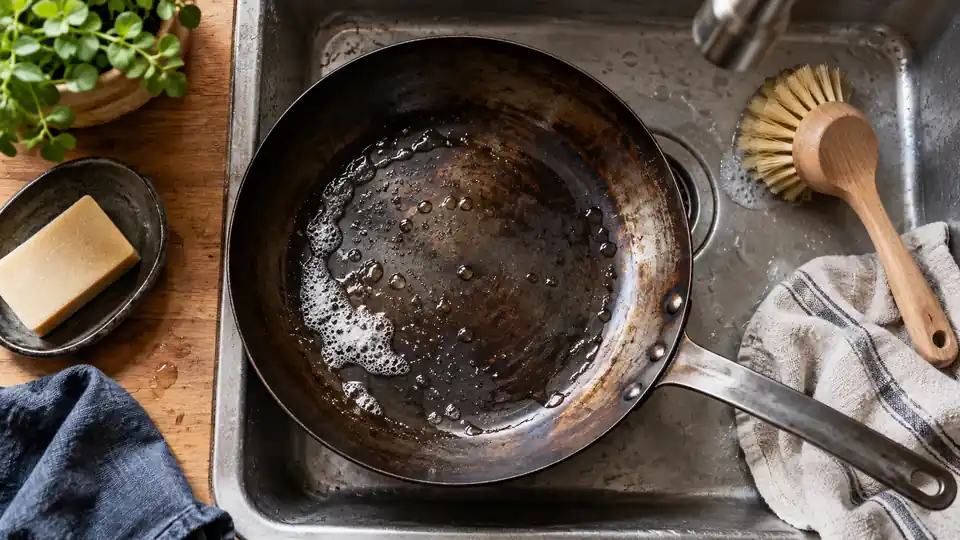
Do not leave cooked food, grease, and moisture sitting in the pan for hours. Wash it once it is cool enough to handle safely. In most cases, warm water, a soft scrubber, and a gentle brush are enough.
You do not need to baby carbon steel, but you should avoid long soaking sessions. If food is stuck, add a little hot water and loosen it with a wooden spatula, scraper, or non-abrasive scrubber rather than letting the pan sit submerged.
2. Dry it immediately with a towel
As soon as washing is done, dry the pan thoroughly with a clean towel. Pay attention to the cooking surface, sidewalls, bottom, handle junction, rivets, and rim. These overlooked areas often hold moisture.
This step should happen right away. Letting the pan sit wet for even a short time is one of the easiest ways to invite surface rust.
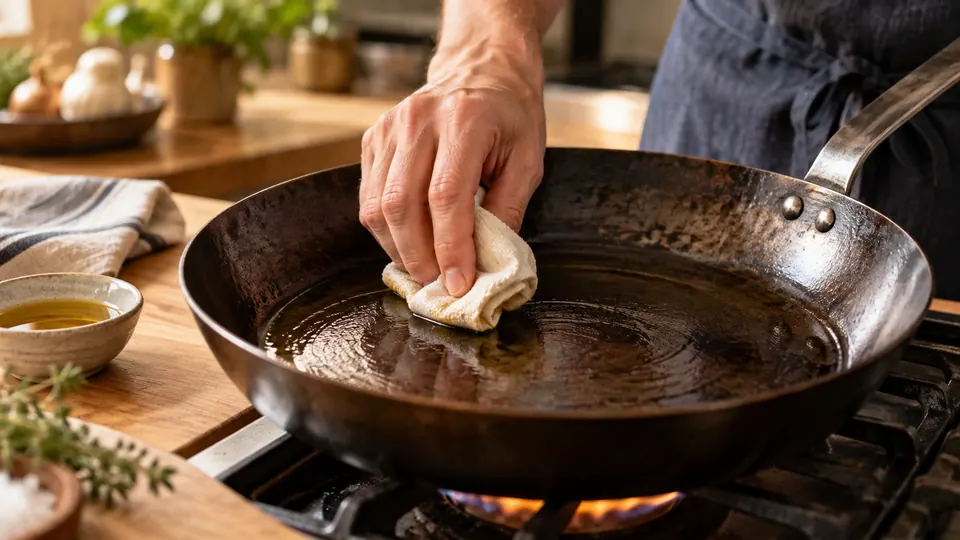
3. Heat-dry the pan on the stove
After towel-drying, place the pan over low or medium-low heat for a minute or two. The goal is not to reseason it every time. The goal is to evaporate hidden moisture.
This matters because water can remain in pores, around rivets, or in tiny scratches in the seasoning. Gentle heat removes that moisture more reliably than air-drying.
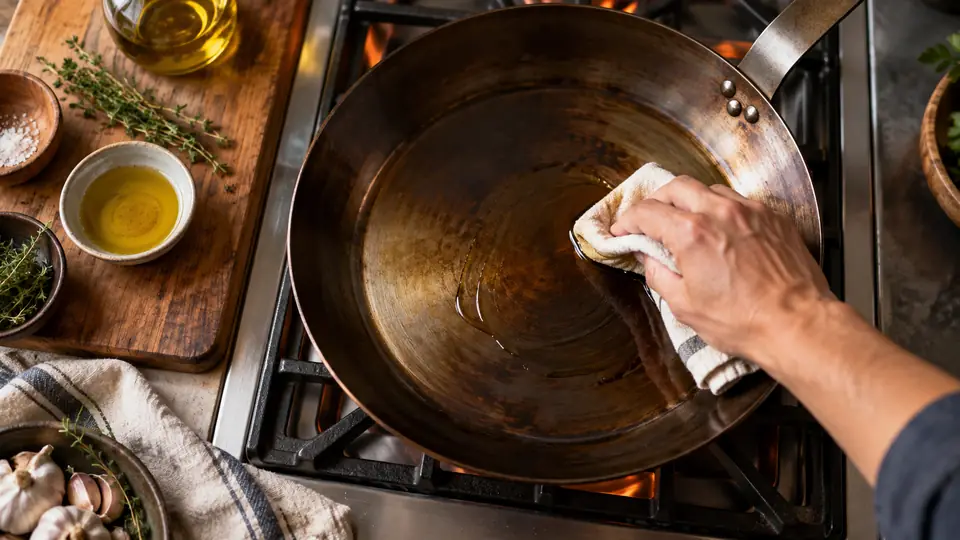
4. Apply a very thin layer of oil if needed
Once the pan is dry and warm, you can wipe on a tiny amount of neutral oil if the surface looks dull, dry, or patchy. Use less oil than you think you need. A thin film is enough. If the pan looks greasy, there is too much.
Wipe the oil over the entire cooking surface, then buff off the excess with a clean cloth or paper towel. Some cooks also wipe the outside of the pan lightly, especially if they live in a humid climate.
5. Store it where moisture cannot collect
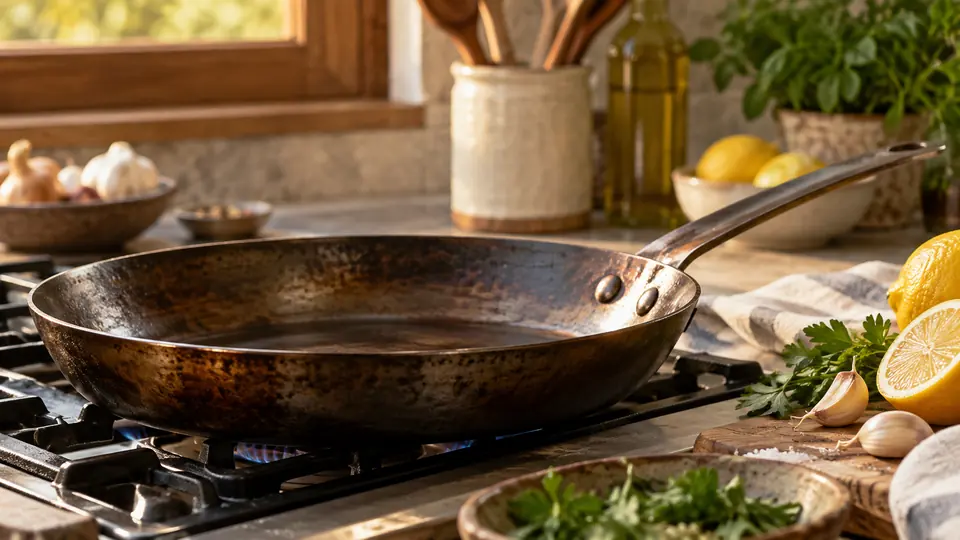
Put the pan away only after it is completely dry. Avoid sealed damp cabinets near dishwashers or sinks if possible. If you stack carbon steel with other cookware, place a paper towel or cloth liner between pans to reduce scratching and absorb trace moisture.
Good storage is part of learning how to prevent rust on carbon steel. Even a well-seasoned pan can rust if it sits in a humid, poorly ventilated space.
What You Need for Rust Prevention
You do not need special equipment to keep carbon steel rust-free. A few basic tools are enough.
- Soft sponge or dish cloth: For routine washing.
- Pan brush or scrubber: For stuck food without harsh damage.
- Dry kitchen towel or paper towels: For immediate drying and oil buffing.
- Neutral oil: Such as grapeseed, canola, sunflower, or another oil suitable for seasoning touch-ups.
- Wooden spatula or scraper: Useful for lifting residue during cleaning.
- Paper towel or pan protector: Helpful if pans are stacked in storage.
That is enough for most kitchens. Fancy accessories are optional. Consistency matters more than gear.
How Seasoning Helps Prevent Rust
Seasoning is often discussed as a nonstick benefit, but rust prevention is just as important. Bare carbon steel is reactive. Seasoned carbon steel has a protective barrier.
During seasoning, oil is heated until it bonds to the metal in a thin hardened layer. This layer does not seal the pan like paint, and it can wear down with use. Still, it reduces direct contact between steel and moisture, which slows oxidation.
Signs your seasoning is protecting well
- The surface looks darkened rather than shiny silver
- Water beads and evaporates cleanly during drying
- The pan feels smooth and not chalky or raw
- Minor washing does not expose bright metal easily
Signs the surface needs attention
- Orange spots appear after storage
- The pan looks gray and dry in patches
- Food has stripped areas down to bare steel
- The surface feels rough from corrosion or flaking seasoning
If your pan is new and you want a shorter learning curve, some cooks prefer cookware that already has a factory-applied base layer. A pre-seasoned option can reduce how exposed the steel is during the first few uses. For that reason, pre-seasoned carbon steel pans are often easier for owners who are still building maintenance habits.
Cleaning Habits That Reduce Rust Risk
Good cleaning protects both the steel and the seasoning. Poor cleaning usually means either too much water exposure or too much abrasion.
Use water briefly, not endlessly
Water itself is not forbidden. Short, controlled washing is fine. The problem is prolonged contact. Think of carbon steel like a tool that should be washed efficiently, then dried immediately.
A quick rinse with warm water is usually safer than a long soak. If residue is stubborn, simmer a small amount of water in the pan for a minute, scrape gently, dump it out, and dry the pan right away.
Avoid harsh detergent habits
A small amount of mild dish soap is not always catastrophic, especially on a well-seasoned pan, but repeated aggressive washing can weaken seasoning over time. Strong degreasers, harsh scrub pads, and heavy-duty cleaners are more likely to strip the surface and expose bare steel.
If the pan still has a young or fragile seasoning layer, keep cleaning simple and controlled. Remove debris, dry the pan, then restore a little oil if needed.
Pay attention after cooking acidic foods
Tomatoes, wine reductions, citrus, and vinegar-based sauces can wear down seasoning, especially during long cooking sessions. After those meals, inspect the pan closely once it is cleaned and dried. If the surface looks lighter or exposed, add a thin oil coat or do a quick stovetop seasoning touch-up.
Storage Tips for Humid Kitchens
Some rust problems are not caused by washing at all. They happen during storage. This is especially common in coastal climates, homes without strong ventilation, or cabinets near dishwashers and sinks.
Choose a dry storage area
If one cabinet always feels damp or warm after the dishwasher runs, avoid storing carbon steel there. Air circulation matters more than many people realize. A dry open rack can be safer than a closed humid cabinet.
Do not trap moisture under lids
If you store a carbon steel pan with a lid on top, any remaining moisture can stay trapped against the cooking surface. If you use a lid, leave slight airflow or place a dry towel between the pan and lid.
Use barriers when stacking
Stacking can rub off seasoning and expose fresh steel. Put a paper towel, cloth, or felt pan protector between pieces. This helps absorb any trace moisture and reduces surface abrasion.
How to Prevent Rust on Carbon Steel in Different Situations
After everyday stovetop cooking
Wash, towel-dry, heat-dry, and oil lightly if the surface looks thirsty. This is the standard routine and solves most issues.
After searing meat at high heat
High heat itself does not cause rust, but it can leave burnt residue that tempts people to soak the pan. Instead, loosen residue with hot water and a scraper, dry thoroughly, and inspect for stripped areas.
After cooking eggs or delicate foods
These foods usually leave less aggressive residue, so cleaning is often easier. Even so, do not skip the drying step just because the pan looks clean.
After camping or outdoor use
Outdoor cooking adds humidity, rain risk, and temperature changes. Dry the pan especially well before packing it away. If it will sit unused for a while, leave a very thin protective oil film.
For long-term storage
If a pan will not be used for weeks or months, dry it thoroughly and wipe on a thin oil coat before storing. Buff off excess so it does not become sticky. Check it occasionally if your storage area is humid.
Common Mistakes That Lead to Rust
Rust often appears after habits that seem harmless in the moment. These are the most frequent mistakes.
Letting the pan “dry on its own”
This is probably the biggest mistake. Air-drying sounds reasonable, but small water droplets remain longer than expected. On reactive steel, that is enough to start oxidation.
Using too much oil after cleaning
Excess oil does not improve protection. It can turn sticky, collect dust, and create uneven buildup. A whisper-thin layer works better than a visible greasy coat.
Scrubbing down to bare metal too often
Heavy abrasion removes the protective seasoning you worked to build. If you repeatedly strip the surface without re-seasoning, rust becomes much more likely.
Ignoring small orange spots
Light rust is easier to fix than deep corrosion. If you notice tiny orange patches, address them early. Waiting gives rust time to spread and pit the metal.
Assuming a dark pan can never rust
Even a well-used pan can rust if the seasoning has weak spots or moisture gets trapped. A dark patina helps, but it does not remove the need for drying and proper storage.
A Simple Maintenance Schedule
Some owners do better with a routine rather than general advice. This schedule keeps carbon steel in good shape without overcomplicating things.
| Task | How Often | Purpose |
|---|---|---|
| Wash promptly after use | Every use | Removes food and moisture before corrosion starts |
| Towel-dry and heat-dry | Every use | Eliminates visible and hidden water |
| Apply a thin oil film if needed | As needed | Protects dry or patchy areas |
| Inspect for rust or exposed steel | Weekly if used often | Catches small issues early |
| Do a touch-up seasoning session | Occasionally | Rebuilds protection after wear |
| Check storage conditions | Occasionally | Prevents moisture buildup in cabinets or stacks |
What to Do If Light Rust Already Appears
Rust prevention is the main goal, but it helps to know what early rust means. A few orange specks usually indicate moisture got through the seasoning or sat on exposed steel. That does not necessarily mean the pan is ruined.
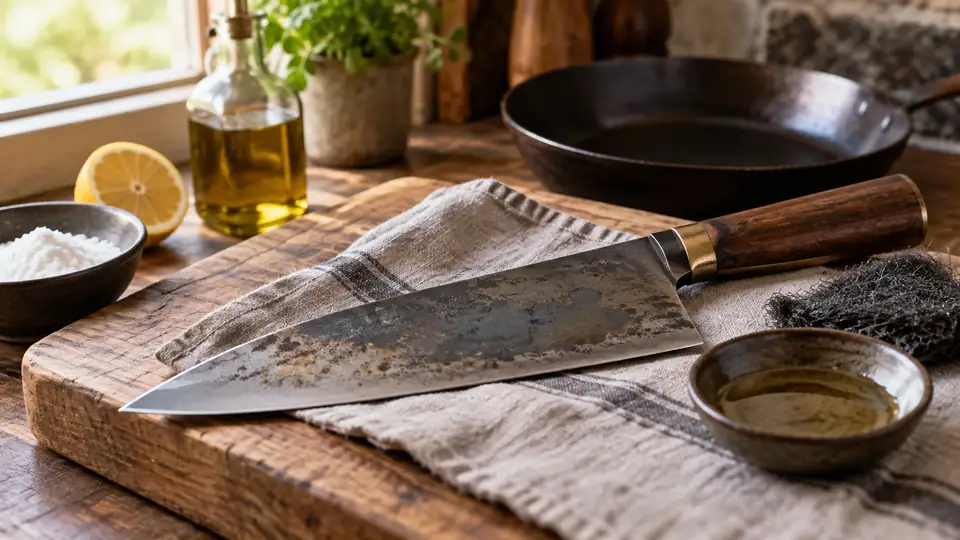
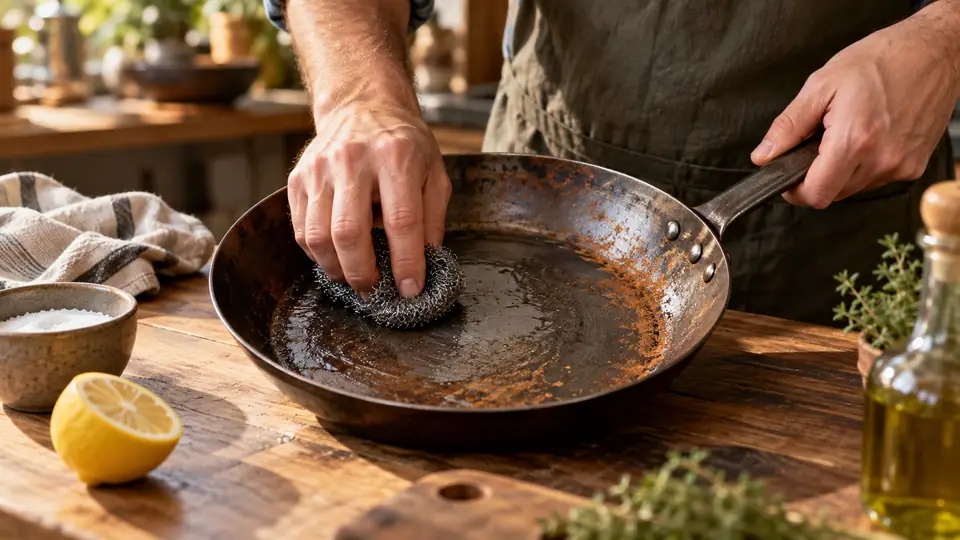
For light surface rust, scrub the affected area with a non-abrasive pad, chain mail scrubber used carefully, or a paste made for gentle rust removal, then rinse quickly, dry thoroughly, and re-season the exposed area. The most important part is not just removing the rust, but correcting the habit that caused it.
If rust returns repeatedly in the same place, check for one of three things: moisture trapped during storage, a seasoning weak spot, or damage from aggressive cleaning.
Frequently Asked Questions
Can carbon steel rust overnight?
Yes. If the pan is left wet or has exposed bare steel, light rust can form very quickly, sometimes overnight. Humid kitchens speed up the process.
Is it enough to towel-dry a carbon steel pan?
Towel-drying is important, but heat-drying is more reliable. A towel removes surface moisture, while brief stove heat removes water left in seams, pores, and tiny scratches.
Should I oil my carbon steel pan after every use?
Not always, but often it helps. If the pan’s seasoning is strong and the surface looks healthy, a fresh oil coat may not be necessary every single time. If the pan looks dry, patchy, or newly cleaned after tougher cooking, a very thin coat is a good idea.
Can I store food in a carbon steel pan?
It is better not to. Food, especially salty or acidic leftovers, holds moisture against the steel and can damage seasoning. Transfer leftovers to another container.
Why does my pan rust even though it looks seasoned?
Seasoning can be uneven. Moisture may also be collecting around the rim, underside, handle junction, or in storage. A dark cooking surface helps, but it does not protect every part of the pan if drying and storage are not thorough.
Final Thoughts
Understanding how to prevent rust on carbon steel is less about special treatments and more about reliable habits. Clean the pan soon after use, dry it immediately, use a little stove heat to remove hidden moisture, and maintain the seasoning so bare metal is not left exposed. Those steps do most of the work.
Carbon steel rewards regular use, but it does not tolerate neglect the way some other cookware does. If you build a simple routine, rust usually stays a minor issue or never appears at all. For most owners, the difference between a pan that rusts and a pan that lasts for years is just a few minutes of care after cooking.

Leave a Reply