


Carbon steel seasoning is not a one-time task. It is an ongoing layer of protection and performance that improves with use, but only if the pan is cared for properly. A well-maintained seasoned surface helps reduce sticking, protects the metal from rust, and makes day-to-day cooking easier. A neglected surface can become patchy, sticky, or start to rust surprisingly fast.
Learning how to maintain carbon steel seasoning is mostly about building a few habits after cooking. Dry the pan thoroughly, avoid leaving moisture or acidic food sitting in it, and apply a very thin coat of oil when needed. That sounds simple, but small details matter. Too much oil can create a gummy layer, harsh cleaning can strip progress, and storing the pan damp can undo weeks of use.
The good news is that seasoning is forgiving. Carbon steel rarely needs perfection. Even if the surface looks uneven or develops a dull spot, it can usually be corrected with regular cooking and a little maintenance. Once you understand what the seasoning layer needs, keeping it in good shape becomes routine rather than complicated.
Quick Answer
How to maintain carbon steel seasoning comes down to four core habits: clean the pan gently, dry it completely, heat it briefly to remove hidden moisture, and apply a very thin film of oil if the surface looks dry or recently scrubbed. Seasoning is a thin layer of oil that has bonded to the steel through heat, so the goal is to protect that layer without leaving behind sticky residue.
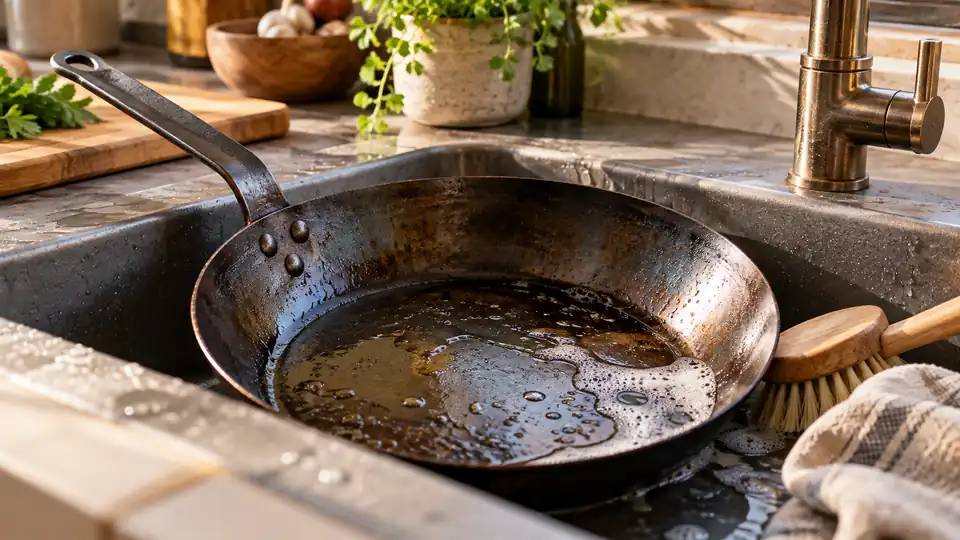
After cooking, wipe out food debris, rinse if needed, and use a soft brush, sponge, or coarse salt for stubborn bits. Avoid soaking the pan and do not leave it wet in the sink. Place it back over low heat for a minute or two until fully dry, then wipe on a few drops of neutral oil and buff off the excess so the surface looks almost dry. If the pan becomes sticky, the oil layer is too thick. If it develops rust, moisture reached bare metal. If food starts sticking more than usual, the seasoning may need reinforcement through a short stovetop seasoning session or a few rounds of cooking with oil-rich foods.
Why Maintaining Seasoning Matters
Seasoning does two important jobs on carbon steel. First, it creates a barrier between bare steel and moisture, which helps prevent oxidation and rust. Second, it improves the cooking surface, making it smoother and less prone to sticking over time.
Unlike synthetic nonstick coatings, carbon steel seasoning changes as you use the pan. It darkens, shifts in appearance, and can wear more in some areas than others. That is normal. A carbon steel pan does not need to look perfectly even to cook well.
What matters is whether the surface stays dry, reasonably slick, and rust-free. Maintenance keeps the seasoning functional, not necessarily pretty. Some of the best-performing carbon steel pans look blotchy, bronze, brown, and black all at once.
What Seasoning Actually Is
Seasoning is not just oil sitting on the pan. It is oil that has been heated until it transforms and bonds to the metal. This process, often described as polymerization, creates a thin, hardened layer that clings to the carbon steel.
That layer is durable, but not indestructible. Acidic ingredients, aggressive scrubbing, prolonged moisture, and overheated oil buildup can damage or weaken it. The best maintenance routine respects that balance. You want the surface clean enough for cooking, but not scrubbed so harshly that you keep removing your progress.
What Good Seasoning Looks Like
- Darkened color: usually brown to deep black, though uneven patches are normal.
- Dry feel: the surface should feel smooth or slightly satiny, not tacky.
- Better food release: eggs may still require technique, but general sticking should be reduced.
- No orange rust: small rust spots mean the protective layer failed in that area.
What Poorly Maintained Seasoning Looks Like
- Sticky or gummy patches: usually caused by applying too much oil.
- Flaking or rough buildup: often from carbonized food residue or uneven heavy seasoning layers.
- Gray exposed steel: not always a problem, but it means protection is thinner there.
- Orange or reddish spots: active rust that needs attention.
How to Maintain Carbon Steel Seasoning After Every Use
The simplest way to preserve seasoning is to follow the same basic routine each time you cook. This does not need to be elaborate. Most of the work takes only a few minutes.
1. Wipe Out Food While the Pan Is Still Warm
Once cooking is done and the pan is safe to handle, wipe out loose food and excess oil with a paper towel or clean cloth. Warm residue lifts more easily than cold, hardened residue.
This first wipe often prevents the need for heavier cleaning later. If the pan was used for eggs, vegetables, pancakes, or seared meat without sugary sauces, this may be almost all the cleaning required.
2. Rinse or Wash Gently if Needed
If bits are stuck on, use warm water with a soft sponge, dish brush, or non-abrasive scrubber. A small amount of mild soap is generally fine on modern carbon steel seasoning, especially if you are dealing with grease or odors. The old advice to never use soap is often overstated.
What matters more is avoiding long soaking and aggressive scouring. A brief wash will not usually ruin a well-established seasoning layer. Leaving the pan submerged in water for half an hour is much more damaging.
3. Remove Stuck-On Food Without Over-Scrubbing
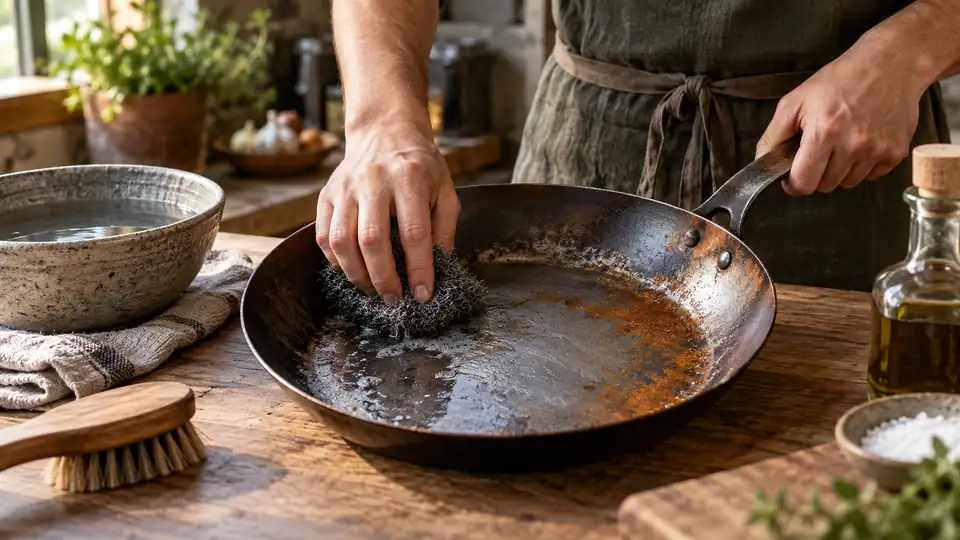
For stubborn residue, add a little water to the pan and warm it gently on the stove to loosen the debris. Then scrape with a wooden spatula, silicone tool, or pan scraper. Coarse kosher salt can also help lift residue without the harshness of steel wool.
If a small patch of seasoning comes off during cleaning, do not panic. Carbon steel seasoning is meant to be renewed. One bare spot does not mean the pan is ruined.
4. Dry the Pan Completely
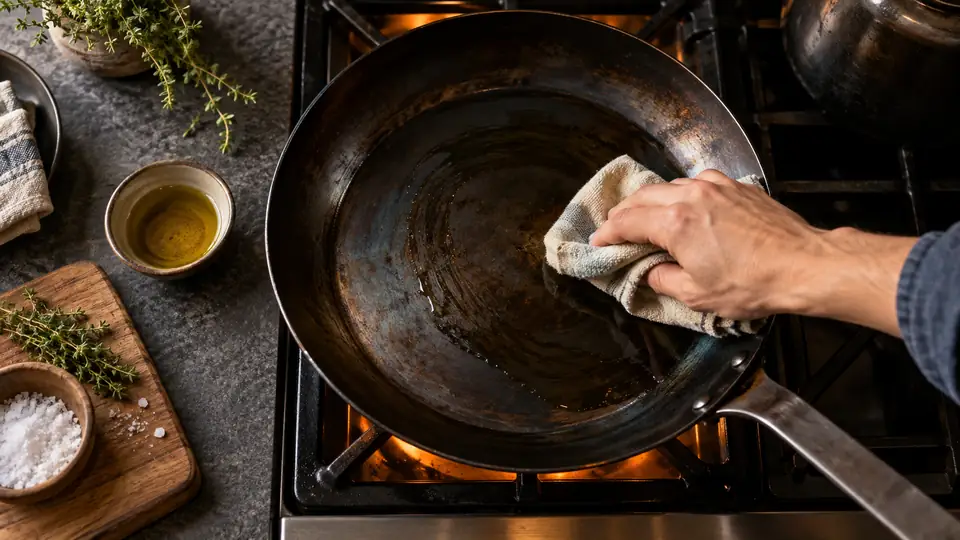
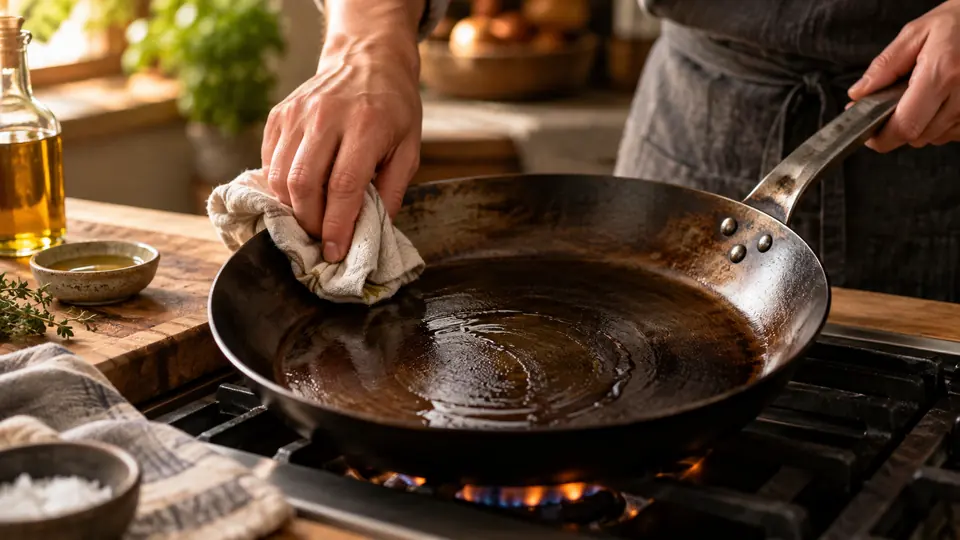
Towel drying is not enough on its own. Carbon steel can hold tiny traces of moisture, especially around rivets, handle joints, and subtle surface texture. Put the pan on low heat for a minute or two until all moisture has evaporated.
This step is one of the most important parts of maintaining seasoning. Rust often appears not because the pan was washed, but because it was not fully dried afterward.
5. Apply a Very Thin Film of Oil
Once the pan is dry and still warm, add a few drops of oil and wipe it across the cooking surface and, if needed, the outer surface. Then buff it aggressively with a clean cloth or paper towel until the pan looks nearly dry.
That last buffing step matters. Excess oil is one of the biggest causes of sticky seasoning. The ideal post-cleaning oil coat is so thin that it barely looks like it is there.
6. Heat Briefly if Desired
Some cooks stop after buffing on oil. Others like to heat the pan for another 30 to 60 seconds over low heat to help set that thin film. Either approach can work. If you heat after oiling, keep it light. You are maintaining, not doing a full seasoning cycle every time.
Maintenance Routine by Cooking Situation
Not every meal affects seasoning the same way. The right maintenance approach depends partly on what you cooked.
| Cooking Situation | Effect on Seasoning | Best Maintenance Response |
|---|---|---|
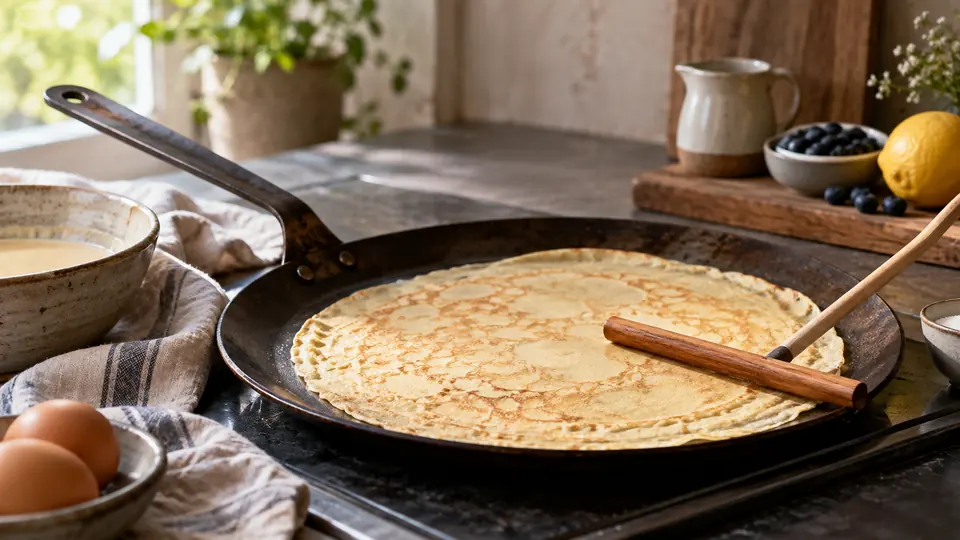
| Eggs, pancakes, toast, grilled sandwiches | Usually gentle | Wipe clean, dry, apply light oil if needed |
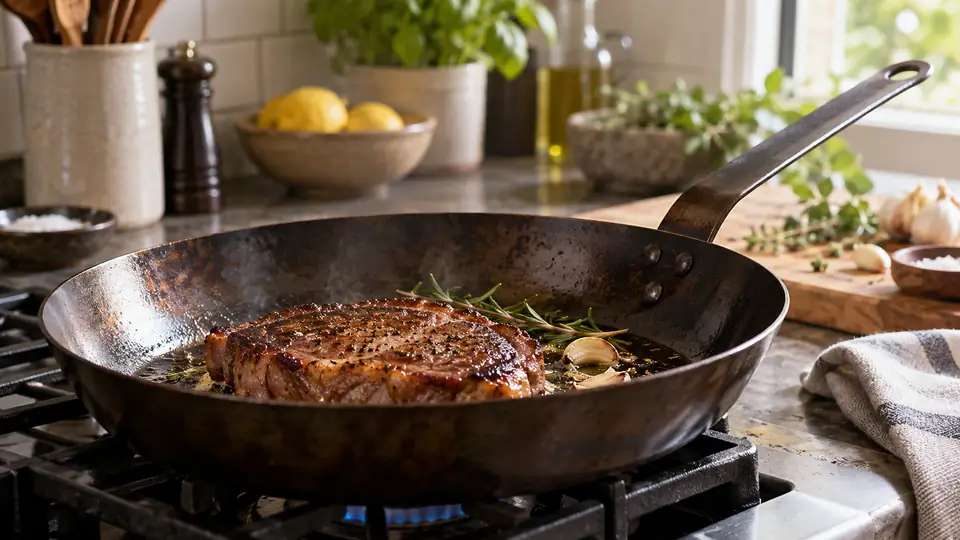
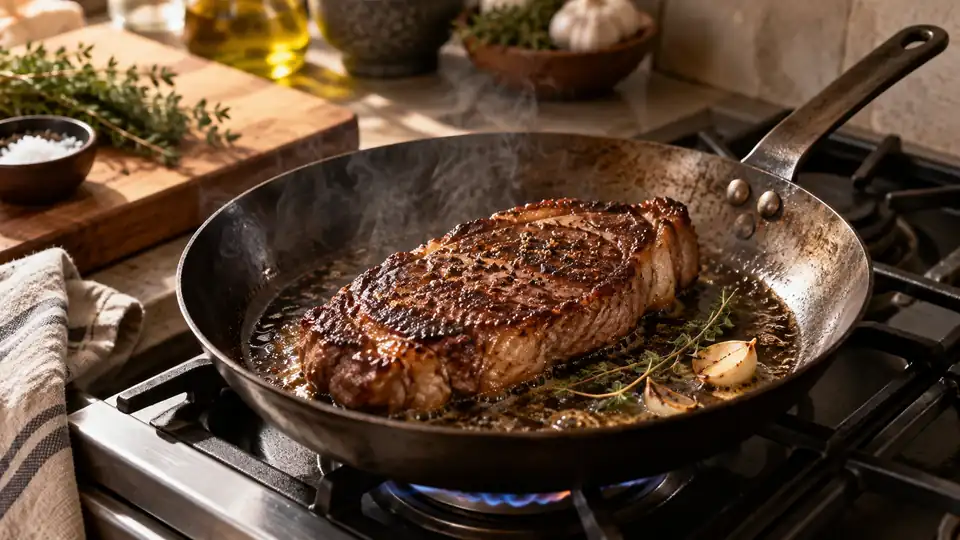
| Steak, burgers, chops | Generally helpful, adds cooking oils and browning | Remove residue, wash lightly if needed, dry thoroughly |
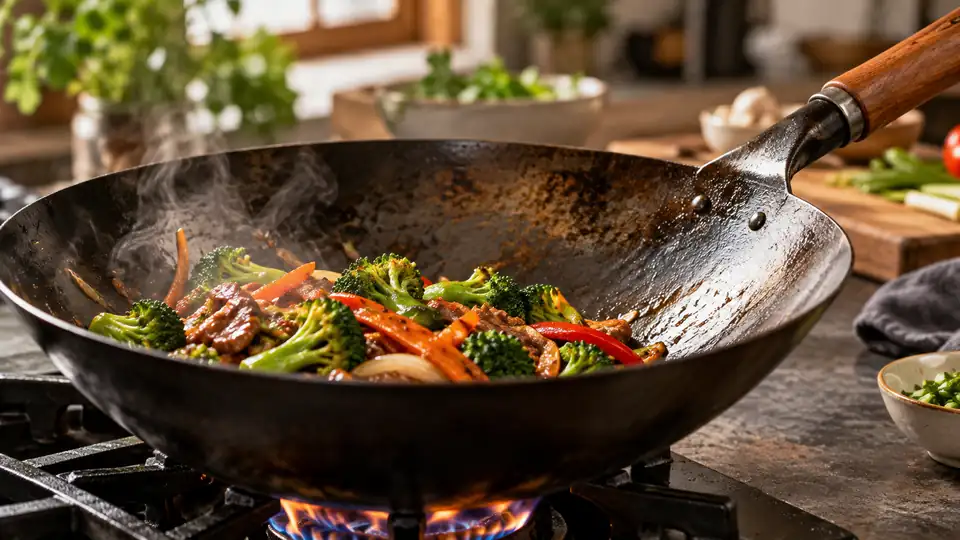
| Stir-fry | Usually good for seasoning if pan is not overcrowded | Clean promptly, dry, thin oil coat |
| Tomato sauce, wine reduction, vinegar-heavy food | Can weaken seasoning | Wash, dry, inspect surface, re-oil or touch up seasoning if needed |
| Sugary glazes or sticky sauces | Can leave stubborn residue and carbon buildup | Loosen with warm water, scrub gently, dry, re-oil lightly |
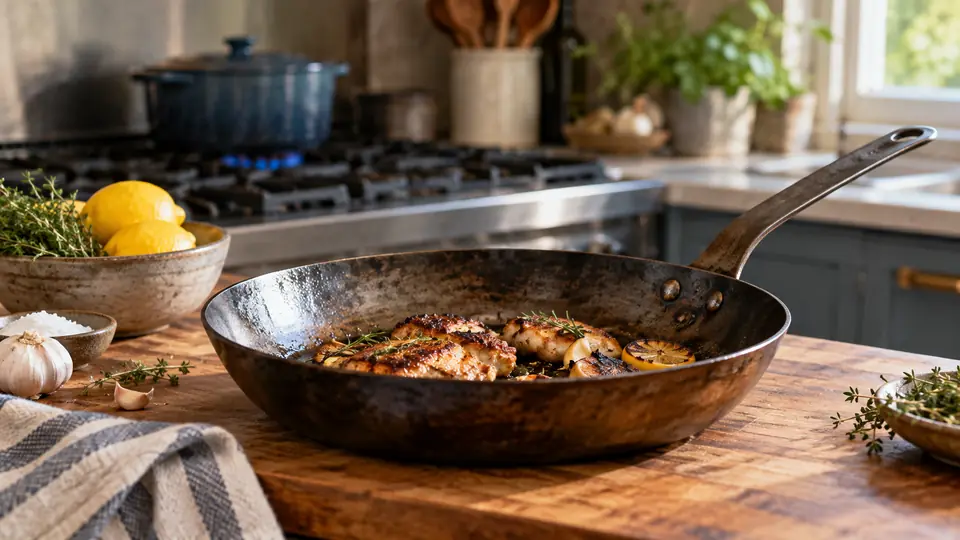
| Fish with skin | Can expose weak spots if pan was not preheated well | Clean carefully, check for patchy areas, continue regular use |
Why Seasoning Breaks Down
Understanding what damages seasoning makes maintenance easier. Most problems come from moisture, acidity, heavy residue, or incorrect oil application.
Moisture and Oxidation
Carbon steel rusts quickly compared with stainless steel because it lacks the same corrosion resistance. If water sits on exposed or weakly seasoned areas, oxidation begins. That is why complete drying matters so much.
Acidic Ingredients
Tomatoes, lemon juice, vinegar, and wine can strip or thin seasoning, especially in a newer pan. A quick deglaze is one thing. Simmering acidic sauce for a long period is another.
Too Much Oil
Many seasoning issues come from adding more oil than necessary. Thick oil layers do not build stronger seasoning. They tend to become sticky, blotchy, and soft.
Burned-On Food Residue
Black crust is not always good seasoning. Sometimes it is just carbonized food. If left in place repeatedly, it can create rough patches that interfere with cooking and make future seasoning less even.
Overaggressive Cleaning
Chain mail scrubbers, steel wool, and harsh abrasion are useful in some recovery situations, but they are not ideal for routine cleaning. If you strip the pan down after every meal, the seasoning never has a chance to mature.
Step-By-Step Solution for Common Seasoning Problems
Sticky Surface
A sticky pan usually means the oil coat was too thick, or it was not heated enough to bond properly.
- Wash the pan with warm water and mild soap.
- Scrub the tacky areas with a non-abrasive scrubber.
- Dry completely over low heat.
- Apply only a tiny amount of oil and buff until nearly invisible.
- If stickiness remains, do a light stovetop reseasoning session.
Light Rust Spots
Small rust spots are common if a pan was stored damp or left uncoated for too long.
- Scrub the rust with a sponge, pan scraper, or fine abrasive pad.
- Wash and rinse thoroughly.
- Dry over heat until completely moisture-free.
- Apply a thin coat of oil.
- Do a touch-up seasoning pass on the stovetop or in the oven.
Dull Gray Patches
Gray areas often mean the seasoning is thinner there. This is not always an emergency.
- Clean and dry the pan.
- Cook a few rounds of oil-friendly foods such as potatoes or onions in a little oil.
- Use proper preheating to reduce sticking while the layer rebuilds.
- Add a light maintenance oil coat after cleaning.
Flaking or Rough Buildup
If the surface feels uneven, some of what you are seeing may be residue rather than healthy seasoning.
- Scrub away loose or flaky material.
- Wash with soap and warm water.
- Dry thoroughly.
- If needed, strip the worst areas and reseason from a more even base.
Best Practices That Help Seasoning Last Longer
Preheat the Pan Properly
A cold carbon steel pan is more likely to grab food. Gentle preheating helps the metal expand evenly and gives oil a chance to coat the surface better. That reduces stuck-on residue, which makes seasoning easier to maintain.
Use Enough Fat for the Food You Are Cooking
Carbon steel improves over time, but it is not magically nonstick in every situation. Eggs, fish, and lean proteins benefit from proper oil or butter. Forcing low-fat cooking too early often leads to scraping and frustration.
Avoid Long Simmers of Acidic Foods
Short contact with acidic ingredients is usually manageable. Long simmering can erode seasoning quickly, especially in a newer pan. Stainless steel or enameled cookware is often a better choice for tomato sauces, vinegar braises, and similar dishes.
Store the Pan in a Dry Place
Even a well-seasoned pan can rust if stored in a damp cabinet, stacked while slightly wet, or covered before fully cooling. If you stack cookware, placing a paper towel between pans can help absorb residual moisture and reduce surface abrasion.
Cook Regularly
Frequent use often improves seasoning more reliably than repeated full reseasoning sessions. Searing meat, sautéing vegetables, and shallow frying all help reinforce the surface when done with sensible heat and enough oil.
When to Do a Full Reseasoning Instead of Simple Maintenance
Routine maintenance handles most situations, but sometimes a pan needs more than a wipe, wash, and light oil coat.
A fuller seasoning session is worth doing if:
- Rust has spread across multiple areas.
- The pan was stripped during deep cleaning.
- The surface is uneven, sticky, and performing poorly.
- Large bare metal patches are exposed.
- The pan smells off because old residue has built up over time.
If you need a deeper reset, a guide on pre-seasoned carbon steel pans can also help clarify how factory seasoning compares with the seasoning you build at home.
That said, do not overuse full reseasoning as a cure for every minor issue. Carbon steel often performs well with imperfect-looking seasoning. Chasing a perfectly black surface can create more work than necessary.
Tools and Materials That Make Maintenance Easier
You do not need specialized gear, but a few simple items help.
| Tool or Material | Why It Helps | Notes |
|---|---|---|
| Paper towels or lint-free cloth | Wiping out debris and buffing off oil | Important for applying very thin oil layers |
| Soft sponge or dish brush | Routine cleaning without excessive abrasion | Good for daily maintenance |
| Pan scraper or wooden spatula | Lifts stuck bits without gouging the surface | Helpful after searing proteins |
| Kosher salt | Acts as a gentle scrub for residue | Useful when you want to avoid heavy scrubbing |
| Neutral high-smoke-point oil | Used for touch-up coats and seasoning support | Use very small amounts |
| Fine abrasive pad | Removes light rust or sticky buildup | Best reserved for problem areas |
Common Mistakes That Ruin Carbon Steel Seasoning
Leaving the Pan in the Sink
This is probably the fastest route to rust. Even a short soak can weaken fresh seasoning, and extended exposure can produce visible rust by the next day.
Applying Oil Thickly After Cleaning
If the pan looks wet or glossy after oiling, there is probably too much on it. Buff until the surface looks almost dry. Thick coats are far more likely to become sticky than protective.
Using High Heat for Everything
Carbon steel handles high heat well, but that does not mean every maintenance step should involve a blazing burner. Very high heat with leftover oil residue can create uneven buildup or scorch patches before the layer bonds properly.
Cooking Acidic Dishes Too Early in a New Pan
Fresh seasoning is more vulnerable. A brand-new carbon steel pan usually benefits from several rounds of regular cooking before tackling tomato-heavy or vinegar-based meals.
Trying to Make the Pan Look Perfect
Maintaining seasoning is about performance, not cosmetics. A pan can cook beautifully with a blotchy, uneven, or mottled appearance. Constant stripping and reseasoning to improve color often does more harm than good.
Scrubbing Off Useful Seasoning After Every Use
Some cooks mistake normal darkening for dirty buildup and clean too aggressively. The goal is to remove food residue, not to return the pan to shiny silver metal every time.
How Often Should You Oil a Carbon Steel Pan?
This depends on how mature the seasoning is and what you cook. Newer pans often benefit from a very thin oil coat after nearly every wash. Well-used pans with stable seasoning may not need extra oil every single time, especially if they are used often and stored in a dry place.
A practical rule is to oil lightly whenever the surface looks dry, freshly scrubbed, or slightly ashy. If the pan already looks healthy and smooth after drying, a maintenance coat can be minimal or skipped occasionally.
Can You Use Soap on Carbon Steel?
Yes, in moderation. A small amount of mild dish soap is usually fine for established seasoning, especially when needed to remove grease or odor. Soap does not automatically destroy the pan.
The bigger risks are soaking, harsh abrasives, and repeated heavy scrubbing. If a little soap helps you clean the pan properly and avoid rancid residue, it can be the better choice.
Which Foods Help Build and Maintain Seasoning?
Some foods are more supportive of seasoning than others. Cooking in a little oil while avoiding long acidic exposure tends to strengthen the surface over time.
Helpful Foods
- Potatoes sautéed in oil
- Onions and other vegetables cooked in fat
- Burgers, steaks, and chops
- Fried rice and many stir-fry dishes
- Cornbread or skillet flatbreads with enough oil
More Challenging Foods
- Tomato-based sauces
- Vinegar-heavy dishes
- Wine reductions simmered for long periods
- Very sticky sugary glazes
- Delicate eggs in a weakly seasoned, poorly preheated pan
Frequently Asked Questions
Do I need to reseason my carbon steel pan after every use?
No. Most of the time, maintaining carbon steel seasoning only requires cleaning, complete drying, and a very thin oil coat if the surface needs it. Full reseasoning is usually only necessary after rust, stripping, or significant performance decline.
Why does my carbon steel pan look blotchy even though it cooks well?
Blotchy seasoning is normal. Carbon steel often develops uneven colors as oils bond, food contacts the surface differently, and heat patterns vary. If the pan is not rusty or sticky and food release is improving, the seasoning is doing its job.
Should I oil the pan before storing it?
Usually, yes, but only lightly. A thin buffed coat helps protect against moisture, especially in humid kitchens or with newer seasoning. Do not leave a wet-looking oil layer on the pan.
How do I know if the seasoning is gone?
Seasoning may be compromised if you see orange rust, broad gray bare patches, or a sudden increase in sticking after normal preheating and oiling. Minor discoloration alone does not mean the seasoning is gone.
Can I maintain seasoning by cooking alone, without special treatment?
Often, yes. Regular cooking with proper preheating and enough oil is one of the best ways to maintain a carbon steel pan. You still need to dry it thoroughly and prevent rust, but everyday cooking does much of the work.
Final Thoughts
Knowing how to maintain carbon steel seasoning is less about complicated techniques and more about consistency. Clean the pan without soaking it, dry it fully over heat, and use only a whisper-thin layer of oil when the surface needs protection. Those small habits preserve the seasoning better than repeated heavy reseasoning sessions.
It also helps to judge the pan by performance rather than appearance. Carbon steel rarely stays perfectly uniform, and it does not need to. If the pan cooks well, resists rust, and improves with use, the seasoning is being maintained properly. Focus on keeping the surface clean, dry, and lightly protected, and the pan will continue to get better over time.

Leave a Reply