
A tacky carbon steel pan usually means the seasoning layer did not fully cure. Instead of forming a thin, hard, dry coating, the oil stayed too thick, overheated unevenly, or cooled into a gummy film on the surface. Sticky seasoning is frustrating because it can grab food, collect dust or paper towel lint, and make a pan feel worse after seasoning than before.
If you are asking, why is my carbon steel seasoning sticky, the good news is that this problem is common and usually fixable. In most cases, the cause is not damage to the pan itself. It is a problem with the seasoning method, especially using too much oil or not heating the pan long enough for the oil to polymerize properly. Once you understand what caused it, you can remove the tacky layer or cook it down into a smoother finish.
Carbon steel seasoning rarely needs to look perfect to work well, but it should feel mostly dry and smooth. A little discoloration is normal. A sticky or gummy coating is not. Fixing it early makes the pan easier to use and helps future seasoning layers bond more evenly.
Quick Answer
If your carbon steel seasoning is sticky, the most likely reason is that the oil layer was too thick. Seasoning works best when oil is applied in an extremely thin film, then heated until it changes from wet oil into a hardened layer bonded to the metal. If too much oil remains on the pan, it does not fully cure and leaves a tacky surface.
Other common causes include heating the pan at too low a temperature, not leaving it on the heat long enough, uneven oven or burner heating, or using an oil that tends to leave a heavier residue. A sticky pan is usually fixable without stripping everything down to bare metal. Mild stickiness can often be corrected by reheating the pan properly or cooking with it a few times. Heavier buildup may need to be scrubbed down and reseasoned with much less oil.
For future seasoning, wipe the oil on, then wipe it off again as though you are trying to remove all of it. The pan should look almost dry before heating. That one change prevents most sticky seasoning problems.
Why Sticky Seasoning Happens
Seasoning is not just oil sitting on metal. It is oil that has changed under heat into a tougher layer that bonds to the pan. This process is often called polymerization. In plain terms, the oil transforms from a liquid into a thin, hardened coating.
When that process is incomplete, the pan feels tacky instead of dry. The coating may look shiny, blotchy, or slightly wet even after cooling. In some cases, it may feel smooth in one area and sticky in another. That uneven result is a clue that the heat or oil application was inconsistent.
Carbon steel is very forgiving, but seasoning mistakes show up quickly on the surface. The material responds fast to heat, which is useful for cooking, but it also means a rushed or heavy-handed seasoning session can create patches of gummy buildup.
How Proper Seasoning Should Feel
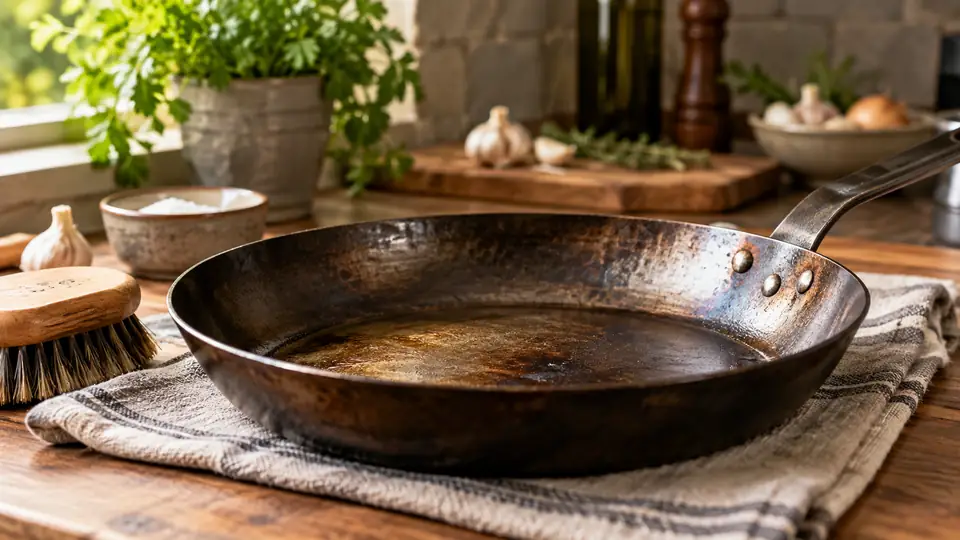
A properly seasoned carbon steel pan does not need to be jet black or perfectly uniform. Fresh seasoning often ranges from light bronze to brown to patchy dark gray. What matters more is texture than color.
- Dry to the touch: The surface should not feel tacky after cooling.
- Thin and even: No raised droplets, thick spots, or oily smears.
- Slightly satin or low sheen: Some shine is normal, but it should not feel wet.
- Stable during cooking: It should not soften or smear when warmed gently.
What Sticky Seasoning Feels Like
Sticky seasoning is easy to recognize once you know the signs.
- The pan grabs at your fingertips or a dry paper towel.
- Dust, lint, or seasoning flakes stick to the surface.
- The pan feels gummy after it has completely cooled.
- Food sticks in places where the coating is thickest.
- The surface may smell faintly oily even after heating.
Most Common Reasons Why My Carbon Steel Seasoning Is Sticky
1. Too Much Oil Was Left on the Pan
This is the leading cause by a wide margin. Many people apply oil and assume the surface should look coated before heating. For carbon steel, that usually means there is already too much oil present.
The correct layer is so thin that the pan can look almost dry before it goes into the oven or over the burner. If you can see obvious streaks, beads, or glossy patches, the oil is probably too thick. Thick oil pools do not polymerize evenly. They harden on top while staying soft underneath, which creates that sticky texture.
2. The Pan Did Not Get Hot Enough
Different oils need enough heat to cure into seasoning. If the pan stays below the range where the oil can properly bond and harden, the surface may partially dry but remain tacky. This often happens in ovens that run cool, on low stovetop heat, or when the pan is removed too soon.
With stovetop seasoning, another issue is that the center of the pan gets hotter than the sides. The bottom may cure while the upper walls stay gummy. Woks and high-sided skillets are especially prone to this if they are seasoned only on a flat burner without rotating the pan.
3. The Pan Was Not Heated Long Enough
Even if the temperature is roughly correct, short heating time can leave the seasoning half-cured. Oil needs enough time under heat to transform fully. A quick pass over the flame or a short oven cycle may darken the pan but not finish the coating.
This is one reason seasoning instructions vary. Pan thickness, stove power, oven accuracy, and the amount of oil all affect how long the process takes.
4. Uneven Heating Created Soft Spots
Carbon steel pans heat quickly, but not always evenly. Burner seasoning can create hot spots in the middle and cooler areas near the rim. Oven seasoning helps with overall coverage, but ovens can still have hot and cool zones.
If one part of the pan feels smooth and another part feels sticky, uneven heat is a likely factor. This does not always mean the method was wrong. It may just mean the pan needs another thin, better-controlled pass.
5. The Oil Choice Left a Heavy Residue
Most common cooking oils can season carbon steel, but some leave a heavier film than others if applied too generously. Oils with a tendency to get sticky when used thickly can make the problem worse. The real issue is still often excess oil, but oil type can influence how obvious the gumminess becomes.
Rather than chasing the perfect oil, it usually helps more to improve the application method. Thin coats matter more than chasing a specific bottle.
6. Too Many Seasoning Layers Were Applied Back to Back
Several rushed coats in one session can build soft residue faster than a pan can cure it. Each layer should be extremely thin and properly heated before another is added. If the earlier layer is not fully set, stacking another coat over it traps that tackiness underneath.
This is common with new owners trying to darken the pan quickly. A darker surface does not always mean a better surface.
7. The Pan Cooled with Residual Oil Still on It
After seasoning, some cooks wipe on a bit of oil for storage. That can be fine if the oil is buffed to a very thin protective film. But if a visible oily layer is left behind and the pan sits unused, it can oxidize and feel sticky later.
This is not always failed seasoning. Sometimes it is simply leftover storage oil that was never buffed off well enough.
Sticky Seasoning Causes and Fixes at a Glance
| Cause | What It Looks or Feels Like | Best Fix |
|---|---|---|
| Too much oil | Glossy, tacky, smeared surface | Scrub lightly if needed, then reseason with a nearly invisible oil layer |
| Temperature too low | Seasoning darkened but stayed gummy | Reheat properly at a higher, controlled temperature |
| Not heated long enough | Surface feels soft after cooling | Extend heating time so the layer fully cures |
| Uneven heating | Center smooth, sides sticky | Rotate pan on stovetop or use oven seasoning for better coverage |
| Too many thick coats | Patchy buildup, sticky spots, darker ridges | Reduce buildup, then apply one thin coat at a time |
| Residual storage oil | Light tackiness after sitting unused | Wash or wipe thoroughly, then heat briefly to dry the surface |
How to Fix Sticky Carbon Steel Seasoning
The right fix depends on how sticky the pan is. Mild tackiness can often be corrected without starting over. Heavy, gummy buildup is easier to solve by removing the bad layer and reseasoning cleanly.
Option 1: Reheat the Pan if the Stickiness Is Mild
If the surface only feels slightly tacky and there are no thick ridges or beads of oil, try reheating the pan first. This can help finish curing a layer that was close but not quite done.
- Wipe the pan thoroughly with a clean cloth or paper towel.
- Place it in a hot oven or on the stovetop over controlled medium to medium-high heat.
- Heat until the pan is fully hot and any remaining oily smell fades.
- Let it cool completely, then check the texture again.
If the surface dries out and feels smoother, the seasoning was likely under-cured rather than badly applied. If it remains sticky, move to a deeper fix.
Option 2: Scrub Off the Tacky Layer and Reseason
For a pan with obvious gumminess, sticky patches, or uneven buildup, cleaning back the surface is usually faster and gives better results.
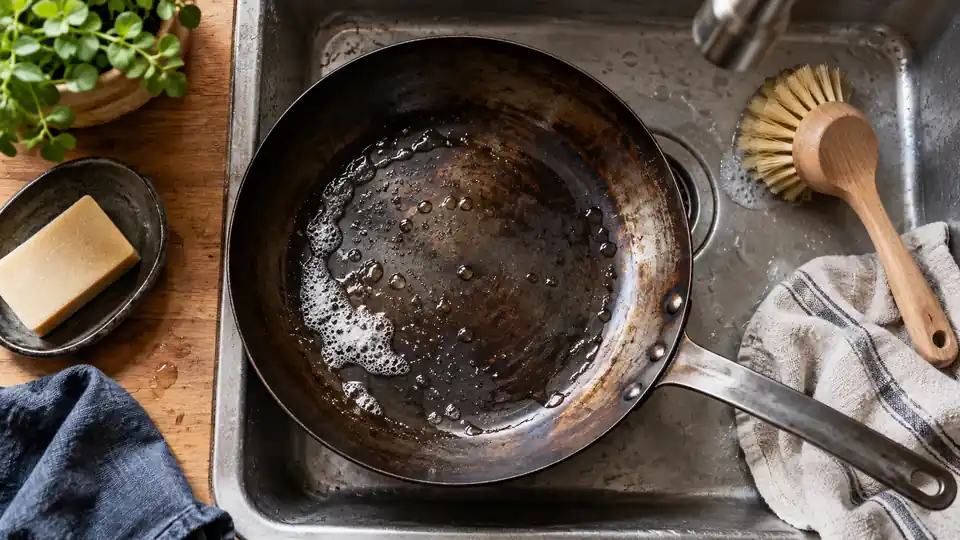
- Wash the pan with hot water and a small amount of dish soap.
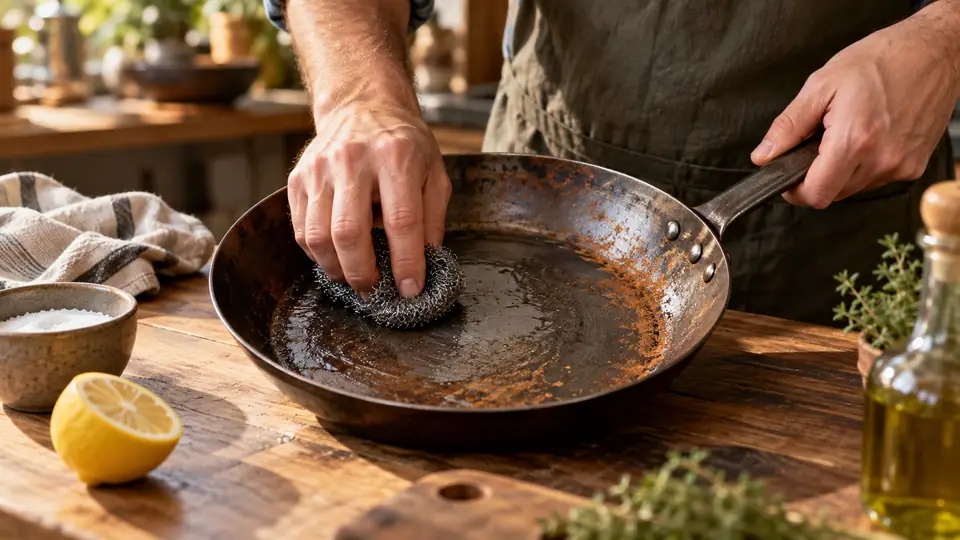
- Use a non-abrasive scrubber or a mild abrasive pad to remove the soft, sticky residue.
- For stubborn spots, scrub until the surface feels more even. You do not always need to strip to bare silver metal unless the buildup is severe.
- Dry the pan completely over heat.
- Apply a very small amount of oil.
- Buff the oil aggressively until the pan looks almost dry.
- Heat the pan long enough to cure that thin layer.
This approach works well because it removes the problem where it exists instead of trying to build over it.
Option 3: Strip and Restart if the Buildup Is Heavy
Sometimes the seasoning is not just sticky. It is thick, dark, uneven, and flaky in places. In that case, a reset can save time and frustration.
Strip the pan back to bare metal using your preferred safe method, then start over with one or two very thin coats. A fresh start is especially helpful when a new pan has gone through multiple failed seasoning attempts.
Step-By-Step Solution for a Sticky Pan
Step 1: Assess How Bad the Stickiness Is
Run clean fingers lightly over the cool pan. If it feels only slightly grabby, reheating may be enough. If your fingers drag or the surface feels gummy, plan to scrub and reseason. If there are visible ridges, blotches, or flakes, a more complete reset may be easier.
Step 2: Remove Loose or Soft Residue
Wash with hot water and a little soap. Contrary to old myths, a small amount of dish soap will not ruin solid seasoning. It helps remove soft oil residue that never bonded properly. Focus on getting the bad layer off rather than preserving a failed coat.
Step 3: Dry the Pan Thoroughly
Moisture and seasoning do not mix well. After washing, dry the pan with a towel and then place it over heat for a few minutes until fully dry. The surface should be warm and moisture-free before oil touches it again.
Step 4: Apply Less Oil Than You Think You Need
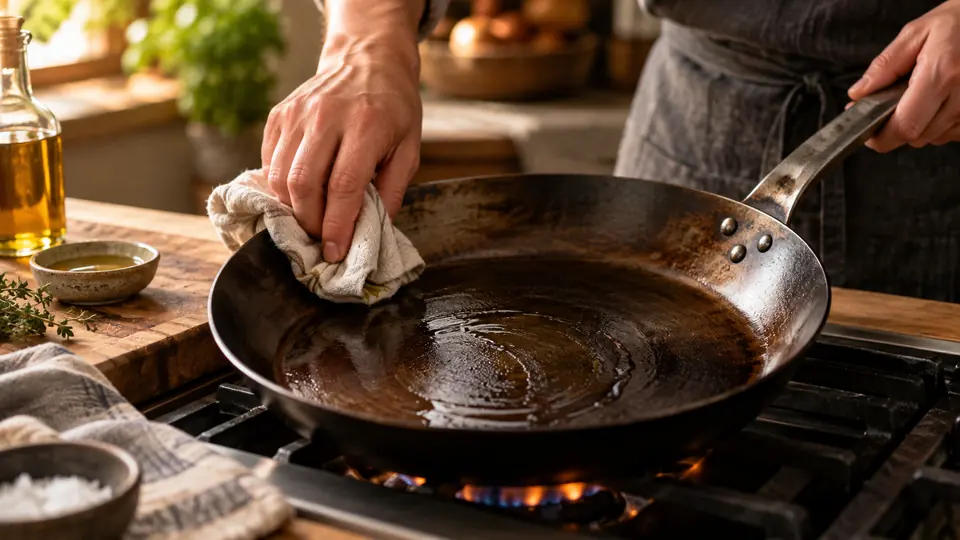
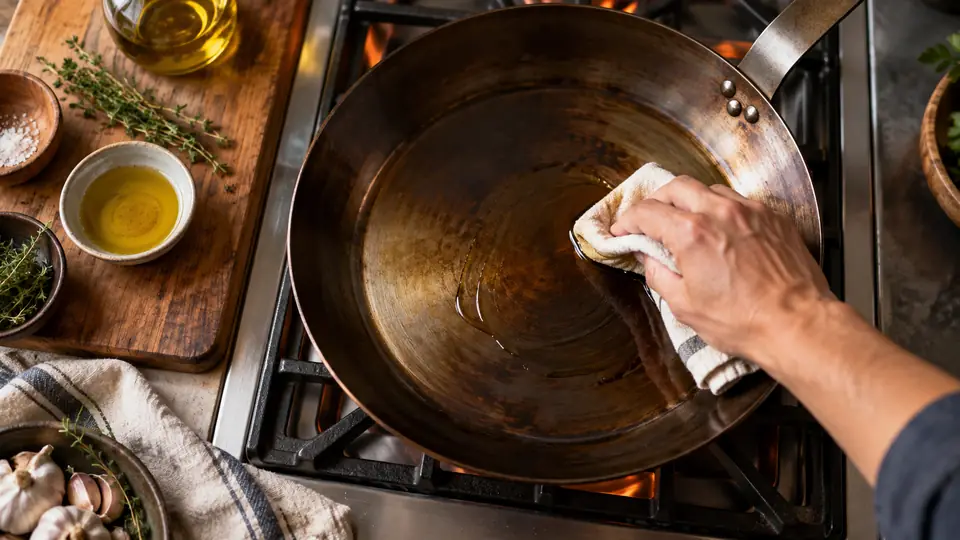
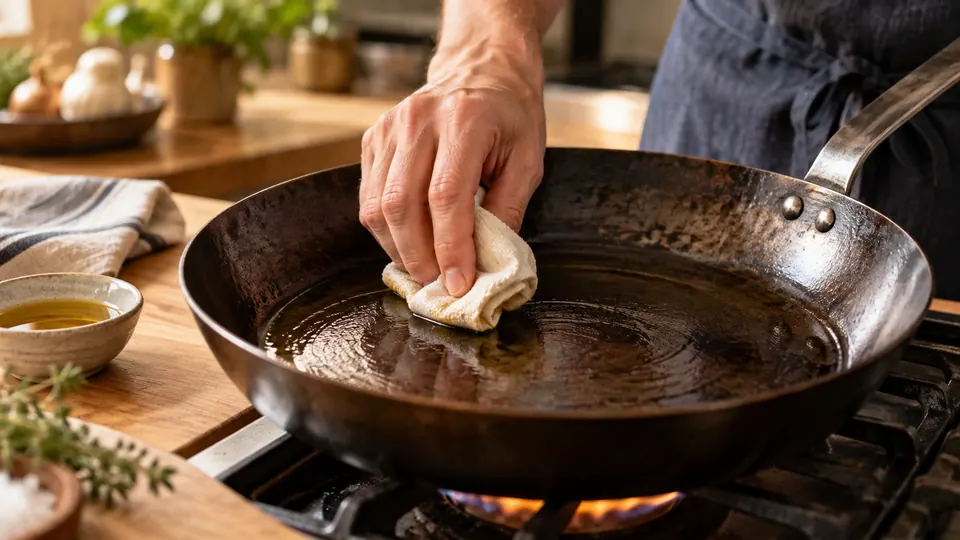
Add only a few drops of oil to the pan. Spread it over the entire cooking surface and up the sides if needed. Then take a clean cloth or paper towel and wipe hard as if you are trying to remove every trace. This step matters more than almost anything else.
If the pan still looks glossy, keep wiping. The ideal preheating appearance is a whisper-thin film, not a visible coat.
Step 5: Heat Until the Oil Properly Sets
You can do this in the oven or on the stovetop. Oven seasoning usually gives more even coverage. Stovetop seasoning is fast and practical for maintenance coats.
On the stovetop, move and rotate the pan if needed so heat reaches the sides. In the oven, allow enough time for the full pan to heat through. Once finished, let the pan cool before judging the final texture. A pan can feel different hot versus fully cool.
Step 6: Test Before Adding More Layers
Do not rush into a second or third coat immediately. Wait until the first layer cools. Touch the surface. If it feels dry and reasonably smooth, you can stop there or add another very thin layer. If it feels tacky again, adjust your method instead of stacking another coat.
Why Proper Seasoning Matters
Sticky seasoning is more than a cosmetic issue. A gummy surface affects how the pan performs. Food may cling more, especially eggs, fish, pancakes, or delicate vegetables. The pan can also collect carbonized residue faster because thick oil layers burn unevenly.
Good seasoning helps with three things:
- Rust resistance: A cured layer helps protect bare steel from moisture and oxygen.
- Release: While carbon steel is never identical to synthetic nonstick, proper seasoning improves food release.
- Easier cleanup: A smooth, stable surface sheds stuck bits more easily.
That said, seasoning develops through cooking too. A perfect-looking finish is not required. Many well-used carbon steel pans look patchy but perform very well. Texture matters more than appearance.
Prevention Tips So Your Carbon Steel Seasoning Does Not Get Sticky Again
Use Extremely Thin Coats
This is the single most useful habit. Apply oil sparingly, then buff it off thoroughly. If you are unsure whether you wiped off enough, wipe again.
Do Not Chase a Dark Black Finish Too Quickly
New owners often try to force a deep black patina in one day. That usually leads to thick coats and sticky buildup. Carbon steel gets better through repeated cooking, not just repeated oiling.
Give Each Layer Time to Cure
Whether seasoning in the oven or on the stovetop, let the oil fully set before deciding the pan needs another layer. Thick, rushed coatings are less durable than one thin, well-cured coat.
Cook Foods That Help Build Seasoning Naturally
After initial seasoning, cooking with moderate oil can help the surface mature. Searing proteins, sautéing vegetables, and pan-frying foods tend to build seasoning gradually. Early on, very sticky sauces or sugary foods can be harder on a fresh coating.
Store the Pan Dry
After cleaning, dry the pan with heat and let it cool. If you apply a protective film of oil for storage, buff it until almost invisible. A thick storage coat often turns tacky later.
Do Not Panic Over Uneven Color
Patchiness alone does not mean the seasoning failed. Fresh carbon steel seasoning often looks blotchy. If the surface is dry and the pan cooks well, appearance is less important than performance.
Common Mistakes That Lead to Sticky Seasoning
- Leaving visible oil on the pan before heating. This is the classic mistake.
- Using very low heat for seasoning. Warm oil is not the same as cured oil.
- Stopping as soon as the pan changes color. Color change does not always mean the oil has fully set.
- Applying repeated coats without checking texture between them. This stacks problems.
- Trying to protect the pan with a wet-looking oil layer during storage. That layer can become sticky on its own.
- Judging the seasoning only by looks. Smooth and dry beats dark and glossy.
How Oven Seasoning and Stovetop Seasoning Affect Stickiness
| Method | Advantages | Risks That Can Cause Stickiness |
|---|---|---|
| Oven seasoning | More even all-over heating, good for full pan coverage | Too much oil can pool, oven may run cool, pan may be removed too early |
| Stovetop seasoning | Fast, convenient for touch-ups, good for flat cooking surface | Hot center and cooler sides can create uneven curing and sticky sidewalls |
Neither method is automatically better in every case. For a pan with sticky seasoning around the sides, an oven cycle may help even things out. For a mostly good pan that just needs a touch-up after cleaning, stovetop seasoning is often enough.
What Not to Do With a Sticky Carbon Steel Pan
Some fixes make the problem worse. Avoid these shortcuts if the pan already feels gummy.
- Do not add more oil over a sticky layer. That usually builds more residue.
- Do not assume cooking will always solve it. Mild tackiness may improve with use, but thick gumminess often needs cleaning first.
- Do not baby a failed layer. If it is sticky, it is better to remove or reduce it than try to protect it.
- Do not focus only on color. A bronze or brown pan that feels dry is in better shape than a black pan that feels sticky.
Frequently Asked Questions
Can I still cook on a carbon steel pan if the seasoning is sticky?
Yes, but results may be worse. Mild tackiness may improve after proper reheating or a few cooking sessions, but a gummy surface often causes more sticking and uneven browning. If the pan feels noticeably sticky, it is usually better to fix it first.
Do I need to strip the whole pan if the seasoning is sticky?
No. Light stickiness often needs only reheating or a partial scrub and reseason. Full stripping is most helpful when the buildup is thick, uneven, or flaking in addition to being sticky.
Is sticky seasoning caused by the wrong oil?
Sometimes oil choice plays a minor role, but excess oil is the more common cause. Even a suitable seasoning oil can turn gummy if it is applied too heavily or not heated long enough.
Why does my pan feel sticky after I oiled it for storage?
You likely left too much oil on the surface. A storage coat should be extremely thin and buffed well. If the pan feels tacky before the next use, wash or wipe it down thoroughly and heat it dry.
Will sticky seasoning eventually harden on its own?
It can, if the tackiness is very mild and the layer was close to fully cured. But thicker gummy buildup often stays troublesome and may burn unevenly during cooking. In that case, cleaning and reseasoning is the more reliable fix.
Final Thoughts
If you have been asking, why is my carbon steel seasoning sticky, the answer is usually simple. The oil layer was too thick, not heated enough, or both. Carbon steel seasoning works best when it is almost invisible before heating and fully cured before another coat goes on.
The encouraging part is that sticky seasoning is rarely a permanent problem. A mild case can often be fixed by reheating. A heavier case usually responds well to a scrub and a fresh, thinner seasoning pass. Once you get the method right, carbon steel becomes much easier to maintain, and the pan improves steadily through regular cooking.
A dry, thin, functional seasoning layer will serve you better than a dark, glossy one that feels gummy. Focus on texture, not perfection, and the pan will usually reward that approach.

Leave a Reply