

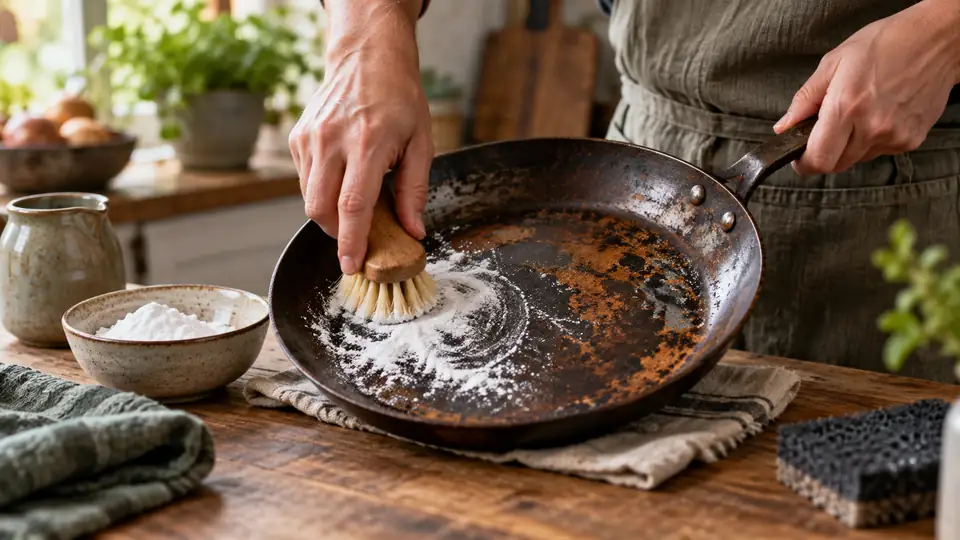
Rust on carbon steel looks alarming, but it is usually fixable. That is why questions about household rust removers matter so much. A pan that develops a few orange spots after air-drying poorly does not need to be thrown out, and in many cases it does not need a harsh chemical treatment either. One of the first ingredients people reach for is baking soda, partly because it is common, inexpensive, and gentle.
Can Baking Soda Remove Rust from Carbon Steel? Yes, but only within limits. Baking soda can help remove light surface rust from carbon steel cookware by acting as a mild abrasive when mixed into a paste or used with a damp scrub pad. It is often a good starting method for small rust spots, thin orange discoloration, or rust that has not deeply eaten into the metal. It is less effective on heavy rust, thick flaking corrosion, or pans that have been neglected for a long time.
The key is knowing when baking soda is enough, how to use it without damaging the pan unnecessarily, and what to do after rust removal so the problem does not come back. Carbon steel is reactive bare metal under its seasoning layer, so cleaning rust is only half the job. The other half is drying, protecting, and re-seasoning the surface properly.
Quick Answer
Can Baking Soda Remove Rust from Carbon Steel? Yes, baking soda can remove light rust from carbon steel cookware, especially small surface spots and fresh orange discoloration. It works best when mixed with a little water into a paste and scrubbed with a non-metal scrubber, sponge, or cloth. Because baking soda is only mildly abrasive, it is gentle enough for minor rust but not strong enough for severe corrosion.
If the rust is thick, dark, rough, or widespread, baking soda may help only partially. In those cases, a stronger rust-removal approach such as vinegar exposure for a short time, steel wool, chain mail, or full stripping and re-seasoning may be needed. After removing rust, the pan should be rinsed, dried completely over heat, and seasoned again. Otherwise the bare carbon steel can begin oxidizing again almost immediately.
For small rust spots, baking soda is often a sensible first step because it is easy to control and less aggressive than stronger acids or heavy abrasives. It is not a cure-all, but it is a practical option for early rust problems.
Why Rust Forms on Carbon Steel
Carbon steel rusts because it contains iron, and iron reacts with oxygen and moisture. This process is oxidation. If water sits on the pan, or if the seasoning layer is patchy and the metal is exposed, rust can start developing surprisingly fast.
In real kitchen use, rust usually shows up after one of a few common mistakes. The pan may have been left to soak in the sink, dried poorly after washing, stored in a humid cabinet, or put away after acidic cooking stripped part of the seasoning. Even a pan that looks dark and seasoned can develop orange spots if a little moisture remains on the surface overnight.
Seasoning helps by forming a protective layer of polymerized oil over the steel. That layer reduces direct contact between water and bare metal. But seasoning is not indestructible. It can wear thin, especially on the cooking surface, around the rim, or near the handle rivets.
Common causes of rust on carbon steel cookware
- Air-drying instead of heat-drying after washing
- Soaking the pan in water for too long
- Storing the pan damp or in a humid place
- Cooking acidic foods that weaken seasoning
- Scrubbing too aggressively and exposing raw steel
- Skipping maintenance oiling after cleaning
How Baking Soda Works on Rust
Baking soda is sodium bicarbonate, a mild alkaline powder. For cookware maintenance, its main value is not that it chemically dissolves serious rust the way stronger acids can. Its main value is that it provides gentle abrasion. When turned into a paste and rubbed over rust, it helps lift oxidation from the surface without being overly harsh.
That makes it useful for early rust problems. If you catch the issue when the rust is still thin and superficial, baking soda can often clear it away with a bit of scrubbing. It is also easier to control than some stronger methods because you can target the affected area instead of exposing the whole pan.
What baking soda does not do especially well is remove deep corrosion efficiently. If the rust has formed texture, pitting, or stubborn dark patches, a mild abrasive will usually take a long time and may not fully solve the problem.
Baking soda strengths and limitations
| Situation | How well baking soda works | Notes |
|---|---|---|
| Fresh orange rust spots | Very good | Often removable with paste and light scrubbing |
| Light rust haze | Good | Works well if caught early |
| Moderate patchy rust | Fair | May need repeated applications and firmer abrasion |
| Heavy rust buildup | Poor | Usually requires stronger methods |
| Deep pitting rust | Very poor | Can remove surface oxidation but not reverse metal loss |
Can Baking Soda Remove Rust from Carbon Steel Effectively?
It can, but effectiveness depends on the condition of the pan. For a lightly rusted carbon steel skillet, wok, or griddle, baking soda is often effective enough to restore the surface. For a pan with months of corrosion, it is usually only a partial solution.
Think of baking soda as a first-response treatment. If the rust appeared recently and is mostly cosmetic, it is a reasonable method to try before moving to harsher options. If the pan feels rough, has visible scaling, or leaves reddish residue even after scrubbing, you are probably past the point where baking soda alone is the best tool.
This matters because carbon steel pans do not all need the same level of intervention. Mild rust calls for a mild fix. Heavy rust calls for deeper cleaning and full re-seasoning.
Step-By-Step: How to Use Baking Soda to Remove Rust from Carbon Steel
This approach works best for pans with light to moderate surface rust. The goal is to remove the oxidation without gouging the steel more than necessary.
What you need
- Baking soda
- Warm water
- Soft cloth, sponge, or non-abrasive scrub pad
- Paper towels or a clean kitchen towel
- Stovetop or oven heat for drying
- A small amount of cooking oil for re-seasoning
Step 1: Rinse and inspect the pan
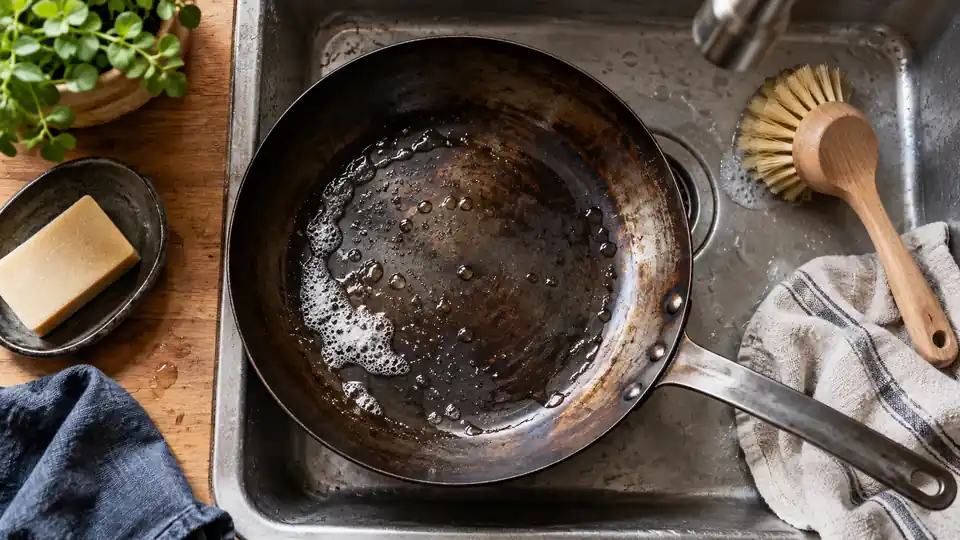
Rinse the pan under warm water to remove loose dust, food residue, or flaky rust. Look closely at the affected area. If the rust is only orange discoloration or a few small spots, baking soda is a strong candidate.
If the pan has thick flakes, very dark rust, or rough texture over a large area, be prepared for the possibility that you will need a stronger follow-up method.
Step 2: Make a baking soda paste
Mix baking soda with just enough water to form a thick paste. It should spread easily but not run off the surface. A thicker paste gives you more scrubbing power and better control.
For a few small spots, a tablespoon or two is plenty. For a larger cooking surface, make more as needed.
Step 3: Apply the paste to the rusted areas
Rub the paste onto the rust and let it sit briefly, usually for a few minutes. You do not need a long soak. Baking soda is not an aggressive chemical rust dissolver, so its main action comes from scrubbing, not waiting.
Short contact time also helps you keep the process tidy and reduces the chance of leaving moisture on the pan longer than necessary.
Step 4: Scrub firmly but sensibly
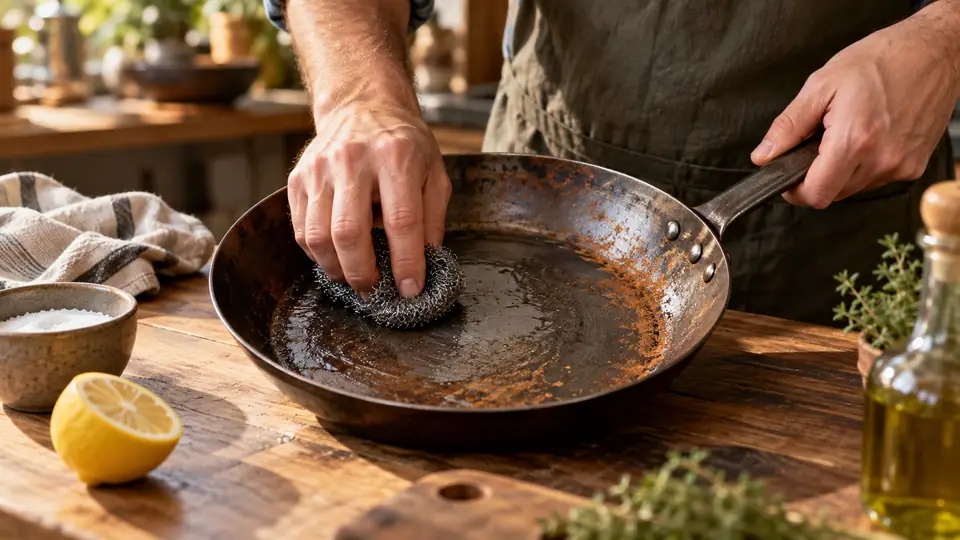
Use a damp sponge, cloth, or scrub pad to work the paste into the rusted area. Moderate pressure is usually enough for light rust. Scrub in small circles or back-and-forth strokes, then wipe away the paste and inspect progress.
You may need to repeat this several times. Fresh rust often lifts fairly quickly. Stubborn spots may take multiple rounds.
Step 5: Escalate carefully if needed
If the baking soda paste removes some rust but not all of it, you can repeat the process with a slightly more abrasive tool, such as the rough side of a sponge or fine steel wool. At that point, baking soda is acting more like a supportive cleaning agent than the main rust remover.
Be aware that stronger scrubbing can also remove remaining seasoning. That is usually acceptable if rust removal is the priority, but it means re-seasoning becomes more important afterward.
Step 6: Rinse thoroughly
Once the rust is gone, rinse the pan well to remove all baking soda residue. Leftover residue is not dangerous in tiny amounts, but it can leave a chalky film and interfere with the next seasoning layer.
Use warm water and wipe the surface clean until it feels smooth and residue-free.
Step 7: Dry the pan completely
This step matters as much as rust removal itself. Towel-dry the pan, then place it over low to medium heat for a few minutes until every trace of moisture has evaporated. Pay attention to the rim, handle joints, and any stamped or textured areas.
Carbon steel can flash-rust quickly if left damp after cleaning. A pan that looks dry to the eye may still hold moisture in tiny surface irregularities.
Step 8: Re-season the exposed steel
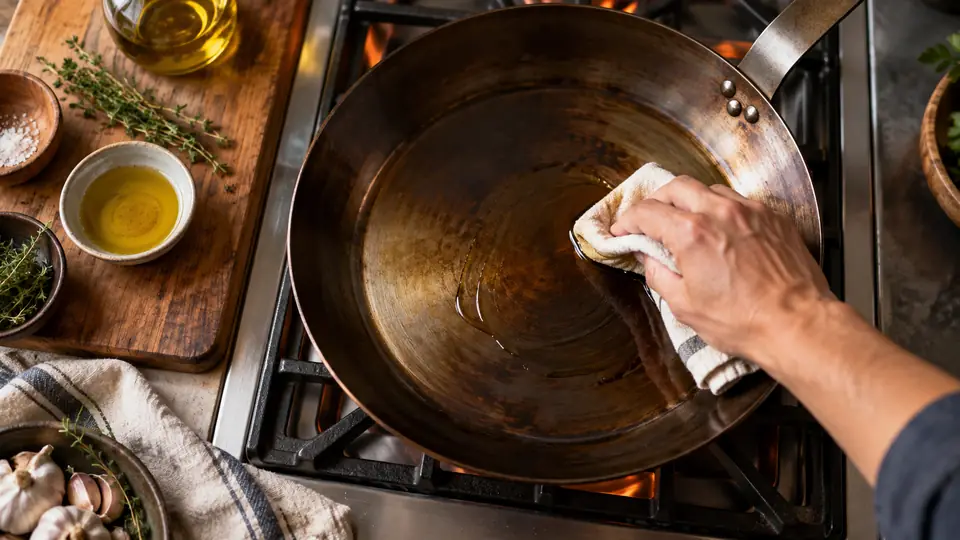
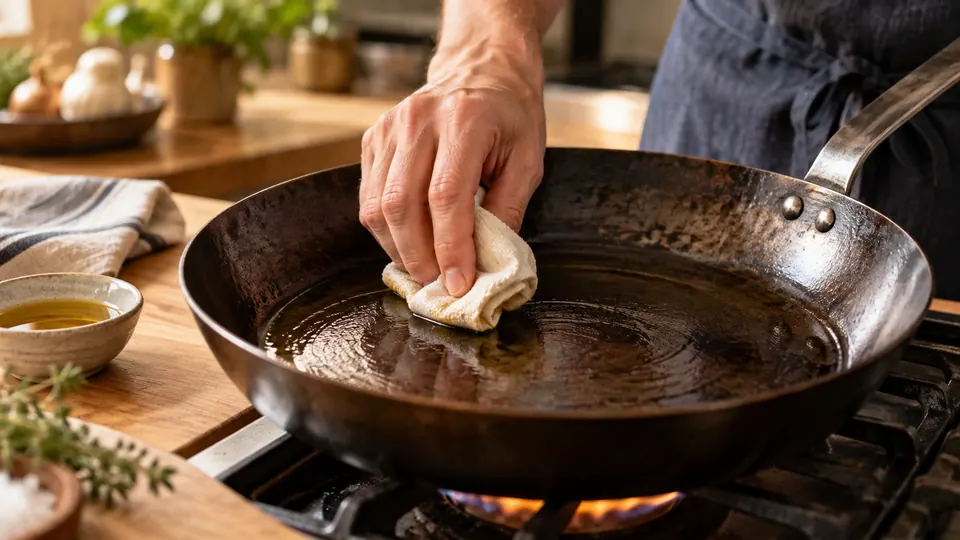
Apply a very thin film of oil to the warm pan, wiping away excess until the surface looks nearly dry. Then heat it until the oil darkens and bonds to the steel. If the rust removal exposed a large area of bare metal, doing one or two full seasoning rounds is a good idea.
If you need a deeper walkthrough, a guide on pre-seasoned carbon steel pans can also help explain why seasoning quality and maintenance affect future rust resistance.
When Baking Soda Is a Good Choice
Baking soda makes the most sense in certain situations. It is especially useful when you want to solve a minor rust issue without reaching immediately for acidic treatments or very abrasive tools.
Best cases for baking soda
- Small orange spots that appeared after washing
- Light rust film on the cooking surface or exterior
- Touch-up cleaning between regular maintenance sessions
- Early intervention before rust spreads further
- Owners who want a gentle method first before using steel wool or vinegar
This is also a practical choice if you are unsure how much of the surface is still seasoned. A mild cleaner lets you assess the pan without stripping everything right away.
When Baking Soda Is Not Enough
Some rust problems are simply too advanced for baking soda alone. That does not mean the pan is ruined, only that a stronger method is more efficient.
Signs you need a stronger rust-removal method
- Rust covers a large portion of the pan
- The surface feels rough or gritty after scrubbing
- Rust is dark brown, not just bright orange
- Flakes or scaling are visible
- The pan re-rusts immediately because old corrosion remains
- There is pitting, which means rust has already eaten into the metal
In those situations, common next steps include a brief vinegar treatment, scrubbing with steel wool, or stripping the pan down to bare metal and re-seasoning from scratch. Baking soda may still be part of the cleanup, but it is no longer the main solution.
Baking Soda vs Other Rust Removal Methods
Not every rust-removal technique suits every pan condition. The table below gives a practical comparison.
| Method | Best for | Aggressiveness | Risk to seasoning | Notes |
|---|---|---|---|---|
| Baking soda paste | Light surface rust | Low | Low to moderate | Good first step for minor rust |
| Salt and oil scrub | Stuck residue and mild rust | Low to moderate | Low to moderate | Useful for spot cleaning, less effective on real corrosion |
| Steel wool | Moderate to heavy rust | Moderate to high | High | Effective, but usually strips seasoning too |
| Vinegar soak or wipe | Moderate rust | Moderate | High | Works fast, but timing matters to avoid overexposure |
| Full strip and re-season | Severe rust or neglected pans | High | Complete removal | Best for deep reset when the pan is in poor shape |
Common Mistakes When Using Baking Soda on Carbon Steel
The method is simple, but a few errors can make the result worse or cause the rust to return quickly.
Leaving the pan wet afterward
This is the most common mistake. Removing rust exposes fresh steel, and fresh steel rusts easily. Always dry the pan with heat after rinsing.
Assuming the pan is finished after scrubbing
Rust removal is not complete until the pan is protected again. If you skip oiling or re-seasoning, the same area can oxidize again in a short time.
Using baking soda for severe rust and expecting a full fix
It is easy to waste time scrubbing a heavily rusted pan with a method that is too gentle. If progress is minimal after a reasonable effort, switch to a stronger approach.
Scrubbing too aggressively too early
Some owners jump straight to harsh steel wool for a tiny rust spot. That can work, but it can also remove more seasoning than necessary. Start mild, then escalate only if needed.
Applying thick oil after cleaning
After rust removal, some people coat the pan heavily with oil and store it. Excess oil can become sticky, uneven, and attract dust. A very thin layer is usually all that is needed before heating.
How to Prevent Rust from Coming Back
Once the rust is gone, prevention becomes the real goal. Carbon steel is not difficult to maintain, but it does reward consistency.
Prevention steps that make a real difference
- Dry the pan over heat after every wash
- Apply a very light oil film if the surface looks dry or newly scrubbed
- Do not soak the pan in water
- Store it in a dry place with good airflow
- Touch up seasoning after cooking acidic foods or after deep scrubbing
- Check rarely used pans before long storage, since neglected cookware rusts more easily
Why heat-drying matters so much
Cloth drying removes visible water, but it does not always remove moisture from seams, rivets, and microscopic surface texture. Heat finishes the job. Two or three minutes on the burner often prevents the kind of overnight rust that surprises many new carbon steel owners.
Why seasoning helps prevent oxidation
Seasoning is built from very thin layers of oil heated until they bond to the steel. That bonded layer is not the same as wet grease. It is a harder, darker protective coating that helps reduce sticking and shields the steel from moisture. If rust has been removed, rebuilding that protective layer is part of proper recovery.
What to Do if the Rust Keeps Returning
Recurring rust usually means one of three things is happening. First, some corrosion may still be left on the surface. Second, the pan may not be getting fully dry after washing. Third, the seasoning may be too thin or patchy to protect the metal.
If baking soda cleaned the visible rust but the same area turns orange again, examine your process. Dry longer over heat, wipe on a thinner layer of oil, and do a more deliberate seasoning pass. If the rust still comes back, strip the area more thoroughly and start over.
Persistent rust on the outside bottom of the pan is also common, especially on pans stored damp or used on gas burners where condensation or spills can be overlooked. Those areas need the same drying and protection as the cooking surface.
Frequently Asked Questions
Can baking soda damage a carbon steel pan?
Used normally, baking soda is unlikely to damage the steel itself. It is mild. However, scrubbing with baking soda can remove some seasoning, especially if you scrub firmly or repeatedly. That is usually acceptable when treating rust, but the pan should be re-seasoned afterward.
Is baking soda better than vinegar for rust on carbon steel?
Baking soda is gentler, while vinegar is usually stronger and faster on moderate rust. For light rust, baking soda is often the safer first step. For heavier rust, vinegar can be more effective, but it should be used carefully because it can strip seasoning and should not be left on the pan too long.
Can I use baking soda on the cooking surface of a carbon steel pan?
Yes. It is commonly used on the cooking surface for light rust removal. After cleaning, rinse well, dry thoroughly, and restore protection with a thin oil layer and seasoning heat.
Will baking soda remove deep rust pits from carbon steel?
No. Baking soda can help remove surface rust, but it cannot reverse pitting. Pitting means the rust has already eaten into the metal. The pan may still be usable if the damage is limited, but the surface will need cleaning, protection, and careful monitoring.
Do I need to season the pan again after using baking soda?
In most cases, yes. Even if the baking soda only removed a small rust spot, the affected area is likely more exposed than before. A quick seasoning touch-up helps prevent fresh oxidation and restores the pan’s protective layer.
Final Thoughts
Can Baking Soda Remove Rust from Carbon Steel? Yes, especially if the rust is light and caught early. It is a practical, gentle first method for small spots, thin orange discoloration, and minor surface oxidation. It is not the strongest rust remover, but that is also part of its appeal. For cookware that only needs a modest cleanup, baking soda often does enough without forcing a full strip-down.
The main thing to remember is that rust removal does not end with scrubbing. Carbon steel needs to be dried completely and re-seasoned so the exposed steel is protected again. If the rust is heavy, rough, or keeps returning, move to a stronger method rather than relying on baking soda alone. Used in the right situation, baking soda is a helpful tool, just not a complete answer for every rust problem.


Leave a Reply