
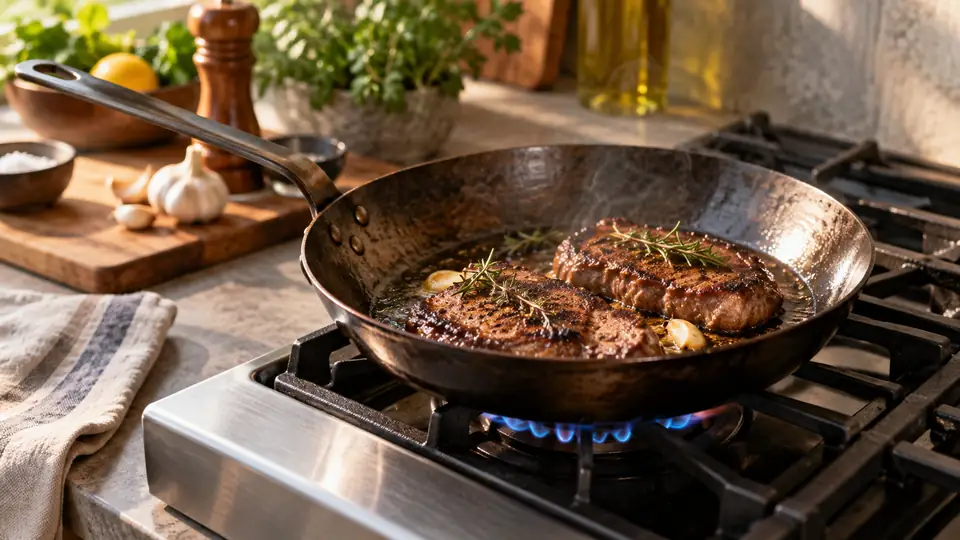
Gas burners and carbon steel are a very natural pairing. In fact, if you ask cooks why carbon steel pans and woks are so often used in professional kitchens, the answer usually includes gas heat. The open flame gives carbon steel the kind of direct, responsive heat it handles especially well.
That does not mean every carbon steel pan works perfectly on every gas stove, or that there are no downsides. Hot spots, scorching, uneven seasoning, and pan warping can still happen if the burner is too powerful, the pan is too thin, or the preheating is rushed. A flat skillet behaves differently from a round-bottom wok, and a small home burner behaves differently from a restaurant wok range.
If you are trying to figure out whether can carbon steel be used on gas stoves, the short answer is yes. The more useful question is how to use it well. That includes choosing the right shape, matching pan size to burner size, controlling preheat, and understanding how flame affects seasoning and cooking performance over time.
Quick Answer
Yes, carbon steel can be used on gas stoves, and it is often one of the best cookware materials for gas cooking. Carbon steel responds quickly to flame, gets hot enough for searing and stir-frying, and works well for skillets, frying pans, griddles, and many flat-bottom woks. Gas also makes it easier to build and maintain seasoning because the pan heats up quickly and dries fast after washing.
That said, good results depend on using the pan correctly. A burner that is much smaller than a large pan can create a very hot center and cooler edges. A very strong flame under a thin pan can cause warping or uneven seasoning. Round-bottom woks also do not sit safely on most standard gas grates unless you use a proper wok ring or have a stove designed for them.
For most home cooks, the safest approach is a flat-bottom carbon steel pan or wok, moderate preheating, and flame control that matches the size of the cookware. Used this way, carbon steel performs very well on gas stoves.
Why Proper Use Matters
Carbon steel is valued for two qualities that matter a lot on gas. First, it heats faster than cast iron. Second, it responds more quickly when you raise or lower the flame. That gives you more control during cooking, especially when sautéing, searing, pan-frying, or stir-frying.
But responsiveness cuts both ways. A pan that heats quickly can also overheat quickly. On gas, that can mean burnt oil, a patchy seasoning layer, or food that sticks because the center became too hot before the rest of the pan caught up.
Proper use matters because gas heat is direct and concentrated. Unlike some electric cooktops that spread heat through a wider element, a gas flame tends to focus heat where the flames contact the base. Carbon steel handles that well, but it rewards a little technique.
Can Carbon Steel Be Used on Gas Stoves Successfully?
Yes, and in many cases gas is one of the easiest heat sources for carbon steel. The material is strong enough to tolerate high temperatures, making it suitable for tasks like browning meat, crisping potatoes, frying eggs once seasoned well, and building wok hei style flavor in the right setup.
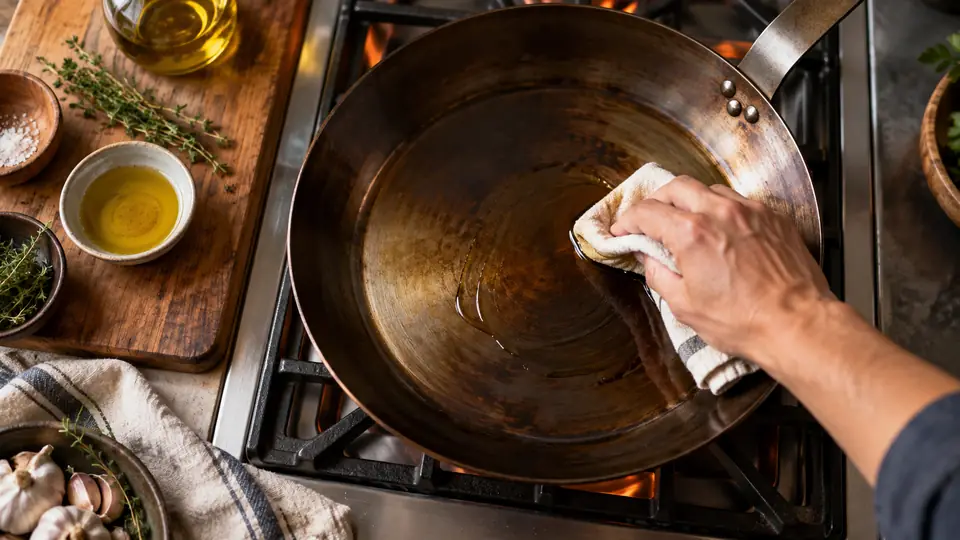
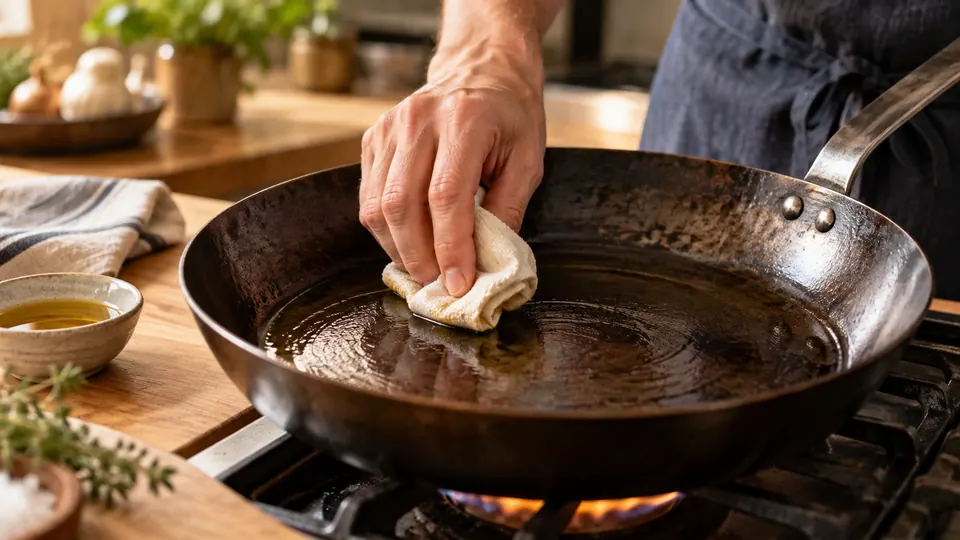
Carbon steel also benefits from being dried over a flame after washing. Since rust is one of the main maintenance concerns with carbon steel, a gas burner makes post-cleaning care simple. You can wash, place the pan back over low heat for a minute or two, then wipe on a very thin layer of oil if needed.
The success of the setup depends less on basic compatibility and more on details such as pan thickness, stove output, burner size, and cookware shape. A 10-inch skillet on a medium gas burner is straightforward. A large, thin, 14-inch pan over a powerful flame requires more care.
How Carbon Steel Behaves on Gas Heat
Fast heat response
Carbon steel is known for heat responsiveness. If you turn the flame up, the pan temperature rises quickly. If you lower the flame, the pan starts adjusting faster than heavy cast iron. This is useful for foods that need changing heat levels, such as eggs after preheating, chicken cutlets that need gentle finishing, or vegetables that should brown without turning soft.
High-heat capability
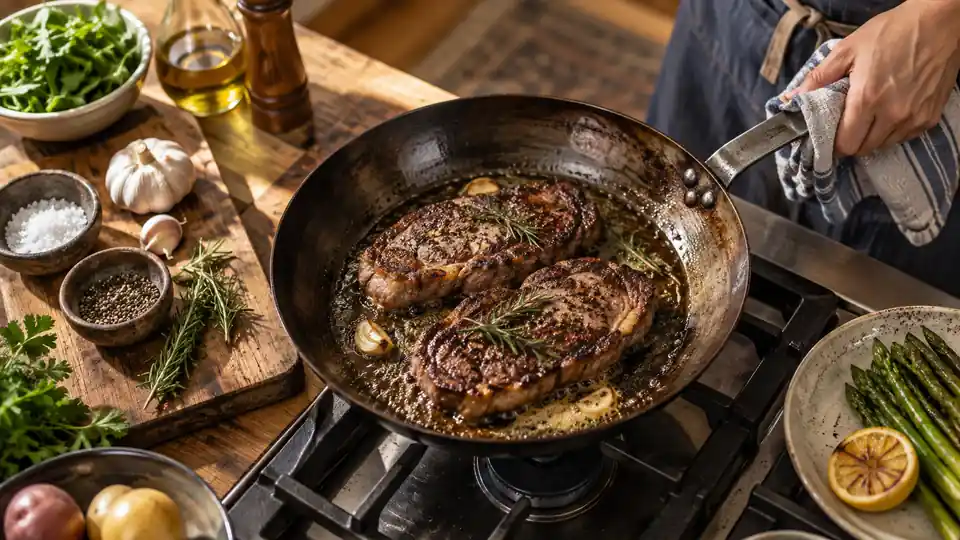
Gas stoves can produce the kind of direct, high heat that carbon steel handles well. That makes this combination particularly useful for searing steaks, blistering peppers, stir-frying vegetables, and creating good browning on burgers or chops.
Unlike many nonstick pans, carbon steel is comfortable at temperatures that would damage synthetic coatings. That does not mean more heat is always better, only that the material itself is suitable for it.
Localized heating
The main weakness of gas with carbon steel is that flame does not always heat the whole pan evenly. The center often gets hottest first. On smaller pans, this is not usually a major issue. On larger skillets, paella pans, or wide griddles, you may notice stronger browning in the middle than around the edges.
Seasoning development
Seasoning is the thin, darkened layer created when oil polymerizes onto the surface. Gas heat can help develop this layer because the pan gets hot enough quickly. However, direct flame can also create uneven seasoning patterns, especially on the bottom and lower sidewalls of a wok or skillet. This is normal and mostly cosmetic unless the surface is sticky or flaking.
Best Carbon Steel Cookware Shapes for Gas Stoves
| Cookware Type | Works on Gas? | Notes |
|---|---|---|
| Flat-bottom skillet | Yes | Very practical for most home gas stoves. Stable and easy to preheat. |
| Frying pan | Yes | Good for searing, eggs, sautéing, and general stovetop use. |
| Flat-bottom wok | Yes | Usually the best wok choice for standard home gas ranges. |
| Round-bottom wok | Sometimes | Needs proper support or a dedicated wok burner. Not ideal on most regular grates. |
| Griddle | Yes | Works well, but even heating can be harder across large surfaces. |
| Paella pan | Yes | Needs a burner large enough to heat more than the center. |
Skillets and frying pans
This is the easiest carbon steel cookware to use on gas. A flat base sits securely on the grate, and the sidewalls help contain food and oil. For most kitchens, a carbon steel skillet is the most forgiving option.
Flat-bottom woks
Flat-bottom woks are a strong match for home gas stoves because they stay stable without extra accessories. They still allow high-heat stir-frying and tossing, though they do not concentrate heat in exactly the same way as a true round-bottom wok over a dedicated wok burner.
If you are specifically looking at wok cooking on gas, a dedicated guide to the best carbon steel wok for gas stove can help explain what shapes and handles tend to work best.
Round-bottom woks
These are traditional and excellent over the right flame setup. On a standard residential gas stove, they are less convenient. Without a proper wok ring or recessed burner design, they can be unstable and unsafe. Even if supported, heat transfer may not be ideal unless the burner flame wraps well around the bottom curve.
Best Practices for Using Carbon Steel on Gas
Match the pan size to the burner
One of the most important habits is pairing cookware size with burner size. A small burner under a very wide pan leaves the center blazing hot while the outer cooking surface stays relatively cool. This can lead to uneven browning, sticking, and seasoning that looks dark in one area and pale in another.
If your stove has multiple burner sizes, use the largest practical burner for larger carbon steel pans. For smaller skillets, a medium burner often gives more controlled, even heat.
Preheat gradually
Carbon steel likes to be preheated, but not shocked. Place the pan over low to medium heat first, then let it warm for a minute or two before increasing the flame if needed. This helps reduce the risk of warping and gives the metal more time to distribute heat.
A rushed preheat on high flame is one of the most common mistakes. It can produce a smoking center before the rest of the pan is ready, which is bad for both cooking consistency and seasoning.
Use enough oil, but not too much
On gas, the pan surface can get hot quickly, which makes oil behavior easier to read. Once the pan is properly preheated, add a modest amount of oil and swirl to coat. Too little oil can encourage sticking. Too much oil can pool, smoke excessively, or leave gummy seasoning if you are trying to maintain the finish after cleaning.
Move food based on hot spots
Even good gas setups can have a stronger center heat zone. Instead of fighting that, use it. Sear in the hottest area, then shift food outward if it needs gentler finishing. This is especially useful with chicken thighs, burgers, or vegetables that benefit from both browning and controlled cooking.
Dry the pan over low heat after washing
This is one of the simplest advantages of gas. After cleaning, place the pan over low heat until all moisture evaporates. Carbon steel rusts easily if water is left on the surface or around the handle rivets, so this step is worth making routine.
Common Mistakes on Gas Stoves
Using high heat by default
Gas gives quick heat, but that does not mean every cooking task should start on high. Many sticking problems happen because the pan was overheated, not because carbon steel is difficult. Eggs, delicate fish, and pancakes often do better at moderate heat once the pan is seasoned and properly preheated.
Ignoring warping risk
Some thinner carbon steel pans can warp if heated too aggressively, especially when empty. This is more likely if a cold pan is placed over a strong burner and left on high heat. Gradual heating helps, and thicker pans tend to be more resistant.
Expecting perfect edge-to-edge heating on large pans
Large carbon steel pans, griddles, and paella pans often heat unevenly on standard home gas burners. That is not always a flaw in the cookware. It is often a limitation of the heat source. Rotating the pan occasionally, using multiple burners when appropriate, or cooking in zones can help.
Letting flames climb the sides too much
A little flame contact on the lower sidewalls is normal, especially with woks. But if the flames are wrapping far up the sides, you may be wasting heat and overheating the handle area. Excessive side flame can also discolor seasoning unevenly and make the pan harder to control.
Using an unstable round-bottom wok
This is more than a performance issue. It is a safety issue. A round-bottom wok that rocks on the grate can spill hot oil or food. Unless your stove is designed for it or you have the proper support, a flat-bottom wok is usually the better choice.
Cooking Tasks Carbon Steel Handles Well on Gas
Searing meat
Gas and carbon steel work very well for fast, aggressive searing. The pan can build enough heat for good crust formation, and the responsiveness makes it easier to lower the heat once browning is achieved.
Stir-frying
This is one of the classic uses. Carbon steel woks on gas can cook vegetables and thin-cut proteins quickly with a nice balance of browning and movement. A stronger burner helps, but even standard home gas can still perform well with smaller batches.
Eggs and delicate foods
These foods are possible on gas with carbon steel, but technique matters. A well-seasoned surface, moderate preheat, and proper oil amount make the biggest difference. Many people assume carbon steel is only for high-heat cooking, yet it can handle eggs very well once the cook learns the pan.
Pan sauces and finishing
Because carbon steel responds quickly, it is useful when you need to shift from searing to lower-heat finishing. You can brown a pork chop, lower the flame, add aromatics, and avoid the lag that comes with heavier cookware.
How Gas Stoves Compare With Other Heat Sources for Carbon Steel
| Heat Source | Carbon Steel Compatibility | Main Advantage | Main Limitation |
|---|---|---|---|
| Gas stove | Excellent | Fast response, strong heat, easy drying after washing | Potential hot spots, uneven heating on large pans |
| Electric coil | Good | Simple compatibility, stable support | Slower response, can be less even depending on coil and pan flatness |
| Smooth electric | Good | Works with flat-bottom pans, steady surface contact | Slower heat adjustments, warped pans perform poorly |
| Induction | Often excellent | Very fast heating, good efficiency with flat pans | Requires flat contact, hot spots can still occur on some setups |
| Oven | Excellent | Even all-around heat, useful for seasoning and finishing | Not suitable for active stovetop techniques like tossing or frequent heat changes |
Gas is often the most intuitive stovetop partner for carbon steel because it combines direct heat with quick control. Induction can be equally strong in different ways, but gas has a long track record with woks and skillets because it supports visual flame control and easy transitions during cooking.
Seasoning Considerations on Gas
Uneven color is normal
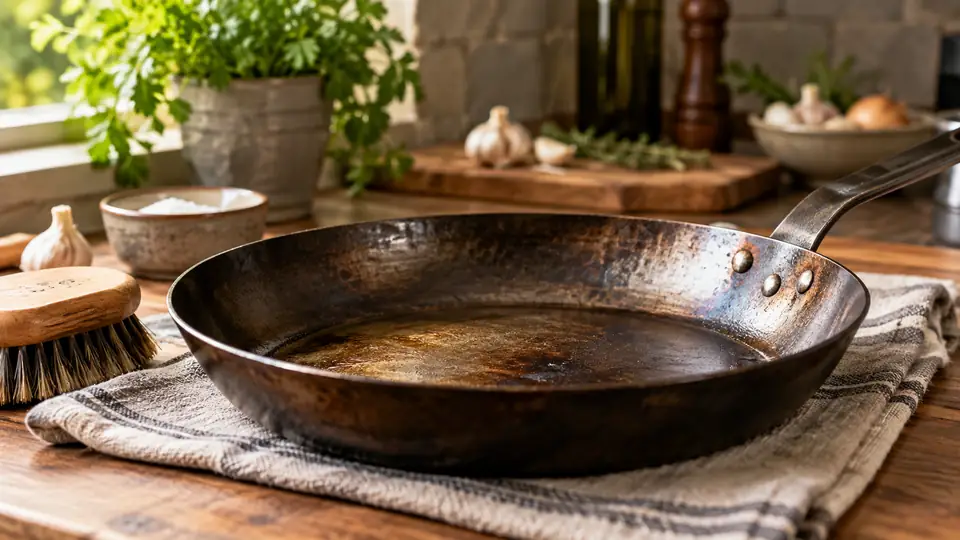
On gas, seasoning often develops in patterns. The center may darken faster than the edges, or the lower sidewalls may show blotchy brown and blue tones. This does not usually mean the seasoning failed. Carbon steel pans often look better after repeated cooking than after a first seasoning session.
Cooking helps seasoning more than cosmetic perfection
New owners sometimes focus too much on making the pan look evenly black. In practice, regular cooking with oil, moderate preheating, and avoiding acidic foods early on often builds a better working surface than repeated oven seasoning for appearance alone.
Very high flame can damage fresh seasoning
A fresh seasoning layer is still relatively delicate. If you blast a newly seasoned pan over high gas flame, the coating may become patchy or burn off in places. That is not unusual, but it is frustrating if you were expecting a perfectly uniform finish. A few normal cooking sessions usually improve it.
Maintenance Tips for Carbon Steel on Gas Stoves
- Dry thoroughly after washing. Gas makes this easy. Use low heat until no moisture remains.
- Apply a very thin oil film if needed. Wipe almost all of it off so the surface does not become sticky.
- Avoid soaking the pan. Long contact with water encourages rust and weakens seasoning.
- Re-season lightly after harsh cleaning. If food burns badly and you scrub hard, a quick stovetop seasoning touch-up can help.
- Watch handle temperature. On gas, long handles can get hotter than expected, especially if flames extend outward.
Who Will Get the Best Results?
Home cooks who use skillets for searing, frying, and sautéing usually get very good results from carbon steel on gas. The same is true for cooks who enjoy stir-frying in smaller batches and have a flat-bottom wok.
People willing to learn preheat control tend to enjoy carbon steel the most. It is not difficult, but it is less forgiving than a modern coated nonstick pan if used carelessly.
Those who may be less satisfied include cooks who expect perfectly even edge-to-edge heating from oversized pans on small burners, or those who want a completely maintenance-free surface. Carbon steel performs well on gas, but it still needs drying, light upkeep, and some technique.
Frequently Asked Questions
Can a carbon steel pan warp on a gas stove?
Yes, some pans can warp if heated too quickly over a strong flame, especially thinner models. Gradual preheating lowers the risk. Matching pan size to burner size also helps.
Is gas better than electric for carbon steel?
For many cooks, yes. Gas offers quicker heat response and is especially useful for searing and stir-frying. Electric can still work well, but gas often gives more immediate control.
Can you use a round-bottom carbon steel wok on a gas stove?
Sometimes, but not always safely or effectively on a standard home range. Most home cooks are better served by a flat-bottom wok unless the stove is designed for round-bottom use or includes proper support.
Does gas heat ruin carbon steel seasoning?
No, normal gas cooking does not ruin seasoning. Excessively high flame can make seasoning patchy or burn it back in spots, especially on a new pan. Routine cooking usually rebuilds and improves the surface over time.
Do carbon steel pans get too hot on gas?
They can if preheated too long or used over high flame unnecessarily. Carbon steel responds quickly, so moderate heat is often enough for many tasks. Learning your burner strength is part of getting consistent results.
Final Thoughts
If you are asking can carbon steel be used on gas stoves, the practical answer is yes, and it is often an excellent combination. Carbon steel handles direct flame well, responds quickly to heat changes, and suits the kind of cooking gas stoves do especially well, including searing, frying, sautéing, and stir-frying.
The key is not just compatibility. It is control. Choose a stable pan shape, preheat gradually, match the cookware to the burner, and accept that seasoning may look uneven before it looks polished. With that approach, carbon steel on gas is not just workable. It is one of the most effective ways to use the material in a home kitchen.

Leave a Reply