
Carbon steel pans can warp, but it is not an inevitable problem. Warping usually happens when the pan is exposed to a sudden, uneven temperature change, or when a thin pan is heated too aggressively. The good news is that most warping is preventable with the right heating habits, and in many cases the pan can still be used even if it no longer sits perfectly flat.
For home cooks, this matters because a warped pan can spin on the burner, heat unevenly, and make searing or frying less predictable. Carbon steel is valued for its responsiveness and durability, but like any thin metal cookware, it has limits. Understanding why carbon steel pans warp helps you avoid the most common mistakes and choose a pan thickness that matches your cooking style.
Quick Answer
Yes, carbon steel pans can warp, especially if they are thin or are heated and cooled too quickly. The main cause is thermal stress, which happens when one part of the pan expands faster than another. Common triggers include preheating an empty pan on high heat, rinsing a hot pan with cold water, or using a very thin pan on a powerful burner.
Most carbon steel pans are still very durable, and warping is often preventable. A moderate preheat, gradual temperature changes, and a thicker pan can reduce the risk a lot. If you already own a warped pan, it may still cook fine, but it can be less stable on flat burners and more annoying to use. The key is to treat carbon steel as responsive cookware, not cookware that should be blasted with heat without caution.
Why Carbon Steel Pans Warp
Warping happens when metal expands unevenly. Carbon steel is a strong material, but it still expands when heated. If the center of the pan heats much faster than the edges, or one area cools much faster than the rest, the metal can bend out of shape.
This is not unique to carbon steel. Stainless steel, cast iron, and even aluminum cookware can warp under the right conditions. Carbon steel just tends to be thinner than cast iron, which makes it more sensitive to sudden temperature changes. That sensitivity is also part of why cooks like it. It heats quickly and responds quickly, but that same responsiveness means you need better heat control.
The most common causes of warping include:
- High heat on an empty pan, especially for a long preheat.
- Sudden cooling, such as rinsing a hot pan with cold water.
- Thin construction, which makes the pan bend more easily.
- Uneven burners, which can heat one part of the pan harder than the rest.
- Repeated thermal shock, meaning the pan goes through extreme hot-to-cold cycles over time.
How Much Warping Is Normal
Very slight warping is not always a serious problem. Some pans develop a small curve or a tiny spin over time and still cook effectively. A little movement may not matter much on a gas burner, but on a flat electric or induction surface it can be more noticeable because the pan makes less stable contact.
What matters most is whether the pan still sits safely and heats evenly enough for your cooking. If eggs slide to one side, oil pools in the center, or the pan rocks significantly, the warp is more than cosmetic. At that point, the pan may still be usable, but it is no longer performing the way most cooks want.
A light bend at the base can happen even in decent cookware, especially if the pan is very thin. Heavier or thicker carbon steel pans resist warping better because they have more material to absorb and distribute heat.
Thin Pans vs Thick Pans
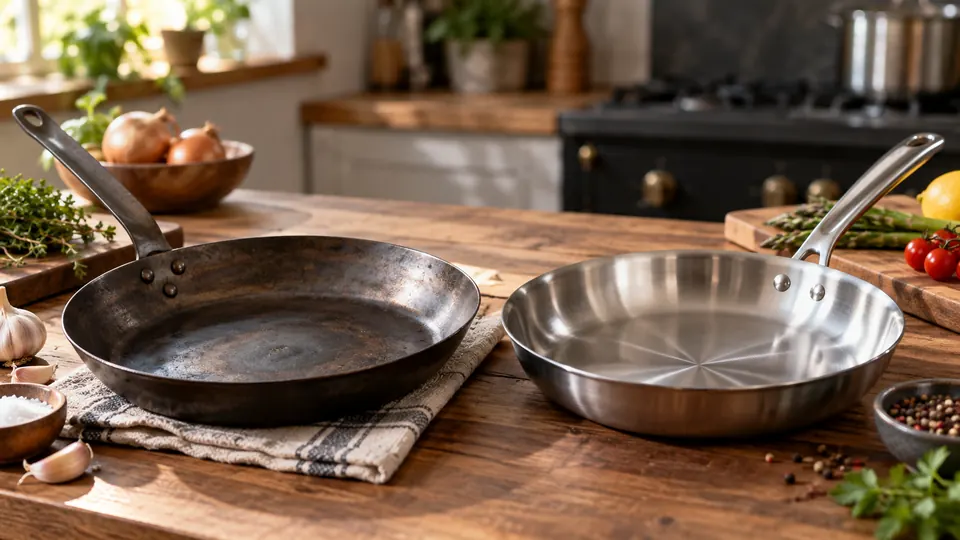
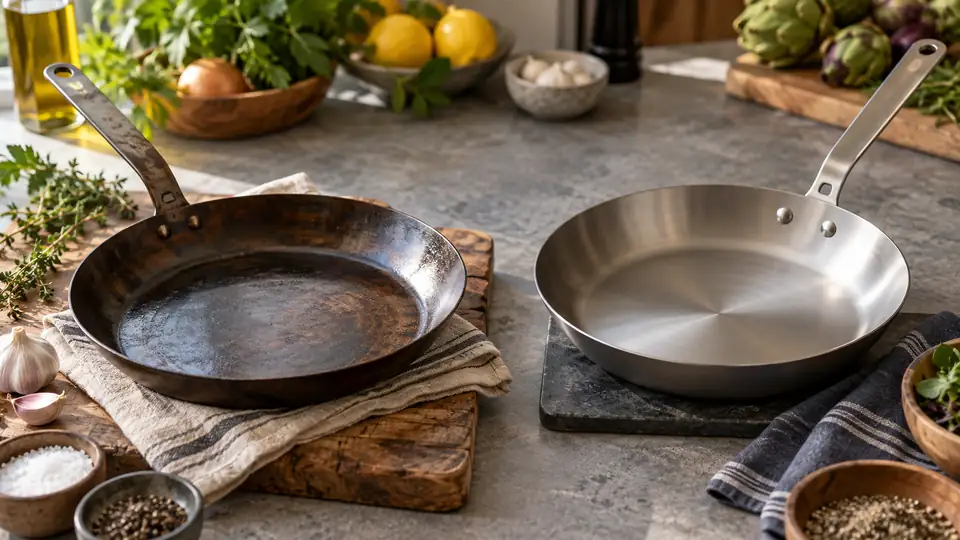
Thickness plays a major role in whether carbon steel pans warp. Thin pans heat quickly, which is appealing for quick cooking, but they are also easier to bend. Thick pans are more stable and usually resist warping better, though they take a little longer to respond to temperature changes.
| Pan Type | Warp Resistance | Heat Response | Common Tradeoff |
|---|---|---|---|
| Thin carbon steel pan | Lower | Very fast | More likely to warp under high heat or thermal shock |
| Medium-thickness carbon steel pan | Moderate | Fast | Good balance for most home kitchens |
| Thick carbon steel pan | Higher | Less reactive | Heavier and slower to warm up |
If warp resistance is a priority, a sturdier pan is usually the safer choice. That is one reason some cooks prefer a heavy duty carbon steel pan for frequent high-heat use. The extra thickness helps the pan stay flatter and more stable under stress.
Heat Shock Is the Biggest Risk
Heat shock, also called thermal shock, is one of the fastest ways to damage the shape of a pan. It happens when one side of the pan cools much faster than the rest. Metal contracts when it cools, so if the cooling is uneven, the pan can pull out of shape.
A common example is taking a very hot pan off the burner and immediately running cold water into it. Even if the pan survives without visible damage, repeated treatment like that can eventually create a permanent bend. The same idea applies to moving a pan from a blazing hot burner to a cold wet countertop or a sink full of cold water.
Letting the pan cool more gradually is much safer. You do not need to baby it, but you also should not treat it like indestructible cast iron. Carbon steel is tough, but it still benefits from some temperature discipline.
Burner Type Can Affect Warping
The cooking surface matters too. Gas burners, electric coils, smooth-top electric ranges, and induction all transfer heat differently. A pan that behaves well on a small gas burner may show problems on a powerful induction unit or on a coil burner that concentrates heat in one area.
Uneven heat distribution is a common cause of warping because it makes one part of the pan expand more than another. This is especially relevant with thin pans and with larger pans that stretch beyond the size of the burner. If the center gets very hot while the edges stay cooler, the metal can flex.
On induction, the base of the pan needs to make good contact with the cooktop. A warped pan that spins or rocks can become annoying fast. For that reason, if you cook on induction, a flatter and heavier pan is often easier to live with. A dedicated carbon steel pan for induction can be a better fit if you want better contact and stability.
Signs Your Carbon Steel Pan Is Warped
Warping is usually easy to spot once you know what to look for. Some signs are obvious, while others show up only during cooking.
- The pan rocks or spins on a flat surface.
- Oil collects in one area instead of spreading evenly.
- Food browns unevenly across the cooking surface.
- The center touches the burner, but the edges lift slightly.
- The pan no longer sits flush on a glass or induction cooktop.
Not every wobble means disaster. Sometimes a handle shape or a slightly uneven stove can make a pan seem more warped than it really is. To check, place the pan on a truly flat counter and see whether it rocks. If it does, the pan itself is likely out of shape rather than the burner.
How to Prevent Carbon Steel Pans from Warping
The easiest way to avoid warping is to manage heat changes more carefully. Carbon steel performs best when it is warmed in a controlled way rather than shocked with full power right away. That does not mean you need to cook gently all the time. It simply means avoiding sudden extremes.
Preheat gradually
Start with medium heat instead of blasting the burner on high from the beginning. Give the pan time to warm evenly before adding oil. This is one of the simplest habits that helps prevent warp stress.
Do not rinse a hot pan with cold water
After cooking, let the pan cool for a few minutes before washing. If stuck-on food needs loosening, use warm water instead of cold. That smaller temperature gap is easier on the metal.
Avoid long empty high-heat sessions
Carbon steel can handle high heat, but leaving an empty thin pan screaming hot for too long increases the chance of bending. If you need high heat for searing, preheat sensibly, then add oil and food without dragging out the dry heat stage.
Match the pan to the burner
A pan that is much larger than the burner may heat unevenly. Try to use a burner size that is reasonably matched to the pan base. This is especially helpful on electric and induction ranges.
Choose thicker construction when possible
If warp resistance matters, thicker carbon steel is generally a better choice. It costs more in weight and slower response, but it handles stress better and tends to stay flatter longer.
Can a Warped Carbon Steel Pan Be Fixed?
Sometimes, but not always. Minor warping can occasionally be improved, though many home cooks simply continue using the pan if the warp is small. A pan that only rocks a little may still cook well enough for everyday meals.
More serious warping is harder to correct. Flattening metal safely usually requires proper tools and experience, and there is always a chance of making the problem worse. For many pans, the practical answer is to keep using it if it still performs acceptably, or replace it if the warp causes major cooking issues.
If the warp happened early in the pan’s life and the pan is still under warranty, it may be worth checking the manufacturer’s policy. That said, prevention is usually more realistic than repair.
Does Seasoning Help Prevent Warping?
Seasoning is important for rust resistance and food release, but it does not stop warping. Seasoning is a thin layer of polymerized oil bonded to the surface. It improves the cooking surface, but it does not change the structural behavior of the metal underneath.
In other words, a well-seasoned pan can still warp if it is heated or cooled too aggressively. Seasoning helps the pan perform better, but it is not a structural fix. If you want to learn more about building and maintaining that cooking surface, our guide to pre-seasoned carbon steel pans can help explain why surface prep matters, even though it is not a cure for warping.
Carbon Steel vs Cast Iron for Warping
Cast iron and carbon steel both have strengths, but they behave differently under heat. Cast iron is thicker and usually more resistant to quick warping, but it is also more brittle and can crack if abused. Carbon steel is thinner and more responsive, which makes it easier to heat and control, but also more sensitive to sudden temperature swings.
| Material | Warp Risk | Heat Response | Typical Use Case |
|---|---|---|---|
| Carbon steel | Moderate, higher in thin pans | Fast | Stir-frying, searing, everyday skillet cooking |
| Cast iron | Lower under normal use, but can still fail under abuse | Slow | Retaining heat, oven cooking, heavy-duty searing |
For cooks who want a pan that reacts quickly, carbon steel is still a strong choice. If the top concern is resisting warp during rough handling, cast iron generally has an edge, though it comes with more weight and slower responsiveness. The right choice depends on how you cook, not just on which material sounds tougher.
Best Practices for Daily Use
Good everyday habits make a big difference. Most warping problems come from repeated misuse rather than a single small mistake. If you build a sensible routine, your pan is much more likely to stay flat and functional for years.
- Preheat on medium or medium-high, not maximum, unless the pan truly needs it.
- Let the pan cool before washing.
- Use a burner that fits the base of the pan reasonably well.
- Store the pan dry so you are not tempted to shock it with water later.
- Use enough oil and avoid dry scorching when you do not need it.
These habits also help with seasoning and overall longevity. A pan that is cared for consistently is less likely to develop hot spots, rust, or surface damage. Warp prevention is only one part of good carbon steel maintenance, but it is a very important one.
Pros and Cons of Carbon Steel Pans
| Pros | Cons |
|---|---|
| Heats quickly and responds fast to temperature changes | Can warp if heated or cooled too aggressively |
| Light enough for easy handling compared with cast iron | Thinner versions are less stable under extreme heat |
| Can develop a durable seasoned cooking surface | Requires more careful heating than some heavier cookware |
| Works well for searing, frying, and high-heat cooking | Uneven burners can reveal weaknesses in a thin pan |
Frequently Asked Questions
Can carbon steel pans warp in the oven?
Yes, but oven use is usually less risky than sudden stove-to-sink temperature shock. Warping is more likely if the pan is thin, placed under very intense broiler heat, or moved abruptly from hot to cold.
Is a warped carbon steel pan still safe to use?
Usually yes, as long as the pan is structurally intact and not dangerously unstable. The main issue is cooking performance. A warped pan may spin, rock, or heat unevenly, which can make everyday cooking more frustrating.
Do pre-seasoned carbon steel pans warp less?
No. Pre-seasoning affects the cooking surface, not the shape of the metal. A pre-seasoned pan can still warp if it is overheated or cooled too quickly.
Why does my carbon steel pan spin on induction?
That often means the base is not perfectly flat. Induction cooktops rely on close contact, so even a small warp can make the pan spin or rock. A flatter, heavier pan usually performs better on induction.
How can I tell if my pan is too thin?
If the pan heats very fast but also seems to bend, rock, or respond badly to heat changes, it may be on the thin side for your use. Thin pans are not automatically bad, but they require more careful handling than heavier models.
Final Thoughts
Do carbon steel pans warp? Yes, they can, but the risk is manageable and depends heavily on thickness, heat control, and cooking habits. Thin pans are more vulnerable, while thicker pans generally hold their shape better. The biggest threats are sudden temperature changes, aggressive empty preheating, and uneven burners.
For most cooks, the practical solution is simple. Heat the pan gradually, cool it gradually, and choose a thickness that matches how hard you plan to use it. Carbon steel remains an excellent cookware material, but it rewards steady technique more than careless heat abuse.

Leave a Reply